


Culture and Heritage Guide to GOA


Laterite Churches • Baroque Altars • Latin Quarter Lanes • Temple Lamp Towers • Ochre Façades • Dawn Bread Rounds • Feni Taverns • Konkani & Portuguese • Siesta Afternoons • Feast Day Processions



KEY DATES IN
Goa New'S History
The Kadamba kings rule Goa, first from Chandor, then from the port of Gopakapattana. Their lion emblem still rides on Goa's state buses.
Afonso de Albuquerque takes Goa from the Bijapur Sultanate. Around 450 years of Portuguese rule begin.
Facing temple demolitions, devotees carry the Mangesh lingam inland to Priol in Ponda. This is why Goa's great temples sit in the hinterland, not the coast. 🇮🇳 1961 — On 19 December, Indian forces end Portuguese rule. Goa joins India, and the date is marked every year as Liberation Day.
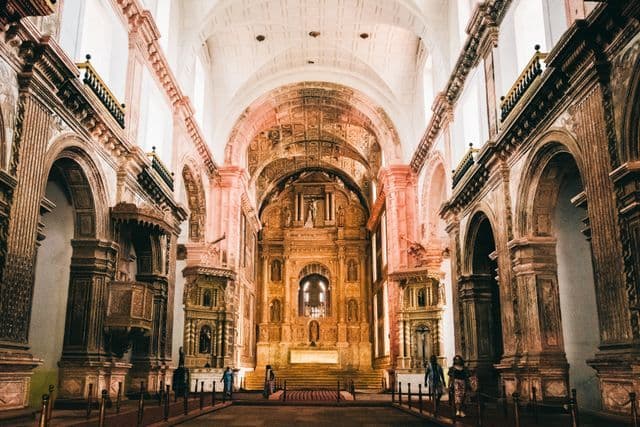
UNESCO lists the Churches and Convents of Goa. Seven Old Goa monuments, Basilica of Bom Jesus among them, become World Heritage.
EVERYDAY Goa New QUIRKS

🥖 The bread alarm: Before breakfast, listen for a cycle horn. That's the poder, delivering poi and pão from a bamboo basket, door to door.
🎨 Paint after the rains: In Portuguese times, Panjim homes had to be repainted every year after the monsoon. Fontainhas still does it, so the ochres and blues look fresh each winter.
✝️ Crosses at every corner: You'll spot whitewashed crosses at junctions, wells and gates. Families build them as thanks, or in memory of someone.
😴 Shutters down at 1: Many shops close from about 1 to 4 pm for lunch and a nap. Plan errands for mornings or evenings.
🏍️ Taxis on two wheels: Goa's motorcycle "pilots" wait at main crossings, handlebars often hung with flowers or a crucifix. Goa legalised them back in 1981.
🦁 A medieval lion on the bus: The state bus service is called Kadamba. Its logo borrows the lion of a dynasty that ruled here a thousand years ago.