


Ubud: The Cultural Heart of Bali — A Complete Visitor's Guide
10 min read
Raj Varma
Author
SHARE BLOG
TABLE OF CONTENTS
- Key Takeaways
- Why Ubud Is Bali's Cultural Heart
- Top Things to Do in Ubud
- Day Trips from Ubud
Key Takeaways
- Ubud is Bali's inland cultural capital — cooler, slower, surrounded by rice valleys and 43 temples within driving range.
- Sacred Monkey Forest now costs IDR 100,000 (~USD 6) on weekdays and IDR 120,000 (~USD 7.50) on weekends, with last entry at 5:15 PM.
- Two to three nights is the realistic minimum; five nights lets you add Mount Batur and Tampaksiring day trips without rushing.
- Stay just outside the centre — Penestanan, Nyuh Kuning, or Sayan — to escape the Jl. Raya Ubud one-way loop traffic between 4 and 7 PM.
- April–June and September–October are the quietest sweet spots in the dry season; book peak July–August villas 2–3 months ahead.
This Ubud Bali travel guide covers the inland town that has been the island's cultural capital for centuries — rice terraces, royal temples, the Sacred Monkey Forest, day-trip volcanoes, and the neighbourhoods worth basing in. Use it to plan two, three, or five nights without retracing your steps.
Ubud sits 35 km inland from Denpasar airport, 600 metres above sea level on the spine of the Wos River valley. It's noticeably cooler than the coast — mornings can dip to 20°C — and the surrounding country still runs on the rice cycle, with palm-thatched shrines in every paddy and offerings on every doorstep. Forty-three Hindu temples lie within driving range. That's the part that gets cut from itineraries built around Seminyak beach clubs.
The town centre has changed. Traffic on the Jl. Raya Ubud–Hanoman–Monkey Forest Road loop now gridlocks between 4 and 7 PM, and the Ubud Art Market burned down in late 2024 (a makeshift replacement is operating, mostly with imported stock). The magic still holds — you just need to know where to look, when to wake up, and which streets to walk down. This guide tells you both.
Why Ubud Is Bali's Cultural Heart
Ubud has been the island's centre of art, dance, and ceremony for over a thousand years — long before tourism arrived. Royal patronage, an active temple economy, and the rice-paddy religion of the subak cooperatives still shape daily life here in a way the coastal resorts can't replicate. That's what people mean when they call Ubud the real Bali, and it's worth understanding before you pick attractions off a list.
A capital of art, dance, and royal patronage
Ubud Palace (Puri Saren Agung), still home to the Sukawati royal family, has hosted public dance performances every evening since the 1930s, when prince Tjokorda Gede Agung Sukawati and German painter Walter Spies founded the Pita Maha artists' association. That collaboration is why Ubud has the museum density it does — the Neka Art Museum, Agung Rai Museum of Art (ARMA), and Puri Lukisan all sit within a 15-minute drive of each other. Entry to the palace courtyard is free; dance performances run nightly at 7:30 PM for IDR 100,000–150,000 (~USD 6.50–10).
The surrounding villages specialise — Mas for woodcarving, Celuk for silver, Batuan for painting, Pengosekan for ceremonial masks. A half-day drive through them is still the best way to understand why Bali developed the craft economy it did.
The rice-paddy religion of subak
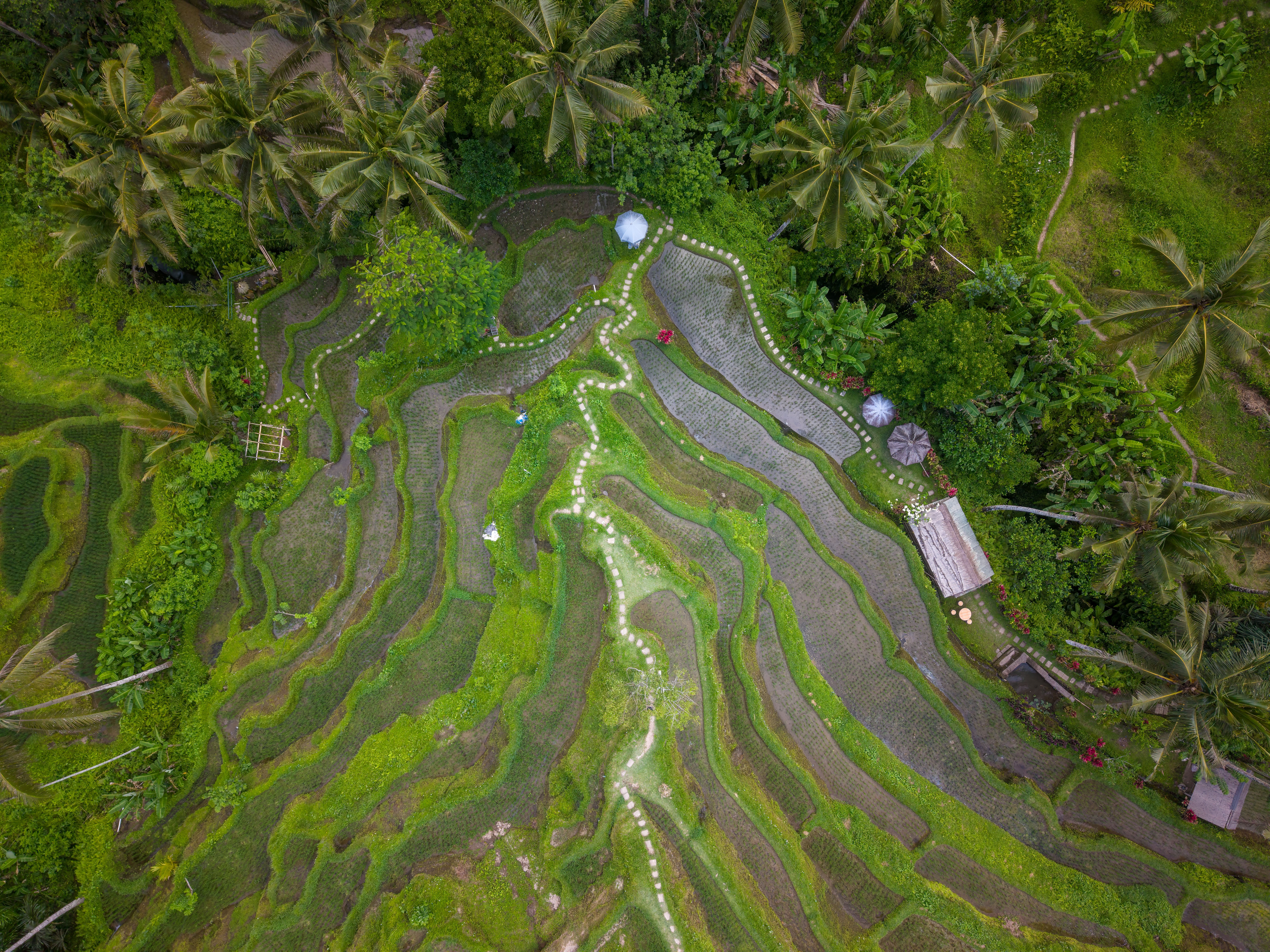
Bali's irrigated rice terraces are governed by the subak system, a thousand-year-old democratic cooperative that UNESCO inscribed in 2012 as a Cultural Landscape. Each paddy is shared between farmers, water priests, and the temple at the head of the valley — water rights and ritual obligations are inseparable. When you walk between paddies on the Campuhan Ridge or the Tegallalang trail, you're walking through a working religious system, not a scenic backdrop. Keep that in mind when you're tempted to wander off-path for a photo.
How Ubud differs from coastal Bali
- Climate: 3–5°C cooler than Seminyak; mornings often misty
- Pace: Most temples and viewpoints quiet before 9 AM; busiest from 10 AM to 3 PM
- No surf, no beach clubs: Ubud is for jungle, paddy, temple, and spa days
- Closing time: Most restaurants stop seating by 10 PM; nightlife is restrained
Top Things to Do in Ubud
The core Ubud sights are walkable from the centre or within a 15-minute scooter ride. Hit them early — before 9 AM for the Monkey Forest and Campuhan, before 8 AM for Tegallalang — and you'll see them at their best. By mid-morning the tour-bus crowds start to land, and the photogenic spots become queue-managed.
Sacred Monkey Forest Sanctuary
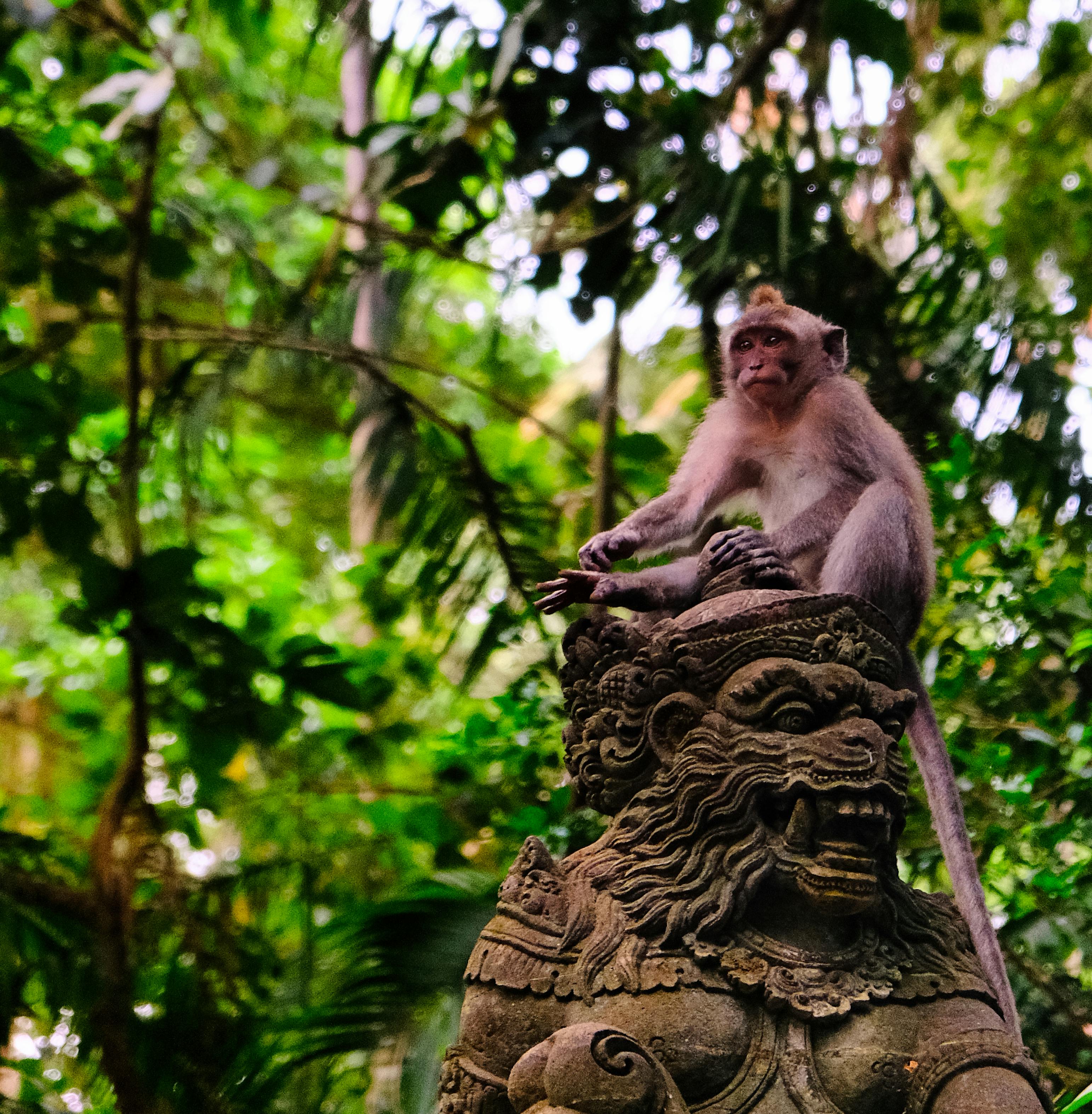
The Sacred Monkey Forest Sanctuary covers 12.5 hectares of jungle on the southern edge of town, with 1,260 long-tailed macaques living among three 14th-century Hindu temples. It's still an active religious site — Pura Dalem Agung Padangtegal at the centre is used for funeral ceremonies — and the conservation staff manage the troops carefully. The Monkey Moment selfie at the kiosk inside the forest costs an extra IDR 50,000 and is shot by trained staff, not you.
- Entry (2026): IDR 100,000 weekday / IDR 120,000 weekend (adult, ~USD 6–7.50); IDR 80,000–100,000 children
- Hours: 9:00 AM – 6:00 PM, last entry 5:15 PM
- Best time: 9–10 AM, before tour groups arrive
- Rules: No loose items, no food, no plastic bags — macaques will grab anything they recognise
- Time needed: 1.5–2 hours
Tegallalang Rice Terrace
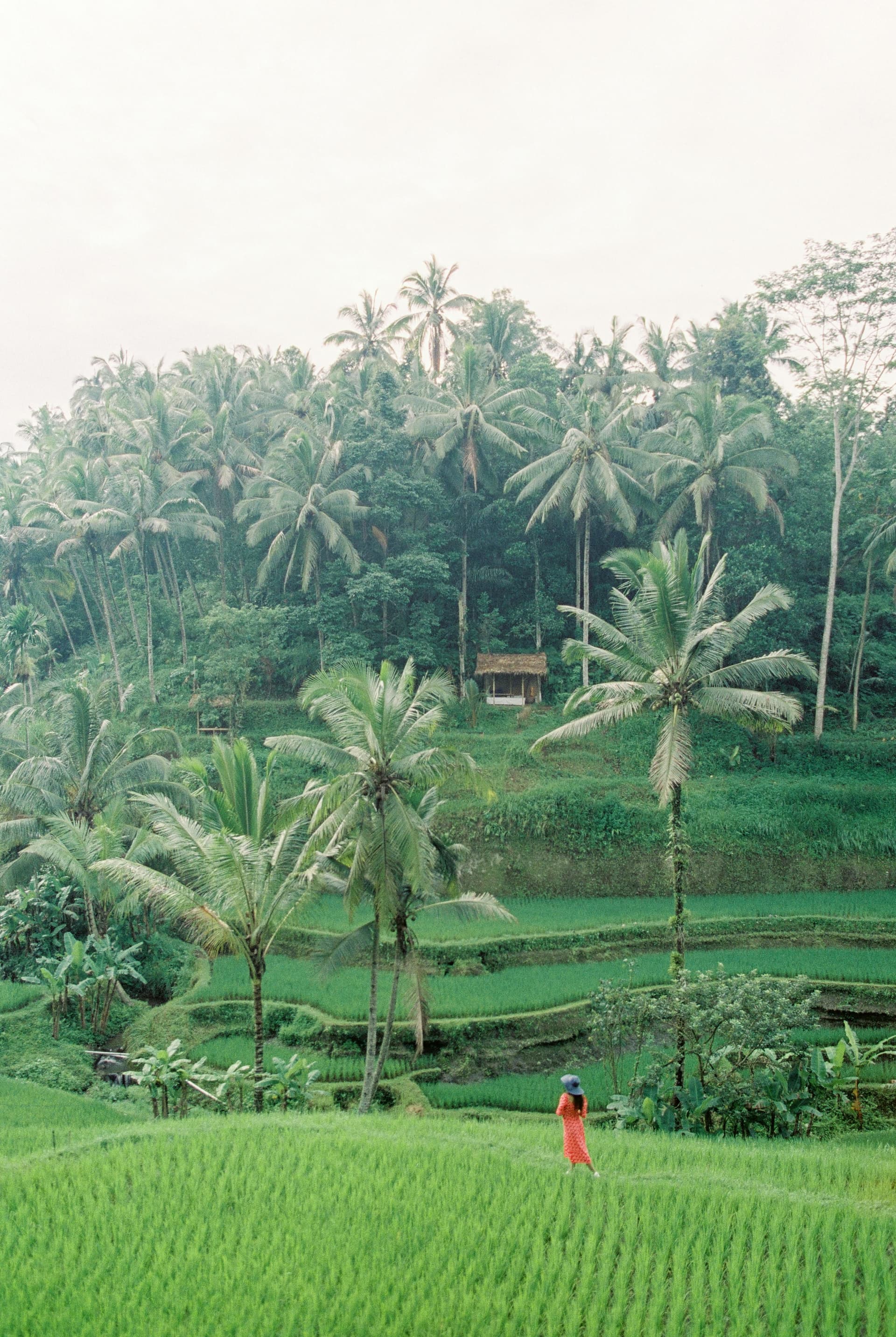
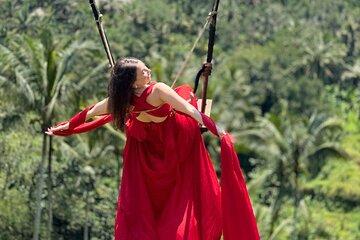
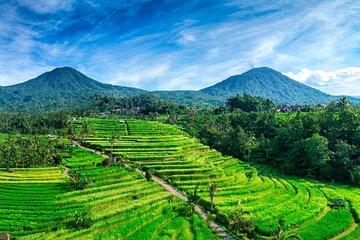
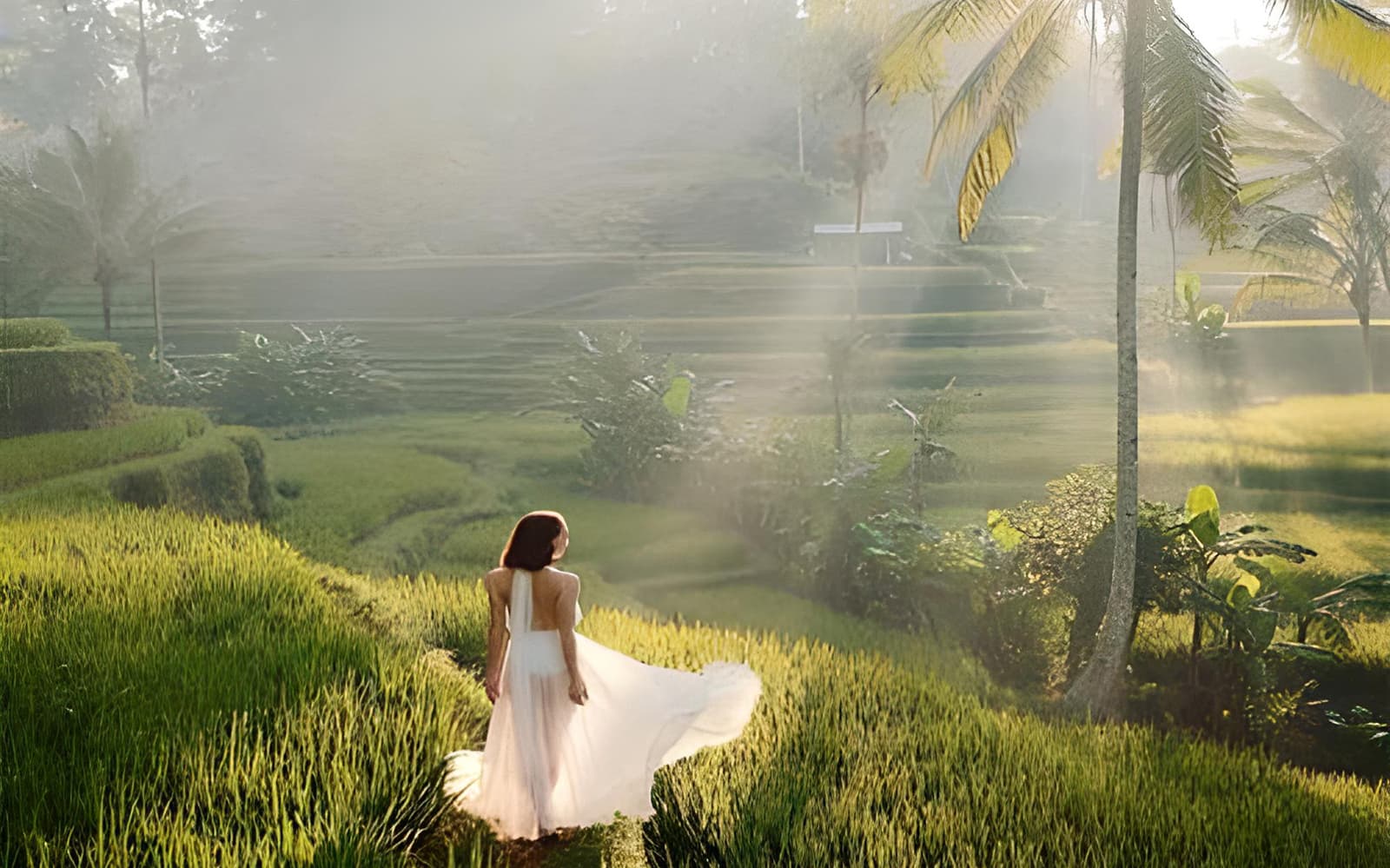
Tegallalang is the most photographed paddy landscape in Bali — a stepped subak valley about 20 minutes north of central Ubud. It's commercialised and not the largest terrace system on the island (Jatiluwih is wider and quieter), but the access and the photo angles are unmatched. Small donations are requested at the upper viewpoints, and the swing operators along the rim charge IDR 150,000–500,000 for the photo-op rigs. Skip those unless you're committed.
- Entry: IDR 50,000 (~USD 3) at the main viewpoint
- Hours: 7:00 AM – 6:00 PM
- Best time: 7:30–9:00 AM, before bus tours and before the heat
- Time needed: 1–2 hours including the valley walk
Campuhan Ridge Walk
The Campuhan Ridge Walk is the easiest cultural-landscape stroll in the area — a 2 km paved path along a grass ridge between two rivers, starting just behind the Warwick Ibah hotel west of the centre. It's free, open 24 hours, and best done before 7 AM when the mist still clings to the valley below. Allow 90 minutes return at an unhurried pace; loop back via the small warungs at Karsa Café for a coffee.
Ubud Palace and Saraswati Temple
Both sit on Jl. Raya Ubud and take 30 minutes to see. Pura Taman Saraswati's lotus pond and water temple are free to view from the connected Café Lotus, and the palace courtyard is open during the day with no entry fee. Evening dance performances are IDR 100,000–150,000 — buy tickets at the gate from 5 PM.
Top Ubud sights at a glance
| Sight | Entry (IDR / USD) | Time needed | Best window |
|---|---|---|---|
| Sacred Monkey Forest | 100K–120K / USD 6–7.50 | 1.5–2 hrs | 9–10 AM |
| Tegallalang Rice Terrace | 50K / USD 3 | 1–2 hrs | 7:30–9 AM |
| Campuhan Ridge Walk | Free | 1.5 hrs return | 5:30–7 AM |
| Ubud Palace | Free (dance: IDR 100K–150K) | 30 min + 1 hr dance | 7:30 PM |
| Saraswati Temple | Free | 15 min | Morning |
| Goa Gajah Elephant Cave | 50K / USD 3 | 1 hr | Morning |
| Neka Art Museum | 75K / USD 4.50 | 1.5 hrs | Anytime |
A note on the Ubud Art Market
- The original Pasar Seni Ubud burned down in November 2024
- A temporary structure on the same site is open, but stocks mostly imported textiles and machine-printed sarongs
- For authentic Balinese craft, drive 20 minutes to the artisan villages of Mas (woodcarving), Celuk (silver), or Batuan (paintings) instead
Day Trips from Ubud
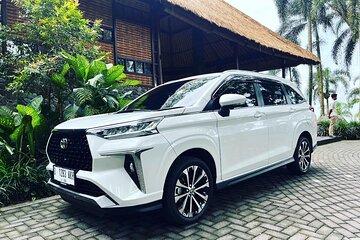
Ubud's central location makes it the best base for day trips into the highlands and central Bali. A private driver for the day costs IDR 500,000–800,000 (~USD 35–55) — flat rate, fuel included, English-speaking — and is the easiest way to chain three or four stops without the heat-exhaustion of a scooter ride. Always agree the route before you set off.
Tirta Empul holy spring temple
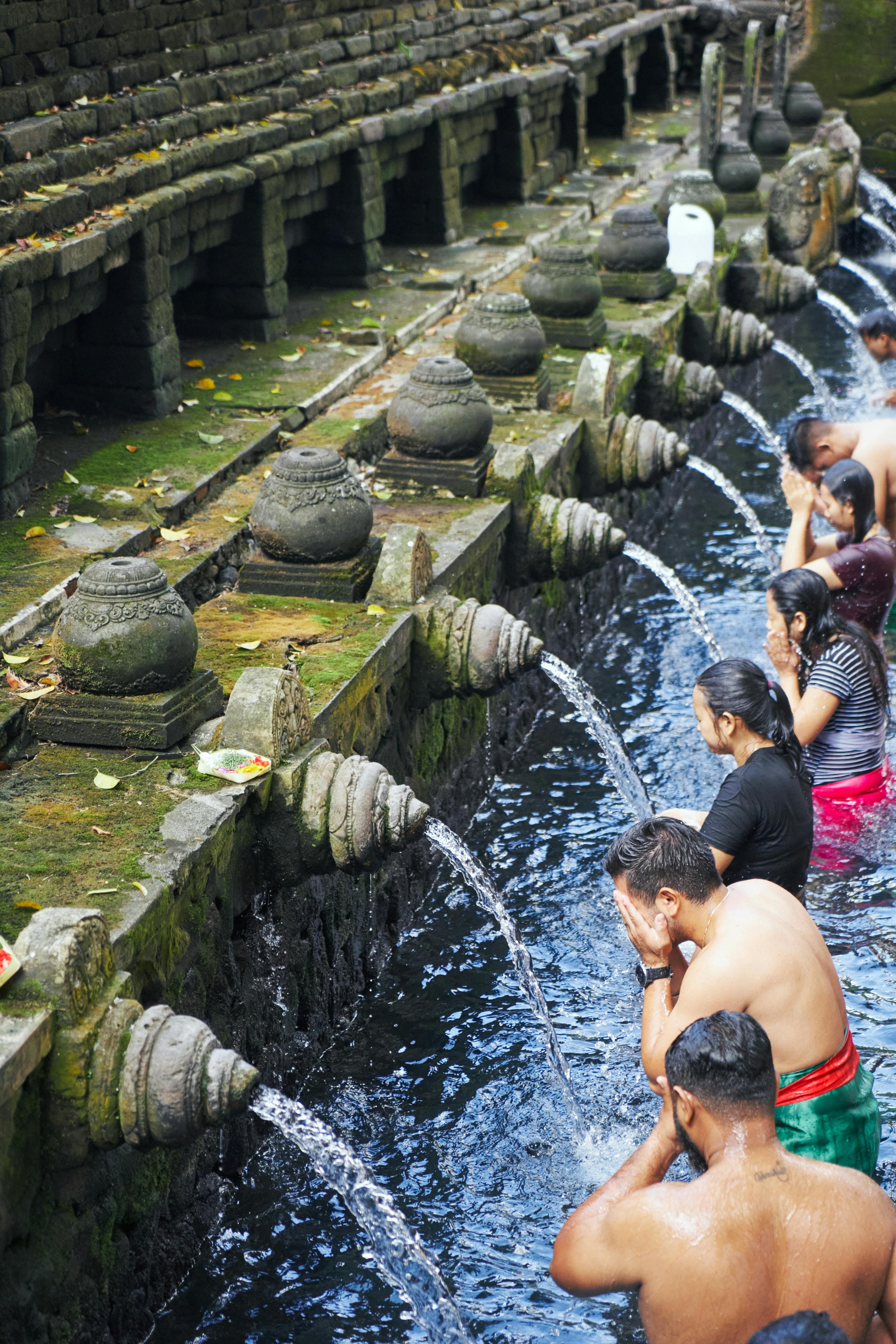
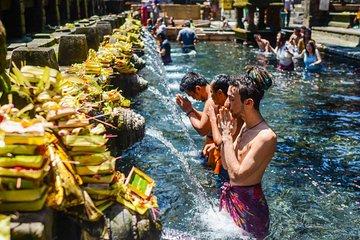
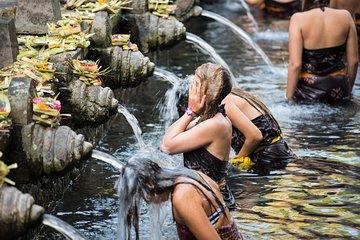
The Tirta Empul holy spring temple at Tampaksiring is the most active purification site in Bali. Worshippers move through a sequence of 30 carved water spouts performing the melukat ritual — a cleansing of body and spirit that visitors are permitted to join with respect and a sarong. The temple dates to 962 CE and is still in daily use, so the protocol matters: women on their period are asked not to enter the bathing pools, and worshippers are not to be photographed at close range.
- Entry: IDR 75,000 adults / IDR 50,000 children (~USD 4.50)
- Hours: 8:00 AM – 6:00 PM
- Dress code: Sarong and sash provided free at entry; a wet sarong for the ritual is yours to bring or rent
- Driving time from central Ubud: 35–40 minutes
Mount Batur sunrise trek
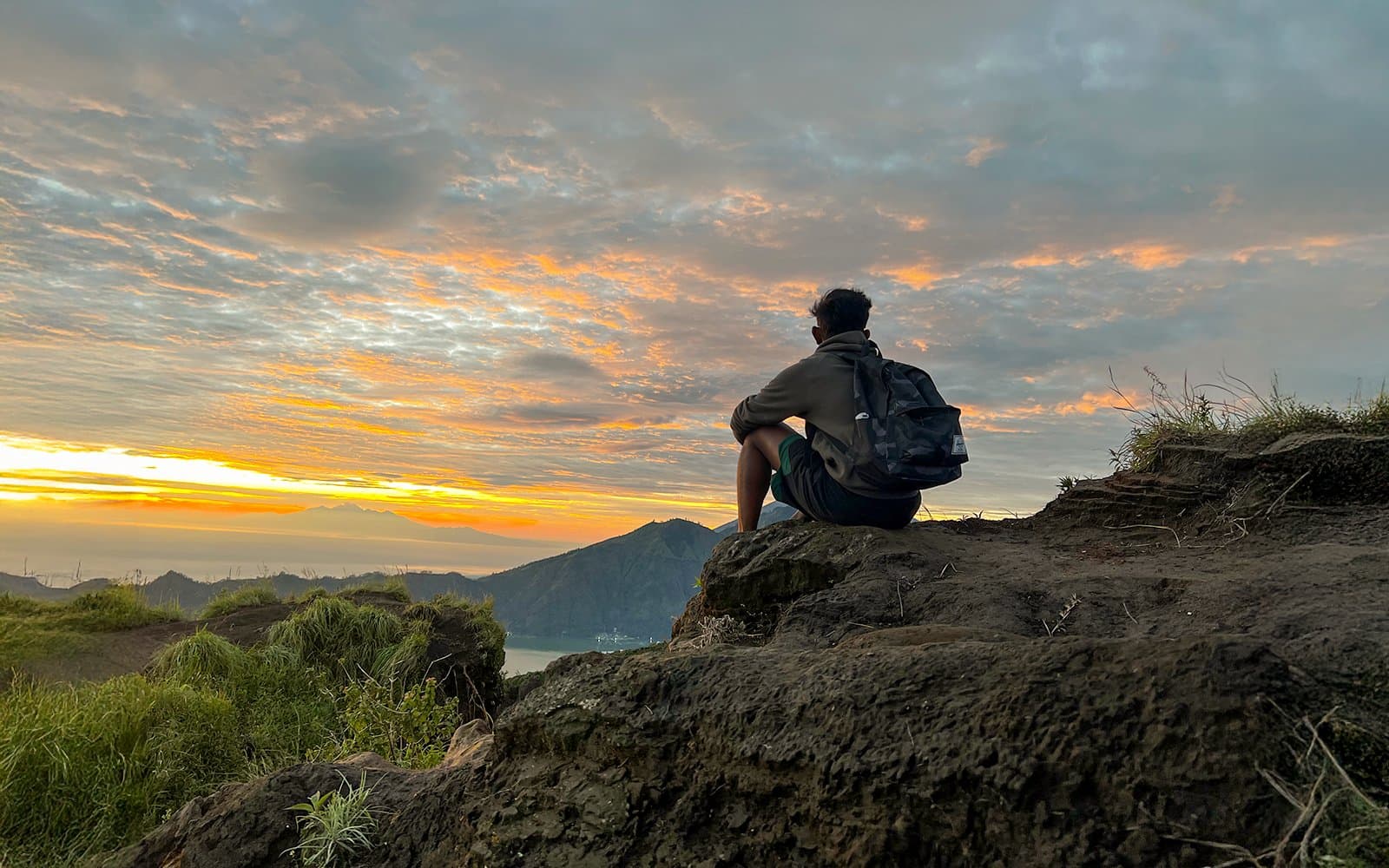
The 2-hour pre-dawn hike up Mount Batur (1,717 m) is the most popular sunrise activity in Bali. Pickup is at 1:30–2:30 AM from your Ubud hotel; you summit by 5:30 AM for the cloud-line view across Lake Batur. Guided treks run USD 30–55 including transfer, guide, breakfast cooked over volcanic steam, and headlamp. Skip it if you have knee issues or you've already done a recent volcano hike — the trail is steep loose scree.
Tegenungan and Tibumana Waterfalls
Tegenungan is the closest waterfall to Ubud — 20 minutes south, busy, paved access, and a swimming pool at the base. Tibumana, 40 minutes north-east, is the quieter alternative — narrower, more atmospheric, fewer crowds.
- Tegenungan entry: IDR 30,000 (~USD 2)
- Tibumana entry: IDR 20,000 (~USD 1.30)
- Bring: Swimsuit, dry bag, grip-soled shoes for the steps
Goa Gajah and Gunung Kawi
Goa Gajah (Elephant Cave) is a 9th-century rock-hewn sanctuary with a carved demon-mouth entrance, on the road from Ubud to Tampaksiring. Gunung Kawi sits a further 20 minutes north — ten 11th-century shrines carved into a river-cliff face, reached by descending 270 stone steps. Pair them with Tirta Empul for a single full-day cultural circuit.
Penglipuran Heritage Village
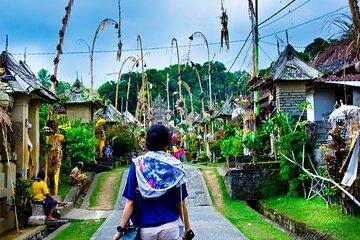
Penglipuran is a Bali Aga village 50 minutes east of Ubud — one long, swept stone street with matched bamboo gates on every compound, regularly named one of the cleanest villages in the world. Entry is IDR 50,000. It feels staged at peak hour; come at 8 AM or 4 PM and it's still a working village.
Day-trip distances at a glance
- Tegenungan Waterfall: 20 minutes south
- Goa Gajah: 20 minutes east
- Tirta Empul and Gunung Kawi: 40 minutes north
- Mount Batur (Kintamani): 75 minutes north
- Penglipuran Village: 50 minutes east
- Jatiluwih Rice Terraces: 90 minutes west







Where to Stay in Ubud — Neighbourhood by Neighbourhood
Ubud's biggest accommodation decision isn't budget — it's central versus peripheral. The central streets are walkable to almost every restaurant and the Monkey Forest, but the Jl. Raya Ubud–Hanoman–Monkey Forest Road one-way loop has become a traffic chokepoint between 4 and 7 PM. Step ten minutes outside the centre and the rice fields, jungle valleys, and quieter villas start. Pick the area that matches your trip's centre of gravity.
Central Ubud — first-timers and walkers
Anchored by Jl. Hanoman, Jl. Raya Ubud, and Jl. Monkey Forest, central Ubud puts you within five minutes of the palace, the market, the Sacred Monkey Forest, and the restaurant strips. The trade-off is noise and scooter traffic. Best for two- or three-night first-timer stays where walkability matters more than serenity.
Penestanan — yoga community and slower mornings
Penestanan sits 15 minutes' walk north-west of the centre, with vegan cafés, drop-in yoga shalas, and bohemian villas under USD 80 a night. It's the right base for a yoga-first week or a digital-nomad stretch. The Campuhan Ridge Walk starts at the bottom of the hill, so morning runs are built-in.
Nyuh Kuning — quiet and family-friendly
Tucked behind the Monkey Forest's southern gate, Nyuh Kuning is a residential village with a single tree-lined main street, a football field, and a handful of family-run guesthouses. It's a 15-minute walk to central Ubud through the Monkey Forest during daylight via the southern route. The most walkable quiet base.
Sayan and Kedewatan — jungle luxury
The Ayung River valley west of Ubud is where the international luxury resorts cluster — Four Seasons Sayan, Mandapa Ritz-Carlton Reserve, Como Shambhala. Expect USD 500–1,500 a night, river-valley views, and a 10–15 minute drive into the centre. Best for honeymoons and travellers paying for stillness.
Tegallalang and Tampaksiring — rice-terrace stays
Newer boutique villas have opened along the Tegallalang ridge and around Tampaksiring with proper rice-paddy views from the pool. The distance trade-off is real — 25–35 minutes to central Ubud for dinner — but the morning view earns it back. Best for second visits or travellers who don't mind a daily commute for breakfast.
Ubud neighbourhoods compared
| Neighbourhood | Vibe | To centre | Per-night range | Best for |
|---|---|---|---|---|
| Central Ubud | Lively, walkable, noisy | 0 min | IDR 800K–4M / USD 50–250 | First-timers, short stays |
| Penestanan | Bohemian, yoga, vegan | 15 min walk | IDR 600K–2M / USD 40–125 | Long stays, wellness |
| Nyuh Kuning | Residential, quiet | 15 min walk | IDR 700K–2.5M / USD 45–160 | Families, solo travellers |
| Sayan / Kedewatan | Jungle luxury, isolated | 10–15 min by car | IDR 5M–25M / USD 320–1,600 | Honeymoons, splurges |
| Tegallalang / Tampaksiring | Rice-paddy views, rural | 25–35 min by car | IDR 1.2M–6M / USD 75–380 | Second visits, photographers |
The Ubud and broader Bali accommodation set surfaced on Travjoy has been put together after on-the-ground research and reviewed by local partners, which saves several hours of cross-referencing reviews against actual quality.
Cultural Experiences and Wellness
Ubud is the only place in Bali where you can credibly fit a cooking class, a temple ritual, a Kecak dance, and a jungle spa into the same trip without leaving town. The wellness scene is mature but heavily filtered — what's worth your time and what's a tourist-tier ritual is the difference here.
Balinese cooking classes
A proper class starts at the Ubud morning market (Pasar Ubud opens at 5 AM), moves to a family compound or organic farm, and finishes with seven dishes you cook yourself — typically lawar, sate lilit, base genep paste, gado-gado, jukut urab, tum ayam, and dadar gulung. Look for classes capped at 8–10 students.
- Price: IDR 450,000–700,000 (~USD 30–45) including market visit, transfer, lunch
- Duration: 4–6 hours
- Well-regarded operators: Paon Bali (Laplapan), Casa Luna Cooking School, Lobong Culinary Experience
Yoga, retreats, and the Yoga Barn
The Yoga Barn (Pengosekan) is the largest open-air studio in Bali with 20+ daily classes — vinyasa, yin, kundalini, sound healing — across five shalas. Radiantly Alive and Ubud Yoga House offer smaller, more teacher-led classes. Drop-ins are IDR 130,000–180,000 (~USD 8–12). For week-long retreats, expect USD 800–2,500 including accommodation.
Kecak fire dance and Legong
The Kecak — a chant-driven Ramayana performance with no instruments, just 50–100 male voices — is performed several nights a week at Ubud Palace and at the Pura Padang Tegal stage near the Monkey Forest. The shorter Legong is performed at the palace. Both run 75–90 minutes and start at 7:30 PM. Buy tickets at the gate from 5 PM; queue early for the front row.
- Ubud Palace dance: IDR 100,000 (~USD 6.50)
- Pura Padang Tegal Kecak and Fire: IDR 150,000 (~USD 10)
- ARMA Museum performances: IDR 100,000 (~USD 6.50)
Spas, healers, and the Eat-Pray-Love effect
A 60-minute Balinese massage at a mid-range spa in central Ubud runs IDR 200,000–400,000 (~USD 13–25). The high-end resort spas at Como Shambhala and the Four Seasons charge USD 150–400 for treatments designed around watsu, sound bowls, and warm-stone work. Independent "healers" — including those made famous by the Eat Pray Love film — vary wildly in quality; bookings now run weeks ahead and prices have inflated beyond what the experience reliably delivers. A mid-range spa or a hotel spa session is the more reliable use of an afternoon.
If you have only one cultural experience in Ubud, choose…
- Best for first-timers: A Balinese cooking class — covers food, market, family compound, and one full meal in 4 hours
- Best for couples: Kecak fire dance at Pura Padang Tegal at sunset
- Best for spiritual seekers: A guided melukat ritual at Tirta Empul with a Hindu priest
- Best for families with kids 8+: A Sacred Monkey Forest morning visit plus a Legong dance evening
Practical Tips for Visiting Ubud
Ubud rewards travellers who plan around the heat and the traffic. The daily rhythm here is dawn-to-mid-morning for outdoor sights, late morning to mid-afternoon for spa or museums, and evenings for food, dance, and walks. Get this rhythm right and you'll see twice as much.
Best time to visit Ubud
The seasonal pattern is simple. The dry season runs April to October, the wet season November to March. Dry-season days are mostly sunny with temperatures of 24–30°C; wet-season days bring 2–3 hours of afternoon rain and lush, green countryside.
- Peak (July–August): Busiest, priciest, dry — book villas 2–3 months ahead
- Sweet spots (April–June, September–October): Same dry weather, 30–40% fewer travellers
- Wet-season value (November–March): Lush, quieter, cheaper — best for indoor wellness, cooking classes, spa work
- Nyepi Day (late March): The 24-hour island-wide silence is one of Bali's most distinctive cultural moments — but every sight, restaurant, and beach is closed and you can't leave your accommodation
How many days do you need in Ubud?
Most Ubud Bali travel guide itineraries follow this rhythm:
- 2 nights: Centre + Monkey Forest + Tegallalang + one dance evening
- 3 nights: Adds Tirta Empul + Tegenungan Waterfall + a cooking class
- 5 nights: Adds Mount Batur sunrise + Penglipuran + Jatiluwih + a real wellness rhythm
- 7+ nights: Useful only if you're combining Ubud with extended yoga or a working stay
Getting around Ubud and beyond
The centre is walkable end-to-end in 25 minutes. For day trips, hire a private driver — flat-rate, no surge pricing, no parking headache.
- Private driver (full day): IDR 500,000–800,000 (~USD 35–55), fuel included
- Scooter rental: IDR 70,000–150,000/day (~USD 5–10); only viable if you're already a confident rider
- Gojek and Grab: Restricted in central Ubud (long-running taxi disputes); usable to and from the airport and to peripheral villas
- Airport transfer: 60–90 minutes from Denpasar (Ngurah Rai); IDR 350,000–500,000 (~USD 22–35) for a fixed-rate car
What to wear and temple etiquette
- Temples: Shoulders and knees covered for both men and women; sarong and sash provided at the gate
- Climate-appropriate: Light cotton, layers for the cooler 20°C mornings, grip-soled shoes for wet paths
- Restaurants: Smart-casual is the ceiling, even at fine-dining venues
- Beachwear: Not appropriate anywhere in central Ubud — it's a temple town, not a coastal strip
Cash, ATMs, and the tourist levy
- Tourist levy: IDR 150,000 (~USD 10) per visitor, paid online via the Love Bali portal before arrival or at the airport
- ATMs: Widely available on Jl. Raya Ubud; use bank-affiliated machines (BCA, Mandiri, BNI) and avoid standalone "Cirrus" units
- Cards: Accepted at hotels, mid- and upper-tier restaurants; cash needed for warungs, drivers, markets, and most temple entries
- Currency: USD 1 ≈ IDR 16,000 (early 2026)
Safety, scams, and monkey behaviour
- Ubud is one of the safer parts of Bali for solo and family travellers; violent crime against tourists is rare
- The most common scams are inflated driver fares (always agree the day rate first), fake "art for charity" donation requests in the market, and overcharged sarong rentals at temples
- Monkey rules: No food, no plastic bags, no sunglasses on your head, no dangling jewellery, no eye contact for more than two seconds — and if a macaque grabs you, stand still and let the sanctuary staff retrieve the item
- Scooter accidents are the biggest risk — wear a helmet, don't ride at night on unfamiliar back roads, and have insurance that explicitly covers two-wheel rentals
Plan Your Ubud Trip
Ubud rewards planning over hustle. Two nights gives you the headline sights; three to five lets you fold in a cooking class, a temple ritual, and a sunrise volcano without the back-and-forth that exhausts most first-timers. Choose your neighbourhood for the version of Ubud you actually want — central for walkable energy, periphery for the green stillness that drew people here in the first place.
Browse the top 20 Bali experiences for the wider island, or use this Ubud Bali travel guide as your starting point with Travjoy's Bali collection — a vetted set of stays, day-trip routes, and cultural experiences put together with local partners so you can skip the cross-checking and focus on the part of the trip that matters.




.svg&w=1920&q=75)