


Bali: Penglipuran Village
Operating Hours:Monday - Sunday: 08:00 - 18:30
The Vibe:The world's cleanest village hides nothing 🌿
Recognised among the three cleanest villages on the planet, Penglipuran blends immaculate traditional Balinese architecture with a living community that still follows 700-year-old customs. It sits in the Bangli highlands, a quiet counterpoint to Bali's busier attractions.
Spotless stone pathways stretch between identical carved gates as bamboo rustles from the forest behind. The cool highland air smells of incense and earth, and the only traffic is birdsong.
- • Named one of the three cleanest villages in the world by the Green Destinations Foundation
- • Winner of the Indonesia Sustainable Tourism Award (ISTA, 2017)
- • Listed in the Sustainable Destinations Top 100
- • Visitors consistently praise the village's serene atmosphere and welcoming residents
Persona Fit
- 👨👩👧 Families: Safe, clean, and flat — children enjoy the bamboo forest and Balinese dress-up photo sessions.
- 💕 Couples: A romantic stroll through picture-perfect architecture and peaceful lanes.
- 📸 Photographers: The symmetrical village street, uniform gates, and golden-hour light create iconic compositions.
- 👵 Seniors: Entirely pedestrianised main street with level pathways; one of Bali's most accessible cultural sites.
- 🌍 Eco-conscious travellers: A model of sustainable tourism where entry fees directly support the community.
Highlights
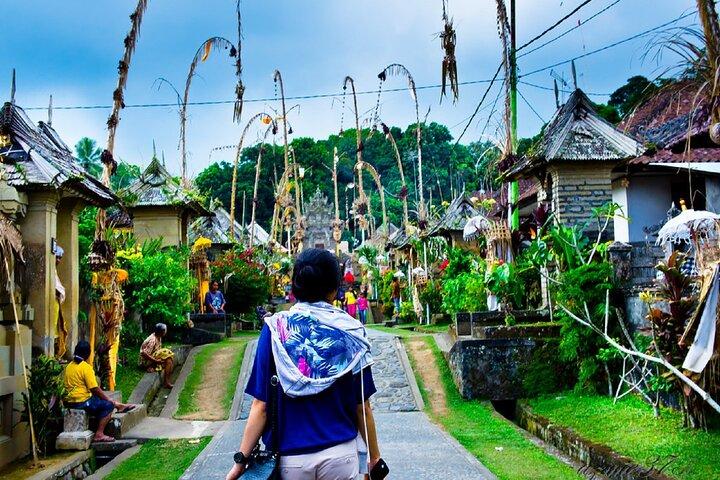
- Pedestrianised main street — a perfectly symmetrical stone path flanked by 77 traditional homes with intricately carved angkul-angkul gates
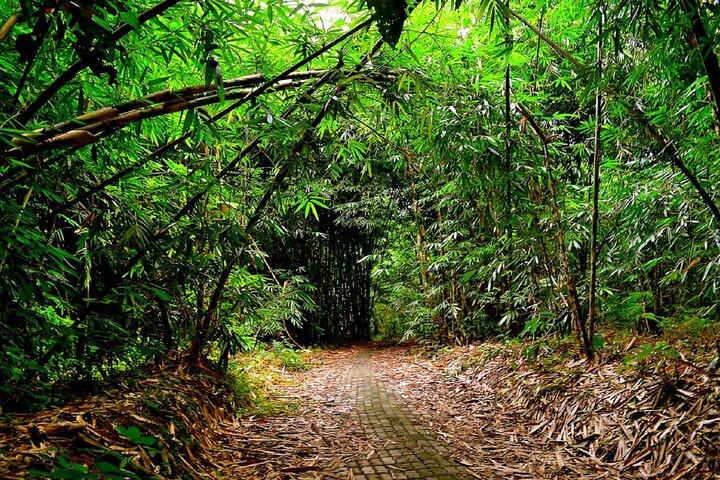
- Bamboo forest — a 45-hectare bamboo grove at the rear of the village, with walking paths and hidden temples within
- Balinese dress-up experience — rent traditional kebaya or Balinese attire and walk the village for photo sessions
- Community-managed tourism — entry fees support all village households equally, making every visit a direct contribution
- Penataran Temple — the village's main temple at the northern end of the main street, where ceremonies are regularly held — Hidden Gem
2 Curated Booking Options
Starts From
(Per Person)
Aura Salsa Dila
Our Bali Local Expert
Table of Contents
Things To Do Nearby
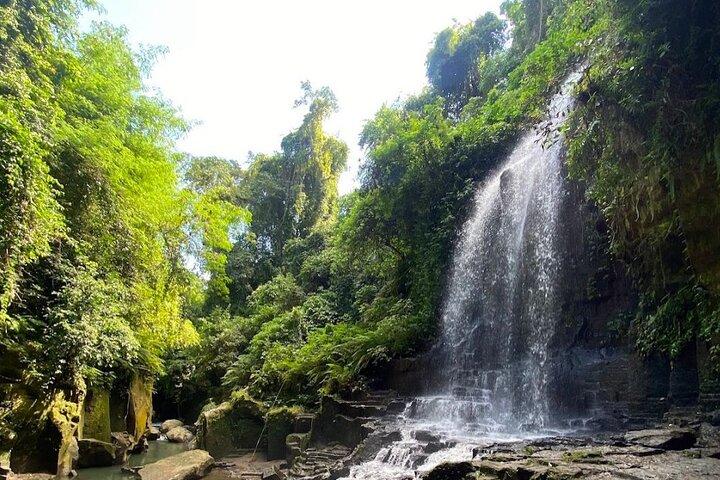
Tukad Cepung Waterfall — a spectacular hidden canyon waterfall about 20 minutes south, where sunbeams pierce through a cave ceiling
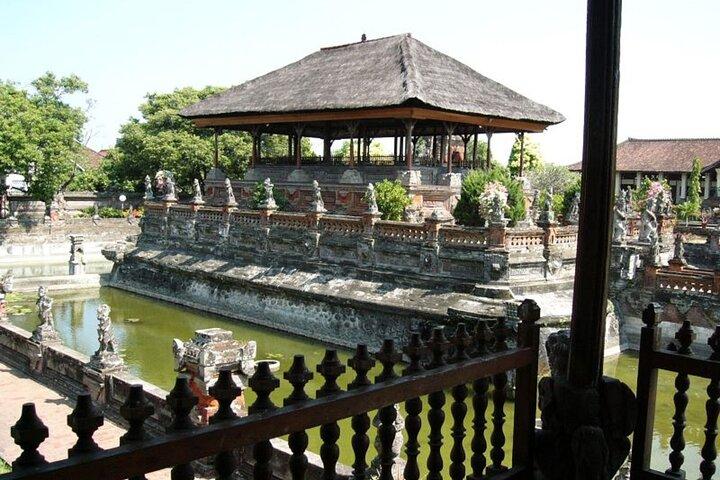
Pura Kehen — a lesser-known terraced temple in Bangli with giant banyan trees and a peaceful atmosphere, just 5 km away
Kintamani — caldera-rim viewpoints over Mount Batur and Lake Batur, about 30 minutes north
Tukad Cepung Waterfall — a spectacular hidden canyon waterfall about 20 minutes south, where sunbeams pierce through a cave ceiling
Pura Kehen — a lesser-known terraced temple in Bangli with giant banyan trees and a peaceful atmosphere, just 5 km away
Kintamani — caldera-rim viewpoints over Mount Batur and Lake Batur, about 30 minutes north
TJ's Guide - Penglipuran Village
Know Before You Go
Insider Tips
Best time: Arrive at 08:00 opening for an almost empty village and soft morning light; avoid 10:30–14:30 when tour buses congregate.
Late afternoon (16:00–17:30) is the second-best window — golden hour turns the stone path and gates into a photographer's dream.
The bamboo forest walk takes only 15–20 minutes but feels like a different world — don't skip it.
Balinese costume rental is inexpensive and genuinely fun — it doubles as a cultural experience and a unique photo session.
Visiting during Galungan or Kuningan festivals adds spectacular penjor decorations and community celebrations.
Best time: Arrive at 08:00 opening for an almost empty village and soft morning light; avoid 10:30–14:30 when tour buses congregate.
Late afternoon (16:00–17:30) is the second-best window — golden hour turns the stone path and gates into a photographer's dream.
The bamboo forest walk takes only 15–20 minutes but feels like a different world — don't skip it.
Balinese costume rental is inexpensive and genuinely fun — it doubles as a cultural experience and a unique photo session.
Visiting during Galungan or Kuningan festivals adds spectacular penjor decorations and community celebrations.
Know Your Facts
- Closest transport: No public buses — hire a private car/driver or ride from Ubud (45 min). Parking is available at the village entrance (IDR 5,000 for cars).
- Single entrance: The ticket booth and car park are at the southern end of the village.
- First-time tip: Pick up a basic map at the entrance — it shows the bamboo forest, temple, and key points.
Once You Reach
Internal Navigation
Main street: A single pedestrianised path runs south to north through the village — all 77 homes are arranged along it.
Open gates: Many homes leave their gates open for visitors to peek into traditional courtyards — enter respectfully.
Bamboo forest: Continue past the northern temple to reach the bamboo grove; follow the marked path through the canopy.
Wheelchair/stroller access: The main street is paved and flat throughout — one of the most accessible cultural sites in Bali.
Food & Coffee Shops
Bamboo Café: A tranquil, forest-enclosed restaurant in the bamboo grove — serves drinks, coffee, and light meals.
Village warungs: Small family-run stalls along the main street sell local snacks, jamu (traditional herbal drinks), and coconut water.
Bamboo Café: A tranquil, forest-enclosed restaurant in the bamboo grove — serves drinks, coffee, and light meals.
Village warungs: Small family-run stalls along the main street sell local snacks, jamu (traditional herbal drinks), and coconut water.
Photography Tips
No photography restrictions in the village; residents are generally happy to be included.
The symmetrical main street with carved gates on both sides creates powerful vanishing-point compositions.
Drone use is possible but check with village staff at the entrance — restrictions may apply during ceremonies.
No photography restrictions in the village; residents are generally happy to be included.
The symmetrical main street with carved gates on both sides creates powerful vanishing-point compositions.
Drone use is possible but check with village staff at the entrance — restrictions may apply during ceremonies.
Explore Deeper
Penglipuran is a living textbook of Balinese spatial philosophy — every gate, pathway, and building placement follows the Tri Hita Karana principle of harmony between God, humanity, and nature, scaled to the intimate dimensions of village life.
All 77 homes share an identical angkul-angkul gate design — not by coincidence but by village regulation, embodying the Balinese principle of communal equality.
The village layout follows the Tri Mandala concept: the temple zone (utama) at the north, residential area (madya) in the centre, and the cemetery zone (nista) to the south.
Penglipuran's 45-hectare bamboo forest is community-managed and harvested sustainably for construction, crafts, and ceremonial use.
The village name derives from 'Pengeling Pura', meaning 'remembering the ancestors' — reflecting its founding purpose as a spiritual retreat for the Bangli royal court.
All 77 homes share an identical angkul-angkul gate design — not by coincidence but by village regulation, embodying the Balinese principle of communal equality.
The village layout follows the Tri Mandala concept: the temple zone (utama) at the north, residential area (madya) in the centre, and the cemetery zone (nista) to the south.
Penglipuran's 45-hectare bamboo forest is community-managed and harvested sustainably for construction, crafts, and ceremonial use.
The village name derives from 'Pengeling Pura', meaning 'remembering the ancestors' — reflecting its founding purpose as a spiritual retreat for the Bangli royal court.
Did You Know?
700-year history — Research traces Penglipuran's founding to the era of the Bangli Kingdom, approximately seven centuries ago.
Cleanest village award — Penglipuran is officially ranked among the world's three cleanest villages, alongside Giethoorn (Netherlands) and Mawlynnong (India).
Community economics — All entrance fees are distributed equally among the village's households, making tourism a genuinely shared benefit.
No-plastic rule — The village enforces a ban on single-use plastics within its boundaries — visitors are expected to comply.