


Bali: Monkey Forest Sanctuary (Ubud)
Operating Hours:Monday - Sunday: 09:00 - 18:00
The Vibe:Wild, sacred, and unapologetically cheeky 🐒
A 12.5-hectare nature reserve threaded through the southern edge of Ubud, where Balinese Hinduism, conservation science, and over 1,200 long-tailed macaques share the same canopy.
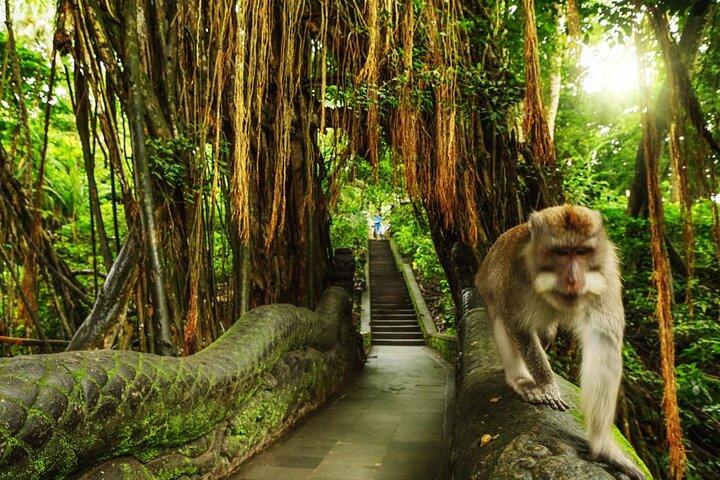
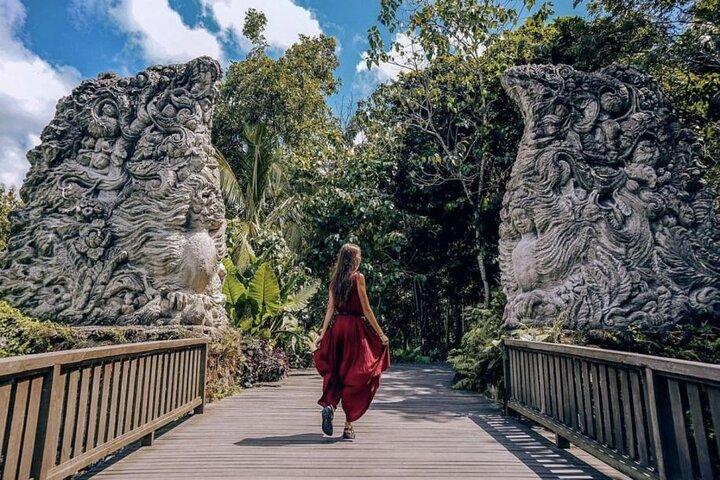
Dappled light filters through towering nutmeg trees as macaques chatter overhead. Moss-covered stone guardians line the paths, temple incense drifts from a nearby shrine, and the forest hums with hidden life.
- • TripAdvisor Travellers' Choice 2024 — ranked number one attraction in Ubud
- • Over 35,000 reviews with consistently high ratings
- • Featured in numerous Bali travel guides as a must-visit
- • Home to active conservation and primate research programmes
Persona Fit
- 👨👩👧 Families: Engaging for children old enough to follow the safety rules; educational feeding stations and weekend dance shows.
- 💕 Couples: Moss-draped temples and jungle pathways make for romantic photo backdrops.
- 📸 Photographers: Golden-hour light through the canopy, expressive monkey portraits, and ancient stone carvings.
- 👵 Seniors: Paved main paths are manageable, though some sections slope; wheelchair-accessible entrance available.
- 🎓 Culture Enthusiasts: Three 14th-century Hindu temples and regular Balinese dance performances.
Highlights
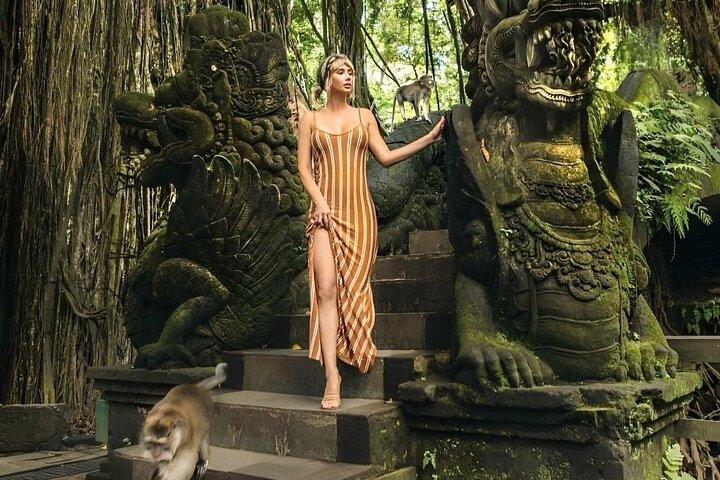
- Pura Dalem Agung Padangtegal — The main temple, dramatic with dragon-staircase carvings and often framed by resident macaques.
- Holy Spring Temple (Pura Beji) — A purification temple with atmospheric stone bathing pools tucked deeper in the forest.
- Banyan Tree Bridge — An enormous banyan root system creates a natural bridge over the ravine, a favourite photo spot.
- Weekend Dance Performances — Colourful Balinese dance shows at 11:00 AM and 4:00 PM on weekends.
- Monkey Feeding Stations — Watch macaques descend in groups for sweet potato and corn at scheduled times — Hidden Gem.
- Cemetery Temple (Pura Prajapati) — Quieter and less visited, this northeast temple is used for cremation rites — Hidden Gem.
3 Curated Booking Options
Starts From
(Per Person)
Aura Salsa Dila
Our Bali Local Expert
Table of Contents
Things To Do Nearby
Ubud Palace — A short walk north, this historic royal residence hosts nightly Balinese dance performances.
Ubud Art Market — Directly opposite the palace, ideal for handmade crafts, textiles, and paintings.
Campuhan Ridge Walk — A scenic morning walk along a narrow ridge between two valleys, about 15 minutes from the forest.
Saraswati Temple — A lotus-pond temple dedicated to the goddess of knowledge, within walking distance.
Ubud Palace — A short walk north, this historic royal residence hosts nightly Balinese dance performances.
Ubud Art Market — Directly opposite the palace, ideal for handmade crafts, textiles, and paintings.
Campuhan Ridge Walk — A scenic morning walk along a narrow ridge between two valleys, about 15 minutes from the forest.
Saraswati Temple — A lotus-pond temple dedicated to the goddess of knowledge, within walking distance.
TJ's Guide - Monkey Forest Sanctuary (Ubud)
Know Before You Go
Insider Tips
Best Time: 9:00–10:00 AM on weekdays for the calmest monkeys and thinnest crowds.
Hack: Lock zippers on bags and leave valuables in your accommodation. Monkeys recognise bags and will test every pocket.
Hidden Gem: Walk past the main temple to the cemetery temple area in the northeast — far fewer visitors and atmospheric stone carvings.
Hack: Purchase your ticket online in advance to skip the queue at the counter.
Best Time: The rainy season (November–March) brings muddier trails but fewer tourists and lush, green photo backdrops.
Best Time: 9:00–10:00 AM on weekdays for the calmest monkeys and thinnest crowds.
Hack: Lock zippers on bags and leave valuables in your accommodation. Monkeys recognise bags and will test every pocket.
Hidden Gem: Walk past the main temple to the cemetery temple area in the northeast — far fewer visitors and atmospheric stone carvings.
Hack: Purchase your ticket online in advance to skip the queue at the counter.
Best Time: The rainy season (November–March) brings muddier trails but fewer tourists and lush, green photo backdrops.
Know Your Facts
- Located at the southern end of Jalan Monkey Forest, about a 10-minute walk from central Ubud.
- The main entrance is on the east side with a large visitor centre, ticket machines, cafe, and toilets.
- Ride-hailing apps (Grab/Gojek) drop off nearby; dedicated parking is available at the southern entrance for private cars.
- First-time tip: Collect a free map from the ticket desk to navigate the pathways, temple zones, and feeding stations.
Once You Reach
Internal Navigation
Main Path: A wide, paved walkway loops from the entrance through the forest past all three temples. Follow the signposted route.
Temple Zones: Each temple area is clearly marked. The main temple (south-west) is the most visited; the holy spring (north-west) and cemetery (north-east) are quieter.
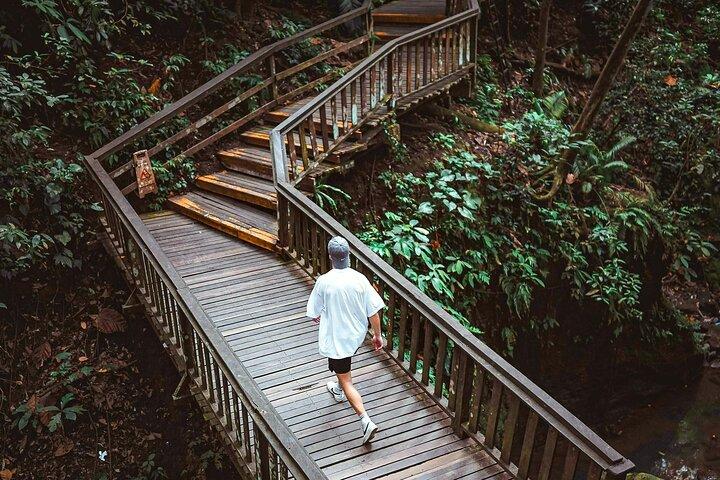
Ravine Section: A stepped pathway descends to a stream and stone bridge — the most photogenic stretch but requires sturdy footwear when wet.
Wheelchair/Stroller: The main entrance and upper paths are accessible, though lower ravine sections involve steps.
Maps: Free printed maps at the ticket counter; Google Maps works well for the surrounding area but is limited inside the forest.
Food & Coffee Shops
Entrance Cafe: Basic refreshments and pastries, convenient for a quick break before or after your walk.
Jalan Monkey Forest restaurants: Dozens of cafes and warungs line the road leading to the forest — try a Balinese coffee or smoothie bowl post-visit.
Entrance Cafe: Basic refreshments and pastries, convenient for a quick break before or after your walk.
Jalan Monkey Forest restaurants: Dozens of cafes and warungs line the road leading to the forest — try a Balinese coffee or smoothie bowl post-visit.
Photography Tips
Photography is freely permitted throughout; no flash restrictions but avoid using flash near monkey faces.
Best light: Early morning (9:00–10:00 AM) when sunbeams pierce the canopy and mist lingers on the moss.
The dragon staircase at Pura Dalem and the banyan bridge offer the most iconic compositions.
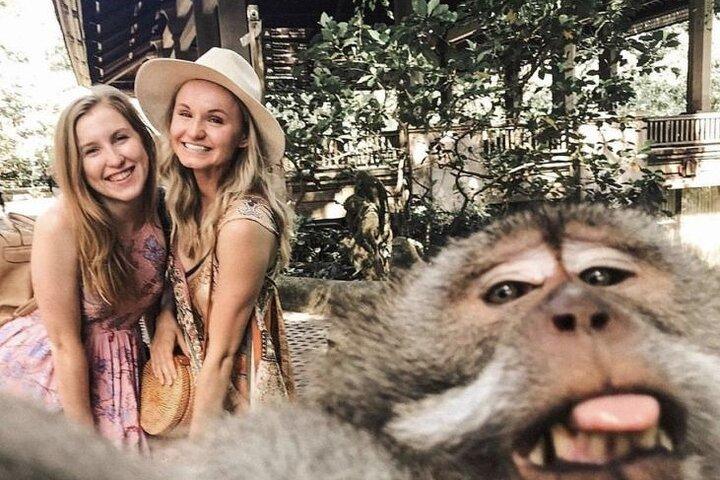
For monkey portraits, crouch low, use a telephoto or portrait lens, and remain still — they often ignore calm, stationary visitors.
Photography is freely permitted throughout; no flash restrictions but avoid using flash near monkey faces.
Best light: Early morning (9:00–10:00 AM) when sunbeams pierce the canopy and mist lingers on the moss.
The dragon staircase at Pura Dalem and the banyan bridge offer the most iconic compositions.
For monkey portraits, crouch low, use a telephoto or portrait lens, and remain still — they often ignore calm, stationary visitors.
Explore Deeper
Beyond its crowd-pleasing macaques, the Monkey Forest is a living intersection of ecology, Hindu spirituality, and village governance — where 186 tree species shelter three temples and an active research programme.
The sanctuary follows the Balinese Hindu principle of Tri Hita Karana — harmony among people, nature, and the divine.
Over 1,260 long-tailed macaques (Macaca fascicularis) live in approximately ten social groups, each with defined territories within the forest.
The three temples — Pura Dalem Agung, Pura Beji, and Pura Prajapati — date to the 14th century and remain actively used for village ceremonies.
The sanctuary supports ongoing primate research and health monitoring, including regular vaccinations and population studies.
The forest covers 12.5 hectares and contains 186 species of trees, several classified as rare or protected.
The sanctuary follows the Balinese Hindu principle of Tri Hita Karana — harmony among people, nature, and the divine.
Over 1,260 long-tailed macaques (Macaca fascicularis) live in approximately ten social groups, each with defined territories within the forest.
The three temples — Pura Dalem Agung, Pura Beji, and Pura Prajapati — date to the 14th century and remain actively used for village ceremonies.
The sanctuary supports ongoing primate research and health monitoring, including regular vaccinations and population studies.
The forest covers 12.5 hectares and contains 186 species of trees, several classified as rare or protected.
Did You Know?
No Rabies Recorded — There have been no documented cases of rabies transmitted by the sanctuary's macaques; regular health checks and vaccinations are carried out.
Mass Cremation Every Five Years — The Pura Prajapati cemetery temple hosts a communal cremation ceremony (Ngaben) roughly every five years, a rare Balinese ritual.
Guardian Monkeys — According to local legend, the macaques serve as spiritual protectors of the temples, keeping evil spirits at bay.