



Tegallalang Rice Terraces: The Complete Visitor Guide
9 min read

Pratima Alvares
Author
Leisure Travel Expert Ex- SOTC & Cox & Kings
SHARE BLOG
TABLE OF CONTENTS
- Key Takeaways
- What the Tegallalang Rice Terraces actually are — and why they're a UNESCO site
- How to get to Tegallalang Rice Terraces from Ubud and South Bali
- Entrance fees, donation booths, and what you'll actually pay
Key Takeaways
- Entry costs IDR 15,000–25,000 (USD 1–1.50) per person, plus small farmer donations of IDR 10,000–20,000 at path booths and IDR 5,000–10,000 for parking.
- The best time to visit is 6:00–8:30 AM — cool air, low crowds, and the side-light that makes the famous photos work.
- The terraces sit 10 km / 20 minutes north of Ubud along Jl. Raya Tegallalang; from South Bali, allow 1.5–2 hours each way.
- Plan a full half-day (3–4 hours) — quick photo stops sell the place short, especially given the heritage and the valley walk.
- Tegallalang is part of Bali's UNESCO-listed subak system, alongside Tirta Empul and Gunung Kawi in the Pekerisan Watershed sub-zone.
The Tegallalang Rice Terraces are tiered emerald rice paddies carved into a steep valley 10 km north of Ubud, irrigated by Bali's thousand-year-old subak system and listed by UNESCO since 2012 as part of the Cultural Landscape of Bali Province. You pay a small fee at one of several ridge-side entry points, then either photograph the terraces from above or descend a steep path into the valley itself — most visitors spend two to four hours here and pair the stop with Tirta Empul or the Sacred Monkey Forest Sanctuary in Ubud.
The 6 AM ridge at Tegallalang is a different place from the 11 AM ridge. Before the tour buses turn up, the air is cool, the side-light catches the descending paddies one tier at a time, and you can hear water running through the subak channels that have shaped this valley for a thousand years. By late morning, the swings are queued, the warungs are full, and the quiet everyone came for has folded itself away until tomorrow.
That gap between Tegallalang at 6 AM and Tegallalang at noon is the single biggest factor in whether your visit lives up to the photos. This guide covers what the Tegallalang Rice Terraces actually are (and why UNESCO put them on the World Heritage list), the real cost of a visit once you add up the layered fees, the best time to go, the truth about the swings, and how to combine the stop with the rest of Ubud — or skip them for a quieter rice-terrace alternative.
What the Tegallalang Rice Terraces actually are — and why they're a UNESCO site
The Tegallalang Rice Terraces are a stepped valley of irrigated rice paddies just north of Ubud in central Bali, 10 km from town along Jl. Raya Tegallalang. The terraces sit at roughly 600 metres elevation, which keeps the ridge cool while the valley floor turns hot and humid by mid-morning. They form one component of the UNESCO-listed Cultural Landscape of Bali Province, inscribed in 2012, and what UNESCO actually protects is not the scenery — it's the system underneath.
The subak system and Tri Hita Karana philosophy
The subak is a cooperative water-management network run by associations of Balinese farmers since the 9th century. Water from volcanic lakes and springs is shared down through canals, weirs, and rice paddies according to a calendar of ceremonies at the local water temples — every paddy gets its share, in turn, on a rotation the community manages collectively. The philosophy behind it is Tri Hita Karana, a Balinese concept that ties together harmony among people, the natural world, and the divine.
It's why you'll see small offerings tucked beside irrigation gates, and why the system has held together for over a thousand years where similar networks elsewhere have not. The UNESCO World Heritage listing recognises the subak as living cultural heritage rather than as a scenic landscape — the water, the temples, the philosophy, and the farmers are the heritage, not the view.
Why Tegallalang specifically — the Pekerisan Watershed UNESCO sub-zone
UNESCO did not list every rice terrace in Bali. The Cultural Landscape designation covers five sub-zones, and Tegallalang sits inside the Pekerisan Watershed — the same UNESCO area that also contains Tirta Empul Temple (the holy spring temple) and Gunung Kawi (the cliff-carved royal shrines).
Knowing this matters for planning. Those three sites are close together and tell a single story about water, ritual, and rice. Pairing them on a half-day gives you context that the standalone Instagram-stop version of Tegallalang doesn't.
What you actually see today
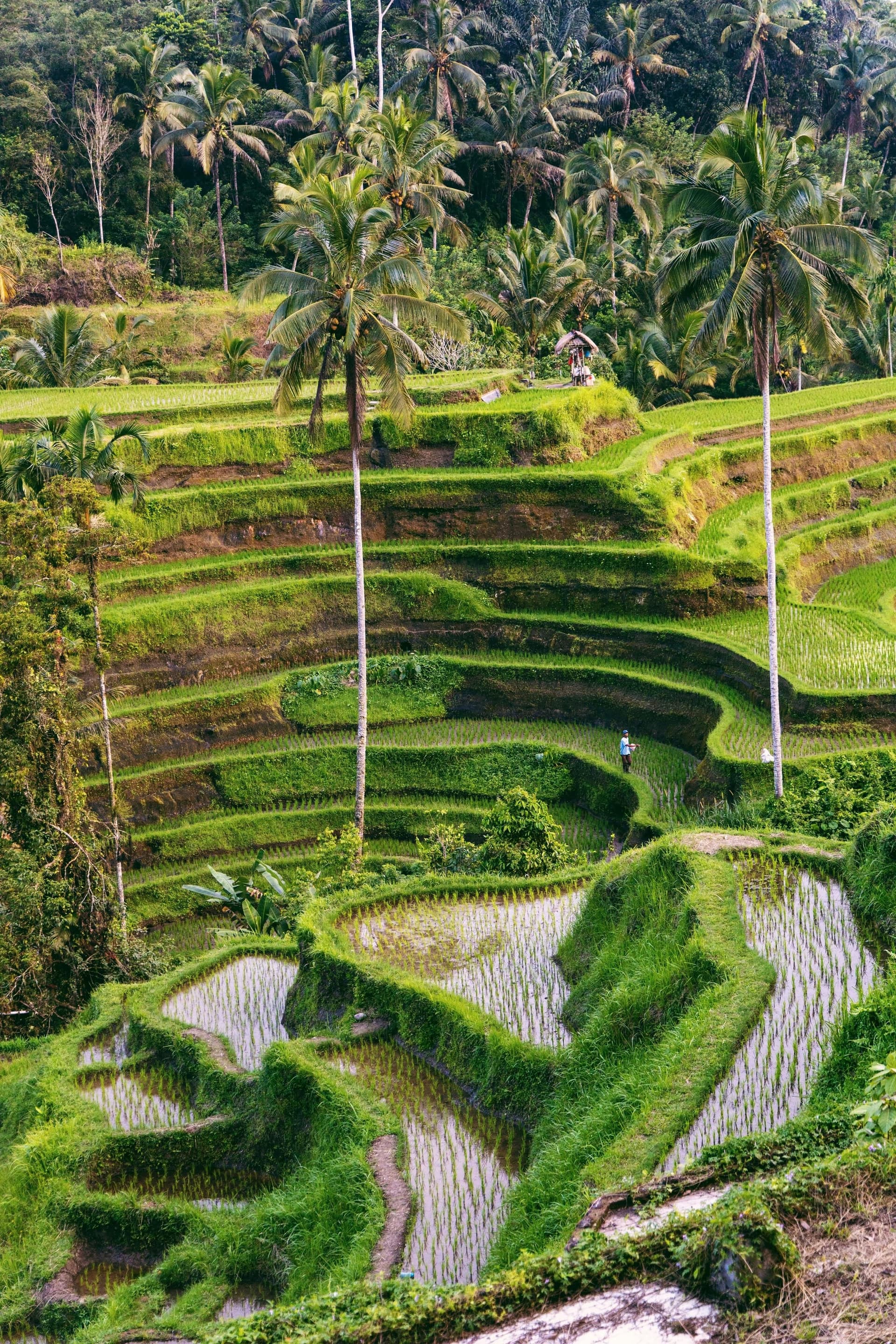
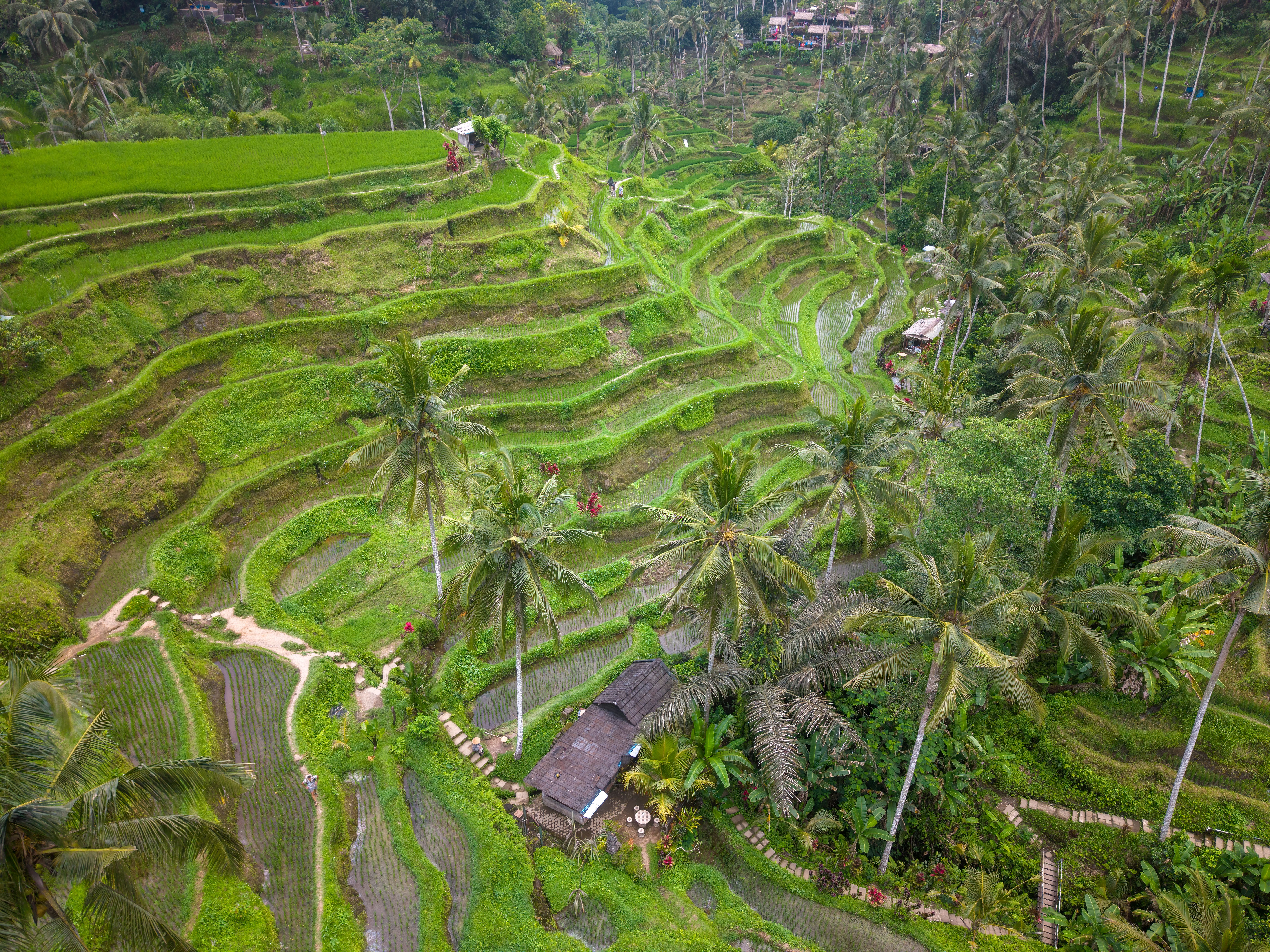
On the ground, you arrive at the ridge along Jl. Raya Tegallalang and look down into a horseshoe-shaped valley of stepped paddies, palm fringes, and irrigation channels. Some terraces are flooded mirrors, others vivid green, others golden-brown if a section has just been harvested — the paddies don't all cycle together. Working farmers in cone-shaped straw hats are usually in the valley by mid-morning, and that's part of the experience, not a staged element for visitors.
How to get to Tegallalang Rice Terraces from Ubud and South Bali
From central Ubud, Tegallalang Rice Terraces are a 20-minute, 10 km drive north along Jl. Raya Tegallalang. From Seminyak or Canggu, allow 1.5–2 hours each way; from Ngurah Rai International Airport, around 1 hour 35 minutes in light traffic. The road is well paved but narrows where it climbs through Tegallalang village, and parking is along the ridge in small lots run by the entry-point operators.
From central Ubud
For most visitors basing themselves in Ubud, the practical options break down by cost and convenience:
- Private driver — IDR 400,000–600,000 (USD 25–40) for a half-day. The easiest option if you're combining Tegallalang with one or two other Ubud sights.
- Scooter rental — IDR 70,000–100,000 (USD 4.50–6.50) per day. Viable if you've ridden in Bali before and feel comfortable with the climbing road and central Ubud traffic.
- Grab or Gojek ride-hailing — IDR 80,000–150,000 (USD 5–10) one way. Works going up, but app coverage at the terraces is patchy when it's time to leave.
- Day-tour pickup — typically IDR 300,000–800,000 (USD 20–55) per person, depending on inclusions.
From South Bali (Seminyak, Canggu, Kuta)
From the beach areas, a half-day visit isn't really viable — you'd spend most of the day in the car. If you're staying in Seminyak, Canggu, or Sanur and want to see Tegallalang, treat it as a full-day Ubud loop rather than a quick stop. A private driver from South Bali for a 10-hour Ubud day typically runs IDR 700,000–900,000 (USD 45–60). On the way back, build in time for traffic — the southbound drive from Ubud routinely takes 90 minutes or more between 4 PM and 7 PM.
Parking and the multiple entry points
Tegallalang isn't a single ticketed attraction. The valley is divided among several private operators along Jl. Raya Tegallalang, each with its own gate, parking lot, and access path. The three you'll see signposted are:
- UMA Ceking Terrace — the default pin if you search "Tegallalang Rice Terrace" on Google Maps; ridge-side viewpoint and access to the valley path, entry IDR 15,000–25,000.
- Abian Desa Rice Terrace — a privately managed section with the most concentrated swing setups, zip-line, and sky-bike; entry IDR 25,000 covers walking access.
- Aloha Ubud and other café-style entries — restaurants with ridge-view terraces; access is via the cover charge for a drink or meal rather than a separate ticket.
Parking is IDR 5,000 for a scooter and IDR 10,000 for a car at most lots, paid in cash to an attendant on arrival.
Entrance fees, donation booths, and what you'll actually pay
The Tegallalang Rice Terraces entrance fee is IDR 15,000–25,000 (USD 1–1.50) per person at the main ridge ticket point, plus IDR 5,000–10,000 for parking and small donations of IDR 10,000–20,000 at additional path checkpoints inside the terraces. A two-hour visit without swings typically lands between IDR 40,000 and IDR 80,000 (USD 2.50–5) total per person. Add a swing experience and your total jumps to IDR 200,000–450,000 (USD 13–30) per person.
The headline fee vs. what you actually spend
The IDR 15,000–25,000 ridge ticket is real, but it's only the first of several small payments. Inside the valley, you cross small bridges and footpaths maintained by individual farming families, and most have a donation booth at the entrance asking for IDR 10,000–20,000. These are legitimate — they fund path and bridge repair, and the work shows.
Some travellers leave with the impression they were nickel-and-dimed; that's a fair reading if you took every booth in series, but most paths share the same landowner and you'll typically pay one or two donations on a full valley loop, not eight.
How the donation system works (and a respectful script for handling it)
The booths are usually staffed by a farmer or a younger family member, with a wooden box and a hand-written sign. The expected ask is small. If you're not planning to walk further into that section, a polite "terima kasih, tidak hari ini" (thank you, not today) and a smile is fine. If you do plan to walk through, drop the small note in the box.
Avoid handing cash directly to a person where you can — it changes the dynamic from heritage maintenance to street solicitation. Carry a stack of IDR 10,000 and IDR 20,000 notes; trying to break a IDR 100,000 at a path booth is awkward for everyone involved.
Which entry point gives you the best access for the price
- UMA Ceking is the most photographed viewpoint, the default for tour buses, and the busiest from 9:30 AM onward. Best if your goal is the classic shot and you arrive early.
- Abian Desa concentrates the swings and photo platforms in one paid zone, so if Instagram is the priority, the IDR 25,000 entry plus a single swing package is the cleanest way to do it.
- Upper-ridge sections past UMA Ceking tend to have a quieter walk with fewer donation booths and a more agricultural feel — worth the extra five minutes on foot.
Quick cost checklist for a 2-hour visit (no swings)
- Entry ticket: IDR 15,000–25,000
- Parking: IDR 5,000 (scooter) or IDR 10,000 (car)
- Path donations: IDR 10,000–30,000 (1–2 booths)
- Coconut or coffee at a ridge café: IDR 35,000–60,000
- Approximate total: IDR 65,000–125,000 (USD 4.20–8) per person







The best time to visit Tegallalang Rice Terraces
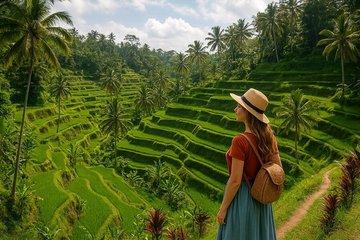
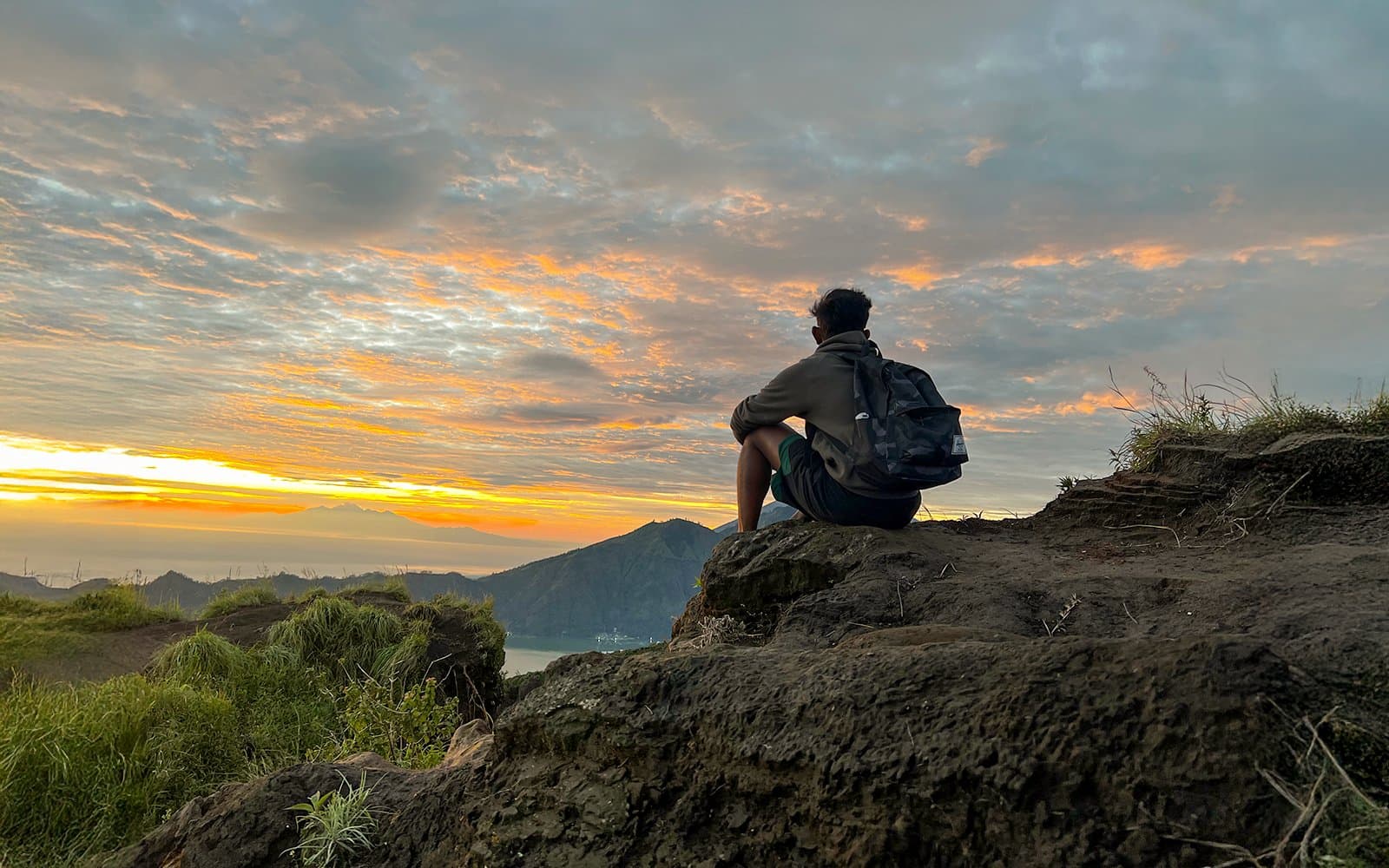
The best time to visit Tegallalang Rice Terraces is between 6:00 and 8:30 AM — cool air, low crowds, and the soft side-light that defines the famous photos. By 10:30 AM, tour buses fill the ridge and the valley turns hot, humid, and busy. Sunset is the second-best window but loses the morning's atmosphere. Dry season (May to September) gives the most consistent green; wet season (October to April) brings vivid colour and slippery paths.
Time of day — why 6:00–8:30 AM beats sunset for most visitors
The morning side-light hits the terraces from the east and rakes across the steps, picking out the texture of each level. Sunrise itself is often hazy in central Bali, so don't fixate on the moment the sun crests the horizon — the better light comes 45 minutes after, between roughly 6:30 and 8:30 AM.
Sunset technically lights the terraces too, but the valley is west-facing and most of the warm light by then falls on the opposite ridge rather than on the steps you've come to see. The morning also gives you the chance to walk the valley before it heats up; by 11 AM the valley floor sits around 30°C with little shade.
Season by season
- May to September (dry season) — the most consistent green and the most reliable light. Paths stay dry, walking is easier, and visibility is good. This is also peak tourist season, so the 6 AM arrival window matters more.
- October to April (wet season) — the terraces are at their most vivid green, especially in February and March, but afternoon rain is common and the valley paths get slippery. Grip-soled shoes are essential, and you may need to time your walk around showers.
- The planting cycle — rice grows year-round at Tegallalang, but individual paddies are on different cycles. You will always see a mix: some flooded mirrors, some tall green, some recently harvested. The most consistent all-green stretch is between the second planting and the second harvest, roughly March to early July.
What to wear and bring
- Lightweight clothing — temperatures sit between 22°C at dawn and 30°C by midday
- Shoes with real grip — the valley paths are clay and stone, and slippery when wet
- Small cash notes (IDR 10,000 and 20,000) for entry and path donations
- Sun protection — there is little shade on the valley descent
- Water — there are warungs at the top but few on the path itself
- No sarong needed — Tegallalang is not a temple, so normal travel clothing is fine
What to actually do at Tegallalang — viewpoint, valley walk, swings, cafés
The classic Tegallalang experience splits into three layers. The ridge-side viewpoint walk takes 15–30 minutes and is the minimum to feel like you've been; the valley trek through the terraces takes 60–90 minutes and includes around 1,000 ft of elevation gain on the return climb; the swings and photo platforms are optional add-ons run by private operators along the ridge.
The ridge-side viewpoint loop (free with entry, 15–30 mins)
Most visitors who arrive on a tour bus only see this section. The ridge path runs above the valley with the best panoramic angles, several roadside cafés, and a couple of marked photo spots. If you've got an hour total at Tegallalang, this is what you do.
The view from the road itself is the famous one; you don't actually need to descend to get the postcard shot. Walk 200–300 metres along the ridge from the main UMA Ceking entry and you'll find quieter angles than the photo crowd at the gate.
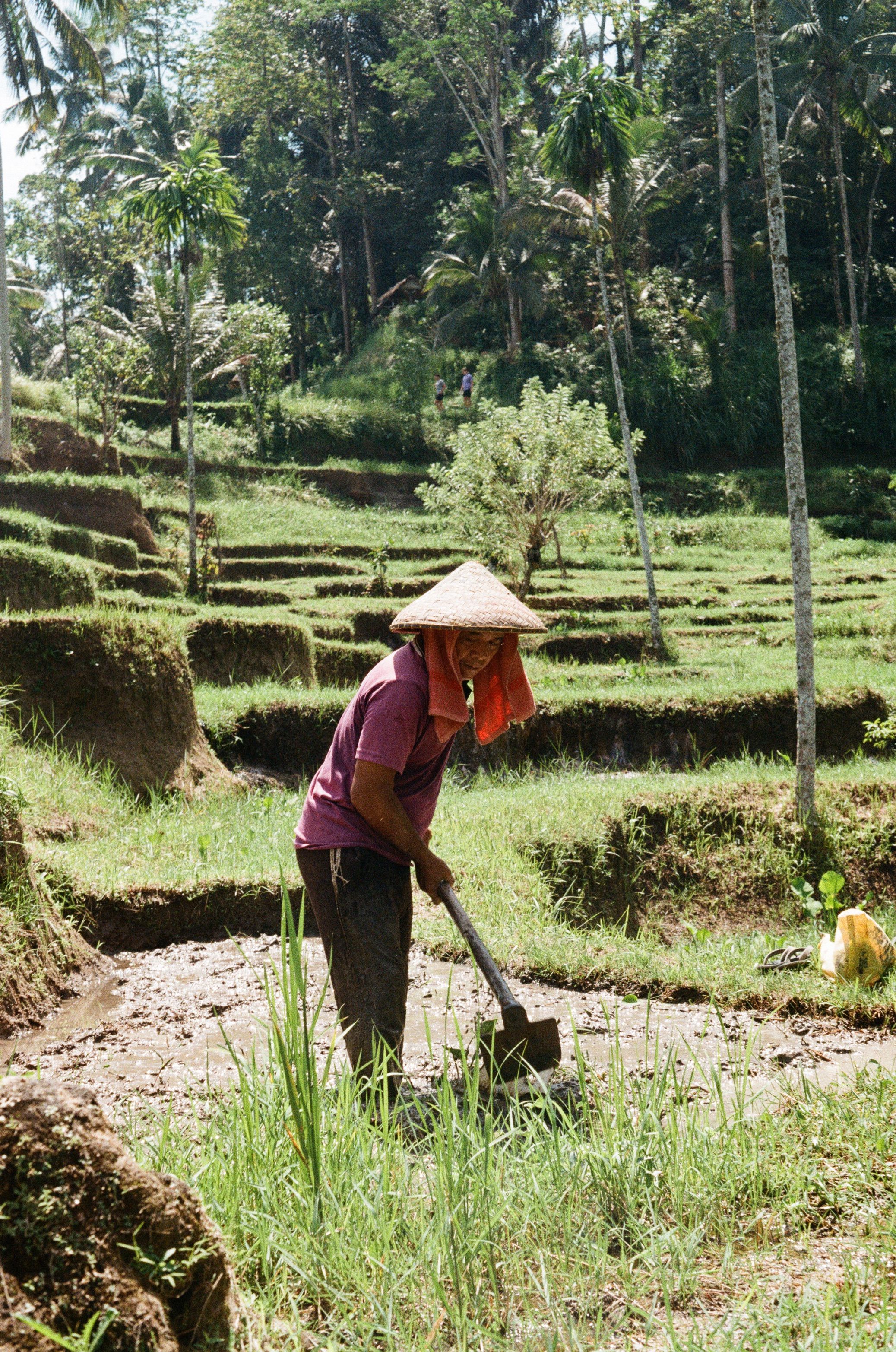
The full valley trek (60–90 mins)
The descent path drops from the ridge into the valley along stepped earth-and-stone paths, sometimes flanked by farmer-maintained railings, sometimes not. You cross irrigation channels and a couple of small wooden bridges, then climb the opposite side and loop back along the upper terrace. The return climb is the hard part — around 1,000 ft of vertical, sometimes on uneven stairs, often in heat by mid-morning.
It's the right call for anyone with average mobility who wants to actually feel the place, but skip the full descent if you have knee issues, if you're in flat sandals, or if it's been raining heavily in the last hour. The ridge view alone is enough on those days.
The Bali Swings — operators, prices, and whether they're worth it
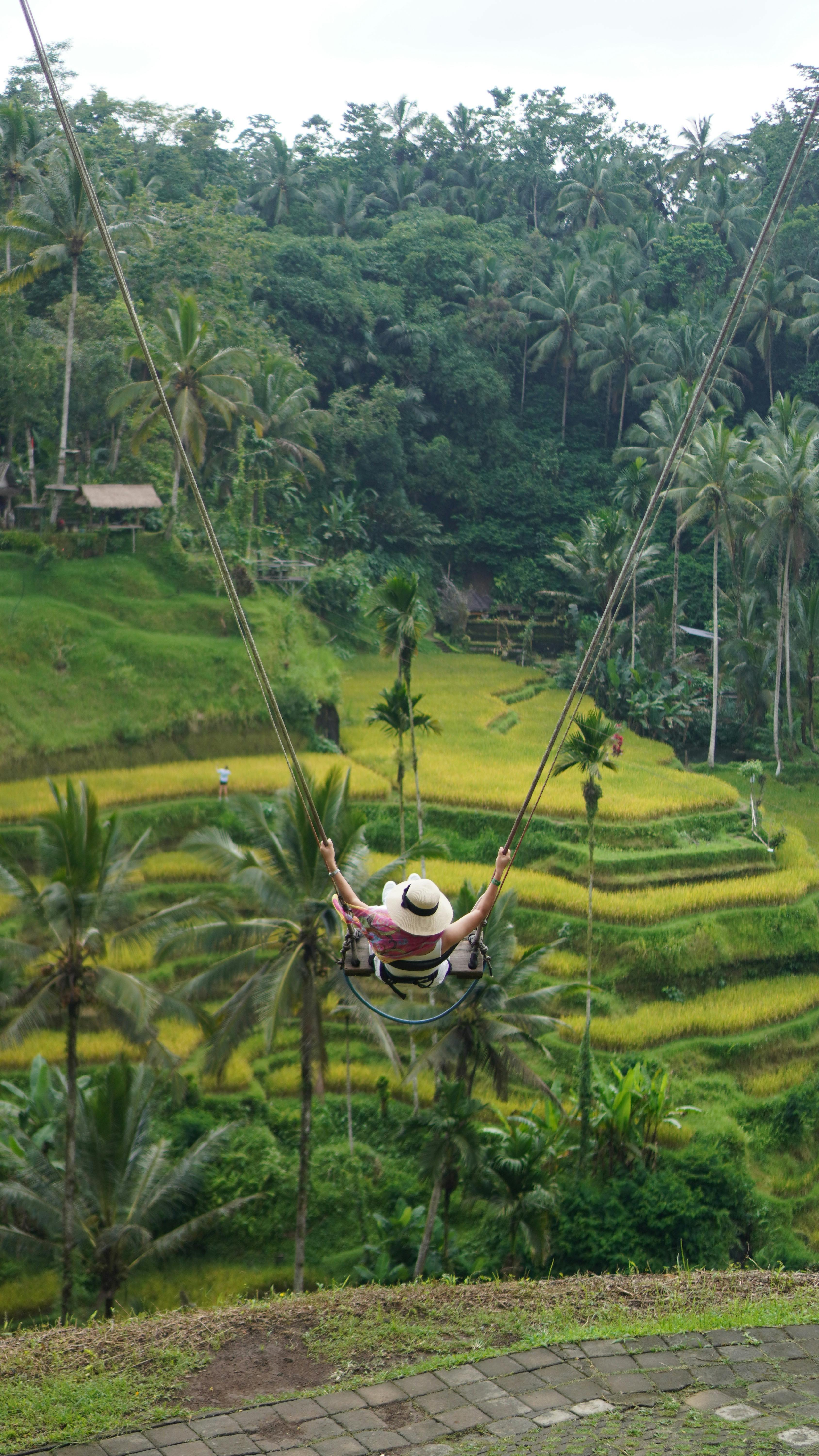
The swings at Tegallalang are run by private operators along the ridge, not by the rice-terrace owners themselves. Most are harness-and-rope setups that arc you out over the valley for a photo, with platforms and "bird's nest" props for additional shots. Prices vary by package:
- Single swing — IDR 150,000–250,000 (USD 10–17), one swing position, 5–10 minutes
- Standard package — IDR 250,000–350,000 (USD 17–22), 2–3 swings and a nest or platform
- Full package — IDR 400,000+ (USD 25+), all swings, multiple props, often includes a soft drink
When the swings are worth IDR 350k — and when they aren't
- Worth it if: you came specifically for the photos; you're with a partner or friends who'll share the cost; this is your one Bali Instagram moment; or you're travelling with kids who'll love the swing itself.
- Not ideal if: you're treating Tegallalang as a UNESCO heritage stop; you have limited time and would rather walk the valley; or you've already done a Bali swing elsewhere on the trip. The view from the ridge is much the same as the view from the swing seat — what you're paying for is the photo of you out over the valley.
Cafés and warungs along the ridge
The roadside cafés sell ridge-view tables more than they sell food. Coffee runs IDR 35,000–60,000, juices similar, a basic nasi goreng IDR 60,000–90,000. The price-to-quality ratio is poor by Ubud standards, but you're paying for the view. The better warungs are 2–3 km back toward Ubud on the same road, away from the photo crowd.
Combining Tegallalang with the rest of Ubud — half-day and full-day plans
Most visitors pair Tegallalang with two or three nearby Ubud sights in a single half-day or full-day loop. The most natural combination is Tegallalang + Tirta Empul + Gunung Kawi, which keeps you inside the Pekerisan Watershed UNESCO zone and tells one connected story about water, ritual, and rice. For a fuller cultural day, add Sacred Monkey Forest and dinner in Ubud town.
The classic Ubud half-day combo (Tegallalang + Tirta Empul)
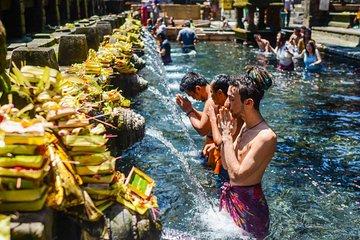
This is the most common and the most efficient pairing. Leave Ubud at 6:00 AM, arrive Tegallalang by 6:30, walk the ridge or descend the valley until 8:30–9:00, then drive 20 minutes north to Tirta Empul Temple. Tirta Empul is the holy spring temple in the same UNESCO sub-zone; visitors can observe the melukat purification ritual at the water spouts, or participate respectfully, with a sarong and guidance from a temple attendant.
You'll be back in Ubud for lunch by noon. Total cost for two people with a private driver: roughly IDR 550,000–750,000 (USD 35–50) for the half-day, including entry to both sites.
The full-day Ubud cultural loop
For a longer day that connects the heritage to the rest of Ubud, the natural sequence is:
- 06:30 — Tegallalang Rice Terraces (ridge view plus a short valley walk)
- 08:30 — Tirta Empul Temple (entry IDR 75,000)
- 10:30 — Gunung Kawi (the cliff-carved royal shrines, 20 mins from Tirta Empul, entry IDR 50,000, around 270 steps down and back up)
- 12:30 — Lunch in central Ubud
- 14:30 — Sacred Monkey Forest Sanctuary (entry IDR 80,000 weekdays / IDR 100,000 weekends)
- 17:00 — Sunset drink and a walk through Ubud town
For more pairings beyond this loop, see the top 20 Bali experiences we've ranked for first-time visitors — Tegallalang sits comfortably inside that list, and several of the others fit neatly onto the same day.
For a quieter rice-terrace alternative — Jatiluwih and Sidemen
Tegallalang is the most photographed rice terrace in Bali because it's the easiest to reach from Ubud. If your priority is the rice landscape itself rather than the iconic photo, two alternatives are worth knowing about:
- Jatiluwih — larger, quieter, more agricultural, also UNESCO-listed (in the Catur Angga Batukaru sub-zone); about 90 minutes from Ubud and a fraction of the visitor numbers.
- Sidemen Valley — east Bali, a working rice landscape with very few tourists, ideal if you have a half-day to drive there from Ubud and prefer a quiet morning to a busy viewpoint.
Etiquette and respect on the terraces
- Stay on the paths — trampling the paddies damages the harvest and the farmer's income for that cycle.
- Ask before photographing farmers up close — a smile and a small note (IDR 10,000–20,000) is the appropriate exchange if you want a posed shot.
- Don't fly drones over working paddies or near temples without explicit permission from the operator.
- Carry your rubbish out — there are few bins in the valley, and what you leave stays.
- Support the small warungs and stalls rather than only the chain cafés on the ridge — the money lands more directly with the farming community.
If you'd rather not piece the logistics together yourself, Travjoy's Bali experiences are vetted by local experts so you can pick a half-day driver or a full-day Ubud cultural loop and know the operator and timing are sound, without trawling through forum threads.
Plan your half-day at Tegallalang
The Tegallalang Rice Terraces reward an early arrival and a willingness to slow down. The 6 AM ridge is a different place from the 11 AM ridge, the valley walk gives you the heritage that the viewpoint alone can't, and pairing the stop with Tirta Empul or Gunung Kawi turns a quick photo into a half-day that actually means something. Decide your priority before you go — heritage, photography, or both — and choose the entry point and timing to match. When you're ready to slot Tegallalang into a wider trip, plan your Bali trip on Travjoy and pull together the rice terraces, the temples, and the rest of the island in one place.



.svg&w=1920&q=75)