



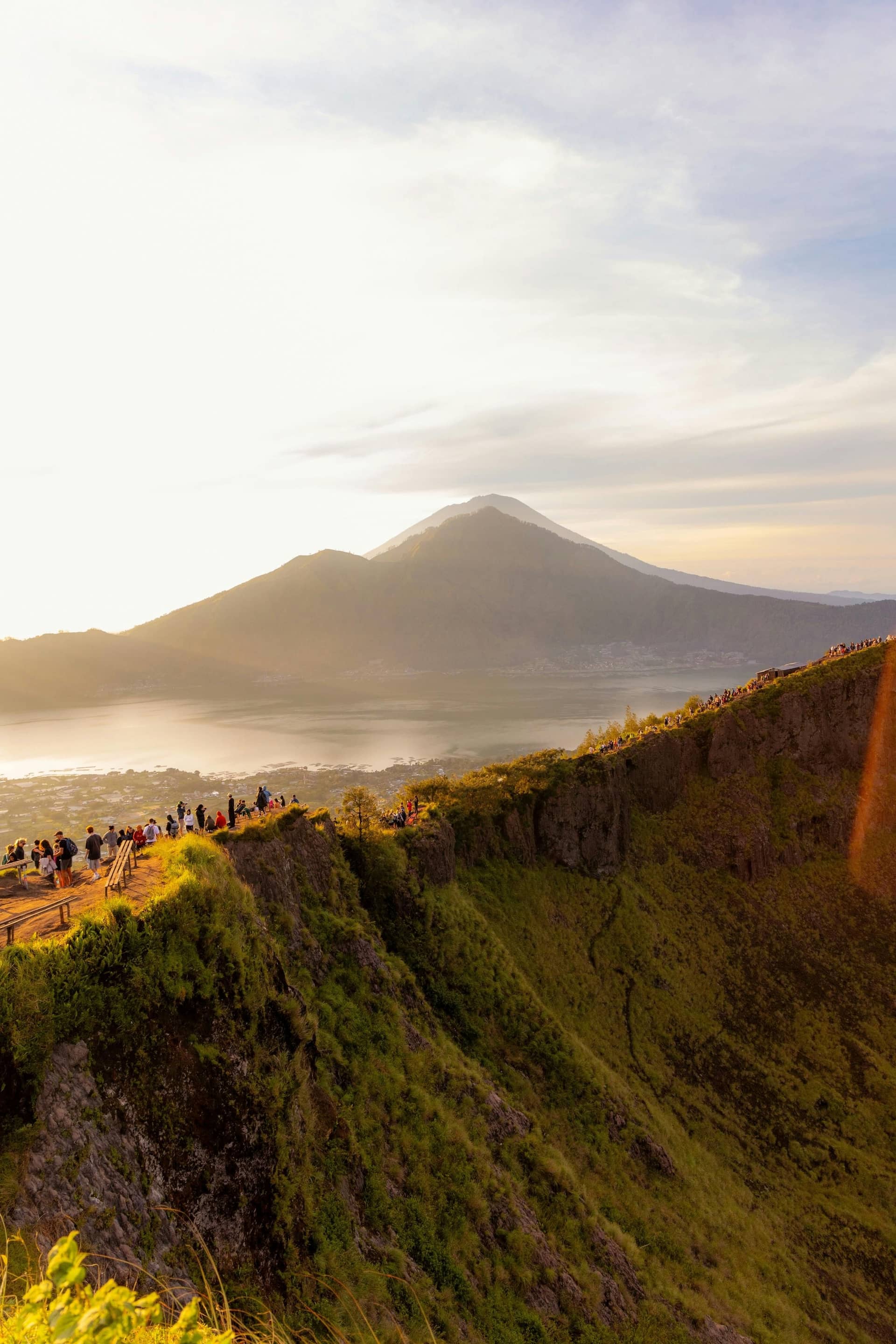
Mount Batur Sunrise Trek: The Complete Guide for 2026
8 min read
Pratima Alvares
Author
Leisure Travel Expert Ex- SOTC & Cox & Kings
SHARE BLOG
TABLE OF CONTENTS
Key Takeaways
- The Mount Batur sunrise trek is a 2-hour pre-dawn hike up an active volcano in Bali's northeast highlands, summiting at 1,717 metres in time for sunrise over Mount Agung and Lake Batur.
- Group treks cost IDR 600,000–800,000 (~USD 38–50) per person in 2026; private treks cost IDR 1,000,000–1,500,000 (~USD 60–95) for one to two people, and a registered PPPGB local guide is mandatory.
- Pickup is between 1:00 AM and 2:30 AM depending on where you stay; expect to be back at your hotel between 10:00 AM and 12:00 PM.
- The dry season (April to October) gives the most reliable sunrise views, but June to September brings 600+ climbers a day to the summit.
- If trekking in the dark sounds difficult, a 4WD Jeep sunrise tour reaches a similar viewpoint without the climb — the same view, half the effort, similar price.
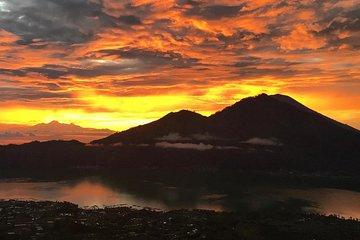
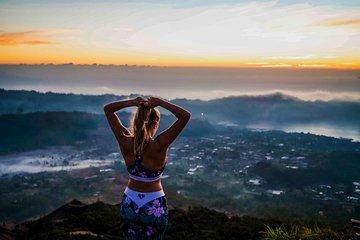
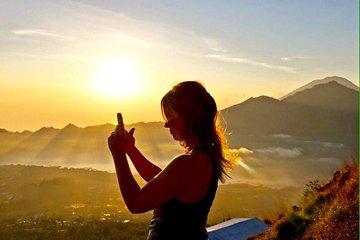
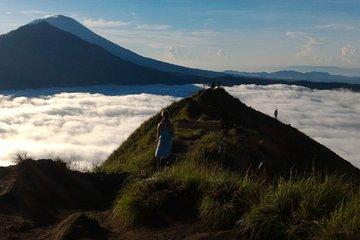
The Mount Batur sunrise trek is a roughly 2-hour pre-dawn hike from Toya Bungkah village to the 1,717-metre summit of an active volcano in Bali's Kintamani region. In 2026, group treks cost IDR 600,000–800,000 (~USD 38–50) per person and private treks cost IDR 1,000,000–1,500,000 (~USD 60–95) for one to two people, with a registered local guide included by law. The summit pays off with sunrise over Mount Agung, Lake Batur, and on clear days, Mount Rinjani on Lombok.
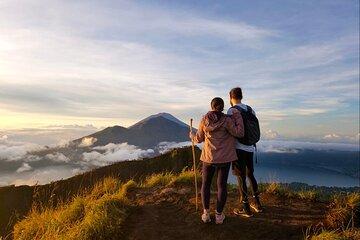
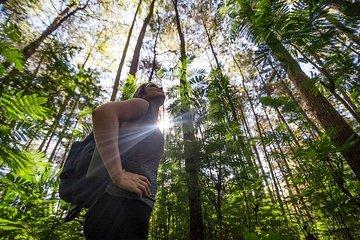
It is 2:15 AM and the lights of Ubud are an hour behind you. The minivan winds up through Kintamani's coffee terraces, drops you at a roadside café in Toya Bungkah, and a guide hands you a headlamp and a flask of coffee. By 3:30 AM you are walking — single-file, head torches on — up a trail that rises 700 metres in around two hours.
The Mount Batur sunrise trek is one of Bali's most-booked experiences for a reason: it is the rare hike that pays off cleanly, with summit views over an active volcano and a breakfast of eggs cooked in volcanic steam. It is also more physical than most travel content lets on, and the operator you choose affects pace, comfort, and whether you actually beat the crowds to the rim.
This guide covers what the trek actually costs in 2026, how the main tour types compare, what to expect on the mountain, and which option fits which kind of traveller. By the end, you'll know whether the hike is for you — and exactly which version to book.
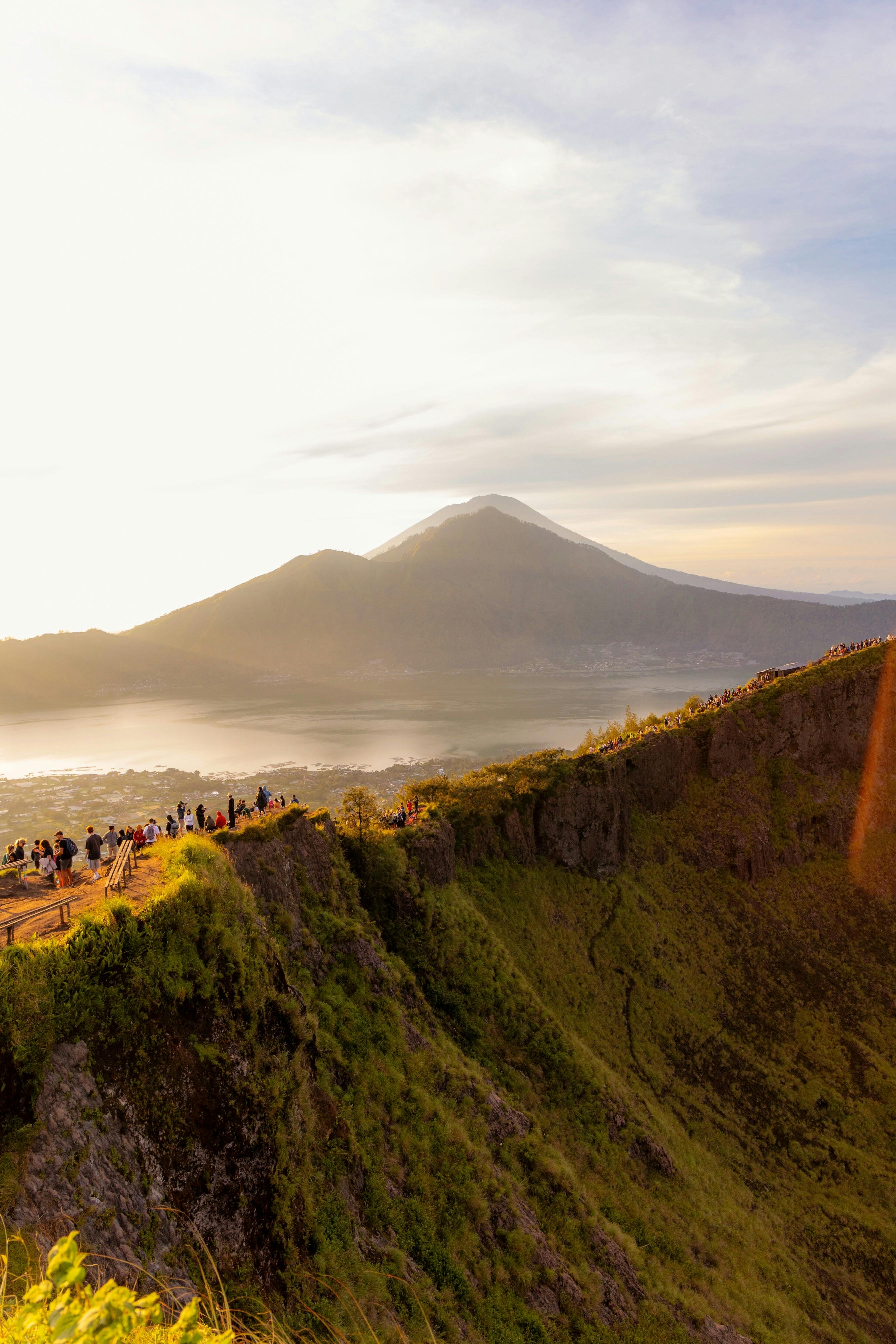
Is the Mount Batur sunrise trek worth it?
For most travellers in reasonable physical shape, yes. The summit view is one of the few Bali experiences that consistently delivers what the photos suggest, and the climb itself is short enough — around two hours up — that you finish before the rest of the island has had breakfast. The trade-off is the wake-up time and the crowds, both of which are real.
Worth it if
- You can comfortably climb stairs for two hours and don't mind a 1:30 AM start.
- You want to say you've hiked an active UNESCO Global Geopark volcano with a payoff view at the top, not just a viewpoint.
- You're staying in or near Ubud — pickup and return is roughly 8 hours total, which leaves the rest of the day for a pool and a long lunch.
- You want the cooking-eggs-in-volcanic-steam summit breakfast moment, which most operators include and which actually happens at the rim.
Not ideal if
- You have knee issues or back trouble — the descent is on loose volcanic gravel and is harder on the joints than the way up.
- You're travelling with kids under 10 or grandparents who would struggle on a 700-metre uphill in the dark. The Jeep tour, covered below, is a better fit.
- You're visiting in December, January, or February — peak rainy season frequently kills sunrise visibility, and the trail gets slippery.
- You want a quiet, off-the-beaten-path experience. Peak-season mornings see 600+ climbers at the summit, and the standard route is a steady single-file procession.
Reality check: it's not a remote wilderness experience
- The standard route from Toya Bungkah carries 300–600 hikers on a typical dry-season morning. You will queue at narrow sections.
- The summit itself is a flat-ish ridge with several food stalls and a few resident monkeys looking for snacks. It is not a pristine viewpoint.
- If silence and solitude matter more than the view, the Mount Agung trek is a far harder, far quieter alternative — but plan a full day and a higher fitness bar for it.
Mount Batur sunrise trek options: hike, jeep, and the variants in between
There are four main ways to do the Mount Batur sunrise trek, and the right one depends on fitness, time, and how much you mind the dark walk up. The classic hike is the most popular, but the Jeep tour has grown fast for travellers who want the view without the climb. The table below sets out the trade-offs.
| Tour Type | Duration | Price Range (per person) | Typically Includes | Best For |
|---|---|---|---|---|
| Group sunrise hike | 8–10 hrs total; 2 hrs up | IDR 600,000–800,000 / USD 38–50 | Mount Batur guide, headlamp, summit breakfast, hotel pickup | First-timers, solo travellers, budget-conscious hikers |
| Private sunrise hike | 8–10 hrs total; 2 hrs up | IDR 1,000,000–1,500,000 / USD 60–95 (1–2 people) | Dedicated guide, flexible pace, off-route options, breakfast | Couples, photographers, slower pace, anyone wanting to skip crowds |
| 4WD Jeep sunrise tour | 7–9 hrs total; no real walking | IDR 700,000–1,200,000 / USD 45–75 | Jeep transfer to viewpoint, breakfast, black lava field stop, hot spring add-on | Families with kids, seniors, anyone with knee or back issues |
| Hike + hot spring combo | 10–12 hrs total | IDR 850,000–1,300,000 / USD 55–85 | All hike inclusions plus Toya Bungkah hot springs and lakeside lunch | Travellers wanting a full Kintamani day, sore-muscle recovery |
| Sunset hike (less common) | 5–7 hrs total; afternoon start | IDR 700,000–1,000,000 / USD 45–65 | Afternoon hike, sunset summit, descent by torchlight | Late risers, rainy-season visitors hoping for clearer afternoon skies |
The classic group sunrise hike is what most people book and what 90% of online photos show. The Jeep tour is the quietly smart choice for anyone who wants the view without the 1,000+ steps; Lonely Planet notes that volcanic 4WD viewpoints have become a popular Kintamani add-on for travellers prioritising comfort over the climb.
Short route vs long route
- Short route: 7 km round trip, ~500 m elevation gain, starts at the foot of the volcano. This is what 95% of tours use.
- Long route: 11 km round trip, ~700 m elevation gain, starts higher up but loops more of the crater rim. Available on request from most private operators for an extra IDR 200,000–400,000.
What the Mount Batur sunrise trek costs in 2026
The honest range for a Mount Batur sunrise trek with hotel pickup, breakfast, and a registered guide is IDR 600,000–1,500,000 (USD 38–95) per person, depending on whether you go group or private and where you're staying. Pricing in 2026 has shifted upward by roughly 10–15% over 2024 rates, partly because the PPPGB guides' association raised its mandatory minimum fees. Here's how the costs break down.
What's included in a standard sunrise hike
- Hotel pickup and drop-off (most operators include Ubud, Sanur, Seminyak, Canggu; Uluwatu and Nusa Dua usually cost extra)
- Registered PPPGB guide (mandatory — you cannot legally hike without one)
- Headlamp and trekking pole on request
- Mount Batur entrance ticket (IDR 150,000–200,000 if bought separately)
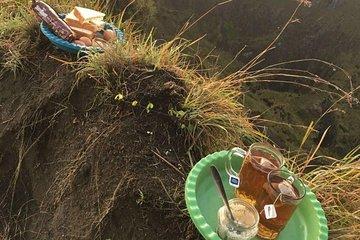
- Summit breakfast: boiled eggs cooked in volcanic steam, banana, bread, hot tea or coffee
- Bottled water
What costs extra
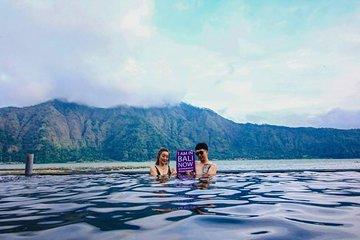
- Toya Bungkah natural hot springs entry: IDR 150,000–350,000 per person
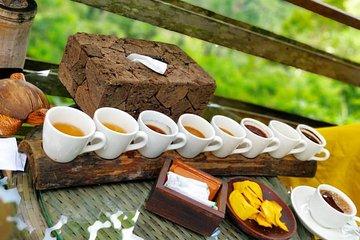
- Coffee plantation stop with luwak coffee tasting: usually free entry, IDR 50,000–80,000 if you buy coffee
- Pickup from Uluwatu or further south: IDR 200,000–400,000 surcharge
- Long-route upgrade (11 km loop): IDR 200,000–400,000
- Photography service or drone footage: IDR 300,000–700,000
- Guide tip: IDR 50,000–100,000 per person is customary and not included
How pickup location changes the price
- From Ubud: IDR 200,000–350,000 return transport (the cheapest base)
- From Seminyak, Canggu, or Sanur: IDR 400,000–600,000 return transport
- From Uluwatu or Nusa Dua: IDR 500,000–700,000 return transport, plus a 2.5-hour drive each way
Reality check on "all-inclusive" pricing
- The cheapest tours advertised at IDR 350,000–450,000 usually quote a price excluding the entrance ticket and pickup fuel surcharge — read the fine print.
- Prices on aggregator sites are often quoted at minimum group sizes (4+ people). A solo traveller may be re-quoted at private-tour rates.
- A 10–15% PPPGB price floor was introduced in early 2026 — anyone offering significantly below IDR 600,000 for a group trek with full inclusions is likely cutting corners on guide certification or transport.

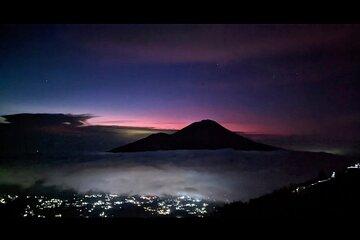



What to expect: from pickup to summit and back
The Mount Batur experience is a tightly choreographed eight-to-ten-hour mission, not a leisurely hike. Operators run on a schedule because the sun comes up at 6:00 AM regardless of how slowly your group walks. Here's what a standard Mount Batur sunrise trek looks like from pickup to drop-off, with the friction points most blogs gloss over.

The timeline
- 1:30–2:30 AM — Hotel pickup. Your driver shows up exactly on time; sleep on the way up.
- 3:15 AM — Arrive at Toya Bungkah village. Brief safety talk, headlamp distribution, light pre-trek snack and coffee at a roadside warung.
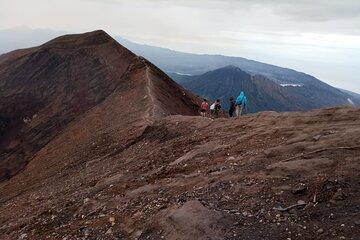
- 3:30–4:00 AM — Trek begins. The first 45 minutes are gentle. The next 75 minutes are steeper, on loose volcanic gravel.
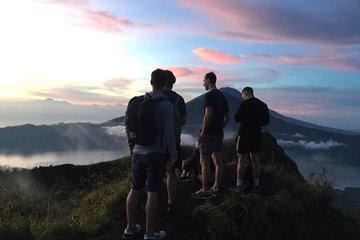
- 5:30–5:45 AM — Summit reached. Find a rock, layer up, wait for sunrise.
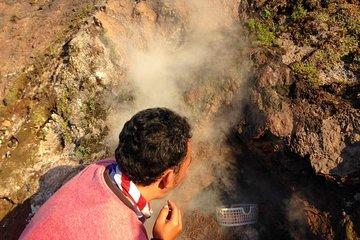
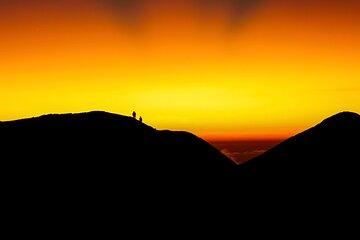
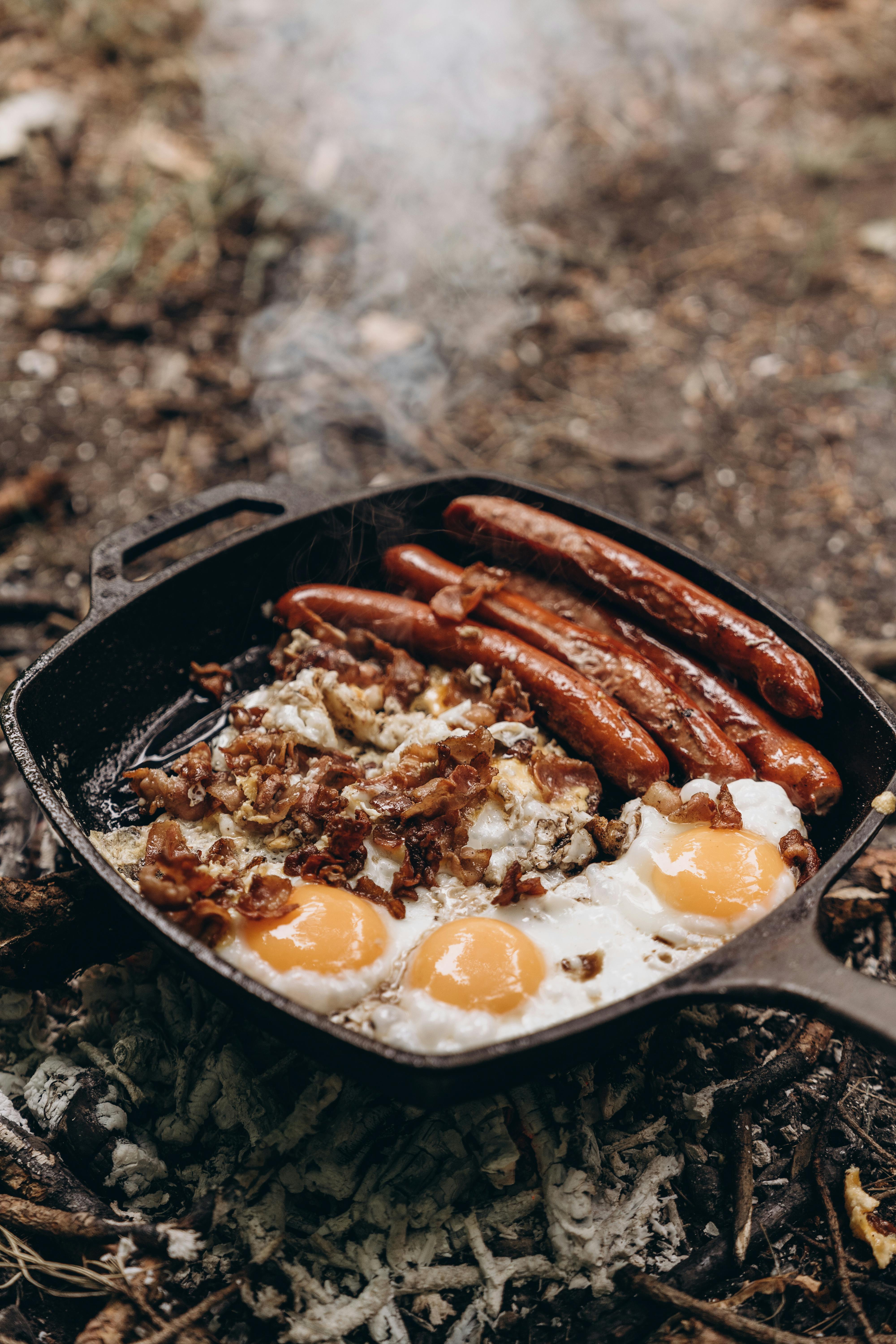
- 6:00–6:30 AM — Sun rises over Mount Agung; your guide cooks eggs in a volcanic steam vent.
- 7:00–7:30 AM — Begin descent. This is the harder part — gravel, knees, sun in your eyes.
- 9:00 AM — Back at base. Optional coffee plantation or hot spring stop.
- 10:00–11:00 AM — Hotel drop-off in Ubud; closer to noon if heading to south Bali.
Terrain and difficulty
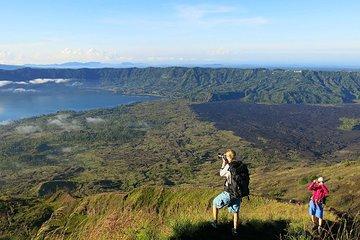
The hike is rated moderate, not technical. There are no ropes, no scrambling, and no exposure to drops. What it does have is a steady incline on volcanic scree, steep enough that you'll be using your hands on a few sections to push off rocks. The trail is relentlessly uphill but never dangerous — a fair summary for the ascent. The descent is where most travellers struggle, because gravel-on-incline is unforgiving on knees.
What it's like at the top
- Summit temperature: 10–15°C / 50–59°F before sunrise, warming quickly after. A light fleece or hoodie is enough.
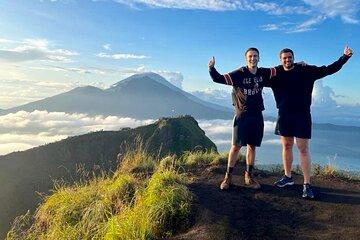
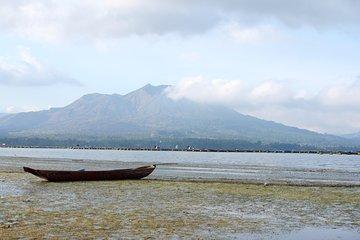
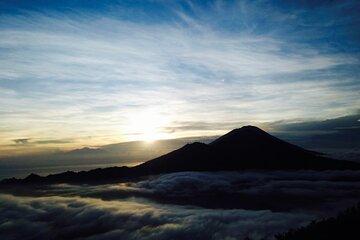
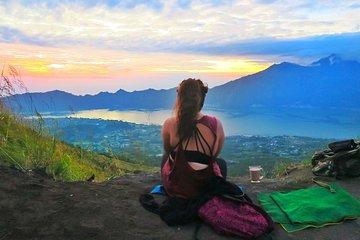
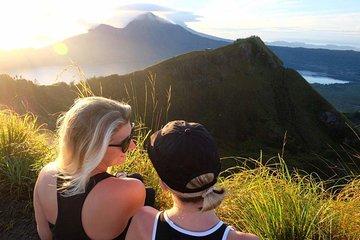
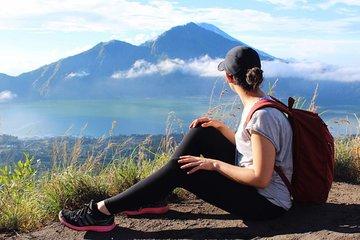
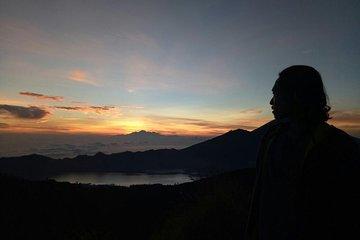
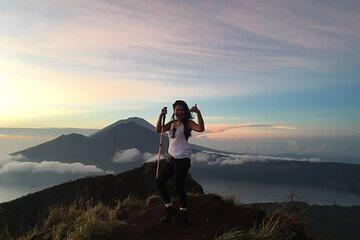
- The view: Mount Agung directly east, Lake Batur 600 metres below, and on clear days, Mount Rinjani on Lombok 100 km east.
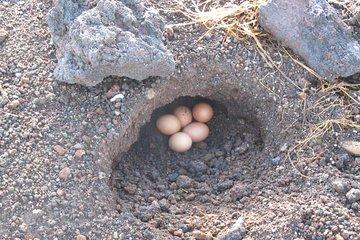
- The breakfast: eggs cooked in volcanic steam vents at the rim — this actually happens and earns the photo.
- The crowds: 300–600 people on a peak-season morning. Move 50 metres along the rim to find quieter spots.
- The monkeys: small, cheeky, and more interested in your bananas than you are. Hold onto your snack bag.
What to pack
- Light fleece or hoodie (it gets cold at the top)
- Long trousers or leggings — shorts are fine for the ascent but cold at the rim
- Closed-toe trainers or hiking shoes with grip — never sandals or flip flops
- Headlamp (provided, but bring a spare if you have one)
- Spare socks for the summit — your trek-up pair will be sweaty
- 500 ml water minimum (operators provide this, but bring extra if you drink fast)
- Cash for tips, hot springs, and a coffee on the way down
- A small backpack — rucksacks larger than 20L are awkward on the steeper sections
Best time to hike Mount Batur
The dry season from April to October gives the most reliable sunrise visibility for the Mount Batur sunrise trek, with June through September offering the clearest skies and lowest rainfall. The catch: those four months are also peak season, with 600+ climbers a day on the standard route. The shoulder months — April, May, October, and early November — are the sweet spot for visibility paired with smaller groups.
Month-by-month conditions
- April–May: Tail end of the rainy season; mornings often clear, fewer crowds, lush green landscape. Best balance for most travellers.
- June–August: Peak dry season. Cold mornings (12–16°C summit), guaranteed visibility, but 500–600 hikers per day.
- September–October: Still mostly dry, fewer crowds than July–August, slightly warmer summit temps.
- November–December: Wet season starts. Mornings may still be clear, but afternoon showers and fog become routine. Trail gets slippery.
- January–February: Peak rainy season. Many operators advise against trekking due to limited visibility and unsafe trail conditions. A sunset hike on a clear afternoon is a better bet.
- March: Wet but tapering. Last week of March often surprises with clear mornings and almost no crowds.
Time of day and crowd avoidance
Sunrise treks dominate because Bali heats up fast — by 9:00 AM the unshaded volcanic slope becomes uncomfortable. If you specifically want fewer people, consider these options.
- Book a private trek with a guide who uses an alternative route — most certified operators have one or two off-the-main-track options.
- Hike on a Tuesday, Wednesday, or Thursday. Weekends and Mondays draw the largest groups.
- Consider a sunset trek (afternoon start, summit around 5:00 PM, descent by torchlight) — usually one-tenth the crowd size and a reliable rainy-season alternative.
Reality check: the sunrise is not guaranteed
- Cloud cover at the rim is unpredictable, even in peak dry season. Roughly one in five sunrise hikes ends with limited or no visibility through low-hanging cloud.
- Most reputable operators do not refund weather-related visibility issues — the trek itself happens regardless of what the sky does.
- Operators offering a "guaranteed sunrise" usually mean they'll rebook you for another morning, not refund. Confirm rebooking policy at booking, especially in the November–March window.
Which Mount Batur sunrise trek should you choose?
The right version of the Mount Batur sunrise trek depends almost entirely on your fitness, group composition, and how much you mind the dark walk up. Use the if/then framework below — most travellers fall cleanly into one of these segments.
If you're a first-time visitor in reasonable shape
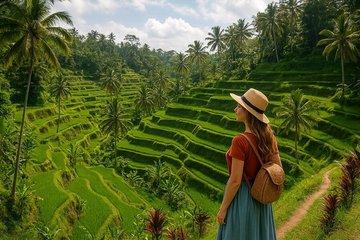
Book the standard group sunrise hike from Ubud. It's the cheapest option (IDR 600,000–800,000), the social atmosphere is part of the experience, and the timing pairs cleanly with a late morning at your villa pool. Combine it with a Tegalalang Rice Terrace stop on the way back if you want to maximise the day — most operators add this for IDR 100,000–200,000 extra.
If you're travelling as a couple or want photos
A private trek pays off here. The pace is yours, the guide will quietly position you at the best summit angles, and you can request the longer 11 km route if you want a less-trafficked descent. Expect IDR 1,000,000–1,500,000 between two — roughly the same per-person cost as the group option, with notably better photos.
If you have kids under 12, are over 65, or have any joint issues
Choose the 4WD Jeep sunrise tour. You skip the climb entirely, reach a viewpoint that captures the same Mount Agung and Lake Batur panorama, and have the rest of the morning to explore the black lava fields and a coffee plantation. The trade-off is that you don't earn the breakfast — but the comfort gap is significant.
If you want a full Kintamani day
Pick the hike + hot spring combo. After the descent, the Toya Bungkah natural hot springs give your legs a recovery soak, and most operators throw in a lakeside lunch and a stop at Penglipuran Village or a coffee plantation. Plan for an 11–12 hour day from pickup to drop-off.
If you're an experienced hiker looking for solitude
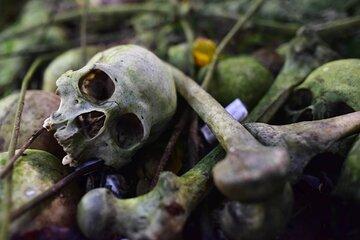
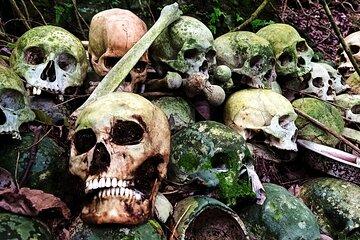
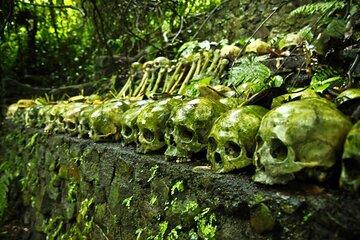
Mount Batur isn't your mountain. Book the Mount Agung trek instead — it's a 6–7 hour climb to 3,031 metres, with a fraction of the crowd and a serious fitness requirement. For something culturally distinctive after Batur, the lakeside Trunyan Village on the eastern shore of Lake Batur is a 30-minute boat ride from Toya Bungkah and one of the few places in Bali where the Bali Aga (pre-Hindu Balinese) traditions are still practised.
If you'd rather not spend an afternoon comparing twenty operators, Travjoy's Bali experiences are vetted by local destination experts who actually run these trails — each option on the platform has been checked for guide certification, transport reliability, and what's actually included in the price. Browse the full set of options on our top 20 Bali experiences page to see how the Batur trek fits alongside the rest of the island.
Plan your Bali trip with confidence
The Mount Batur sunrise trek is one of those Bali experiences that survives the hype — the summit moment is real, the breakfast is real, and the volcanic-steam eggs are not a marketing fiction. What changes the experience from good to memorable is the operator: a certified guide, a private group of two to four, and the right pickup time for where you're staying.
Book ahead during dry season (especially July through September), pack a fleece, and plan a slow afternoon back at your villa. Start planning your Bali trip on Travjoy's Bali destination page, where every Mount Batur option has been checked by local experts so you can book your sunrise without second-guessing the small print.


.svg&w=1920&q=75)