



Cycling in Bali: Best Routes for a Scenic Downhill Ride
7 min read
Raj Varma
Author
Travel & Tourism Expert Ex-Thomas Cook, Kuoni, Times of India & Travel Triangle.
SHARE BLOG
TABLE OF CONTENTS
Key Takeaways
- Most cycling in Bali is downhill: a vehicle drives you up to the Kintamani highlands and you ride mostly downhill back toward Ubud.
- The classic Kintamani-to-Ubud route covers 22–40 km past Mount Batur views, rice fields, temples, and villages — and suits riders of almost any fitness level.
- Guided downhill tours run roughly IDR 550,000–950,000 (USD 34–60) per person in 2026, usually including transport, bike, guide, and lunch.
- Ride in the dry season (April–October) and start in the morning, before the heat and afternoon rain.
Most cycling in Bali is downhill by design. A driver takes you and the bikes up to the Kintamani highlands at around 1,500 metres, and you ride 22–40 km mostly downhill toward Ubud, through rice terraces, farming villages, and temple courtyards. A typical guided tour costs IDR 550,000–950,000 (USD 34–60) per person, takes two to three hours of actual riding, and is gentle enough that you don't need to be fit to enjoy it.
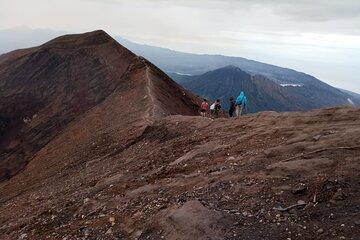
Picture being driven out of Ubud at 7 a.m., past the point where the road starts to climb, until the air turns cool and the caldera of Mount Batur opens up below you. You get off the bus, get on a bike, and barely pedal for the next two hours — the gradient does the work while you take in the view. That is the appeal of downhill cycling here, and it is why the format suits people who would never call themselves cyclists.
This guide maps the best routes for a scenic downhill ride, from the famous Kintamani descent to quieter rides in Jatiluwih and Sidemen. You'll get distances, what each route is like to ride, 2026 pricing, the best time to go, and a clear sense of which route fits which kind of rider.

Why downhill is the smart way to cycle in Bali
Downhill is the smart way to approach cycling in Bali because the island's interior is steep, hot, and humid, and riding uphill in that climate is hard work most travellers don't want on holiday. The downhill model removes the climb entirely: a support vehicle carries you and the bikes to the high point, and you ride the descent. You get the scenery and the movement without the suffering.
How the drive-up, ride-down model works
Almost every operator follows the same shape. You're collected from your hotel, driven up to a highland starting point — usually around Kintamani or Penelokan — and given a mountain bike and helmet. Breakfast is often served first, frequently at a coffee plantation near Tegalalang with a view over the rice terraces. Then you ride down, with a guide leading and a vehicle following in case anyone wants to stop riding.
Why it suits riders of any fitness level
Because the route runs from roughly 1,500 metres down toward Ubud at around 200 metres, the dominant direction is down. There are short flat sections and the occasional gentle rise, but no sustained climbing. Children, older riders, and people who haven't been on a bike in years all manage it comfortably. If you can balance and brake, you can do this ride.
At a glance: downhill cycling in Bali
- Start elevation: ~1,500 m (Kintamani / Penelokan)
- Finish elevation: ~200 m (Ubud area)
- Riding time: 2–3 hours; full day door-to-door (3–8 hours)
- Fitness needed: low — basic balance and braking
- Bikes: mountain bikes standard; e-bikes available on some routes
The Kintamani to Ubud downhill route (the classic)
The Kintamani-to-Ubud descent is the most popular cycling route in Bali, and for good reason — it packs volcano views, rice terraces, villages, and temples into a single mostly-downhill ride of 22–40 km. You start high on the rim near Penelokan, with Mount Batur and Lake Batur spread out below, then drop through the rural heart of the island toward Ubud.
What you ride past
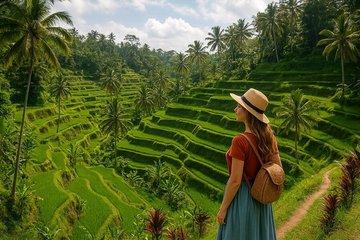
The route threads quiet back roads with little traffic, which is a large part of why it works. Along the way you pass clove and coffee plantations, the famous Tegalalang Rice Terrace, family compounds where daily life carries on around you, and small Hindu temples. Many tours stop to explain Bali's traditional Subak irrigation system, a UNESCO-recognised way of sharing water between rice farmers that has shaped these landscapes for centuries.
Route facts
- Distance: 22–40 km depending on operator and finish point
- Riding time: around 2 hours, plus stops
- Direction: predominantly downhill, with a few short flat stretches
- Start point: Kintamani / Penelokan rim, near Mount Batur
- Finish: a village, café, or traditional house near Ubud, usually with lunch
- Optional Batur viewpoint entry: around IDR 50,000 (USD 3) per person
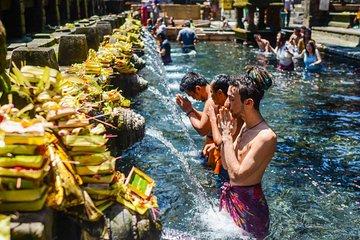
If you only do one ride, this is the one. It's also easy to combine with other central highlights — many riders pair it with a stop at Tirta Empul Temple for the purification springs, or finish near Ubud and walk into the Sacred Monkey Forest Sanctuary later in the day. The cycling experiences listed on Travjoy are reviewed by local experts, so you can book the descent knowing the route and operator have been checked rather than picking blind from a search result.
Five more scenic Bali cycling routes
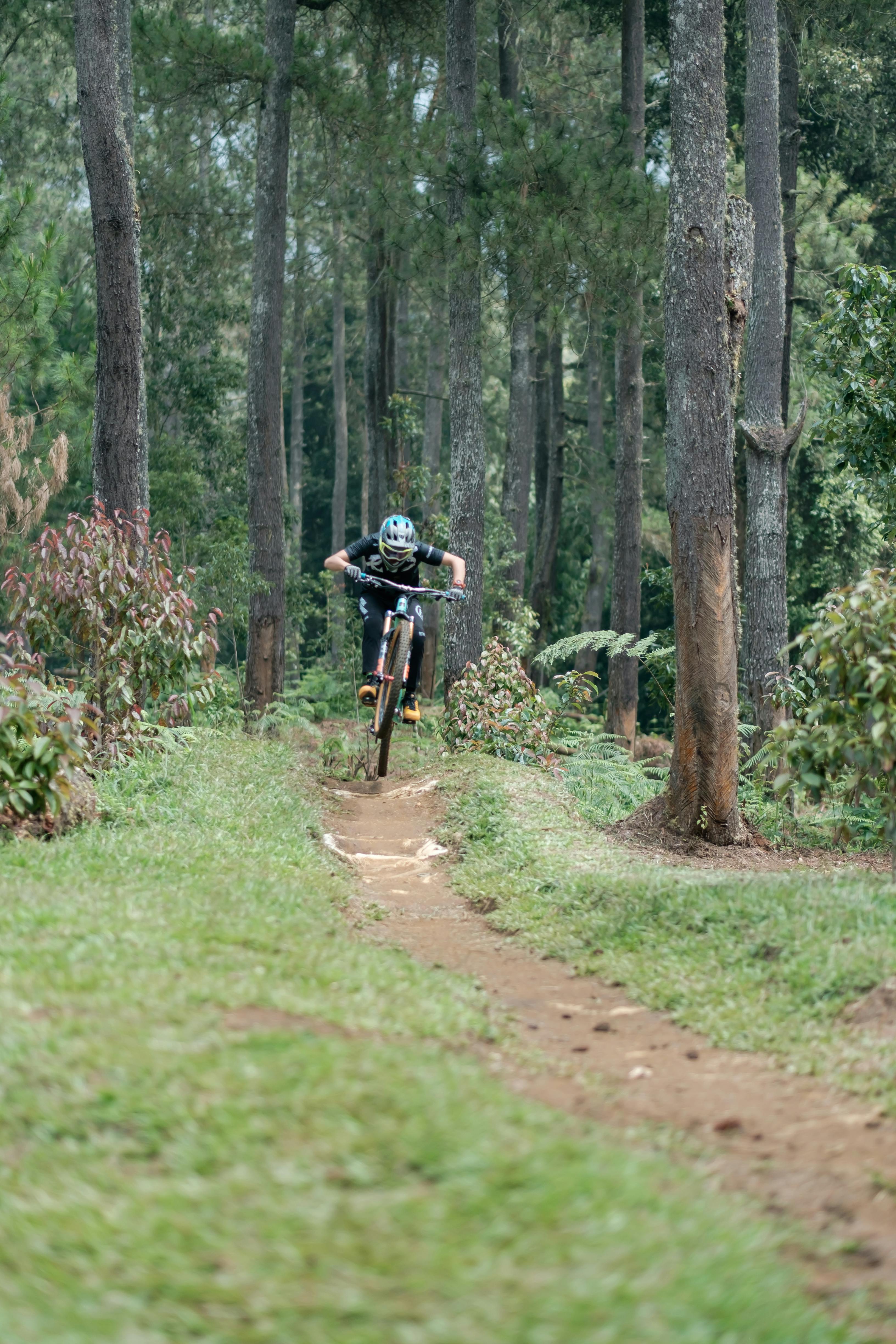
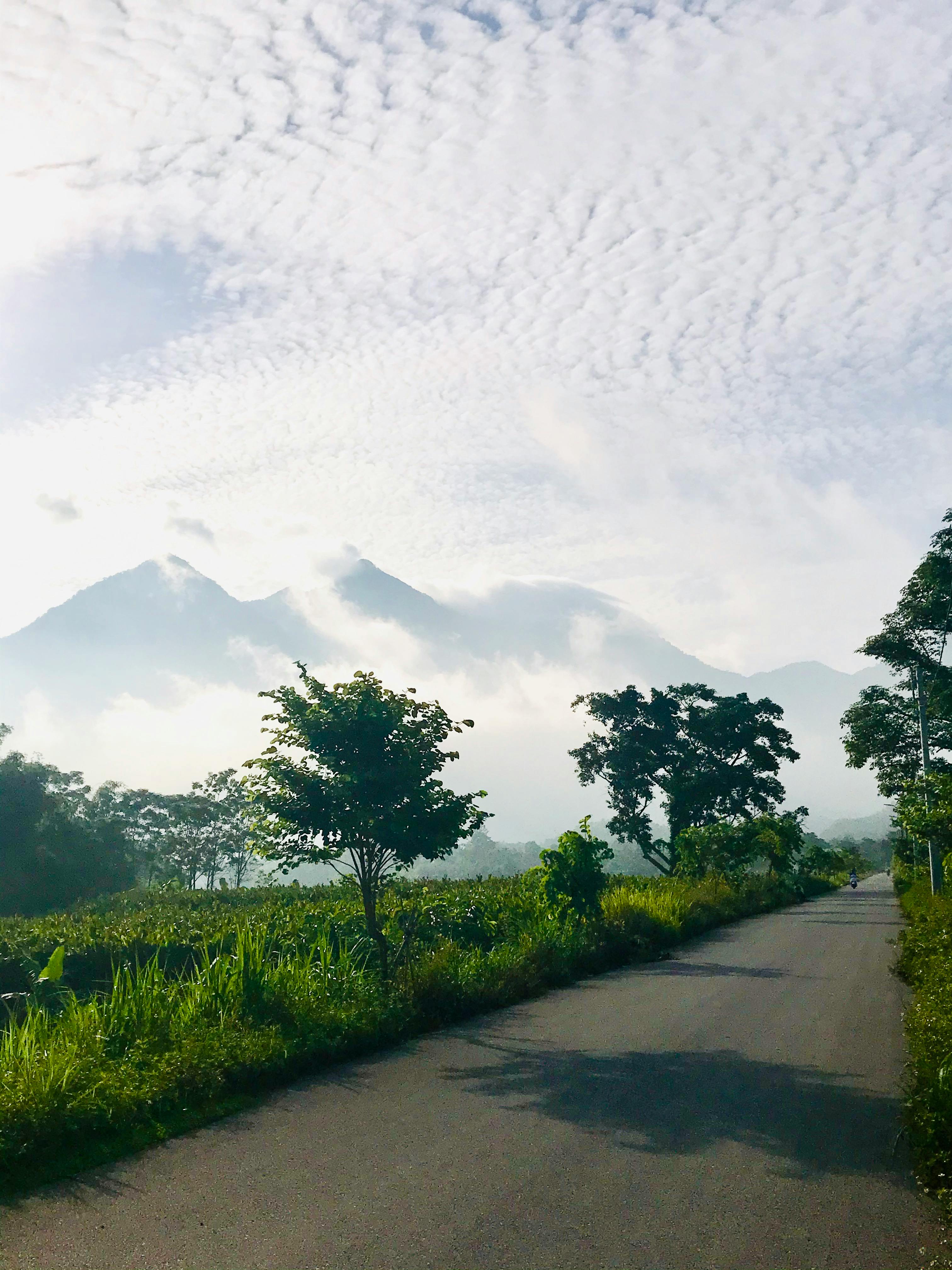
Beyond Kintamani, Bali has five more routes worth riding, each with a different character — from UNESCO rice terraces you can take slowly on an e-bike to a coastal descent in the east that ends at a quiet beach. The table below compares them at a glance, and the notes that follow explain what each is like to ride.
| Route | Distance | Terrain | Best for |
|---|---|---|---|
| Kintamani → Ubud | 22–40 km | Mostly downhill | First-timers, families, the classic ride |
| Jatiluwih | 10–25 km | Rolling hills | UNESCO rice-terrace views; e-bike riders |
| Sidemen Valley | 15–30 km | Gentle to rolling | Quiet rides under Mount Agung |
| Putung → Pantai Perasi | 15–25 km | Moderate downhill | East-coast scenery, ending at a beach |
| Munduk–Bedugul | 20–35 km | Hilly, cooler | Fitter riders, mountain-lake scenery |
| Ubud backroads loop | 10–12 km | Flat to gentle | Half-day rides, short on time |
Jatiluwih: the UNESCO rice terraces
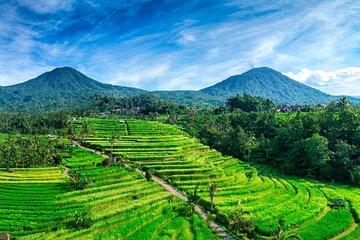
Jatiluwih in Tabanan is the route to choose for the widest rice-terrace views. Its terraced fields are part of Bali's UNESCO-listed Subak cultural landscape, and the riding rolls gently rather than dropping steeply, which is why e-bikes are popular here. Tours range from a one-hour spin to a half-day, and you'll pass temples, schools, and farming villages with very few other tourists around.
Sidemen and the east
Sidemen Valley sits under Mount Agung and stays far quieter than the Ubud area. The riding is gentle to rolling through rice paddies, cacao, clove, and salak (snakeskin fruit) plantations. Further east, the Putung-to-Pantai Perasi route gives you a moderate downhill through Karangasem countryside that ends at a quiet beach — a rare cycling route in Bali that finishes at the coast.
Munduk, Bedugul, and the Ubud loop
For fitter riders, the Munduk–Bedugul stretch in the central mountains delivers cooler air, lakes, and the most dramatic highland scenery, but expect real climbs rather than a pure descent. At the opposite end, a short Ubud backroads loop of 10–12 km through village lanes toward Tegalalang is ideal if you only have half a day and want something close to base.





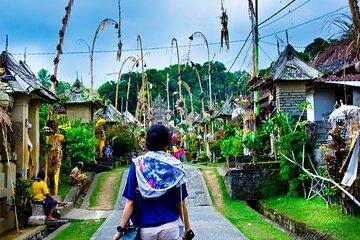

Guided or self-guided, group or private, bike or e-bike
For most visitors, a guided downhill tour beats going it alone — the operator handles the long uphill transfer, picks traffic-free back roads, and provides the bike, so you skip the logistics that make independent cycling in Bali frustrating. Self-guided riding makes sense only if you're an experienced cyclist comfortable with local traffic and you've sorted your own bike. The choice between group and private, and between a regular bike and an e-bike, then comes down to who you're riding with.
Which option fits your group
- Group tour, regular bike — the standard, best-value choice. Pick this if you're a confident-enough rider who wants the classic Kintamani descent at a sociable pace.
- Private tour — costs more but lets you set the pace and stop when you like. Pick this for families, mixed-ability groups, or anyone who wants flexibility.
- E-bike — choose this for Jatiluwih or any rolling route, or if you want the scenery without working for the few uphill sections. E-bikes make hillier rides accessible to almost everyone.
- Self-guided — only for experienced riders with their own bike who are at ease on Balinese roads.
If you're not used to local traffic, a guided ride is worth it for the back-road routing alone. Bali's main roads are busy and chaotic; the value of a good operator is that they keep you off them. Travjoy's cycling experiences are reviewed by local experts, which takes the guesswork out of telling a well-run tour from a poorly run one.
What a Bali cycling tour costs in 2026
A guided downhill cycling tour in Bali costs roughly IDR 550,000–950,000 (USD 34–60) per person in 2026, with private tours and multi-activity combos costing more. Price depends on the operator, your pickup location, and what's included — most rates already cover the bike, helmet, guide, and meals.
Typical 2026 pricing
- Group downhill tour: IDR 550,000–800,000 (USD 34–50) per person
- Private downhill tour: IDR 750,000–950,000 (USD 47–60) per person
- Child rate (under 12): often IDR 450,000–650,000 (USD 28–41)
- Multi-activity combo (cycling + ATV or rafting): IDR 1,600,000+ (USD 100+)
- Batur viewpoint entry (optional): ~IDR 50,000 (USD 3) per person
What's usually included — and what's not
Most downhill tours bundle hotel pickup and drop-off (free for the Ubud area), breakfast at a coffee plantation, a mountain bike and safety gear, mineral water, an English-speaking guide, and lunch at the finish. The main extra to watch for is transport: if your hotel is in the south — Seminyak, Canggu, Kuta, Nusa Dua, or Jimbaran — expect a surcharge of around IDR 300,000 (USD 19) per car each way, because those areas are well over an hour from the start point.
- Usually included: transfers (Ubud area), bike and helmet, breakfast, lunch, water, guide, entrance fees
- Often extra: south Bali transport surcharge, Batur viewpoint entry, gratuities, Luwak coffee tasting
When to ride and how to prepare
The best time for cycling in Bali is the dry season, roughly April to October, and the best time of day is the morning. Dry-season mornings are cooler, the light is good, and you avoid the afternoon downpours that are common in the wet months from November to March. Even in the wet season most tours still run — they simply start early to stay ahead of the rain.
Best time to ride
- Dry season (Apr–Oct): best conditions; June–September is peak and busiest
- Wet season (Nov–Mar): still rideable, mornings only, expect some mud
- Time of day: morning starts (around 7–9 a.m.) beat the heat and rain
What to wear and bring
The highlands start cool — Kintamani can sit at 18–20°C in the early morning — then warm up fast as you descend. Dress in light layers you can shed, and bring sun protection for the lower, hotter sections.
- Light, breathable clothing plus a thin layer for the cool start
- Closed sports shoes — not sandals
- Sunscreen, sunglasses, and a hat or cap for under the helmet
- Small backpack for a camera, water, and your layer
- Small IDR notes for snacks, offerings, and tips
- Light rain jacket in the wet season
Is cycling in Bali safe?
- Guided downhill routes use quiet back roads, away from main-road traffic
- A support vehicle follows the group, so you can stop riding any time
- Helmets are standard — always wear one
- The gradient is gentle; falls are rare and usually low-speed
- Tell your guide about any health conditions before you start
For a sense of how a ride fits into a wider trip, browse Travjoy's top 20 experiences in Bali — the central highlights you cycle past, from Mount Batur to the rice terraces, sit alongside the temples and beaches you can build the rest of your days around.
Plan your Bali cycling trip
The case for cycling in Bali is simple: you get the island's interior — volcano views, rice terraces, temples, and village life — at a pace that lets you actually see it, with the hard climbing taken care of. Start with the Kintamani-to-Ubud descent if it's your first ride, choose Jatiluwih or Sidemen if you want it quieter, and ride in the dry-season morning whenever you can. Budget IDR 550,000–950,000 (USD 34–60) per person for a guided tour, and check whether a south Bali transfer surcharge applies.
Start planning your cycling trip in Bali on Travjoy's Bali destination page, where you can line up the right downhill route alongside the rest of your itinerary.









.svg&w=1920&q=75)