


Best Eco-Luxury Stays in Bali: Sustainable Resorts for Conscious Travellers
8 min read

Sandeepa K
Author
Long-term traveller and AI Expert.
SHARE BLOG
TABLE OF CONTENTS
Key Takeaways
- The best eco-luxury stays in Bali run on renewable energy, manage their own water and waste, and pour money back into nearby villages — not just a recycling bin in the lobby.
- 2026 nightly rates span a wide band: from around USD 250 (IDR 4.1M) for a bamboo room at Bambu Indah to USD 1,050+ (IDR 17.1M) for a glamping tent at Capella Ubud.
- Look for EarthCheck, Green Globe, or GSTC-recognised certification, plus the Balinese Tri Hita Karana award, to separate real sustainability from marketing.
- Jungle resorts near Ubud sit 1.5–2 hours from the airport, so pair a jungle stay with a coastal one if you want both.
The best eco-luxury stays in Bali combine certified sustainability with the comfort you would expect at any high-end resort. Expect 2026 rates from roughly USD 250 to over USD 1,050 per night, depending on region and brand. Our top pick for regenerative design is Bambu Indah in Ubud; for zero-waste luxury on the coast, it is Desa Potato Head.
Bali has a trash problem. Walk a beach after a storm or look into a roadside canal, and the plastic is hard to miss. At the same time, a serious movement of resorts is doing the opposite: building with bamboo instead of concrete, generating their own power, and treating their own water.
This guide cuts through the green marketing. You will learn what actually makes a resort sustainable, which eight properties deliver real eco-luxury, what each costs in 2026, and which one fits the way you travel. Every rate is listed in both Indonesian rupiah and US dollars so you can budget without converting.

What Counts as Eco-Luxury in Bali (and How to Spot Greenwashing)
An eco-luxury resort backs its claims with systems you can verify, not slogans. The difference between a true sustainable resort and a hotel with a "save the towel" card comes down to five things: where its energy comes from, how it handles water and waste, where it sources food and materials, how it treats the local community, and whether its building works with the land instead of flattening it.
If a property cannot tell you how it powers itself or where its waste goes, treat the "eco" label with caution. The strongest eco-luxury stays in Bali publish this detail openly.
The five signals of a truly sustainable resort
- Renewable energy: solar arrays, hydro generators, or a documented shift away from diesel — not just LED bulbs.
- Water and waste systems: on-site water filtration or spring-fed supply, plus a real waste programme. Desa Potato Head sends only about 2.6% of its waste to landfill.
- Local sourcing: kitchens that grow their own produce or buy within Indonesia, and interiors built from reclaimed or local materials.
- Community ties: partnerships with nearby villages, artisans, and schools, so tourism money stays on the island.
- Regenerative design: buildings raised on stilts or shaped around old-growth trees, rather than land cleared flat for concrete.
Certifications worth checking before you book
Three independent standards do the homework for you. A resort holding any of them has been audited against international criteria, not just self-declared.
- EarthCheck: science-based benchmarking running since 1987; measures energy, water, waste, and community impact. Alila Villas Uluwatu was one of Bali's first resorts built to its protocols.
- Green Globe: 44 core criteria with annual on-site audits, aligned to global standards.
- GSTC: the Global Sustainable Tourism Council sets the criteria the other bodies are measured against — "GSTC-recognised" is the gold standard.
- Tri Hita Karana: a Balinese award rooted in the philosophy of harmony between people, nature, and the divine. The Emerald level signals deep local credibility.
Is an eco-luxury stay in Bali worth it?
- Worth it if you want a high-comfort stay with a clear conscience, value design and provenance over a big-brand name, and don't mind being further from the action.
- Not ideal if you need beachfront nightlife on your doorstep, full air-conditioning in every room, or a five-minute airport transfer — many jungle eco-resorts trade those for nature.
The Best Eco-Luxury Resorts in Bali, by Region
Bali's eco-luxury scene clusters in three areas: the Ubud jungle, the Bukit cliffs around Uluwatu, and the Seminyak coast. Each offers a different version of sustainable luxury, so where you base yourself matters as much as which resort you pick.
Ubud and the jungle
This is the heartland of regenerative design, where resorts grow their own food and build from bamboo. It is also the furthest from the airport.
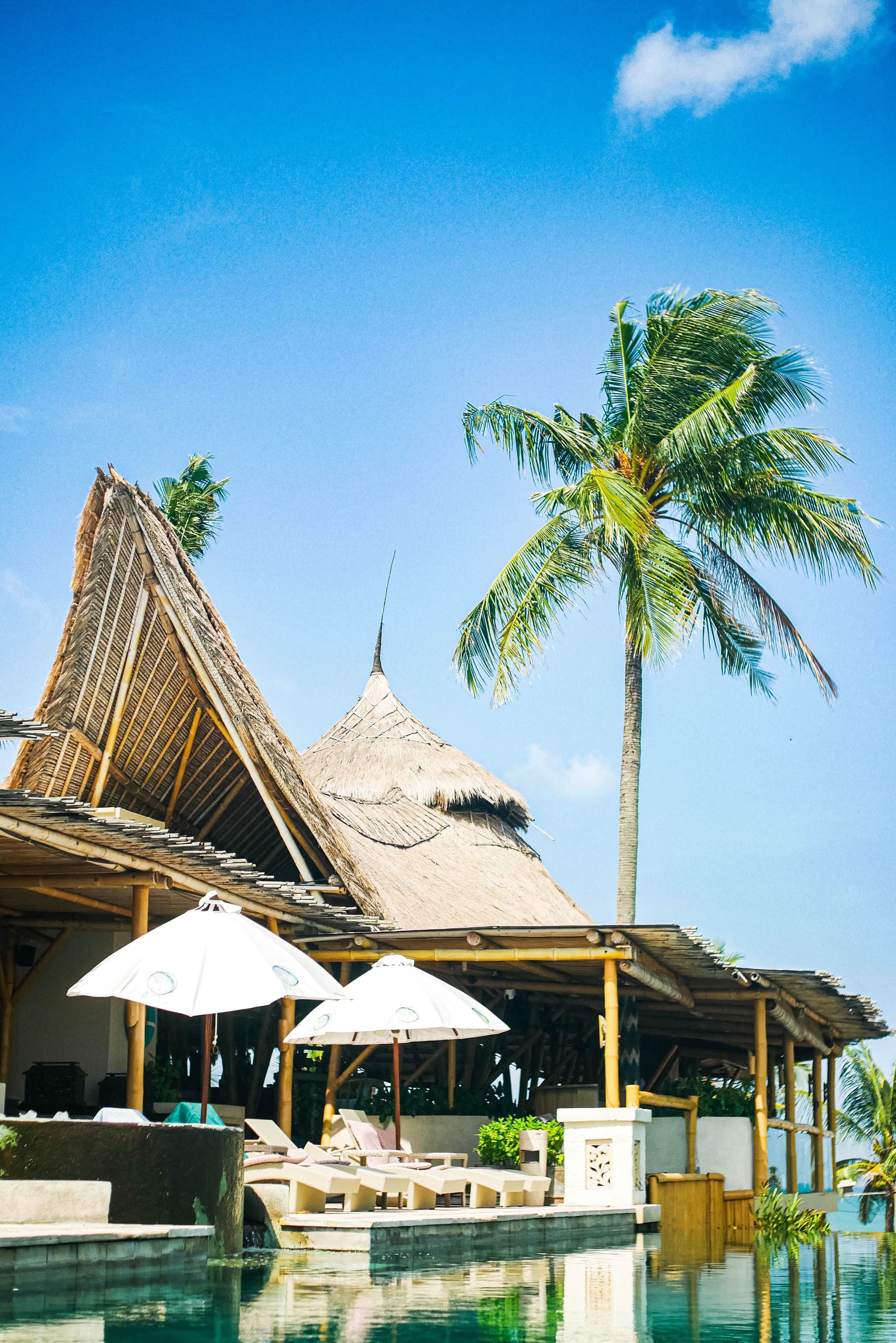
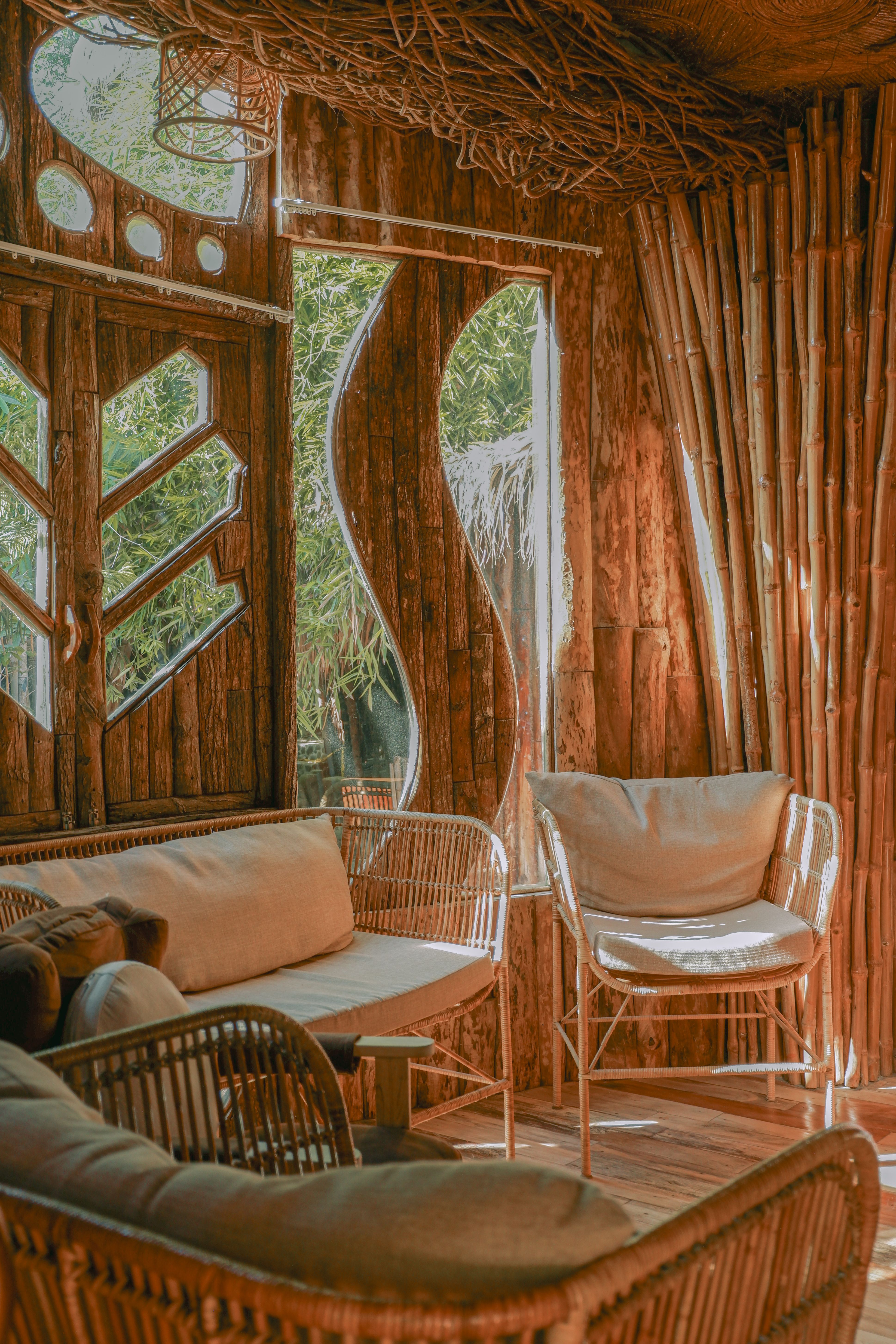
- Bambu Indah (Sayan) — Built by Green School founders John and Cynthia Hardy from antique Javanese bridal homes and bamboo, with spring-fed natural pools and its own rice and vegetable plots. Just 23 rooms; the resort describes itself as an experiment in regenerative hospitality. From USD 250 / IDR 4.1M per night (2026).
- Capella Ubud (Keliki) — Bill Bensley's tented glamping retreat, where each of the canvas suites was placed to avoid felling a single old-growth tree. Private saltwater pools and treetop dining. From USD 1,050 / IDR 17.1M per night (2026).
- Buahan, a Banyan Tree Escape (north of Ubud) — A "no walls, no doors" concept: 16 open bales built from local materials, with a kitchen working from ancient Balinese recipes and botanicals grown on site. From USD 800 / IDR 13M per night (2026).
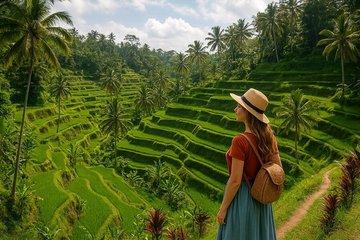
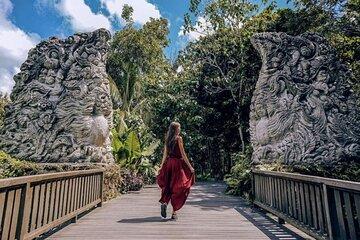
Base yourself here and you are close to the Sacred Monkey Forest Sanctuary and Ubud's rice-terrace walks.
Reality check: the jungle trade-off
- Ubud-area resorts are 1.5–2 hours from Denpasar Airport in traffic — not the place for a quick weekend.
- Open-air bales and bamboo rooms mean insects and limited air-conditioning. Bring repellent and pack light; leave the stilettos at home.
The Bukit and Uluwatu cliffs
The southern Bukit peninsula pairs clifftop drama with some of the island's most rigorous sustainability programmes. These sit 45–50 minutes from the airport.
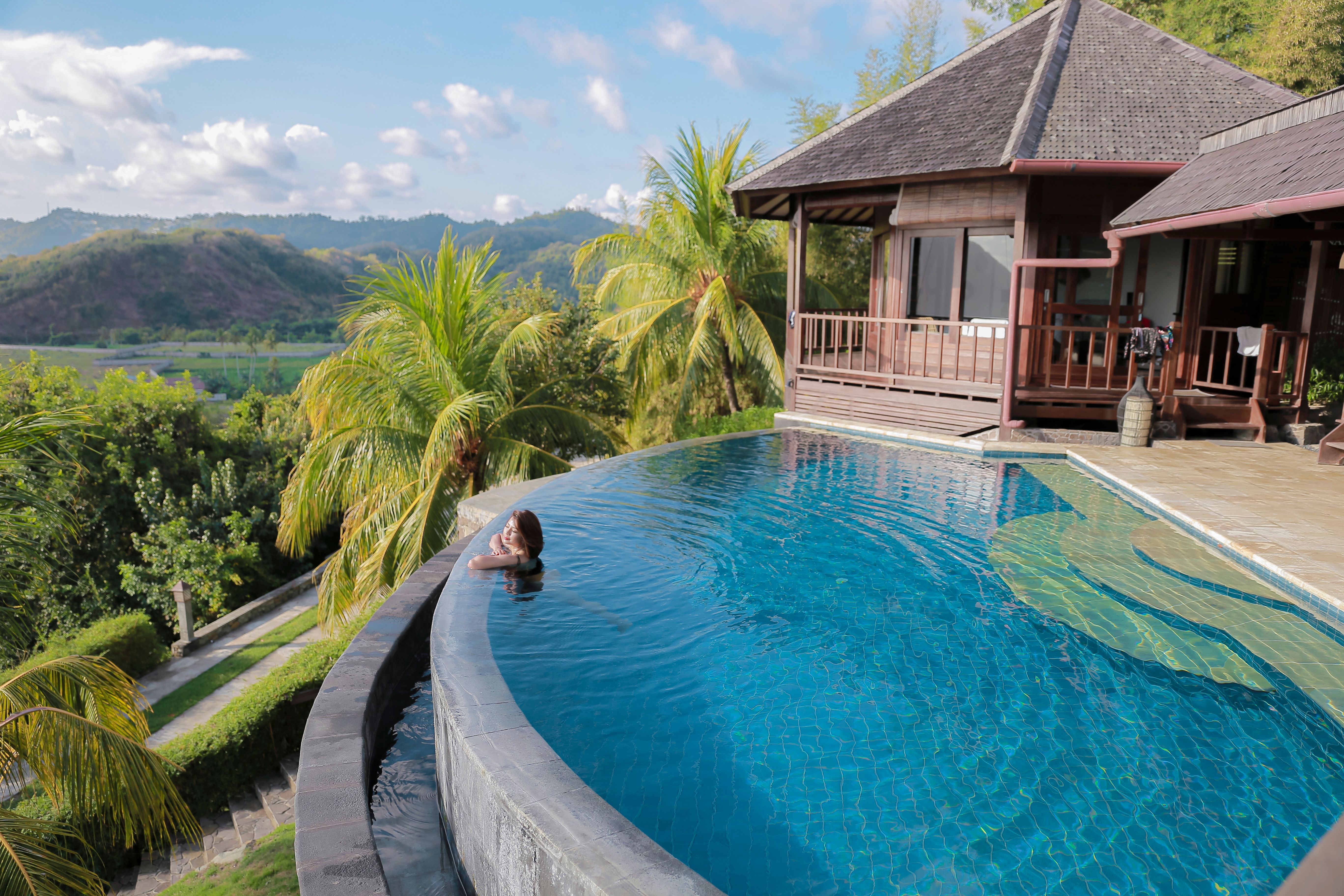
- Six Senses Uluwatu — Opened in 2021, the 103-key resort runs on solar power and its own water-filtration plant. Its Earth Lab is a working sustainability workshop you can tour, and three cascading pools line the cliff edge. From USD 900 / IDR 14.7M per night (2026).
- Suarga Padang Padang — A bamboo-built resort raised on stilts to preserve the flora beneath and channel natural airflow, set above Bali's premier surf breaks. The mid-luxury entry point on the Bukit. From USD 300 / IDR 4.9M per night (2026).
- Alila Villas Uluwatu — One of the first resorts on the island designed to EarthCheck protocols, with rooftop gardens that insulate the villas and a partnership programme with local artisans. Sharp, low-slung architecture on the clifftop. From USD 750 / IDR 12.2M per night (2026).
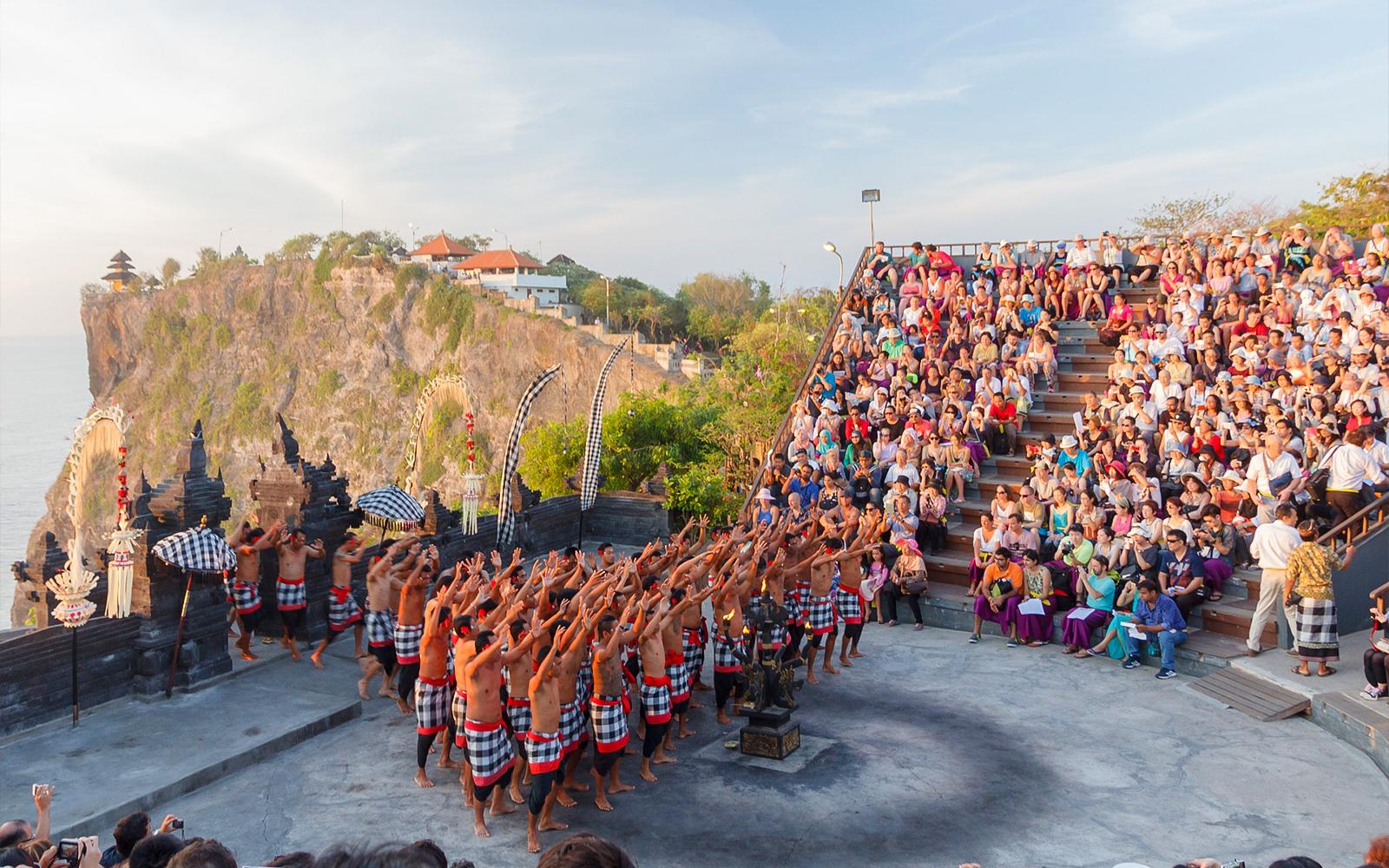
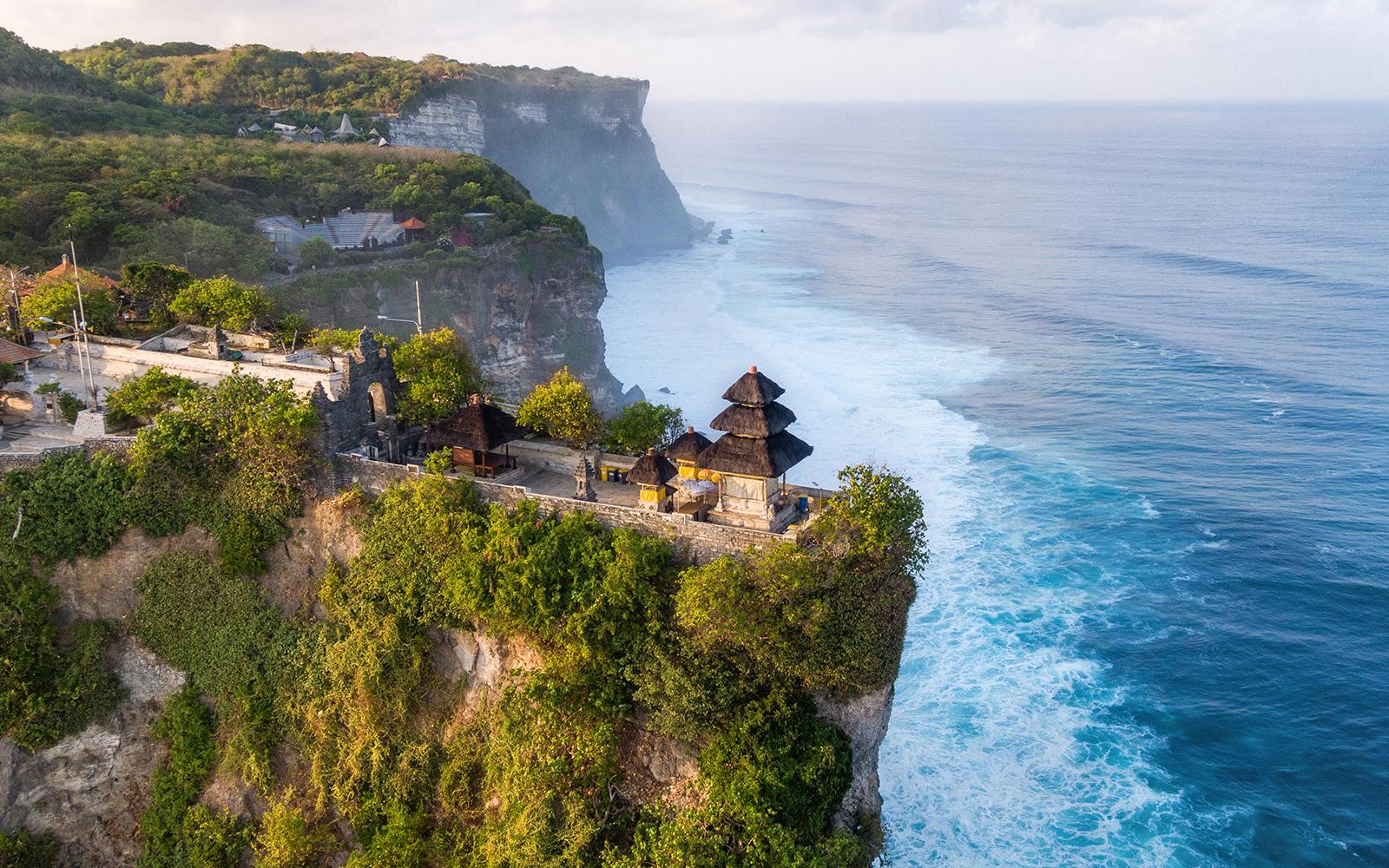
You are a short drive from Uluwatu Temple and its sunset kecak dance. For more clifftop options, see our guide to the best cliffside and overwater hotels in Bali.
Seminyak and the coast
If you want sustainability without leaving the beach, the coast delivers. This is where eco-luxury meets walkable restaurants and surf.
- Desa Potato Head (Seminyak) — A self-styled zero-waste "creative village" on Seminyak Beach. Suites are built from reclaimed materials, in-room slippers are biodegradable, and the on-site Sustainism Lab turns plastic waste into design objects. Only about 2.6% of its waste reaches landfill. From USD 350 / IDR 5.7M per night (2026).
For the broader luxury picture, our ranking of the best 5-star hotels in Bali covers how these eco-properties stack up against the island's classic five-star names.
Beyond the big three: a budget eco option
Eco-luxury doesn't have to mean four-figure rates. If your priority is low-impact travel over polished service, the highlands deliver.
- Sarinbuana Eco Lodge (Mount Batukaru, Tabanan) — A forest lodge on the slopes of a sacred mountain, with a chemical-free pool, organic produce grown on site, and guided rainforest walks. Simpler than the headline resorts, but the green credentials are real. From USD 120 / IDR 2M per night (2026).
It is a two-hour drive from the south, so it suits travellers happy to slow down and stay put rather than day-trip across the island.







Eco-Luxury Bali at a Glance
Here is how the eight properties compare on region, style, sustainability credentials, and 2026 starting rates. Use it to shortlist before reading the full picks above.
| Resort | Region | Style | Sustainability signal | From (2026) | Best for |
|---|---|---|---|---|---|
| Bambu Indah | Ubud (Sayan) | Bamboo boutique | Regenerative design, spring-fed pools, own farm | USD 250 / IDR 4.1M | Design-led couples, repeat visitors |
| Capella Ubud | Ubud (Keliki) | Luxe tented glamping | Tents sited to spare old-growth trees | USD 1,050 / IDR 17.1M | Special-occasion splurges |
| Buahan, a Banyan Tree Escape | North of Ubud | Open-air "no walls" bales | Local materials, on-site botanicals | USD 800 / IDR 13M | Privacy-seekers, nature immersion |
| Six Senses Uluwatu | Uluwatu (Bukit) | Clifftop wellness resort | Solar power, own water plant, Earth Lab | USD 900 / IDR 14.7M | Wellness-led couples, first-time luxury |
| Suarga Padang Padang | Uluwatu (Bukit) | Bamboo clifftop | Built on stilts to protect the land beneath | USD 300 / IDR 4.9M | Surfers, mid-budget eco travellers |
| Desa Potato Head | Seminyak | Zero-waste beach village | ~2.6% waste to landfill, reclaimed-material suites | USD 350 / IDR 5.7M | Beach-and-nightlife travellers |
| Alila Villas Uluwatu | Uluwatu (Bukit) | Clifftop design villas | Among Bali's first EarthCheck-built resorts | USD 750 / IDR 12.2M | Architecture lovers, honeymooners |
| Sarinbuana Eco Lodge | Mount Batukaru (Tabanan) | Forest eco-lodge | Chemical-free pool, organic on-site produce | USD 120 / IDR 2M | Lower-budget conscious travellers |
The properties on this list have been checked and approved by local Bali experts before being recommended, so you can shortlist with confidence rather than wading through dozens of unverified "eco" claims.
Which Eco-Luxury Stay Should You Choose?
The right pick depends less on budget than on how you want to spend your days. Match the resort to your trip, not the other way round.
- Choose Bambu Indah if you care about design and provenance and want regenerative credentials without a four-figure rate.
- Choose Six Senses Uluwatu if you want a wellness-led clifftop stay and the reassurance of a big brand running serious sustainability systems.
- Choose Desa Potato Head if you want the beach, restaurants, and nightlife within walking distance and zero-waste design built in.
- Choose Capella Ubud or Buahan for a milestone trip — honeymoon or anniversary — where privacy and immersion matter more than price.
- Choose Suarga Padang Padang or Sarinbuana if you want real eco credentials on a mid-range budget.
Couples tend to split their stay between a jungle base and a coastal one. Families lean towards Six Senses or Desa Potato Head for space and facilities. Solo travellers and surfers gravitate to the Bukit.
Insider tip: build a two-base trip
- Spend the first half in the Ubud jungle (regeneration, rice terraces, quiet) and the second on the coast or Bukit (beach, surf, sunset bars).
- It avoids long daily transfers and gives you both sides of Bali. See our top 20 things to do in Bali to plan around each base.
Booking Smart and What to Expect
Eco-luxury resorts reward planning. Rates, transfer times, and the realities of open-air living all shift the experience, so book with these points in mind.
When and how to book
- Dry season (April–October) brings the best weather and the highest demand. Book 4–6 months ahead for villa availability and better rates.
- Book direct where you can. Many of these resorts reinvest more in sustainability when bookings aren't skimmed by third-party platforms.
- Day passes exist. Bambu Indah and several others let you tour the grounds, pools, and restaurant without staying over — useful if the room rate is out of reach.
What the photos don't tell you
Reality checks before you commit
- Natural pools look different. Spring-fed and chemical-free pools may have a greener tint and the odd leaf — that is the point, not neglect.
- Open-air rooms are open to wildlife. Geckos, insects, and the occasional monkey come with the territory at jungle properties.
- Cliff "beach access" often means stairs or a lift. On the Bukit, reaching the sand can mean 100-plus steps or a slow funicular — ask before booking if mobility is a concern.
None of this should put you off. It is the trade-off that makes these the most authentic eco-luxury stays in Bali — buildings that work with the climate rather than sealing it out.
Plan Your Sustainable Bali Trip
The strongest eco-luxury stays in Bali prove you don't have to choose between comfort and conscience. Pick Bambu Indah for regenerative design, Six Senses Uluwatu for clifftop wellness with real systems behind it, or Desa Potato Head for zero-waste living steps from the beach. Check for EarthCheck, Green Globe, GSTC, or Tri Hita Karana credentials, budget in both rupiah and dollars, and weigh the airport-distance trade-off before you book.
A two-base trip — jungle then coast — gives you the fullest version of the island. Start planning your sustainable escape on Travjoy's Bali page, where every experience is vetted and approved by local experts.




.svg&w=1920&q=75)