


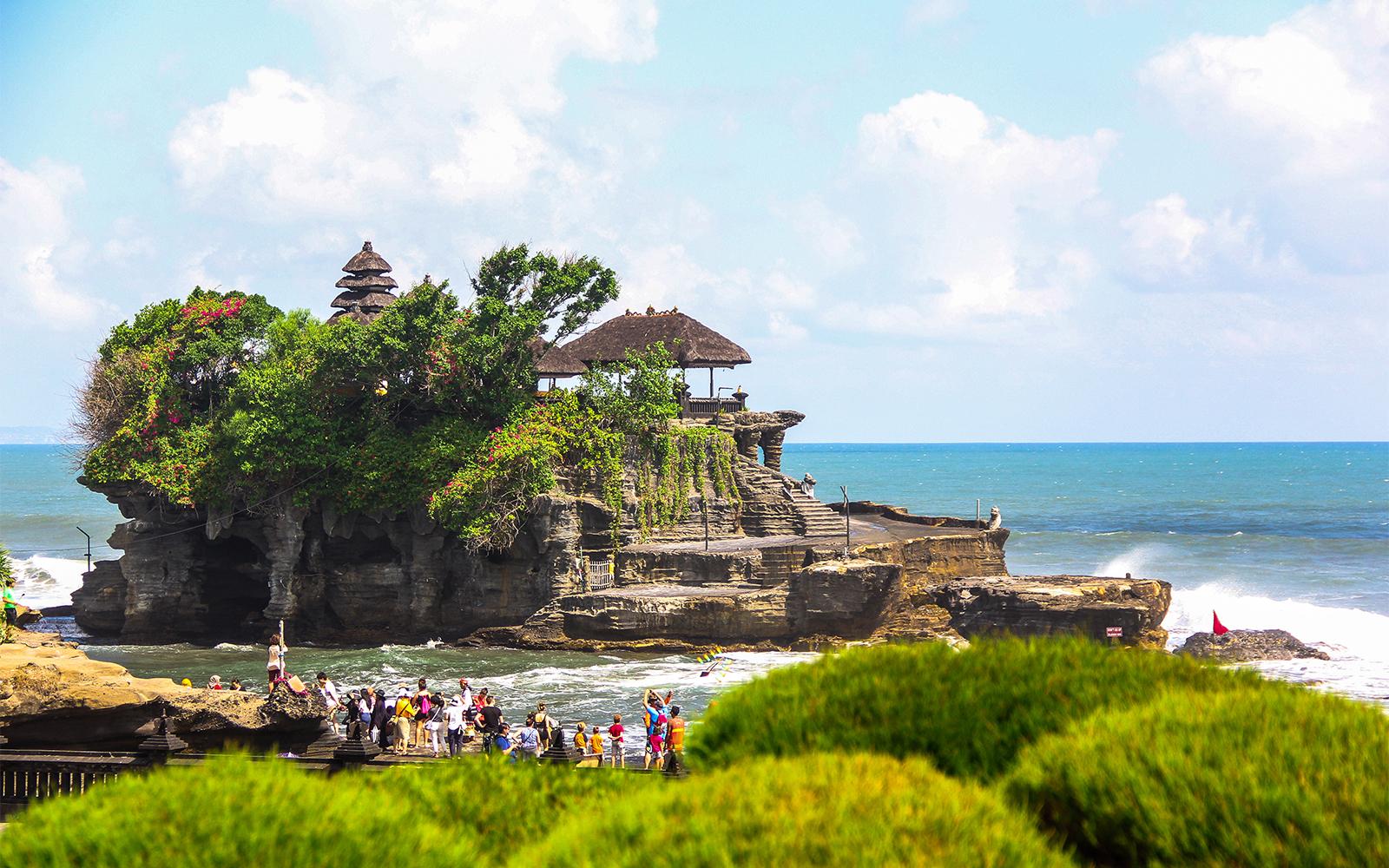
Bali: Tanah Lot Temple
Operating Hours:Monday - Sunday: 07:00 - 19:00
The Vibe:Where the sea guards the sacred 🌊
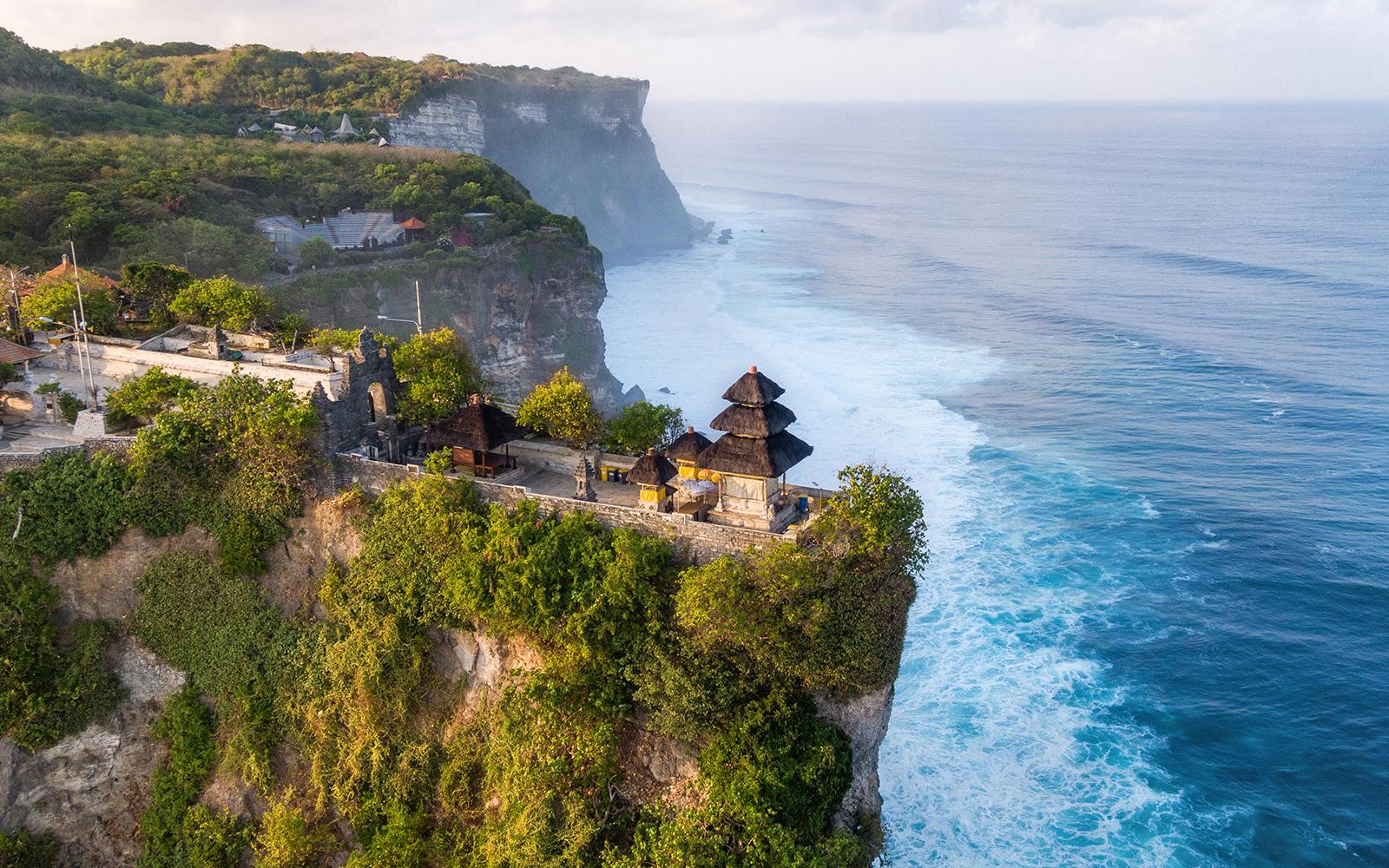
One of seven sea temples believed to protect Bali from malevolent ocean spirits, this 16th-century shrine sits on a rocky outcrop that vanishes under the tide. It remains an active pilgrimage site and a defining silhouette of the island's southwest coast.
Waves crash against dark volcanic rock as salt-tinged air mixes with incense. At sunset, the temple silhouette shimmers in amber light while chanting carries faintly from the shore.
- Tripadvisor Travellers' Choice Award winner
- Part of Bali's sacred chain of seven sea temples
- Visitors rave about legendary sunset backdrops 🌅
- Featured in Condé Nast Traveler, Fodor's, and Travel + Leisure
Persona Fit
- 👨👩👧 Families: Flat coastal paths, kid-friendly market stalls, and easy pacing.
- 💕 Couples: Golden-hour silhouettes and cliffside dining with ocean views.
- 📸 Photographers: Dramatic compositions at every angle during low tide and sunset.
- 👵 Seniors: Mostly level walkways; shaded rest spots along the garden path.
- 🧘 Culture seekers: Active ceremonies, sacred snake cave, and holy-water blessings.
Highlights
- Sunset silhouette — The temple framed against a fiery sky is Bali's most iconic view.
- Low-tide walkway — Cross the exposed ocean floor to the base of the rock and receive a holy-water blessing.
- Batu Bolong Temple — A clifftop shrine with a natural rock archway framing the sea — Hidden Gem.
- Sacred snake cave — Peer into the grotto beneath the temple said to be guarded by sea snakes.
- Cliffside garden promenade — A manicured pathway with panoramic Indian Ocean views.
- Cultural market lane — Browse Balinese woodcarvings, sarongs, and handmade jewellery on the walk down — Hidden Gem.
5 Curated Booking Options
Starts From
(Per Person)
Aura Salsa Dila
Our Bali Local Expert
Table of Contents
Things To Do Nearby
Taman Ayun Temple — A royal Mengwi-era temple with moat gardens and traditional Balinese architecture, about 20 minutes away.
Canggu Beach — Surf-friendly black sand beach with a lively cafe scene, roughly 30 minutes south.
Alas Kedaton Monkey Forest — A quieter alternative to Ubud's monkey forest set within a nutmeg plantation, about 15 minutes north.
Jatiluwih Rice Terraces — UNESCO-listed subak landscape with sweeping highland views, about 40 minutes inland.
Taman Ayun Temple — A royal Mengwi-era temple with moat gardens and traditional Balinese architecture, about 20 minutes away.
Canggu Beach — Surf-friendly black sand beach with a lively cafe scene, roughly 30 minutes south.
Alas Kedaton Monkey Forest — A quieter alternative to Ubud's monkey forest set within a nutmeg plantation, about 15 minutes north.
Jatiluwih Rice Terraces — UNESCO-listed subak landscape with sweeping highland views, about 40 minutes inland.
TJ's Guide - Tanah Lot Temple
Know Before You Go
Insider Tips
Best time hack: Arrive around 16:00 to explore the grounds and market at a leisurely pace before positioning for sunset by 17:30.
Tide timing matters: Check the tide table before visiting. Low tide lets you walk across to the temple base; high tide offers the dramatic 'floating temple' photo.
Midday secret: Between 12:00 and 15:00, the temple complex is nearly empty, vendors are relaxed, and photography is crowd-free — ideal if sunset is not a priority.
Budget tip: The entrance fee is cash-only (IDR). Keep small notes handy for parking, toilet access, and market purchases.
Pair strategically: Combine with Taman Ayun Temple (morning) and a Luwak coffee stop on the same half-day loop.
Best time hack: Arrive around 16:00 to explore the grounds and market at a leisurely pace before positioning for sunset by 17:30.
Tide timing matters: Check the tide table before visiting. Low tide lets you walk across to the temple base; high tide offers the dramatic 'floating temple' photo.
Midday secret: Between 12:00 and 15:00, the temple complex is nearly empty, vendors are relaxed, and photography is crowd-free — ideal if sunset is not a priority.
Budget tip: The entrance fee is cash-only (IDR). Keep small notes handy for parking, toilet access, and market purchases.
Pair strategically: Combine with Taman Ayun Temple (morning) and a Luwak coffee stop on the same half-day loop.
Know Your Facts
- By car or Grab: About 45–60 minutes from Seminyak/Kuta; 1–1.5 hours from Ubud. Traffic worsens after 15:00 on the return.
- Main entrance: A single gated entry with QR-coded ticket scanning. Purchase tickets at the booth just past the parking area.
- Scooter access: Possible from Canggu (about 25–30 minutes), with motorcycle parking near the gate for IDR 5,000.
- First-time tip: Follow signage past the parking area to the ticket booth; the walk from parking to the temple overlook is about 10 minutes through the souvenir market lane.
Once You Reach
Internal Navigation
Market lane: The path from the ticket gate leads through a 300-metre corridor of souvenir stalls before reaching the temple overlook.
Main overlook: Turn right past the market for the classic elevated view of the temple on its rock.
Beach-level access: Steps lead down to the sandy shore at low tide, where you can approach the temple base and the sacred spring cave.
Clifftop promenade: Walk south along the cliff edge to reach Batu Bolong Temple and quieter panoramic viewpoints.
Signage: Directional signs are clear but sparse. The layout is linear, so it is difficult to get lost.
Food & Coffee Shops
De Jukung Resto & Bar Tanah Lot — A quieter cliffside spot past the main temple area with good sea breeze and Balinese dishes.
Clifftop warungs — Several options above the main temple serve fresh coconut water, coffee, and light snacks with direct sunset views.
De Jukung Resto & Bar Tanah Lot — A quieter cliffside spot past the main temple area with good sea breeze and Balinese dishes.
Clifftop warungs — Several options above the main temple serve fresh coconut water, coffee, and light snacks with direct sunset views.
Photography Tips
Tripods are permitted. Use one for long-exposure sunset shots framing the temple silhouette.
Golden hour (17:00–18:30) gives warm backlight; shoot from the clifftop promenade south of the main temple for the classic angle.
At low tide, head to the beach level for dramatic foreground waves with the temple above.
Drone flying is restricted over the temple grounds. Check local signage before launch.
Tripods are permitted. Use one for long-exposure sunset shots framing the temple silhouette.
Golden hour (17:00–18:30) gives warm backlight; shoot from the clifftop promenade south of the main temple for the classic angle.
At low tide, head to the beach level for dramatic foreground waves with the temple above.
Drone flying is restricted over the temple grounds. Check local signage before launch.
Explore Deeper
Tanah Lot is far more than a sunset photo opportunity. It anchors a spiritual chain of sea temples stretching along Bali's coast, each built within sight of the next to form a protective barrier against ocean malice.
The temple was established by the wandering priest Dang Hyang Nirartha in the 16th century, who is said to have been drawn to the site by the rock's mystical energy during his travels spreading Hinduism across the island.
Tanah Lot translates to 'land in the sea' — during high tide, the rock is completely surrounded by water, creating the illusion of a floating shrine.
In the 1980s, the rock face began to crumble. A Japanese-funded restoration project rebuilt over one-third of the structure using disguised artificial rock to stabilise the formation.
Small black-and-white banded sea snakes inhabit caves at the temple's base and are considered sacred guardians of the shrine.
The temple was established by the wandering priest Dang Hyang Nirartha in the 16th century, who is said to have been drawn to the site by the rock's mystical energy during his travels spreading Hinduism across the island.
Tanah Lot translates to 'land in the sea' — during high tide, the rock is completely surrounded by water, creating the illusion of a floating shrine.
In the 1980s, the rock face began to crumble. A Japanese-funded restoration project rebuilt over one-third of the structure using disguised artificial rock to stabilise the formation.
Small black-and-white banded sea snakes inhabit caves at the temple's base and are considered sacred guardians of the shrine.
Did You Know?
Banknote fame — Tanah Lot's silhouette has appeared on Indonesian currency and tourism branding for decades.
Sacred sea-snake guardians — Venomous banded kraits live in the caves beneath the rock and are revered as protectors; priests ensure visitors view them safely.
500,000 annual visitors — A 2019 study ranked Tanah Lot among Indonesia's most visited attractions, averaging half a million tourists per year.