


Bali: Taman Ayun Temple
Operating Hours:Monday - Sunday: 08:00 - 18:00
The Vibe:A royal garden floating between earth and heaven
Built in 1634 by the Mengwi Kingdom, this moat-encircled royal temple is one of Bali's six directional temples and a UNESCO World Heritage component. Its name translates to 'Beautiful Garden', and the grounds live up to it entirely.
Lotus ponds reflect towering meru pagodas in still water. Birdsong fills shaded pathways while the faint scent of frangipani drifts across manicured lawns.
- • UNESCO World Heritage Site (part of the Cultural Landscape of Bali Province, inscribed 2012)
- • Recognised as one of the most architecturally refined temples in Bali
- • Praised by visitors for its tranquillity and immaculate upkeep
Fit For
- 👨👩👧 Families: Flat, shaded paths and a short visit duration make it easy with children.
- 💕 Couples: The lotus-fringed moat and quiet gardens offer a romantic stroll.
- 📸 Photographers: The meru towers reflected in the moat produce postcard-perfect compositions.
- 👵 Seniors: One of the most accessible temple visits in Bali — minimal stairs, mostly level ground.
Highlights
- Ten meru towers — multi-tiered thatched pagodas rising above the inner sanctum, each dedicated to a different deity or royal ancestor
- Moat and floating-garden illusion — the wide encircling waterway creates the sense of a temple adrift on sacred water
- UNESCO Cultural Landscape status — part of the subak irrigation system inscription, linking the temple to Bali's rice-growing heritage
- Outer courtyard pavilion — features a cockfighting tableau statue, referencing the Balinese Hindu belief that spilled blood wards off evil spirits — Hidden Gem
- Perimeter walkway — a full loop around the inner sanctum offers close-up views of every tower from different angles
- Ogoh-Ogoh Museum — just around the corner from the temple, displaying enormous papier-mâché effigies created for Bali's annual Nyepi celebrations
- Candi Bentar split gate — the ornately carved entrance portal is itself a work of art worth pausing at before entering the grounds
1 Booking Option
Curated by AI, handpicked by local expert
Starts From
(Per Person)
Bali Local Expert
Aura Salsa Dila
10+ years of experience
Table of Contents
- Closest transport: No public buses — drive, hire a car, or arrive via a tour. Scooter parking (IDR 2,000) is on the road; car parking (IDR 5,000) is near the museum.
- Main entrance: A single entry point through the split gate leads into the outer courtyard.
- First-time tip: The temple is compact — don't confuse the brief visit time with lack of significance. It's one of Bali's most important royal temples.
Food & Coffee Shops
Inner warung: A simple on-site stall in the outer courtyard serves cold drinks and snacks.
Mengwi town: Local warungs five minutes' drive away offer inexpensive nasi campur and Balinese coffee.
Inner warung: A simple on-site stall in the outer courtyard serves cold drinks and snacks.
Mengwi town: Local warungs five minutes' drive away offer inexpensive nasi campur and Balinese coffee.
Insider Tips
Best time: Early morning or late afternoon for softer light and fewer visitors; the temple is a popular add-on stop, so midday brings tour groups.
Allow 30–45 minutes — the site is compact and easily explored without rushing.
Combine with the Ogoh-Ogoh Museum next door for a fuller cultural picture of Mengwi.
Card payments are not accepted; carry cash in small denominations.
Best time: Early morning or late afternoon for softer light and fewer visitors; the temple is a popular add-on stop, so midday brings tour groups.
Allow 30–45 minutes — the site is compact and easily explored without rushing.
Combine with the Ogoh-Ogoh Museum next door for a fuller cultural picture of Mengwi.
Card payments are not accepted; carry cash in small denominations.
Photography Tips
No restrictions on photography in the outer courtyards; the moat reflection shots work best in calm, windless conditions.
Late afternoon golden hour makes the thatched meru roofs glow against the sky.
The bridge crossing into the temple provides a symmetrical framing opportunity.
No restrictions on photography in the outer courtyards; the moat reflection shots work best in calm, windless conditions.
Late afternoon golden hour makes the thatched meru roofs glow against the sky.
The bridge crossing into the temple provides a symmetrical framing opportunity.
Things To Do Nearby
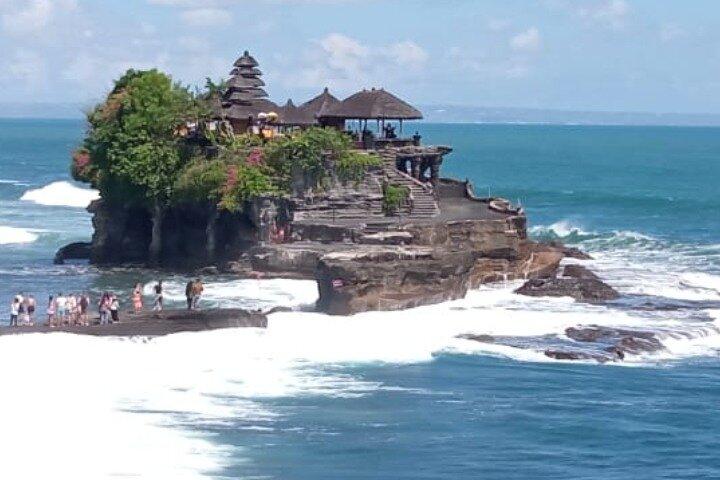
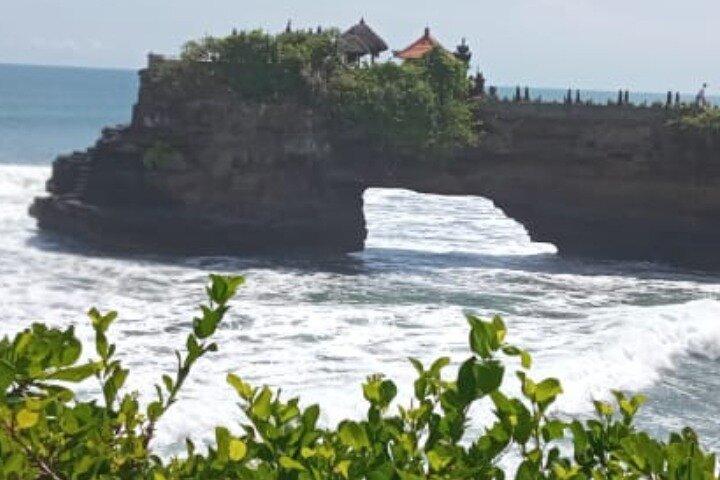
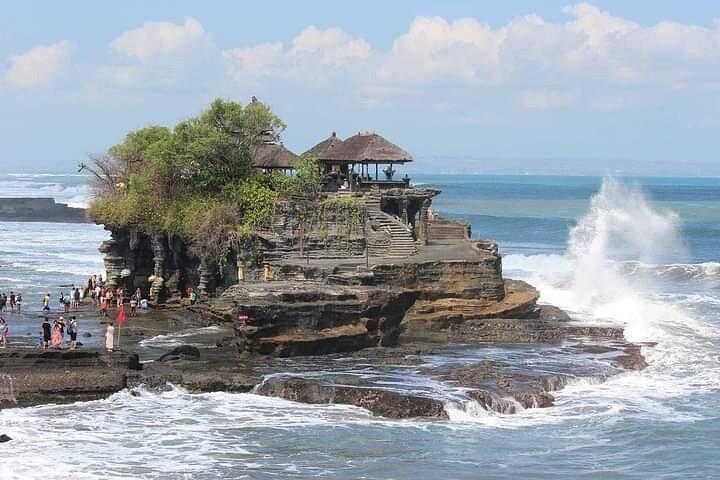
Tanah Lot Temple — Bali's iconic ocean-perched temple, about 30 minutes west, spectacular at sunset
Alas Kedaton Monkey Forest — a smaller, less touristy monkey sanctuary surrounded by nutmeg trees, 15 minutes away
Jatiluwih Rice Terraces — UNESCO-listed rice paddies stretching across the Tabanan highlands, about 45 minutes north
Tanah Lot Temple — Bali's iconic ocean-perched temple, about 30 minutes west, spectacular at sunset
Alas Kedaton Monkey Forest — a smaller, less touristy monkey sanctuary surrounded by nutmeg trees, 15 minutes away
Jatiluwih Rice Terraces — UNESCO-listed rice paddies stretching across the Tabanan highlands, about 45 minutes north