



Bali Travel Tips: A Local Expert's Honest Guide
10 min read
Pratima Alvares
Author
Leisure Travel Expert Ex- SOTC & Cox & Kings
SHARE BLOG
TABLE OF CONTENTS
Key Takeaways
- Complete your e-VoA, tourist levy, and e-Arrival Card online before you fly — it saves 30–60 minutes of queue time at Ngurah Rai Airport.
- Carry cash in Indonesian Rupiah for warungs and markets, but use a travel debit card (like Wise) at bank-attached ATMs for the best exchange rates.
- Dress modestly at temples (sarong and sash required), tip 5–10% for good service, and learn three or four Bahasa Indonesian greetings — locals notice the effort.
- Pick your base area deliberately: Ubud for culture and rice terraces, Uluwatu for cliffside beaches, Seminyak for dining and nightlife, Canggu for surf and co-working.
The most important Bali travel tips come down to three pre-trip actions: sort your e-VoA visa online (IDR 500,000 / ~USD 31), pay the Bali tourist levy on the official Love Bali website (IDR 150,000 / ~USD 10), and fill in the All Indonesia e-Arrival Card before boarding. On the ground, cash is still essential outside resort zones, traffic between areas regularly takes twice as long as the map suggests, and temple dress codes are actively enforced — not optional guidelines.
There is a version of Bali that lives on social media: golden-hour rice terraces, flower-petal pool floats, and cliffside infinity edges with nobody else in the frame. Then there is the Bali you land in — where the drive from the airport to Ubud takes two hours in peak traffic, where your phone's data plan stops working in the middle of a temple visit, and where a money changer just short-changed you by IDR 200,000 while you were still smiling.
Neither version is wrong. Bali delivers some of the most memorable travel experiences in Southeast Asia, from sunrise treks on volcanic ridgelines to IDR 25,000 plates of nasi campur that rival any fine-dining concept. But the gap between expectation and reality catches first-time visitors off guard, and most online guides either gloss over the friction or bury useful details under affiliate links.
This guide is different. It covers the practical, specific, on-the-ground knowledge that separates a smooth Bali trip from one spent Googling "how to get a refund" in a hotel lobby. From visa paperwork and airport arrival to scam mechanics, temple etiquette, and which neighbourhood actually suits your travel style — these are Bali travel tips built on local expertise, not recycled listicles. Whether you are visiting for the first time or returning after a few years away, start here before you pack.
Before You Fly — Paperwork, Payments, and Pre-Trip Prep
Three digital tasks will save you 30–60 minutes of standing in queue at Bali's I Gusti Ngurah Rai International Airport. Complete all three before you board your flight, and your arrival becomes a five-minute walk to the exit instead of a slow shuffle past overheated kiosks.
Visa on Arrival vs. e-VoA
Most nationalities — including Indian, Australian, British, American, and EU passport holders — are eligible for a Visa on Arrival. You can either pay at the airport counter or apply for the electronic version (e-VoA) online through the official Indonesian immigration portal at least 48 hours before departure.
- Cost: IDR 500,000 (~USD 31) for both the counter VoA and the e-VoA; a small processing fee applies to the online version.
- Duration: 30 days, extendable once for an additional 30 days through the immigration office in Bali.
- e-VoA advantage: Lets you use the automated e-gates at the airport, skipping the manual immigration queue entirely.
- What to have ready: Passport with at least 6 months validity, proof of onward or return travel, and the confirmation email or QR code if you paid online.
Quick Tip — Fake Visa Sites
- Only use the official Indonesian government portal for e-VoA applications. Third-party websites often charge two to three times the real fee and sometimes delay processing. If the URL does not end in a .go.id domain, close the tab.
The Bali Tourist Levy
Since February 2024, every international tourist entering Bali must pay a separate provincial levy of IDR 150,000 (~USD 10). This is in addition to the visa fee. The levy funds cultural preservation and environmental programmes across the island.
- Where to pay: The official Love Bali website (lovebali.baliprov.go.id) or the Love Bali app. You can also pay at counters in the airport arrivals hall, but the queue can be long.
- Scam warning: Several fake websites advertising "Bali tourist tax payment" charge IDR 400,000–600,000 for the same IDR 150,000 levy. Some even buy Google Ads to appear at the top of search results. Always verify you are on the official .baliprov.go.id domain.
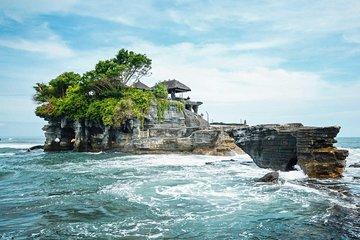
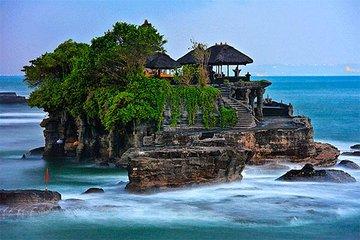
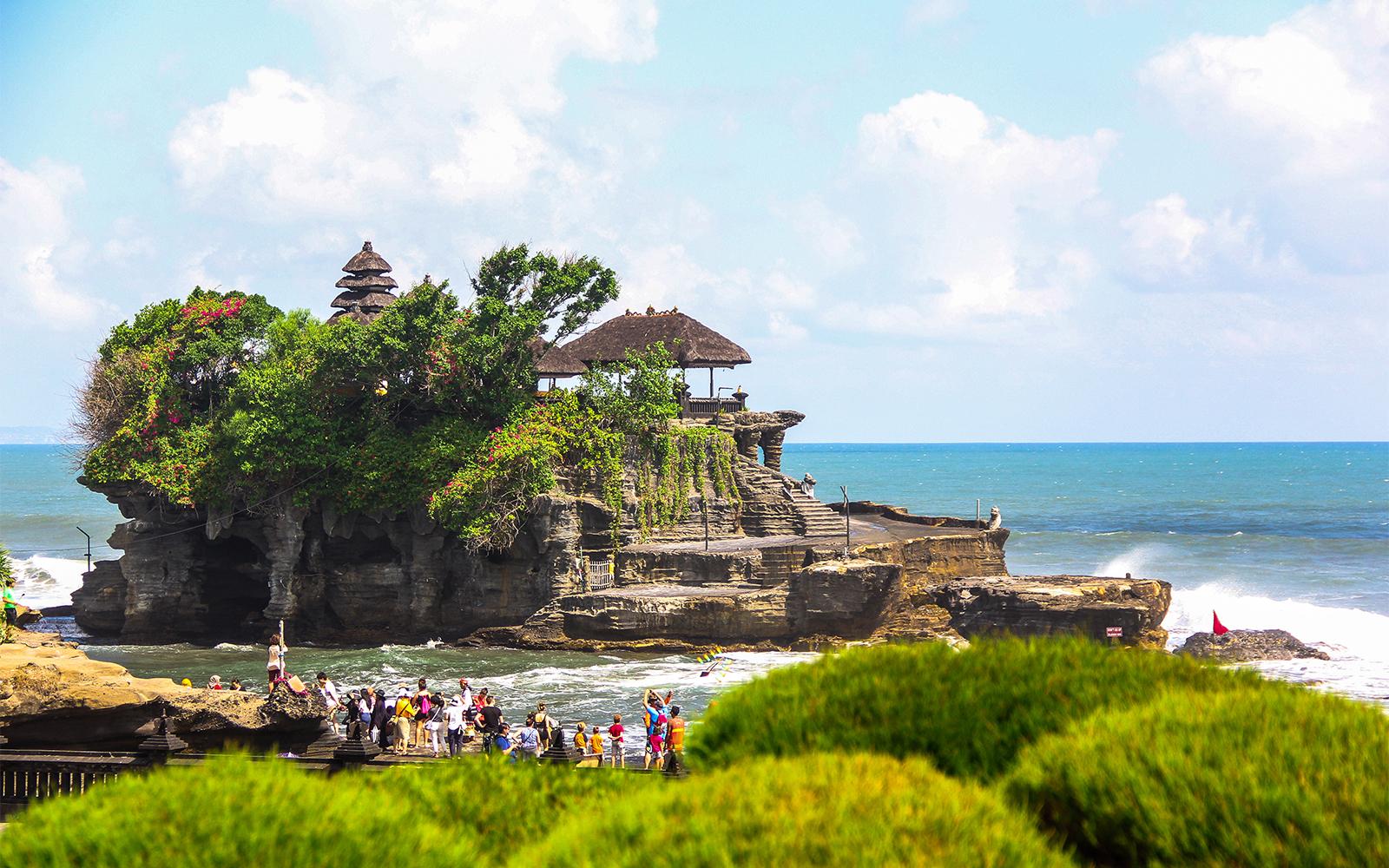
- What to keep: After payment, you receive a QR code via email. Save a screenshot — tourism police conduct random checks at major attractions like Tanah Lot Temple and Uluwatu.
All Indonesia e-Arrival Card
Indonesia has replaced its old customs declaration, health pass, and immigration forms with a single digital submission called the All Indonesia e-Arrival Card. Fill it in online within three days of your departure. You will receive a QR code to scan on arrival — no paper forms needed.
What to Pack (Beyond the Obvious)
Bali's equatorial sun and temple dress codes catch many visitors off guard. A lightweight sarong solves both — it works as temple cover, a beach wrap, and a privacy curtain on overnight ferries. Beyond that, prioritise reef-safe sunscreen (conventional formulas are increasingly restricted at dive sites), mosquito repellent with DEET for evenings in Ubud's jungle areas, and a Type C power adapter. If you plan to rent a scooter, bring or arrange an International Driving Permit before you fly — Bali police conduct roadside checks, and your travel insurance may not cover scooter accidents without one.
Where to Base Yourself — Bali's Neighbourhoods Decoded
Bali is not one destination — it is several distinct areas connected by roads that are often slower than you expect. Picking the right base saves you hours of daily commuting and shapes the entire feel of your trip. Here is an honest breakdown of each major zone.
Ubud — Culture, Craft, and Green Canopy
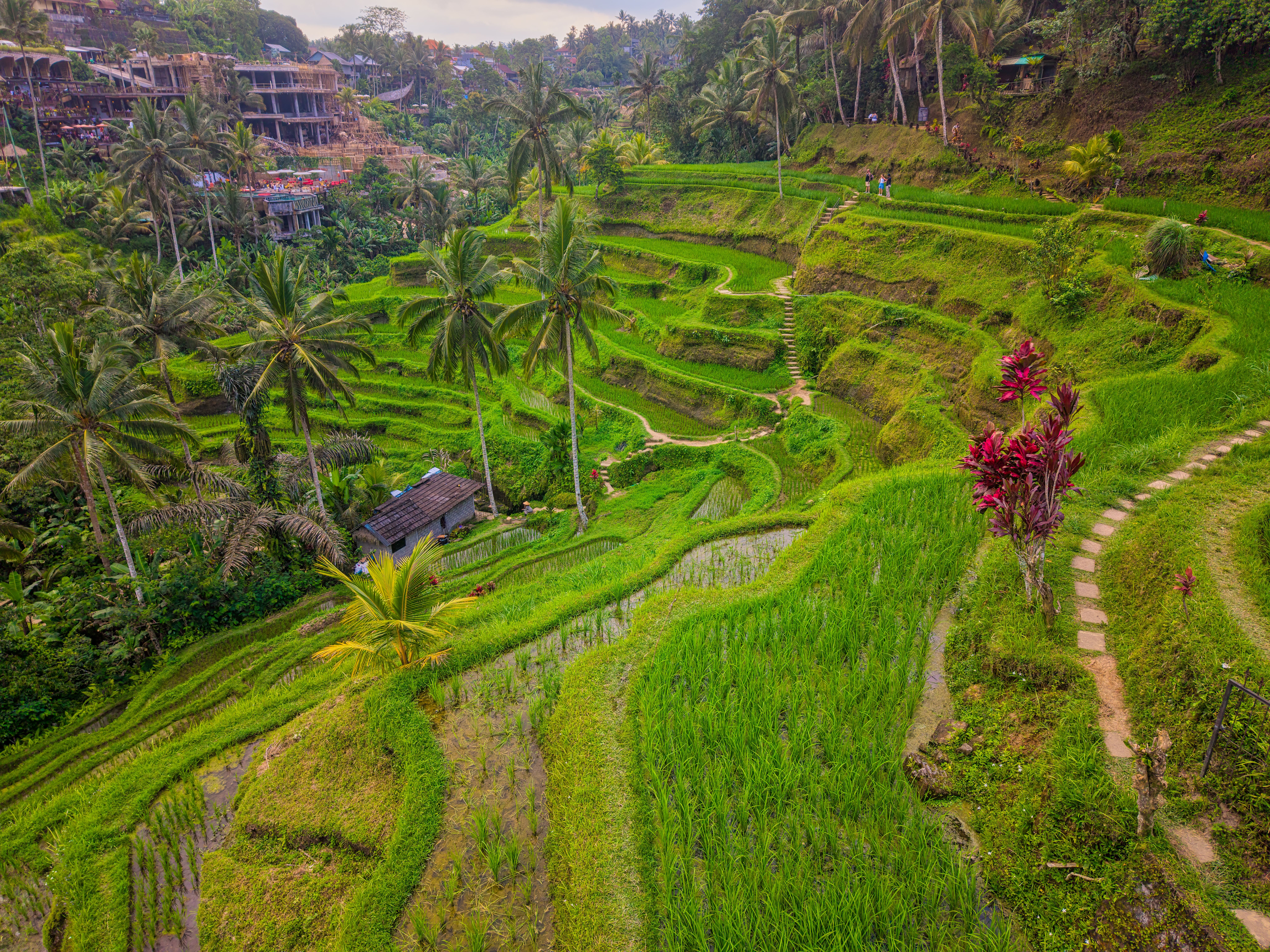
Ubud sits inland among forested ravines, rice terraces, and Hindu temple compounds. It is the centre of Bali's arts scene, with galleries, dance performances, and workshops in silver, batik, and woodcarving. The Monkey Forest Sanctuary and Tegalalang Rice Terrace are both here. The trade-off: no beach access, and the town centre's single main road creates heavy traffic by mid-morning. If you want culture and jungle, Ubud is unmatched. If you want sand, you will need a 60–90 minute drive south.
Seminyak — Dining, Boutiques, and Polished Nightlife
Seminyak is Bali's most established upscale zone. High-end restaurants, designer boutique shops, and sunset beach clubs line its main streets. Accommodation ranges from five-star resorts to private pool villas. Prices here run 20–40% higher than Canggu or Ubud for comparable quality. If you want quality dining within walking distance and a beach that is maintained daily, Seminyak delivers — but expect crowds during peak season (July–August and Christmas–New Year).
Canggu — Surf, Cafes, and the Co-Working Crowd
Canggu has evolved from a quiet surf village into Bali's digital nomad headquarters. Expect Australian-style brunch cafes, yoga studios, and co-working spaces alongside rice paddies that are slowly being built over. The surf is accessible for beginners at Batu Bolong, and nightlife skews younger than Seminyak. The main downside: traffic congestion on the single-lane roads is severe, especially between 8–10am and 5–7pm. The beach at Canggu has dark volcanic sand — if you want white-sand postcard beaches, head to Uluwatu or Nusa Dua instead.
Uluwatu and Nusa Dua — Cliffs, Resorts, and Calmer Water
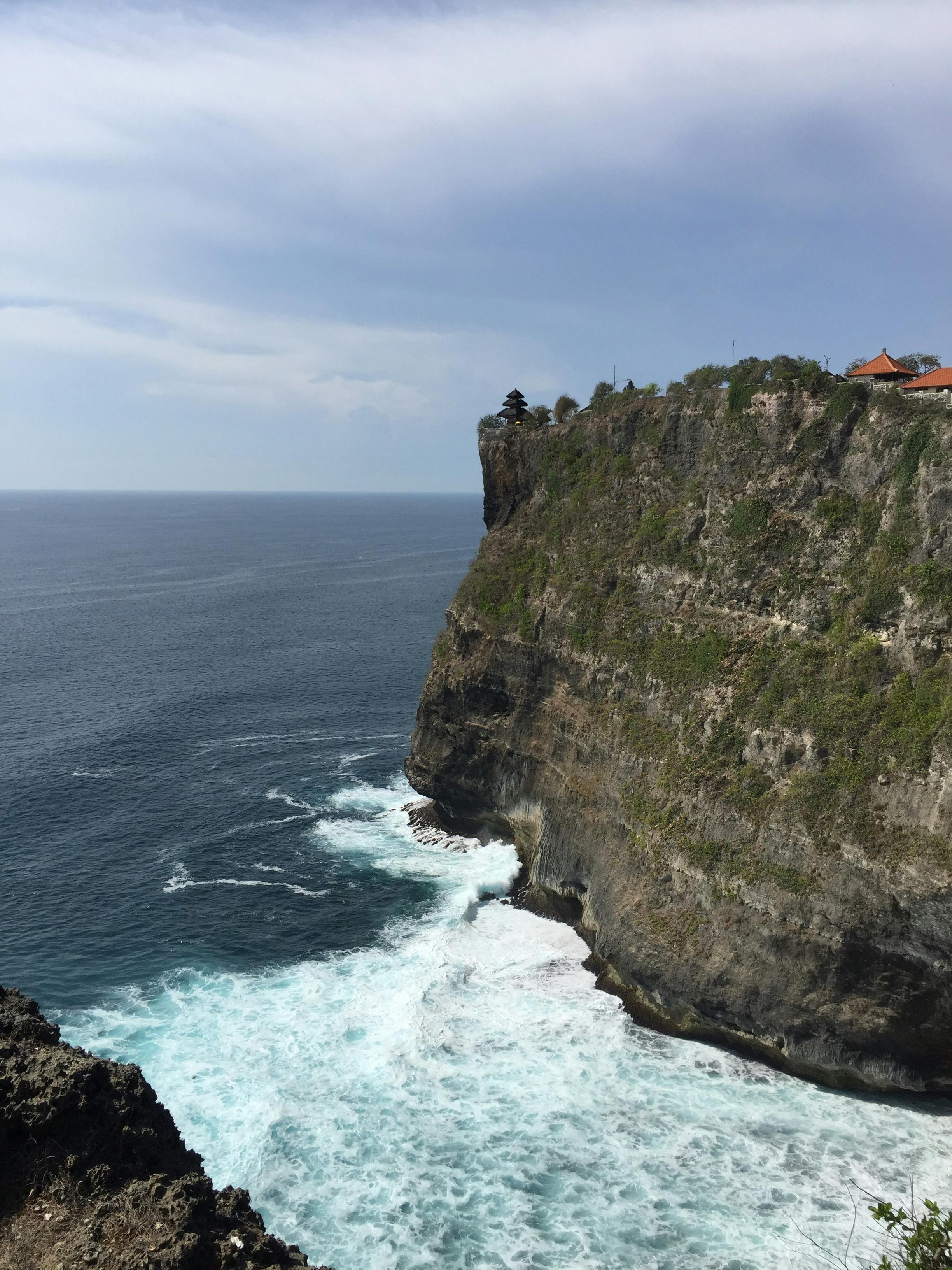
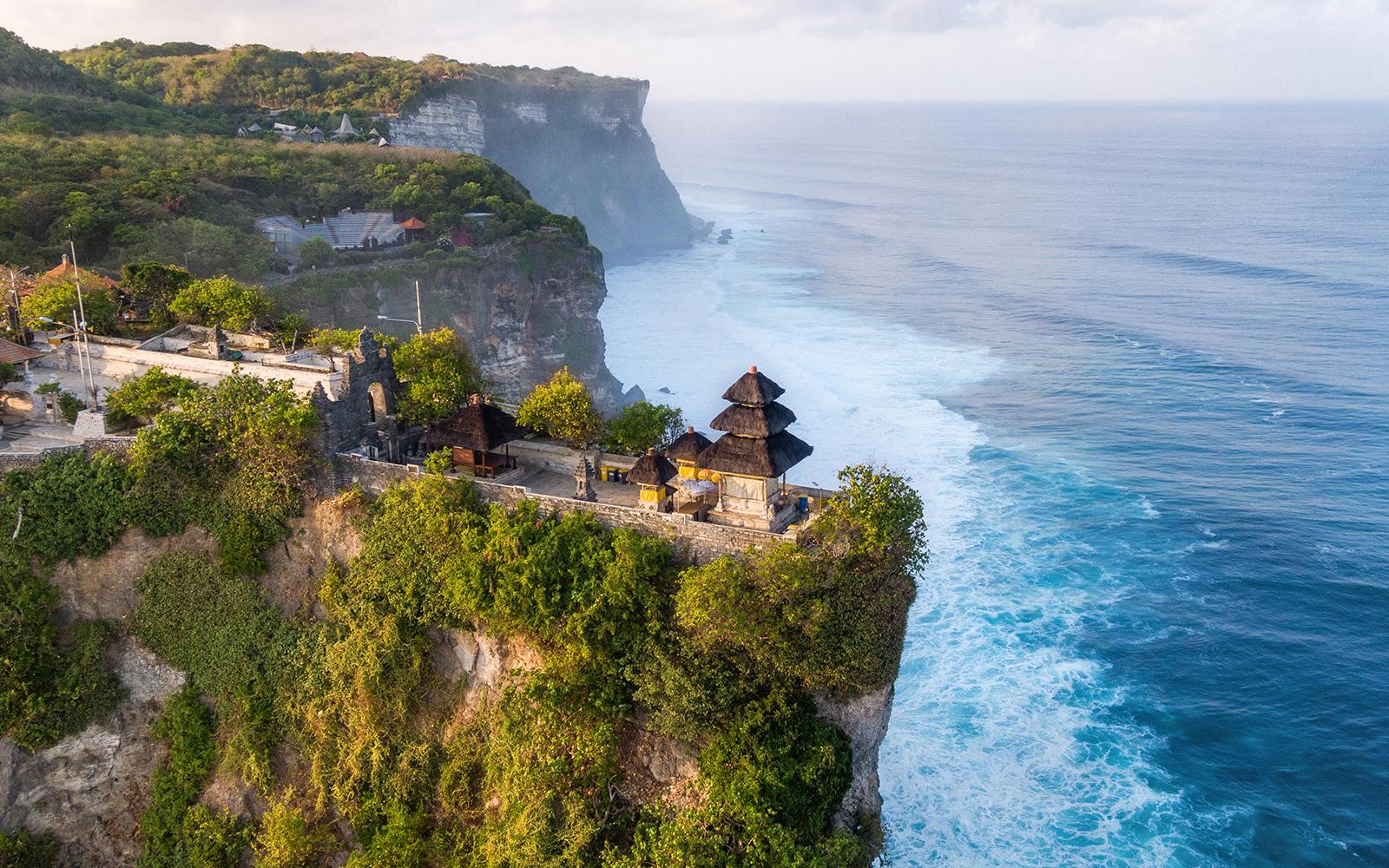
The Bukit Peninsula in southern Bali splits into two distinct zones. Uluwatu is the cliffside half — dramatic ocean views, world-class surf breaks, and the famous Kecak fire dance at sunset. Nusa Dua sits on the eastern shore with calm, swimmable water, international resort chains, and manicured beachfronts. Both areas are quieter than Seminyak or Canggu but require a driver or scooter to reach restaurants and attractions. If you are travelling with young children or want a beach-resort holiday with minimal planning, Nusa Dua is the path of least resistance.
Sanur — Sunrises, Families, and a Slower Pace
Sanur is the east-coast alternative that rarely makes Instagram. It has a paved beachfront path, calm morning water, and a handful of local seafood restaurants that have been open since the 1980s. Sunrise here is the best on the island — you face directly east across the Bali Sea with Mount Agung in the background. Sanur also serves as the departure point for fast boats to Nusa Penida and Nusa Lembongan. If your priority is a relaxed base with easy island-hopping, Sanur earns its spot.
Getting Around — Transport That Actually Works
Bali does not have a rail system, a functioning public bus network, or ride-share coverage that works everywhere. Getting from A to B requires a small amount of planning, and ignoring the traffic factor is the single most common mistake visitors make.
Grab and Gojek — Your Default for Short Trips
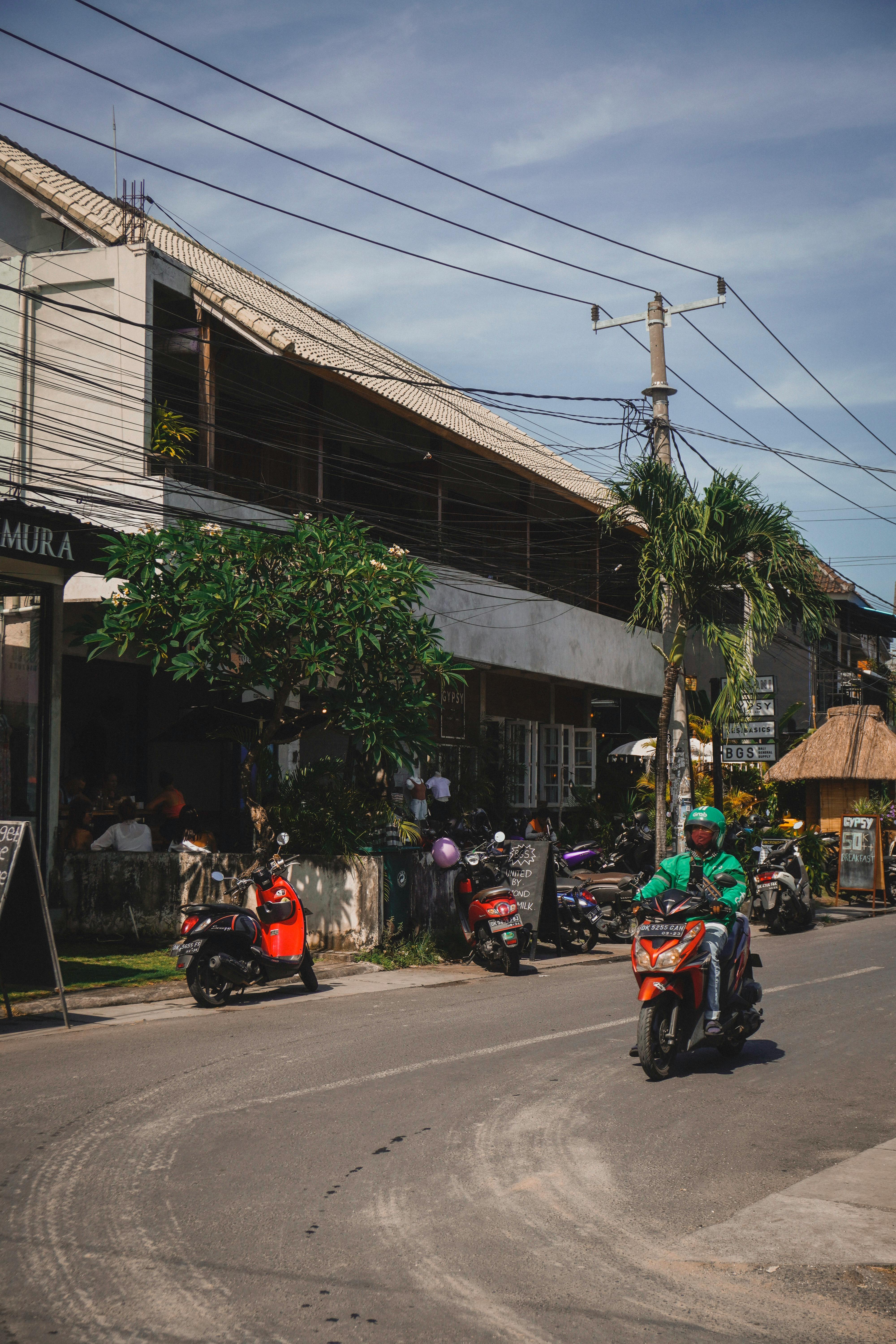
Both apps work across most of Bali and offer car or motorbike rides with upfront pricing. A 15-minute car ride typically costs IDR 30,000–50,000 (~USD 2–3). The catch: some hotel zones, especially around Nusa Dua resorts and the airport, restrict app-based drivers from picking up. In those areas, you will need to walk to a nearby main road or use the hotel's taxi service. Always confirm the driver's name and plate number through the app before getting in.
Private Drivers for Day Trips
Hiring a driver for a full day is one of the best-value decisions you can make in Bali. Most drivers double as informal guides, know which temples are crowded at which hours, and will wait while you explore.
- Cost: IDR 500,000–700,000 per day (~USD 31–44) for a car and driver, typically covering 8–10 hours.
- What is included: Petrol, the driver's time, and usually some local knowledge. Entrance fees to temples and attractions are separate.
- How to book: Ask your accommodation for a recommendation, or book through a platform with reviews. Avoid accepting offers from unsolicited drivers at the airport or tourist hotspots — pricing and reliability are unpredictable.
Scooter Rental — Freedom with Fine Print
Scooters are the cheapest and most flexible way to get around Bali at IDR 70,000–100,000 per day (~USD 4–6). But two non-negotiable conditions apply. First, you need an International Driving Permit — Bali police run regular roadside checkpoints, and the fine for riding without a valid permit is IDR 500,000. Second, your travel insurance almost certainly excludes scooter accidents unless you hold a valid licence. If you plan to ride, sort both before you leave home.
Traffic Reality Check
Google Maps distances in Bali are misleading. A 15-kilometre drive from Canggu to Uluwatu can take 60–90 minutes. The stretch from the airport to Ubud routinely takes two hours during afternoon traffic. Build in extra time for every journey, schedule no more than two major attractions per day, and avoid the corridors between Seminyak, Canggu, and Denpasar during morning and evening rush hours (8–10am and 5–7pm).








Money, Scams, and Spending Smart
Indonesia's currency is the Indonesian Rupiah (IDR), and the sheer number of zeros trips up nearly every first-time visitor. A bottle of water costs IDR 5,000 (~USD 0.31). A sit-down meal at a local warung runs IDR 35,000–60,000 (~USD 2–4). A night in a private pool villa can be IDR 2,000,000 (~USD 125). Getting comfortable with these numbers early saves you from both overpaying and under-tipping.
ATMs — Where You Withdraw Matters
Use ATMs that are physically attached to bank branches — BCA, BNI, and Mandiri are the three most reliable networks. These machines are maintained regularly, sit inside air-conditioned lobbies, and have security cameras. Avoid standalone ATMs in convenience stores, petrol stations, or tourist-strip kiosks — card skimming devices are harder to spot on unmonitored machines.
- Withdrawal limit: Most Bali ATMs dispense a maximum of IDR 2,500,000 per transaction (~USD 155). Some BCA machines allow IDR 3,000,000.
- Fees: Indonesian banks charge IDR 30,000–50,000 per foreign withdrawal. Your home bank may add a further fee plus a currency conversion margin.
- Pro move: A multi-currency travel card (Wise, Revolut, or similar) lets you hold IDR directly, avoiding double-conversion fees. Load IDR before you fly and withdraw at bank ATMs for the best rate.
Money Changer Scams — How They Work
The classic money changer scam in Bali follows a pattern. A kiosk on a tourist street advertises an exchange rate well above the bank rate — that is your first signal. Inside, the teller counts your rupiah notes in front of you, then asks to "recheck" the pile. During the recount, one or two notes are dropped behind the counter using a sleight-of-hand fold. By the time you walk away, you are short IDR 100,000–300,000.
If you must exchange cash, use authorised money changers with a "PVA Berizin" (licensed money changer) sign, digital rate boards, and a proper counter. Count your money yourself, do not let the teller take it back after you have verified the amount, and use your phone calculator to confirm the total. Better yet, skip physical currency exchange entirely and use a bank ATM or travel card.
Tipping Culture
Tipping is not mandatory in Bali, but it is appreciated and makes a real difference — the average monthly salary in Bali is under IDR 3,500,000 (~USD 220). A small tip signals that the service mattered to you.
- Restaurants: 5–10% of the bill. Check whether a service charge is already included — many upscale restaurants add 10%.
- Private drivers: IDR 50,000–100,000 for a full-day trip (~USD 3–6).
- Spa therapists: IDR 20,000–50,000 per session.
- Hotel staff: IDR 10,000–20,000 for porters or housekeeping, left on the pillow or handed directly.
Daily Budget Benchmarks
What you spend in Bali depends entirely on your travel style. Here is a realistic range for one person per day, excluding flights and accommodation:
- Budget traveller: IDR 300,000–500,000/day (~USD 19–31) — warungs for meals, Grab motorbike rides, free beaches and temple exteriors.
- Mid-range traveller: IDR 700,000–1,200,000/day (~USD 44–75) — mix of warung and restaurant meals, private driver for a day trip, one paid activity or entrance fee.
- Premium traveller: IDR 2,000,000+/day (~USD 125+) — fine dining, private tours, spa treatments, beach club daybeds, and guided cultural experiences.
Temple Etiquette and Cultural Respect
Bali is home to more than 20,000 Hindu temples, and daily religious practice is woven into every part of island life. Respecting temple customs is not a suggestion — it is an expectation, and enforcement has tightened in recent years after high-profile incidents involving tourists.
Dress Code — Non-Negotiable at Every Temple
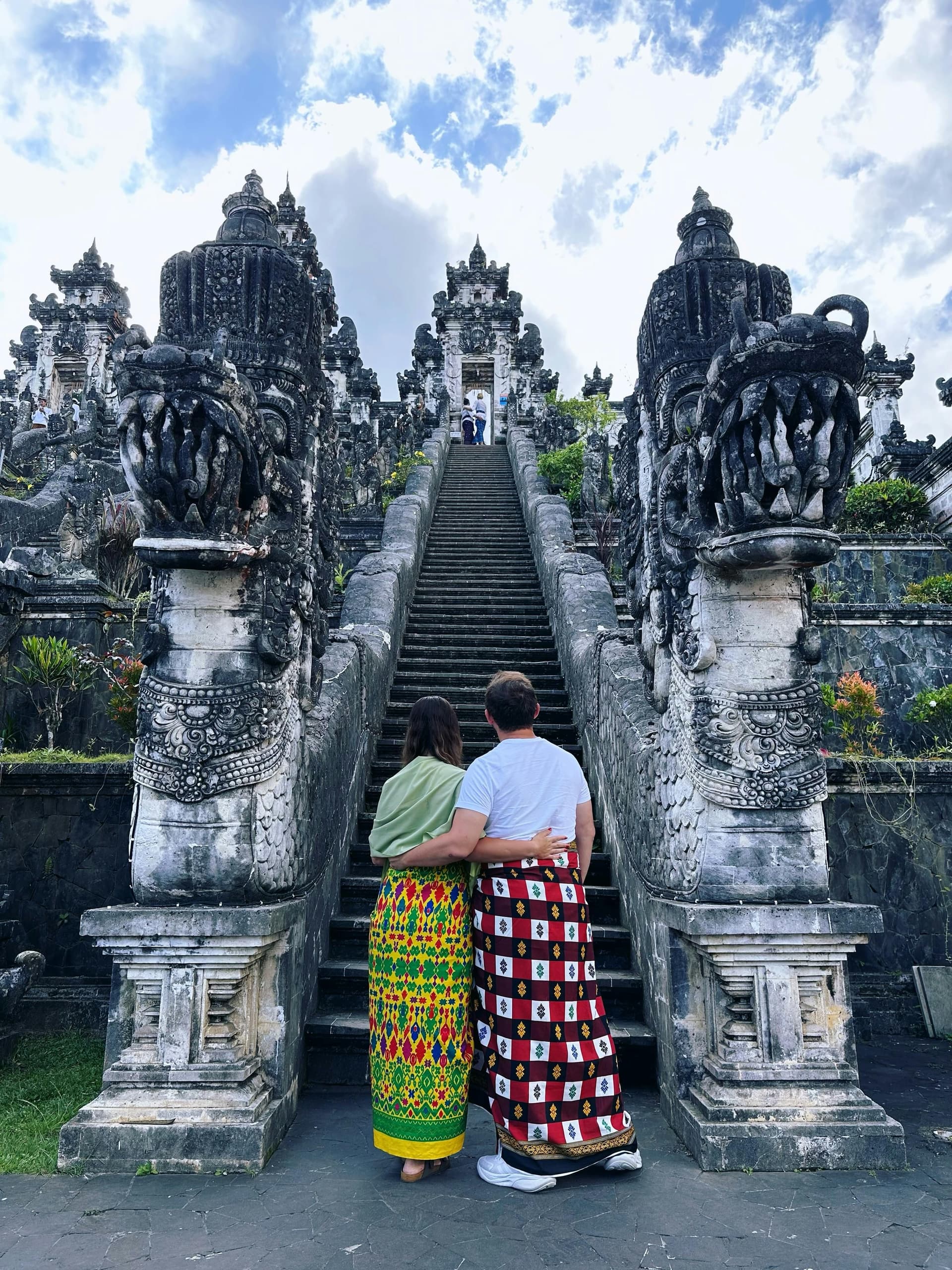
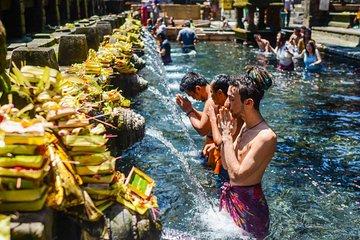
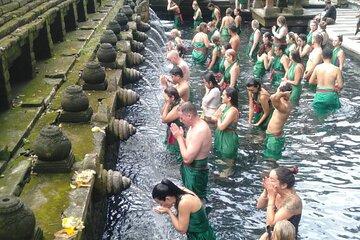
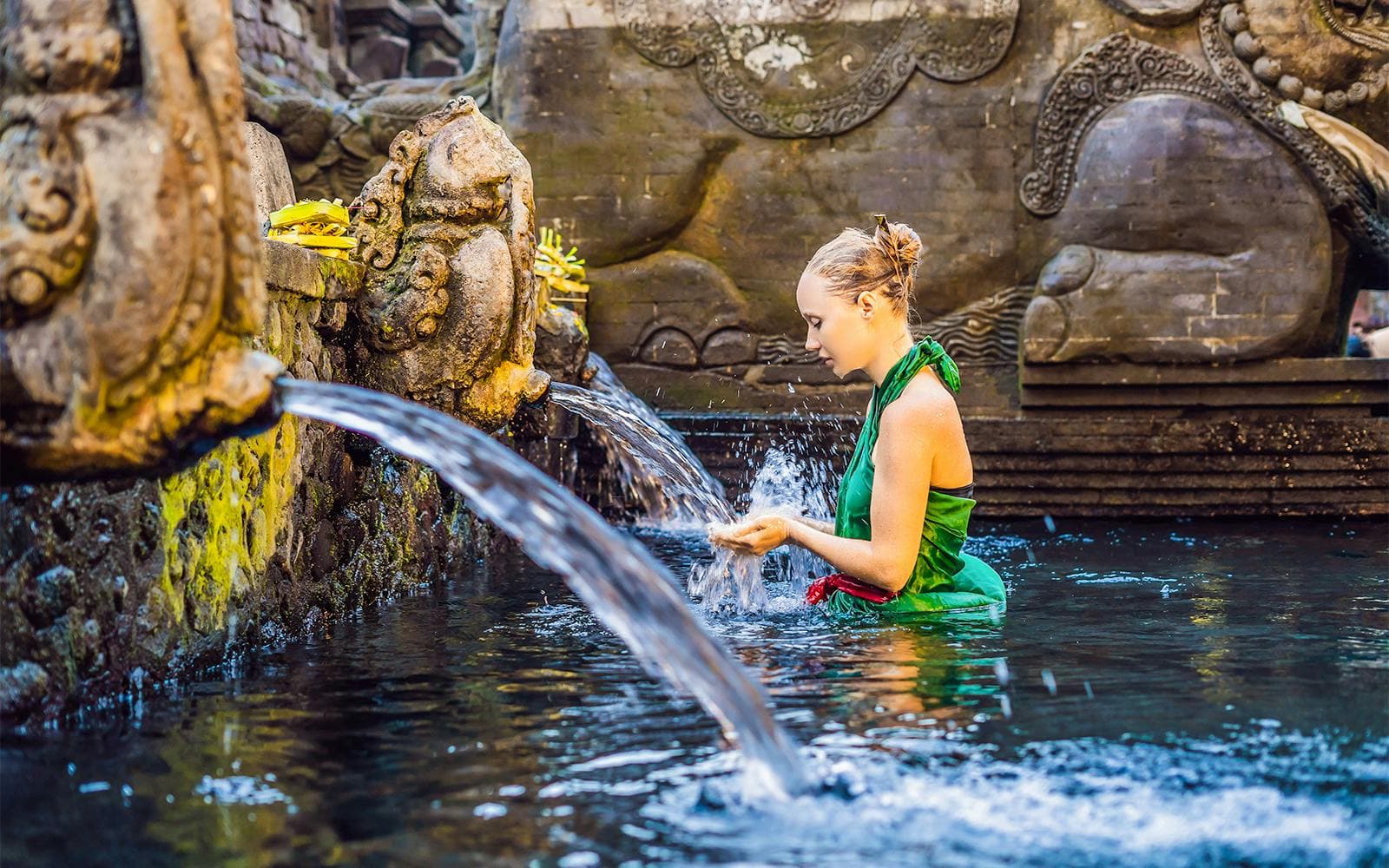
Both men and women must wear a sarong and a sash (selendang) tied around the waist before entering any temple compound. Most major temples — including Tirta Empul Temple, Besakih, and Uluwatu — offer sarong rentals or loans at the entrance, but bringing your own gives you more flexibility and avoids the queue. Shoulders should be covered, and hats are removed when entering the inner courtyards. Women who are menstruating are traditionally asked not to enter temple compounds — signs at the entrance state this directly.
Nyepi — The Day of Silence
Nyepi falls on the Balinese New Year (Saka calendar) and is unlike any public holiday you have experienced. For 24 hours, the entire island shuts down. No flights land or depart. No vehicles move on the roads. Shops, restaurants, and beaches close. Hotels ask guests to remain inside the property with curtains drawn. Even the airport halts operations. If your trip overlaps with Nyepi, plan to stay put for the day — it is a rare and deeply moving experience, but it requires knowing the date in advance. In 2026, Nyepi fell on 29 March.
Offerings — What the Small Baskets Mean
The small woven baskets filled with flowers, rice, incense, and sometimes a cracker or cigarette are called canang sari. Balinese families place them on doorsteps, shrines, car dashboards, and pavements multiple times a day as offerings of gratitude. Never step on or kick a canang sari, even if it is on the pavement in your path. Step over it or walk around it. Photographing offerings is generally fine, but ask before photographing people mid-prayer.
Basic Bahasa Indonesian — A Little Goes Far
English is widely spoken in tourist areas, but using even a few Bahasa Indonesian phrases shifts the dynamic. Locals notice the effort and respond warmly.
- Terima kasih — Thank you
- Selamat pagi — Good morning
- Permisi — Excuse me
- Berapa harganya? — How much does this cost?
- Tidak, terima kasih — No, thank you (useful for persistent market vendors)
Health, Safety, and the Things Nobody Warns You About
Bali is a safe destination for travellers by any reasonable measure, but two or three common health issues catch visitors off guard every week. Preparing for these does not mean worrying — it means packing the right things and knowing what to skip.
Bali Belly — Prevention and Recovery
Traveller's diarrhoea affects a significant number of visitors, usually within the first 48 hours. The cause is typically unfamiliar bacteria, not "dirty food." Your immune system simply has not met these microbes before.
- Prevention: Drink only bottled or filtered water — use it for brushing your teeth too. Avoid raw salads at street stalls (cooked food from the same stalls is usually fine). Wash your hands before eating.
- Treatment: Activated charcoal tablets, oral rehydration salts (available at any Bali pharmacy for IDR 5,000–10,000), and a 24-hour bland diet. If symptoms last beyond 48 hours or include fever, visit a clinic — SOS International and BIMC are the two most reliable private hospitals for tourists.
Sun and Heat
Bali sits 8 degrees south of the equator. The UV index regularly hits 11–12 during midday, which is "extreme" on the international scale. Sunburn happens fast, even on overcast days when clouds filter visible light but not UV radiation. Apply SPF 50 reef-safe sunscreen every two hours, wear a hat between 10am and 3pm, and carry a refillable water bottle — dehydration accelerates fatigue and can ruin a full day of sightseeing.
Travel Insurance — Not Optional
Travel insurance for Bali needs to cover three specific scenarios that standard policies sometimes exclude: scooter accidents (only covered if you hold a valid licence), dengue fever treatment, and medical evacuation to Singapore or Australia if needed. Read the fine print before you buy. A basic policy that covers these three items typically costs USD 30–60 for a two-week trip — a fraction of what a single emergency room visit at BIMC costs out of pocket (starting at IDR 1,500,000 / ~USD 94 for a consultation).
Water Safety Checklist
- Never drink tap water — not even in four- and five-star hotels.
- Use bottled or filtered water for brushing teeth.
- Ask for "no ice" (tanpa es) at street-side warungs unless the ice is tube-shaped (commercially produced) rather than crushed from block ice.
- Carry a reusable bottle and refill at filtered water stations — many villas and co-working spaces now offer free refills.
Dengue, Mosquitoes, and What to Spray
Dengue fever is present in Bali year-round, with a spike during the wet season (November–March). The mosquitoes that carry dengue bite during the day, not just at dusk. Use DEET-based repellent on exposed skin, especially in Ubud and other inland areas with dense vegetation. Accommodation with air conditioning and screened windows reduces your exposure overnight. If you develop a sudden high fever with severe headache and joint pain after returning from Bali, mention your travel history to your doctor — dengue is treatable when caught early.
Plan Your Bali Trip with Confidence
The best Bali travel tips come down to three things you can control before you leave home: sort your paperwork online (e-VoA, tourist levy, e-Arrival Card), plan your cash strategy (travel card plus bank ATMs, not street money changers), and choose a base that fits how you actually travel — not what looks best in a photo grid.
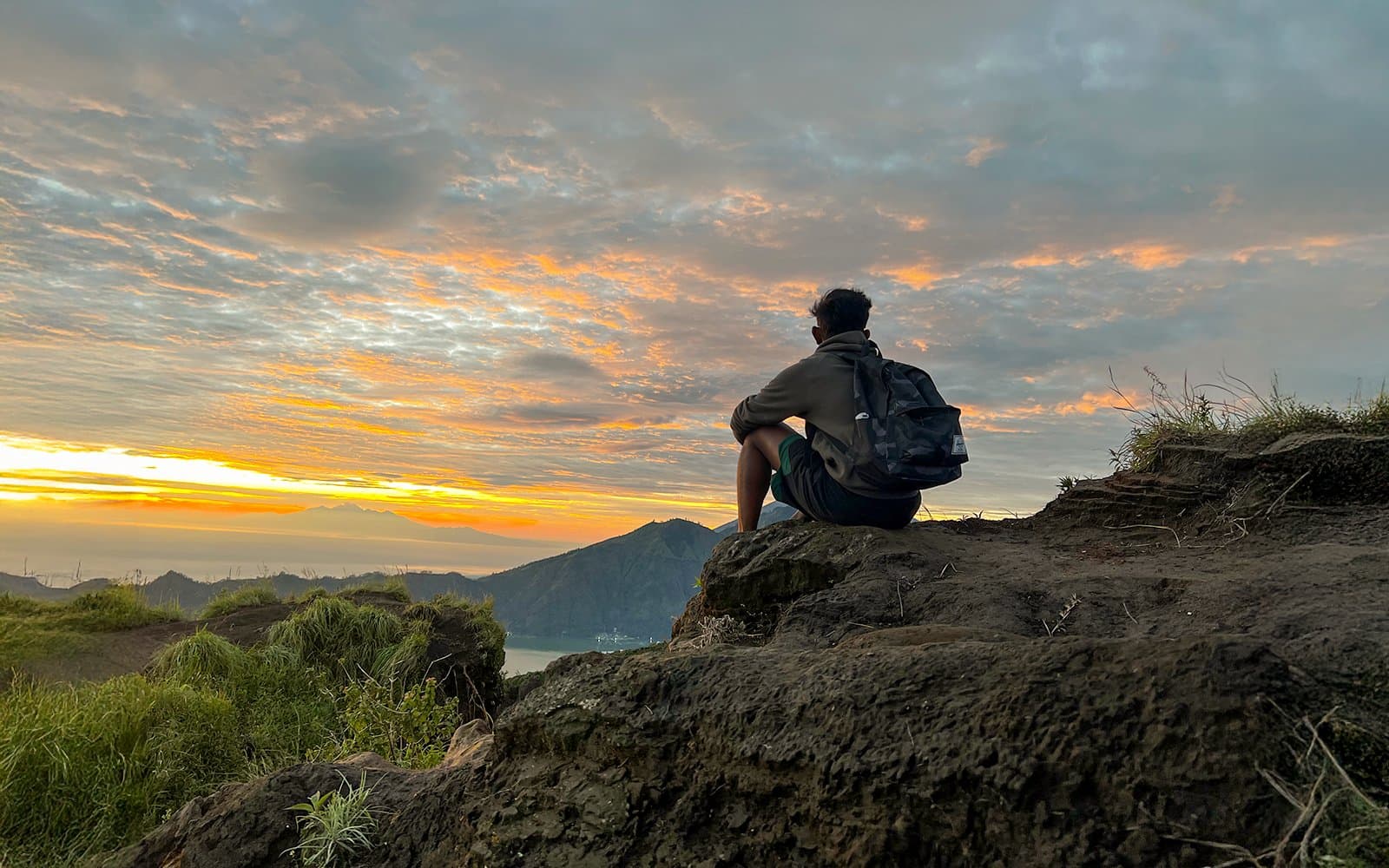
On the ground, Bali rewards travellers who slow down, respect the culture, and stay curious. A Mount Batur sunrise trek at 4am, a plate of babi guling at a roadside warung, an afternoon watching a Legong dance rehearsal in a village courtyard — these are the moments that make the planning worthwhile. Travjoy's Bali collection has been reviewed and approved by local experts, so you can browse and book with confidence rather than second-guessing every option. Start planning your Bali trip on Travjoy and see what the island has in store.








.svg&w=1920&q=75)