



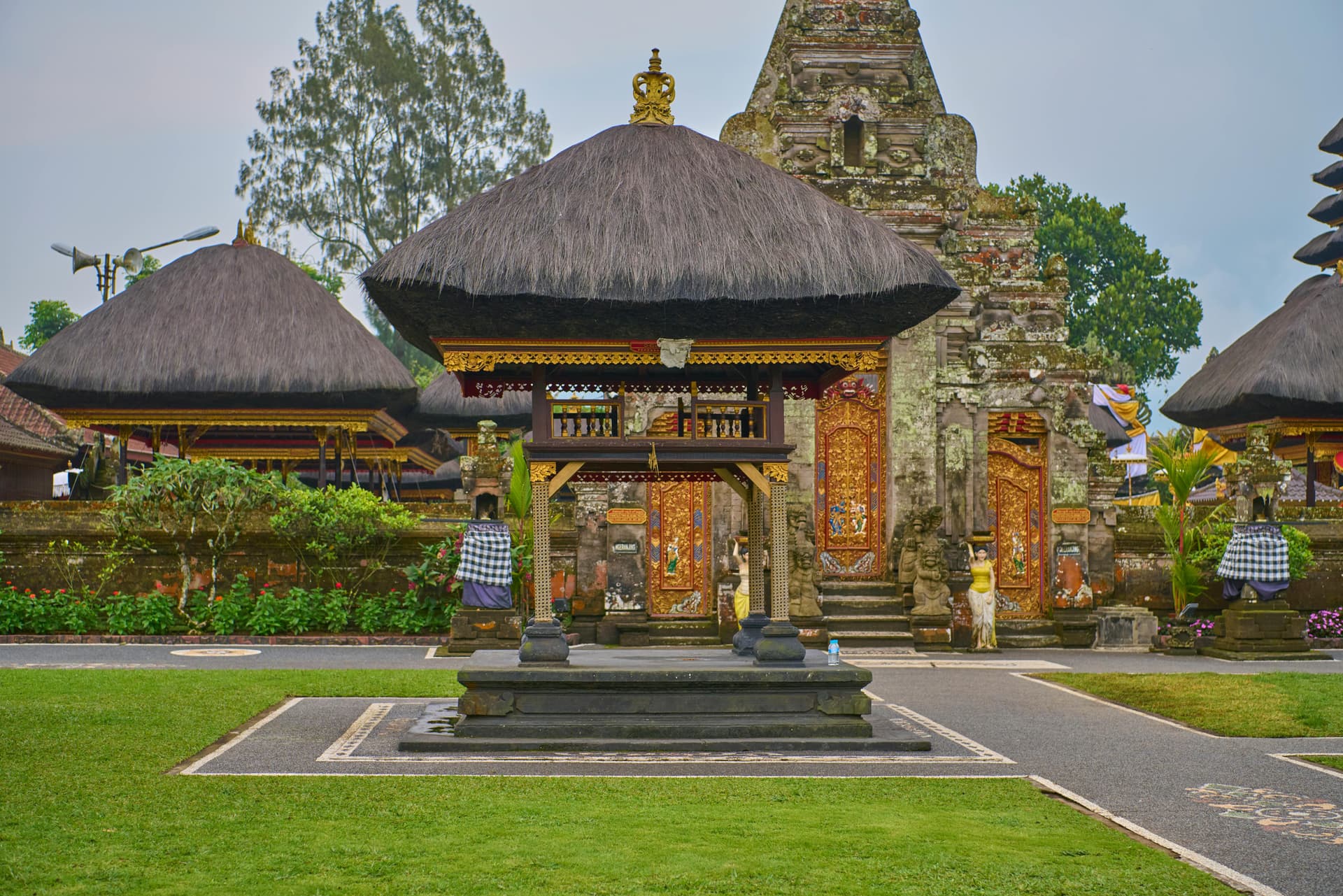
Bali Temples: 15 Sacred Sites and How to Visit Them
9 min read
Raj Varma
Author
Travel & Tourism Expert Ex-Thomas Cook, Kuoni, Times of India & Travel Triangle.
SHARE BLOG
TABLE OF CONTENTS
Key Takeaways
- Bali has six directional temples (Sad Kahyangan) considered the island's most sacred — most travellers see four to six in a week
- Entry fees range from IDR 30,000 (around USD $1.85) at smaller temples to IDR 150,000 (around USD $9.30) at Besakih, with sarong rental usually included
- Sea temples like Tanah Lot and Uluwatu are best at sunset; water temples like Tirta Empul and Ulun Danu Beratan reward early-morning visits
- A sarong and sash are mandatory at every temple — bring your own or rent at the gate, and keep shoulders covered
- Group temples by region: South coast, East Bali, the Ubud area, and Bedugul each line up as one or two day trips
The most sacred Bali temples include Besakih (the Mother Temple), Tanah Lot, Uluwatu, Lempuyang, Tirta Empul, and Ulun Danu Beratan — each anchored to a specific element of Balinese cosmology. Entrance fees in 2026 range from IDR 30,000 to IDR 150,000 (USD $2–9), sarong rental is usually included, and most temples are open 7am–6pm daily. To see Bali's main temples, plan four or five dedicated half-day or full-day trips grouped by region.
With over 20,000 active places of worship spread across an island roughly the size of Delaware, Bali holds one of the densest concentrations of Hindu temples anywhere in the world. The Balinese call it the Island of the Gods, and the name fits — Bali is also the only remaining stronghold of Hinduism in the Indonesian archipelago, where every village runs at least three community temples, every rice field has a small spirit shrine, and every household compound has a family altar where offerings appear at dawn.
For a traveller, the abundance is the problem. Which Bali temples are worth the drive? Which ones photograph well but feel hollow once you're standing there? How many can you fit in a week without temple fatigue setting in by day three?
This guide cuts through it. We've grouped 15 of Bali's most sacred and visit-worthy temples by type and region, with 2026 entrance fees in IDR and USD, opening hours, dress-code reminders, and which temples logically pair as single-day trips. The aim is a shortlist you can use as the spine of your Bali itinerary — not every shrine you could theoretically visit.
How Balinese temples are organised — a 5-minute primer
Every Balinese temple, from a 1,000-year-old mountain sanctuary to a small village shrine, follows the same architectural logic. Most reflect the philosophy of Tri Hita Karana — a Balinese concept of harmony between people, nature, and the divine. Once you understand the three-courtyard layout and the rough categories of temple, you'll spend less time wondering what you're looking at and more time noticing what's actually different about each site.
The three-courtyard structure
Most temples are divided into three concentric zones, increasing in spiritual purity as you move inward:
- Jaba (outer courtyard) — the public area you enter from the street. Often has resting pavilions, vendors, and performance space
- Jaba tengah (middle courtyard) — where most ceremonies happen. Open pavilions (bale) host offerings and gamelan musicians
- Jeroan (inner sanctum) — the most sacred zone, with multi-tiered shrines (meru) and altars. Usually closed to non-Hindu visitors except during major festivals
If you find yourself stopped at a low wall with a guard pointing politely back the way you came, you've reached the jeroan. That's expected — it's not personal.
Pura Sad Kahyangan — the six "world temples"
Six temples are considered the spiritual pillars of the island, each tied to a cardinal direction and a specific Hindu deity. They are Besakih (centre and east), Lempuyang (east), Goa Lawah (southeast), Uluwatu (southwest), Batukaru (west), and Pucak Mangu (north). Visiting all six is a pilgrimage most Balinese aspire to. Most travellers see two or three of them.
Sea, mountain, water, and village — quick distinctions
- Pura Segara (sea temples) — built on coastal rocks to honour the sea gods. Tanah Lot and Uluwatu are the famous ones
- Pura Gunung (mountain temples) — perched on volcanic slopes, anchored to Bali's spiritual hierarchy. Besakih sits on Mount Agung
- Pura Tirta (water temples) — built around springs or lakes, used for purification rituals. Tirta Empul is the most-visited
- Pura Desa (village temples) — community temples found at the heart of every Balinese village
- Pura Dalem (temples of the dead) — usually located near cemeteries, dedicated to Shiva in his destroyer aspect
Bali's iconic sea temples
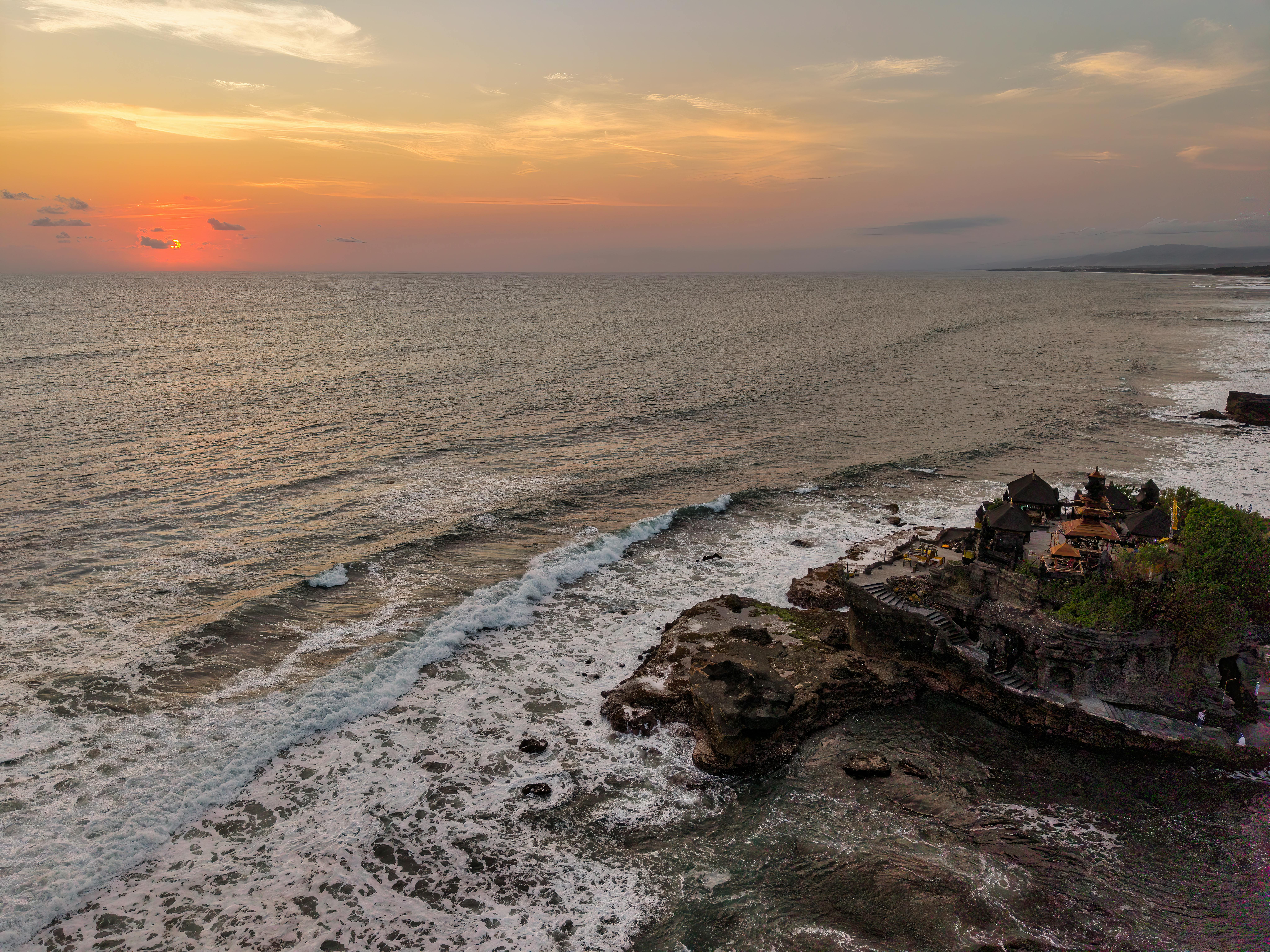
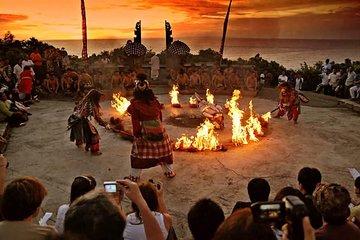
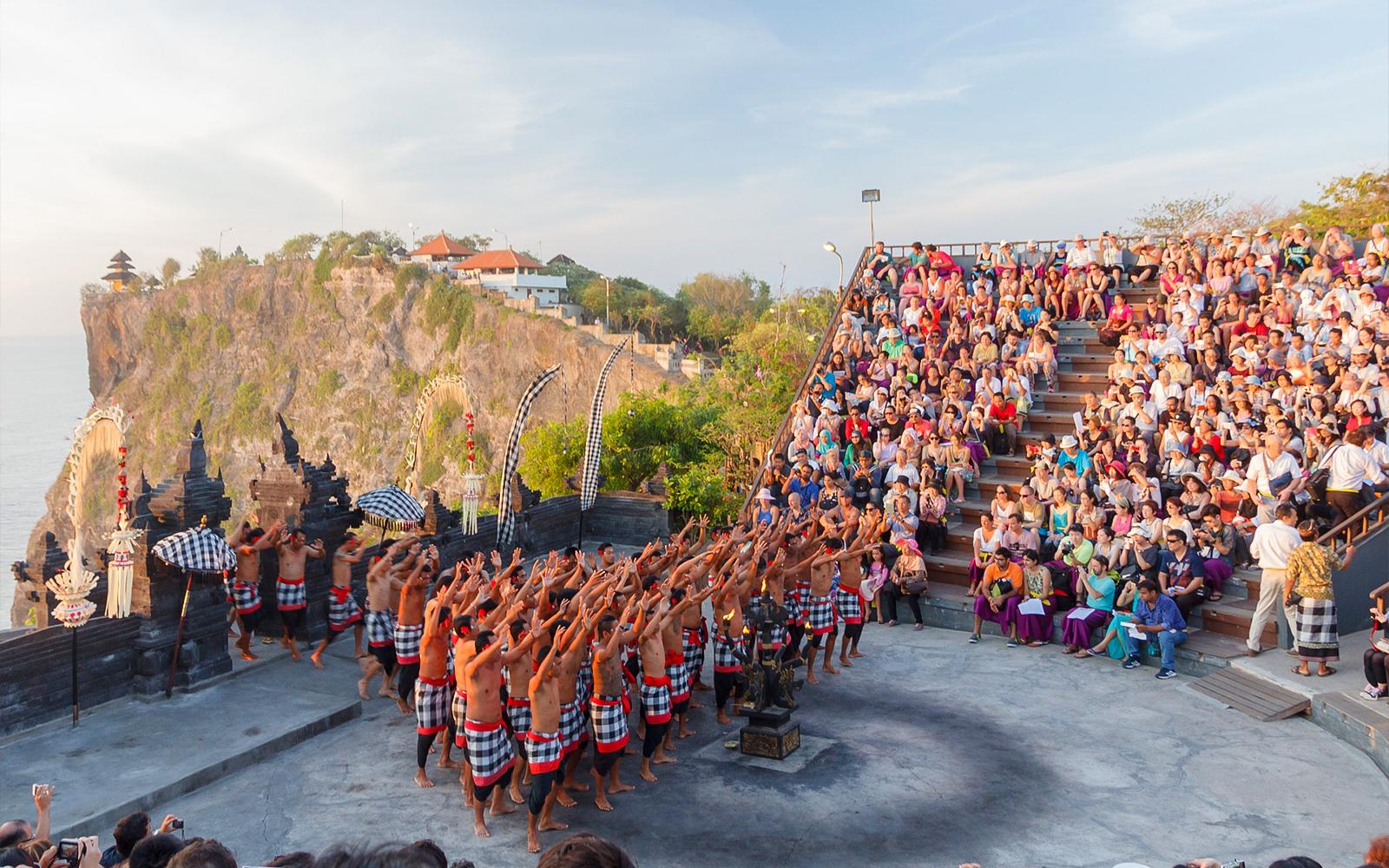
Bali's most-photographed temples sit on its tidal rocks and limestone cliffs, and two of them — Tanah Lot and Uluwatu — anchor most first-time itineraries. Both are best at golden hour, but for very different reasons. Tanah Lot becomes a silhouette as the tide rolls in. Uluwatu pairs the sunset with the Kecak fire dance, performed daily on a clifftop amphitheatre.
Tanah Lot Temple — the floating rock at sunset
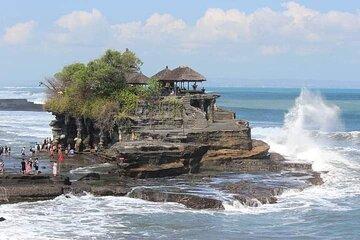
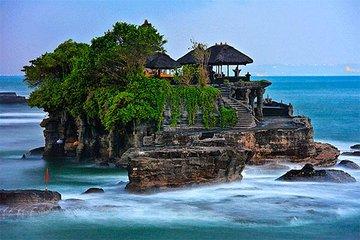
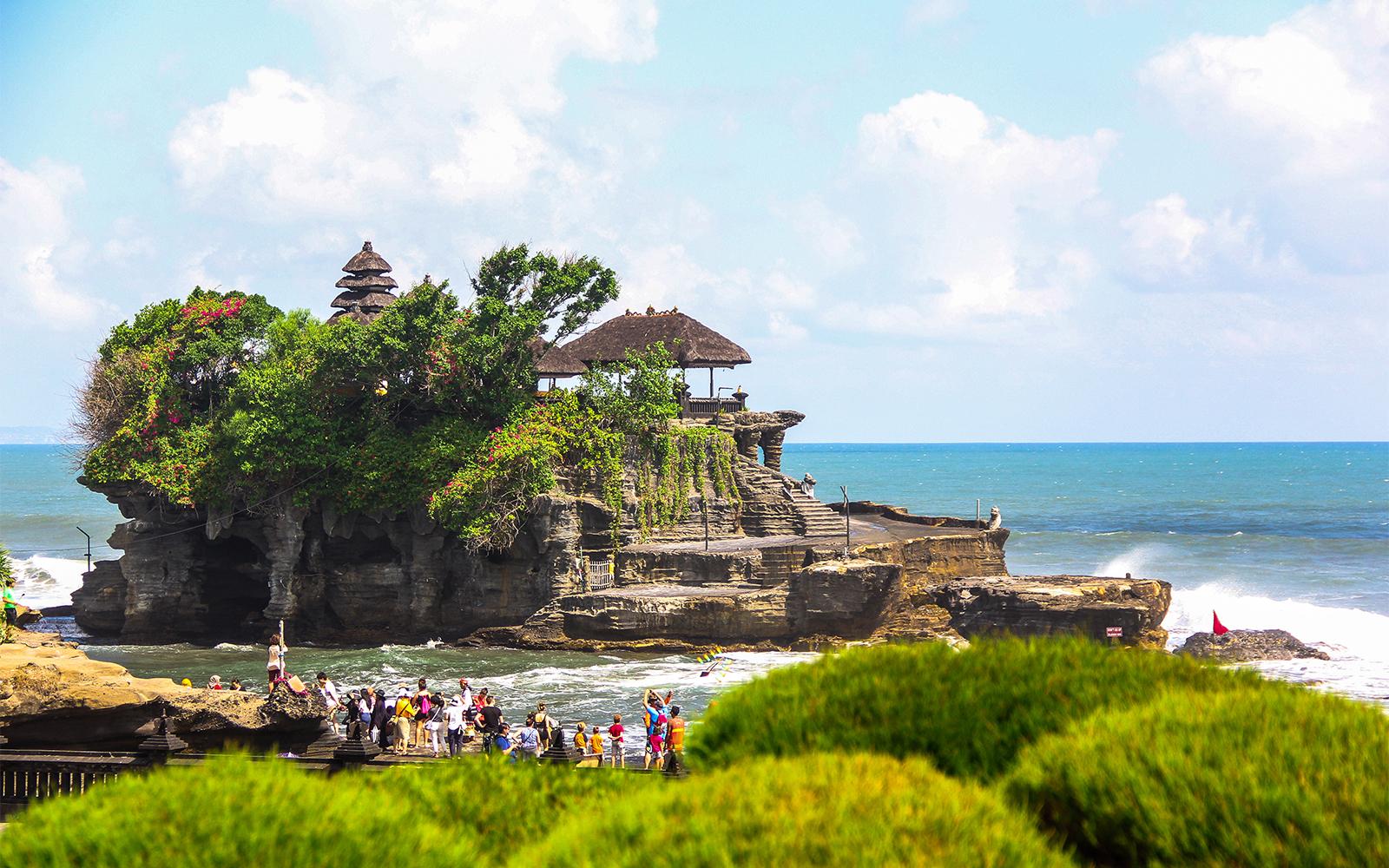
Tanah Lot Temple sits on a jagged offshore rock in Tabanan Regency, about 45 minutes from Seminyak. Built in the 16th century by the priest Dang Hyang Nirartha, it's one of Bali's seven sea temples and arguably its most photographed. Non-Hindus can't enter the inner shrine, but the surrounding clifftop park, the smaller Pura Batu Bolong nearby, and the sunset views are the real draw.
- Entry fee (2026): IDR 75,000 / USD $4.50 (adults), IDR 40,000 / USD $2.45 (children)
- Hours: 7am–7pm daily; cash-only ticket booth
- Best time: 90 minutes before sunset; check the tide chart — low tide lets you walk to the base
- Kecak Dance: separate ticket, around IDR 100,000 / USD $6.10, performed at 6pm
Uluwatu Temple — clifftop monkeys and the Kecak fire dance
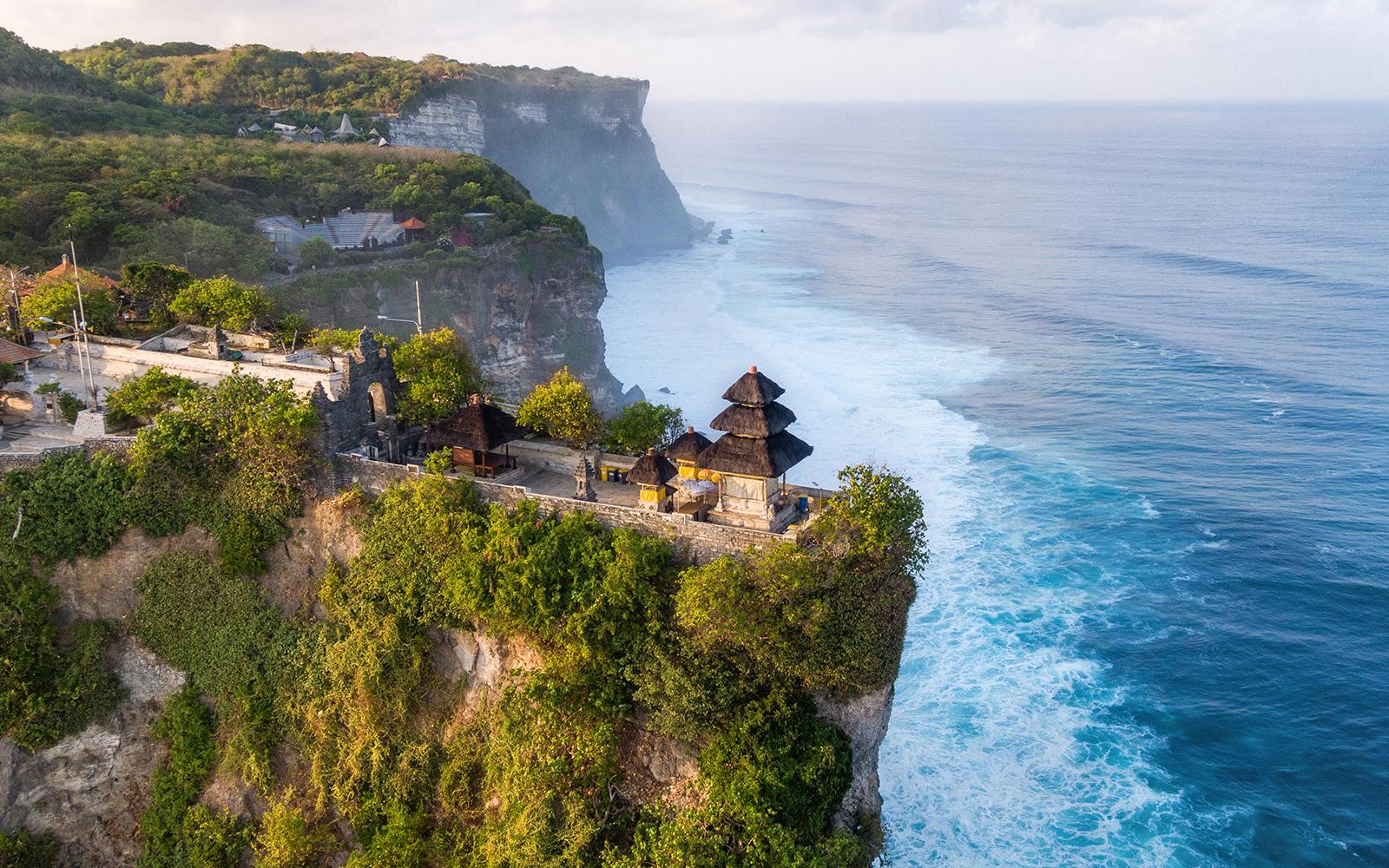
Uluwatu Temple, perched 70 metres above the Indian Ocean on the Bukit Peninsula, is one of the six Sad Kahyangan world temples. The clifftop walk is the headline experience, often paired with the evening Kecak performance — 50-plus dancers, no instruments, all chant, set against the open ocean as the sun drops.
- Entry fee (2026): IDR 50,000 / USD $3.05 (adults), IDR 30,000 / USD $1.85 (children)
- Hours: 7am–7pm daily
- Kecak Dance ticket: IDR 150,000 / USD $9.20 (adults), IDR 75,000 / USD $4.60 (children); performed 6–7pm
- Heads up: the resident monkeys grab sunglasses, hats, and phones — secure loose items before you walk in
If you only have time for one sea temple, choose by the experience you want: Tanah Lot for the floating-rock photo, Uluwatu for the cliff walk and the Kecak.
The Mother Temple and mountain sanctuaries
East Bali holds the island's spiritual heavyweight — Besakih, the Mother Temple — alongside Lempuyang's "Gates of Heaven," Pura Goa Lawah's bat cave, and the quiet Pura Luhur Batukaru in the western foothills. These four belong together because the East Bali drive lines up logically as one or two day trips from Ubud or Sanur. They're some of the most revered Bali temples for the Balinese themselves, and they reward visitors who arrive before the tour buses.
Pura Besakih — Bali's largest temple complex
Pura Besakih is not a single temple but a complex of 23 interconnected shrines built across terraces on the southwestern slopes of Mount Agung. Origins trace back at least to the 9th century, with major expansion under the 15th-century Gelgel kingdom. The central sanctuary, Pura Penataran Agung, anchors the complex; the others fan out across the volcano's flank.
- Entry fee (2026): IDR 150,000 / USD $9.30 for international visitors; includes sarong rental, a mandatory local guide, and a one-way shuttle bus to the main entrance
- Hours: 7am–6pm daily; arrive before 9am for clear Mount Agung views and smaller crowds
- Drive time: around 2 hours from Ubud or Seminyak
- Worth knowing: the mandatory guide is a recent change — they're informative, but vendors near the entrance can be persistent. A polite "no thanks" works
Pura Lempuyang Luhur — the Gates of Heaven
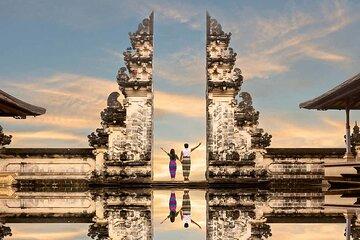
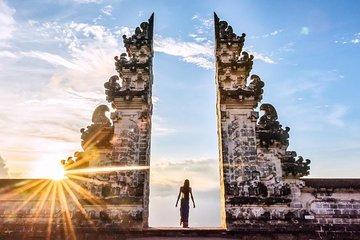
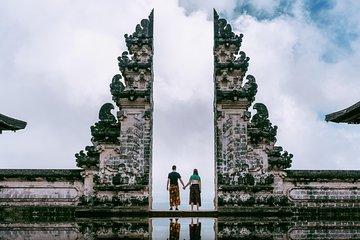
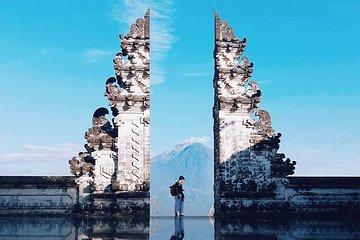
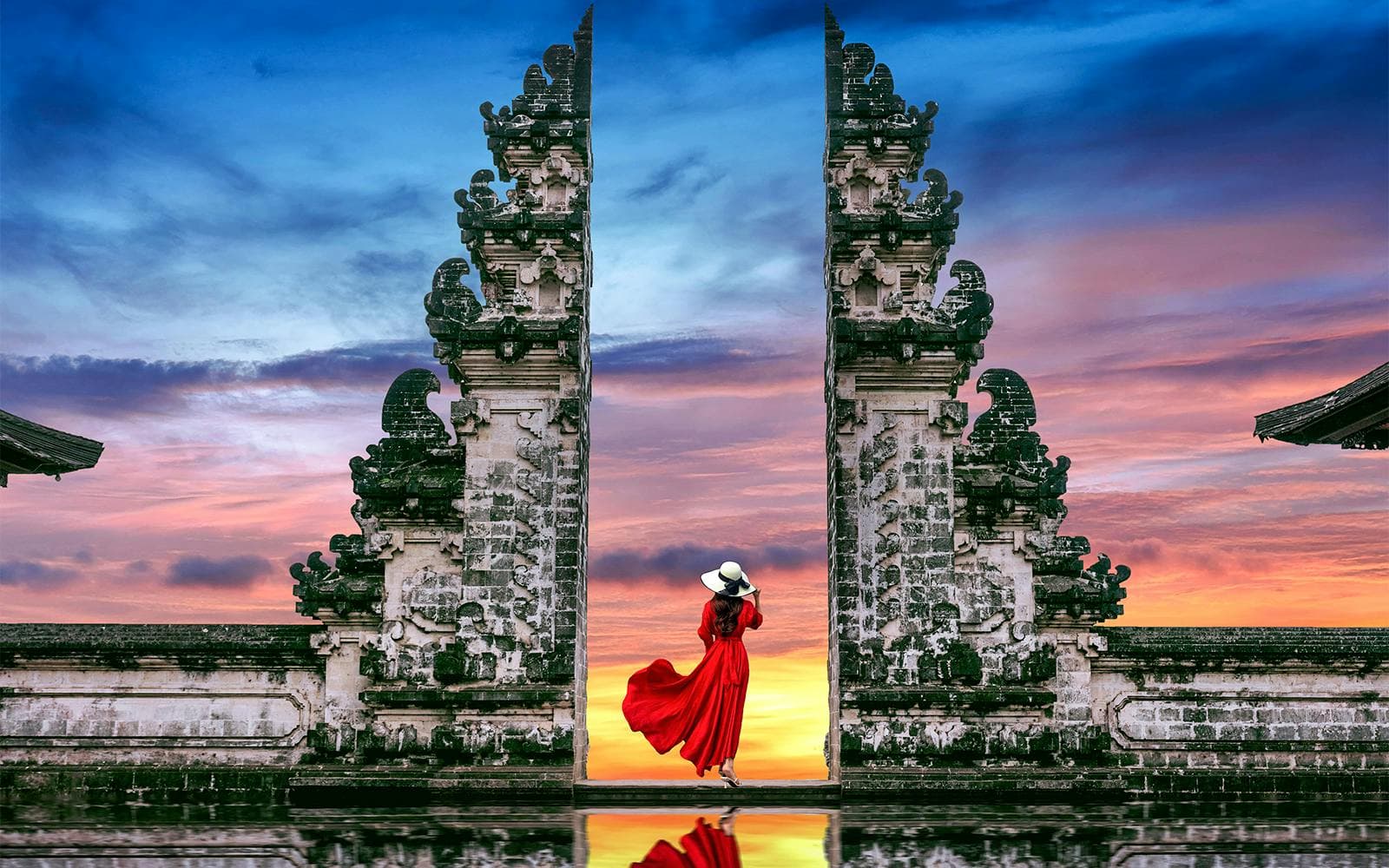
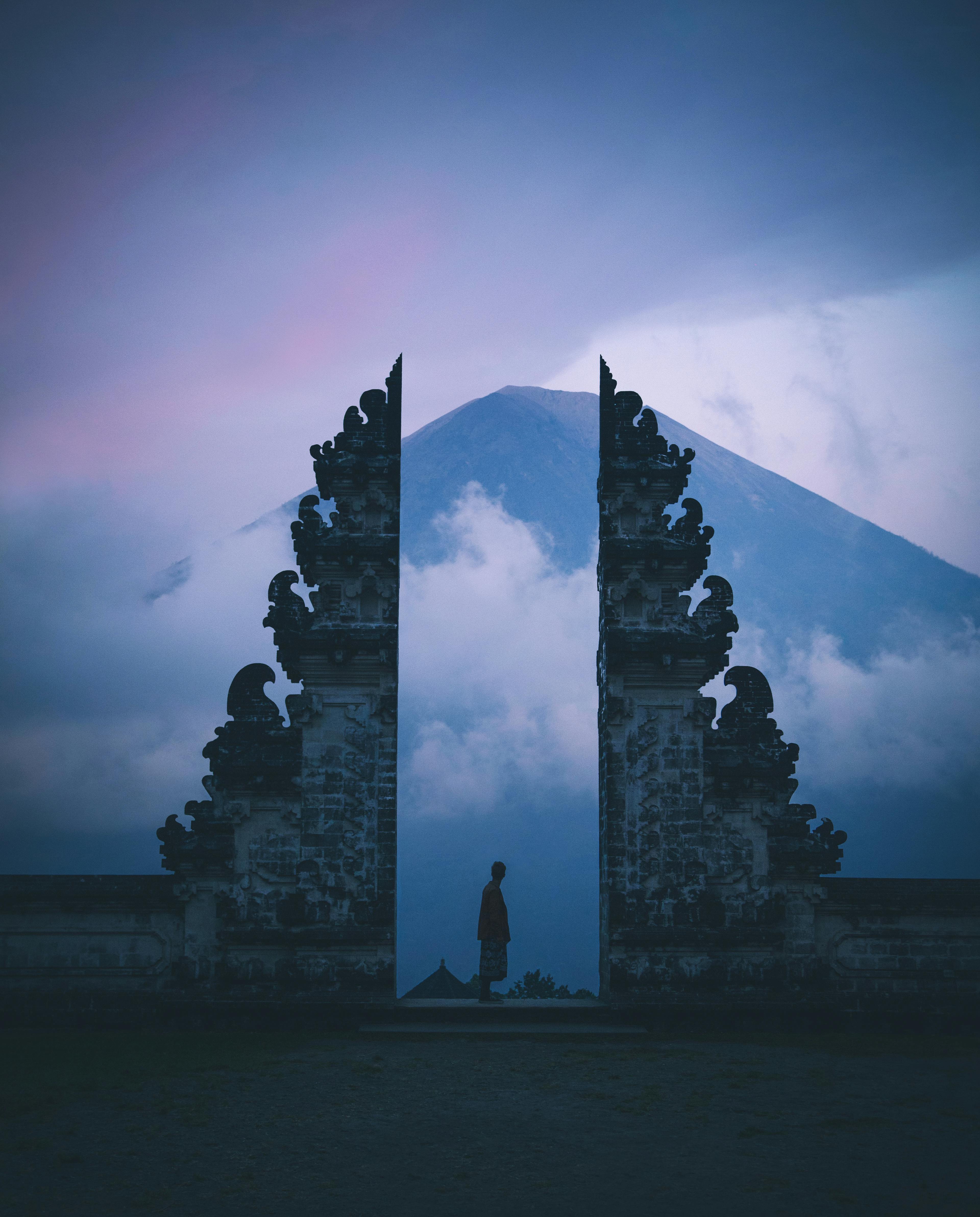
Pura Lempuyang Luhur sits high on Mount Lempuyang in East Bali, and the photo of its split candi bentar gate framing Mount Agung is one of the internet's most copied Bali shots. Worth knowing: the dreamy reflection in the photo is created by a hand-held mirror at the gate, not a real pool. The temple complex itself is deeply sacred — one of the six Sad Kahyangan — with seven shrines climbing the mountain. Most visitors only photograph the first gate.
- Entry fee (2026): IDR 100,000 / USD $6.10, plus IDR 50,000 / USD $3.05 for the mandatory shuttle
- Hours: 7am–6pm daily
- Photo queue: 30–90 minutes during the day. Arrive at sunrise for clear Mount Agung views and almost no wait
- Climb: reaching the upper shrines means over 1,700 steps through forest — almost no one does it
Pura Goa Lawah — the bat cave temple
Pura Goa Lawah translates as "bat cave temple," and the name is literal — thousands of fruit bats roost inside a natural cave at the temple's centre. It's one of the six Sad Kahyangan, and locals believe one of its caves connects underground to Besakih. It's a quick stop on the way between Sanur and Candidasa.
- Entry fee: around IDR 50,000 / USD $3.05
- Hours: 8am–6pm daily
- Visit time: 30 minutes is plenty
Pura Luhur Batukaru — the quiet mountain temple
If you want a Sad Kahyangan world temple without a single tour bus, this is it. Pura Luhur Batukaru sits on the southern slopes of Mount Batukaru in Tabanan, about 90 minutes from the airport. Dedicated to Dewa Mahadewa, it's the guardian temple of the west and a working pilgrimage site for Balinese farmers. Often nearly empty, even at midday.
- Entry fee: around IDR 75,000 / USD $4.60 (donation-based at quieter times)
- Hours: 8am–5pm
- Why it's worth the detour: the moss-covered shrines and the rainforest canopy make it the most atmospheric of the six world temples




Sacred water temples and lake shrines
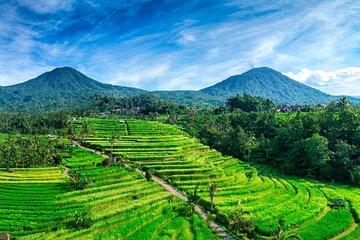
Bali's water temples (Pura Tirta) are tied to the island's UNESCO-recognised subak irrigation system — a thousand-year-old network of cooperative water management that links rice farmers to temple ritual. Three water temples handle most of the visitor traffic, and each offers a different entry point: a purification ritual you can join, a lake-temple postcard view, and a high-altitude shrine where most tourists never arrive.
Tirta Empul — the holy spring purification ritual
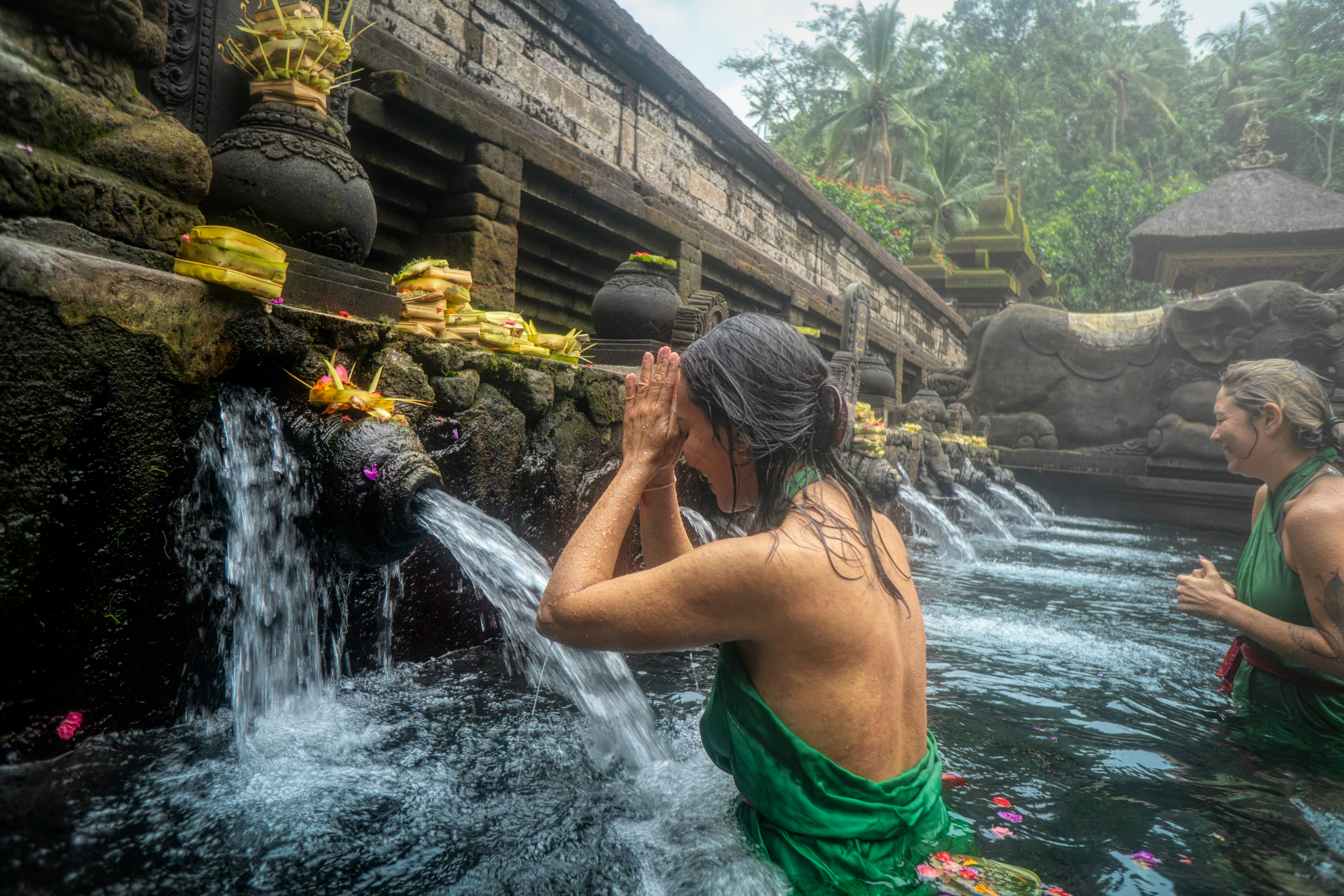
Tirta Empul, near Tampaksiring north of Ubud, is built around a natural cold spring. The melukat ritual — bathing under a series of stone fountains in a specific order — is open to visitors and considered one of the most accessible Hindu rituals in Bali. You don't need to be Hindu to take part, but treat it as worship rather than a photo opportunity.
- Entry fee (2026): IDR 75,000 / USD $4.60 (adults), IDR 50,000 / USD $3.05 (children)
- Hours: 8am–6pm daily; arrive before 9am to avoid the tour-bus rush
- Joining the ritual: bring a separate green bathing sarong (rental on-site, around IDR 25,000) and a change of clothes
- Drive time: 30 minutes from Ubud
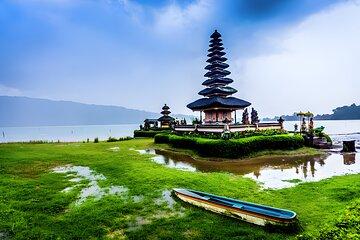
Pura Ulun Danu Beratan — the lake temple at Bedugul
Pura Ulun Danu Beratan sits on the shore of Lake Beratan in the cool, misty mountains of Bedugul, two hours north of Seminyak. The temple's multi-tiered meru shrines appear to float when the lake is full. It's dedicated to Dewi Danu, the goddess of water and lakes, and it's one of the most-photographed temples in Bali after Tanah Lot.
- Entry fee (2026): IDR 75,000 / USD $4.60 (adults), IDR 25,000 / USD $1.55 (children)
- Hours: 8am–6pm
- Bring: a light jacket — Bedugul sits at 1,200m and is consistently 5–7°C cooler than the coast
- Pair with: Bali Botanical Gardens (10 minutes away) and Taman Ayun on the drive back
Pura Ulun Danu Batur — the directional temple of the north
Often confused with its more-famous Beratan namesake, Pura Ulun Danu Batur is a separate temple on the rim of the Mount Batur caldera in Kintamani. It's the directional temple of the north and one of the most important sites in Balinese Hinduism, dedicated to Dewi Danu in her role as guardian of all the island's lakes. Most travellers who reach it are doing the Mount Batur sunrise trek and stopping by on the way back.
- Entry fee: around IDR 50,000 / USD $3.05 (donation-based)
- Hours: 8am–5pm
- Pair with: Mount Batur sunrise trek or the Kintamani volcano viewpoint
Ubud's temple cluster and the UNESCO treasure
Six temples sit within an hour of central Ubud, which makes it the easiest single base for temple-hopping. They span 9th-century cave shrines, 11th-century cliff-cut royal monuments, an active jungle temple, and a UNESCO water-management showpiece. If you have only three days in Bali and want temples without long drives, base in Ubud.
Pura Saraswati — the lotus pond temple in central Ubud
Built in the 1950s in honour of Saraswati — the Hindu goddess of learning, art, and music — Pura Saraswati sits behind a lotus pond in central Ubud, a five-minute walk from the Royal Palace. The inner courtyard is closed to non-worshippers, but the gates, carvings, and pond are part of the public view from the front café terrace. It's one of the few Bali temples you can drop into between meals.
- Entry fee: free
- Hours: outside views any time; inner courtyard closed to visitors
- Best time: late afternoon for evening Legong dance performances on the temple platform
Goa Gajah — the 9th-century Elephant Cave
Six kilometres east of central Ubud, Goa Gajah is one of the oldest temple sites on the island. The cave entrance is carved into the rock as a giant demon's face — you walk through the open mouth into a narrow 15-metre tunnel containing Hindu and Buddhist statuary. The grounds also include a sacred bathing pool unearthed in the 1950s.
- Entry fee: IDR 50,000 / USD $3.05
- Hours: 8am–4pm
- Visit time: 45 minutes
Gunung Kawi — 11th-century cliff-cut royal shrines
Just north of Tampaksiring, Gunung Kawi is a complex of 10 ancient shrines carved directly into the rock face of a river gorge. They're memorial monuments to an 11th-century king and his queens, not active worship temples, but the setting — a working subak rice valley with a stream running through it — is one of the most dramatic in Bali.
- Entry fee: IDR 50,000 / USD $3.05
- Hours: 8am–6pm
- Heads up: nearly 300 steps down (and back up) — not ideal for limited mobility
Pura Dalem Agung Padangtegal — inside the Sacred Monkey Forest
Tucked inside the Sacred Monkey Forest, Pura Dalem Agung Padangtegal is a Pura Dalem (death temple) dedicated to Shiva in his destroyer aspect. Moss-covered carvings, banyan-root walls, and a steady stream of curious macaques give it a feel none of Bali's better-lit temples match. It's still an active worship site — ceremonies happen here through the year.
- Entry fee: IDR 100,000 / USD $6.10 (covers entry to the Monkey Forest, including the temple grounds)
- Hours: 8:30am–6pm
- Heads up: don't bring food or open bags — the macaques are clever, and they win
Pura Taman Ayun — the UNESCO royal water-garden temple
Pura Taman Ayun, in Mengwi, was built in 1634 as the royal family temple of the Mengwi kingdom. It's surrounded by a moat, with rows of multi-tiered meru shrines visible across the water. The whole complex is part of the UNESCO Cultural Landscape of Bali Province listing, recognised in 2012. You can't enter the inner courtyard, but the perimeter walk and the gardens are the point.
- Entry fee: IDR 50,000 / USD $3.05 (sarong included)
- Hours: 8am–6pm
- Pair with: Tanah Lot on the same day — both sit in Tabanan, 30 minutes apart
Pura Maduwe Karang — the bicycle relief in north Bali
Far north in Buleleng Regency, Pura Maduwe Karang is famous for one stone relief: a Dutch artist riding a bicycle, carved sometime around 1904. The artist was W.O.J. Nieuwenkamp, the first European to sketch the temples of Bali in detail. The relief sits among more conventional Hindu carvings and is the kind of small, surprising detail that rewards travellers who skip the standard south-Bali loop.
- Entry fee: donation-based, around IDR 30,000 / USD $1.85
- Hours: 8am–5pm
- Pair with: Lovina beach and the dolphin-watching coast
Pairing Bali temples by region for itinerary efficiency
- South coast (half-day): Tanah Lot + Pura Taman Ayun, ending with sunset at Tanah Lot
- Bukit Peninsula (half-day): Uluwatu Temple + Kecak fire dance + Padang Padang or Pandawa beach
- East Bali (full day): Besakih + Lempuyang + Goa Lawah, ideally as a private-driver trip starting from Ubud
- Ubud cluster (full day): Tirta Empul + Gunung Kawi + Goa Gajah + Pura Saraswati on foot in the evening
- Bedugul (full day): Pura Ulun Danu Beratan + Botanical Gardens + Taman Ayun on the drive back
Temple etiquette, dress code, and how to plan your visits
Every temple in Bali shares the same dress code, the same broad etiquette, and similar pricing logic. Once you've internalised those, you can show up at any of the famous Bali temples with confidence. The few rules below cover most of what you'll be expected to do.
What to wear — sarong, sash, and covered shoulders
- Sarong (kain): a long cloth wrapped around the waist, covering legs to at least mid-calf
- Sash (selendang): tied around the waist over the sarong — required even if you're already in long pants or a long skirt
- Top: shoulders must be covered. T-shirts and blouses are fine; tank tops and singlets aren't
- Rental: usually included in the entrance fee. Where it's separate, expect IDR 10,000–20,000
- Shoes: generally fine in outer courtyards; remove them if asked at inner sanctums
How to behave during a ceremony or in an active temple
- Stay at the back if a ceremony is happening — never walk between worshippers and the altar
- Don't stand higher than the priest or any seated worshipper
- Don't point your feet at shrines, statues, or worshippers when seated
- Phone on silent; ask before photographing people praying
- Women who are menstruating are traditionally asked to skip the inner courtyards — an honour-system rule, not policed at the gate
How many Bali temples can you realistically visit?
One or two per half-day if you want to actually absorb each visit. Temple fatigue is real after the third in a single day — the carvings start blurring together, and you stop noticing the differences that make each site distinct. Combine temples with rice terraces, waterfalls, or a long meal between visits, and your trip will feel more varied than a temple checklist would suggest. For more help mapping the rest of your trip, see Travjoy's top 20 picks for Bali.
Best time of day for each temple type
- Sea temples (Tanah Lot, Uluwatu): late afternoon into sunset — the silhouette is the point
- Water temples (Tirta Empul, Ulun Danu Beratan): early morning, before tour buses arrive at 9–10am
- Mountain temples (Besakih, Lempuyang): by 9am for a clear Mount Agung view; clouds usually settle in by midday
- Ubud cluster: any time, but Pura Saraswati is most atmospheric in the late afternoon
Pulling it together — your Bali temples shortlist
Pick by region, not just fame. Two temples in a half-day, organised around a meal and a viewpoint, will leave a sharper memory than five temples in a single rushed loop. The dress code is non-negotiable but easy — most temples lend you the sarong at the gate. And don't try to do them all: the Balinese themselves don't.
If you want a shortlist, start here. South coast: Tanah Lot at sunset, with Taman Ayun on the way. Bukit: Uluwatu and the Kecak. Ubud cluster: Tirta Empul, Gunung Kawi, and the temple inside the Monkey Forest. East Bali: Besakih and Lempuyang in one long day. That's eight of the most important Bali temples, each photographable, each easy to fold into the rhythm of a real holiday.
Travjoy's Bali temple tours and cultural experiences are reviewed by local experts and shortlisted from a much larger pool, so you can pick a guided trip without second-guessing the operator. Start planning your Bali trip on Travjoy and put together an itinerary that respects both the temples and your own pace.






.svg&w=1920&q=75)