



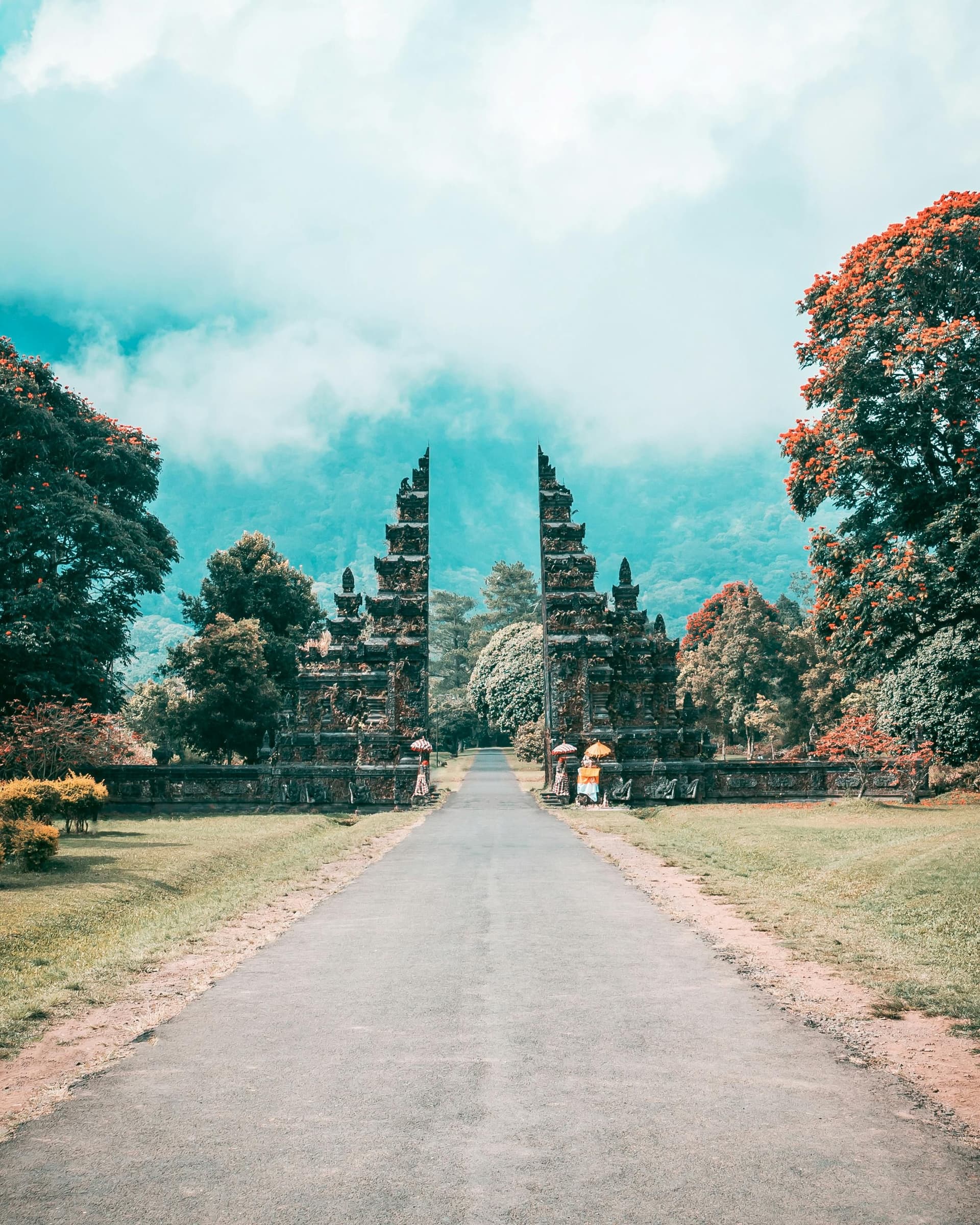
Bali for First Timers: Your Complete 7-Day Starter Guide
11 min read
Raj Varma
Author
Travel & Tourism Expert Ex-Thomas Cook, Kuoni, Times of India & Travel Triangle.
SHARE BLOG
TABLE OF CONTENTS
Key Takeaways
- Seven days is the sweet spot for first-timers — enough for Ubud, the south coast, and one Nusa island without burning out
- 2026 entry costs: IDR 500,000 Visa on Arrival plus the IDR 150,000 Tourist Levy, both payable on the official Love Bali portal before you fly
- Use a two-base strategy — 3 nights in Ubud for temples and culture, then 4 nights on the south coast (Uluwatu, Canggu, or Seminyak) for beaches and sunsets
- Mid-range trips run USD 800–1,200 per person all-in; backpackers can do it for USD 450, while honeymoon-style stays start at USD 2,000+
- Hire a private driver (IDR 600,000–800,000 per day) for sightseeing — only rent a scooter if you've ridden one before, since enforcement of International Driving Permits is now strict
Bali for first timers means working out what to skip as much as what to see. The 7-day plan below covers Ubud's temples and rice terraces in the first half, then moves you south for Uluwatu's cliffs, a Nusa Penida day trip, and beach time in Canggu or Seminyak — with 2026 visa, levy, and proof-of-funds rules handled before you board.
Your search results return 200 perfect Bali itineraries, and they don't agree on much. One says base in Seminyak. Another swears by Canggu. A third tells you to skip the south altogether and stay in Ubud. You'll find conflicting advice on whether you need cash, whether scooters are safe, and what the new Tourist Levy is for. By the time you've read five guides, you've planned nothing.
This is the planning document for first-timers who want a clear path from booking to boarding. It covers the 2026 entry rules that older guides miss, the two-base strategy that actually works in Bali's traffic, a day-by-day plan you can adapt, dual-currency costs, and the first-timer mistakes that turn good trips into expensive ones.
By the end you'll know exactly where to base yourself, how much rupiah to carry, which day trips are worth a sunrise wake-up, and where to leave space for doing nothing.

Before You Go: Bali Entry, Money & Packing in 2026
Visiting Bali for first timers in 2026 means handling two payments before you land — the Visa on Arrival and the Bali Tourist Levy. Both can be done on official portals 24–72 hours before your flight, which saves you 30–45 minutes of queueing at Ngurah Rai. Your passport needs six months' validity, and immigration officers will check for an onward ticket and, increasingly, proof of funds.
Visa on Arrival and the Tourist Levy
Citizens from over 90 countries — including the US, UK, Australia, Canada, and most of Europe — get a 30-day Visa on Arrival, extendable once for another 30 days. The official cost is IDR 500,000 (about USD 32). Pre-pay it as an electronic Visa on Arrival (eVoA) on the Indonesian immigration portal to use the fast e-gates on arrival; pay at the counter on landing if you missed the deadline, but you'll be in the slow lane.
The Bali Tourist Levy is a separate one-time fee of IDR 150,000 (about USD 10) that funds environmental and cultural projects. Pay it on the official Love Bali portal at least 24 hours before departure and save the QR code on your phone. Officials sometimes scan it on arrival, sometimes not — but every entry point has been instructed to verify it.
- Visa on Arrival: IDR 500,000 (~USD 32)
- Bali Tourist Levy: IDR 150,000 (~USD 10)
- Total mandatory entry cost: IDR 650,000 (~USD 42) per person
- Passport validity required: 6 months from arrival
- Onward or return ticket: mandatory and sometimes checked at boarding
How much rupiah to carry and where to draw it
The Indonesian rupiah (IDR) trades at roughly 16,000 to USD 1 in early 2026. Cards are widely accepted in restaurants, hotels, and bigger shops, but cash matters for warungs, markets, temple donations, parking, and most drivers. Carry IDR 1–2 million in cash for your first day, then top up from ATMs — they're everywhere, but use machines inside bank branches or hotels to avoid card skimmers in tourist areas.
Most ATMs cap withdrawals at IDR 2.5–3 million per transaction. Indonesian banks charge an IDR 25,000–50,000 transaction fee, and your home bank will add its own — a travel card with low or no foreign-transaction fees pays for itself within three withdrawals. USD is accepted in some hotels and dive shops, but rates are poor, so convert what you need and pay in rupiah for everything else.
What to pack for Bali
- Lightweight, quick-dry clothing — Bali sits at 27–32°C year-round
- One modest outfit for temples (shoulders and knees covered)
- Reef-safe sunscreen (regular sunscreen damages coral around Nusa Penida)
- Mosquito repellent with DEET
- A light raincoat or packable umbrella (afternoon showers happen even in the dry season)
- Sturdy sandals plus one pair of trainers for the Mount Batur trek or temple walks
- Power bank and a universal Type C/F adapter
- A small basic first-aid kit with electrolyte sachets — Bali belly is real
The 2026 cohabitation law explained
Indonesia's revised criminal code, effective January 2026, includes a clause penalising cohabitation between unmarried adults. In practice, the law applies only when a family member or local official files a complaint — there is no random hotel enforcement against tourists, and the Bali tourism board has publicly stated that hotels will not be checking marital status at check-in. Unmarried couples have continued to share rooms throughout 2026 without incident. The risk is theoretical, but the law is real, so book through reputable hotels rather than informal homestays where complaints are more likely to arise.
Reality check: proof-of-funds spot checks at the airport
- Under the 2026 Quality Tourism regulation, immigration officers can ask Visa on Arrival holders to show proof of funds — usually a screenshot of a bank balance covering your trip
- For the 60-day C1 visa, a 3-month bank statement showing USD 2,000+ is mandatory, not optional
- Travellers with a confirmed return ticket and a pre-booked hotel are rarely asked — those without bookings or staying with locals are more likely to be screened
- Save a PDF of your last bank statement to your phone before flying; airport Wi-Fi is unreliable
Where to Base Yourself: The Two-Base Strategy
For first-timers, the single biggest planning decision is where to sleep — and the answer is two places, not one. Bali's main tourist zones sit 60–90 minutes apart in traffic, and trying to do a day trip from one to the other will burn most of your week in a car. The rule that works: 3 nights in Ubud, then 4 nights on the south coast.
Why one base doesn't work for first-timers
Ubud sits in the central highlands, an hour and a half north of the airport. The south coast (Uluwatu, Canggu, Seminyak) sits 30–60 minutes south or west of the airport. Day-tripping between them eats 3+ hours of driving daily. Splitting your stay lets you bank that time for actual experiences — sunrise temple visits, longer beach afternoons, post-dinner walks.
Ubud (Nights 1–3) — culture, rice fields, and rainforest
Base in Ubud first while you're fresh and curious. The town centre is walkable, the food scene runs from warungs to fine dining, and you're 20–40 minutes from the Tegalalang rice terraces, Tirta Empul, the Sacred Monkey Forest, and the Campuhan Ridge Walk. Stay in a villa with rice-paddy views if your budget stretches — they're the postcard image for a reason.
- Budget room: IDR 350,000–600,000/night (USD 22–38)
- Mid-range villa: IDR 1.2–2.5 million/night (USD 75–155)
- Boutique villa with private pool: IDR 3.5–6 million/night (USD 220–375)

South coast (Nights 4–7) — three areas, one decision
The south coast offers three viable bases for first-timers. Pick one and stick to it — they're 20–40 minutes apart but each has a different personality.
- Uluwatu — cliffside hotels, the best sunset views on the island, smaller crowds, harder to reach restaurants without a driver. Best for couples and quiet travellers.
- Canggu — surfer-café-yoga energy, walkable strips, lots of beach clubs, traffic is dense at sunset. Best for solo travellers and younger groups.
- Seminyak — beach clubs, restaurants, shopping, easy taxis, more developed than the other two. Best for first-timers who want convenience over atmosphere.
Where first-timers should not base
- Kuta — the original tourist strip, now dated and rowdy at night. Skip unless you specifically want the party scene.
- Nusa Dua — manicured all-inclusive bubble that hides Bali from you. Better for return visitors who want a resort week.
- Lovina (north coast) — too far for a first 7-day trip; save it for a longer return visit.
For a shortlist across price points, see Travjoy's top 20 picks for Bali — the list pairs neighbourhoods with the experiences they go best with.
Days 1–3 in Ubud: Temples, Rice Terraces & Choosing One Adventure
The Ubud leg of your Bali for first timers itinerary is paced for one cultural anchor in the morning, an active or scenic afternoon, and an early evening — Balinese restaurants finish dinner service earlier than you'd expect. Mount Batur and Ayung River rafting are mutually exclusive Day-3 options; choose based on whether you're a sunrise person or a daylight person.
Day 1 — Arrival, Sacred Monkey Forest, and Campuhan Ridge sunset
Land at Ngurah Rai (DPS), clear immigration with your eVoA and Tourist Levy QR ready, and book a private transfer to Ubud (IDR 350,000–500,000, around 90 minutes in light traffic, 2+ hours in evening rush). Check in, eat at a warung near your villa, then visit the Sacred Monkey Forest in the late afternoon when the heat eases. End the day with the Campuhan Ridge Walk — a flat 2km path along a forested ridge that hits its best light at 5:30–6:00pm.
- Sacred Monkey Forest entry: IDR 80,000 (USD 5)
- Campuhan Ridge Walk: free
- Warung dinner: IDR 50,000–120,000 per person (USD 3–8)
Day 2 — Tegalalang sunrise, Tirta Empul, Ubud town
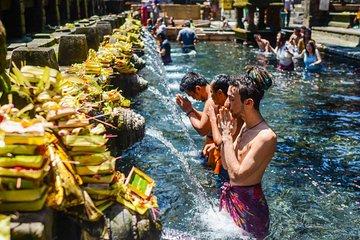
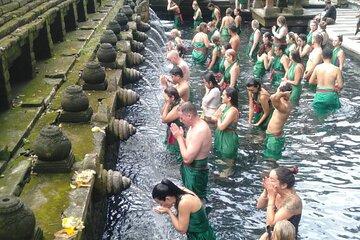
Arrange your driver for a 6:00am pickup and beat the busloads to the Tegalalang Rice Terrace. The light from 6:30–8:00am is the entire point — by 10:00am the place is packed and the swings have queues. Move on to Tirta Empul, the holy spring temple — you can join the purification ritual if you want, or simply walk the compound. Back in Ubud by lunch for a Balinese cooking class or to wander Jalan Hanoman's boutiques and bookshops.
- Tegalalang entry: IDR 25,000 (USD 1.50)
- Tirta Empul entry + sarong rental: IDR 75,000 (USD 5)
- Cooking class (half day): IDR 450,000–700,000 (USD 28–44)
- Driver for the day: IDR 600,000–800,000 (USD 38–50) for 8–10 hours
Day 3 — Mount Batur sunrise trek OR Ayung River rafting
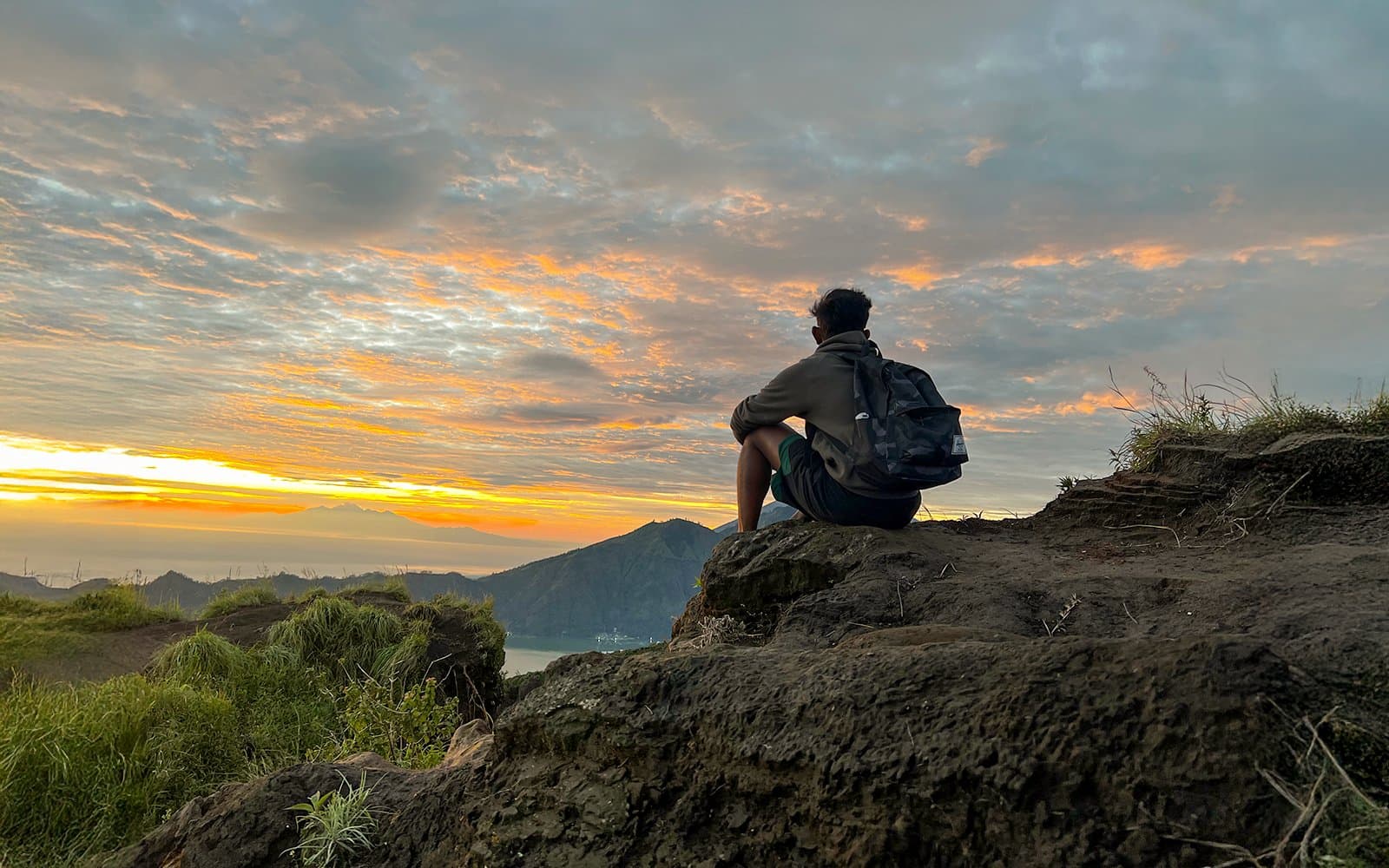
This is the day you choose your adventure. Mount Batur is a 2:00am pickup, a 2-hour hike up an active volcano in the dark, and a sunrise over Lake Batur from 1,717m. Rafting is a more civilised 9:00am start, 2 hours on the Ayung River, and a lunch back at the resort. Both cost roughly the same — pick the one that matches your energy.
- Mount Batur sunrise trek (with breakfast): IDR 700,000–950,000 (USD 44–60)
- Ayung River rafting (with transfers + lunch): IDR 650,000–850,000 (USD 41–53)
Whichever you choose, finish the day with an early dinner and an early night — Day 4 starts with a transfer south.
Reality check: the Instagram-only stops
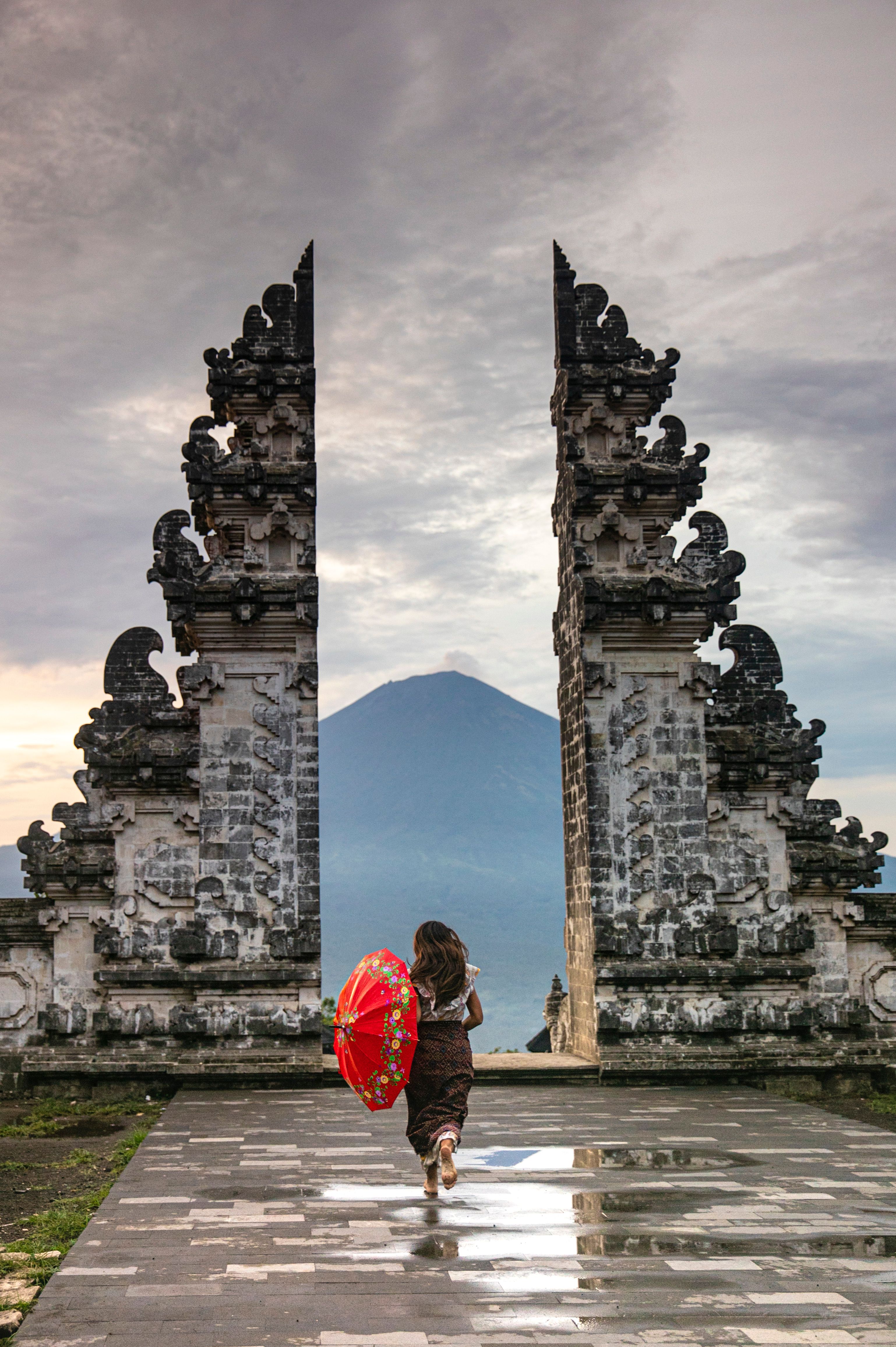
- The "Bali Gates of Heaven" photo at Pura Lempuyang isn't a portal to the gods — it's a man with a mirror holding it under the lens. The wait is 1–2 hours. Skip unless the photo is the trip.
- The viral "swing over rice terraces" stops along the Tegalalang road charge IDR 250,000–500,000 for a 5-minute swing and exist purely for social posts
- Tukad Cepung waterfall is striking but requires a 30-minute scramble and is busiest 10am–2pm — go at opening (6:30am) or skip
- Spend the saved hours at a longer Tirta Empul visit or a slower lunch — these are the better Bali memories












Days 4–7 on the South Coast: Beaches, Sunsets & Day Trips
The south coast leg of your Bali first-timer trip trades temple bells for cliff-edge bars and rice paddies for surf breaks. Days 4–7 cover Tanah Lot's offshore temple, a Nusa Penida day trip that's longer and bumpier than guides admit, and Uluwatu's Kecak fire dance at sunset — the one performance every first visit deserves.
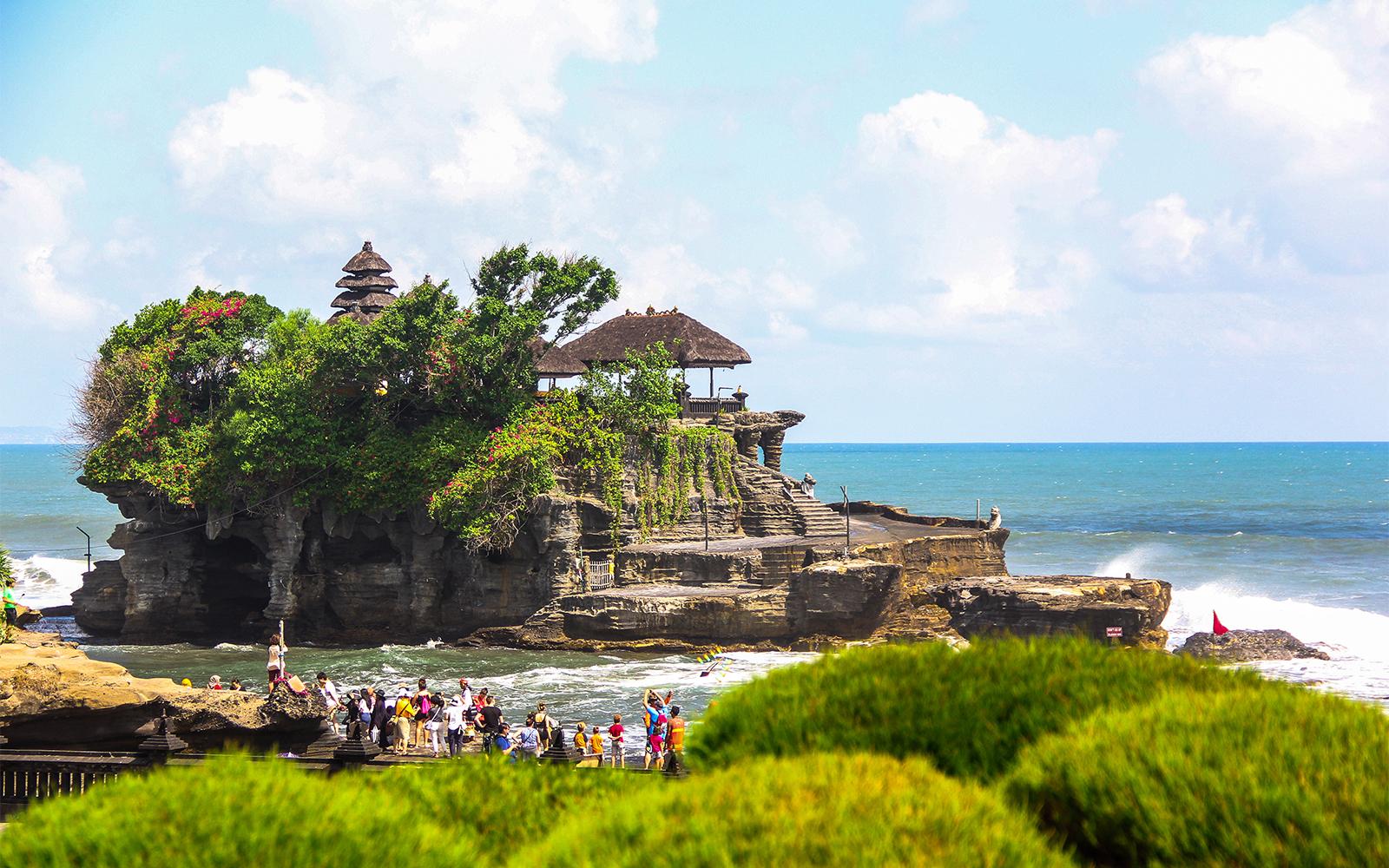
Day 4 — Transfer south, beach afternoon, Tanah Lot at sunset
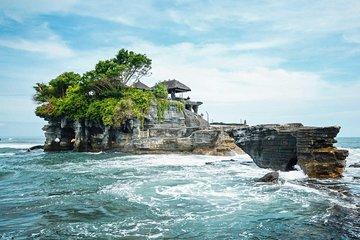
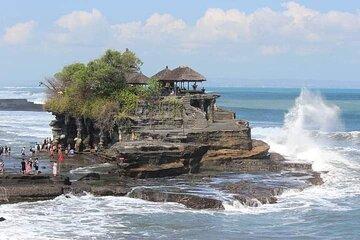
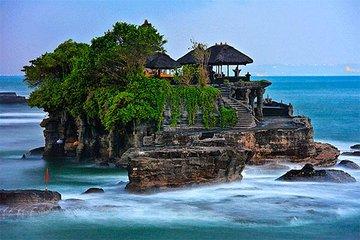
Check out by late morning and have your driver route via Tanah Lot on the way to your south coast hotel (allow 4–5 hours including the stop). Tanah Lot is a Hindu sea temple that sits on a rock 100m offshore at high tide — visit 30 minutes before sunset, walk the cliff path, and stay for the gold-hour light. Reach your Uluwatu, Canggu, or Seminyak hotel by 7:30pm for a soft landing in your new base.
- Tanah Lot entry: IDR 75,000 (USD 5)
- Ubud-to-south-coast driver via Tanah Lot: IDR 750,000–1,000,000 (USD 47–63)
Day 5 — Nusa Penida day trip
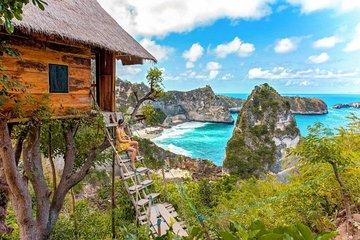
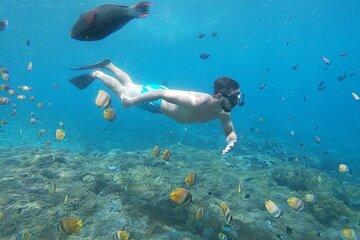
Nusa Penida is the day everyone remembers and the day everyone underestimates. The fast boat from Sanur takes 30–45 minutes; the queues at Kelingking Beach, Broken Beach, and Angel's Billabong are real; and the inland roads on Penida are bone-jarring. A standard west-coast tour covers all three viewpoints and Crystal Bay for snorkelling. Book the earliest boat (7:30–8:00am from Sanur) to give yourself buffer time.
- Fast boat return (Sanur–Nusa Penida): IDR 350,000–550,000 (USD 22–34)
- Full-day west tour (boat + driver + 4 stops): IDR 1.2–1.6 million (USD 75–100) per person
- Day-trip duration: 12–13 hours door to door
- Best time: May–October (dry season — seas are calmer)
For specific operators and inclusions, see Travjoy's Nusa Penida day trip page.
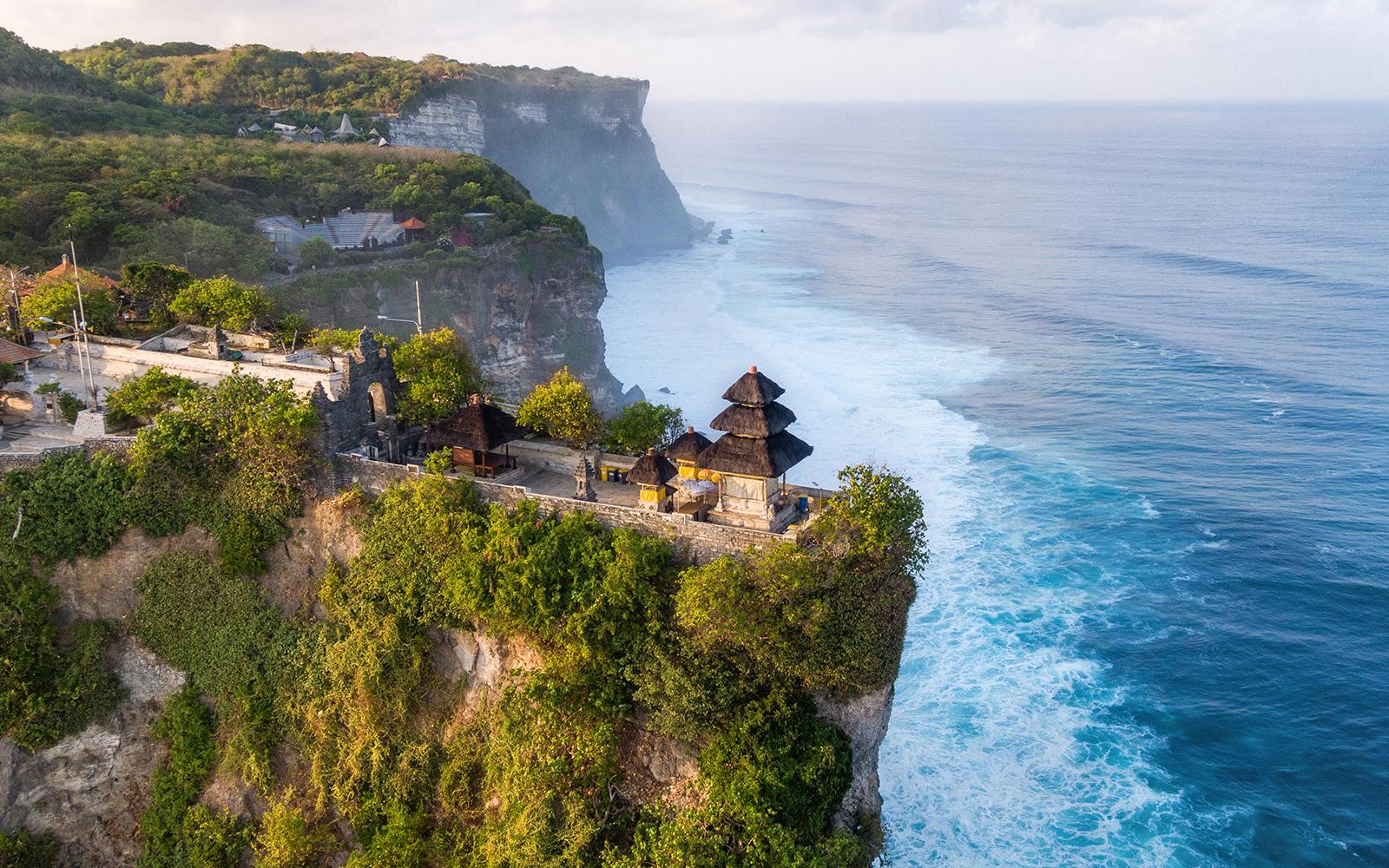
Day 6 — Uluwatu Temple, Kecak fire dance, and a cliff bar sunset
Day 6 is the sunset day. Visit Uluwatu Temple at 4:30pm, watch the monkeys (and watch your sunglasses — they steal them), then take a seat for the 6:00pm Kecak fire dance in the open-air amphitheatre overlooking the ocean. The performance runs 60 minutes. Walk five minutes to Single Fin or Ulu Cliffhouse for a post-show drink with the cliffs lit gold.
- Uluwatu Temple entry: IDR 75,000 (USD 5)
- Kecak dance ticket: IDR 150,000 (USD 10)
- Cliff bar drinks: IDR 90,000–180,000 (USD 6–12) per cocktail
Day 7 — Slow morning, beach club or café, departure
Use Day 7 to spend money on time rather than sights. Sleep in, do a long breakfast at one of Canggu or Seminyak's café strips (Crate, Mason, Penny Lane), spend a few hours at a beach club (Potato Head, Finns, Atlas), and head to the airport 3.5 hours before your flight — Ngurah Rai security queues are slow in peak departure windows (8pm–midnight).
Reality check: the Nusa Penida day-trip reality
- Fast boats cancel in choppy weather — November to March has the highest cancellation rate
- The Kelingking Beach viewpoint is the photo; getting down to the actual beach involves a 30-minute near-vertical climb on rope and broken steps. Most tour groups skip the descent
- The drive between west coast viewpoints is 30–60 minutes on rough roads — motion sickness tablets help
- Take seasickness medication before the boat if you're prone
- Wear trainers or sturdy walking sandals, not flip-flops
Getting Around, Cultural Etiquette & First-Timer Mistakes to Avoid
The mistakes that cost first-timers the most are usually the small operational ones — picking the wrong transport, walking into a temple with bare shoulders, or treating a Bali stomach bug like a minor inconvenience. This section covers the field rules that don't appear in itineraries but make the difference between a smooth trip and a stressful one.
Private driver vs Grab vs scooter — when to use each
Private driver is the right answer for 80% of first-timer travel. You agree a price for the day (IDR 600,000–800,000 for 8–10 hours), the driver waits at each stop, and you skip the negotiation at every taxi rank. Hotels arrange them, or book directly through your villa.
Grab and Gojek (the local ride-hailing apps) work well inside the main tourist zones — Seminyak, Canggu, Sanur, Ubud town, Kuta — but coverage thins outside them. Some areas like Ubud central restrict ride-hailing pickups due to local-taxi politics; you'll need to walk a few blocks to a non-restricted pickup point.
Scooters are everywhere and cheap (IDR 70,000–120,000/day) but only ride one if you've ridden a scooter before — Bali's roads are not where you learn. Police checkpoints have stepped up enforcement in 2025–2026 and they now fine riders without an International Driving Permit (IDP) endorsed for motorcycles. Helmet use is mandatory and your travel insurance probably excludes accidents on a scooter without an IDP.
Temple etiquette and sarong rentals
- Every temple visit requires a sarong covering knees, available at the entrance for IDR 10,000–25,000 or included in your ticket
- Shoulders should be covered too — a light scarf or t-shirt is enough
- Women on their menstrual cycle traditionally do not enter temples (this is observed locally and signage at most temples reminds visitors)
- Step over offerings (canang sari) on pavements — never on them
- Photography is fine in most outer compounds; ask before photographing ceremonies
Seven first-timer mistakes to avoid
- Over-packing the itinerary — Bali rewards a slower rhythm. Pick 1 cultural anchor plus 1 active or social block per day, not 4 sights
- Letting monkeys near loose items — at Uluwatu and the Monkey Forest, the macaques steal sunglasses, phones, hats, and water bottles. Stash everything before entering
- Drinking the tap water — bottled or filtered only, including for brushing your teeth at smaller stays. Ask for drinks without ice in warungs you don't know
- Bringing or buying drugs — Indonesia's narcotic laws are among the world's strictest, with mandatory minimums and the death penalty in extreme cases. Even ADHD medication and codeine require a doctor's note
- Riding a scooter without an IDP — fines, voided insurance, and potential overstay complications if you're injured
- Withdrawing cash from street ATMs — skimming devices are a known issue. Use ATMs inside banks or hotels
- Underestimating Bali belly — pack oral rehydration sachets and antidiarrhoeals before you fly. A 24-hour bout will write off any day you don't prepare for
Reality check: the IDP enforcement crackdown
- Indonesian traffic police have run more checkpoints in 2025–2026 across Canggu, Seminyak, Ubud, and Uluwatu
- The on-the-spot fine for riding without a valid IDP is IDR 250,000–1,000,000
- Most home licences are not accepted — you need a 1968 Convention IDP specifically endorsed for motorbikes
- If you're injured riding without an IDP, your travel insurance will likely refuse the claim — a major medical bill in Bali runs into thousands of US dollars
How Much Does a 7-Day Bali Trip Cost?
A 7-day Bali for first timers trip costs USD 406 per person at the backpacker end, USD 780 mid-range, and USD 1,260 premium — with honeymoon-style stays running USD 2,200+. Costs scale heavily with your accommodation and how much driving you outsource; food, activities, and entry tickets are remarkably consistent across tiers.
Budget breakdown by traveller style
| Cost line (7 days, per person) | Backpacker | Mid-range | Premium | Honeymoon |
|---|---|---|---|---|
| Accommodation (twin sharing) | IDR 1.5M / USD 95 | IDR 4.5M / USD 280 | IDR 10M / USD 625 | IDR 22M / USD 1,375 |
| Food (3 meals/day) | IDR 1M / USD 63 | IDR 2.3M / USD 145 | IDR 4M / USD 250 | IDR 6M / USD 375 |
| Private driver (3 days) | IDR 900K / USD 56 (shared) | IDR 2.1M / USD 130 (shared) | IDR 2.1M / USD 130 | IDR 2.4M / USD 150 |
| Nusa Penida day trip | IDR 1.2M / USD 75 | IDR 1.4M / USD 88 | IDR 1.6M / USD 100 | IDR 2.5M / USD 156 (private) |
| Mount Batur or rafting | IDR 700K / USD 44 | IDR 800K / USD 50 | IDR 950K / USD 60 | IDR 950K / USD 60 |
| Temple entries + Kecak + odds | IDR 500K / USD 31 | IDR 750K / USD 47 | IDR 900K / USD 56 | IDR 1M / USD 63 |
| Visa + Tourist Levy | IDR 650K / USD 42 | IDR 650K / USD 42 | IDR 650K / USD 42 | IDR 650K / USD 42 |
| Per-person total (7 days) | IDR 6.4M / USD 406 | IDR 12.5M / USD 782 | IDR 20.2M / USD 1,263 | IDR 35.5M / USD 2,221 |
Where your money actually goes
Three categories make up 75% of the total: accommodation, food, and day trips. Accommodation is the biggest swing — moving from a backpacker guesthouse to a mid-range villa more than doubles your spend. Day trips are the second biggest variable: a private Nusa Penida boat with a personal driver costs 3x the shared tour. Temple entries, the visa, and the levy are fixed — those bills don't change with your tier.
If you're optimising for value, the smart play is to keep accommodation mid-range and spend the savings on better day-trip operators. Travjoy's experience listings are pre-vetted by local specialists, so first-timers know which operators run safe boats, which Mount Batur guides actually lead groups (rather than dropping them at the trailhead), and which Kecak performance gets the full sunset — saving you the trial-and-error cost. Browse the picks for your dates on the Bali destination page.
Plan Your First Bali Trip with Confidence
Three rules carry first-timers through Bali. Base in two places, not one. Handle your Visa on Arrival and Tourist Levy online before you fly. And leave at least one full day unscheduled — Bali's best moments rarely show up on an itinerary line.
Seven days is the right length to feel the island without checking off a list. You'll come back to a stamped passport, a few hundred photos, and a clearer sense of which corner you want to return to — Ubud's slow mornings, Uluwatu's gold-hour cliffs, or a Nusa Lembongan stretch you didn't have time for this round.
When you're ready to book, start planning your trip to Bali on Travjoy — the experiences are pre-vetted by local specialists so you spend less time comparing operators and more time actually being there.



.svg&w=1920&q=75)