


Bali Cooking Class: Learn to Make Authentic Balinese Dishes
6 min read
Pratima Alvares
Author
Leisure Travel Expert Ex- SOTC & Cox & Kings
SHARE BLOG
TABLE OF CONTENTS
Key Takeaways
- A Bali cooking class costs roughly USD 18–55 (IDR 300k–900k) for a group or small-group session in 2026, rising to USD 75–175+ for private and luxury formats.
- Most classes run 3–6 hours and follow the same arc: morning market visit, hand-grinding the base genep spice paste, cooking four to six dishes, then eating what you made.
- Ubud has the widest choice and the most village and farm settings; Seminyak, Sanur and Nusa Dua suit travellers based in the south.
- Only morning classes usually include the market tour — afternoon sessions skip it, so book the early slot if the market matters to you.
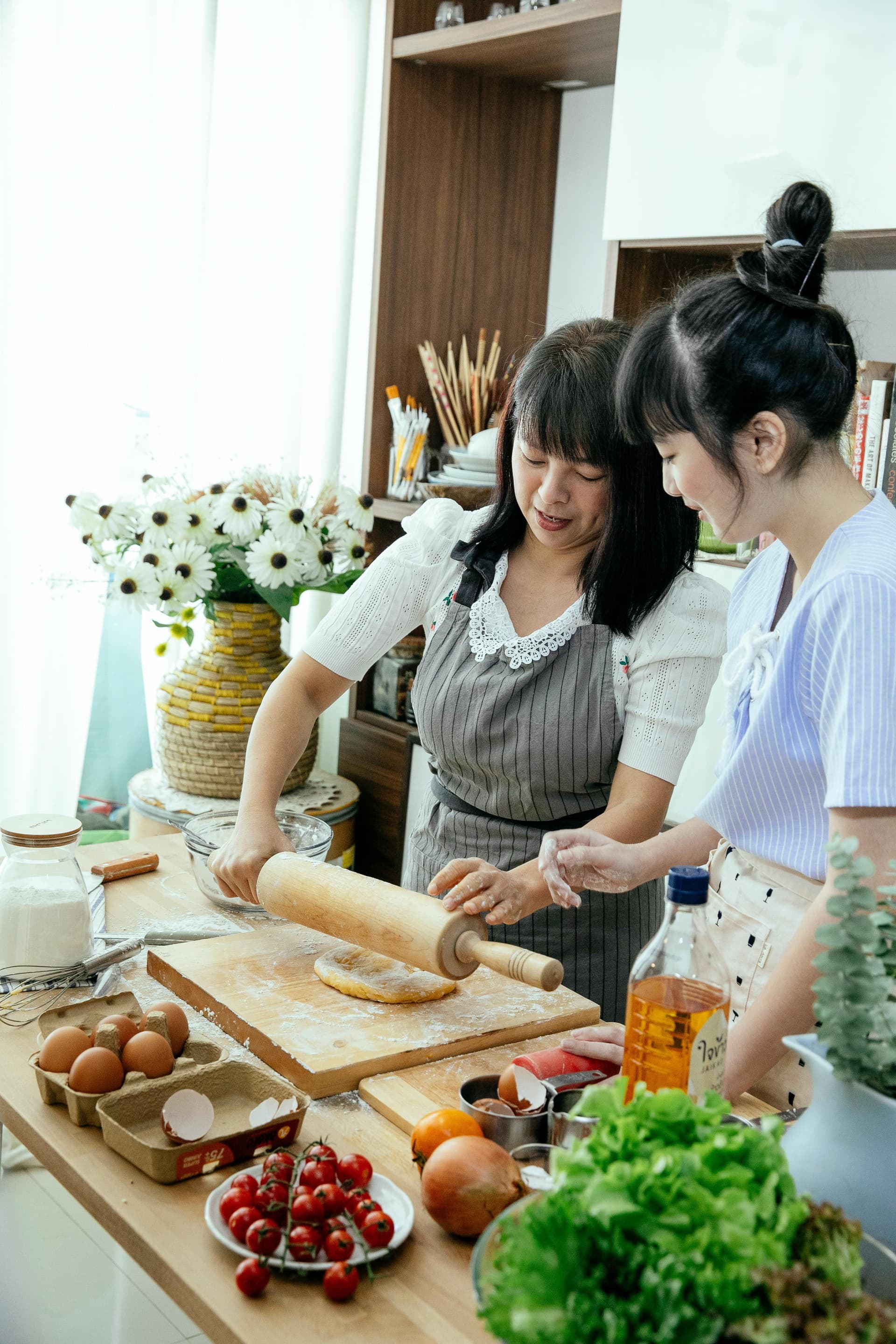
A Bali cooking class is worth it for most travellers who want to take home a real skill rather than another fridge magnet, and it costs USD 18–55 per person in 2026 for a standard group or small-group session. The typical class lasts three to six hours, starts with a market or garden visit, and teaches you to pound the base genep spice paste before cooking dishes like sate lilit and lawar that you then eat together.
You have been eating your way around the island — sate lilit fresh off the coals, a banana-leaf parcel of pepes at a roadside warung, sambal that ruins supermarket chilli sauce forever. Then the holiday ends and the recipes stay behind. A Bali cooking class is how you bring the flavours home.
The problem is choice. Search "cooking class" and you get hundreds of near-identical listings — every one "authentic", every one "hands-on", none of them telling you what actually differs between a USD 20 group session and a USD 150 private one. This guide cuts through that. It covers what you actually learn to cook, what the different class types cost in 2026, which format suits which traveller, and the practical details that decide whether your morning is well spent.
Is a Bali cooking class worth it?
For most travellers, yes — a Bali cooking class is one of the few activities on the island that gives you something to keep. You walk away able to recreate four to six dishes, a recipe booklet, and a much sharper eye for what you are eating for the rest of the trip. It is also one of the better-value half-days on the island, sitting well below the cost of a private driver day or a beach club afternoon.
That said, it is not the right call for everyone. Here is the honest split.
Worth it if…
- You like cooking at home and want recipes you will actually make again.
- You want a cultural half-day that isn't another temple or waterfall.
- You're travelling as a couple or family and want a shared, hands-on activity.
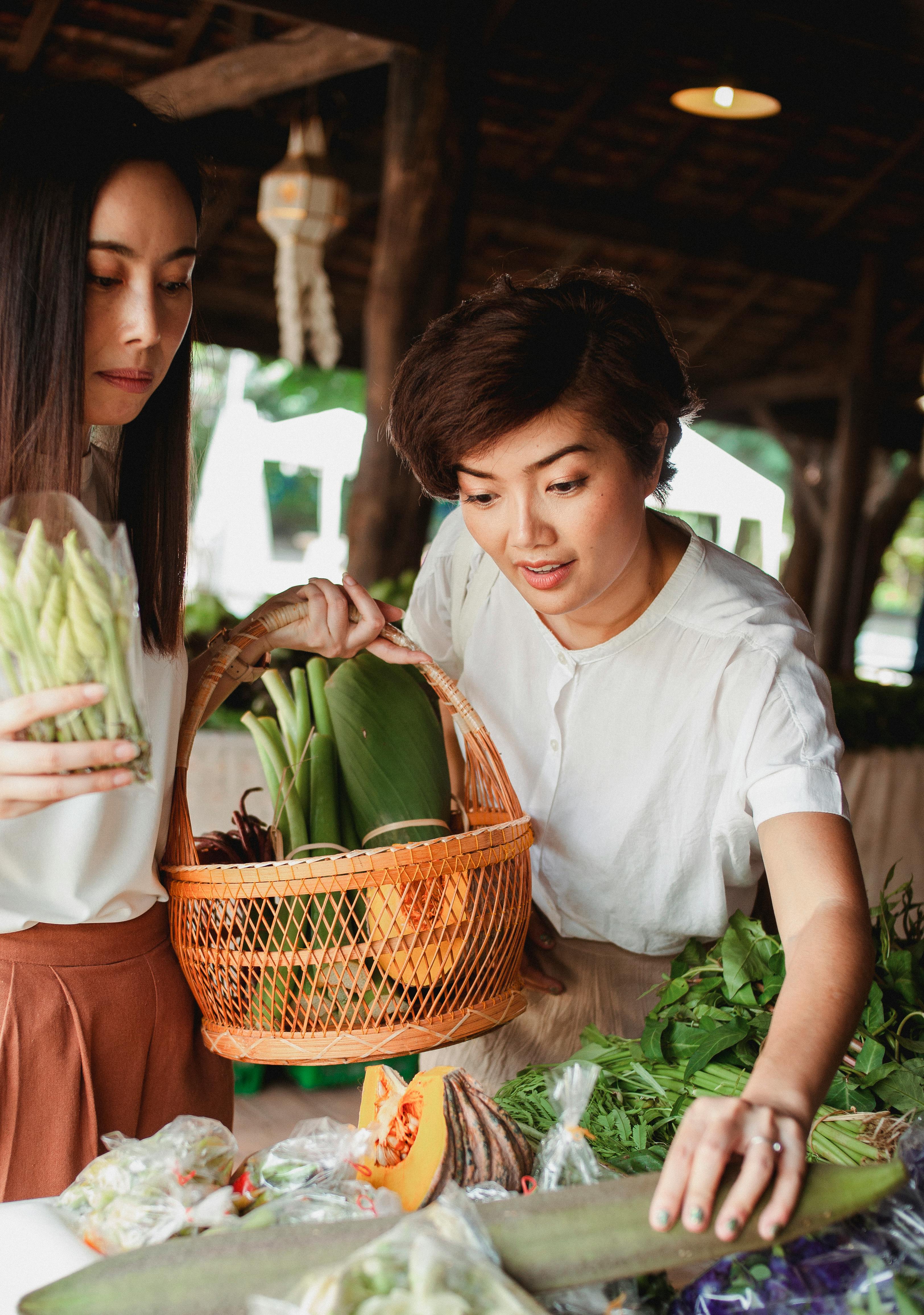
- You're curious about why Balinese food tastes the way it does — the spice paste, the coconut, the banana-leaf steaming.
Not ideal if…
- You don't cook at home and won't open the recipe booklet again — a guided food tour or a meal at a good warung gives you the flavours without the three-hour commitment.
- You're tight on time and the class would eat your only Ubud morning.
- You want fine dining rather than home-style cooking — most classes teach everyday family food, not restaurant plating.
The one detail that catches people out
- The market visit — the part most people remember — is almost always tied to the morning class only.
- Afternoon sessions skip the market and start straight at the kitchen, often at a lower price.
- If browsing a working Balinese market for galangal, candlenuts and fresh turmeric is the point for you, confirm the morning slot when you book.
What you'll actually cook — authentic Balinese dishes
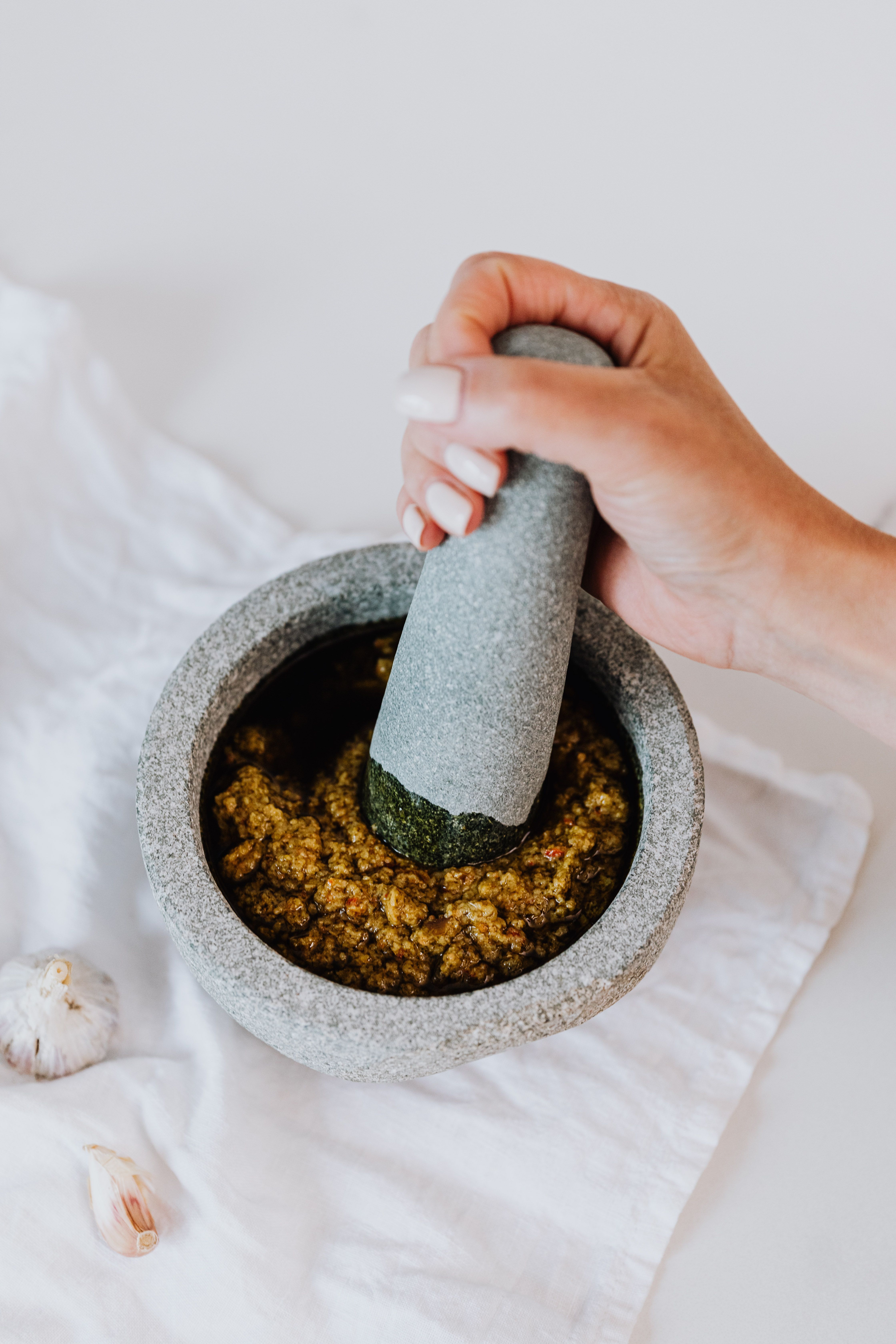
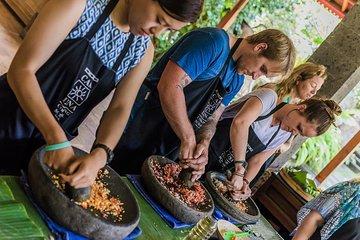
Almost every authentic Bali cooking class is built around one thing: base genep, the foundational Balinese spice paste whose name means "complete seasoning". Get that right and the rest of the menu follows. You'll grind shallots, garlic, turmeric, galangal, ginger, candlenuts, coriander and chilli by hand in a stone mortar — and that single technique is the most useful thing you take home, because the paste underpins dozens of dishes.
From there, a typical menu of four to six dishes is drawn from Bali's home-cooking repertoire rather than tourist-menu staples. You'll usually make a mix of these:
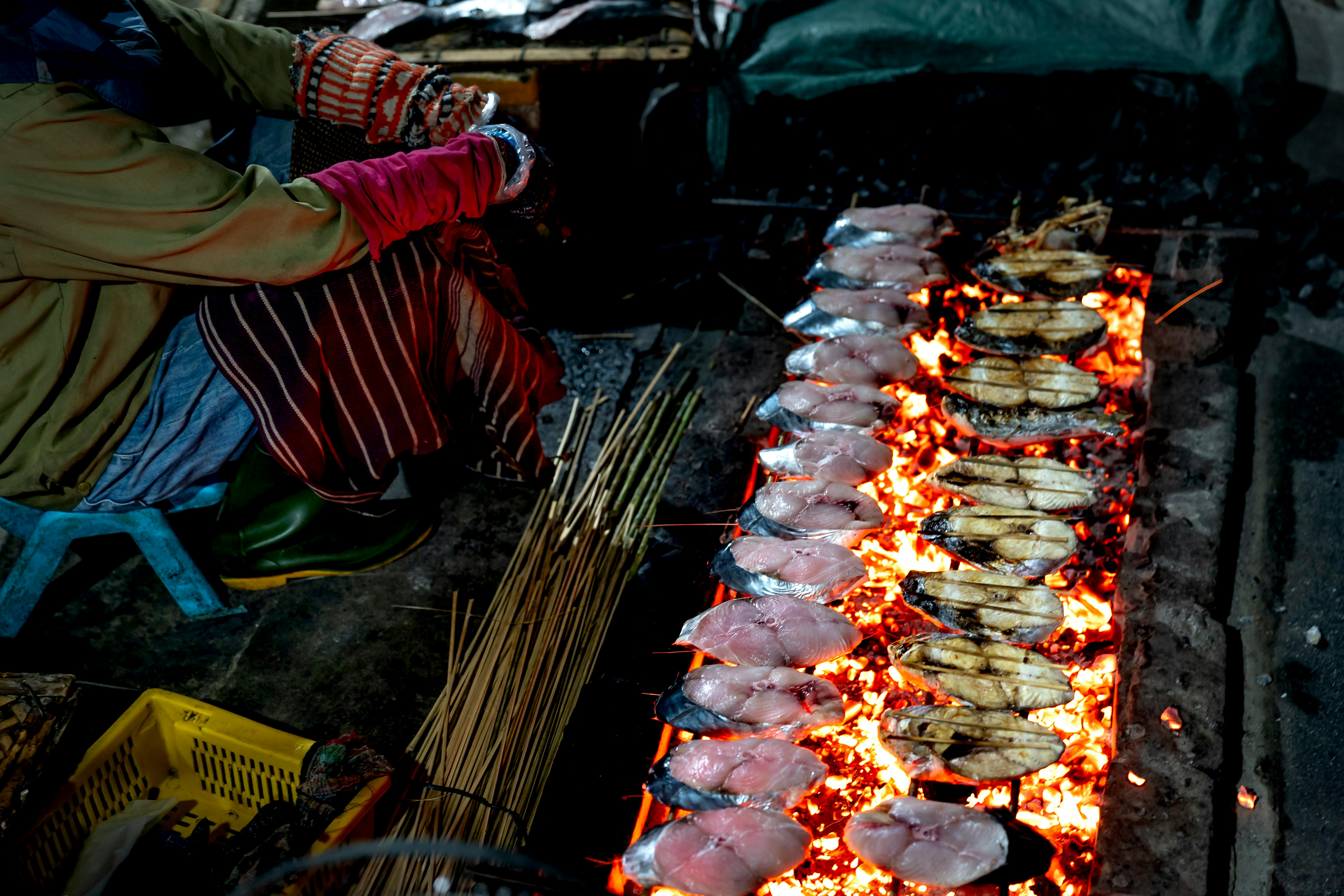
- Sate lilit — minced fish or chicken blended with grated coconut, coconut milk and base genep, wrapped around a flat lemongrass or bamboo skewer and grilled over coconut-husk coals. Lilit means "to wrap around".
- Lawar — a hand-mixed salad of minced meat or vegetables, grated coconut and spices; mixing it by hand is part of the lesson.
- Pepes or tum — seasoned fish, chicken or tofu folded into a banana-leaf parcel and steamed or grilled, so the leaf perfumes the filling.
- Sambal matah — a raw relish of sliced shallot, lemongrass, chilli and lime; the fresh counterpoint to everything else on the plate.
- Urab — blanched vegetables dressed in spiced grated coconut.
- A dessert — often dadar gulung (pandan crepes with palm-sugar coconut) or pisang goreng (banana fritters).
Some classes go further into slow-cooked showpieces like ayam betutu, where a whole chicken is packed with base genep, wrapped in banana leaves and cooked for hours until it falls off the bone. You won't replicate the buried-in-rice-husk method at home, but you'll understand it. This is the deeper, hands-on cousin of simply tasting Bali's local dishes or grazing your way through Bali's street food — here you learn the mechanics behind them.
Vegetarian, vegan and halal menus
Plant-based and halal versions are easy to find and usually just as authentic — lawar, sate lilit and pepes all have well-established vegetable and tempeh versions. Flag your requirements when you book, not on the day, so the host shops accordingly. Solo travellers with dietary needs do best in small-group or private classes where the menu flexes around them.













Types of Bali cooking class compared
Not all classes are the same experience, and the price gap reflects real differences in setting, group size and pace — not just markup. Choose the format first, then the operator. The six common types below cover almost everything you'll see listed for 2026.
| Class type | Setting & feel | Duration | Price (2026, per person) | Best for |
|---|---|---|---|---|
| Family compound (Ubud villages) | Open kitchen in a host family's home; most rooted in daily life | 4–6 hrs | IDR 500k–820k / USD 30–50 | Authenticity-seekers, couples, solo |
| Organic farm / farm-to-table | Farm walk and harvest, garden tour, then cook | 5.5–8 hrs (incl. transfers) | IDR 580k–980k / USD 35–60 | Families, slow travellers, ingredient nerds |
| Budget group class (central Ubud) | Easy to reach, larger group, short or no market stop | 2.5–3 hrs | IDR 300k–490k / USD 18–30 | Budget travellers, short on time |
| Culinary-school / restaurant class | Professional chef, structured, themed menus | 3–4 hrs | IDR 820k–1,300k / USD 50–80 | Keen home cooks wanting technique |
| Luxury / resort / private villa | Private chef, polished setting, your own pace | 3–5 hrs | IDR 1,200k–2,850k+ / USD 75–175+ | Luxury travellers, special occasions |
| South-coast class (Seminyak / Sanur / Nusa Dua) | Convenient if based in the south; fish-market option | 3–5 hrs | IDR 650k–980k / USD 40–60 | Travellers not heading to Ubud |
One reality check before you book: many classes advertised as "Balinese" actually teach a pan-Indonesian menu — nasi goreng, rendang, gado-gado — which are delicious but not specific to the island. If you want the truly Balinese repertoire (base genep, sate lilit, lawar, betutu), read the menu and confirm it covers those dishes rather than generic Indonesian fare.
How much does a Bali cooking class cost in 2026?
A Bali cooking class costs USD 18–55 (IDR 300k–900k) per person for the group and small-group sessions most travellers book, and USD 75–175+ (IDR 1,200k+) for private or luxury formats. Price tracks group size, setting and whether a market visit and transfers are included — not the quality of the food itself, which is consistently good across the range. Here's the breakdown:
- Budget group class: IDR 300,000–490,000 / USD 18–30 — larger group, central location, shorter session.
- Standard small-group with market tour: IDR 650,000–980,000 / USD 40–60 — the sweet spot for most people; market visit, four to six dishes, recipe booklet.
- Private / luxury / resort: IDR 1,200,000–2,850,000+ / USD 75–175+ — private chef, your own pace, comfortable setting.
- Solo market-tour surcharge: around IDR 100,000 / USD 6 — common when only one person joins the morning market walk.
Most classes include hotel pickup within a set zone, all ingredients, the meal you cook, and a recipe booklet; many add an apron or certificate to take home. What's usually not included is drop-off outside the pickup zone and alcohol. As a benchmark, eating the same dishes at a warung costs a fraction of this — the class is about the skill and the morning, not a cheaper lunch.
Two booking quirks worth knowing
- Many classes need a minimum of two people to run; solo travellers may pay a single supplement or join a scheduled group date.
- Quoted prices sometimes carry a "++" (tax and service) on top — check whether the figure you see is net or before extras.
Where to base yourself and which class to choose
Ubud is Bali's cooking-class capital — it has the most options, the best village and farm settings, and the easiest pairing with a proper morning market. If you're spending any time in Ubud, do your class there. If you're based on the south coast and not making the trip inland, Seminyak, Sanur and Nusa Dua all have solid classes, several with the option of a Jimbaran or Kedonganan fish-market visit instead of a produce market.
Match the class to who you're travelling as:
- Couples — a family-compound class in an Ubud village; intimate, hands-on, and a better story than another dinner out.
- Families — an organic-farm class; the farm walk keeps kids engaged before the cooking, and the pace is relaxed.
- Solo travellers — a small-group class; you'll cook alongside others and the host can flex the menu around you.
- Keen home cooks — a culinary-school or chef-led class for proper technique and a wider menu.
- Luxury travellers / special occasions — a private villa or resort class at your own pace.
- Budget travellers — a central-Ubud group class; you lose the market and some elbow room, not the dishes.
If sorting genuine classes from the hundreds of near-identical listings feels like the hard part, that's exactly the work Travjoy does — the Bali cooking classes on Travjoy are reviewed by local experts, so you can book one knowing it delivers the market visit, the hands-on time and the authentic menu it promises. You can pair the class with the rest of your itinerary using Bali's top experiences once the morning is locked in. Many Ubud classes also start with a walk through Ubud's morning market before the kitchen.
Booking, logistics and what to bring
A Bali cooking class needs almost nothing from you beyond an appetite, but a few details make the morning run smoothly. Book one to three days ahead in peak season (July–August, Christmas–New Year), confirm your dietary needs in writing, and bring very little.
- What to wear: light, comfortable clothes you don't mind smelling of smoke and spice; closed or easy-off shoes, since many kitchens are shoes-off.
- What to bring: a hat and water for the market walk, some cash for tips or extras, and your phone for photos and the recipe notes.
- Timing: morning classes start early (often 7.30–9.00am) to catch the market; afternoon classes begin around 2.00–3.00pm and skip it.
- Pickup: usually free within a set zone — check your hotel qualifies, and whether drop-off is included.
- Takeaways: a recipe booklet is standard; some classes add an apron or certificate.
Two final reality checks. First, come hungry — you eat everything you cook, and the portions are generous, so don't book a big breakfast beforehand. Second, the dishes are easy to recreate but some ingredients aren't: fresh galangal, candlenuts and kaffir lime are hard to find at home, so ask your host for substitutes before you leave. The hand-ground spice-paste technique travels better than any single ingredient.
Plan your Bali cooking class
A good Bali cooking class gives you three things at once: a hands-on cultural morning, a proper meal, and a handful of dishes you can actually cook again at home. For most travellers the standard small-group class with a market tour is the sweet spot at USD 40–60, while couples and luxury travellers will lean private and budget travellers toward a central-Ubud group session. Whichever you pick, build it around base genep — master the paste and the rest of Balinese cooking opens up.
Decide where you're based, choose the morning slot if the market matters, and confirm the menu is properly Balinese before you book. Start planning your Bali cooking class — and the rest of your island trip — on Travjoy's Bali pages, where every experience is researched and approved by local experts so you can spend less time second-guessing and more time at the mortar.







.svg&w=1920&q=75)