


Bali: Cooking Classes
The Vibe:Grind, taste, repeat — Bali on a plate 🌶️
Across rice-terrace villages and family compounds, Balinese cooks have passed down spice-paste recipes for generations. A cooking class here is less about formal technique and more about understanding why bumbu bali — the island's master seasoning — shapes every dish.
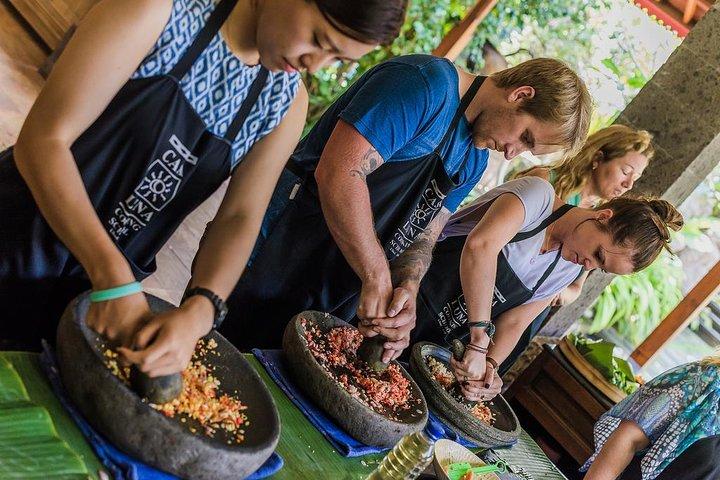
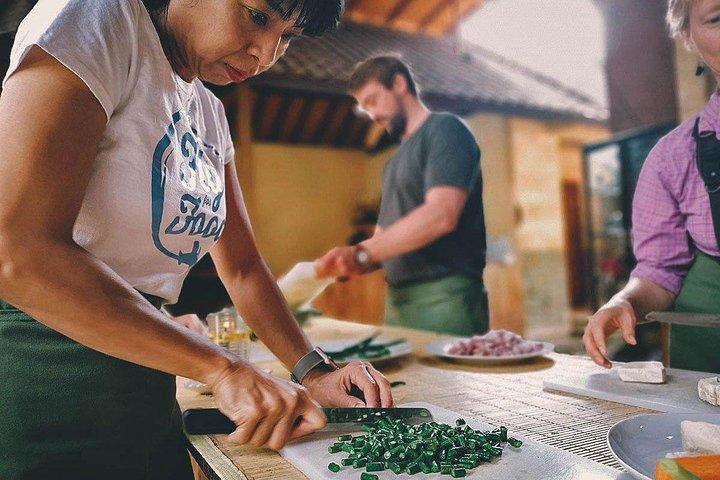
Stone mortars crack against turmeric root, coconut oil pops in wide woks, and steam carrying lemongrass and galangal rises from clay pots set over wood fire 🍳.
- • Balinese cooking classes consistently rank in TripAdvisor's top 10 Bali experiences
- • Many classes include organic farm walks praised for their educational depth
- • Participants frequently describe the experience as a holiday highlight in reviews
Persona Fit
- 👨👩👧 Families: Kids enjoy hands-on grinding, mixing, and tasting; most classes welcome children.
- 💕 Couples: A shared morning of cooking in a tropical garden makes for a memorable date.
- 🎒 Solo Travellers: Small group formats create easy social connections over a shared meal.
- 🍜 Foodies: Learn core techniques (bumbu pastes, sate preparation, lawar mixing) to recreate at home.
- 👵 Seniors: Relaxed pace with seated prep stations and shaded outdoor kitchens.
Highlights
- Bumbu bali spice-paste preparation — the aromatic foundation of nearly every Balinese dish, ground fresh by hand
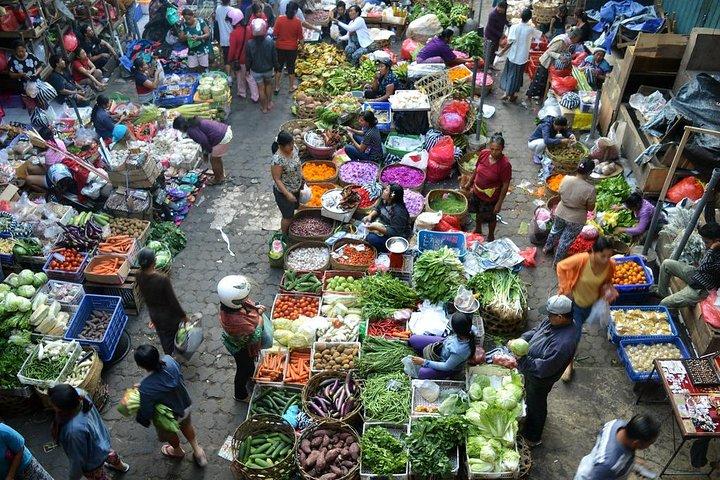
- Market visit at a traditional pasar — most morning classes start with a guided walk through a local produce market
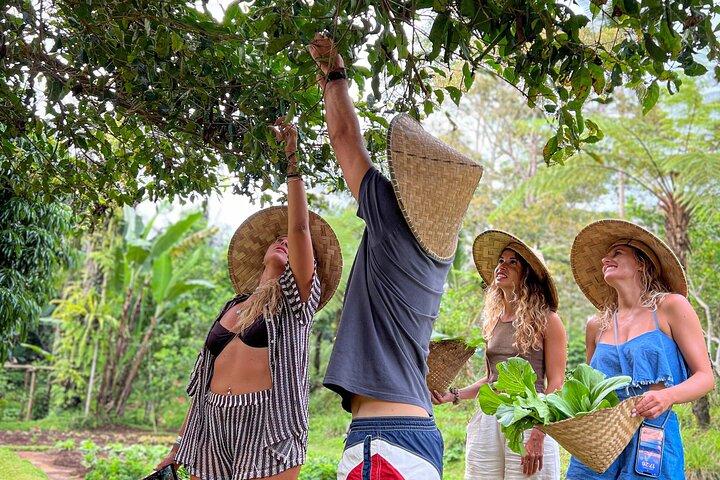
- Organic farm tour — several Ubud-based classes include a walk through rice paddies and herb gardens before cooking
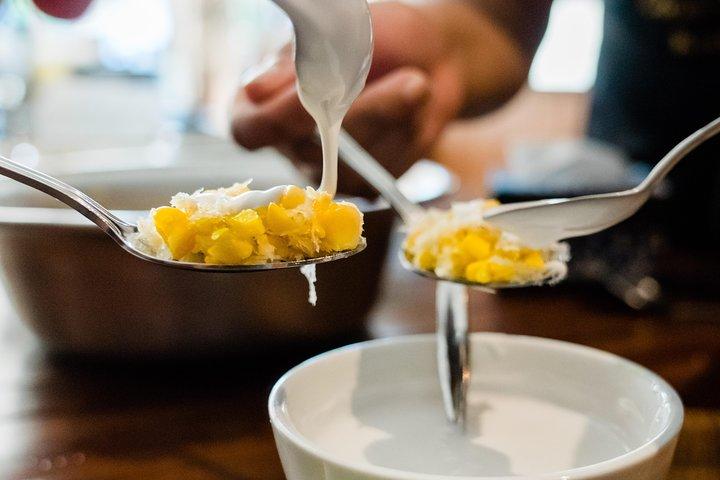
- Multi-dish menu — classes typically cover 5–8 dishes, from sate lilit to black rice pudding
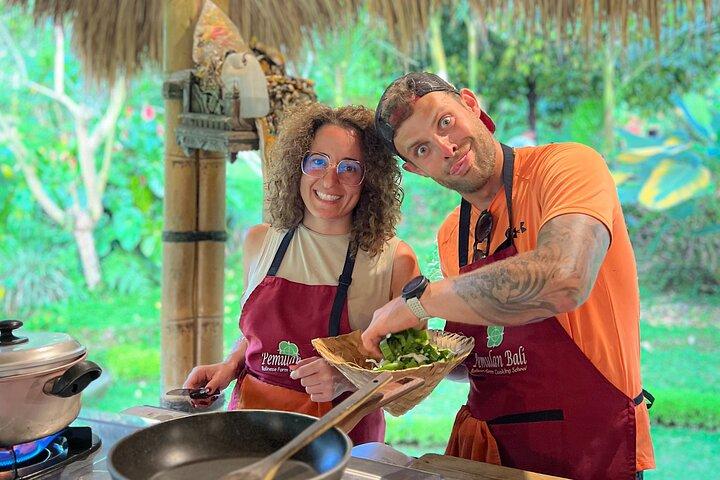
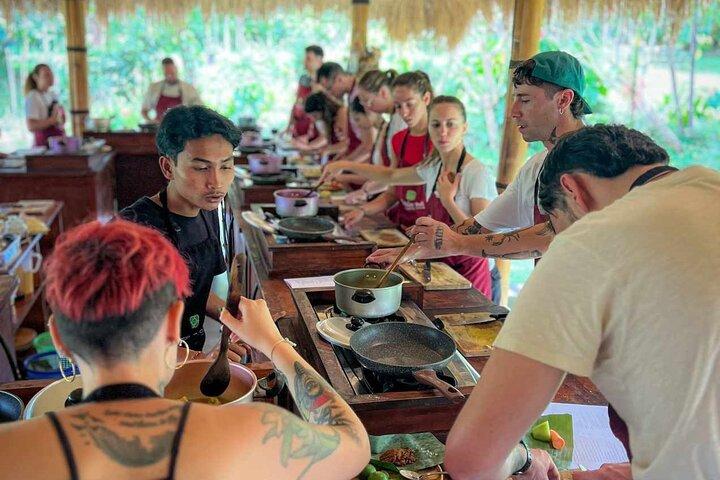
- Open-air kitchen setting — many classes cook in bamboo pavilions surrounded by tropical gardens — Hidden Gem
- Take-home recipe cards — most schools provide printed or digital recipes so you can recreate dishes at home — Hidden Gem
5 Curated Booking Options
Starts From
(Per Person)
Aura Salsa Dila
Our Bali Local Expert
Table of Contents
- Most Ubud-based classes include hotel pick-up from central Ubud; south Bali pick-ups (Seminyak, Kuta) may cost extra or require self-transport.
- Kuta-based classes (e.g., Chef Bagus) are more accessible for southern visitors without long drives.
- If self-driving to Ubud, allow extra time for narrow village roads and limited parking near rural kitchen compounds.
Food & Coffee Shops
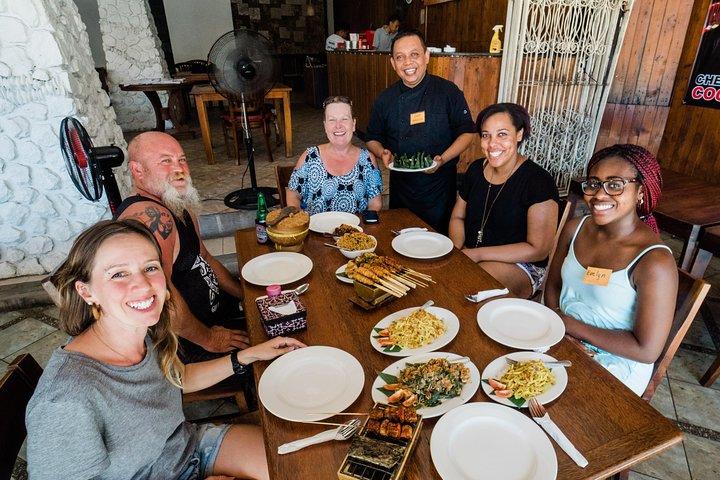
On-site meal: Every class ends with a full meal of your dishes — no extra dining needed immediately after.
Ubud market warungs: If taking a morning class with a market visit, grab a kopi Bali and pisang goreng (fried banana) from a market stall before the session.
Cafe culture in Ubud: After class, Ubud's Jalan Goutama and Jalan Dewi Sita are lined with cafés for a post-cooking coffee.
On-site meal: Every class ends with a full meal of your dishes — no extra dining needed immediately after.
Ubud market warungs: If taking a morning class with a market visit, grab a kopi Bali and pisang goreng (fried banana) from a market stall before the session.
Cafe culture in Ubud: After class, Ubud's Jalan Goutama and Jalan Dewi Sita are lined with cafés for a post-cooking coffee.
Insider Tips
Best Time: Book a morning session (starting 08:00–09:00) to get the freshest market produce and cooler temperatures in outdoor kitchens.
Hack: Ask the instructor to teach you sambal matah (raw shallot-lemongrass chilli relish) — it's the most useful Balinese condiment to master for home cooking.
Hidden Gem: Some farm-based classes allow you to join the host family's brief canang sari offering before the session begins — ask politely if this is possible.
Bring a phone or camera with a clean lens — the colourful spice-paste grinding and plating stages are the most photogenic moments.
Best Time: Book a morning session (starting 08:00–09:00) to get the freshest market produce and cooler temperatures in outdoor kitchens.
Hack: Ask the instructor to teach you sambal matah (raw shallot-lemongrass chilli relish) — it's the most useful Balinese condiment to master for home cooking.
Hidden Gem: Some farm-based classes allow you to join the host family's brief canang sari offering before the session begins — ask politely if this is possible.
Bring a phone or camera with a clean lens — the colourful spice-paste grinding and plating stages are the most photogenic moments.
Photography Tips
Best shots happen during spice grinding and wok-tossing — position yourself opposite the steam for dramatic backlight.
Morning classes in open-air Ubud kitchens get the best natural light between 09:00–10:30.
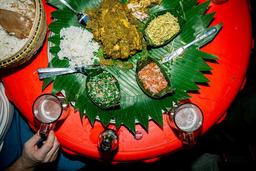
Capture the finished plate from above with banana-leaf garnishes for a clean, vibrant food photo.
Ask before photographing the host family or their home compound — most are happy to be included but appreciate being asked.
Best shots happen during spice grinding and wok-tossing — position yourself opposite the steam for dramatic backlight.
Morning classes in open-air Ubud kitchens get the best natural light between 09:00–10:30.
Capture the finished plate from above with banana-leaf garnishes for a clean, vibrant food photo.
Ask before photographing the host family or their home compound — most are happy to be included but appreciate being asked.
Things To Do Nearby
Tegallalang Rice Terraces — iconic layered paddies just north of Ubud, perfect for a post-class walk.
Ubud Monkey Forest — a shaded sanctuary with long-tailed macaques, roughly 10 minutes from central Ubud cooking schools.
Tirta Empul Temple — a sacred water purification temple about 20 minutes north, ideal to pair with a morning cooking class.
Tegallalang Rice Terraces — iconic layered paddies just north of Ubud, perfect for a post-class walk.
Ubud Monkey Forest — a shaded sanctuary with long-tailed macaques, roughly 10 minutes from central Ubud cooking schools.
Tirta Empul Temple — a sacred water purification temple about 20 minutes north, ideal to pair with a morning cooking class.