



Vegan and Vegetarian Bali: The Ultimate Plant-Based Food Guide
7 min read

Sandeepa K
Author
Long-term traveller and AI Expert.
SHARE BLOG
TABLE OF CONTENTS
- Key Takeaways
- Why Bali Is One of Asia's Easiest Places to Eat Plant-Based
- Traditional Balinese Dishes That Are (Almost) Vegan — and the Traps
- Ubud — Bali's Plant-Based Capital
Key Takeaways
- Ubud is Bali's plant-based capital; Canggu and Uluwatu come a close second, and almost every tourist-area cafe has vegan options.
- Many traditional dishes — gado-gado, nasi campur, urap, tempeh and tofu — are plant-based by default, but watch for terasi (shrimp paste), fish sauce, chicken stock and egg.
- Learn three phrases: "saya vegan", "tanpa terasi" and "tanpa telur" — they cover most ordering situations.
- Budget warung meals run IDR 25,000–60,000 (USD 1.50–4); dedicated vegan cafes IDR 60,000–180,000 (USD 4–12); raw fine dining costs more.
- Vegan Balinese cooking classes (IDR 480,000–975,000 / USD 30–60) are one of the best ways to understand the cuisine.
Eating vegan and vegetarian in Bali is easy, especially in Ubud, Canggu and Uluwatu, where dedicated plant-based cafes are everywhere. Many Indonesian staples — gado-gado, nasi campur, tempeh and tofu — are already meat-free, though you should ask for them without terasi (shrimp paste), egg and chicken stock. Expect to pay IDR 25,000–180,000 (roughly USD 1.50–12) per meal depending on whether you eat at a local warung or a Western-style vegan cafe.
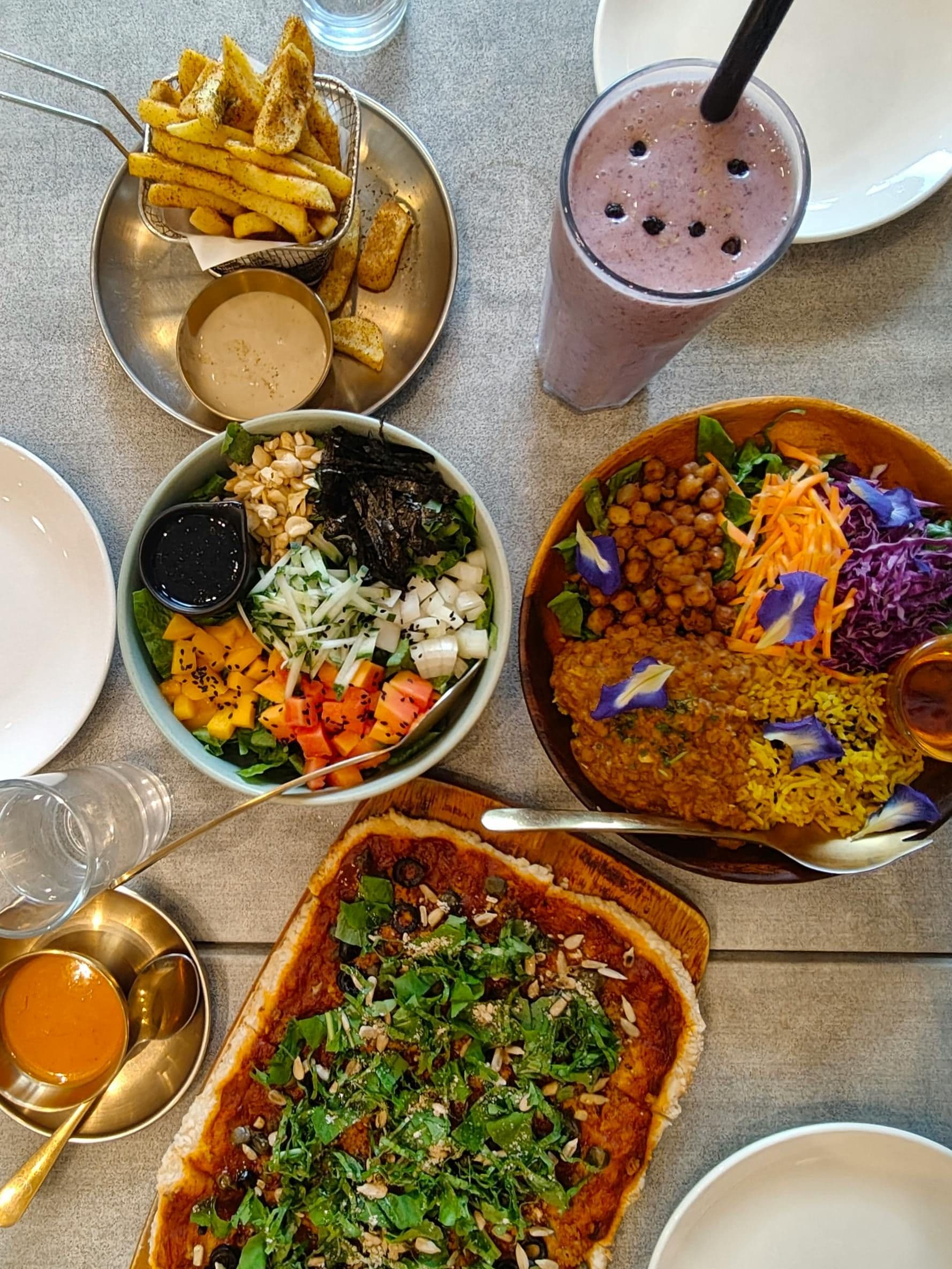
You arrive in Bali bracing yourself for two weeks of plain nasi goreng and fruit plates, and within a day you realise you had it backwards. The island has one of the densest plant-based food scenes in Asia — raw cafes in jungle clearings, smoothie-bowl bars by the surf, and warungs serving tempeh that puts most Western mock meats to shame.
Eating vegan and vegetarian in Bali is less about hunting for options and more about knowing where to base yourself and how to order. Ubud, Canggu and Uluwatu are saturated with dedicated vegan kitchens, while the local Balinese and Indonesian repertoire is full of dishes that are plant-based by default. The one real catch is terasi — fermented shrimp paste — which hides in sauces you would never suspect.
This guide maps the best areas for plant-based eating, the traditional dishes worth ordering, the ingredients to watch for, the phrases that get you a clean meal, and what it all costs in rupiah and dollars. By the end you'll know exactly where to eat, what to say, and how to do it without blowing your budget.
Why Bali Is One of Asia's Easiest Places to Eat Plant-Based
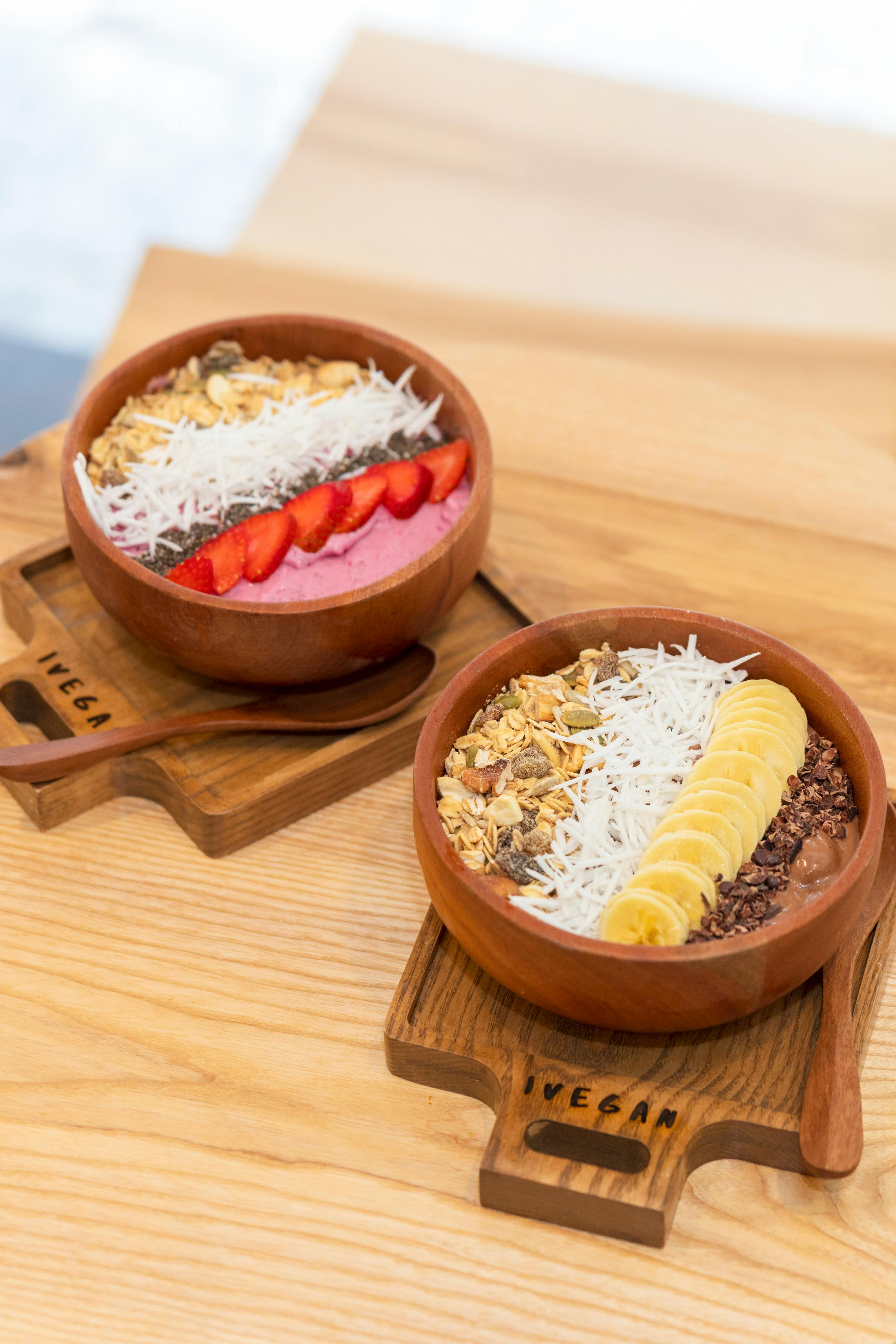
Bali makes plant-based travel easy because plant foods sit at the centre of its everyday cooking and because decades of wellness tourism have built a dense network of vegan kitchens. Tempeh and tofu come from this part of the world, coconut and vegetables anchor most home cooking, and tourist towns now compete to out-do each other on smoothie bowls and raw desserts.
Where you base yourself still matters. The plant-based density drops sharply once you leave the main tourist belt, so picking the right area does most of the work for you.
Plant-based density by area
Here's how Bali's main areas compare for plant-based Bali dining, from the vegan capital to the calmer, more vegetarian-friendly south.
| Area | Plant-based density | Vibe | Typical price tier | Best for |
|---|---|---|---|---|
| Ubud | Highest | Raw food, jungle, wellness | Budget to fine dining | Couples, foodies, first-timers |
| Canggu | Very high | Brunch, surf, digital nomad | Mid-range | Solo travellers, families |
| Uluwatu | Rising | Cliffs, surf, beach cafes | Mid-range to high | Surfers, couples |
| Seminyak & Kuta | Moderate | Beach clubs, shopping | Mid-range to high | Vegetarian-friendly Western cafes |
| Sanur & Nusa Dua | Lower | Calm, family resorts | Mid-range | Families, slower trips |
Traditional Balinese Dishes That Are (Almost) Vegan — and the Traps
Plenty of classic Indonesian and Balinese dishes are vegan or vegetarian as served, or become so with one small request. Knowing the names means you can eat well at any local warung, not just at Western cafes. The dishes below are the safest bets.
Dishes that are plant-based by default
- Gado-gado — steamed vegetables, tofu and tempeh in peanut sauce (ask for it without egg and krupuk).
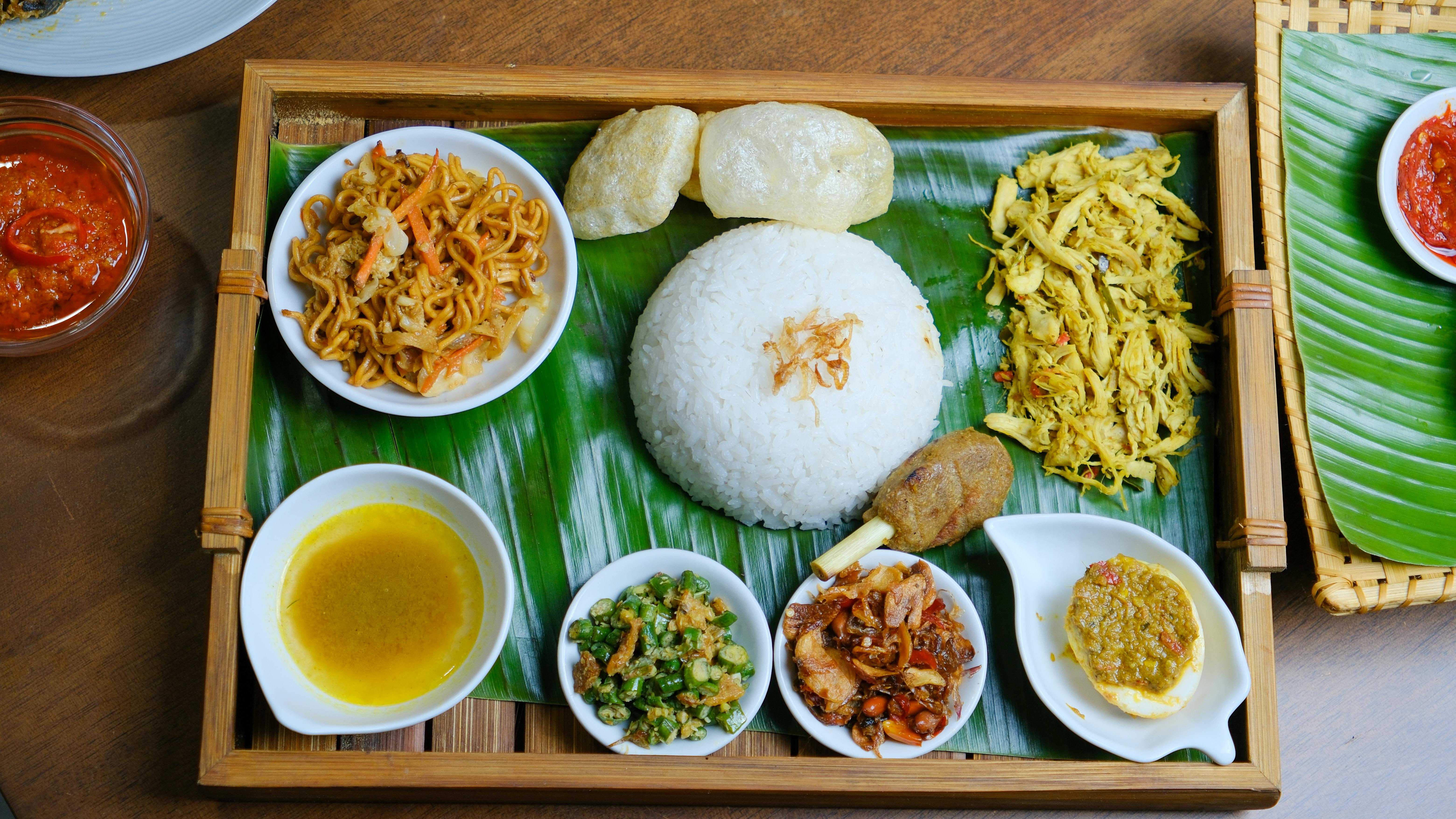
- Nasi campur sayur — rice with a pick-and-point spread of vegetable sides; choose the meat-free dishes.
- Urap — shredded vegetables tossed with spiced grated coconut.
- Capcay — stir-fried mixed vegetables in a light soy sauce.
- Pecel — blanched greens with a thick peanut-chilli sauce.
- Tempe and tahu goreng — fried fermented soybean cake and tofu, often glazed with sweet soy.
- Sayur lodeh — vegetables simmered in coconut milk.
- Tempeh or tofu sate — skewers with peanut sauce (confirm no shrimp paste in the sauce).
The ingredients that catch vegans out
The main risk in Bali isn't a lack of vegetables — it's a handful of animal-based flavourings tucked into otherwise plant-based dishes. Watch for these:
- Terasi — fermented shrimp paste, the base of many sambals and peanut sauces.
- Kecap ikan — fish sauce, used in some stir-fries and marinades.
- Kaldu ayam — chicken stock, common in soups and rice dishes.
- Telur — egg, often added to gado-gado, nasi goreng and mie goreng.
- Krupuk — crackers that are usually prawn-based.
- Shared frying oil — at busy warungs, tofu may be fried in the same oil as fish or chicken.
How to order plant-based in Indonesian
A few words go a long way. Most cafe staff in tourist areas speak English, but these phrases matter at local warungs and in quieter parts of the island.
- "Saya vegan" / "saya vegetarian" — I am vegan / vegetarian.
- "Tanpa daging" — without meat.
- "Tanpa terasi" — without shrimp paste.
- "Tanpa telur" — without egg.
- "Tanpa krupuk" — without crackers.
- "Pakai terasi?" — does it have shrimp paste in it?
Sweet snacks and desserts worth trying
Traditional Balinese sweets are mostly built on rice, coconut and palm sugar, which makes many of them plant-based by default. They're sold cheaply from market stalls and roadside carts.
- Bubur injin — black rice porridge with coconut milk and palm sugar.
- Dadar gulung — pandan-green crepes filled with sweet grated coconut.
- Pisang goreng — fried banana fritters, a warung staple.
- Rujak — a tart fruit salad with chilli and palm sugar (check the dressing for terasi).
- Jaja batun bedil — glutinous rice cakes with coconut and palm sugar.
Ubud — Bali's Plant-Based Capital
Ubud has the highest concentration of fully plant-based restaurants on the island, which is why most vegan and vegetarian Bali itineraries start here. Set among rice paddies and jungle, it leans toward raw food, permaculture kitchens and slow, health-focused dining rather than party brunches.
Where to eat in Ubud
- Sayuri Healing Food — raw vegan institution known for desserts and smoothie bowls.
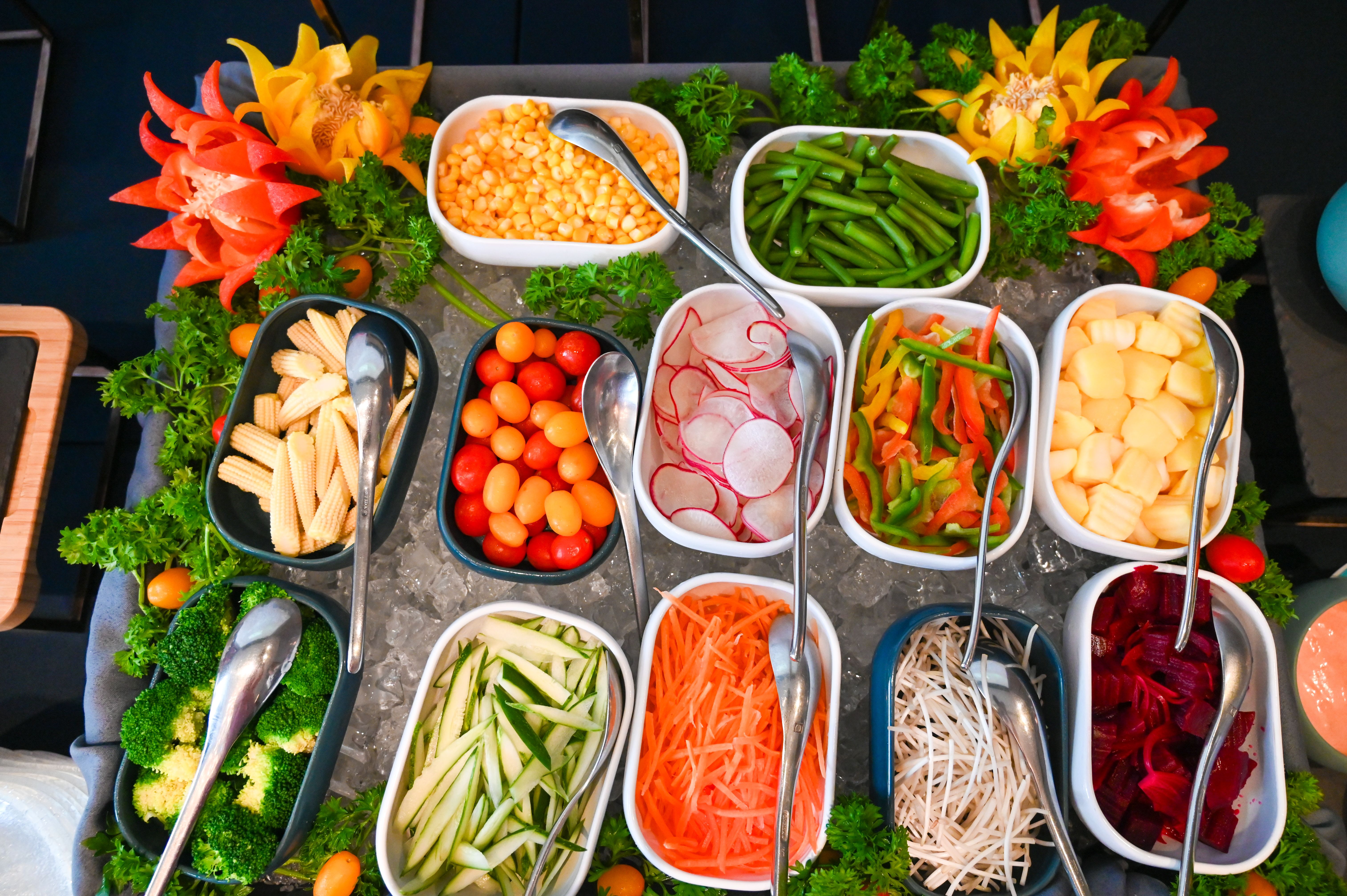
- Alchemy — one of Asia's largest raw vegan buffets, with build-your-own bowls.
- Moksa — plant-based fine dining on a working permaculture farm just outside town.
- Zest Ubud — hillside cafe with a strong dinner menu and valley views.
- Earth Cafe — long-running all-day spot for burgers, bowls and wraps.
- Seeds of Life — raw food, cashew cheeses and raw chocolate cake.
- Clear Cafe — the iconic vegetarian-leaning cafe that helped build Bali's vegan reputation.
What it costs in Ubud
Ubud spans the full price range, from cheap raw-buffet lunches to multi-course tasting menus.
- All-you-can-eat vegan buffet lunch: from IDR 50,000 (about USD 3).
- Smoothie bowls and mains at a mid-range cafe: IDR 70,000–150,000 (USD 4.50–10).
- Plant-based fine dining and tasting menus: IDR 350,000+ (USD 22+).
Pair the eating with Ubud's wider draws — temples, rice terraces and the markets that supply these kitchens. Our top 20 things to do in Bali rounds out a few days based here.









Canggu, Seminyak and Uluwatu — Beach-Town Plant-Based Hubs
If Ubud is about raw food and quiet, the coastal towns are about all-day brunch, smoothie bowls and surf-and-eat energy. Canggu has the densest plant-based scene outside Ubud, Seminyak skews toward vegetarian-friendly Western cafes, and Uluwatu is the fast-rising newcomer.
Canggu
Canggu is so plant-friendly that it's rare to find a cafe here without vegan options. Canggu works well as a base if you want to eat well and surf or work between meals.
- Kynd Community — pink-walled, all-vegan cafe famous for smoothie bowls and "calamari".
- The Shady Shack — relaxed garden spot with hearty vegetarian and vegan bowls.
- Peloton Supershop — all-vegan brunch with a strong ethical and community focus.
- I Am Vegan Babe — creative, all-day plant-based menu.
- Warung Dua Hati — affordable, fully plant-based Indonesian dishes like vegan sate and nasi campur.
Seminyak and Kuta
Seminyak has fewer fully vegan kitchens than Canggu but plenty of vegetarian-friendly cafes and a couple of long-running vegan stalwarts. Seminyak suits travellers who want plant-based meals alongside beach clubs and shopping.
- Zula — one of Bali's original vegetarian restaurants, with a sprawling menu.
- Sea Circus — colourful all-day cafe with clearly marked vegan dishes.
- Kynd Community — a second branch of the Canggu favourite.
Uluwatu and the Bukit
Uluwatu is the up-and-coming plant-based zone, driven by surfers and a growing wellness crowd on the Bukit Peninsula.
- Alchemy — the raw vegan buffet's southern outpost.
- Bingin and Padang Padang cafes increasingly serve vegan brunch and bowls near the surf.
What it costs at the coast
- Smoothie bowls: IDR 60,000–110,000 (USD 4–7).
- Vegan mains and burgers: IDR 80,000–160,000 (USD 5–10).
- Local plant-based warung meals such as Warung Dua Hati: IDR 35,000–70,000 (USD 2.50–4.50).
Plant-Based on a Budget — Warungs, Delivery and Cooking Classes
You don't need a Western-cafe budget to eat plant-based in Bali. Local warungs serve filling vegetable-and-rice meals for a fraction of cafe prices, and the same dishes arrive through delivery apps for a few dollars.
Eating cheap at warungs
The easiest budget meal is nasi campur at a point-and-pick warung, where dishes sit in a glass case and you choose what goes on your plate. Skip anything with visible meat or egg, ask "pakai terasi?" about the sauces, and you'll eat well for very little.
- Nasi campur sayur (rice plus vegetable sides): IDR 25,000–50,000 (USD 1.50–3).
- Tempe or tahu with rice and greens: IDR 20,000–40,000 (USD 1.30–2.50).
- Fresh fruit and market produce: a few thousand rupiah each.
Delivery and self-catering
- GoFood and GrabFood deliver from most vegan cafes and warungs island-wide; filter by "vegan" or "vegetarian".
- Plant milks (soy, coconut, oat) are standard in cafes and stocked in supermarkets, though unsweetened soy can be harder to find.
- Traditional markets are cheap for fruit, vegetables, tempeh and tofu if you're self-catering.
Learn to cook it — vegan cooking classes
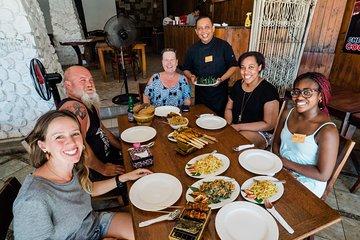
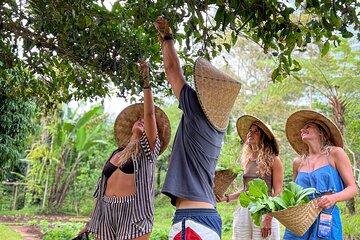
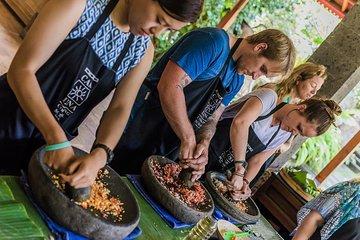
A vegan Balinese cooking class is one of the best ways to understand the cuisine and take it home. Most run on organic farms near Ubud, include a market or garden tour, and guarantee no shrimp paste or fish sauce. You can book a Balinese cooking class with a plant-based menu through Travjoy, where the experiences are researched and approved by local experts so you know the dietary side is handled.
- Group vegan or vegetarian class (4–6 hours, with market tour): IDR 480,000–600,000 (USD 30–38).
- Evening or advanced classes: IDR 750,000–935,000 (USD 47–60).
- Private classes: from around IDR 975,000 (USD 60).
Plan around the Bali Vegan Festival
- Held annually across Ubud and Canggu, with food stalls, talks and cooking demos.
- Dates shift from year to year — check the official festival channels before booking travel around it.
- Even outside the festival, Ubud and Canggu run regular plant-based markets and pop-ups.
Which Plant-Based Bali Trip Suits You?
The best base depends on how you travel. Use this quick logic to decide where to spend most of your nights for the easiest plant-based eating.
- If you're a couple after calm, scenic dining: base in Ubud for raw cafes, permaculture restaurants and valley views.
- If you're travelling as a family: Canggu and Sanur are easiest, with familiar Western-style vegan cafes and gentler menus for kids.
- If you're a solo traveller or digital nomad: Canggu has the density, community and laptop-friendly cafes.
- If it's your first time and you want a mix: split your stay between Ubud and Canggu — together they cover almost everything.
- If you're a budget foodie: stick to warungs and delivery anywhere in the tourist belt, and treat cafes as occasional splurges.
Practical tips for a smooth trip
- Strict vegans should confirm frying oil isn't shared at non-dedicated warungs.
- Carry a written translation of "no shrimp paste, no fish sauce, no egg" for quieter areas.
- Drink only bottled or filtered water; most tourist-area ice is factory-made and fine, but ask if you're unsure.
Plan your plant-based trip to Bali
Eating vegan and vegetarian in Bali is as easy as anywhere in Asia, provided you base yourself well and learn a few words. Ubud gives you the deepest plant-based scene, Canggu and Uluwatu bring the beach-town energy, and the local warung repertoire keeps costs low once you know which dishes to order and which flavourings to skip.
Get terasi, egg and chicken stock onto your radar, keep "tanpa terasi" and "tanpa telur" handy, and you'll rarely have a bad meal. Start planning your plant-based trip on Travjoy's Bali page and build an itinerary around the island's best food towns.











.svg&w=1920&q=75)