



Things to Do in Singapore You Absolutely Cannot Miss (2026 Guide)
19 min read

Author
SHARE BLOG
TABLE OF CONTENTS
- Singapore packs world-class attractions, cultural quarters, and protected rainforest into a 730 sq km island — plan at least 4–5 days to cover the essentials.
- The top free experiences include the Garden Rhapsody light show at 7:45 PM and 8:45 PM nightly, the Spectra water show at Marina Bay, and walking through Kampong Glam and Chinatown.
- Hawker centres are non-negotiable — expect to pay SGD 3–8 (~USD 2–6) per dish for some of the best street food on the planet.
- Most major attractions cost SGD 20–50 (~USD 15–38) per adult, and pre-booking online saves both money and queuing time. See Travjoy's top 20 Singapore experiences for a ranked shortlist.
- Singapore's MRT connects nearly every attraction on this list; a stored-value card keeps per-ride costs under SGD 2 (~USD 1.50).
The best things to do in Singapore span the Marina Bay waterfront, the conservatories at Gardens by the Bay, cultural quarters like Chinatown and Kampong Glam, hawker-centre food trails across the island, Sentosa's theme parks, and protected nature reserves like Bukit Timah and the Botanic Gardens. Most first-time visitors need 4–5 days to cover the highlights comfortably, with daily budgets ranging from SGD 50 (~USD 38) for budget travellers to SGD 300+ (~USD 225) for premium experiences.
Singapore measures just 730 square kilometres — smaller than most national parks — yet somehow fits a UNESCO-listed rainforest, a Michelin-starred hawker stall, a 35-metre indoor waterfall, and one of the world's largest aquariums within a 45-minute MRT ride of each other. That density is the city-state's defining advantage, and the Singapore Tourism Board promotes it well — but it also makes planning tricky. Most "things to do" lists either overwhelm you with 100 entries or skim the surface with the same five postcard shots.
This guide takes a different approach. It covers what genuinely belongs on your itinerary — organised by experience type, with honest timing estimates, current 2026 prices in both SGD and USD, and clear guidance on which experiences suit couples, families, solo travellers, and budget-conscious visitors. If you have three days or ten, you will walk away knowing exactly where to spend your hours.

Marina Bay and the City Centre — Singapore's Signature Skyline
Marina Bay is where most visitors get their first real look at Singapore, and for good reason. The 3.5-kilometre waterfront loop connecting Merlion Park, the Helix Bridge, and the ArtScience Museum is free to walk and best experienced in the hour before sunset, when the temperature drops and the building lights begin to switch on. This single walk gives you the city's most recognisable landmarks in one stretch.
The Marina Bay Waterfront Walk
Start at Merlion Park for the obligatory photo with Singapore's half-lion, half-fish mascot. From there, cross the pedestrian Helix Bridge — its DNA-inspired steel curves make it one of the more photogenic bridges in Southeast Asia, especially after dark. The walk ends near the lotus-shaped ArtScience Museum, which hosts rotating exhibitions that typically run SGD 19–25 (~USD 14–19) per adult.
The full loop takes 45–60 minutes at a comfortable pace. If you are walking with children or stopping for photos, budget closer to 90 minutes.
Marina Bay Sands SkyPark Observation Deck
The SkyPark sits 200 metres above street level on the 57th floor of Marina Bay Sands. The views stretch from Gardens by the Bay and the Supertree Grove to the shipping lanes of the Singapore Strait. On a clear day, you can see the coastline of Malaysia.
- Non-peak tickets (before 5 PM): SGD 35 (~USD 26) adult / SGD 22 (~USD 17) child (ages 2–12)
- Peak tickets (5 PM–10 PM): SGD 39 (~USD 29) adult / SGD 22 (~USD 17) child
- Family package (2 adults + 2 children): SGD 110–126 (~USD 83–95)
- Opening hours: 11 AM–10 PM daily (last entry 9:30 PM)
- Best time to visit: Arrive 30 minutes before sunset for both daylight and night views
One trade-off worth knowing: the observation deck is standing room only — there are no seats, and you cannot access the rooftop infinity pool (that is reserved for hotel guests). If you want to sit with a drink and watch the sunset, the rooftop bars inside the hotel are a better option, though drinks start at SGD 25+ (~USD 19).
Best for: First-time visitors who want a wide-angle orientation of the city. Couples visiting at sunset will find the timing especially worthwhile.
Spectra Light and Water Show (Free)
Spectra runs nightly on the Marina Bay waterfront promenade — a 15-minute production of water fountains, laser projections, and orchestral music choreographed against the Marina Bay Sands facade. It rivals the Bellagio fountains in scale and costs nothing.
- Showtimes: 8 PM and 9 PM (Sunday–Thursday); additional 10 PM show on Fridays and Saturdays
- Best viewing spot: Event Plaza, directly in front of the Marina Bay Sands shopping mall
Best for: Everyone — families, couples, and solo travellers. Arrive 10–15 minutes early to secure a front-row spot.
Singapore Flyer — When It Makes Sense and When to Skip It
The Singapore Flyer is a 165-metre observation wheel offering 360-degree views from an air-conditioned capsule. Each rotation takes about 30 minutes. If you have already visited the SkyPark, the Flyer covers similar visual territory from a slightly different angle — so doing both on the same trip is not essential.
- Tickets: SGD 40 (~USD 30) adult / SGD 31 (~USD 23) child
- When it makes sense: If you are skipping the SkyPark or visiting with young children who might enjoy the capsule experience
- When to skip: If you have already done the SkyPark and want to allocate time elsewhere
Gardens by the Bay and the Green Heart of Singapore
Gardens by the Bay is Singapore's single most-visited paid attraction, and it earns the reputation. The 101-hectare waterfront park — developed on reclaimed land along Marina Bay — combines two climate-controlled conservatories, a grove of 25-to-50-metre vertical gardens, and free outdoor spaces that stay open until midnight. You could spend an entire day here, but most visitors cover the highlights in 3–4 hours.
Cloud Forest and Flower Dome
The Cloud Forest houses a 35-metre indoor waterfall draped in tropical mist, with walkways spiralling up through mountain vegetation typically found 2,000 metres above sea level. The Flower Dome — the world's largest glass greenhouse — recreates Mediterranean and semi-arid climates, with seasonal exhibitions that rotate every few months. In 2026, the Cloud Forest also features Jurassic World: The Experience, with life-sized animatronic dinosaurs positioned throughout the conservatory.
- Combo ticket (Cloud Forest + Flower Dome): SGD 46–53 (~USD 35–40) adult / SGD 28–32 (~USD 21–24) child (ages 3–12)
- Singapore resident pricing: SGD 34 (~USD 26) adult
- Opening hours: 9 AM–9 PM daily (last admission 8:30 PM)
- Time needed: 2–3 hours for both conservatories
If you only have time for one conservatory, choose the Cloud Forest. The waterfall, the mist, and the vertical walkways make it the more immersive experience. The Flower Dome is the calmer option — ideal if you are visiting with older family members or want a cooler indoor break from the heat.
Best for: Families with children (the dinosaur installations hold attention), couples looking for a cooler escape, and anyone who enjoys horticultural design.
Garden Rhapsody and the Supertree Grove
The Supertree Grove is free to walk through at any hour, and the nightly Garden Rhapsody light show transforms the structures into a synchronised display of LED lights and orchestral music. The show runs for about 10 minutes.
- Showtimes: 7:45 PM and 8:45 PM nightly (free)
- Pro tip: Bring a mat and lie on the grass directly beneath the Supertrees — the upward view is far better than watching from the walkways
- OCBC Skyway (elevated walkway): SGD 14 (~USD 11) adult / SGD 10 (~USD 8) child — connects two Supertrees at 22 metres above ground
Singapore Botanic Gardens — A UNESCO World Heritage Morning Walk
The Singapore Botanic Gardens predates the country itself — established in 1859, it earned UNESCO World Heritage status in 2015. The grounds are free to enter and best visited early morning, when the air is cooler and joggers share the paths with birdwatchers.
- Entry: Free (grounds); SGD 5 (~USD 4) for the National Orchid Garden
- Opening hours: 5 AM–midnight daily
- Time needed: 1.5–2 hours for a relaxed walk; add 45 minutes for the Orchid Garden
Best for: Couples and solo travellers looking for a quiet morning. Families with young children will appreciate the Jacob Ballas Children's Garden (free, open Tuesday–Sunday).
Bukit Timah Nature Reserve — Singapore's Wild Side
Bukit Timah holds Singapore's highest point at 163 metres and protects one of the last remaining patches of primary tropical rainforest on the island. The main summit trail takes 30–45 minutes each way and involves steep sections with uneven stone steps. Long-tailed macaques are common along the route — keep food sealed and bags closed.
- Entry: Free
- Opening hours: 7 AM–7 PM daily
- Getting there: MRT to Beauty World station (Downtown Line), then a 10-minute walk
- Difficulty: Moderate — the steps are steep in sections and can be slippery after rain
Best for: Active travellers and nature enthusiasts. Not ideal for very young children or those with mobility concerns.

Singapore's Cultural Quarters — Neighbourhoods That Tell the Story
Singapore's identity sits at the intersection of Malay, Chinese, Indian, and Peranakan heritage — and the clearest way to experience that diversity is on foot through the city's four distinct cultural quarters. Each neighbourhood is walkable in 2–3 hours, and all are connected by MRT stations within minutes of each other.
Chinatown
Chinatown stretches across Pagoda Street, Temple Street, and Smith Street, with the Buddha Tooth Relic Temple as its architectural centrepiece. The temple houses a relic of the Buddha in a 420 kg solid gold stupa and is free to enter — modest dress is required (no shorts, shoulders must be covered).
Surrounding the temple, the Chinatown Street Market sells everything from souvenirs to traditional Chinese medicine. The real draw, though, is the food. Maxwell Food Centre sits a five-minute walk south and houses some of Singapore's most celebrated hawker stalls, including the famous Tian Tian chicken rice — expect queues of 30–45 minutes during peak lunch hours.
Insider tip: If the Tian Tian queue is discouraging, try Ah Tai Hainanese Chicken Rice at the neighbouring stall. Run by a former head chef of Tian Tian, it serves a near-identical plate with a fraction of the wait.
Kampong Glam and Haji Lane
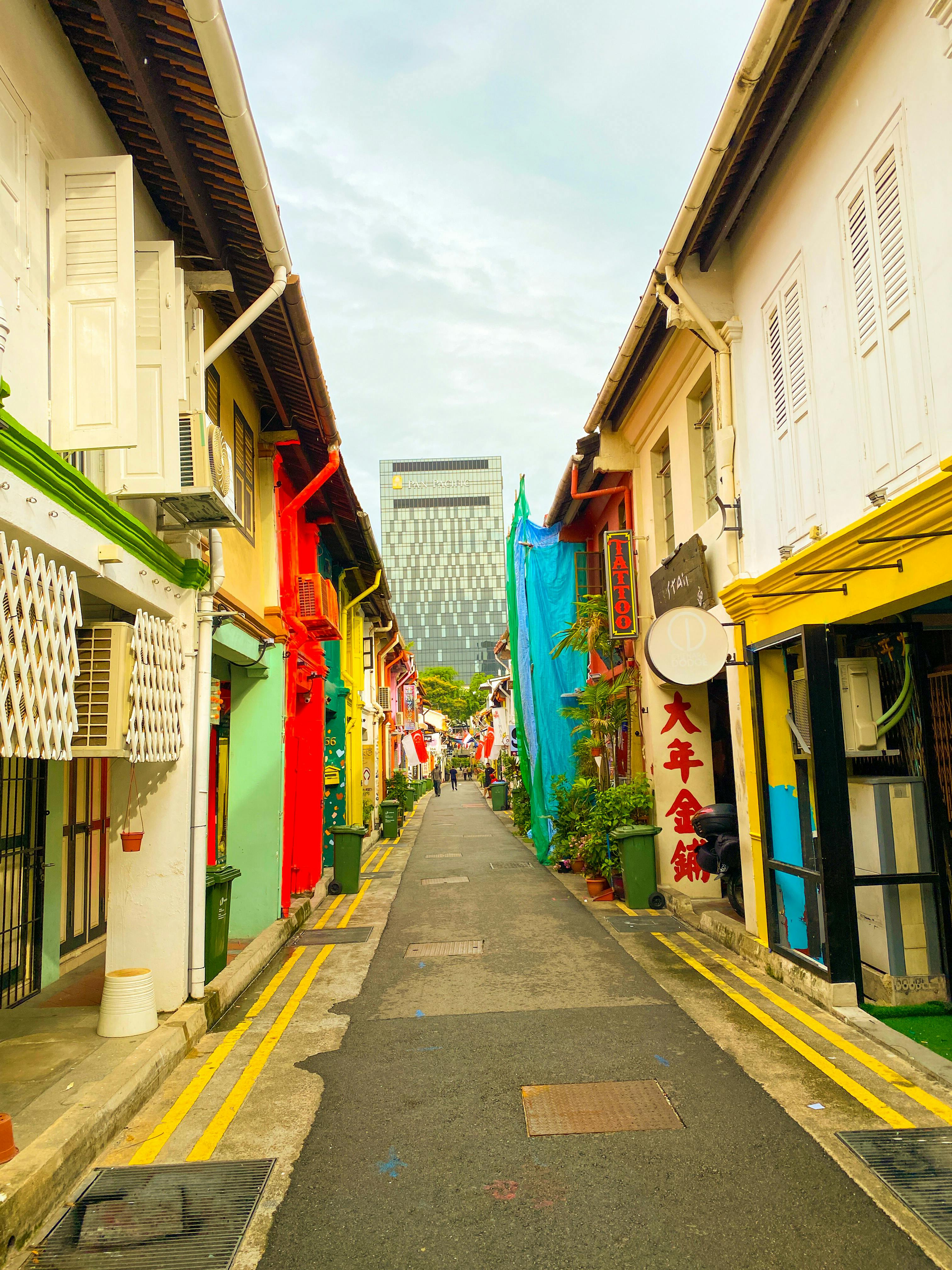
Kampong Glam is Singapore's Malay-Arab quarter, centred around the golden-domed Sultan Mosque and the narrow laneway of Haji Lane. The mosque is free to visit (shoes off, headscarves available at the entrance for women), and the surrounding streets are lined with textile shops, independent perfumeries like Sifr Aromatics, and Middle Eastern restaurants.
Haji Lane itself is barely two metres wide in places — a single lane of independent boutiques, street art, and small cafés that fills up after 4 PM. Visit in the morning for quieter browsing.
Best for: Couples and solo travellers interested in design, textiles, and food. The area is flat and compact enough for families with strollers.
Little India
Little India is the most sensory of Singapore's cultural quarters. The streets around Serangoon Road are dense with flower garland vendors, spice shops, sari stores, and the ornate Sri Veeramakaliamman Temple. Tekka Centre — the neighbourhood's main hawker hub — offers some of the best South Indian food in Singapore, with biryani plates and thosai from SGD 3–5 (~USD 2–4).
If you visit on a Sunday evening, the area around the Mustafa Centre 24-hour shopping complex is particularly lively, as it is a gathering point for Singapore's South Asian migrant worker community.
Tiong Bahru — Art Deco Architecture and Independent Cafés
Tiong Bahru is Singapore's oldest public housing estate, built in the 1920s–1930s with distinctive Art Deco architecture. It has evolved into one of the city's most walkable café neighbourhoods, with independent bookshops, bakeries (Tiong Bahru Bakery is the anchor), and rotating street art on the building facades. The Tiong Bahru Market downstairs is an excellent hawker centre that sees far fewer tourists than Maxwell or Lau Pa Sat.
Best for: Couples, solo travellers, and design-minded visitors who want a quieter, local-feeling morning away from the main tourist loop.
Hawker Centres and Food Experiences You Cannot Skip
Eating at a hawker centre is not a suggestion — it is the single most essential thing to do in Singapore. The UNESCO-recognised hawker culture is where Michelin stars and plastic stools coexist, and where SGD 5 (~USD 4) buys you a dish that took decades to perfect. If you leave Singapore without sitting in a hawker centre at least once, you have missed the point.
How Hawker Centres Work
Hawker centres can feel overwhelming on a first visit — dozens of stalls, each specialising in a single dish or cuisine type. The process is straightforward once you know it.
- Step 1: Find an empty seat and note the table number (if marked). In busy centres, "choping" — reserving a seat by placing a packet of tissue paper on the table — is standard practice.
- Step 2: Walk the entire centre once to scan the stalls and note what looks good.
- Step 3: Order at the stall counter and give your table number. Food is either delivered or collected when your number is called.
- Payment: Many stalls still accept cash only — carry small denominations. Larger centres increasingly accept contactless payment, but do not rely on it.
- Return your tray: This is expected and enforced at most centres.
Top Hawker Centres by Location and Speciality
Hawker Centre Quick Guide
- Maxwell Food Centre (Chinatown) — Famous for Tian Tian chicken rice. Tourist-heavy at lunch but the range of stalls justifies the crowds.
- Lau Pa Sat (CBD) — Listed national monument with a Victorian cast-iron structure. After 7 PM, the adjacent Boon Tat Street transforms into an open-air satay strip.
- Old Airport Road Food Centre (Geylang) — A local favourite with the highest concentration of heritage hawkers. Zero tourist frills, maximum flavour.
- East Coast Lagoon Food Village (East Coast Park) — Seafront setting with excellent satay and barbecue stingray. Best visited at sunset.
- Tiong Bahru Market (Tiong Bahru) — Smaller, quieter, and highly rated for chwee kueh (steamed rice cakes with preserved radish).
Must-Try Dishes
Singapore's food identity draws from Malay, Chinese, Indian, and Peranakan kitchens. These are the dishes that define the hawker experience.
- Hainanese chicken rice: SGD 4–6 (~USD 3–5) — poached or roasted chicken over fragrant rice with chilli and ginger sauces
- Laksa: SGD 4–6 (~USD 3–5) — rich coconut curry broth with noodles, prawns, and fish cake
- Char kway teow: SGD 4–5 (~USD 3–4) — flat rice noodles stir-fried in dark soy with cockles, Chinese sausage, and bean sprouts
- Satay: SGD 0.60–0.80 per stick (~USD 0.45–0.60) — grilled skewered meat with peanut sauce, typically ordered by the dozen
- Chilli crab: SGD 40–80 (~USD 30–60) per crab — Singapore's most famous restaurant dish, best shared between two to four people
Best for: Every type of traveller. Hawker centres are family-friendly, budget-friendly, and the fastest way to understand what Singapore is about.
Sentosa Island and Theme Park Experiences
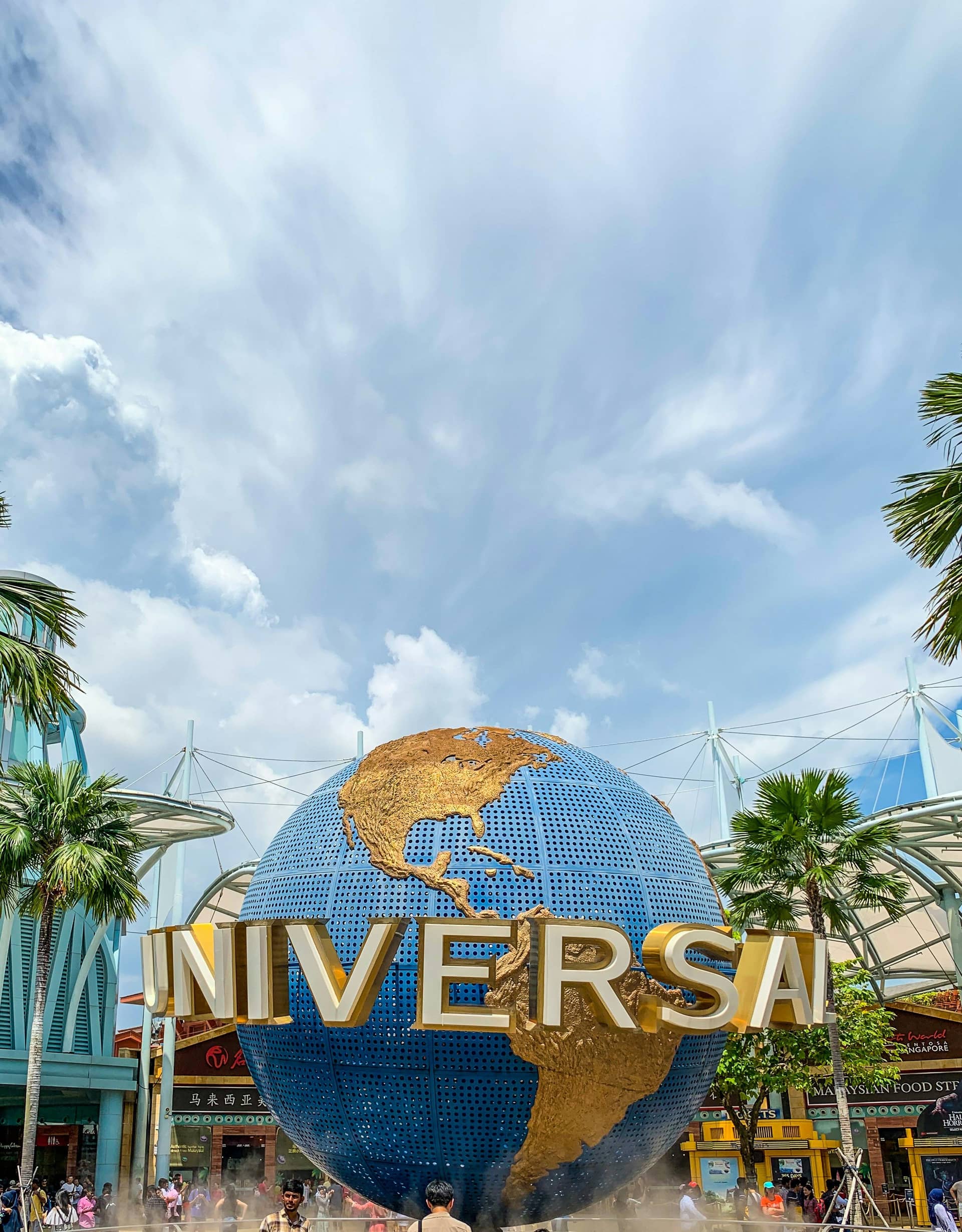
Sentosa sits off Singapore's southern coast, connected by a 710-metre boardwalk, monorail, and cable car. The island concentrates the city-state's biggest ticketed attractions in one place — Universal Studios, the Singapore Oceanarium, Adventure Cove Waterpark, and three public beaches. If you are travelling with children, Sentosa will likely take an entire day.
Universal Studios Singapore
Southeast Asia's only Universal Studios park covers seven themed zones, from Jurassic Park to a dedicated section for younger children. The park is compact enough to cover in a single day, though queues for headline rides like Transformers: The Ultimate 3D Battle and Battlestar Galactica can exceed 45 minutes during school holidays and weekends. The Wizarding World of Harry Potter section, added in recent years, has become the park's biggest draw.
- One-day ticket: SGD 82 (~USD 62) adult / SGD 62 (~USD 47) child (ages 4–12)
- Express Pass (skip-the-line): SGD 50–80 (~USD 38–60) on top of admission
- Opening hours: Typically 10 AM–7 PM (extended to 9 PM on weekends and holidays)
- Time needed: 5–7 hours for all major rides and zones
Best for: Families with children aged 4+, and theme park enthusiasts. Couples without a strong interest in rides may find a half-day sufficient.
Singapore Oceanarium (Formerly S.E.A. Aquarium)
The S.E.A. Aquarium rebranded as the Singapore Oceanarium when it reopened in July 2025, tripling its original footprint. The centrepiece remains the massive Open Ocean viewing panel — one of the largest aquarium windows in the world — but the expanded facility adds new immersive habitats and conservation-focused exhibits.
- Tickets: SGD 38–46 (~USD 29–35) adult / SGD 28–33 (~USD 21–25) child
- Opening hours: 10 AM–7 PM daily
- Time needed: 2–3 hours
Best for: Families with children of all ages and marine life enthusiasts. The air-conditioned environment also makes it a strong option on the hottest days.
Adventure Cove Waterpark, Skyline Luge, and Other Sentosa Activities
Beyond the headline attractions, Sentosa offers a cluster of smaller experiences that fill out a day.
- Adventure Cove Waterpark: SGD 38 (~USD 29) adult — slides, a lazy river, and a snorkelling pool with rays
- Skyline Luge Sentosa: SGD 25–43 (~USD 19–33) for 2–4 rides — a downhill cart ride through tropical scenery with a skyride back up
- Cable car (Mount Faber to Sentosa): SGD 37 (~USD 28) round-trip — the most scenic route onto the island
Sentosa's Beaches — Siloso, Palawan, and Tanjong Compared
Sentosa has three public beaches, each with a different character.
- Siloso Beach: The liveliest of the three, with beach bars, volleyball courts, and water sports rentals. Best for younger travellers and groups.
- Palawan Beach: The most family-friendly, with a suspension bridge to the "Southernmost Point of Continental Asia" marker. Calm waters and shaded seating.
- Tanjong Beach: The quietest option, favoured by couples and those looking for a calmer atmosphere. Tanjong Beach Club serves drinks and food on the sand.
Best Free Things to Do in Singapore
Singapore has an expensive reputation, but a surprising number of its best experiences cost nothing. If you are watching your budget or simply want to balance paid attractions with free ones, these are the standouts.
Free Light Shows, Park Walks, and Waterfront Strolls
- Garden Rhapsody at Supertree Grove: 7:45 PM and 8:45 PM nightly — a 10-minute light and music show beneath the Supertrees
- Spectra at Marina Bay: 8 PM and 9 PM nightly (additional 10 PM on Fridays and Saturdays) — water, laser, and light projections
- Southern Ridges trail: A 10-kilometre elevated trail linking Mount Faber to Kent Ridge, with canopy walkways and views of the southern coastline. Free and open 24 hours.
- MacRitchie Reservoir TreeTop Walk: A 250-metre suspension bridge 25 metres above the forest canopy. Free, but the hike to reach it takes 60–90 minutes each way.
Free Museums and Heritage Trails
Several of Singapore's museums offer permanent free admission.
- The National Gallery Singapore offers free admission to selected galleries showcasing Southeast Asian art in the former Supreme Court and City Hall buildings.
- The Indian Heritage Centre (Little India) and the Asian Civilisations Museum both offer free admission for Singapore residents, with tourist tickets typically SGD 8–15 (~USD 6–11).
- Heritage walking trails through Chinatown, Kampong Glam, and Little India are self-guided and free — maps are available at any MRT station visitor centre.
Pulau Ubin — A Day Trip to Singapore's Last Kampong Island
Pulau Ubin is a 10-minute bumboat ride from Changi Point Ferry Terminal (SGD 4 / ~USD 3 each way) and feels like stepping back 50 years. The island has no cars, no malls, and no high-rises — just gravel paths, mangrove wetlands, and the last surviving traditional kampong village in Singapore. Rent a bicycle on arrival (SGD 8–15 / ~USD 6–11) and explore the Chek Jawa Wetlands boardwalk, where you can spot horseshoe crabs, mudskippers, and wild boar at low tide.
- Bumboat fare: SGD 4 (~USD 3) each way
- Bicycle rental: SGD 8–15 (~USD 6–11) for the day
- Time needed: Half day (4–5 hours)
- Getting there: MRT to Tampines, then bus 29 to Changi Village, walk to Changi Point Ferry Terminal
Best for: Nature lovers, photographers, and anyone who wants to see what Singapore looked like before the skyscrapers. Not ideal if you need air conditioning or paved walkways throughout.
Plan Your Singapore Trip with Confidence
Singapore rewards both the first-time visitor and the repeat traveller. The city's compact size means you can shift from a temple courtyard to a hawker stall to a rainforest canopy in a single afternoon — the key is matching the right experiences to your time, budget, and travel style. Whether you have three days or a full week, the things to do in Singapore on this list cover the full range: from free waterfront walks and SGD 4 chicken rice to world-class conservatories and theme parks.
Travjoy's Singapore options have been selected after extensive research and reviewed by local experts, giving you the confidence to book the right experiences without second-guessing. Start planning your Singapore trip on Travjoy and see the full range of activities, tours, and experiences available across the island.

.svg&w=1920&q=75)