


Singapore: Lau Pa Sat
Operating Hours:Monday - Sunday: Open 24 hours
The Vibe:Heritage food hall sizzling day and night 🍢
A Victorian-era wet market turned hawker hotspot, preserving Singapore’s street food heritage amid the skyscrapers of the financial district.
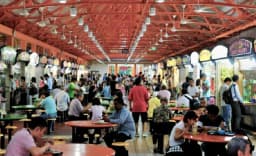
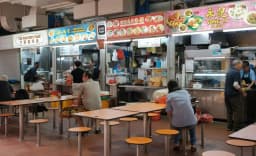
The clang of wok spatulas and aroma of grilling satay fill the air. By day, a cheerful din of office workers bounces off ornate iron columns; by night, smoke and laughter spill onto lantern-lit streets.
- Gazetted National Monument (since 1973)
- Icon of Singapore’s UNESCO-listed hawker culture
- Renowned for nightly satay street atmosphere
Persona Fit
- Families: Casual setting with many choices; high chairs available, and kid-friendly finger foods
- Couples: Atmospheric spot for a late-night local food date under city lights
- Foodies: 50+ stalls covering all Singaporean cuisines—perfect for a hawker feast
- Night Owls: Open 24/7, ideal for midnight supper or post-party munchies
Highlights
- Satay Street (Boon Tat St) — each evening the road beside Lau Pa Sat closes as dozens of satay grills fire up under the stars
- International Hawker Fare — from Hainanese chicken rice to Indian curries and Malay fried rice, find a bit of everything deliciously under one roof
- Clock Tower & Architecture — admire the intricate cast-iron filigree of the 19th-century structure and its central clock tower, iconic in Singapore’s skyline
- Thunder Tea Rice Stall — serving a traditional Hakka green herbal rice dish rarely found elsewhere — Hidden Gem

Adeline Ee
Our Singapore Local Expert
Table of Contents
Things To Do Nearby
Merlion Park — iconic half-lion, half-fish statue by Marina Bay, a 10-minute walk for postcard photos
Gardens by the Bay — famed futuristic gardens (with Supertrees and domes) about a 20-minute stroll or a quick bus ride away
Chinatown — another heritage food and culture district a short MRT ride from Lau Pa Sat, for more hawker fare and night market vibes
Merlion Park — iconic half-lion, half-fish statue by Marina Bay, a 10-minute walk for postcard photos
Gardens by the Bay — famed futuristic gardens (with Supertrees and domes) about a 20-minute stroll or a quick bus ride away
Chinatown — another heritage food and culture district a short MRT ride from Lau Pa Sat, for more hawker fare and night market vibes
TJ's Guide - Lau Pa Sat
Know Before You Go
Insider Tips
• Try to visit during off-peak if you want easy seating (weekday mid-mornings or mid-afternoons). Noon lunch and 7-8pm dinner get very crowded
• In the evening, scout and "chope" (reserve) a table with a tissue packet or an umbrella before you go on a food hunt — it’s local custom!
• Bring cash. Most hawker stalls here are cash-only. There are ATMs in nearby office buildings if needed
• Mix and match small portions from different stalls to taste more; sharing is part of the experience
• Try to visit during off-peak if you want easy seating (weekday mid-mornings or mid-afternoons). Noon lunch and 7-8pm dinner get very crowded
• In the evening, scout and "chope" (reserve) a table with a tissue packet or an umbrella before you go on a food hunt — it’s local custom!
• Bring cash. Most hawker stalls here are cash-only. There are ATMs in nearby office buildings if needed
• Mix and match small portions from different stalls to taste more; sharing is part of the experience
Know Your Facts
- • MRT: Raffles Place (East-West/North-South Line) and Telok Ayer (Downtown Line) stations are both about 5 minutes on foot. Look for signs to "Telok Ayer Market/Lau Pa Sat"
- • Main entrance is on the corner of Boon Tat St and Robinson Road, but the market is open-sided— you can actually enter from any direction under the arches
- • If driving, note this is the CBD: only limited street parking or nearby paid parking buildings (no dedicated lot for Lau Pa Sat). Consider a taxi/drop-off
Once You Reach
Internal Navigation
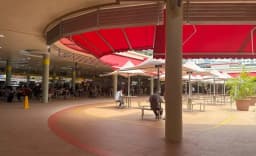
• Circular Layout: The stalls ring around the perimeter and some in the middle. Do a full walk-around to see all options before deciding; stall numbers and cuisine type are displayed on signage
• Satay Street Protocol: At night, just sit at any open outdoor table on Boon Tat St. Satay sellers will approach with menus. You can order from multiple satay stalls – they’ll deliver to your table and tally at the end
• Halal vs Non-halal: Note that stalls are not all Halal. Muslim-friendly stalls are typically grouped together (and marked) on one side of the hall for easier navigation
• Clean as You Go: You’ll often find a tray return rack at the edges of the seating area. It’s courteous to return your tray and crockery after eating to keep tables free for others
Food & Coffee Shops
• Satay Stall 7 & 8 – Famous satay vendors on Boon Tat Street known for succulent skewers and the classic peanut dip; a must-try during the evening scene
• BBQ Seafood (Stall 11) – Renowned for spicy barbecued stingray on banana leaf, a quintessential Singapore hawker dish that pairs perfectly with a sugarcane juice
• Satay Stall 7 & 8 – Famous satay vendors on Boon Tat Street known for succulent skewers and the classic peanut dip; a must-try during the evening scene
• BBQ Seafood (Stall 11) – Renowned for spicy barbecued stingray on banana leaf, a quintessential Singapore hawker dish that pairs perfectly with a sugarcane juice
Photography Tips
• Architectural shots: Stand at a corner of the hall to capture the radial symmetry of the roof and the central clocktower. A wide-angle lens works great
• Food action: Many stalls will let you snap photos as they cook (satay flames, noodle tossing). Use a fast shutter to catch flying noodles or rising flames in focus
• Night atmosphere: For Satay Street’s steam and smoke lit by streetlights, a higher ISO and some patience will yield great candid shots of hawkers at work
• Architectural shots: Stand at a corner of the hall to capture the radial symmetry of the roof and the central clocktower. A wide-angle lens works great
• Food action: Many stalls will let you snap photos as they cook (satay flames, noodle tossing). Use a fast shutter to catch flying noodles or rising flames in focus
• Night atmosphere: For Satay Street’s steam and smoke lit by streetlights, a higher ISO and some patience will yield great candid shots of hawkers at work
Explore Deeper
To fully appreciate Lau Pa Sat, consider its historical and cultural layers. It’s not just a place to eat, but a heritage monument reflecting Singapore’s evolution.
• Architectural Gem
Built in 1894, Lau Pa Sat (Telok Ayer Market) was prefabricated with cast-iron in Scotland and assembled in Singapore. Its octagonal shape and ornate columns were cutting-edge for its time, blending Victorian design with local functionality
• Hawker Culture
Eating at Lau Pa Sat means partaking in Singapore’s hawker heritage
• From Market to Food Hub
It started as a wet market by the waterfront, supplying fresh fish and produce to the town. As the city modernized, the market was repurposed as a hawker centre in the 1970s, ensuring the grand old building remained a bustling gathering spot
• Name Origins
Its local name "Lau Pa Sat" means "Old Market" in Hokkien. It was called that after a newer market opened in the 1900s. The affection for the building kept the nickname alive, even after it officially became just a food centre
• Architectural Gem
Built in 1894, Lau Pa Sat (Telok Ayer Market) was prefabricated with cast-iron in Scotland and assembled in Singapore. Its octagonal shape and ornate columns were cutting-edge for its time, blending Victorian design with local functionality
• Hawker Culture
Eating at Lau Pa Sat means partaking in Singapore’s hawker heritage
• From Market to Food Hub
It started as a wet market by the waterfront, supplying fresh fish and produce to the town. As the city modernized, the market was repurposed as a hawker centre in the 1970s, ensuring the grand old building remained a bustling gathering spot
• Name Origins
Its local name "Lau Pa Sat" means "Old Market" in Hokkien. It was called that after a newer market opened in the 1900s. The affection for the building kept the nickname alive, even after it officially became just a food centre
Did You Know?
• National Monument – Lau Pa Sat was one of Singapore’s first food markets and was gazetted as a National Monument in 1973. The restoration in the 1980s preserved many original features, right down to the ornate cast iron fountain (now a planter) in the center
• Massive Scale – With nearly 35000 reviews online and counting, Lau Pa Sat is one of the most reviewed food places in the world. It can seat over 2,000 diners at capacity
• Moved Shorelines – In the 1800s, the market stood at the shoreline. Extensive land reclamation over the years means that today it’s about 500m away from the sea. What used to be waterfront is now the downtown business district surrounding it