


Singapore: Tiong Bahru Market Hawker Centre
Operating Hours:Monday – Sunday: 06:00 - 21:00
The Vibe:Retro charm with serious street food buzz 🍜
Nestled in a quaint 1930s housing estate, this market is a beloved local institution. Residents and gourmands flock here for breakfast classics and fresh groceries, making it a lively crossroads of old-school charm and culinary fame.
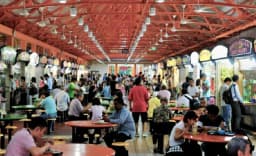
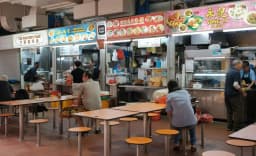
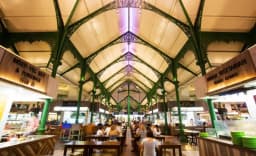
Morning brings the aroma of freshly brewed kopi and frying dough sticks. Fans whir overhead as hawkers shout orders and metal woks clang. Sunlight filters into the airy hall, illuminating steam rising from noodle bowls.
- Widely regarded by locals as one of Singapore’s best hawker centres.
- Home to Michelin Bib Gourmand hawker stalls (e.g., Hong Heng Fried Prawn Mee).
- Featured in travel guides for its variety and quality at over 80 stalls.
Persona Fit
- Families: Spacious seating and a bustling yet friendly atmosphere make it great for a family breakfast (though it can get warm).
- Couples: A fun brunch date spot – share local dishes and then explore the surrounding trendy neighborhood together.
- Seniors: There’s an elevator to the food floor and many traditional dishes to enjoy; visit on weekdays for a calmer experience.
- Photographers: The market’s art deco architecture and vibrant food presentations are photogenic, and the nearby streets offer vintage charm.
Highlights
- Jian Bo Chwee Kueh (Stall 5) — iconic steamed rice cakes with savory preserved radish, a must-try local breakfast.
- Hong Heng Fried Sotong Prawn Mee — Michelin-rated stall serving fragrant fried noodles with prawns and squid.
- Lor Mee 178 — famous for its rich gravy noodles topped with crispy shark nuggets for a unique twist.
- HarriAnns Delights (Stall 25) — traditional Nonya kueh and desserts; pick up colorful rice cakes for a sweet treat.
- Koh Brother Pig’s Organ Soup — a heritage hawker offering comforting broth with pork innards and special stuffed intestines — Hidden Gem

Adeline Ee
Our Singapore Local Expert
Table of Contents
Things To Do Nearby
Tiong Bahru Heritage Trail — explore the surrounding art deco buildings and quirky murals that give this estate its retro charm.
Tiong Bahru Bakery — a famous artisan bakery nearby, perfect for coffee and croissants if you want a cafe break after hawker dining.
Seng Poh Garden — a small park across the street featuring the iconic Dancing Girl sculpture, offering a quiet spot to relax after a meal.
Tiong Bahru Heritage Trail — explore the surrounding art deco buildings and quirky murals that give this estate its retro charm.
Tiong Bahru Bakery — a famous artisan bakery nearby, perfect for coffee and croissants if you want a cafe break after hawker dining.
Seng Poh Garden — a small park across the street featuring the iconic Dancing Girl sculpture, offering a quiet spot to relax after a meal.
TJ's Guide - Tiong Bahru Market Hawker Centre
Know Before You Go
Insider Tips
• Many hawker stalls here open early and close after lunch. For best selection (and shorter lines), arrive in the morning. By 2–3pm, lots of stalls will be done for the day.
• On weekends, it's very crowded; consider visiting on a weekday to comfortably find seating and avoid long queues.
• Return your trays and utensils at the designated stations after eating – an initiative to keep the place clean.
• The wet market downstairs is busiest from dawn till mid-morning. Even if you come for the food, a quick walk through the market can be fascinating (but watch out for wet floors).
• Many hawker stalls here open early and close after lunch. For best selection (and shorter lines), arrive in the morning. By 2–3pm, lots of stalls will be done for the day.
• On weekends, it's very crowded; consider visiting on a weekday to comfortably find seating and avoid long queues.
• Return your trays and utensils at the designated stations after eating – an initiative to keep the place clean.
• The wet market downstairs is busiest from dawn till mid-morning. Even if you come for the food, a quick walk through the market can be fascinating (but watch out for wet floors).
Know Your Facts
- • MRT: Tiong Bahru Station (East-West Line) is about a 10-minute walk. Outram Park MRT (East-West/North-East Line) is around 15 minutes away on foot.
- • Bus: Several buses (5, 16, 33, 63, 123, among others) stop near the market – check for stops at Tiong Bahru Road or Seng Poh Road.
- • Main access: The market is at 30 Seng Poh Road. Ground floor entrances lead you into the wet market area; escalators and a lift are available to reach the second-floor hawker centre.
- • Parking: There is a multi-story parking facility integrated above the market (entrance via Lim Liak Street). Parking can fill up during peak dining times.
Once You Reach
Internal Navigation
• Dual-level: Wet market stalls occupy the ground floor (fruits, veggies, meat, seafood), while all the cooked food hawker stalls and seating are on the second floor.
• Signage: There’s a directory near the escalator listing stall numbers and names so you can locate famous stalls. Hawker stall numbers are sequential and displayed on their signboards.
• Seating: The dining area is open seating. During peak hours, have someone in your group secure a table while others buy food. Solo diners can often share a table with friendly strangers.
• Cleanliness: Tray return stations are placed around – kindly return your tray and dishes after eating. The centre is known for being relatively clean and airy post-renovation.
• Wet market tip: If interested in the market, go early. By noon many fresh market vendors start packing up. It’s an authentic experience of local daily life.
Food & Coffee Shops
• Ah Chiang’s Porridge (Tiong Bahru Rd) – a famed congee shop next to the market, if you want a more sit-down traditional meal option.
• Nylon Coffee Roasters (Everton Park, ~10min walk) – a tiny specialty coffee joint where serious coffee aficionados can grab an espresso in a cozy spot after exploring Tiong Bahru.
• Ah Chiang’s Porridge (Tiong Bahru Rd) – a famed congee shop next to the market, if you want a more sit-down traditional meal option.
• Nylon Coffee Roasters (Everton Park, ~10min walk) – a tiny specialty coffee joint where serious coffee aficionados can grab an espresso in a cozy spot after exploring Tiong Bahru.
Photography Tips
• Food shots: take your plate to a brighter spot near the perimeter of the hawker center for better lighting on the food.
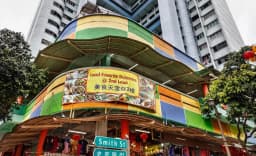
• Architectural shots: capture the curved, Streamline Moderne facade of the market from across Seng Poh Road – it’s a distinctive semicircular design.
• Candid moments: early morning scenes of vendors in the wet market chopping and arranging produce make for great local-life photos. Just be respectful and ask if shooting individuals up close.
• Neighborhood vibes: The murals and vintage shopfronts around Eng Hoon Street and Tiong Bahru Road are very photogenic for a photo walk after eating.
• Food shots: take your plate to a brighter spot near the perimeter of the hawker center for better lighting on the food.
• Architectural shots: capture the curved, Streamline Moderne facade of the market from across Seng Poh Road – it’s a distinctive semicircular design.
• Candid moments: early morning scenes of vendors in the wet market chopping and arranging produce make for great local-life photos. Just be respectful and ask if shooting individuals up close.
• Neighborhood vibes: The murals and vintage shopfronts around Eng Hoon Street and Tiong Bahru Road are very photogenic for a photo walk after eating.
Explore Deeper
A pioneering hawker centre, Tiong Bahru Market has evolved with the city. Its journey from a 1950s wooden market to a renovated foodie hotspot mirrors Singapore’s progress, all while keeping a strong sense of community.
• Opened in 1951 as Seng Poh Road Market, it was originally a simple wooden structure with a zinc roof
one of the first modern markets built in a residential area.
• It served Singapore’s first public housing estate, Tiong Bahru, which was developed in the 1930s by the Singapore Improvement Trust and known for its Art Deco architecture.
• The market was completely rebuilt and reopened in 2006 with modern facilities. The upgrade added better sanitation and ventilation while retaining its role as a neighborhood focal point.
• Several stalls here have been run by the same families for generations, dating back to the market’s early days
a testament to the living hawker heritage passed down over time.
• The building’s curved, two-story design maximizes airflow and openness, reflecting a blend of functional design and the 1950s aesthetic
a model that has influenced other hawker centre designs.
• Opened in 1951 as Seng Poh Road Market, it was originally a simple wooden structure with a zinc roof
one of the first modern markets built in a residential area.
• It served Singapore’s first public housing estate, Tiong Bahru, which was developed in the 1930s by the Singapore Improvement Trust and known for its Art Deco architecture.
• The market was completely rebuilt and reopened in 2006 with modern facilities. The upgrade added better sanitation and ventilation while retaining its role as a neighborhood focal point.
• Several stalls here have been run by the same families for generations, dating back to the market’s early days
a testament to the living hawker heritage passed down over time.
• The building’s curved, two-story design maximizes airflow and openness, reflecting a blend of functional design and the 1950s aesthetic
a model that has influenced other hawker centre designs.
Did You Know?
• Name Origin - 'Tiong Bahru' is Hokkien for 'New Cemetery' – the area was once a burial ground before being developed into a housing estate (don’t worry, it’s very lively now!).
• Hawker Legends - Jian Bo (chwee kueh stall) has been operating since the 1950s and is often cited as the best chwee kueh in Singapore, earning a Michelin Bib Gourmand.
• Community Hub - Every morning, local retirees gather at the hawker centre forming a social club of sorts, catching up with friends over kopi. It’s a key social space in the neighborhood.
• Art Deco - The market and surrounding flats are noted for their Streamline Moderne (Art Deco) style. This makes Tiong Bahru not just a foodie haven but also an architectural conservation area with unique charm.