



The Hindu Culture of Bali: A Beginner's Guide to the Island's Soul
8 min read

Raj Varma
Author
Travel & Tourism Expert Ex-Thomas Cook, Kuoni, Times of India & Travel Triangle.
SHARE BLOG
TABLE OF CONTENTS
Key Takeaways
- About 87% of Balinese practice Agama Hindu Dharma — a localised form of Hinduism blended with Buddhist and indigenous animist beliefs found nowhere else in the world.
- The guiding philosophy is Tri Hita Karana: harmony with the divine, harmony with people, and harmony with nature.
- Daily offerings (canang sari), 20,000-plus temples, and festivals like Nyepi and Galungan shape life on every street, not just inside temples.
- Knowing the basics — sarong rules, festival dates, what offerings mean — turns sightseeing into something closer to understanding.
The Hindu culture of Bali is a localised form of Hinduism, called Agama Hindu Dharma, that fuses Indian Hindu teachings with Buddhist ideas and pre-existing animist beliefs. Roughly 87% of Balinese follow it, which is why the island feels distinct from the rest of Muslim-majority Indonesia. You'll see it in the daily flower offerings on doorsteps, the 20,000-plus temples, and the festivals that briefly stop traffic.
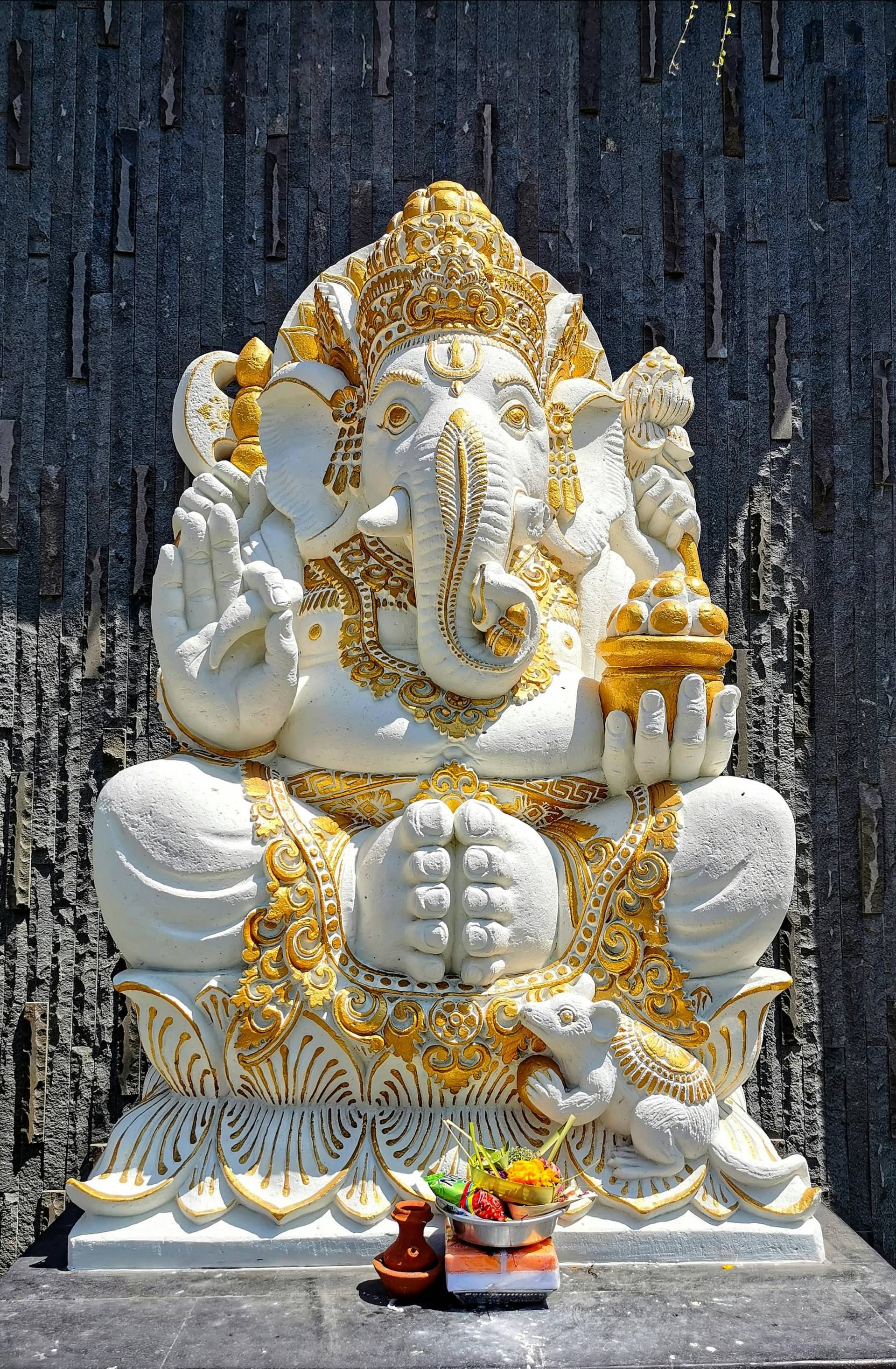
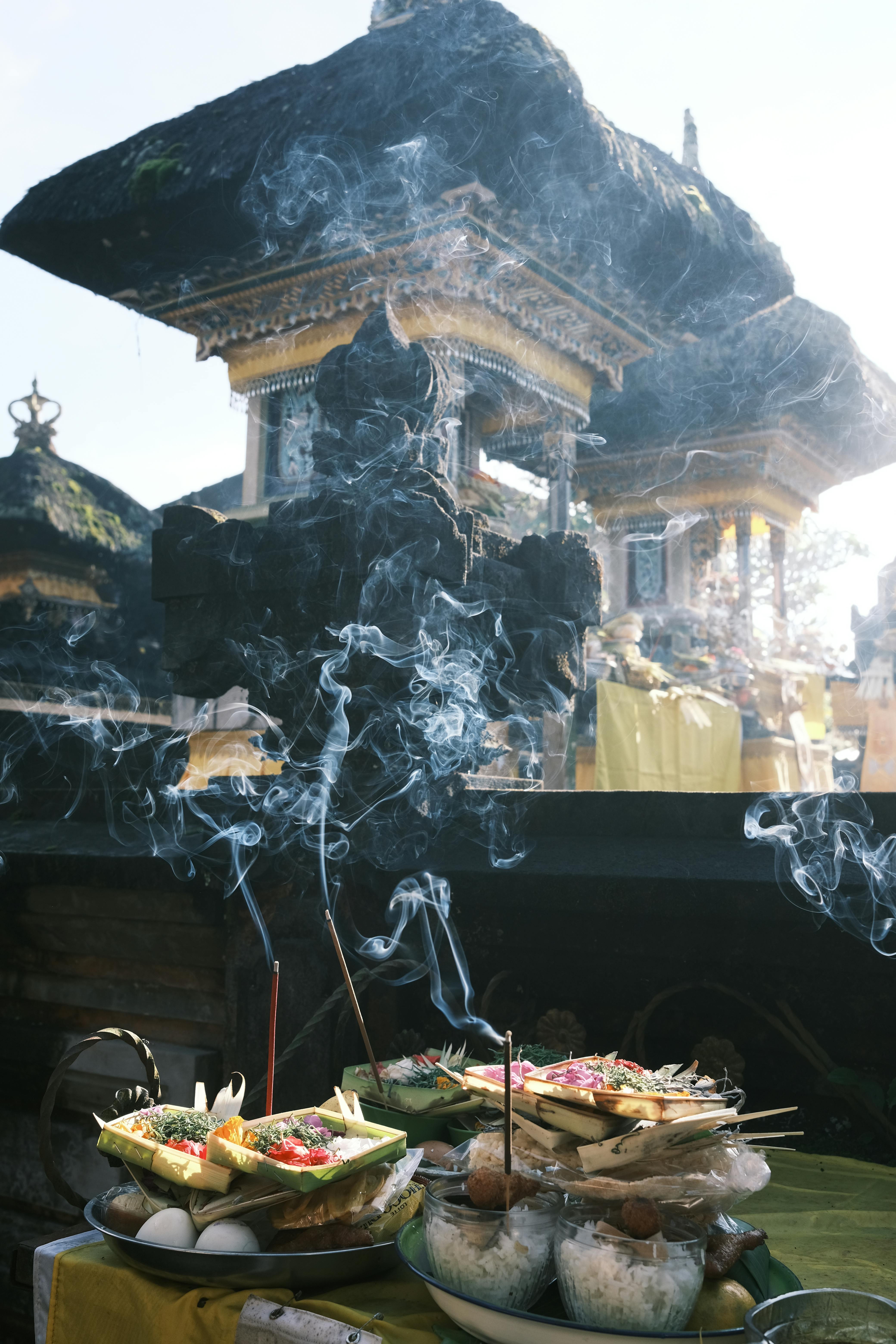
Pull into Denpasar airport in the morning and the first thing you'll notice isn't the heat — it's a small woven basket of flowers and a smouldering stick of incense placed on the dashboard of your driver's car. Step out and you'll see another on the pavement. Then on a temple gate. Then, somehow, balanced on the seat of a parked scooter. These are canang sari, daily offerings, and they are everywhere because in Bali the line between sacred and ordinary is faint by design.
That detail tells you most of what you need to know. Bali is a Hindu island in a Muslim-majority country, and the religion practiced here — called Agama Hindu Dharma — isn't quite the same as the Hinduism of India. It's a blend of Indian Hindu teachings, older Buddhist ideas, and indigenous animist beliefs that has settled, over centuries, into something specifically Balinese. Understanding even the basics changes how a holiday here feels.
This guide covers the history, the core beliefs, the temples you'll likely visit, the daily rituals you'll witness, and the etiquette you'll need so a temple visit or a festival encounter feels respectful instead of confusing.
Why Bali Is Hindu: A Short History
Bali is Hindu because of two waves of migration: an early one from India around the first century CE, and a much larger one from Java in the 14th to 16th centuries when the Hindu Majapahit Empire collapsed and its priests, artists, and royals fled east. The result is a religion with Indian roots and a Javanese-Balinese soul.
The first wave: Indian traders and the 1st century
Indian traders arrived in the Indonesian archipelago as early as the first century CE, bringing Sanskrit, Hindu and Buddhist iconography, and ritual ideas along with their goods. Archaeologists working in Bali have found evidence of this exchange at Sembiran village dating to that period. These early influences arrived mostly via Java rather than directly from India, and they were absorbed into existing Balinese animist frameworks rather than replacing them.
By the 8th century, according to Balinese legend recorded on lontar palm-leaf manuscripts, an East Indian priest named Rsi Markandeya is said to have founded Hinduism on the island, sanctifying water sources on Mount Agung and establishing the mother temple at Besakih.
The second wave: the Majapahit migration
The defining moment came later. In 1343, the Hindu Majapahit Empire of Java conquered Bali, and over the following two centuries — as Islam spread across Java — Hindu nobles, priests, artists, and intellectuals migrated east to Bali in large numbers. They brought with them a deeper, more organised version of Hinduism, plus the courtly arts: dance, gamelan music, sculpture, and lontar manuscript traditions.
This is the period that shaped the Bali you'll see today. The temples, the dance forms, the priestly system, the layered cosmology — most of it traces back to refugees from a Javanese empire that no longer exists.
How Bali stayed Hindu while the rest of Indonesia turned to Islam
Several factors kept Bali Hindu. The island sits east of Java, slightly off the main maritime trade routes that carried Islam through the archipelago. Dutch colonial rule, despite its many other costs, suppressed religious conflict for centuries. And the Balinese themselves built a religious system so entwined with village life — the banjar (community council), the family compound, the rice cooperative — that converting would have meant dismantling the social fabric, not just changing belief.
When Indonesia gained independence in 1945, the new constitution recognised religious freedom but initially required religions to be monotheistic. Balinese Hindus successfully petitioned in 1958 to have their faith officially recognised, framing Sang Hyang Widhi Wasa as the single supreme deity.
Agama Hindu Dharma: How Balinese Hinduism Differs from Indian Hinduism
Balinese Hinduism shares its core concepts — karma, dharma, samsara (the cycle of rebirth), and moksha (liberation) — with Indian Hinduism, but its texture is distinct. Three things in particular set the Hindu culture of Bali apart: a single supreme deity, a central role for holy water, and a deep undercurrent of ancestor worship and animism.
One supreme God, many forms
Balinese Hindus worship one supreme creator: Sang Hyang Widhi Wasa, sometimes called Acintya ("the inconceivable"). All other deities — Brahma the creator, Vishnu the preserver, Shiva the destroyer, Saraswati of knowledge, Dewi Sri of rice, plus countless local guardians — are understood as different faces or expressions of this single divine power. This monotheistic framing was important historically; it helped the religion gain official recognition in independent Indonesia.
In practice, you'll see the trinity of Brahma, Vishnu, and Shiva referenced in temple iconography, but daily worship is just as likely to be addressed to ancestors, to the goddess of rice, or to the spirit of a particular spring or mountain.
The religion of holy water
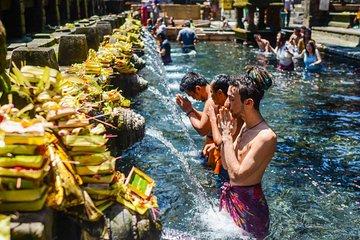
Balinese Hinduism is sometimes called Agama Tirtha — "the religion of holy water." Holy water (tirtha) accompanies every act of worship: priests bless devotees with it, families take it home from ceremonies, and sick people drink it for healing. The belief is that holy water cleanses spiritual impurities and protects against negative forces.
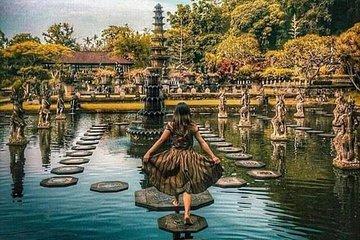
This is why so many of Bali's most important temples are built around water sources. Tirta Empul, in central Bali, is famous for its purification pools fed by sacred springs; Ulun Danu Beratan sits on a crater lake; Tirtagangga is a former royal water palace. Even the morning canang sari involves a small sprinkle of holy water before it's placed.
Animism, ancestors, and the unseen world
Underneath the Hindu layer, older animist beliefs run strong. The Balinese understand the world as having two dimensions: sekala (the seen) and niskala (the unseen). Ancestors, spirits of place, and unseen forces are present and active in daily life, not abstract concepts.
This is why every family compound has a small temple, why offerings are placed both up high (for benevolent forces) and on the ground (to keep mischievous lower spirits content), and why a major cremation ceremony — ngaben — is treated as a celebratory release of the soul rather than a sad farewell.
Tri Hita Karana: The Philosophy You'll See Everywhere
If you remember one Balinese phrase, make it this one. Tri Hita Karana translates as "the three causes of well-being," and it's the operating system behind almost everything you'll see on the island — village layouts, rice fields, family compounds, even how a hotel decides where to place its garden.
The three harmonies
- Parahyangan — harmony with the divine. Expressed through prayer, offerings, and temple ceremonies.
- Pawongan — harmony among people. Expressed through the banjar (village council), shared rituals, and family obligations.
- Palemahan — harmony with nature. Expressed through agricultural practices, water management, and the use of biodegradable materials in offerings.
The idea is that well-being doesn't come from any one of these alone. A person can be devout but socially isolated, or wealthy but estranged from the land, and still be out of balance. The Balinese arrange their lives so all three are tended to, daily.
Where you'll see it on your trip
Once you know what to look for, Tri Hita Karana shows up everywhere:
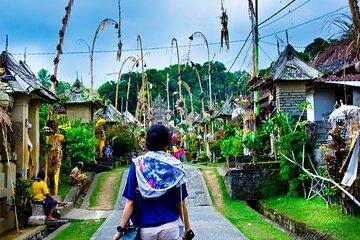
- The traditional village of Penglipuran Village in Bangli is laid out so the family temples sit at the highest, mountain-facing end (toward the divine), homes in the middle (people), and fields and cemetery toward the sea (nature). Almost every traditional Balinese village follows this principle.
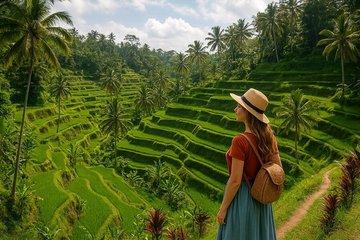
- The subak rice cooperative system — recognised by UNESCO as a World Heritage cultural landscape — is a thousand-year-old water-sharing system in which farmers, priests, and village councils together decide who irrigates when. It's Tri Hita Karana embodied as agriculture.
- Family compounds always include a household shrine (the sanggah) tucked into the kaja-kangin corner — the auspicious north-east — orienting the home toward Mount Agung.
What this means for visitors
- If a hotel describes itself as designed around Tri Hita Karana, it usually means it has a working temple on site, employs locally, and uses traditional materials. Worth asking about.
- Many wellness retreats in Ubud frame their programs around this idea — useful to know what they actually mean by it.
- Watching a ceremony at a rice-field temple makes more sense once you know the farmers, the priests, and the irrigation are part of the same religious system.






Bali's Temples (Pura): What to See and How to Behave
Bali has more than 20,000 temples. Some are massive, island-defining complexes; many are tiny shrines tucked into a rice field or a family courtyard. Knowing the basics — what each kind is for, which ones to visit, and how to dress — makes a temple day feel less like ticking off attractions and more like reading the island.
Family, village, and island-level temples
Three layers of temples organise Balinese religious life:
- Family temple (sanggah) — every traditional Balinese home compound has one, dedicated to the family's ancestors.
- Village temples (kahyangan tiga) — every village has at least three: Pura Puseh (origin temple, for ancestors), Pura Desa (community temple), and Pura Dalem (death temple, near the cemetery).
- Directional temples (sad kahyangan) — six (sometimes counted as nine) major temples that protect the entire island from each cardinal direction. These are the famous ones.
The big-name temples worth visiting
If you're new to the Hindu culture of Bali, these temples give you the most context for the least effort:
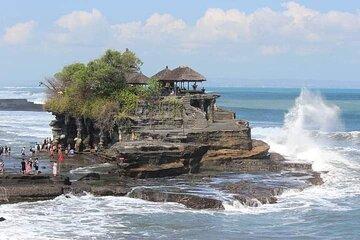
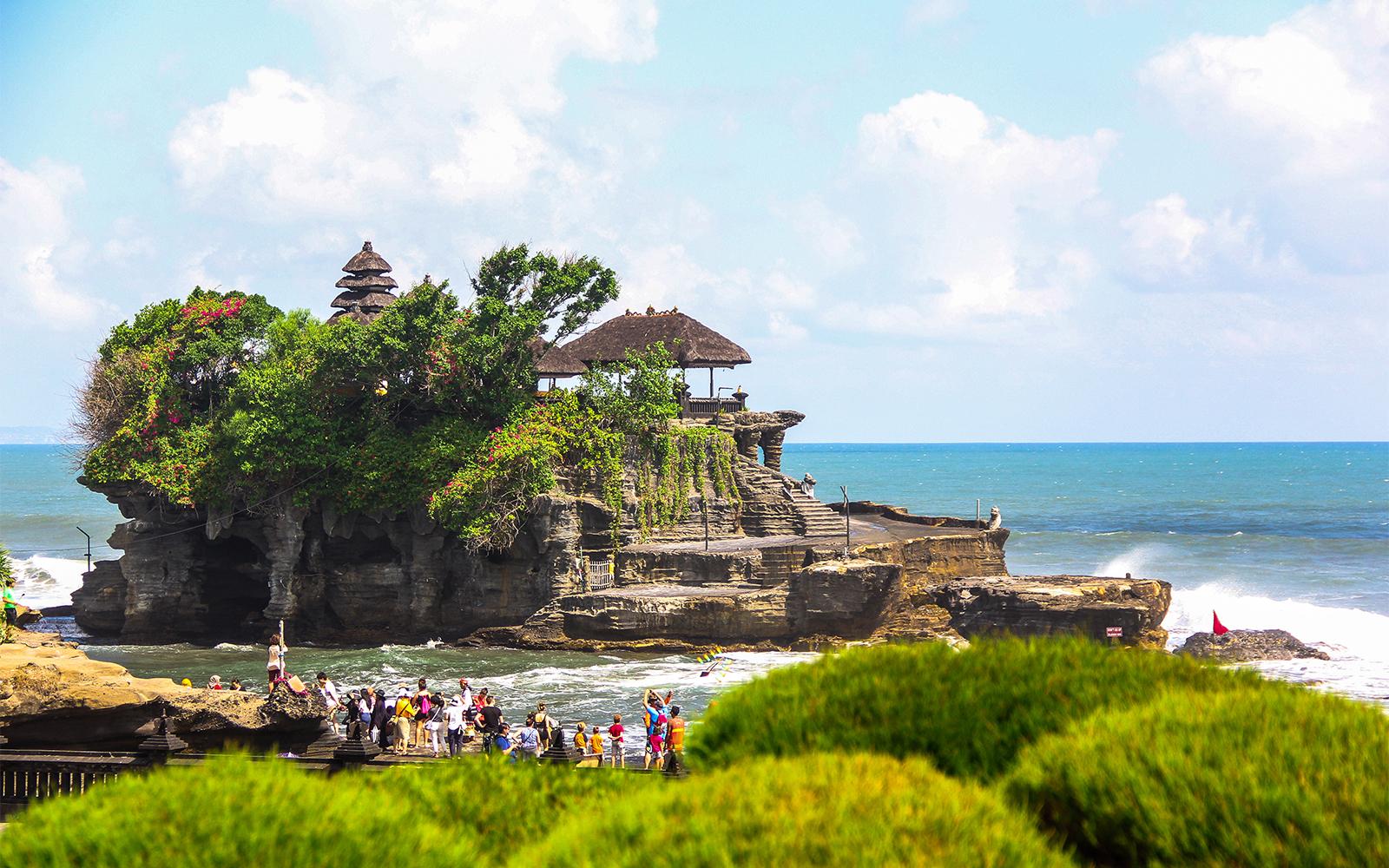
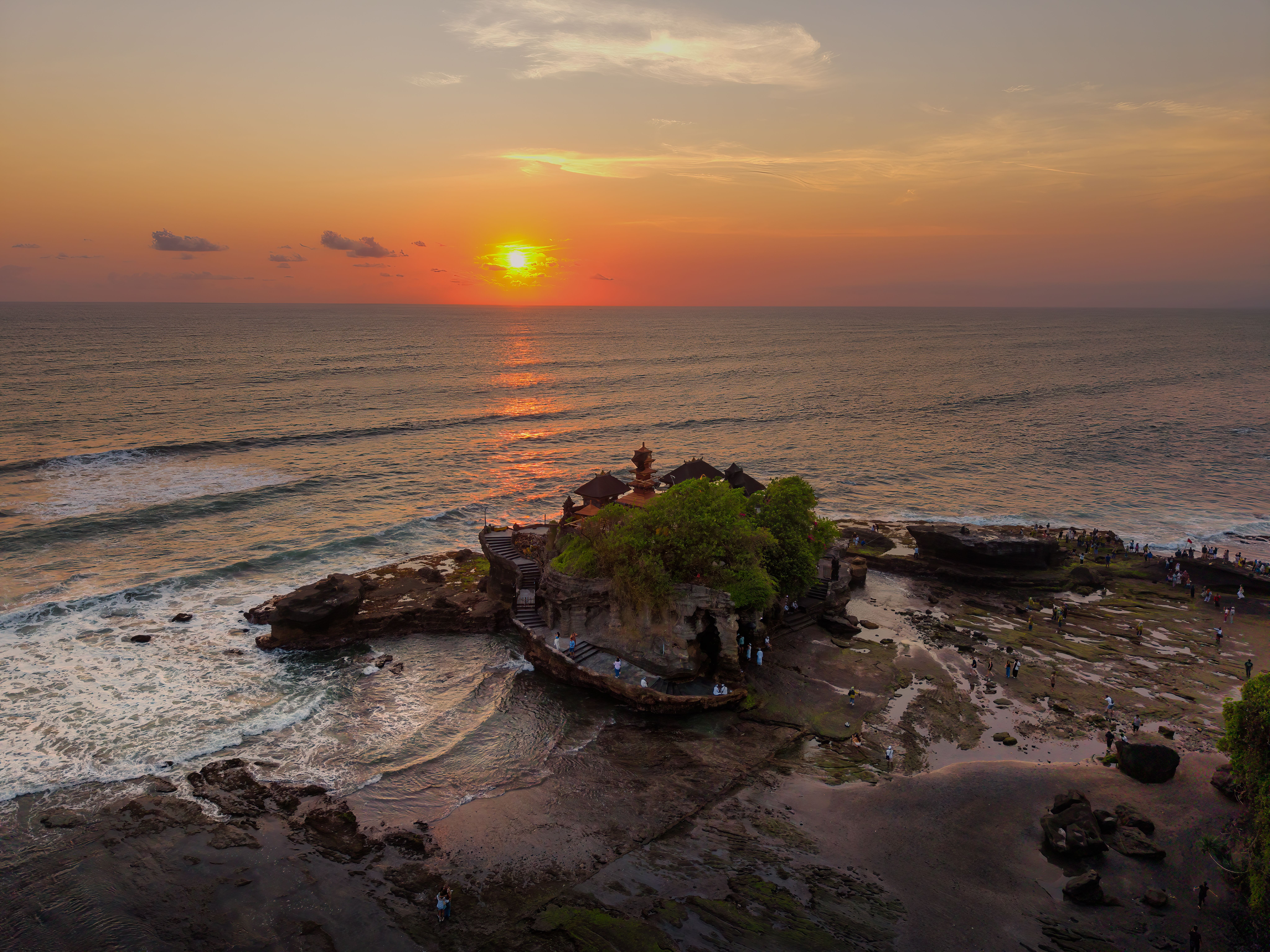
- Tanah Lot Temple — sits on a rock formation in the sea on Bali's south-west coast. One of the directional temples; the sunset view is what packs the place. Arrive an hour earlier for the same sky with fewer people.
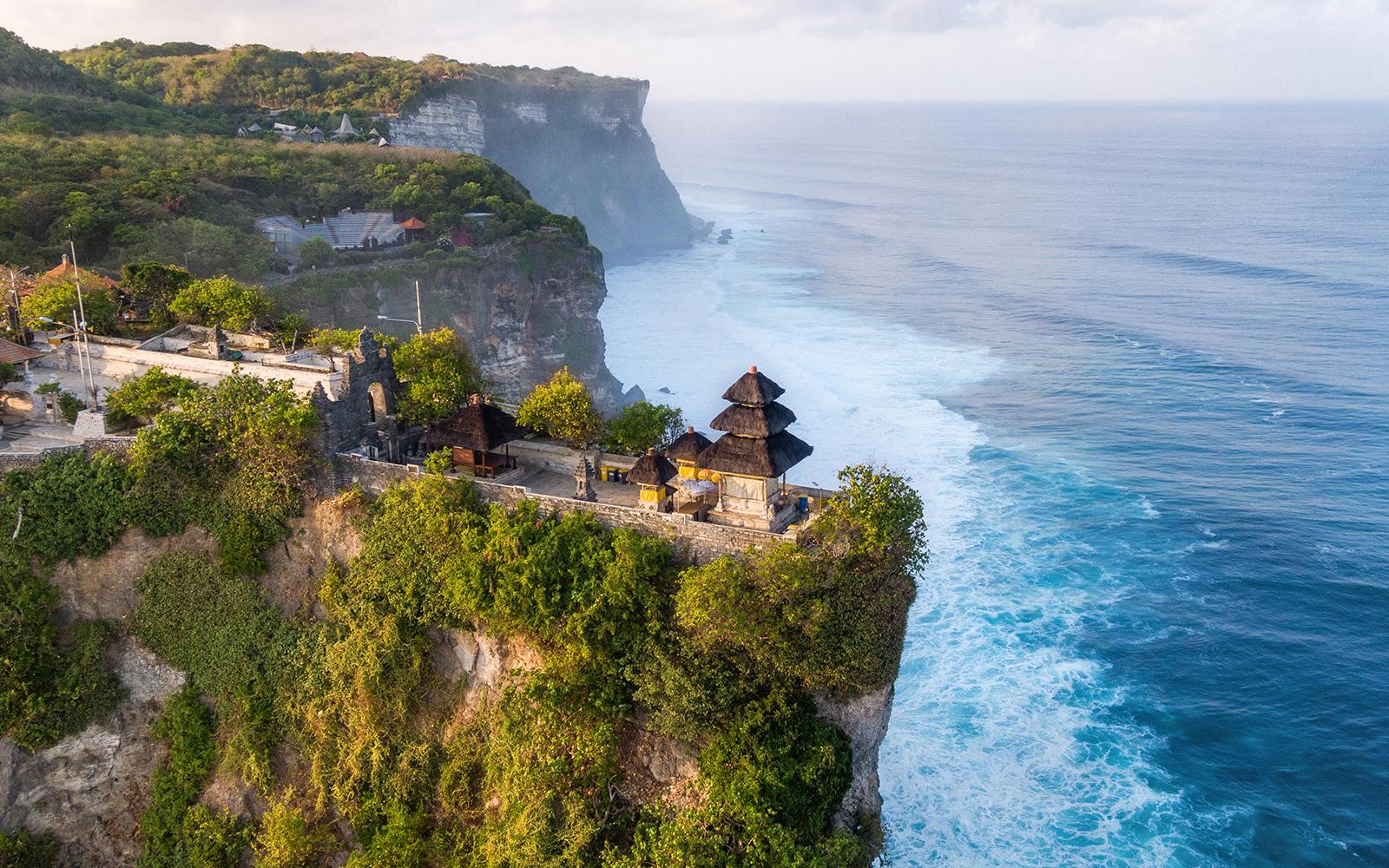
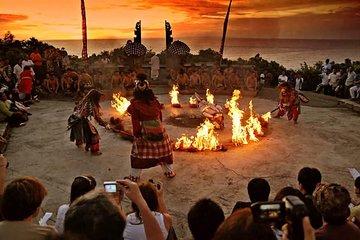
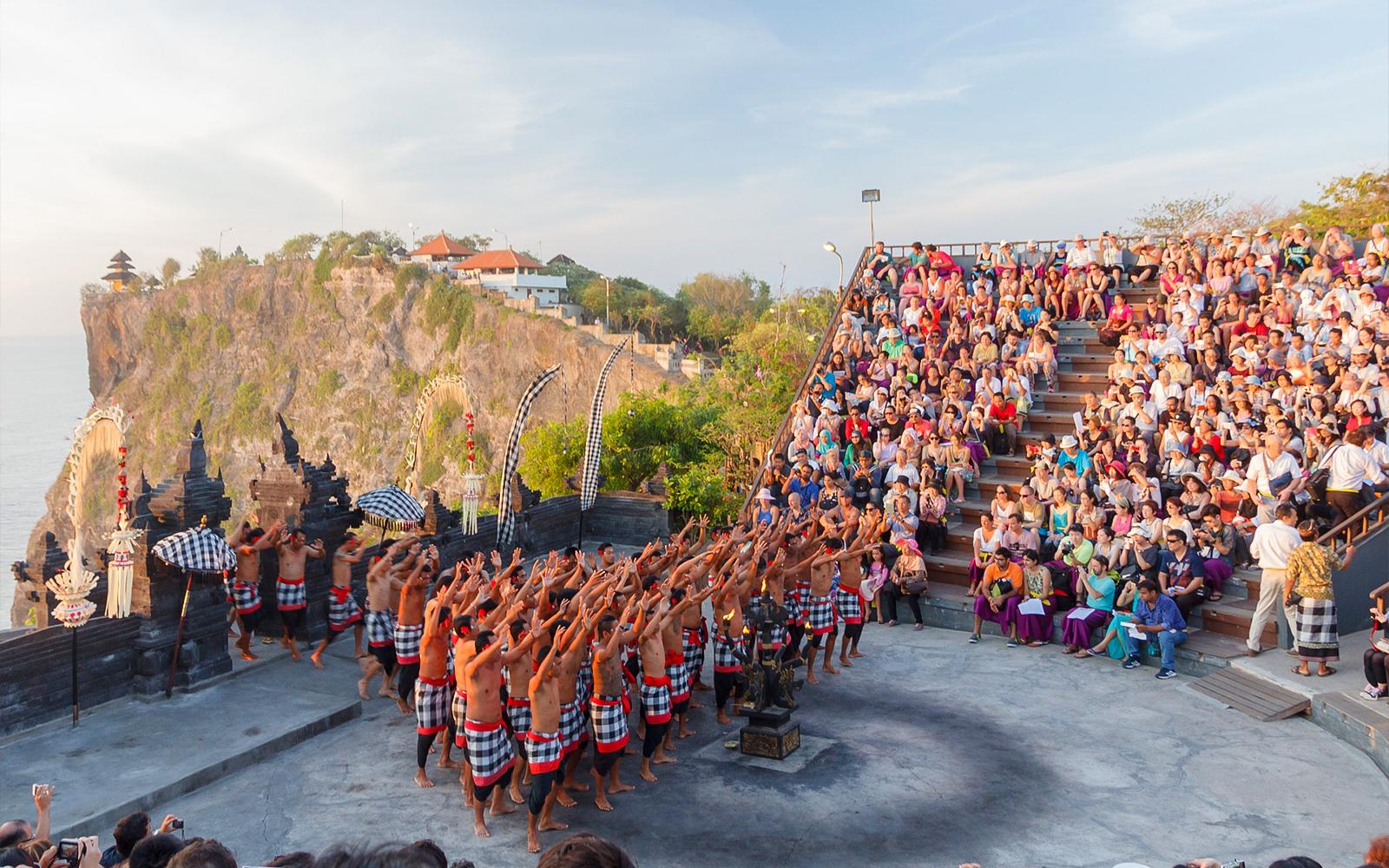
- Uluwatu Temple — guards Bali's south-western spiritual boundary from a 70-metre cliff. Famous for the kecak fire dance performed at sunset.
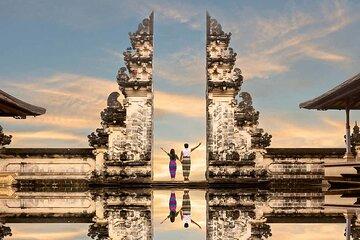
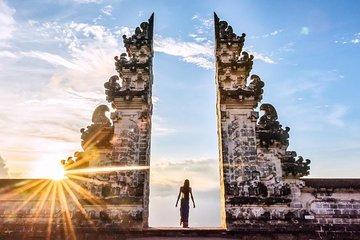
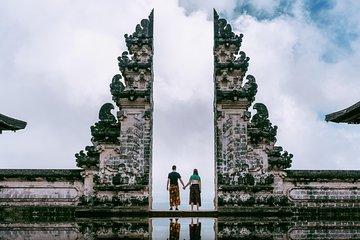
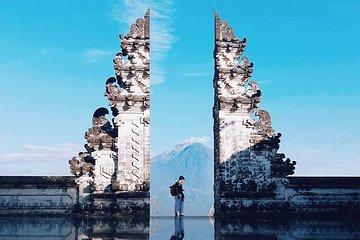
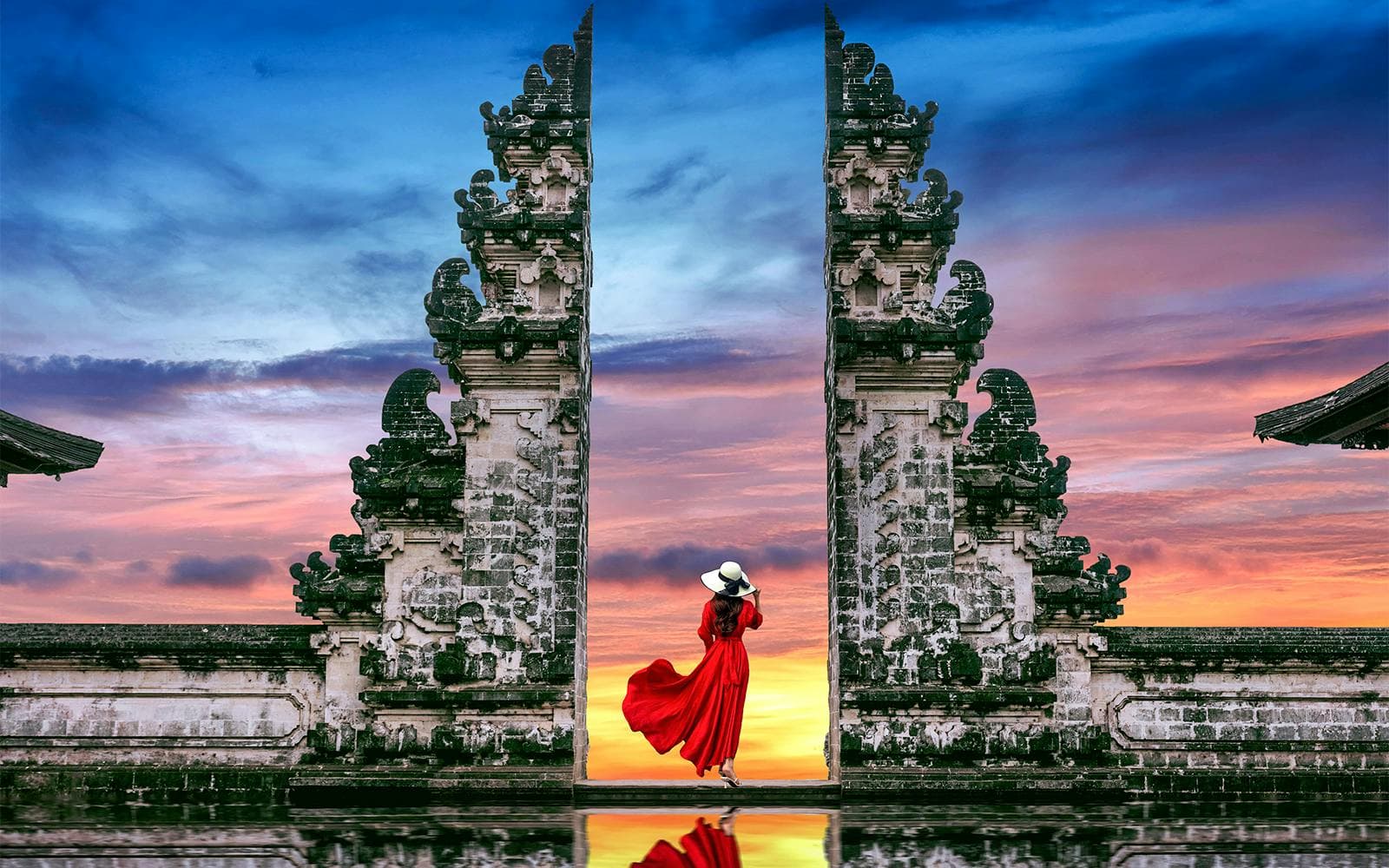
- Penataran Agung Lempuyang — the "Gates of Heaven" temple in the east, with Mount Agung framed between two split gates. The viral Instagram image is a real place; the puddle-mirror effect is staged with a phone, not actual water.
- Besakih Temple (Pura Besakih) — Bali's mother temple, a complex of 23 separate temples on the slopes of Mount Agung. Founded, by tradition, by Rsi Markandeya himself.
- Tirta Empul — the holy spring temple in central Bali. Visitors can join the purification ritual (melukat) at its bathing pools; a guide is recommended for first-timers.
- Ulun Danu Beratan — the lake temple in Bedugul, often called the "floating temple" because the shrines appear to sit on the water's surface.
Temple etiquette: what to wear and how to behave
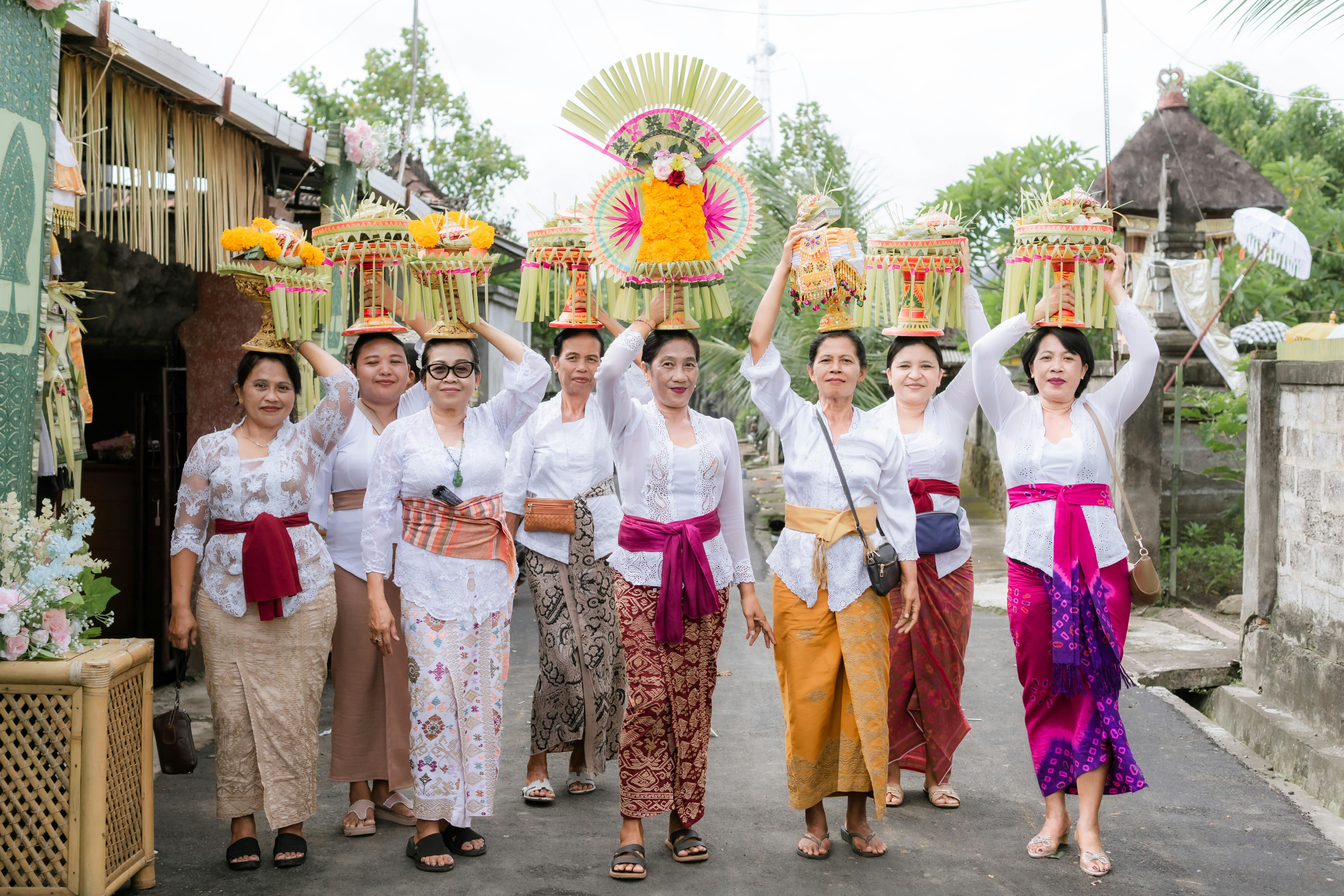
Most major temples in Bali require visitors to wear a sarong and sash regardless of what they have on underneath. Both are typically included in the entry ticket or available to rent at the entrance. The basic rules:
- Sarong (kamen) — wraps the legs to below the knee. Required for everyone, even if you're already wearing long trousers or a long skirt.
- Sash (selendang) — tied around the waist over the sarong. Symbolically separates the upper (pure) and lower (less pure) body.
- Shoulders covered — no vests, tank tops, or anything that bares the shoulders or back.
- No menstruating women in inner courtyards — a deeply held belief. It's not policed at the gate, but visitors are asked to respect it.
- Don't sit higher than a priest or stand in the path of someone praying.
- No flash photography on priests' faces, and never photograph people during prayer without permission.
Temple entry fees range from IDR 30,000 to IDR 75,000 (about USD 2–5) at most major sites, and most are open from around 7 am to 6 pm. Sunset temples like Tanah Lot and Uluwatu are busiest in the last hour before dark; arriving earlier gives you the same view with fewer people.
Daily Rituals: Canang Sari and the Offerings on Every Doorstep
The most visible expression of the Hindu culture of Bali isn't inside a temple. It's the small, woven palm-leaf basket of flowers and incense that you'll find on every doorstep, dashboard, shop counter, and shrine before 8 am. These are canang sari, and once you understand what they are, you'll see Bali differently.
What canang sari are and what they mean
A canang sari is a small square tray made of woven coconut or banana leaf, filled with petals, a sliver of banana, sometimes a sweet or a coin, and topped with a smouldering stick of incense. The name itself comes from Balinese words meaning "beautiful" and "intention." Each element has meaning: the colours of the flowers correspond to the four cardinal deities — white for east (Iswara), red for south (Brahma), yellow for west (Mahadeva), and blue or green for north (Vishnu).
The offerings perform two jobs at once. Placed up high — on shrines, gates, dashboards — they express thanks to benevolent deities. Placed on the ground (sometimes in slightly different form, called segehan), they appease lower spirits and keep the cosmic books balanced.
The morning routine
A traditional Balinese woman may prepare 50 to 150 of these offerings every morning before the household properly wakes up. The work itself — the cutting, weaving, arranging — is treated as part of the prayer. By the time foreigners are eating breakfast, the daily ritual has already happened.
Canang sari are refreshed daily, which means yesterday's are swept away and the cycle starts again. The offering isn't permanent; the act of making and placing it is what counts.
What to do — and not do — when you encounter them
- Don't step on them. If one is on a footpath, walk around. If you accidentally step on one, a small apology gesture is appreciated, but it won't cause lasting offence — the Balinese understand visitors aren't always looking down.
- Don't move them. Even if one is in a place that seems inconvenient (the seat of a parked motorbike, for example), it's there for a reason.
- Don't pick the flowers. They've been blessed.
- Photograph respectfully. A canang sari is not a still-life prop, even when it photographs like one.
- Try one yourself. Many guesthouses in Ubud and family-run hotels offer canang sari workshops. Doing it once teaches you more than reading about it.
The Festivals and Ceremonies You Might Witness (with 2026 Dates)
Balinese Hinduism follows two calendars at once — the 210-day Pawukon and the lunar Saka — which means festival dates shift every year against the Western calendar. If you're travelling in 2026, these are the moments worth planning around (or planning to avoid).
Nyepi — the Day of Silence (March 19, 2026)
Nyepi is the Balinese Hindu New Year and the most consequential day on the island's calendar. The whole island stops for 24 hours — no flights in or out, no traffic, no lights at night, no work, no internet at some hotels. Even tourists are required to stay inside their hotels. The night before brings the Ogoh-Ogoh parade: giant papier-mâché demon effigies are paraded through villages and then burned to drive out negative forces.
If your trip overlaps with Nyepi, plan accordingly. Some travellers find the silence one of the most memorable days of their lives; others struggle with the confinement. Either way, the airport closes from 6 am the day of Nyepi to 6 am the day after, so book travel around it carefully.
Galungan and Kuningan (June 17 and June 27, 2026)
Galungan marks the victory of dharma (good) over adharma (evil). For ten days, ancestral spirits return to visit their families. Tall, arched bamboo poles called penjor line every village street, decorated with rice, fruit, and palm-leaf ornaments. Galungan ceremonies happen at dawn and inside family compounds, so they're not always public, but the visual transformation of the island is striking.
Kuningan, ten days later, marks the spirits' return to the heavens. Families prepare yellow turmeric rice (nasi kuning) and special yellow-decorated offerings. By midday on Kuningan, ceremonies are mostly complete and the island settles back into rhythm.
Note: 2026 has only one Galungan-Kuningan cycle (the next one falls in January 2027). The June dates are the only window in the calendar year.
The smaller festivals: Saraswati, Tumpek, and odalan
- Saraswati Day (April 4, 2026) — honours the goddess of knowledge and learning. Schools and libraries bless their books; many Balinese avoid reading on this day.
- Pagerwesi (April 8, 2026) — the "iron fence," a day of strengthening spiritual defences.
- Tumpek ceremonies — a series of days through the year that honour different aspects of nature: tools and metal objects (Tumpek Landep), plants (Tumpek Uduh), animals (Tumpek Kandang).
- Odalan — every temple has its own anniversary celebration every 210 days. With 20,000 temples on the island, you'll almost certainly encounter one. Lempuyang's odalan and the Besakih anniversary draw the largest crowds.
Ngaben — what to do if you encounter a cremation
A Balinese cremation ceremony (ngaben) is the elaborate ritual that releases the soul for reincarnation. It's loud, colourful, and sometimes processional through the streets — far from the sombre affair you might expect. If you find yourself in the path of one:
- Pull over and let it pass — never cross in front.
- If you're staying at a homestay where ngaben is happening, your hosts may invite you to attend. It's an honour.
- Wear something with a sarong if you do attend; white or muted colours are best.
- Photography is usually fine if discreet, but ask first.
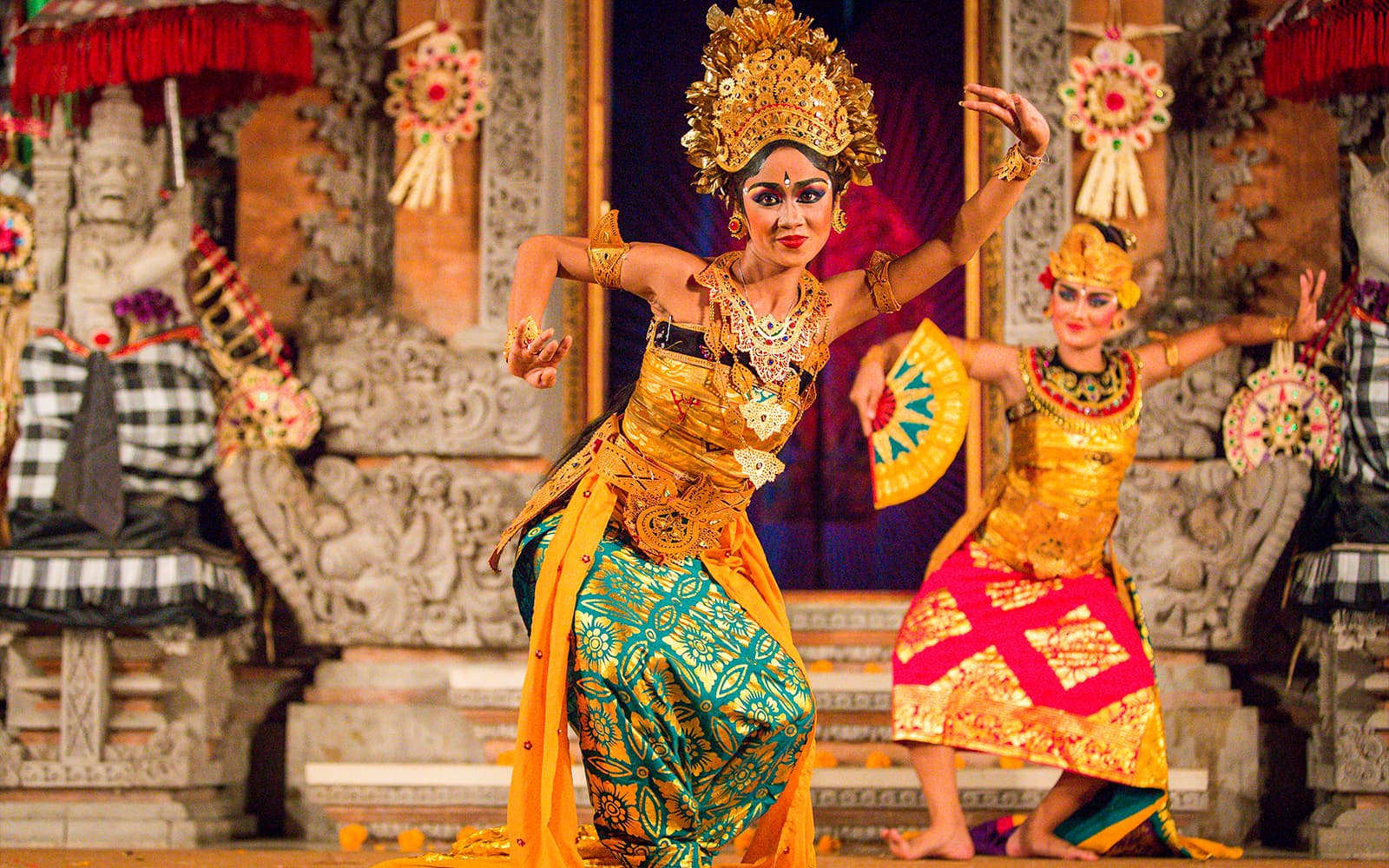
Travjoy works with local Bali-based experts to recommend cultural experiences and ceremonies that are open to respectful visitors, so you can spend less time wondering whether something is appropriate to attend and more time actually being there. A traditional Legong dance performance is one of the easier cultural entry points for first-timers.
Pulling It Together: Travel with Understanding
The Hindu culture of Bali isn't a museum exhibit. It's the operating system the island runs on — visible in the offerings on every step, the temple at every junction, the festival that briefly stops traffic. Once you know the basics, the texture of a Bali trip changes. A canang sari isn't decoration; a sarong isn't a costume; Nyepi isn't a holiday closure to work around.
Three things to take with you. Bring a sarong and sash for temple visits, even if you have your own (small souvenir, big utility). Check the festival calendar before you book — Nyepi and Galungan especially. And when in doubt, watch what locals do and follow.
Start planning your Bali trip on Travjoy's Bali destination page, or browse the top experiences in Bali — both researched and approved by local experts so you know which temples, ceremonies, and cultural moments are open to visitors and worth your time.



.svg&w=1920&q=75)