



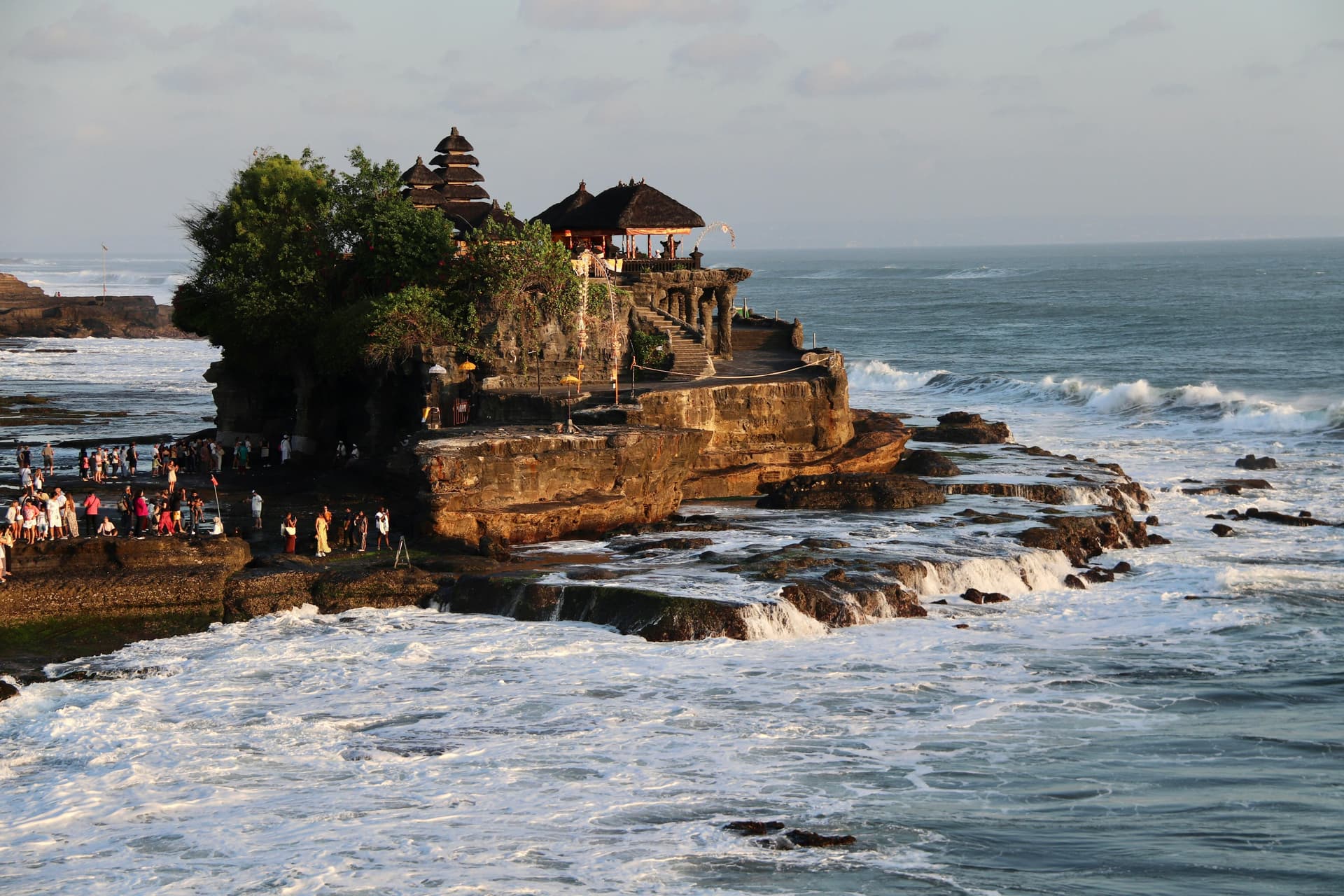
Tanah Lot Temple: Sunset Secrets and What to Know Before You Visit
8 min read

Raj Varma
Author
Travel & Tourism Expert Ex-Thomas Cook, Kuoni, Times of India & Travel Triangle.
SHARE BLOG
TABLE OF CONTENTS
- Key Takeaways
- The legend, the rock, and why Tanah Lot matters
- When to visit Tanah Lot Temple — the tide and time question
- Tanah Lot Temple entrance fee, hours, and on-site logistics
Key Takeaways
- Tanah Lot Temple sits on a rocky outcrop in Tabanan Regency, about 45 minutes northwest of Seminyak — open 7am–7pm daily
- 2026 entrance fee: IDR 75,000 / USD 4.50 for adult foreigners, IDR 40,000 / USD 2.45 for children; cash only at the booth
- Sunset is the headline experience (5:45–6:30 PM by season), but arrive by 4:30 PM to secure a clifftop spot
- Non-Hindus cannot enter the inner shrine, but the cliff park, the holy water blessing at the base spring, and Pura Batu Bolong are open to all
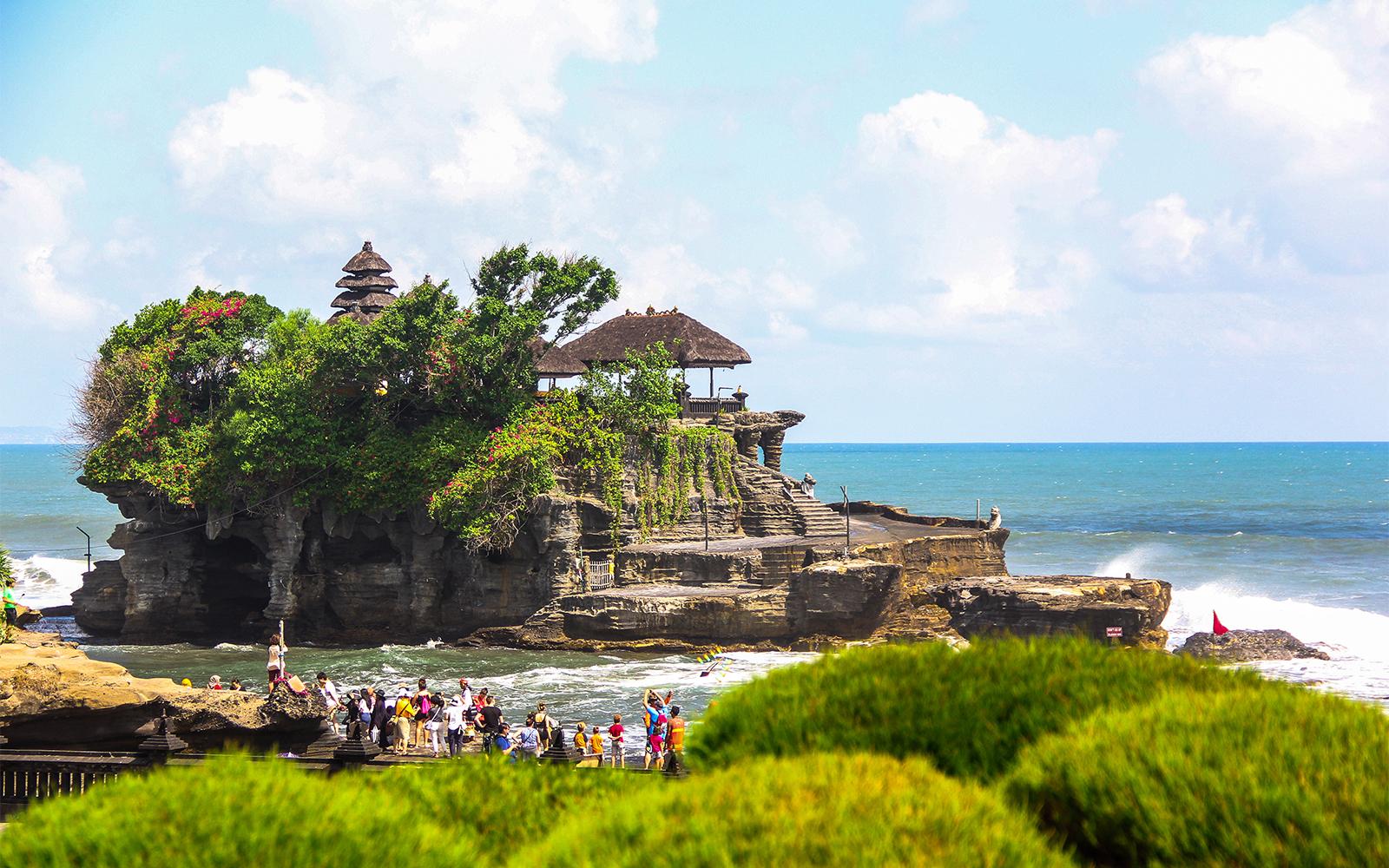
Tanah Lot Temple is a 16th-century Hindu sea temple perched on a rocky outcrop on Bali's southwestern coast, best visited 60–90 minutes before sunset for the silhouette photograph the island is famous for. Adult foreign visitors pay IDR 75,000 (about USD 4.50) at the gate, and the cliffside park around the temple stays open from 7 AM to 7 PM daily.
By 4:45 PM in dry season, the cliffside at Tanah Lot Temple is already busy. Photographers stake out the east lawn an hour before the sun drops, locals set up offerings near the base, and the tide is either letting visitors walk to the rock or hiding the path entirely depending on the day's chart. It looks ancient — and most of it is.
But here's the part the guidebooks rarely mention: roughly a third of the rock you photograph was rebuilt in the 1990s, after coastal erosion left engineers worried the temple itself would slide into the sea. A Japanese-funded restoration project poured reinforced fibre-cement to stabilise the base, and the work continues today. None of that makes the experience less worthwhile — it's still arguably Bali's most photographed landmark.
But understanding what you're looking at, when to arrive, and how to read the tide turns a 45-minute photo stop into something far more interesting. Here's how to plan your visit to Tanah Lot Temple.
The legend, the rock, and why Tanah Lot matters
Tanah Lot Temple was built in the 16th century by the Javanese Hindu priest Dang Hyang Nirartha and is one of seven sea temples along Bali's southwestern coast — each placed within sight of the next to form a spiritual chain protecting the island. The name translates from old Balinese as "Land in the Sea," and the temple is dedicated to Dewa Baruna, the god of the ocean.
The founding story
Nirartha (also known as Dang Hyang Dwijendra) travelled from the Majapahit Kingdom of Java in the 15th–16th century to spread Hinduism in Bali. Local accounts say he arrived at a striking rock formation along the southwest coast, felt its spiritual energy, and urged the local fishermen to build a shrine there.
A second strand of the legend describes a conflict with the local chief Bendesa Beraban, in which Nirartha used spiritual power to detach the rock from the mainland and push it into the sea, then created sacred sea snakes from his sash to guard the temple from negative forces. The banded sea kraits that still live in the rocky crevices around the base are the foundation of the holy snake mythology you'll hear at the site.
Where Tanah Lot fits in Bali's spiritual map
Tanah Lot is one of Bali's seven pura segara (sea temples) — a chain that includes Uluwatu Temple, Pura Sakenan, Pura Rambut Siwi, and others. Together they form what Balinese Hindus describe as a protective spiritual line along the coastline. Inland, the chain mirrors the island's Sad Kahyangan (six great temples) and connects via subak — Bali's UNESCO-recognised cooperative irrigation system that channels water from mountain temples down to coastal sea temples.
The Piodalan ceremony, held every 210 days according to the Balinese Pawukon calendar, draws thousands of worshippers in white sarongs carrying tall offering towers up the cliff path. If your visit lines up with one, you'll see the temple as a living place of worship rather than a viewpoint.
The 1990s restoration almost nobody mentions
By the late 1980s, the rock under the temple was eroding fast. Cracks ran through the base, and structural engineers warned of collapse. A grant from the Japanese government funded a multi-year restoration that stabilised the rock with reinforced fibre-cement — work that left roughly a third of the visible structure rebuilt or reinforced.
The repair was carefully matched in colour and texture so it reads as natural rock, but if you look closely from the lower beach during low tide, the seams are visible. The detail isn't usually in tour scripts, but it adds context to what you're seeing — a living temple kept standing by deliberate intervention.
When to visit Tanah Lot Temple — the tide and time question
The single most important planning decision at Tanah Lot is tide timing, not arrival time. Low tide lets you walk across the wet sand to touch the base of the rock and receive the holy water blessing; high tide hides the path entirely and gives you the "floating temple" photograph. Both have appeal — but they happen on different days, sometimes hours, and the tide chart for your specific visit date decides which you'll get.
Reading the tide for your visit
Tide tables for Tabanan are published by Indonesia's national meteorological agency (BMKG) and republished by tide aggregator apps. Three patterns matter:
- Low tide windows shift by roughly 50 minutes each day — a 5 PM low tide today is a 5:50 PM low tide tomorrow
- New moon and full moon periods produce the most extreme high and low tides — the "floating" photo is most dramatic during spring tides
- Wet season afternoons can bring sea spray that fogs your camera lens regardless of tide
For most travellers, the goal is a low tide window between 4:30 PM and 6:30 PM, which gives you 60–90 minutes at the base before the sun drops. If the chart shows high tide during that window, plan a morning visit (7–9 AM is the calmest) and return another day for sunset.
Sunset in Bali by season
"Sunset" isn't a fixed time in Bali. The sun drops at meaningfully different hours depending on the month:
- November to February (wet season): around 6:15–6:35 PM
- March, April, September, October (shoulder): 6:00–6:20 PM
- May to August (dry season): 5:45–6:10 PM
Add the golden hour 30–45 minutes before that, and you have your real arrival target. Aim to be inside the gates by 4:30 PM in dry season, 4:45 PM in wet season — earlier on weekends and during the Indonesian school holidays of mid-June to mid-July.
Morning vs afternoon vs sunset
Each window trades crowds for light:
- 7:00–9:00 AM: quiet, soft light, almost no tour groups, harder light for silhouette photography but better for detail shots
- 11:00 AM–3:00 PM: harsh light, hottest period, midday tour-bus arrivals, best avoided unless tide windows force it
- 4:30 PM onward: peak crowd density, golden light, queue at the holy water spring if it's accessible
For first-time visitors, the afternoon sunset slot is worth the crowds. For repeat visitors or anyone who's photographed Tanah Lot before, early morning is the calmer experience.
Tanah Lot Temple entrance fee, hours, and on-site logistics
The 2026 Tanah Lot Temple entrance fee for international visitors is IDR 75,000 (about USD 4.50) for adults and IDR 40,000 (about USD 2.45) for children aged 5–10. The temple complex opens daily from 7:00 AM to 7:00 PM, and the ticket booth accepts cash only — bring small Indonesian rupiah bills, as change for larger notes isn't always available.
What the ticket covers — and what it doesn't
The standard entry covers:
- Access to the clifftop park, viewing terraces, and the path down to the lower beach
- Entry to Pura Batu Bolong, the second sea temple at the same site
- The market walk and souvenir area
- Same-day re-entry if you exit and come back
Not included in the entry ticket:
- Kecak Dance at the Surya Mandala Cultural Park (separate ticket, IDR 100,000–150,000 per person)
- Sarong rental, if you don't bring your own (IDR 5,000–10,000 with refundable deposit)
- Professional photography or drone permits (only required for commercial shoots)
- Parking — IDR 5,000 for a car, IDR 2,000–3,000 for a scooter, paid at a separate booth
Domestic Indonesian visitors pay a reduced fee — IDR 30,000 for adults and IDR 20,000 for children. The two-tier pricing is standard at Bali's major heritage sites.
The market walk and what to expect
From the parking area, a 10–15 minute walk down a wide path lined with souvenir stalls leads to the temple grounds. Stalls sell wood carvings, sarongs, snacks, ice cream, and the usual fridge magnets. Prices are not fixed — haggle by half and settle near 60–70% of the opening ask. If you're short on time before sunset, walk through and shop on the way back. The vendors are used to the rhythm.






How to get to Tanah Lot — and the smart day-trip pairing
Tanah Lot is in Beraban Village, Tabanan Regency, about 20–25 km northwest of Seminyak. Driving times depend heavily on traffic — count on 20–30 minutes from Canggu, 40–55 minutes from Seminyak, 45–60 minutes from Kuta, 60–90 minutes from Ubud, and around 90 minutes from Nusa Dua. The smartest visitors don't make Tanah Lot a standalone trip — they pair it with one or two inland sites and treat the whole day as a single Tabanan loop.
Choosing your transport
For most travellers, a private driver is the easiest option. Drivers charge IDR 350,000–500,000 for a half-day round trip from South Bali, they know the tides, and they'll wait in the car park while you explore. Most are happy to combine Tanah Lot with stops at Taman Ayun, Jatiluwih, or Ulun Danu Beratan for an extra IDR 100,000–200,000.
Other transport options:
- Grab or Gojek work well for the outbound journey, but return trips can be tricky as there are no return rideshares queuing near the gate — book before you start walking back to the car park
- Scooter rental (IDR 70,000–100,000 per day) suits confident riders comfortable with Bali traffic, but the return ride after dark is harder than the outbound
- Public transport (bemos via Denpasar's Ubung Terminal) exists but is slow, inflexible, and rarely worth the saving
If you're planning multiple temple visits in one trip, the experiences listed on Travjoy are vetted by local experts so you can pick a guided route without sifting through hundreds of operator listings.
The two smart day-trip routes
Routing decides whether Tanah Lot anchors your day or sits as a 60-minute stop wedged into bad traffic. Two pairings work consistently:
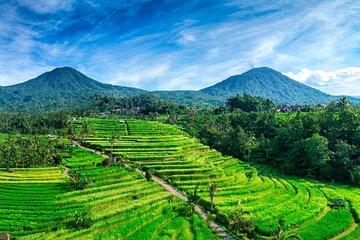
Tabanan loop (full day): Taman Ayun (8:30 AM) → Jatiluwih rice terraces (10:30 AM) → lunch in Tabanan town → Tanah Lot for sunset (4:30 PM). This routes you through Bali's UNESCO-listed subak landscape, gives you the regency's two best temples, and ends at the coast. Best for first-time visitors who want a single full day covering culture and rice fields.
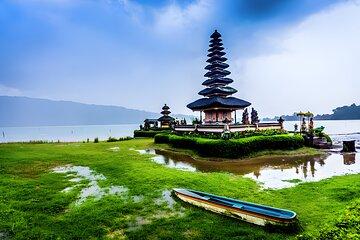
Central highlands loop (full day): Ulun Danu Beratan (10:00 AM) → lunch around Lake Bratan or Munduk → Jatiluwih on the way back → Tanah Lot for sunset (5:00 PM). This is the longer route — count on 8–10 hours total — but it pairs the highland water temple with the coastal sea temple, which makes sense culturally (subak connects the two).
The most common mistake is treating Tanah Lot as a 45-minute drop-in between Seminyak and Canggu. The driving time wastes more of your day than the visit itself.
Insider routing rule
- Stay south: if you're based in Seminyak, Canggu, or Kuta, pair Tanah Lot with Taman Ayun and Jatiluwih — keep it a one-direction day
- Stay central: if you're based in Ubud, pair with Ulun Danu Beratan and Jatiluwih on a downhill loop ending at the coast
- Avoid: pairing with Uluwatu in the same day — they're on opposite coasts and you'll waste 2–3 hours in traffic
Sunset secrets — four vantage points and the Kecak Dance question
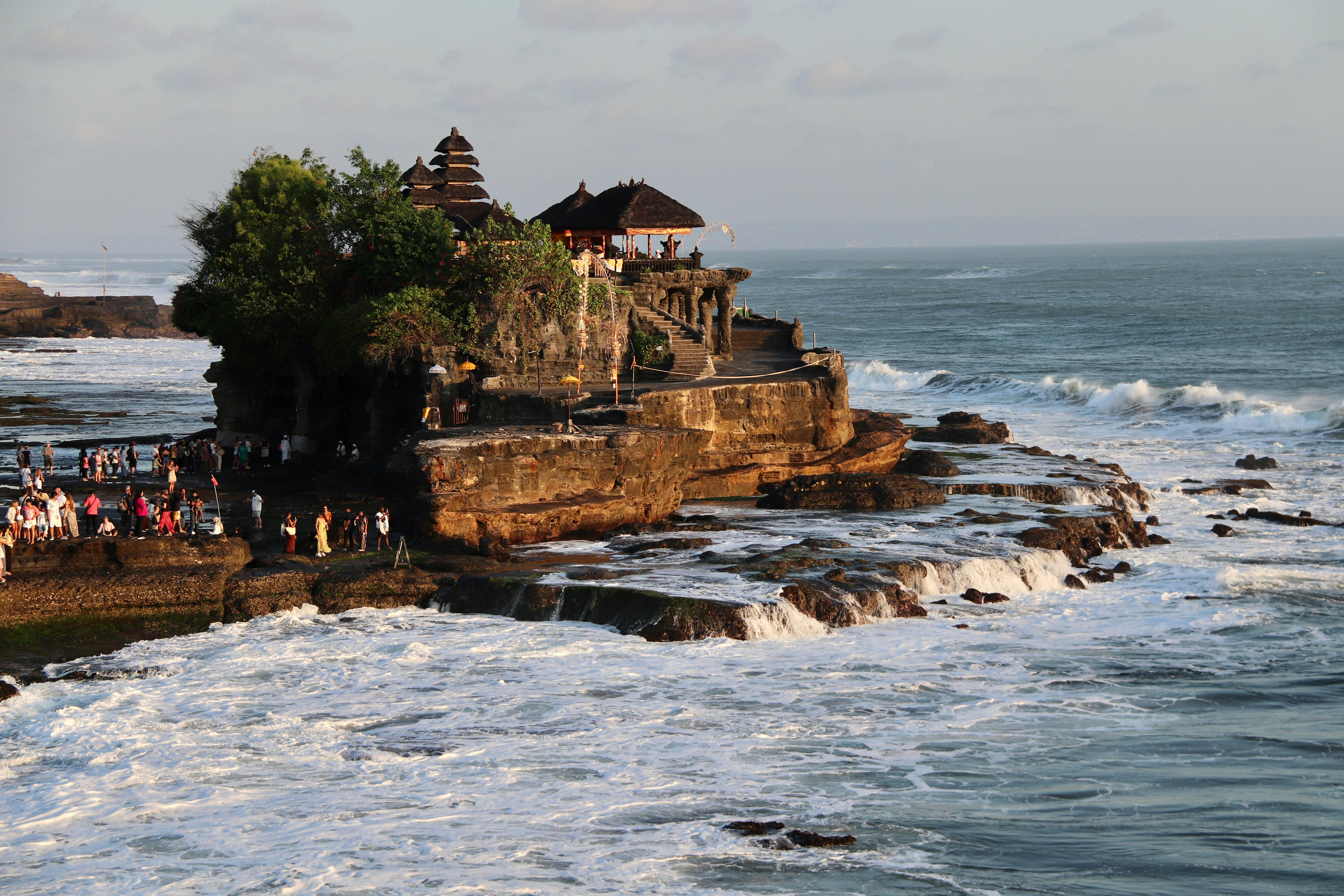
The sunset photograph everyone associates with Tanah Lot Temple is taken from one specific spot — the clifftop east lawn — but three other vantage points give you completely different shots. Knowing where to stand, when to switch positions, and what lens to use turns a single golden hour into four distinct photographs. Plan for one main shot per vantage; you won't have time for more.

The four shooting positions
- Clifftop east lawn (4:30–5:30 PM): the classic silhouette shot — temple side-on against the open ocean with the sun setting to camera-left. 35–70mm lens range. Arrive early; the prime spots fill 90 minutes before sunset
- Surya Mandala terrace (5:30–6:00 PM): elevated viewing platform behind the cultural park, slightly further back — wider context shots showing the temple, the coastline, and the crowd below. 24–35mm
- Batu Bolong viewpoint (any time): Pura Batu Bolong sits on its own arched rock formation 200 metres south of the main temple, with a natural sea arch beneath it — best photographed during high tide with waves crashing under the arch. 50–85mm
- Lower beach during low tide (5:00–6:00 PM if tide allows): worm's-eye view from the wet sand at the base, looking up at the temple — most dramatic shot, but only possible when the tide chart allows it
If you can only pick one, the clifftop east lawn delivers the photo that matches the postcard. The Batu Bolong viewpoint is the one most visitors miss.
Kecak at Tanah Lot vs Kecak at Uluwatu
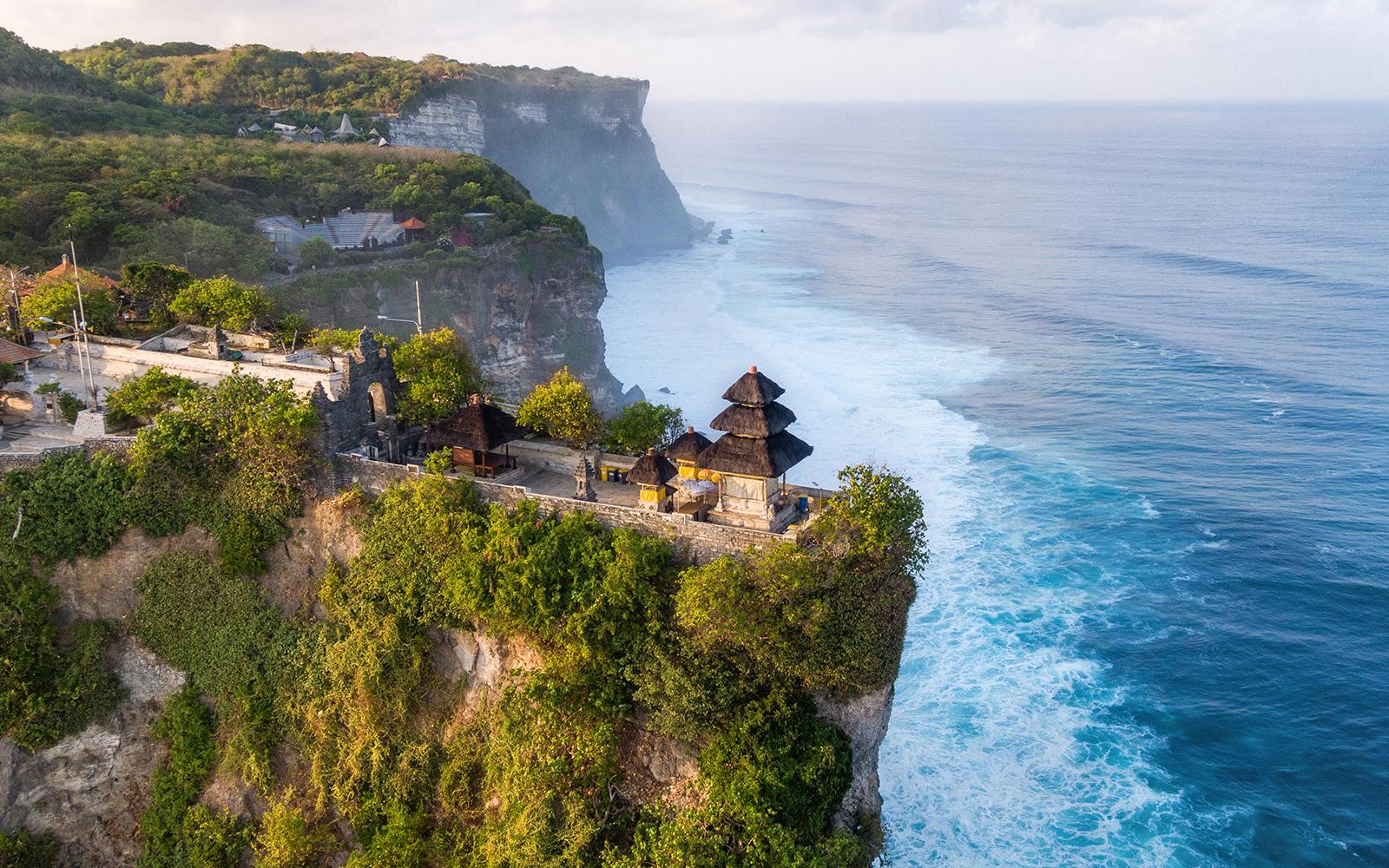
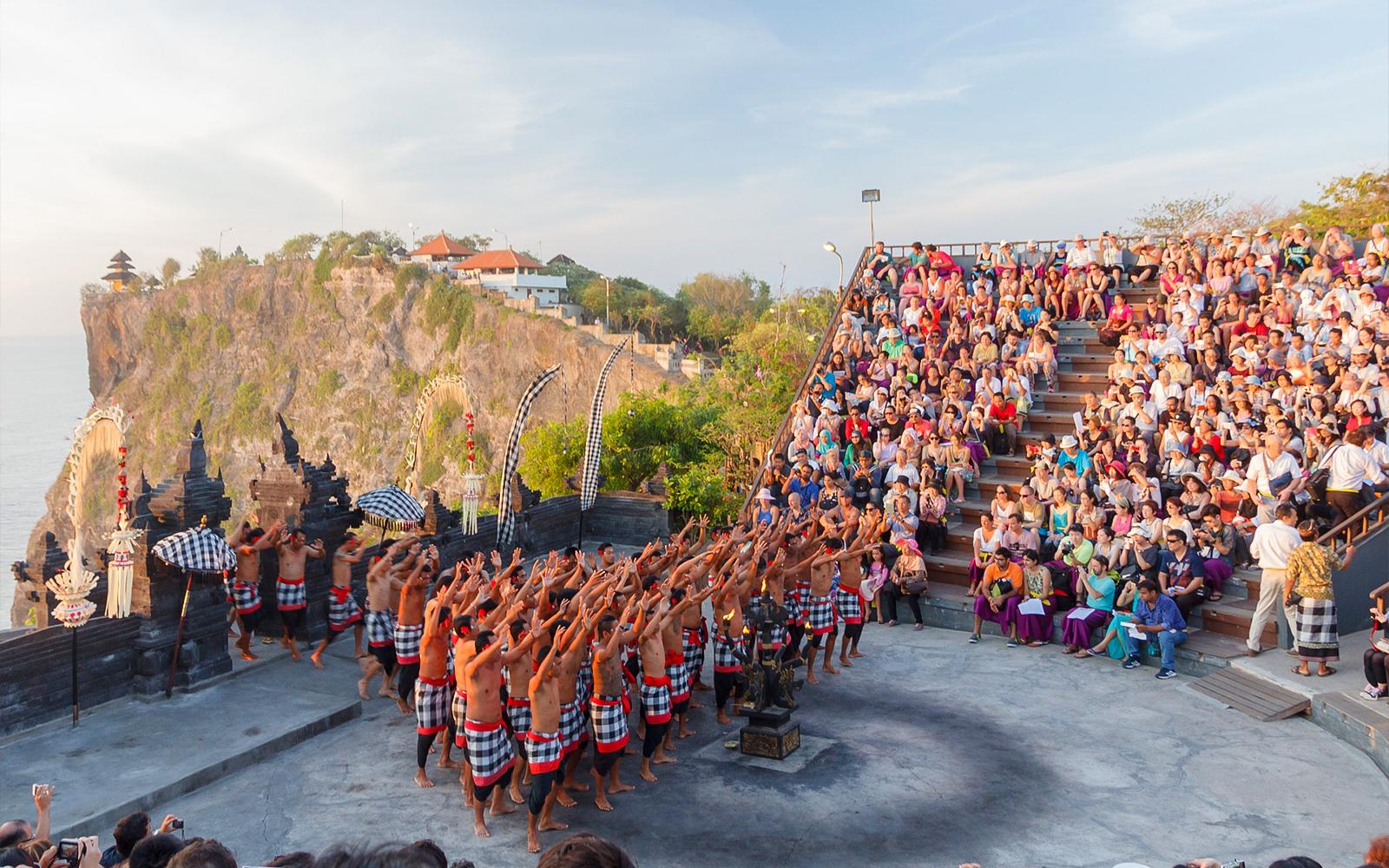
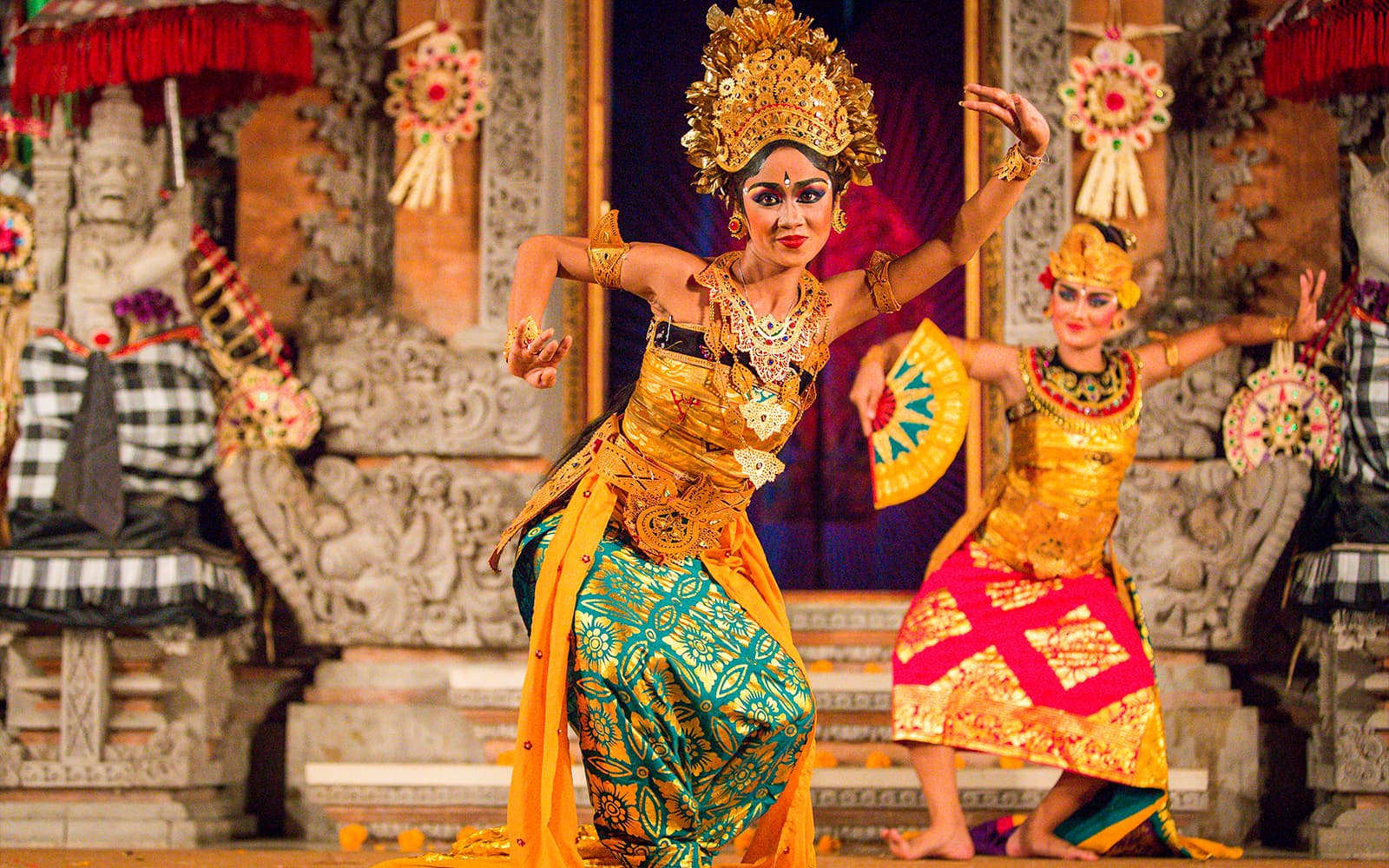
The Kecak Fire Dance is performed at two venues in Bali — Uluwatu Temple and the Surya Mandala Cultural Park within the Tanah Lot complex — and they're not identical. At Uluwatu Temple, the amphitheatre sits 70 metres above the Indian Ocean with the sun setting directly into the open sea behind the performers; tickets are IDR 150,000, performance times are 6:00–7:00 PM, and demand is high enough that arriving 60 minutes before the show is normal.
At Tanah Lot, the Kecak runs at the Surya Mandala stage from 6:30 PM (some seasons 6:00 PM), tickets are around IDR 100,000–150,000 depending on the operator, and the venue is smaller and quieter. The choreography is similar — both retell the abduction of Sita from the Ramayana — but the setting is the deciding factor:
- Choose Uluwatu if the open-ocean clifftop drama is the priority, and you don't mind the crowd
- Choose Tanah Lot if you want the dance and the sea temple silhouette in the same evening without a separate venue trip
Pre-booking either show through a trusted local operator means you skip the on-site ticket queue and arrive when the gates open. For most first-time visitors, the Uluwatu version remains the headline experience; the Tanah Lot version is the smart pairing with the sunset photograph.
Etiquette, what to skip, and the things competitors won't tell you
Tanah Lot is a working Hindu temple, not a museum, and the etiquette expectations match. Wear clothes covering shoulders and knees; pick up a sarong and sash at the entrance if you're in shorts or strappy tops (the rental kiosk takes IDR 5,000–10,000 with a refundable deposit). The full inner shrine is closed to non-Hindus, but the cliff park, holy water spring, and Pura Batu Bolong are open to everyone.
The holy water blessing — the part most visitors miss
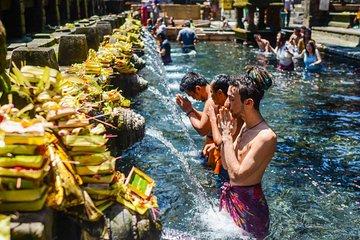
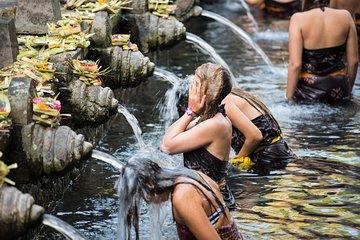
Beneath the rock, a freshwater spring runs out of the cliff base — the source of Tirta Pabersihan, the holy water used in Tanah Lot's rituals. During low tide, visitors can walk to the spring and receive a blessing from a temple attendant — water sprinkled on your hands, a sip from cupped palms, and a few grains of rice pressed to your forehead.
It's a five-minute experience, the donation is voluntary (IDR 10,000–30,000 is appropriate), and it's the most personal interaction with the temple's living religious function. Photography is generally accepted, but ask before you point a camera at the attendant.
The banded sea krait situation
The sacred snake cave is a small grotto on the west side of the rock containing one or two banded sea kraits — black-and-white striped, mildly venomous, but extremely shy. A keeper sits with the snake during opening hours and visitors can look in for a small donation (IDR 10,000–20,000). The setup is touristy, the snakes are real, and the photograph is harmless. Decide on the spot whether the donation feels worth it; nobody will pressure you.
What to skip, what to bring
Skip:
- The cliff-edge restaurants charging tourist prices for mediocre food — eat in Canggu or Tabanan town before or after
- Drone flying without a permit — enforcement is active, and the wind off the cliff is harder than it looks
- Buying snake-shaped souvenirs from inside the complex — the same items are 40–50% cheaper in Ubud's market
Bring:
- Small-denomination IDR for the gate, parking, sarong rental, snake cave, holy water donation, and snacks
- A scarf or light layer for the breeze that picks up after sunset
- Camera with one lens in the 24–85mm range; tripods are technically discouraged but commonly tolerated outside ceremony days
- A refillable water bottle — the walk from car park to clifftop and back is sweaty in dry season
Plan your Tanah Lot visit
Two things turn a Tanah Lot visit from a hurried sunset stop into something worth the drive — the tide chart and the day-trip pairing. The first decides whether you'll walk to the base or photograph a floating rock; the second decides whether the temple sits inside a meaningful Bali day or just adds traffic to your evening. Get both right and the 1990s-rebuilt rock with its Japanese-funded restoration still delivers the sunset the island is famous for.
The route, the timing, and the etiquette laid out here are the same questions every first-time visitor sends ahead. Start planning your Bali trip on Travjoy and pair Tanah Lot with one of the top experiences in Bali for a day that earns its place in the itinerary.






.svg&w=1920&q=75)