



Singapore Street Art: Best Murals & Where to Find Them
10 min read

Sandeepa K
Author
Long-term traveller and AI Expert.
SHARE BLOG
TABLE OF CONTENTS
- Key Takeaways
- Why Singapore's Street Art Scene Stands Out
- Kampong Glam — The Most Photogenic Street Art District
- Chinatown & Telok Ayer — Heritage Murals That Tell Singapore's Story
Key Takeaways
- Singapore's best street art clusters in six walkable neighbourhoods: Kampong Glam, Chinatown, Telok Ayer, Little India, Tiong Bahru–Everton Park, and Katong-Joo Chiat.
- Yip Yew Chong is the most prolific mural artist in the city — his heritage works span Chinatown, Tiong Bahru, Everton Park, and Kampong Glam, and many are linked by a self-guided trail.
- All murals are free to visit year-round, and most are within a five-minute walk of an MRT station.
- Early morning or late afternoon gives the best light for photography and the most comfortable walking conditions.
Singapore street art is concentrated in six heritage-rich neighbourhoods, each with its own character and signature murals. Kampong Glam's Haji Lane and Gelam Gallery offer the most Instagram-ready walls, while Chinatown's Yip Yew Chong trail delivers 40-metre heritage narratives. Every mural is free, outdoors, and accessible by MRT — making a self-guided art walk one of the easiest half-day activities in the city.
Singapore doesn't look like a street art city at first glance. Glass towers, manicured parks, and a reputation for strict rules don't exactly scream "spray paint." But step off the main roads into the back lanes of Kampong Glam or the pre-war shophouse corridors of Tiong Bahru, and a different side of the city shows up — one where 40-metre murals wrap around temple walls and former accountants paint three-storey scenes of vanishing trades.
The shift started around 2015, when government-approved mural programmes began encouraging artists to transform blank walls across heritage districts. Since then, the scene has grown from a handful of commissioned pieces to hundreds of works spanning neighbourhoods from Chinatown to Katong. Some tell the story of Singapore's immigrant past. Others are pure visual play — batik-pattern explosions, Aztec-inspired portraits, and neon-coloured alley murals that change every few months.
This guide maps out the best Singapore street art neighbourhood by neighbourhood, with specific mural locations, the artists behind them, and practical walking details so you can build your own route. Whether you have two hours or a full day, you'll know exactly where to go and what to look for.
Why Singapore's Street Art Scene Stands Out
Singapore's mural culture sits at an unusual intersection: street art is technically illegal without approval (vandalism carries fines and even caning), yet the government actively commissions and funds public art across heritage zones. The result is a scene that looks raw and spontaneous but is, in most cases, carefully vetted and protected.
From Illegal Graffiti to Government-Backed Murals
Before 2015, most public walls in Singapore stayed blank. The country's strict vandalism laws — famously enforced when an American teenager was caned for spray-painting cars in 1994 — meant artists had few legal outlets. That changed when community arts councils and heritage boards began inviting artists to paint on walls in conservation areas. Today, painting a public mural requires written approval, but once granted, the work is maintained and celebrated rather than scrubbed away.
The approval process means Singapore's murals tend to be higher quality than what you find in cities with unregulated graffiti. Artists work on scaffolding for days, sometimes weeks. They coordinate with building owners, heritage boards, and neighbourhood committees. The trade-off is less spontaneity — you won't find much raw tagging — but the payoff is murals that last years rather than weeks.
The Role of Heritage Preservation
Many of Singapore's most celebrated murals aren't abstract art — they're historical records. They depict letter writers, wet markets, Cantonese opera performances, and kampung (village) life that has largely disappeared from the physical landscape. This heritage angle gives the scene a depth that pure graffiti cultures elsewhere lack. You're not just looking at art — you're looking at a visual archive of a country that has transformed faster than almost anywhere on earth.
Key Artists to Know
A few names come up repeatedly as you walk the city's mural districts:
- Yip Yew Chong — A former accountant turned full-time mural artist, Yip is the most recognised name in Singapore street art. His large-scale heritage murals in Chinatown, Tiong Bahru, Everton Park, and Kampong Glam depict scenes from his childhood and Singapore's immigrant past. His 40-metre mural behind Thian Hock Keng Temple is the single most visited street artwork in the country.
- Ripple Root — An artist duo known for botanical and abstract murals that blend rice plants, native flora, and climate-themed motifs. Their work lines the shophouses of Keong Saik Road and Tanjong Pagar.
- Slacsatu — A Singaporean artist whose batik-pattern explosion at Aliwal Arts Centre is one of the most colourful single pieces in the city.
- Alex Face (Patcharapol Tangruen) — A Bangkok-based artist whose bunny-like characters in traditional costumes appear on Spottiswoode Park Road in Tanjong Pagar.
Kampong Glam — The Most Photogenic Street Art District
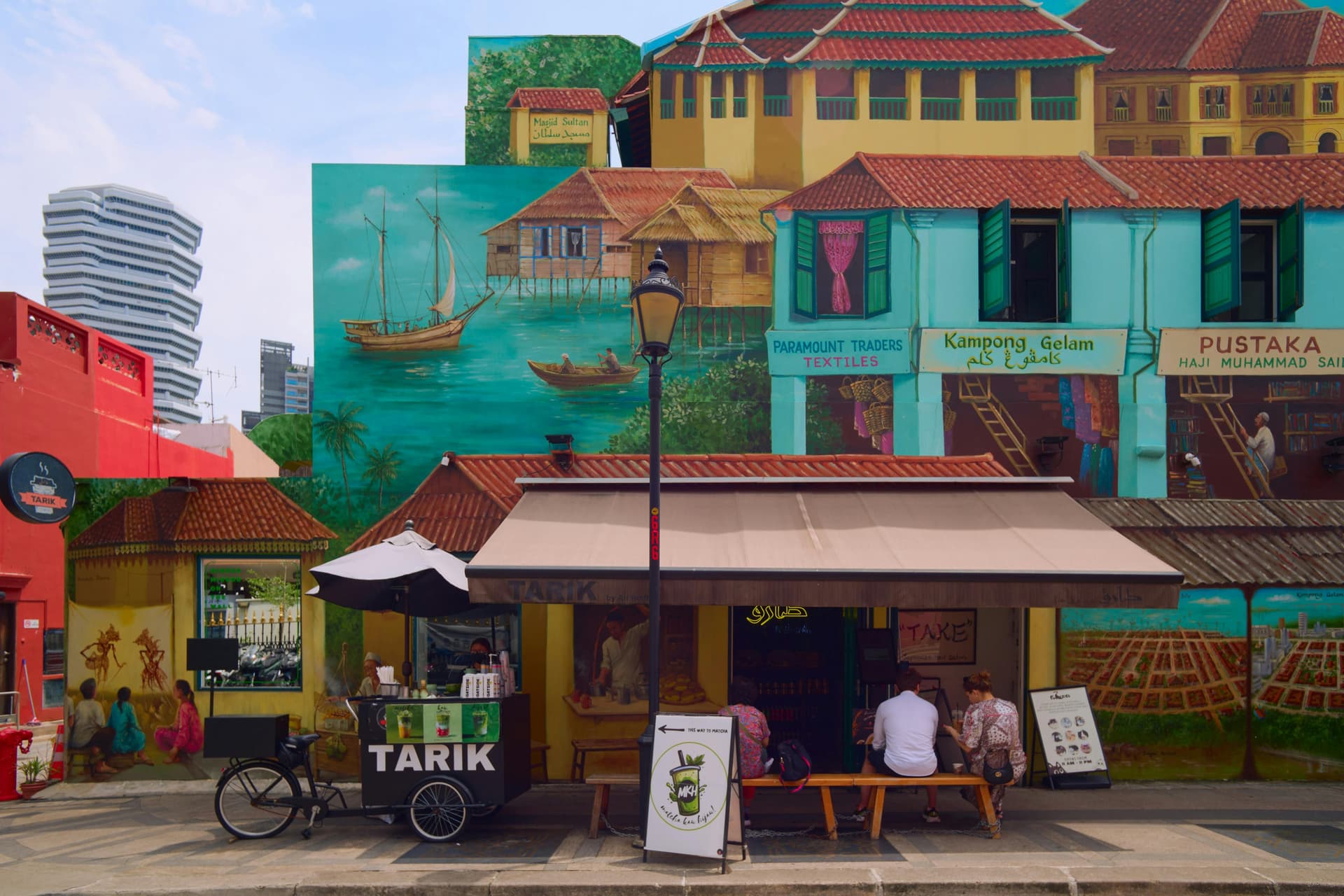
If you only have time for one neighbourhood, make it Kampong Glam. This historic Arab-Malay quarter packs the highest concentration of street art into the smallest footprint, with murals on nearly every lane between Haji Lane and Arab Street. The area sits a five-minute walk from Bugis MRT (East-West Line / Downtown Line).
Haji Lane's Ever-Changing Walls
Haji Lane's street art scene is the most dynamic in Singapore. The narrow lane is lined with independent boutiques and cafés that commission artists to paint their facades, meaning the walls change every few months. You'll find everything from Aztec-themed portraits by French-Singaporean artist Didier Jaba Mathieu to intricate calligraphy and pop-culture mashups.
The best approach is to walk slowly from one end to the other, then loop back through the parallel lanes. Piedra Negra (a Mexican restaurant at the Haji Lane–North Bridge Road junction) has one of the most frequently repainted and photographed exteriors. Arrive before 10am for empty streets and even light, or after 4pm when the western sun warms the east-facing facades.
Gelam Gallery — Singapore's First Outdoor Gallery
Tucked behind Muscat Street, Gelam Gallery has operated as an open-air exhibition space since 2019. The back alleys host over 30 works by local and international artists, including contributors from Oman whose pieces create a cross-cultural dialogue that reflects the quarter's Arab trading roots. Each work has a plaque with the artist's name and description — closer to a museum experience than a graffiti hunt.
A 240-metre stretch along Ophir Road and Bali Lane adds to the collection. Originally painted on construction noise barriers, these murals by 17 Singapore-based artists each include a QR code linking to a microsite with artist bios and artwork context.
Arab Street and Sultan Gate Heritage Murals
On Arab Street, Yip Yew Chong's panoramic mural at number 92 traces Kampong Glam's transformation from a seafront village to a cultural node. The piece includes scenes of daily trades, the Sultan Mosque, and Istana Kampong Gelam, with interactive map comparisons that contrast past and present street layouts. Nearby, Sultan Arts Village — home to The Black Book graffiti store — displays a rotating gallery of spray-painted works along its exterior walls.
Kampong Glam at a Glance
- Nearest MRT: Bugis (EW12/DT14) — 5 min walk
- Walking time to cover the area: 60–90 min
- Best hours: Before 10am (quiet streets, soft light) or after 4pm (golden hour on east-facing walls)
- Combine with: Turkish and Middle Eastern food on Arab Street, textile shopping at Haji Lane Kampong Glam
Chinatown & Telok Ayer — Heritage Murals That Tell Singapore's Story
Chinatown holds the most historically significant murals in Singapore. Nearly all of them are by Yip Yew Chong, and together they form an unofficial walking trail through the district's shophouse lanes. Start at Chinatown MRT (North East Line) and work your way south toward Telok Ayer — the whole loop takes about 90 minutes at a comfortable pace.
The Yip Yew Chong Chinatown Trail
Yip's Chinatown murals are concentrated in the blocks between South Bridge Road, New Bridge Road, and Upper Cross Street. Each one recreates a scene from Singapore's past, painted with photographic detail directly onto shophouse walls:
- Letter Writer (Smith Street / New Bridge Road) — A man composing letters for illiterate Chinese immigrants who needed to communicate with families back in China. Active until the 1980s, letter writers were a fixture of old Chinatown.
- Mid-Autumn Festival (Smith Street / New Bridge Road) — A family celebrating at home with lanterns, paper kites, durian, and local fruits while children play outside with a toy car.
- Cantonese Opera (Temple Street) — An elaborate performance scene with actors on a wooden stage, vendors selling food to children, and families seated on wooden stools.
- My Chinatown Home (Smith Street / Temple Street) — Interior scenes from a shophouse dwelling, based on Yip's own childhood memories.
- Three-Storey Tea Shop (alley between Temple Street and Pagoda Street) — An epic vertical mural stretching three storeys, depicting a traditional tea merchant's premises.
- Wet Market (adjacent to Tea Shop mural) — A bustling marketplace full of vendors, shoppers, and the kind of raw community energy that defined Chinatown before modern supermarkets.
At the southern end of the trail, the Chinatown Street Market area along Pagoda Street and Trengganu Street is worth a wander — the shopfronts themselves function as a visual extension of the mural culture, with painted shutters and decorative facades.
Thian Hock Keng Temple — The 40-Metre Mural
Yip Yew Chong's most ambitious work stretches across the entire back wall of Thian Hock Keng Temple on Amoy Street. At 40 metres, it's the longest single mural in Singapore. Seven panels depict the early lives of Hokkien immigrants — modern Chinese wedding ceremonies, kampong daily life, port arrivals, and street trades — all labelled with historical extracts. Plan at least 15 minutes to walk its full length and read the panels.
Keong Saik, Tanjong Pagar & Beyond
Along Keong Saik Road, Ripple Root's Floral Mural (at number 1) wraps around a row of heritage shophouses with candy-coloured botanical motifs — rice plants intertwined with modern geometric shapes. A few blocks south, the Nutmeg Mural at 21 Tanjong Pagar Road pays tribute to the area's plantation past with depictions of a lion, a sepoy (one of the first Indian arrivals), and a nutmeg plant.
On Spottiswoode Park Road, Bangkok artist Alex Face's pair of bunny-like characters dressed in changshan and nonya kebaya is one of the few international artist contributions in this part of the city. Belinda Low's Samsui Women mural at Chinatown Complex (335 Smith Street) is another local favourite — a tribute to the female construction workers who helped build modern Singapore.
Chinatown & Telok Ayer at a Glance
- Nearest MRT: Chinatown (NE4/DT19) or Telok Ayer (DT18) — murals are between both stations
- Walking time to cover the area: 90–120 min (including Thian Hock Keng)
- Best hours: Morning for softer light in the narrow lanes; avoid 12pm–2pm when shade disappears
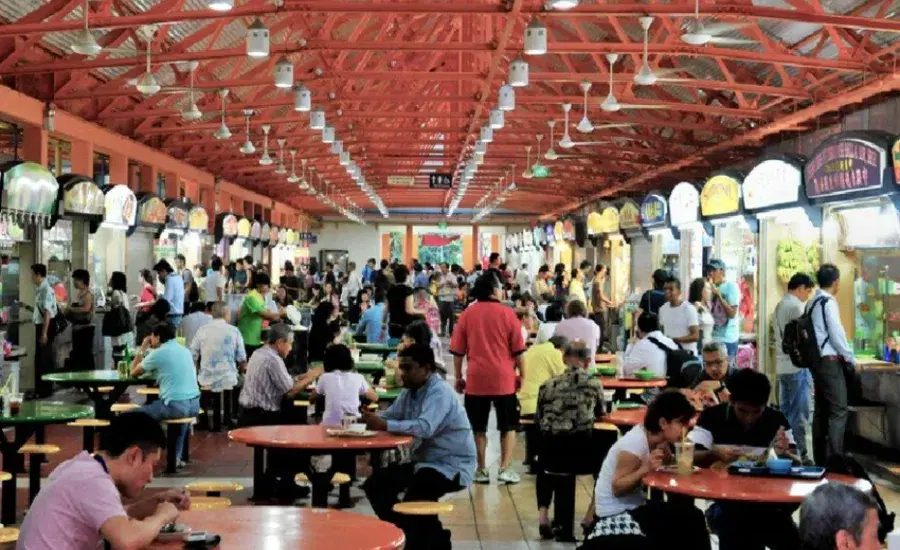
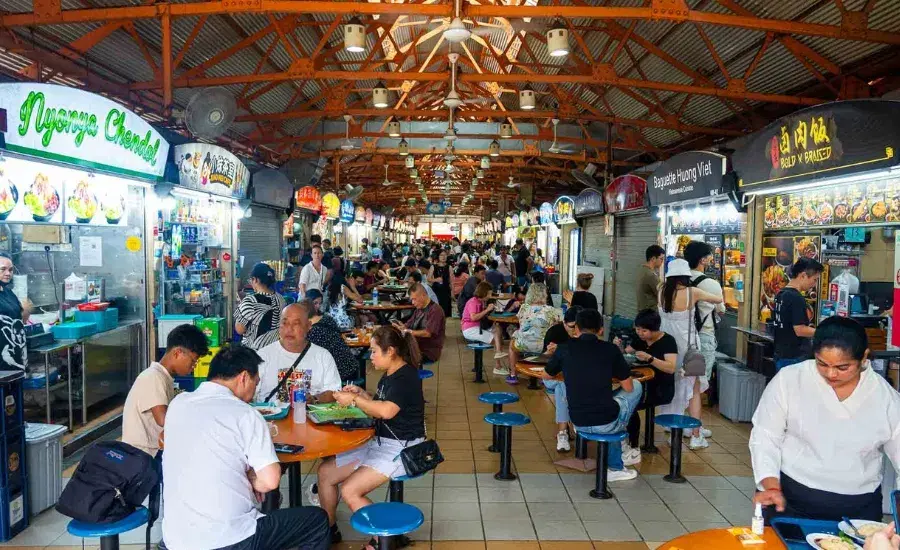
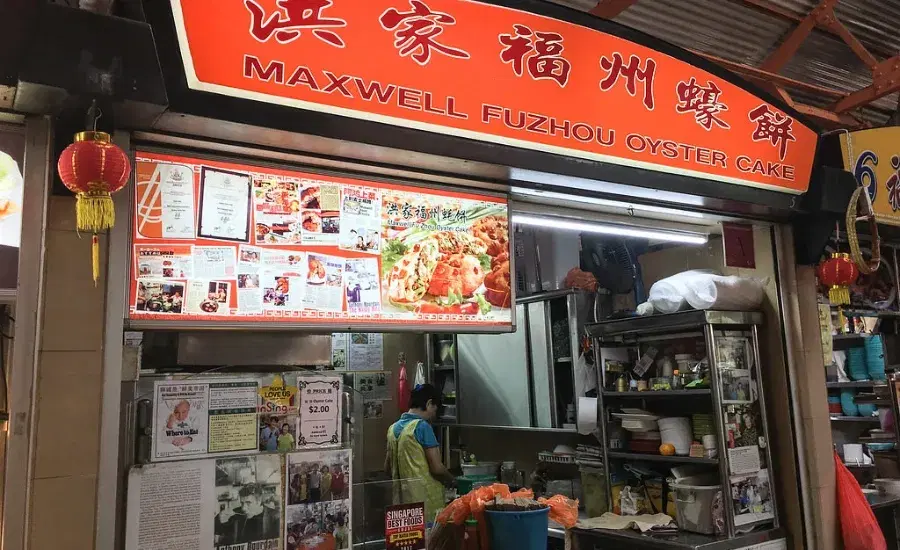
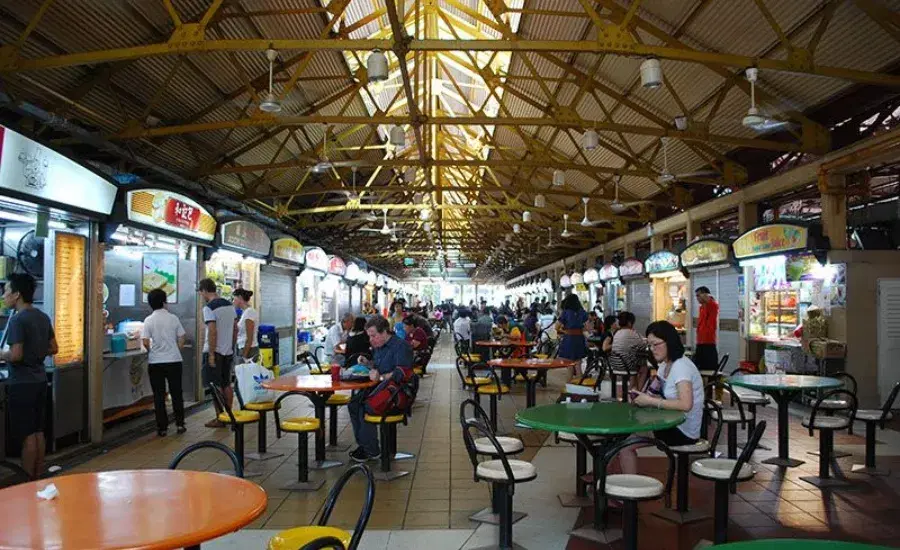
- Combine with: Hawker lunch at Maxwell Food Centre or Chinatown Complex, then walk south to Tanjong Pagar for the Ripple Root and Alex Face pieces





Little India & Jalan Besar — Bold Colour and Local Character
Little India is the loudest street art neighbourhood in Singapore — not in volume, but in colour. Where Chinatown's murals lean historical and Kampong Glam's feel polished, Little India's walls hit you with saturated pinks, electric blues, and oversized characters that match the energy of the surrounding spice shops and garland stalls.
Kerbau Road's Signature Murals
The standout piece along Kerbau Road is the rainbow cow mural — a nod to the area's origins as a cattle-trading hub in the 19th century. "Kerbau" itself means "buffalo" in Malay, and the mural connects this etymology to a bright, modern visual. It's become one of the most photographed works in the precinct.
Further along, a mural of a dancer surrounded by security cameras, drones, and surveillance machinery offers a pointed commentary on the heavy policing this neighbourhood has historically faced. Nearby, an Ultraman figure exploring a row of shophouses adds absurdist humour to the mix. These pieces aren't labelled with artist plaques the way Kampong Glam's are — part of the charm is the anonymity.
Hindoo Road and Jalan Besar's Hidden Walls
On Hindoo Road, two murals stand out. Izzad Radzali Shah's "Festival" at 1 Hindoo Road fills an alleyway with vivid blue figures in motion. At 11 Hindoo Road, artist Zero's portrait of Indian film star Rajinikanth — titled "Working Class Hero" — covers an entire wall face. It's a reminder that Little India's cultural references extend to Bollywood and Tamil cinema as much as to local heritage.
Walk northeast to Jalan Besar for the Guinness-commissioned "Ang Ji Gao" (Hokkien for "red-tongued dog") murals at Horne Road and the junction of Plumer Road. These designs by artist Ben Qwek celebrate the brand's limited-edition Foreign Extra Stout, blending commercial art with local dialect and visual style.
Little India at a Glance
- Nearest MRT: Little India (NE7/DT12) or Farrer Park (NE8) — both within 5 min walk of mural clusters
- Walking time: 45–60 min for Kerbau Road, Hindoo Road, and Jalan Besar
- Best hours: Late afternoon for warm light on the west-facing shophouses
- Combine with: Lunch at Tekka Centre, spice shopping on Serangoon Road
Tiong Bahru, Everton Park & Katong-Joo Chiat — Neighbourhood Gems Beyond the Centre
These three residential neighbourhoods sit outside the main tourist circuit, but each delivers a distinct street art experience worth the short MRT ride. They're quieter than Kampong Glam or Chinatown, which makes them better for photography and slower exploration.
Tiong Bahru's Art Deco Estate Murals
Singapore's oldest public housing estate doubles as an outdoor gallery, with murals painted on the curved white walls of its 1930s Art Deco blocks. All three signature pieces are by Yip Yew Chong, painted in early 2016:
- Bird Corner (near Tiong Bahru Community Centre) — A scene of elderly residents gathering with their caged songbirds under a void deck, a practice that defined the estate's social life for decades. Yip added this mural at a discount because he felt the series would be incomplete without it.
- Home (Tiong Bahru estate corridor) — The interior of a typical HDB flat rendered with such detail that chairs placed in front of the wall let visitors pose as if they're sitting inside the painted room.
- Pasar & Fortune Teller (near Tiong Bahru Market) — A bustling market scene with vendors, fortune tellers, and shoppers, painted outdoors over four and a half days in the sun.
Inside Tiong Bahru Market itself, a three-storey peacock mural covers the central staircase wall — impossible to miss if you're heading up to the hawker centre for lunch.
Everton Park's Kampung Life Series
A 10-minute walk south from Tiong Bahru, Everton Park is a cluster of pre-war shophouses now occupied by specialty cafés and small studios. Yip Yew Chong's first-ever public murals were painted here in August 2015, and they launched his career as a full-time artist:
- Amah (Everton Road) — A long wall piece depicting a housemaid washing and drying clothes for a Peranakan family, with a rooster and its brood wandering in the foreground.
- Barber (adjacent to Amah) — A makeshift tent where a village barber gives haircuts, complete with details like a can of Carnation milk hanging from real existing pipes.
- Provision Shop (Everton Road) — A densely detailed mural of a traditional dried-goods store, painted based on a verbal description from a local homeowner who invited Yip to the neighbourhood.
These murals are smaller and more intimate than Yip's later Chinatown works, and the quiet street setting — with a real neighbourhood cat that inspired one of the painted cats — makes Everton Park feel like a private gallery.
Katong-Joo Chiat's Peranakan-Inspired Murals
The Katong-Joo Chiat precinct, famous for its rows of pastel Peranakan shophouses, has developed its own street art identity in recent years. The area sits along the East-West Line — alight at Paya Lebar MRT and walk 10 minutes south.
The most celebrated piece is Medley Alley at 150 East Coast Road, a collaborative mural by Nicia Lam, Valerie Neo, Novena Angela, and Yullis Lam. The design resembles wings made from colourful Peranakan tiles — a nod to the decorative Art Deco and Art Nouveau tiles that are a cherished part of Baba Nyonya heritage in this area. It's become a popular photo spot where visitors stand between the two wings.
At 341 Joo Chiat Road (now a Scanteak furniture store), a quiet mural of a mother cradling her child pays tribute to the building's former life as the Joo Chiat Maternal and Child Health Clinic, founded in 1907 to address high infant mortality. Across the road, a mural of fierce street cats adds a lighter note. Newer additions include murals at Kway Guan Huat Popiah (one of Singapore's oldest popiah makers, operating since 1938), where artist Jaxton Su painted three panels celebrating the shop's popiah-making heritage.
Tiong Bahru, Everton Park & Katong at a Glance
- Tiong Bahru MRT: EW17 — murals within 5 min walk of station
- Everton Park: 10 min walk from Outram Park MRT (EW16/NE3) or Tiong Bahru MRT
- Katong-Joo Chiat: 10 min walk from Paya Lebar MRT (EW8/CC9) heading south
- Walking time per area: 30–45 min each
- Combine with: Café-hopping in Tiong Bahru or Everton Park, laksa at 328 Katong Laksa
Practical Tips for a Singapore Street Art Walk
You can cover two to three neighbourhoods in a half-day walk, or spread all six across a full day with MRT hops between them. Here's what to know before you head out.
Best Time of Day and What to Wear
Singapore is hot and humid year-round. Start before 9am or after 4pm to dodge the midday heat and catch softer light for photography. Most murals sit in narrow lanes or under partial shophouse shade, but the walk between clusters will be in full sun.
- Footwear: Lightweight, breathable shoes with good grip — you'll cover 5–10 km depending on how many neighbourhoods you visit
- Carry: Water bottle, sunscreen, portable fan or handheld umbrella for shade
- Rain: Singapore's afternoon showers are sudden but short. Ducking into a nearby café or hawker centre for 20 minutes usually does the trick
Photography Tips for Murals
Flat, even light works best for mural photography — overcast mornings or the hour before sunset avoid harsh shadows that cut across painted surfaces. A few things to keep in mind:
- A wide-angle lens (or phone ultra-wide mode) helps in narrow alleys where you can't step back far enough to frame the full piece
- Shoot straight-on to avoid perspective distortion, especially for the large heritage murals with fine detail
- For murals that incorporate 3D elements or interactive poses (like Tiong Bahru's "Home"), include a person in the frame to show scale and context
- Check for reflections and glare on glossy-finished walls — shift your angle slightly or wait for a cloud to pass
How to Build Your Own Walking Route
The most efficient way to link the central neighbourhoods is by MRT. A suggested half-day route:
- Morning: Bugis MRT → Kampong Glam (Haji Lane, Gelam Gallery, Arab Street) — 60–90 min
- Late morning: Walk or MRT one stop to Chinatown → Chinatown trail + Thian Hock Keng + Keong Saik — 90 min
- Lunch: Hawker break at Maxwell Food Centre or Chinatown Complex
- Afternoon: MRT to Little India for Kerbau Road and Hindoo Road — 45 min
If you have a full day, add Tiong Bahru–Everton Park in the morning before Kampong Glam, and finish with Katong-Joo Chiat in the late afternoon. Travjoy's list of top 20 things to do in Singapore is worth checking if you want to weave in non-art stops between neighbourhoods.
Street Art Etiquette and Singapore's Vandalism Laws
A few rules, some legal and some social:
- Don't touch or lean on murals — paint deteriorates faster with physical contact, especially in Singapore's humidity
- Don't add your own marks — unauthorised graffiti or tagging is a criminal offence under Singapore's Vandalism Act. Penalties include fines, imprisonment, and caning. This applies even to small stickers or marker tags
- Respect private property — some murals are on residential walls or business facades. If a shop is closed or a doorway is blocked, photograph from a respectful distance
- Be considerate of residents — particularly in Tiong Bahru and Everton Park, where the murals sit in quiet residential lanes. Keep noise down, especially before 9am
Start Planning Your Singapore Street Art Walk
Six neighbourhoods, dozens of murals, and not a single admission fee. Singapore's street art scene delivers one of the most rewarding walking experiences in the city — part culture lesson, part photo safari, part excuse to eat your way through hawker centres between mural stops. Whether you spend a morning in Kampong Glam or a full day linking all six precincts by MRT, you'll see a side of Singapore that most visitors walk right past.
The murals won't stay the same forever. Walls get repainted, new commissions go up, and some pieces fade under the tropical sun. The best time to see them is now. Start building your Singapore itinerary on Travjoy — where the activities, tours, and experiences are selected after extensive research and vetted by local experts, so you can spend less time planning and more time exploring.





.svg&w=1920&q=75)