


Singapore: Geylang Serai Market
Operating Hours:Monday - Sunday: 07:00 - 14:45
The Vibe:A feast of Malay heritage 🥘
In the heart of Singapore’s Malay community, this two-story market is a sensory adventure. Shoppers browse spices and fabrics downstairs, while upstairs hawker stalls dish out fragrant biryanis and traditional sweets.
Morning light spills through the market’s latticework. The air is rich with curry and grilled meat, mixed with the sweetness of tropical fruits. Vendors banter in Malay over the hum of ceiling fans.
- One of Singapore’s largest wet markets
- Center of the annual Hari Raya Bazaar festivities
- Praised by visitors for authentic Malay cuisine and culture
Persona Fit
- Families: Cultural learning and hearty breakfast options (try nasi lemak) in a lively but safe setting.
- Couples: Morning market strolls to sample kueh and shared snacks, followed by exploring nearby boutiques.
- Seniors: Elevator access to the hawker center; friendly vendors and seating areas for breaks.
- Culture Buffs: A deep dive into Malay heritage foods, spices, and traditional wares all under one roof.
Highlights
- Wet Market Bounty — Fresh seafood, meats, and an array of spices and produce on the ground floor reflecting Malay and regional ingredients
- Textile & Sundry Stalls — Vendors selling batik fabrics, traditional Malay costumes, brass ware and rattan products, adding a bazaar flair
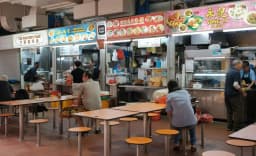
- Halal Hawker Delights — Upstairs food centre serving Malay classics like nasi padang, lontong and teh tarik, all 100% halal
- Putu Piring Stall — Famous steamed rice flour cakes filled with molten palm sugar, a sweet treat that often draws a queue — Hidden Gem
- Ramadan Bazaar (seasonal) — Come pre-Hari Raya, the surrounding area blooms into a festive night market with street food and decorations

Adeline Ee
Our Singapore Local Expert
Table of Contents
Things To Do Nearby
Joo Chiat Complex – Right next door, a treasure trove of Malay fashion and textiles (great for browsing beautiful batik and affordable clothing).
Haig Road Food Centre – Across the street, another hawker center famed for Malay and Indian Muslim food (try the nasi lemak at Selera Rasa or putu piring dessert).
Wisma Geylang Serai – A new cultural center beside the market with a community gallery and sometimes events, showcasing modern Malay arts and community programs.
Joo Chiat Complex – Right next door, a treasure trove of Malay fashion and textiles (great for browsing beautiful batik and affordable clothing).
Haig Road Food Centre – Across the street, another hawker center famed for Malay and Indian Muslim food (try the nasi lemak at Selera Rasa or putu piring dessert).
Wisma Geylang Serai – A new cultural center beside the market with a community gallery and sometimes events, showcasing modern Malay arts and community programs.
TJ's Guide - Geylang Serai Market
Know Before You Go
Insider Tips
• Morning is prime time – arrive by 9–10 AM to see the market at its liveliest (and to get the best food selection before things sell out or close after lunch).
• Modest dress is appreciated since Geylang Serai is a culturally significant Malay area (think covering shoulders and knees). It’s not enforced, but you’ll blend in better with the local crowd.
• If you visit during the Ramadan month, come in the late afternoon or evening too – the surrounding Geylang Serai area erupts into a famous night bazaar with food and festive lights in the lead-up to Hari Raya Aidilfitri.
• Bring your own shopping bags. Many wet market vendors will appreciate it if you have reusable bags for your purchases, plus it’s eco-friendly!
• Morning is prime time – arrive by 9–10 AM to see the market at its liveliest (and to get the best food selection before things sell out or close after lunch).
• Modest dress is appreciated since Geylang Serai is a culturally significant Malay area (think covering shoulders and knees). It’s not enforced, but you’ll blend in better with the local crowd.
• If you visit during the Ramadan month, come in the late afternoon or evening too – the surrounding Geylang Serai area erupts into a famous night bazaar with food and festive lights in the lead-up to Hari Raya Aidilfitri.
• Bring your own shopping bags. Many wet market vendors will appreciate it if you have reusable bags for your purchases, plus it’s eco-friendly!
Know Your Facts
- • MRT: Paya Lebar (EW/CC Lines) – from Exit A, walk straight, and you’ll see the market’s distinctive architecture ahead on your right. It’s a short 300m walk.
- • Bus: Bus stops right outside on Changi Road/Geylang Road serve many routes. Alight when you see the big yellow-brown building with a pitched roof – that’s Geylang Serai Market.
- • Car: The entrance to the market’s multi-story car park is along Geylang Serai road (behind the market building). Spaces can fill up on weekends. Alternatively, park at the nearby Tanjong Katong Complex open-air lot and walk over.
- • Entrances: The main entrance is from the front facing Geylang Road (you’ll walk up directly into the wet market stalls). There’s another entry on the side next to the car park, and one from the back (near the taxi stand) – all lead into the ground floor. Use the central escalators or lift to reach the food court upstairs.
Once You Reach
Internal Navigation
• Layout: Ground floor is the wet market and dry goods. You’ll find fish and meat vendors on one side (look for tiled sections and wetter floors), produce in the middle, and spices/dry goods and clothes toward the other end. The second floor is entirely the food centre with hawker stalls lining the perimeter.
• Moving around: There is a central aisle running through the length of the ground floor – use it to orient yourself, then duck into the smaller lanes between stalls to explore specific sections. It can be crowded; be patient and shuffle along with the flow during peak hours.
• Going upstairs: An escalator in the middle of the market (near the fruit section) will take you up to the hawker centre. There’s also an elevator tucked in a corner near the car park side – convenient for wheelchair users or strollers.
• Upstairs hawker center: It’s free seating. Claim a table by setting a packet of tissues (the local custom to ‘chope’ a spot) if you’re with someone. Otherwise, be ready to share a table during busy times. The stalls up here are numbered – popular ones have signs and often queues. After eating, return trays to the collection point to help keep the area clean.
Food & Coffee Shops
• Must-try meals: Upstairs, look for the Nasi Padang stalls – they display a spread of dishes, you pick what you want with rice. Perfect for sampling multiple Malay dishes like rendang and sambal goreng. Another highlight: the mee rebus or soto ayam from the Haji Kadir stall (rich gravy noodle dishes).
• Snack break: For a quick pick-me-up, get a teh tarik (pulled milk tea) or kopi at the drink stall upstairs. Pair it with goreng pisang (banana fritters) or a piece of kueh (colorful Malay sweet cake) from one of the vendors to recharge.
• Cooling treat: If it’s a hot day, head back downstairs and find the stall selling fresh fruit – grab a cup of cut jackfruit or a young coconut. Enjoy it under the shade around the market (there are benches along the exterior corridors) for a refreshing pause.
• Must-try meals: Upstairs, look for the Nasi Padang stalls – they display a spread of dishes, you pick what you want with rice. Perfect for sampling multiple Malay dishes like rendang and sambal goreng. Another highlight: the mee rebus or soto ayam from the Haji Kadir stall (rich gravy noodle dishes).
• Snack break: For a quick pick-me-up, get a teh tarik (pulled milk tea) or kopi at the drink stall upstairs. Pair it with goreng pisang (banana fritters) or a piece of kueh (colorful Malay sweet cake) from one of the vendors to recharge.
• Cooling treat: If it’s a hot day, head back downstairs and find the stall selling fresh fruit – grab a cup of cut jackfruit or a young coconut. Enjoy it under the shade around the market (there are benches along the exterior corridors) for a refreshing pause.
Photography Tips
• Vibrant stalls: The spice pyramids, fruit piles, and rainbow array of kueh (cakes) are very photogenic. Best captured in the morning when natural light filters through – bump up ISO slightly indoors but avoid harsh flash to keep the atmosphere.
• Candid portraits: If you want to photograph vendors or shoppers, ask politely. Most are friendly and proud of their stalls. Learn a greeting like “Boleh ambil gambar?” (May I take a photo?) to break the ice.
• Architecture shot: Step across the street (or to the overhead bridge) to get a full view of the market’s traditional Malay roof design. Sunset can cast a nice glow on the orange roofs.
• Festive focus: During Ramadan, photograph the transformation – the market building decked in lights and the bustling bazaar tents around it. Tripod recommended at night to capture the lively scene without blur.
• Vibrant stalls: The spice pyramids, fruit piles, and rainbow array of kueh (cakes) are very photogenic. Best captured in the morning when natural light filters through – bump up ISO slightly indoors but avoid harsh flash to keep the atmosphere.
• Candid portraits: If you want to photograph vendors or shoppers, ask politely. Most are friendly and proud of their stalls. Learn a greeting like “Boleh ambil gambar?” (May I take a photo?) to break the ice.
• Architecture shot: Step across the street (or to the overhead bridge) to get a full view of the market’s traditional Malay roof design. Sunset can cast a nice glow on the orange roofs.
• Festive focus: During Ramadan, photograph the transformation – the market building decked in lights and the bustling bazaar tents around it. Tripod recommended at night to capture the lively scene without blur.
Explore Deeper
Geylang Serai Market isn’t just a place to shop and eat – it’s the cultural heartbeat of the Malay community. Its background reveals how it has long served as a social hub, preserving traditions amid a rapidly modernizing city.
• Community pillar: Established in 1964, the market quickly became more than just a marketplace
it was where Malay families from across Singapore came for ingredients, especially those not found in Chinese or Indian markets. This made it a cultural touchstone and gathering spot.
• Architectural heritage: The current building (opened 2009) was designed with Malay kampong (village) elements
from the spike-shaped roof eaves resembling a traditional Malay roof, to motifs of flowers and vines on its facade that echo Malay songket patterns. It’s form meets function, honoring heritage while serving modern needs.
• Festive centerpiece: Every year during Ramadan, the market and its vicinity transform. Since the 1980s, a night bazaar sprouts up around it, drawing tens of thousands. Stalls sell everything from Malay snacks like dendeng (grilled meat jerky) to traditional clothes for Hari Raya. It’s a continuation of bazaar traditions that date back generations, making Geylang Serai synonymous with Ramadan festivities.
• Enduring trades: Amid the new malls around, Geylang Serai Market still hosts some old-school vendors
like spice grinders who will custom mix rempah (spice paste) for you, or traditional kueh makers using recipes handed down from their kampong days. They are living links to a past era, adapting within this modern market structure.
• Community pillar: Established in 1964, the market quickly became more than just a marketplace
it was where Malay families from across Singapore came for ingredients, especially those not found in Chinese or Indian markets. This made it a cultural touchstone and gathering spot.
• Architectural heritage: The current building (opened 2009) was designed with Malay kampong (village) elements
from the spike-shaped roof eaves resembling a traditional Malay roof, to motifs of flowers and vines on its facade that echo Malay songket patterns. It’s form meets function, honoring heritage while serving modern needs.
• Festive centerpiece: Every year during Ramadan, the market and its vicinity transform. Since the 1980s, a night bazaar sprouts up around it, drawing tens of thousands. Stalls sell everything from Malay snacks like dendeng (grilled meat jerky) to traditional clothes for Hari Raya. It’s a continuation of bazaar traditions that date back generations, making Geylang Serai synonymous with Ramadan festivities.
• Enduring trades: Amid the new malls around, Geylang Serai Market still hosts some old-school vendors
like spice grinders who will custom mix rempah (spice paste) for you, or traditional kueh makers using recipes handed down from their kampong days. They are living links to a past era, adapting within this modern market structure.
Did You Know?
• Name origin – “Geylang Serai” likely comes from the lemongrass (“serai” in Malay) that grew in abundance here when the area was marshland and agricultural. So you’re literally at the Lemongrass Village Market!
• Royal visit – Queen Elizabeth II visited Geylang Serai Market in 1989 during a state visit. Vendors proudly showed Her Majesty local fruits and spices, underscoring the market’s cultural importance.
• On screen – The market’s vibrant setting was featured in Netflix’s "Street Food: Asia" series. It highlighted the beloved putu piring stall, run by fourth-generation owners, shining a global spotlight on this humble dessert and the market itself.