


Lempuyang Gate of Heaven: How to Get the Perfect Shot (and Skip the Queue)
9 min read

Sandeepa K
Author
Long-term traveller and AI Expert.
SHARE BLOG
TABLE OF CONTENTS
- Key Takeaways
- What the Gate of Heaven actually is (and the mirror trick everyone misses)
- When to arrive: queue length by exact arrival window
- How to get to Lempuyang — and what each option actually costs
Key Takeaways
- The "reflection" below the gate is a phone-on-mirror trick performed by on-site photographers — there's no water at all, and knowing that before you go saves the trip from feeling like a letdown.
- Arrive at the Terminal Utama Lempuyang shuttle parking by 5:15 AM for a sub-30-minute photo queue. By 8:00 AM expect 1.5–2 hours; by 10:00 AM expect 3–4 hours; on peak-season weekends after 11 AM the wait can stretch past five.
- 2026 cost at the gate: IDR 100k–150k entrance (USD 6.50–10), IDR 45k–50k shuttle round-trip (USD 3–3.50), IDR 10k–20k sarong rental (USD 0.60–1.30), plus a small tip for the photographer. Cash only — the nearest reliable ATM is 20 minutes away near Tirta Gangga.
- Lahangan Sweet, a 20-minute drive from Lempuyang, has a purpose-built split-gate photo spot with the same Mount Agung backdrop and waits of 5–15 minutes instead of three hours. If you sleep through the 5 AM alarm, this is your backup plan.
The Lempuyang Gate of Heaven photo is taken at Pura Penataran Agung Lempuyang in East Bali, with a smartphone-and-mirror reflection trick performed by on-site temple photographers. To skip the queue, arrive at the Terminal Utama Lempuyang shuttle parking by 5:15 AM — visitors who do this typically finish their photo by 7:30 AM, versus the 2–4 hour waits faced by anyone arriving from 9:00 AM onwards.
You roll into the shuttle terminal at 9:30 AM, get handed queue ticket #380, and watch the dotted line of tourists ahead of you wind around a covered shelter. Mount Agung is still clear — for now. By the time it's your turn at 1:15 PM, the volcano has vanished into cloud, the photographer takes three quick poses on a phone you weren't told to clean, and the result is fine. Not great. Fine.
That's the version of Lempuyang Gate of Heaven most travellers come home with. It doesn't have to be. The temple is real, Mount Agung is real, the spiritual weight of the site is real — and the photo trick, once you understand it, is actually fun to take part in. The variable that decides whether you leave delighted or deflated is timing, and timing is fixable.
This guide gives you the exact arrival windows that determine your wait, the 2026 cost breakdown, a real shot list for the three poses you'll get, and the case for Lahangan Sweet — the 20-minute-drive alternative most tours skip. None of it requires a fancier camera. It requires knowing what you're walking into before you book the driver.
What the Gate of Heaven actually is (and the mirror trick everyone misses)
Pura Penataran Agung Lempuyang is one of Bali's six Sad Kahyangan — the spiritual pillar temples that anchor Balinese Hinduism across the island. Founded in the 11th century during the reign of Mpu Kuturan, it predates Bali's better-known sea temples and sits in the same league as Besakih, the Mother Temple, and the cliffside Uluwatu and sea-rock Tanah Lot. That spiritual significance is the part Instagram skips.
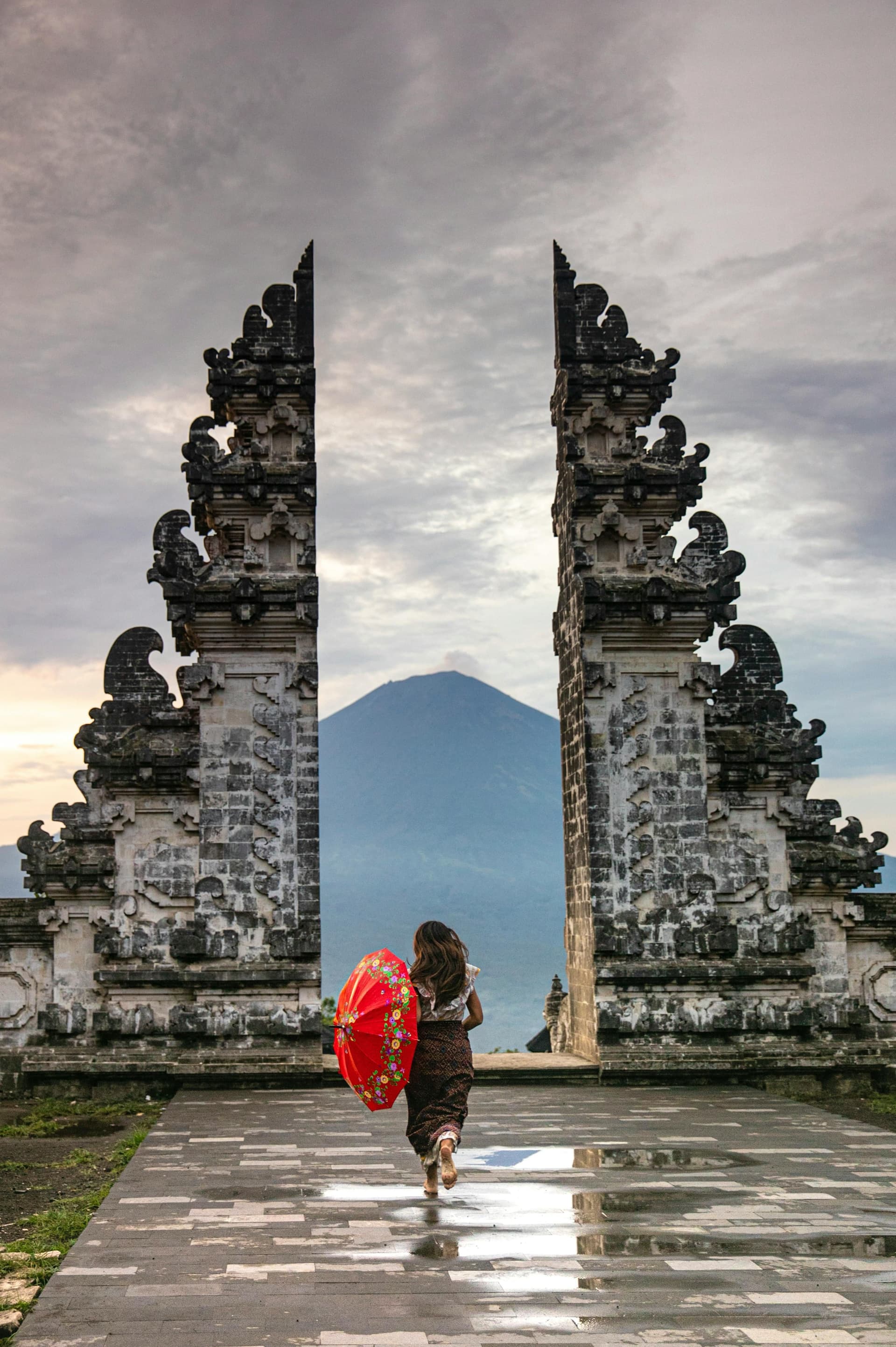
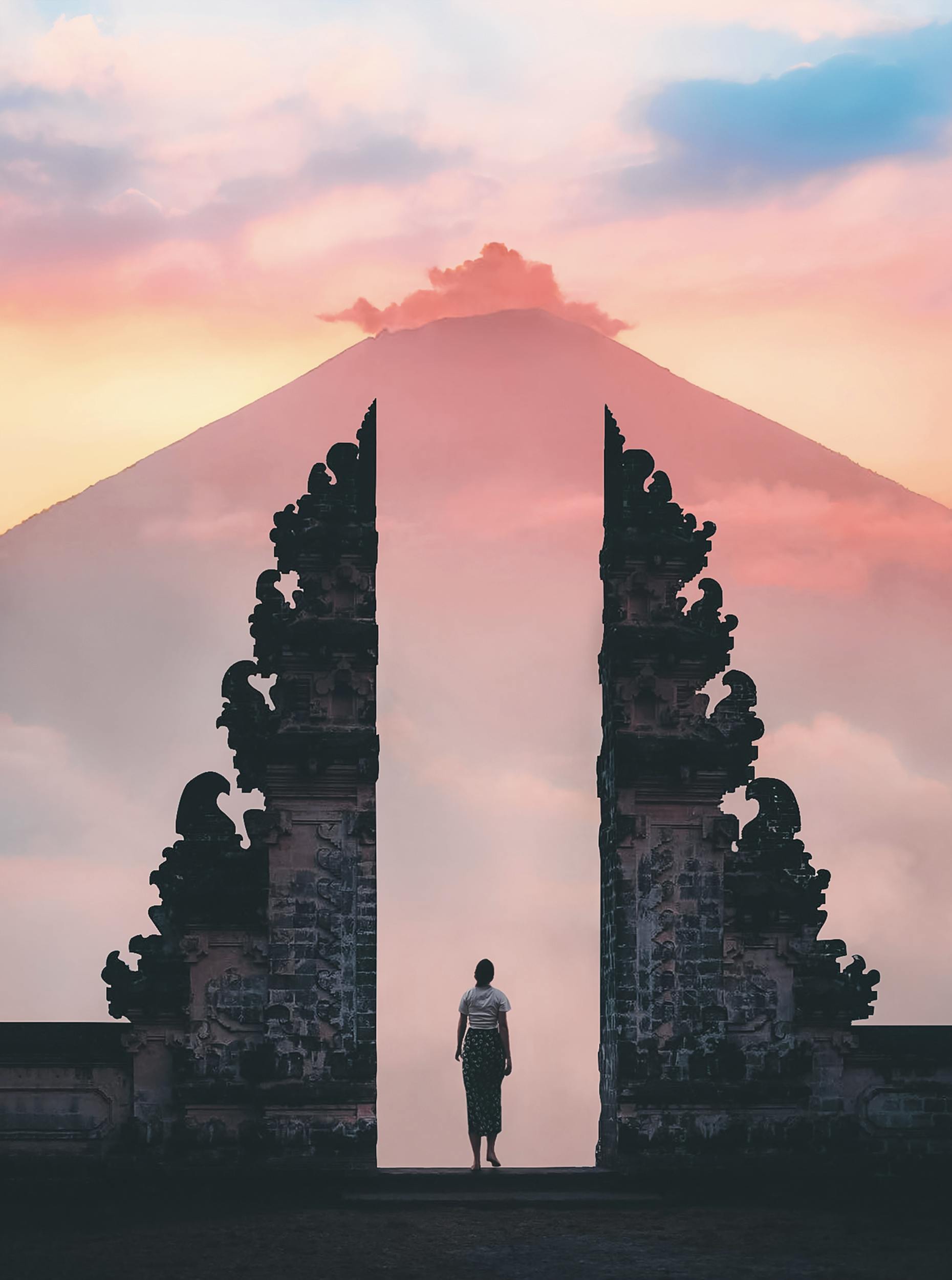
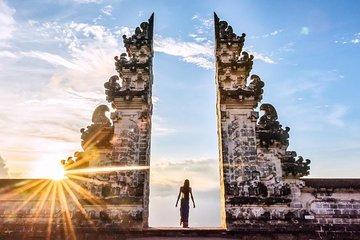
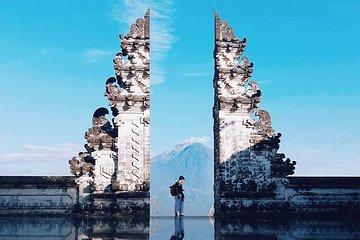
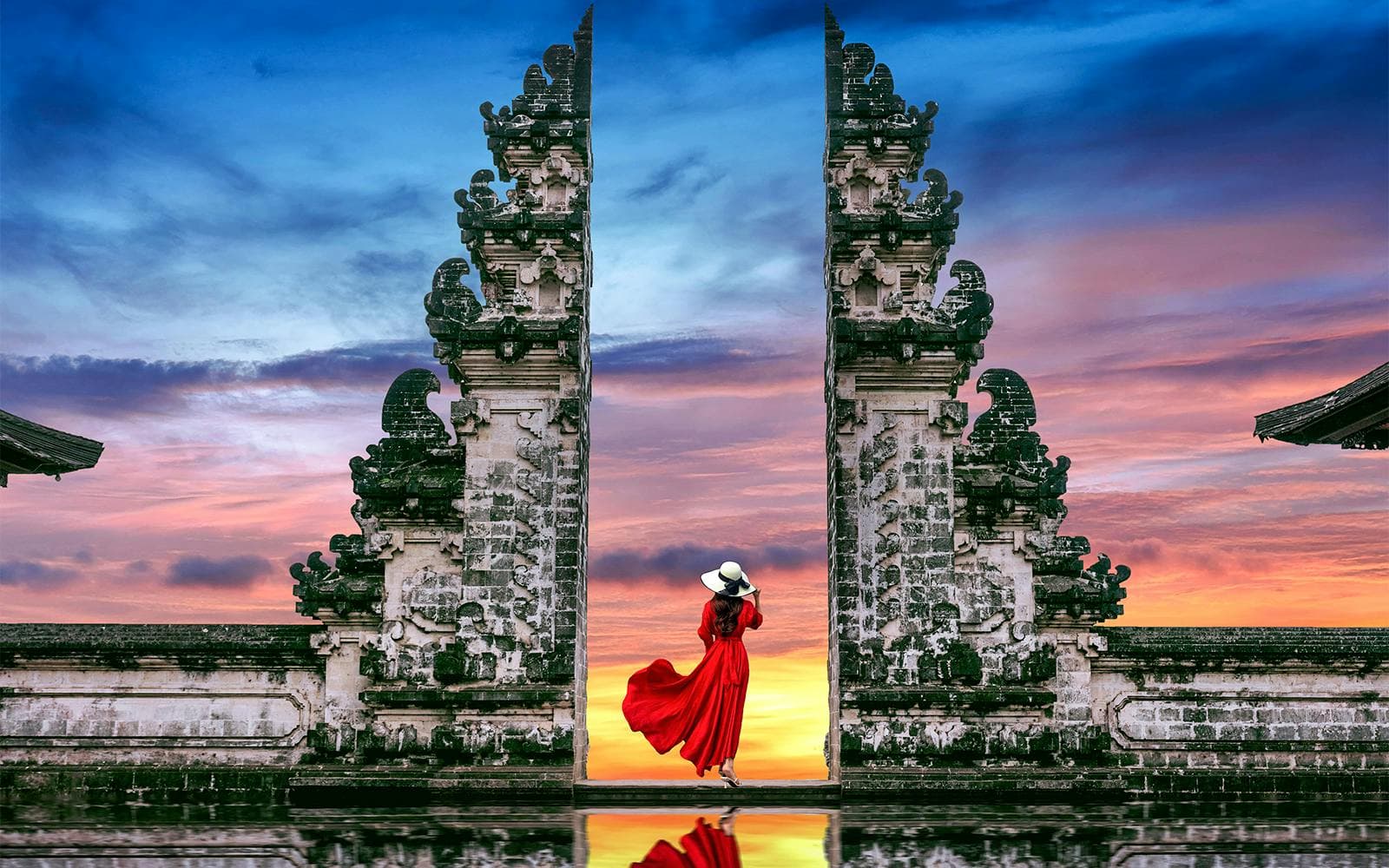
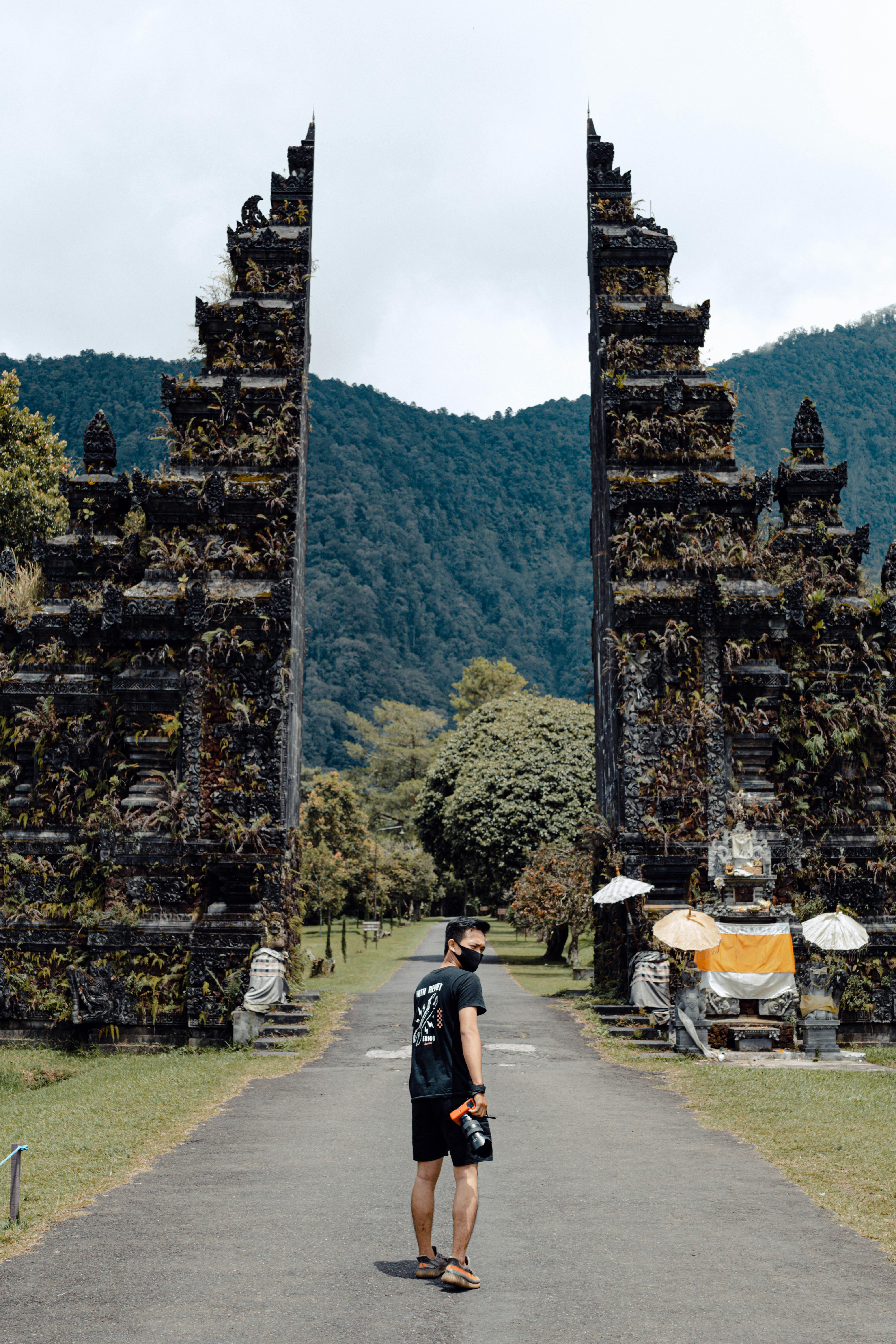
The famous gate is a candi bentar — a traditional Balinese split gate — at Pura Penataran Agung, the lowest of seven temples spread up the slope of Mount Lempuyang. On a clear day, when you stand dead-centre between the two halves of the gate, Mount Agung sits perfectly framed in the gap behind it, smoke or no smoke. That much is real, and on the right morning it's one of the more memorable views in Bali.
The mirror trick, explained
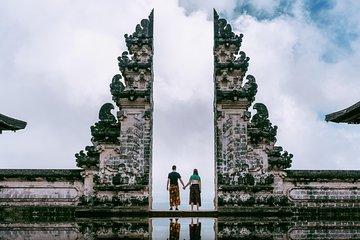
The lake-like reflection you've seen all over Instagram doesn't exist. There is no pool of water at the base of the gate. What happens at the front of the queue is this: you hand your phone to a local photographer who sits on a very low stool, removes your phone case, and holds a small mirror or piece of glass directly under the lens at a careful angle. The mirror reflects the temple stone and the sky, and the camera reads it as water.
The trick works almost exclusively with smartphones — DSLRs and mirrorless cameras tend to throw off the angle and produce a bleached, off-coloured reflection, per first-hand accounts from travellers who've tried both. Hand over the phone, even if you brought a better camera. The photographers know how every major handset operates and will frame it correctly the first time.
Two things are worth knowing before you queue. First, the mirror photo is included in your entrance fee — there's no extra charge, though a small tip (IDR 20k–50k, USD 1.30–3.30) is appropriate and appreciated. Second, the "real" photo — gate, mountain, no reflection — is often stronger than the staged one. Don't dismiss the un-mirrored shot just because Instagram trained you to expect the mirror version.
When to arrive: queue length by exact arrival window
If you remember one thing from this guide, make it the 5:15 AM rule. The Terminal Utama Lempuyang shuttle parking is where queue tickets are issued, and the first shuttle of the day departs around 5:45–6:00 AM. Arriving at 5:15 AM puts you in the first wave of visitors, which collapses the wait time from "lose your morning" to "comfortable cup of coffee".
Here's what to expect at each arrival window in dry season (April–October). Wet-season figures run slightly lower because there are fewer tourists, though the chance of clouds covering Mount Agung rises sharply after 8 AM.
- 5:15 AM at the terminal: under 30 minutes from queue ticket to photo. Mount Agung almost always clear.
- 6:30 AM at the terminal: 45 minutes to 1 hour. Volcano still mostly clear.
- 8:00 AM at the terminal: 1.5–2 hours. Cloud build-up starts.
- 10:00 AM at the terminal: 3–4 hours. Mount Agung often hidden by the time you reach the front.
- 11:00 AM onwards, peak-season weekend (July–August, late December): 4–6 hours. Per local reporting from The Bali Sun, waits topped four hours during recent peak weeks.
The cloud window matters as much as the queue window. Mount Agung typically holds its silhouette until around 9:00–9:30 AM in the dry season; by 10:30 AM cloud cover sets in for the rest of the day. Even if you don't mind queuing, arriving late means you wait three hours to photograph a grey wall where the volcano should be. The two clocks run together — beat the queue, and you'll also beat the cloud.
Sunrise math — what 5:15 AM actually means by region
- From Ubud: 2-hour drive. Leave by 3:00 AM.
- From Seminyak / Canggu / Kuta: 2.5-hour drive. Leave by 2:30 AM.
- From Sanur: 2-hour drive. Leave by 3:00 AM.
- From Amed: 30-minute drive. Leave by 4:30 AM. Staying overnight in Amed the night before is the single easiest hack for this trip.
- From Nusa Dua: 3-hour drive. Leave by 2:00 AM, or stay in Amed the night before.
How to get to Lempuyang — and what each option actually costs
Public transport doesn't reach Lempuyang. Your three real options are private driver, group tour, or self-drive — and the right pick depends as much on what time you want to leave as on the cost.
| Transport | Round-trip time | 2026 cost (per car) | Best for | Downside |
|---|---|---|---|---|
| Private driver (10-hr East Bali day) | 10–11 hours | IDR 850,000–1,200,000 (USD 55–80) | Families, anyone wanting to pair Lempuyang with Tirta Gangga and Lahangan Sweet | You build the itinerary |
| Group East Bali day tour | 10–12 hours | IDR 600,000–900,000 (USD 40–60) per person | Solo travellers, anyone short on planning time | Fixed schedule, usually a 7:00–8:00 AM arrival, which means a 2-hour queue |
| Self-drive scooter (from Amed) | 1.5 hours round-trip | IDR 70,000–100,000 rental (USD 4.50–6.50) | Confident riders staying overnight in Amed | Steep mountain road, not recommended from Ubud or Canggu |
| Self-drive car rental | 5–6 hours round-trip plus temple time | IDR 350,000–500,000 day (USD 22–32) | Experienced left-hand-drive drivers | Bali traffic plus winding mountain road in the dark; for most travellers, not worth the saving |
For a 5:15 AM terminal arrival from anywhere south of Ubud, a private driver is the practical choice. Group tours almost never depart that early — most leave hotels at 6:00–7:00 AM, which puts you at the gate during the worst part of the queue. If you're locked into a group tour, ask up front what time you arrive at Lempuyang; if the answer is "around 8 AM", consider switching to a private driver or building the trip around Lahangan Sweet instead.
The mandatory costs once you arrive
- Entrance fee: IDR 100,000–150,000 per person (USD 6.50–10). Includes the photo service. The fee has shifted upward through 2025–2026 — check the latest on the spot.
- Shuttle bus (round trip): IDR 45,000–50,000 per person (USD 3–3.50). Mandatory; private vehicles can't drive up the mountain road. The ride takes 5 minutes each way.
- Sarong rental: IDR 10,000–20,000 (USD 0.60–1.30). Most basic-tier tickets now include one; nicer sarongs cost extra. Required even if you're wearing long pants or a long dress.
- Parking: IDR 5,000 for a car (USD 0.30), IDR 2,000 for a scooter.
- Photographer tip: Optional but appropriate — IDR 20,000–50,000 (USD 1.30–3.30). These photographers take hundreds of shots a day for no fixed wage.
Bring cash in IDR. The Lempuyang ticket office is cash-only — no card machines, no QR payments, and per Bali Holiday Secrets' updated 2026 visitor guide, there are no ATMs at the terminal or temple. The nearest reliable cash point is around 20 minutes away near Tirta Gangga, so withdraw before you leave Ubud, Amed, or wherever you're starting from.
What changes if you stay overnight in Amed
- 30-minute scooter ride to the temple, not a 2.5-hour drive in the dark
- Comfortable 4:30 AM departure on a full night's sleep
- Easy to combine with Tirta Gangga, Virgin Beach, and the Amed snorkelling reefs on the way back
- A night's stay in Amed runs IDR 350k–1,500k (USD 22–95) depending on the property — often less than the saved driver fare




How to get the perfect shot — queue mechanics and a real pose plan
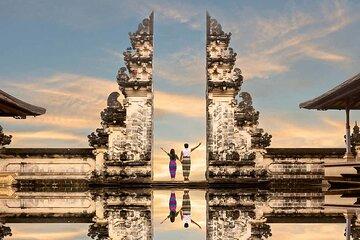
The photo queue at the Gate of Heaven Bali runs on a strict rotation: one group at a time, three poses each, then you move. Knowing the system before you arrive turns the queue from a slow grind into a manageable wait — and gives you the headspace to plan poses instead of freezing when it's your turn.
How the queue actually works
When you arrive at the temple, you'll be issued a queue number at the entry point near the candi bentar. You then wait in a covered shelter — most visitors miss this until they're already standing, so claim a seat early. A local attendant calls groups by number; when yours is up, you walk to the front, hand your phone to the photographer sitting at the lens, and step into position.
You get roughly 60–90 seconds at the front. That's three solid poses, maybe four if you're quick. Then the next group is called. Local Balinese photographers will shout "Next!" to keep the line moving, but newcomers often stall to decide what to do, which is why the wait stretches in the first place. Decide your poses while you're in the shelter, not when you're standing on the mark.
The five-pose shot list
The photographers know what works. They'll line up these five poses faster than you can describe them, so picking three before you reach the front means you walk away with your full quota instead of two passable shots and a confused half-pose.
- Standing centred (the classic): arms slightly out, weight on back foot, looking straight ahead at the mountain. This is the one Instagram trained you to want.
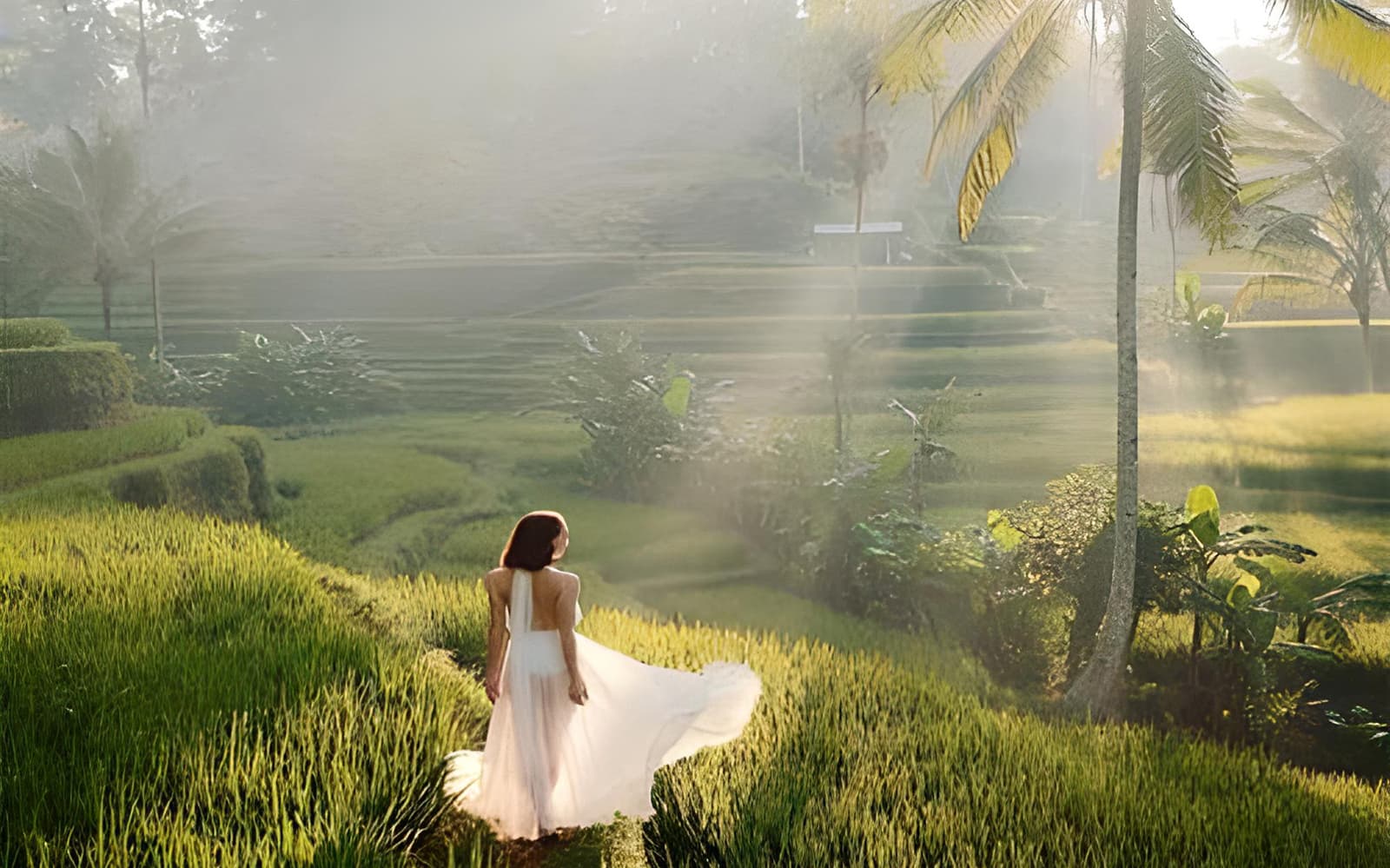
- Walking toward camera: turn your back to the gate, walk slowly toward the photographer with Mount Agung framed behind you. Works well with a long dress or wide trousers.
- Sitting on the step: sit on the lowest step of the gate, hands resting behind, eyes on the volcano. Lower angle exaggerates the reflection.
- Sarong twirl or dress lift: a 180-degree twirl mid-shot. The photographer will time the click; ask them to take it as a burst.
- Jumping: a single timed jump. Hardest to nail; ask the photographer to count to three.
Five small things that separate good shots from forgettable ones
- Clean your phone lens before queueing. Smudges read as haze in the mirror reflection.
- Remove the phone case in the shelter, not at the front. Fumbling at the lens wastes one of your three poses, per a detailed walk-through from What's Hot Blog.
- Wear colours that contrast with grey stone: white, red, deep blue, ochre, terracotta. Avoid black — it disappears in the mirror reflection.
- Don't bring a tripod or selfie stick. The photographer needs to handle your phone at a specific angle; accessories slow them down and the next group is already at the line.
- Plan your three poses in writing. Sounds excessive; it isn't. Two hours of waiting tends to scramble decision-making, and the photographer will move on without you if you hesitate.
Lempuyang or Lahangan Sweet? The queue-skipper alternative
Lahangan Sweet is a 15–20 minute drive from Lempuyang, has its own purpose-built split-gate photo spot, the same Mount Agung backdrop, and queues of 5–15 minutes instead of 2–4 hours. Most East Bali tours skip it. They shouldn't.
The comparison, side by side
| Lempuyang Gate of Heaven | Lahangan Sweet | |
|---|---|---|
| Location | Karangasem, East Bali | Karangasem, 20 min from Lempuyang |
| Entrance + extras | IDR 100k–150k entrance + IDR 50k shuttle + sarong (USD 10–13 all in) | IDR 30k–50k entrance + IDR 50k optional jeep + IDR 50k optional mirror photo (USD 2–9 all in) |
| Average wait for photo | 1.5–4 hours depending on arrival time | 5–15 minutes |
| Mirror reflection photo | Included, smartphone only | Available for IDR 50k tip, smartphone or camera |
| Mount Agung view | Iconic — through the split gate | Unobstructed panorama plus a replica split gate |
| Extras at the site | Optional 1,700-step hike to seven higher temples; full Sad Kahyangan spiritual experience | Treehouse platforms, swings, multiple viewpoints, small warungs for coffee |
| Spiritual / cultural weight | One of Bali's six pillar temples, 11th-century origin | Purpose-built viewpoint, no religious significance |
Which one should you choose?
Choose Lempuyang if: you can arrive at the terminal by 5:15 AM, you care about visiting one of the six Sad Kahyangan pillar temples, or you want to hike the full seven-temple loop up Mount Lempuyang (allow 4 hours).
Choose Lahangan Sweet if: you can't or won't make a pre-dawn start, you're visiting in peak season (July–August or late December), you have small children, or you want unobstructed Mount Agung views beyond just the gate shot. First-hand reviews from Eternal Arrival describe the line at the Lahangan Sweet split gate as "literally just me" on weekday mornings.
Worth it (Lempuyang) if: you're a temple architecture or Hindu philosophy enthusiast, you're already in East Bali for two or three days, or the Sad Kahyangan classification matters to you. Not ideal if: you're a one-day-from-Seminyak day-tripper, you have mobility limitations (the queue involves standing for hours), or you're travelling with toddlers who won't sit still through a 2-hour wait.
Doing both in a single morning
- 5:15 AM at Lempuyang terminal — photo done by 7:00 AM
- 7:30 AM coffee at the base, drive to Lahangan Sweet (20 min)
- 8:00–10:00 AM at Lahangan Sweet — treehouse platforms, replica gate, panoramic Mount Agung
- 10:30 AM onward — Tirta Gangga water palace, Virgin Beach, or back to Amed for a snorkel
This is the most rewarding way to spend a morning in East Bali, and it only works if you start at 5:15 AM.
Pairing Lempuyang with the rest of East Bali
Most travellers see Lempuyang as a single-stop trip. Done well, it's the anchor of a four- or five-stop East Bali day that uses the temple as a 6 AM warm-up and fills the rest with sites that get better, not worse, as the crowds at Lempuyang peak.
A practical post-Lempuyang loop
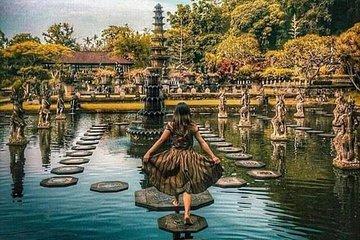
- Tirta Gangga water palace (30 min from Lempuyang, IDR 50k entrance) — stepping-stone ponds, koi-filled pools, and shade. Ideal at 9–10 AM after the early Lempuyang start.
- Virgin Beach (Pasir Putih) (45 min from Lempuyang, IDR 50k entrance) — white-sand cove with low-key warungs serving grilled fish lunches.
- Tirta Empul (1.5 hr from Lempuyang) — the holy spring temple where Balinese pilgrims perform the melukat purification ritual. Pair with Lempuyang for a deeper temple day.
- Besakih, the Mother Temple (1 hr from Lempuyang) — Bali's holiest site, also a Sad Kahyangan pillar. A natural pairing with Lempuyang if you want to see two of the six pillar temples in one day.
- Penglipuran Village (2 hr from Lempuyang) — traditional Balinese village with intact bamboo architecture. Better as a separate day, but workable as a long loop.
The trip-planning shortcut
The reason most Lempuyang trips feel rushed isn't the temple — it's the driver, the schedule, and the order of stops. East Bali rewards an early start and a flexible afternoon, and a fixed group tour rarely delivers either. Travjoy's East Bali experiences are reviewed by local experts and shortlisted from a much larger pool, so you can pick a private day that actually starts at 4 AM if you ask for it, without the second-guessing that comes with anonymous online listings. See the top 20 picks for Bali to slot Lempuyang into the rest of your trip.
Planning your Lempuyang morning
Three things decide whether the Lempuyang Gate of Heaven photo becomes a trip highlight or a mild regret. Arrive at the shuttle terminal by 5:15 AM, not 9:00 AM. Decide before the trip whether you're doing Lempuyang, Lahangan Sweet, or both — and have the driver routed accordingly. Build the rest of the East Bali day around the temple, not just the photo, so the long drive earns its keep.
The mirror trick is part of the experience, not a reason to skip the temple. The Sad Kahyangan weight, the Mount Agung view through a real 11th-century gate, and the calm of the temple grounds before the tour buses arrive — that's the version of Lempuyang worth getting up at 3 AM for. Start planning your Bali trip on Travjoy and put together an East Bali day that respects both the temple and your own sleep schedule.



.svg&w=1920&q=75)