



How to Plan a Bali Holiday: Step-by-Step Guide for 2026
8 min read

Raj Varma
Author
SHARE BLOG
TABLE OF CONTENTS
- Key Takeaways
- Step 1 — Pick Your Dates: Season, Festivals and the Nyepi Trap
- Step 2 — Set Your Budget: 2026 Cost Breakdown by Style
- Step 3 — Sort Your Entry: Visa, Tourist Levy and Arrival Docs
Key Takeaways
- Bali planning runs in eight clear steps: dates, budget, entry admin, route, flights, accommodation, transport, and pre-booking
- Every foreign visitor pays the IDR 150,000 (USD 10) Bali Tourist Levy before entry — pay online via the official Love Bali portal to skip the airport queue
- Visa on Arrival costs IDR 500,000 (around USD 32) and gives 30 days, extendable once for a further 30 days
- May, June and September deliver the best weather-to-price-to-crowd balance in 2026 — avoid arriving on Nyepi day (18 March), when the airport closes
- Three to four nights per area beats one base — most first-timers split between Ubud and a coastal hub like Seminyak or Uluwatu
To plan a Bali holiday in 2026, work through eight steps in order — pick your travel dates (May, June or September read best for weather and price), set a realistic dual-currency budget (USD 50–293 per day depending on style), sort your visa and the IDR 150,000 Tourist Levy via the Love Bali portal, then build a route across two to three areas, book flights and hotels four to six months ahead, arrange island transport, and pre-book your headline experiences before you fly. This guide walks you through each step with current 2026 numbers.
A traveller lands at Denpasar in mid-March, books a private driver to head straight to Ubud, and realises three things on the drive — Nyepi is tomorrow, they never paid the IDR 150,000 levy, and the 90-minute trip from the airport has stretched into three hours of evening traffic. None of this is hard to avoid, but only if you plan in the right order.
Most articles on how to plan a Bali holiday dump every tip onto one page — useful for browsing, useless when you need a sequence to actually book the trip. This guide breaks the process into eight steps you can work through over a few evenings. Each step has current 2026 costs in IDR and USD, the trade-offs that matter, and the one or two calls that quietly make or break a Bali trip.

Step 1 — Pick Your Dates: Season, Festivals and the Nyepi Trap
The first decision shapes every other one. Bali has two seasons — dry (April–October) and wet (November–March) — and your travel month decides hotel prices, the look of the rice fields, sea conditions, and whether the island shuts down on the day you land.
If you want one answer: aim for May, June or September. Weather is reliably dry, temperatures sit at 27–32°C with lower humidity than the wet months, and hotel prices run 20–30% below the July–August peak.
Dry season vs wet season — what each month actually delivers
- April–October (dry): 26–32°C, low humidity, 8–10 hours of sunshine, calm seas for diving and snorkeling; July–August brings 40–60% hotel price spikes and crowded beaches
- November–March (wet): Daily 1–2 hour afternoon showers, lush green rice fields, accommodation discounts up to 40%; January averages 350 mm of rain
- Shoulder months (May, June, September): The sweet spot — dry season weather, off-peak prices, manageable crowds
2026 dates to dodge — or chase
Some festival dates make Bali unforgettable. Others make it impossible to move. Plan around them deliberately.
- 18 March 2026 — Nyepi (Balinese New Year): Ngurah Rai airport closes for 24 hours, all activity stops island-wide, hotels confine guests to grounds, and streets are silent. Land before or after, never on.
- 17 March 2026 — Ogoh-Ogoh parade evening: Giant effigies carried through every village before Nyepi. Worth catching if you arrive a day or two ahead.
- 16–27 June 2026 — Galungan and Kuningan: Penjor bamboo poles line every street; deep cultural texture, but also Bali's biggest domestic travel surge.
- 13 June – 11 July 2026 — Bali Arts Festival: Month-long programme of music, dance and crafts in Denpasar.
Pick the month that matches your trip style
- Beach and diving priority: July to September — calm seas, 27–28°C water
- Lowest prices and green landscapes: February or October
- Cultural depth: June (Galungan) or the days before Nyepi in March — never the day itself
- Honeymoon or quiet weather: May, June or September
- Surfers: West coast breaks (Uluwatu, Canggu, Padang Padang) read best November–March; east coast (Keramas, Nusa Dua) shines April–October
Step 2 — Set Your Budget: 2026 Cost Breakdown by Style
The second step in how to plan a Bali holiday is to set a realistic daily spend, then add one-time costs and a buffer. Bali stretches from very affordable to seriously luxurious — your daily number decides which Bali you actually experience.
Daily spend ranges (per person, excluding international flights)
- Backpacker: IDR 800,000–1,500,000 / USD 50–95 per day — hostels and homestays, warung meals, scooter rental, public transport
- Mid-range: IDR 1,900,000–4,300,000 / USD 115–270 per day — 3-star hotels and mid-range villas, mix of restaurants and warungs, private driver for day trips
- Luxury: IDR 4,800,000+ / USD 293+ per day — 5-star resorts and private villas with pool, fine dining, dedicated driver, spa daily
Total budget benchmarks for common trip lengths
| Trip length | Backpacker (USD) | Mid-range (USD) | Luxury (USD) |
|---|---|---|---|
| 7 days | $350–650 | $800–1,900 | $2,050–6,300 |
| 10 days | $500–950 | $1,200–2,700 | $2,950–9,000 |
| 14 days | $700–1,300 | $1,600–3,800 | $4,100–12,500 |
Figures exclude international flights and the one-time entry costs in Step 3.
One-time costs that always blindside first-timers
- Visa on Arrival: IDR 500,000 (USD 32) per person, payable on entry by card or cash
- Bali Tourist Levy: IDR 150,000 (USD 10) per person — all ages, including infants
- Proof of funds (for C1 visa applicants): Three-month bank statement showing USD 2,000 minimum balance
- "++" on restaurant menus: 11% government tax plus 10% service charge added to listed prices in upscale venues
- Hotel tax and service: Up to 21% on top of the quoted nightly rate — always check "inclusive" before paying
Reality check — the hotel headline rate trap
- A villa quoted at USD 100 per night routinely lands at USD 121 after the 11% tax and 10% service charge
- Filter booking sites by "total price" not "nightly rate" before comparing
- Five-star resorts in Seminyak and Uluwatu often include the 21% — boutique properties rarely do
Step 3 — Sort Your Entry: Visa, Tourist Levy and Arrival Docs
This is the step most travellers leave too late. Indonesia consolidated its digital entry system in 2026, and there are now four separate things to file — but each one takes 10 minutes once you know what's needed.
Pick the right visa for your trip length
- 30-day Visa on Arrival (VoA) or e-VoA: IDR 500,000 (USD 32) — the default for most travellers, extendable once for another 30 days at any immigration office
- Visa-free (ASEAN nationals including Singapore, Malaysia, Thailand): 30 days, no fee, no extension
- C1 Visit Visa: 60 days, needs a 3-month bank statement showing minimum USD 2,000 balance
- Passport rule: Six months validity from arrival date, two blank pages
Pay the IDR 150,000 Bali Tourist Levy — the right way
The levy is mandatory for every foreign visitor entering Bali, including children and infants. Indonesian residents and ASEAN nationals are exempt. You can pay on arrival, but the queue takes 10–20 minutes and the pre-paid lane is empty.
- Go to lovebali.baliprov.go.id — the only official portal
- Enter your full name, passport number, nationality, email address and expected arrival date
- Pay IDR 150,000 by card (Visa, Mastercard, Amex), QRIS or Indonesian bank transfer
- Save the QR code voucher to your phone — also screenshot or print a backup
- Present the QR at the dedicated levy checkpoint before the arrivals hall
The All Indonesia app — your one-stop arrival hub
Indonesia retired paper customs forms in 2025. Download the All Indonesia app before you fly, then:
- Submit the Electronic Customs Declaration (e-CD) within 48 hours of arrival — you'll get a QR code to scan at customs
- Link your Love Bali levy QR code inside the app so everything lives in one place
- Complete the digital arrival card the same way
Watch out for the scam websites
- Lookalike sites ending in
.comor.orgcharge IDR 300,000 or more to "process" the levy — they're not official - The only official domain is
lovebali.baliprov.go.id— the.go.idsuffix is reserved for Indonesian government portals - If the Love Bali site fails to load, disable your VPN and ad-blocker, or pay at the BRI Bank counter on arrival









Step 4 — Build Your Route: How Many Days, Which Areas
Bali is small on a map but slow on the ground. Driving from one side of the island to the other can take three hours — sometimes more in evening traffic — so the route you pick decides how much you actually see versus how much time you spend in a car.
The standard structure for first-timers is two areas: one inland (Ubud) and one coastal (Seminyak, Canggu or Uluwatu). Longer trips add a third area or a day on the Nusa Islands.
How many days you actually need
- 5–6 nights: One coastal base plus a single Ubud trip — enough for highlights, tight on rest
- 7–9 nights: The first-timer sweet spot — two or three areas, two day trips, real downtime
- 10–14 nights: Add the Nusa Islands, Sidemen Valley, or East Bali (Amed, Mount Agung)
- 14+ nights: Add Ubud's surrounding villages, Munduk in the north, or a full week in one luxury villa
The four core area "flavours" — pick two or three
- Ubud (inland): Rice terraces, temples, yoga, art markets, jungle cafés — 2–3 nights. Best visited as the cultural anchor of any first trip. Link the Tegalalang rice terraces with a cooking class or temple morning.
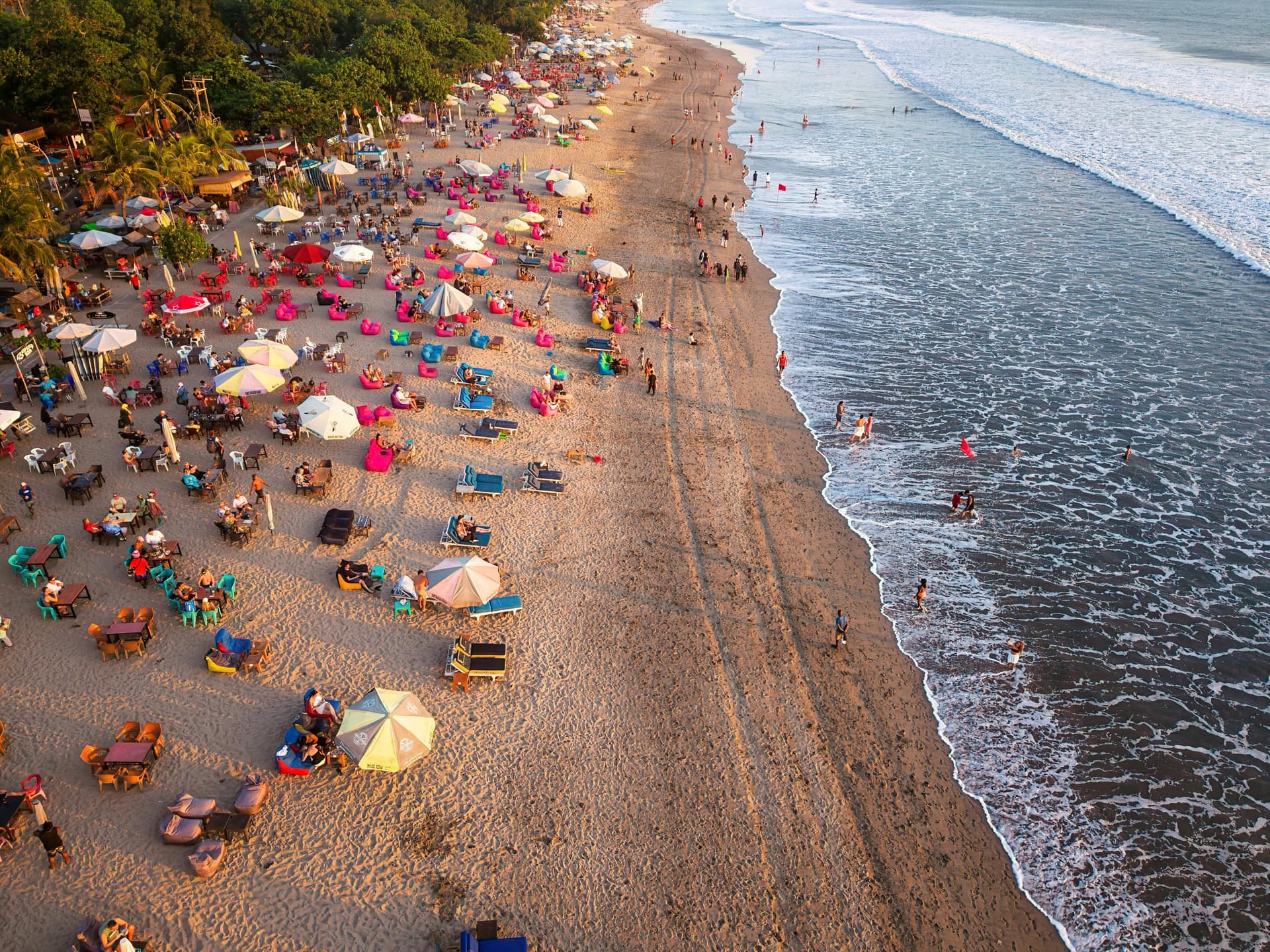
- Seminyak / Canggu (south-west coast): Beach clubs, sunsets, café culture, surf lessons — 2–4 nights. Seminyak is more polished and family-friendly; Canggu is the digital-nomad and surf hub.
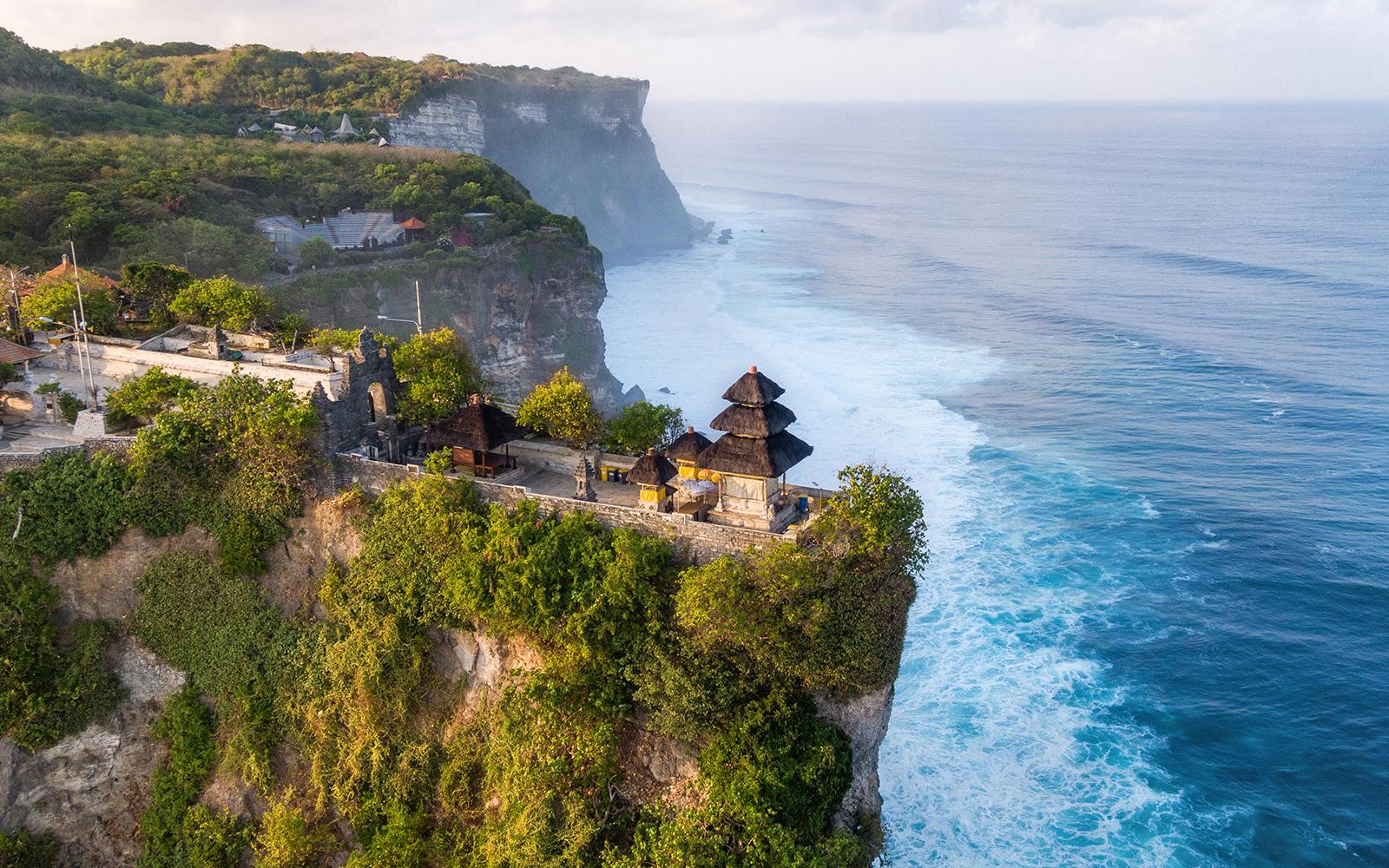
- Uluwatu / Bukit (southern peninsula): Clifftop villas, Padang Padang and Pandawa beaches, the cliff-edge Uluwatu Temple — 2–3 nights for couples and quieter trips.
- Nusa Penida / Lembongan (offshore islands): A day trip or overnight from the mainland — Kelingking Beach, manta ray snorkeling, dramatic cliffs. Book Nusa Penida as either a long day from Sanur or a 1–2 night side trip.
Sample splits for common trip lengths
| Total nights | Suggested split | Best suited to |
|---|---|---|
| 7 nights | 3 Ubud + 4 Seminyak/Canggu | First-timers, couples, families |
| 10 nights | 3 Ubud + 4 Seminyak + 3 Uluwatu | Comprehensive first trip |
| 14 nights | 3 Ubud + 3 Seminyak + 4 Uluwatu + 2 Nusa Lembongan + 2 buffer | Second-time visitors, slow travellers |
| 5 nights | 2 Ubud + 3 Seminyak (or 5 in one base) | Short breaks, side trips from Singapore or Australia |
Choose your base by traveller type
- Couples and honeymooners: Ubud plus Uluwatu — cliff villas, jungle pools, sunset temples
- Families with younger kids: Sanur or Nusa Dua — calm beaches, gentle waves, lower-key resorts
- Surfers and digital nomads: Canggu — beach breaks, co-working spaces, café density
- Solo travellers: Ubud and Canggu — both walkable, both with strong solo communities
- Luxury seekers: Ubud's Sayan ridge or Uluwatu's clifftop villas — both deliver privacy at premium


Step 5 — Book Flights and Accommodation
Once your route is set, lock in flights and beds early. Bali fills up months ahead for the dry season, and a delay of two weeks can mean USD 200–400 more per person on flights alone.
When to book
- International flights: 4–6 months ahead for May/June/September arrivals; 6–8 months for July/August or Christmas/New Year
- Hotels and villas in high season: 4 months minimum, 6 for popular Ubud and Uluwatu properties
- Major event windows (Bali Arts Festival, Christmas/New Year, Galungan): 6 months ahead
- Wet season (November–March, excluding Christmas): 4–8 weeks ahead is usually enough
Airport transfers — and the late-night Ubud trap
Ngurah Rai International Airport (DPS) is Bali's only airport, in the south near Kuta. Onward transfer times are deceptive — Google Maps doesn't account for evening traffic.
- Airport to Seminyak: 30–45 minutes, IDR 200,000–350,000 (USD 13–22)
- Airport to Canggu: 45–75 minutes, IDR 300,000–450,000 (USD 19–29)
- Airport to Uluwatu: 45–60 minutes, IDR 250,000–400,000 (USD 16–26)
- Airport to Ubud: 60–150 minutes depending on traffic, IDR 350,000–500,000 (USD 22–32)
If your flight lands after 7 PM, don't make Ubud your first night. The drive in evening traffic routinely takes 2.5 hours — you'll arrive past midnight, exhausted. Sleep one night in Seminyak or near the airport and move to Ubud rested the next morning.
Accommodation tiers and what they actually cost
- Hostels and homestays: IDR 200,000–500,000 per night (USD 13–32) — fan rooms, shared bathrooms, social atmosphere
- 3-star hotels and small villas: IDR 800,000–2,000,000 (USD 50–130) — AC, pool, breakfast, decent location
- 4-star and mid-luxury villas: IDR 2,000,000–4,500,000 (USD 130–290) — private pool, kitchen, daily housekeeping
- 5-star resorts and private villas: IDR 4,500,000+ (USD 290+) — service, design, often inclusive of the 21% tax and service charge
Step 6 — Sort Transport on the Island
Getting around Bali is where first-timers most often overpay or get stuck. The right transport plan depends on your areas, your appetite for two wheels, and where you'll be after dark.
Private driver, scooter, or ride-hailing — the call most travellers get wrong
- Private driver (full day, up to six passengers): IDR 700,000–1,100,000 (USD 45–70). The default for first-timers — air-conditioned, flexible, knows the back roads, waits at every stop. Splitting between four people costs less than four separate Grab rides.
- Scooter rental: IDR 70,000–150,000 per day (USD 4–10). Requires an international driving permit valid for motorcycles. Don't attempt the Uluwatu cliff roads, Ubud's narrow lanes after dark, or any road in heavy rain unless you ride at home.
- Grab and Gojek (ride-hailing apps): Cheap for short hops — IDR 20,000–80,000 (USD 1.50–5) for trips under 5 km. But many tourist hubs in Canggu, Ubud and Uluwatu have "no-go zones" where these apps can drop off but not pick up.
How long things actually take — Bali's real drive times
- Ubud to Seminyak: 90 minutes to 2 hours
- Ubud to airport (evening): 2 to 2.5 hours plus
- Canggu Batu Bolong area at sunset: 2 km in 40 minutes — book your dinner ride 30 minutes early
- Uluwatu to Seminyak: 60 minutes (longer Friday evenings)
- Sanur to Nusa Penida (fast boat): 35–45 minutes plus 30 minutes harbour processing
Reality check — the ride-hailing "no-go zones"
- Many areas in Canggu, Ubud and Uluwatu have local taxi cooperatives that block Grab and Gojek pickups
- You can be dropped off, but pickups from inside the zone are not allowed — you'll see painted signs at the entrance
- Walk 200–400 metres to the main road to call your ride, or arrange a local driver for the evening
Step 7 — Pre-Book Your Headline Experiences
The experiences that book out fastest in Bali are sunrise treks, Nusa Penida day tours, cooking classes, sunset Kecak dance shows, and high-end spa treatments. The ones you can leave for the ground are walking-distance dinners, beach club day passes, scooter rentals, and most temple entries.
What to lock in before you fly
- Mount Batur sunrise trek — 2 AM start, busy daily, book 2–4 weeks ahead
- Mount Agung sunrise trek — harder than Batur, smaller group sizes, often closes during ceremonies
- Nusa Penida day tour — Kelingking, Broken Beach, Angel's Billabong — boats fill in dry season
- Cooking classes in Ubud — the popular ones (Paon Bali, Casa Luna) book 2–3 weeks out
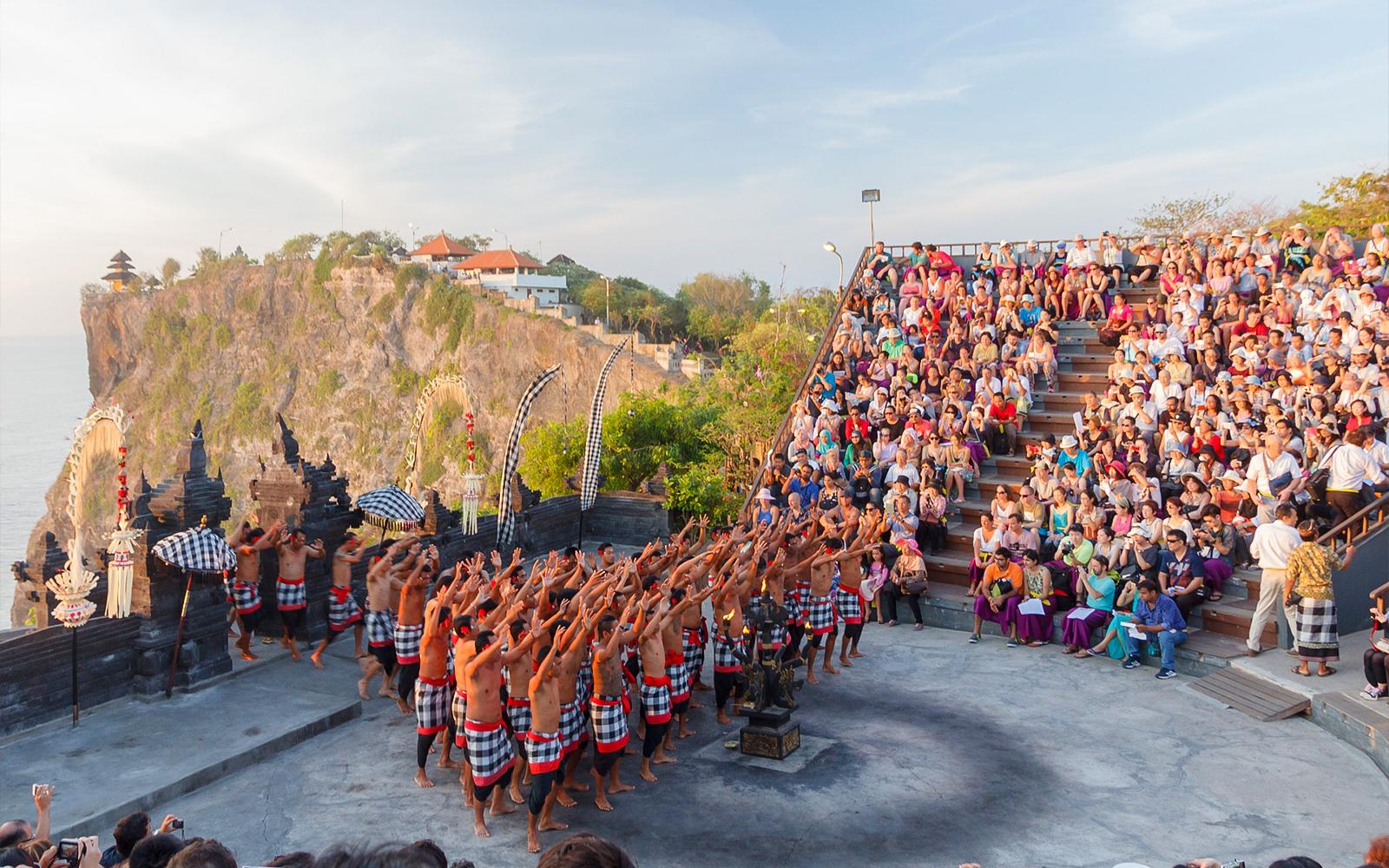
- Uluwatu sunset Kecak fire dance — only at sundown daily, no advance entry without a tour
- White water rafting on the Ayung River — wet-suit gear and transfer pickup need a day's notice
- Signature spa treatments at top properties — Como Shambhala, Bvlgari, Mandapa — book before flying
Cultural sites that need timing — not just booking
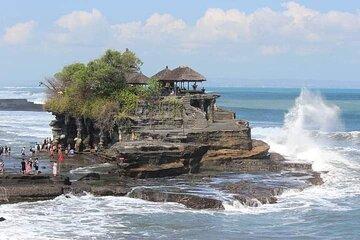
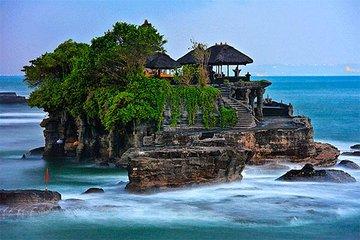
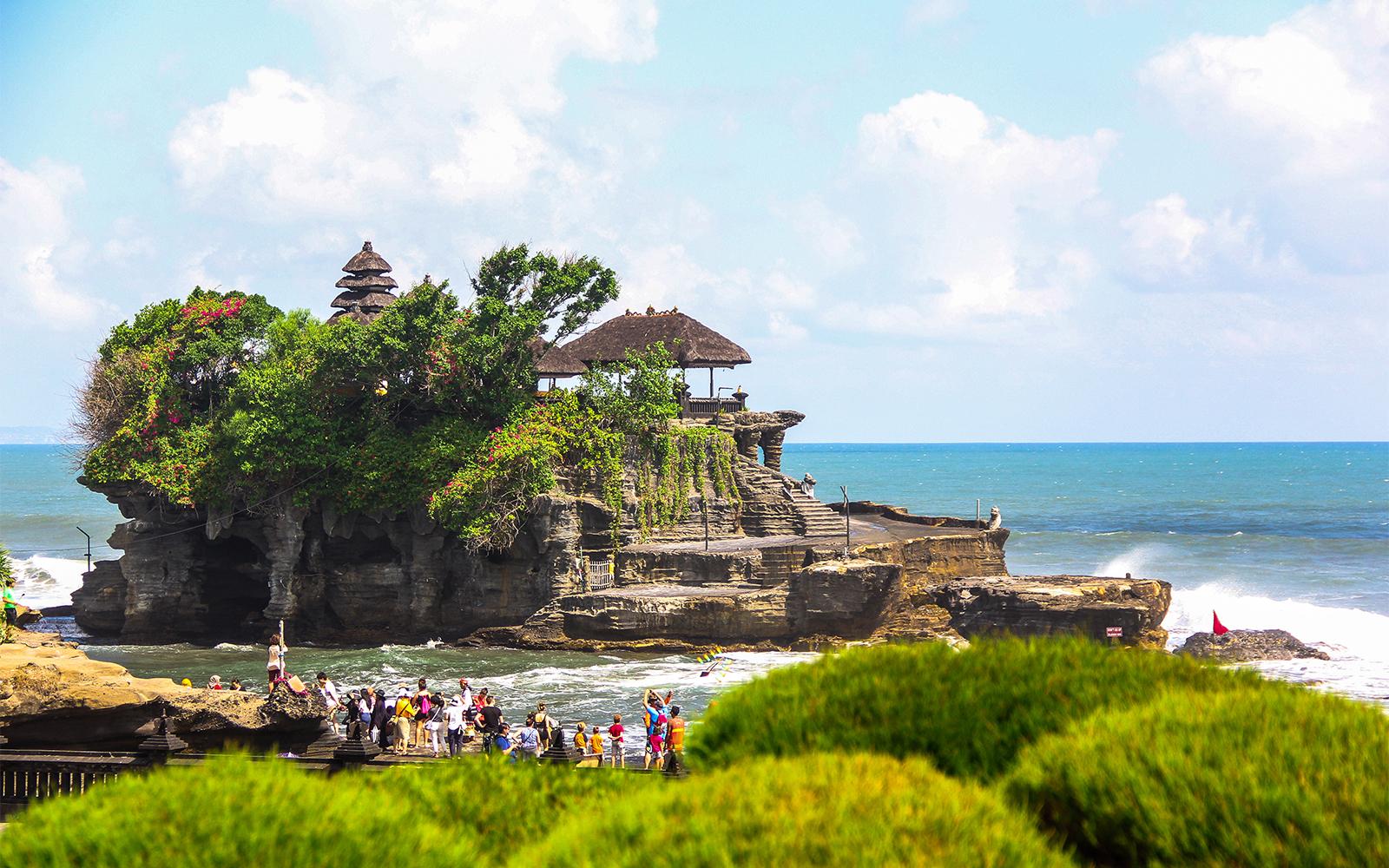
- Tanah Lot Temple: Arrive by 4:30 PM for the 6 PM sunset. Carry a sarong or rent one at the gate for IDR 50,000.
- Sacred Monkey Forest Sanctuary: Visit in the morning (8:30–10:30 AM) before the macaques get aggressive in the heat. No food or shiny items in pockets. No eye contact with the long-tails.
- Pura Besakih (Mother Temple): Mornings only — afternoon ceremonies often close the inner courtyards
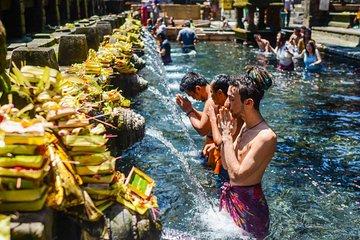
- Tirta Empul holy water temple: Bring a change of clothes for the purification ritual; ceremonies pause public access on certain days — check the local calendar
Why pre-booking through a vetted platform reduces risk
Bali has thousands of operators selling near-identical day tours, treks and spa packages. The activities listed on Travjoy have been vetted after extensive research and approved by local experts — so you choose from a vetted shortlist instead of guessing between dozens of similar listings. Browse Bali's top 20 picks to see the experiences that consistently land well with first-time visitors.
Step 8 — Pack and Prep the Final Week Before You Fly
The last step in how to plan a Bali holiday is the night-before checklist. Most arrival problems trace back to one missing document or one forgotten setup.
Documents and apps — the night-before checklist
- Passport (six months validity, two blank pages)
- Printed VoA receipt or e-VoA approval email
- Love Bali levy QR code saved offline on phone, plus a printed backup
- All Indonesia app installed, e-CD submitted, arrival card complete
- Travel insurance certificate (printed and photographed)
- Hotel and tour confirmations in one offline folder
- Emergency contact card with embassy and insurance numbers
Packing essentials specific to Bali
- Temple-friendly clothing: Sarong (or buy one at any temple for IDR 50,000), shirts that cover shoulders, trousers or long skirts covering the knee
- Reef-safe sunscreen: Mineral-based — many Bali snorkel operators now refuse oxybenzone formulas
- Mosquito repellent with DEET: Strong evening mosquitoes in Ubud and rice-field areas
- Light layers: Ubud and Bedugul are 5°C cooler than the coast at night; Mount Batur is noticeably cold at 4 AM
- Basic first aid: Diarrhoea tablets, antiseptic for scooter scrapes, antihistamine
- Universal adaptor: Bali uses Type C and F (European two-pin) sockets
Money setup — get the basics right before you fly
- Tell your bank you're travelling — Indonesia transactions trigger fraud holds on many cards
- Carry USD 300–500 in cash as backup — most ATMs accept foreign cards but occasional outages happen
- Use ATMs over money changers — official rates are 3–5% better, and street changers are notorious for sleight-of-hand short-changing
- At every card terminal, decline "pay in your home currency" (Dynamic Currency Conversion) — always pay in IDR for the better rate
- Set up Wise, Revolut or a similar multi-currency card before flying for low-fee ATM withdrawals
Pulling Your Bali Plan Together
The trick to planning a Bali holiday is doing things in the right order — not skipping any of the eight steps and not letting one step bleed into the next before it's done. Dates first, then budget, then entry admin, then route, then booking, then transport, then experiences, then packing. Eight focused sessions over a few evenings is enough.
Get the timing right (May, June or September if you have a choice), pay the IDR 150,000 levy online before you fly, split your nights across two or three areas, and pre-book the experiences that book out. The rest you can decide once you're on the ground with a fresh coconut in hand.
When you're ready to lock in the experiences, plan your full Bali trip on Travjoy — every activity and tour is vetted by local experts so you skip the comparison spiral and book with confidence.








.svg&w=1920&q=75)