



Best Warungs in Bali: Eating Like a Local Without the Tourist Price
7 min read

Pratima Alvares
Author
Leisure Travel Expert Ex- SOTC & Cox & Kings
SHARE BLOG
TABLE OF CONTENTS
- Key Takeaways
- What Is a Warung — and Why It Beats the Tourist Restaurants
- How to Spot a Real Warung (and Dodge the Tourist Markup)
- What to Order — the Dishes That Define a Bali Warung
Key Takeaways
- A warung is a small, family-run Indonesian eatery — the cheapest, most local way to eat in Bali, with meals from 15,000–40,000 IDR (about $1–$2.50).
- The real ones have locals queuing, a glass display you point at, cash-only payment, and prices that don't balloon for foreigners.
- Nasi campur — mixed rice you build by pointing — is the dish to start with; babi guling and ayam betutu are the Balinese classics worth chasing down.
- Ubud and Sanur lean traditional and cheap; Canggu, Seminyak and Uluwatu run a touch pricier; Kuta is for late-night spicy rice.
- Go at lunch — the best babi guling and nasi campur spots sell out by mid-afternoon.
The best warungs in Bali are family-run local eateries serving dishes like nasi campur, babi guling and ayam betutu for 15,000–40,000 IDR (roughly $1–$2.50) a plate — a third to a half of what tourist restaurants charge. The most authentic ones are busy with locals, use a point-and-pick glass display, take cash only, and don't pad prices for foreigners. Ubud and Sanur lead for traditional Balinese cooking, while Canggu and Uluwatu mix local spots with surf-town favourites.
Walk down almost any street in Canggu or Ubud and you'll pass a café charging 90,000 IDR for a smoothie bowl. A few doors down, on a plastic stool under a tin roof, a local family is serving a plate of mixed rice that tastes better and costs 30,000 IDR. That gap is the whole story of eating in Bali.
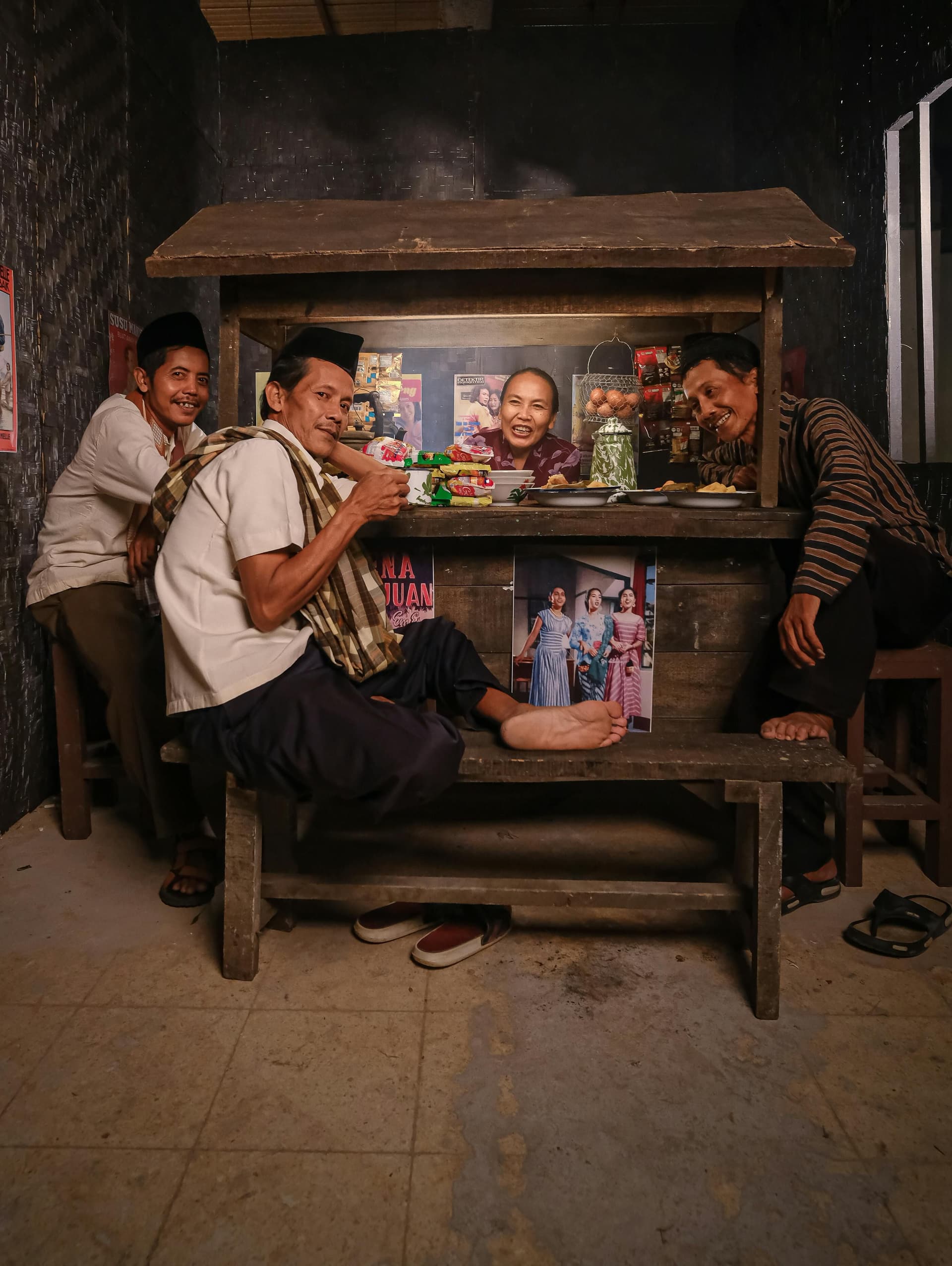
Warungs are where Indonesian food actually lives — small, family-run kitchens cooking the dishes Balinese people eat every day. The food is bolder, the portions bigger, and the bill a fraction of what you'd pay on a beach-club menu. The catch is knowing which places are the real thing and which have quietly added a tourist markup.
This guide covers the best warungs in Bali by area, the dishes worth ordering, what each should cost in 2026 in both rupiah and dollars, how to tell an authentic warung from a dressed-up tourist version, and the etiquette and timing that keep you eating well without getting sick. Eat where the locals eat, and Bali becomes one of the cheapest great-food destinations in Asia.
What Is a Warung — and Why It Beats the Tourist Restaurants
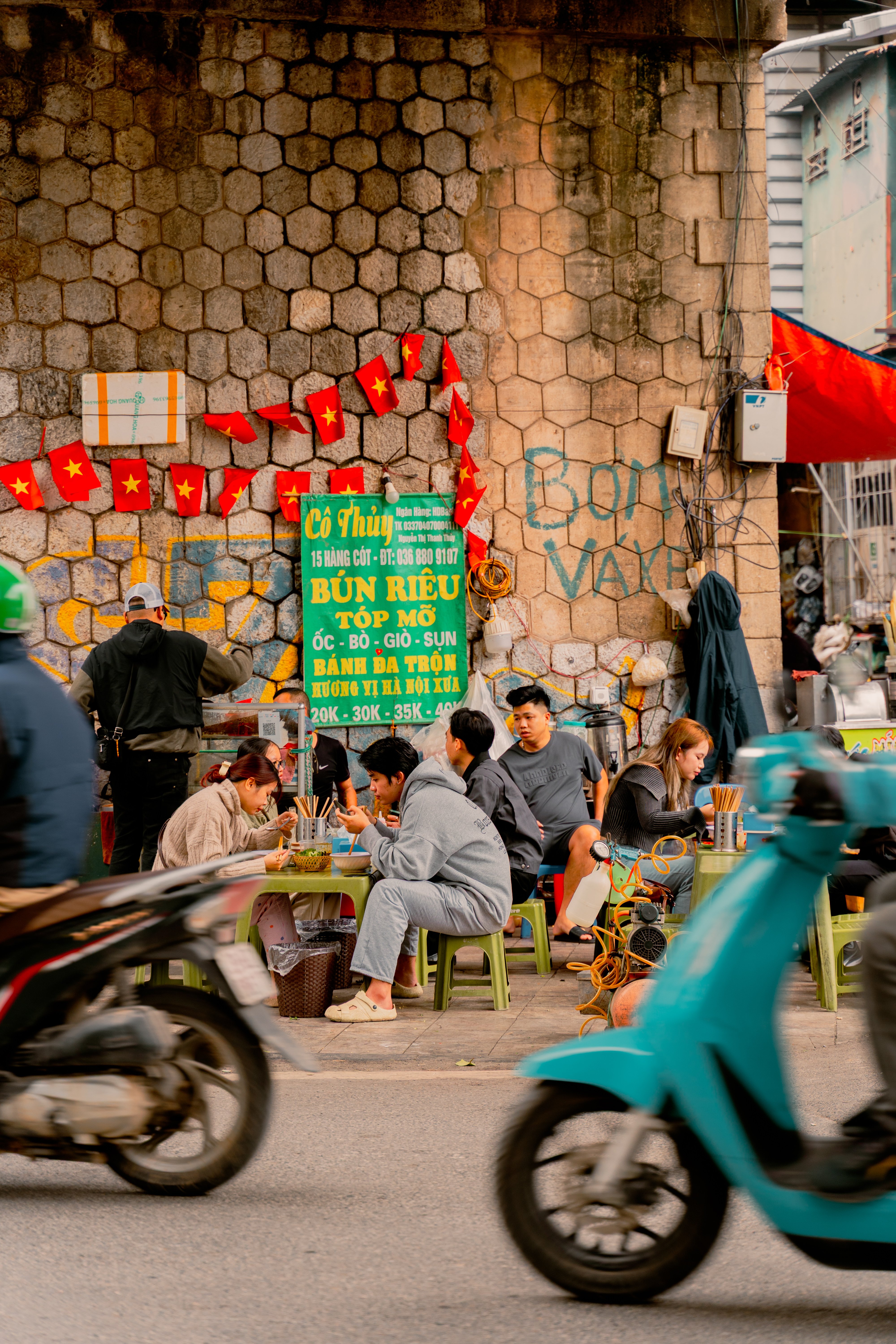
A warung is a small, family-run Indonesian eatery serving home-cooked local food at local prices. Most are a simple structure by the road or a few tables in someone's front yard — no printed menu, no receipt, just point, eat and pay. Because the family cooks what's fresh that day and runs on low overheads, a warung plate costs a third to a half of the same dish in a tourist restaurant.
The main types you'll see
Not every warung serves the same thing. A few focus on one dish and do it well; others are general counters. The main ones to recognise:
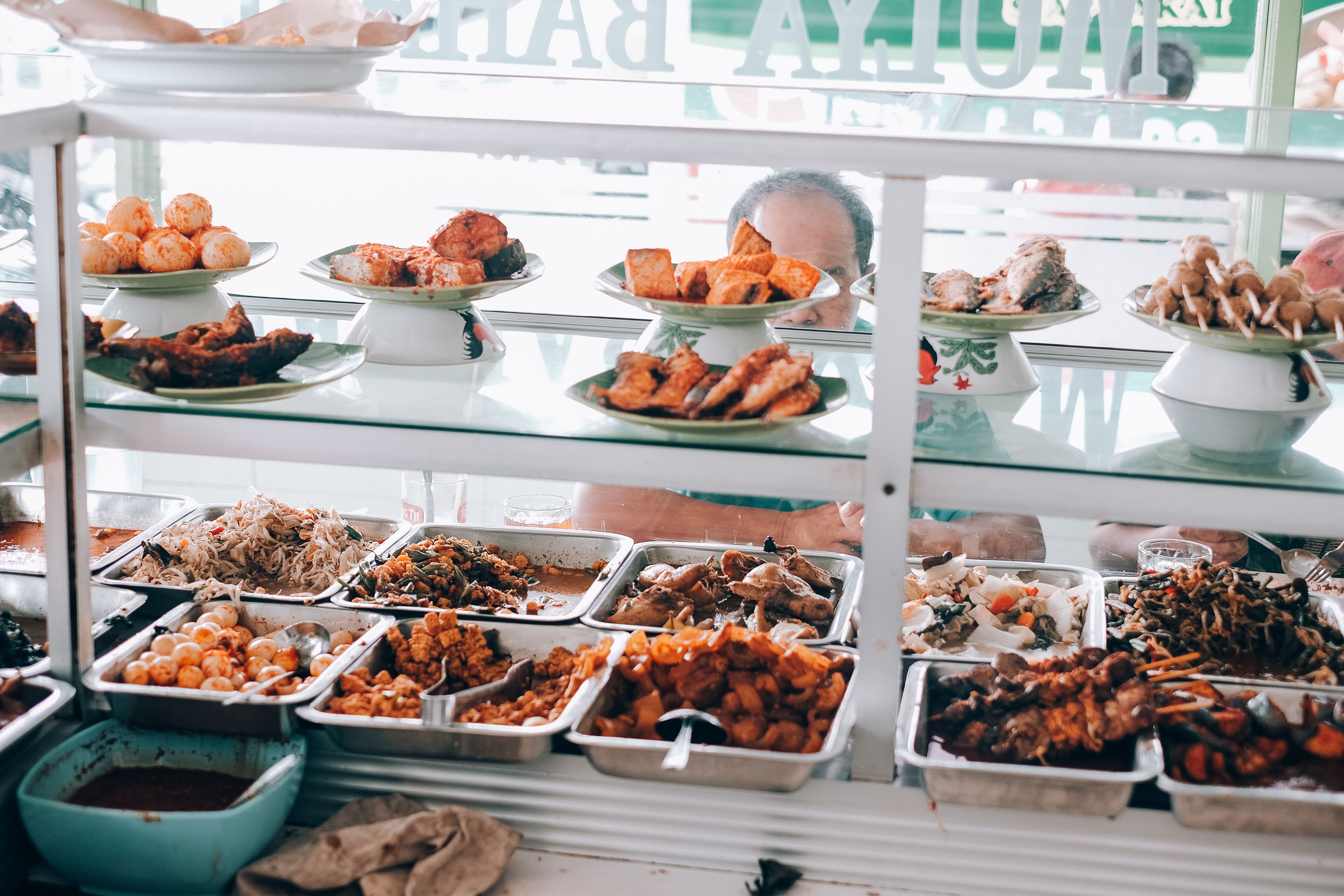
- Warung makan / warung nasi — the classic. A glass display of cooked dishes; you build a plate of rice with whatever you point at (nasi campur).
- Warung babi guling — specialists in Bali's spit-roasted suckling pig. Usually lunch-only, and they sell out fast.
- Warteg (warung Tegal) — Javanese-style, a wide spread of home-style sides over rice, found island-wide.
- Specialty warungs — one dish done well: ayam betutu (slow-cooked spiced chicken), bebek betutu (duck), fresh seafood, or soto (soup).
Warung vs. rumah makan vs. restoran
The labels signal price and formality, not quality — and definitely not hygiene. A busy warung with fast turnover is often a safer, better-cooking bet than a quiet "restoran" with a Western menu.
- Warung — smallest, simplest, cheapest; traditional Indonesian food.
- Rumah makan ("eating house") — a step up in size and a little more formal; still local food.
- Restoran — formal, often an international menu, and the highest prices.
How to Spot a Real Warung (and Dodge the Tourist Markup)
The best warungs in Bali share a few tells: they're busy with locals, the food sits in a visible glass display you point at, payment is cash at a counter when you finish, and the prices don't change because you're foreign. If a basic nasi campur is priced above 50,000 IDR (about $3.10), you've wandered into a tourist-oriented spot — real warungs run well below that.
The green flags
- A queue of locals, especially at lunch — high turnover means fresh food.
- A glass cabinet of cooked dishes you point at (tunjuk), not a laminated photo menu.
- Plastic stools, a tin or open roof, and a family running the kitchen.
- Cash only, prices shown or quoted plainly, no service charge tacked on.
- A spot off the main tourist strip — duck down side streets and alleys.
What dishes actually cost in 2026
Warung prices vary by area — Canggu and Seminyak run a little higher than Sanur or Denpasar — but the bands below hold across the island. The right-hand column shows roughly where a tourist-oriented spot starts charging, so you know when you're overpaying.
| Dish | Warung price (IDR) | Approx. USD | Tourist-spot price (IDR) |
|---|---|---|---|
| Nasi campur (mixed rice) | 20,000–40,000 | $1.25–$2.50 | 60,000–120,000 |
| Babi guling (suckling pig plate) | 35,000–55,000 | $2.20–$3.40 | 90,000+ |
| Ayam / bebek betutu | 35,000–60,000 | $2.20–$3.75 | 80,000+ |
| Sate lilit (skewers with rice) | 25,000–45,000 | $1.55–$2.80 | 60,000+ |
| Mie / nasi goreng | 20,000–35,000 | $1.25–$2.20 | 50,000+ |
| Es teh / local drink | 5,000–15,000 | $0.30–$0.95 | 25,000+ |
What to Order — the Dishes That Define a Bali Warung
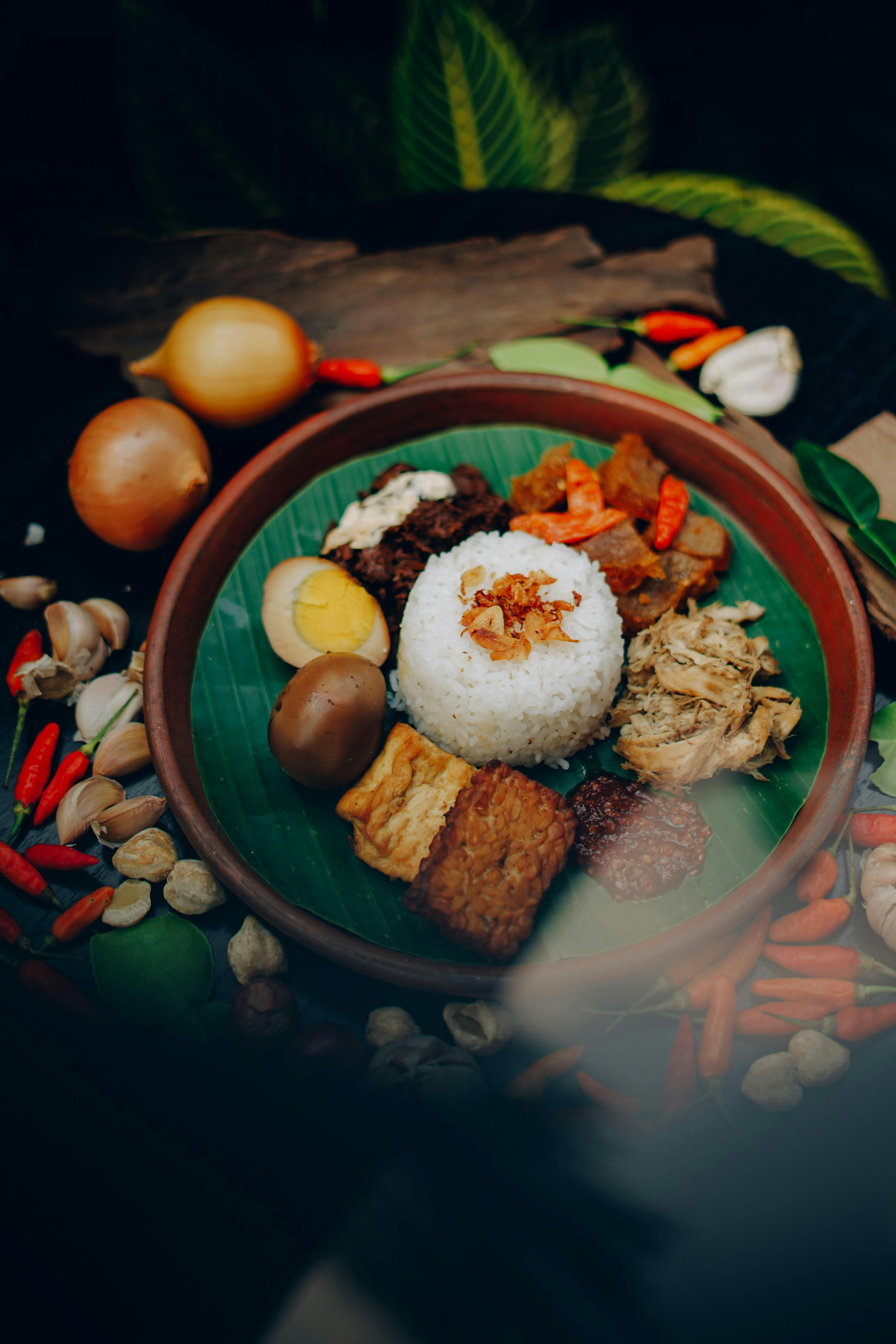
Start with nasi campur — a mound of rice surrounded by small portions you choose from the display, letting you taste six to eight dishes on one plate for around 30,000 IDR ($1.90). From there, chase the Balinese specialities: babi guling, ayam betutu, sate lilit and lawar, each shaped by base genep, the island's signature spice paste.
Nasi campur — the one to start with
Nasi campur means "mixed rice." You begin with steamed rice, then point at what you want from the glass case — grilled chicken, tempeh, tofu, vegetables, a piece of fish, peanuts, kerupuk crackers, and a spoon of sambal. The Balinese version runs spicier and heavier on turmeric than the Javanese style elsewhere in Indonesia. It's the cheapest, fastest way to understand why people fly back to Bali for the food.
The Balinese classics worth chasing
- Babi guling — spit-roasted suckling pig, turmeric-rubbed and stuffed with spice paste; the crackling skin is the prize. Lunch-only at the best spots, and they sell out.
- Ayam / bebek betutu — chicken or duck slow-cooked for hours in banana leaf with base genep until it falls off the bone.
- Sate lilit — minced fish or pork pressed onto lemongrass stalks and grilled; a uniquely Balinese take on satay.
- Lawar — chopped vegetables, grated coconut and minced meat with spices; ceremonial, fragrant and intense.
- Nasi pedas — "spicy rice," a Kuta late-night institution where you build a plate from trays of curries and sambals.
If you want to take these flavours home, a half-day Balinese cooking class teaches you to grind the base genep paste behind most warung dishes. Travjoy's Bali cooking class options are researched and approved by local experts, so you're learning in a real working kitchen rather than a staged tourist demo.











Best Warungs in Bali by Area
Every part of Bali has its own warung scene. Ubud and Sanur lean traditional and cheap; Canggu and Seminyak mix local counters with slightly pricier surf-town warungs; Uluwatu rewards a short detour off the cliff road; and Kuta is where the late-night spicy-rice institutions live. Use the table to match an area to your appetite, then chase the named spots below.
| Area | Vibe | Price tier | Signature dish | Best for |
|---|---|---|---|---|
| Ubud | Traditional, jungle-edge | $ | Babi guling, ayam betutu | First-timers, classic Balinese |
| Sanur | Quiet, local, breakfast-strong | $ | Nasi campur ayam, seafood | Early risers, families |
| Canggu | Surf town, point-and-pick | $$ | Nasi campur, sambal matah | Digital nomads, lunch crowd |
| Seminyak | Polished, central | $$ | Babi guling, nasi campur | Convenience near the action |
| Uluwatu / Bukit | Cliffside, surf | $$ | Nasi campur, betutu | Surfers, beach days |
| Kuta | Late-night, busy | $ | Nasi pedas | Night owls, budget |
Ubud and Sanur — the traditional heartland
This is where to eat the Balinese classics at the lowest prices. Ubud is babi guling country, while Sanur's strength is the early-morning nasi campur breakfast.
- Ibu Oka (Ubud) — the island's most famous babi guling; arrive before lunch or risk the sell-out.
- Babi Guling Warung Tetamian (Ubud) — quieter, off the main street, with crisp-skinned pork and standout ayam.
- Warung Men Weti (Sanur) — a breakfast legend; locals queue from 7am for nasi campur ayam with spicy chicken and crispy skin. Cash only.
- Warung Mak Beng (Sanur) — a seafood institution near the beach, doing one fish-soup-and-fried-fish set for decades.
Both towns sit a short drive from the rice terraces and temples most visitors come for, so a warung lunch slots neatly between sights.
Canggu, Seminyak and Uluwatu — the surf-town scene
Prices climb a little here, but the point-and-pick counters still undercut the cafés around them by half. In Canggu, Warung Bu Mi near Batu Bolong beach draws a lunch queue for its build-your-own nasi campur, while regulars argue Warung Varuna does a bolder sambal. Warung Sika is the garden-set favourite among expats. In Seminyak, Warung Babi Guling Pak Malen serves a well-known suckling-pig plate for around 40,000 IDR ($2.50). Around Uluwatu, the best point-and-pick spots sit just off the road to Padang Padang and open for lunch from noon.
Kuta — late-night spicy rice
Kuta runs on a different clock. Its nasi pedas warungs open late and stay busy with the post-night-out crowd, letting you build a fiery plate from trays of curries, sambals and crispy tempeh for 25,000–40,000 IDR ($1.55–$2.50). It's the one area where the warung scene peaks after midnight rather than at lunch.
Eating Like a Local — Etiquette, Timing and Staying Healthy
Warung etiquette is simple: point at what you want from the display, eat with the spoon in your right hand, and pay cash at the counter when you're done. Go at lunch — the best babi guling and nasi campur spots sell out by mid-afternoon — and pick busy places to eat safely.
How to order and pay
- Point-and-pick (tunjuk): start with rice, then point at the dishes you want added. At specialty warungs, just ask for "satu porsi" (one portion).
- Right hand: eat with the spoon in your right hand and use the fork in your left to push food on; the left hand is considered impure.
- Pay at the end, usually at a central cashier. Carry small rupiah notes — most warungs are cash only.
- A little Indonesian helps: "Suksma" (thank you, in Balinese) and "enak" (delicious) go a long way.
Timing — go early
- Babi guling and the famous nasi campur spots often open late morning and sell out by 2–3pm.
- Sanur breakfast warungs draw queues from 7am, so the freshest food is gone by mid-morning.
- Kuta's nasi pedas places run the opposite clock — open late for the after-dark crowd.
Staying healthy — avoiding Bali belly
- Eat where it's busy: high turnover means food hasn't been sitting out.
- Favour freshly cooked or steaming-hot dishes; be wary of cold buffet items left in the heat.
- Skip tap water and ice of unknown origin; choose bottled or sealed drinks.
- Watch how staff handle cash and food — the careful ones use tongs or switch hands.
- If your stomach is sensitive, start with a freshly grilled or vegetarian dish at a high-turnover spot.
Which Warung Experience Suits You?
Choose your warung strategy by how you travel. First-timers should start with a polished point-and-pick spot; couples and families want clean, sit-down warungs with space; solo travellers and budget backpackers can chase the cheapest local counters; and food adventurers should follow the locals down the side streets.
- First-timers: start at a well-known nasi campur warung with a set plate, which removes the guesswork. Graduate to point-and-pick once you've found your dishes.
- Couples: Ubud's garden warungs and Sanur's quiet seafront spots make a relaxed, cheap date.
- Families: choose busy, clean warungs with proper tables; nasi goreng and mie goreng are reliable kid-friendly orders.
- Solo travellers and digital nomads: Canggu's point-and-pick counters are fast, social and cheap — ideal for a daily lunch routine.
- Budget backpackers: warteg and roadside nasi campur counters keep a full day's food under $7.
- Food adventurers: skip the strip, find the babi guling and betutu specialists locals line up for, and go early.
Whichever group you fall into, build the rest of the day around the meal — a morning at the markets, a rice-terrace walk, then a warung lunch. See our top 20 Bali experiences for the highlights worth pairing with your warung crawl.
Plan your Bali food trip
Eating at the best warungs in Bali is the single easiest way to spend less and eat better. Follow the locals, point at what looks good, carry cash, and arrive before the lunch rush clears the display. Start with nasi campur, work your way up to babi guling and betutu, and you'll have eaten the real Bali for the price of a coffee back home.
Match the food to the rest of your itinerary — markets, temples, a rice-terrace morning, a cooking class — and you've built a trip around the island's best table. Start planning your trip on Travjoy's Bali page, where every experience is researched and approved by local experts so you can spend less time second-guessing and more time eating.












.svg&w=1920&q=75)