




Best Time to Visit Bali: Month-by-Month Guide for 2026
11 min read

Sandeepa K
Author
Long-term traveller and AI Expert.
SHARE BLOG
TABLE OF CONTENTS
- Key Takeaways
- Bali's Two Seasons — and the Gaps Most Guides Miss
- Bali Month by Month — January to June 2026
- How Weather Affects What You Came to Do
Key Takeaways
- The dry season (April–October) gives you reliable sunshine; the green season (November–March) gives lush landscapes, fewer crowds, and lower prices.
- For the strongest weather-and-value balance, May, June, and September are the sweet-spot months in 2026.
- Peak crowds and peak prices land in mid-July through August, plus the Christmas/New Year week.
- Nyepi (Bali's Day of Silence) falls on Thursday, March 19, 2026 — the airport closes for 24 hours and no one is allowed outdoors.
- Galungan (June 17) and Kuningan (June 27) only happen once in 2026, making mid-June a rare cultural window.
The best time to visit Bali in 2026 is May, June, or September, when dry-season weather meets shoulder pricing and lighter crowds. July and August deliver the most reliable sunshine but the heaviest tourist volume, while January and February are the cheapest months thanks to short daily downpours. All international visitors also pay a one-time IDR 150,000 (about USD 10) Tourist Levy on arrival, regardless of when you go.
Bali in February costs less than half what it costs in August. You'll also lose roughly two afternoons a week to tropical downpours. That's the central trade-off in choosing when to go — and it shapes every other decision, from which villa you can afford to whether you'll get a clear sunrise on Mount Batur.
This month-by-month guide breaks down the 2026 calendar with the detail most travel sites skip: the actual hotel rate bands by season, the festivals worth planning around, the days the airport shuts (yes — it shuts), and the microclimate quirks that mean Uluwatu can be sunny while Ubud is in mist. By the end, you should know exactly which weeks fit your priorities and budget, and which to avoid.
Bali's Two Seasons — and the Gaps Most Guides Miss
Bali sits a few degrees south of the equator and runs on two seasons: dry and green (rainy). Temperatures barely move across the year — most days fall between 24°C and 32°C (75°F–90°F). What changes is rainfall, humidity, sea conditions, and crowd density. Once you understand those four variables, picking a month gets much easier.
The dry season (April–October) — what it actually means
Dry season runs from April through October. Expect sunny mornings, occasional afternoon clouds, and rainfall only on a handful of days each month. Humidity drops noticeably from June onward, and sea visibility improves sharply for diving and snorkelling. This is when Bali looks like the postcards — but it's also when the island fills up.
- Average rainfall: 30–80mm/month (April–September), rising again in October
- Daytime highs: 28–32°C (82–90°F)
- Sea conditions: calm on the east coast (Sanur, Nusa Dua); larger swells on the west coast (Uluwatu, Canggu) — perfect for surfing
- Crowds: light in April and May, peak July–August, easing in September–October
The green season (November–March) — and why "rainy" oversells it
The green season runs November through March, with January and February the wettest. Rain typically arrives in heavy afternoon bursts — 30 minutes to two hours — then clears. Mornings are often bright. Skies look dramatic. Rice terraces glow electric green. The downside: humidity hovers around 80%, sea visibility drops, and the west-coast surf goes flat.
- Average rainfall: 250–350mm/month (December–February)
- Daytime highs: 27–31°C (80–88°F) but the air feels heavier
- Rainy days: roughly 18–22 per month in peak wet (vs 5–10 in dry season)
- Crowds: lightest of the year except Christmas/NYE week
The shoulder weeks most guides ignore
The transition weeks — late March (after Nyepi) and late October — are quietly excellent. The rains have either tapered off or haven't fully returned, prices are still low, and the island feels relaxed. If you're willing to gamble on a few showers in exchange for 30–40% lower hotel rates, these are the smartest two-week windows on the calendar.
Microclimate note: not all of Bali rains the same
- Bukit Peninsula (Uluwatu, Nusa Dua, Jimbaran): the driest part of the island year-round; can be sunny while central Bali is wet
- Ubud and central highlands: cooler (often 22–28°C), more rainfall, more mist — beautiful in green season, chillier in the evenings
- North coast (Lovina, Pemuteran): drier than the south during wet months
- East coast (Sanur, Candidasa): protected from the biggest swells, calmer seas year-round
Bali seasons at a glance
| Season | Months | Weather | Crowds | Mid-range hotel (USD/night) | Best for |
|---|---|---|---|---|---|
| Wet (low) | Jan–Feb | Heavy afternoon rain, humid | Lightest | $60–$130 | Budget travel, indoor wellness, spa retreats |
| Wet → shoulder | Mar (post-Nyepi) | Showers easing, lush | Light | $70–$150 | Cultural travellers, photographers |
| Shoulder (sweet spot) | Apr–May | Dry, low humidity | Light–moderate | $90–$180 | First-timers, couples, value seekers |
| Peak (high) | Jun–Aug | Dry, breezy, sunny | Heaviest | $130–$280 | Families, surfers, festival-goers |
| Shoulder (sweet spot) | Sep–Oct | Dry, warm, breeze fades | Moderate–light | $90–$190 | Divers, snorkellers, returning travellers |
| Wet (Xmas spike) | Nov–Dec | Returning rains; NYE crowds | Mostly low; spike Dec 22–Jan 3 | $70–$150 (low) / $200+ (NYE) | Lush scenery, Christmas escapes |
Hotel ranges above are mid-range four-star averages, drawn from typical 2026 rates across Seminyak, Canggu, and Ubud. Luxury villas and resorts will sit two to four times higher; hostels and guesthouses considerably lower.
Bali Month by Month — January to June 2026
The first half of 2026 takes you from the wettest weeks of the year, through Nyepi and Eid, into the start of dry season and one of Bali's biggest cultural cycles. Here's how each month plays out.
January — wettest, cheapest, quietest
January is the rainiest month in Bali. Expect rain on 18–22 days, often as heavy afternoon storms followed by humid, bright evenings. Beaches see washed-up plastic from monsoon currents, and ocean activities — diving, ferries to Nusa Penida, and surfing — are unreliable.
- Daytime highs: 30–32°C; humidity around 85%
- Best for: spa retreats, cooking classes, Ubud yoga, indoor cultural experiences
- Rough mid-range hotel rate: $60–$130/night (sharp drop after the NYE spike clears around Jan 5)
- Avoid: Nusa Penida day trips and east-coast diving
If your priority is a cheap, slow-paced trip with green rice paddies, January in Ubud or the Bukit Peninsula works well. The first week, however, is still pricey from holdover NYE travellers.
February — quiet wet-season month
February is similar to January but slightly drier toward the end. It's the cheapest "non-holiday" month of the year, and the island feels distinctly local. Wellness travellers and digital nomads find it ideal — fewer queues at yoga studios, easier table bookings, and discounted villa rates.
- Rainy days: 15–18; rain usually clears within an hour
- Best for: long stays, wellness, food and cooking classes
- Avoid: hiking Mount Batur (cloud cover blocks the sunrise) and snorkelling (poor visibility)
March — Nyepi week and what to do about it
March is a transitional month. Rain eases through the second half, and the island's biggest spiritual event takes over. Nyepi falls on Thursday, March 19, 2026 — the Balinese Day of Silence. For 24 hours, no one is allowed outdoors. The airport closes. Streets empty. Lights stay off after dark. Even hotel pools are off-limits.
- March 18 (Wed): Tawur Agung Kesanga and the spectacular Ogoh-Ogoh parades at sunset — papier-mâché demon effigies carried through every village
- March 19 (Thu): Nyepi — total silence; airport closed for 24 hours; resort guests must stay on the property
- March 20 (Fri): Ngembak Geni — the island reopens slowly
If you're flying in or out on March 19, your flight will be cancelled. If you're already on the island, your hotel will arrange a "Nyepi package" with all meals and activities indoors. Many travellers actively plan their trip around Nyepi for the rare experience of a tourist island in total silence — book the resort package at least three months ahead.
April — dry season starts
April is the unofficial start of dry season. Humidity drops, sea conditions improve, and rain becomes occasional rather than daily. Crowds are still light. Hotel rates haven't yet jumped. For first-time visitors looking for low-risk weather without the July rush, this is one of the best windows on the calendar.
- Bali Spirit Festival: April 15–19, 2026 (Ubud, The Yoga Barn and Puri Padi) — yoga, dance, healing
- Saraswati Day: April 4 — Hindu day of knowledge; pretty offerings at temples
- Ramadan ends in mid-March 2026, so April is post-Eid and has no major Indonesian travel disruptions
May — the first sweet-spot month
May is one of the strongest all-round months to visit Bali. Skies are reliably clear, the air is dry, and humidity drops to its lowest reading of the year. Crowds remain moderate. Hotel rates sit in the $90–$180 range for four-star properties — meaningfully cheaper than July.
- Ubud Food Festival: May 29–31, 2026 — Indonesia's biggest culinary event
- Bali & Beyond Travel Fair: May 28–30 (Nusa Dua) — adds business-traveller volume
- Surf is consistent on the west coast; sea visibility is improving but not yet peak
June — Galungan, Kuningan, and Bali Arts Festival
June 2026 is unusually rich culturally. Because Galungan follows the 210-day Pawukon calendar, it lands only once in 2026 — a rare single-cycle year. That single cycle starts on Wednesday, June 17, 2026, with Kuningan ten days later on Saturday, June 27. The Bali Arts Festival opens on June 13 and runs through July 11 in Denpasar with free entry.
- Penjor (decorated bamboo poles) line every village street from June 16
- Many small businesses close on Galungan and Kuningan; stock up June 16
- Best base: Ubud or Sanur for ceremony access; Bukit Peninsula for beach time without crowds
- Hotel rates: $130–$280 mid-range; book at least three months ahead for the Galungan week
If you have flexibility, mid-June is one of the most rewarding weeks in the entire 2026 calendar — dry-season weather plus a once-yearly cultural event. The trade-off is rising prices and slightly disrupted hours at restaurants and shops on the religious days.
How Weather Affects What You Came to Do
The "best" month depends on what you actually want from your trip. The same week that's perfect for surfing Uluwatu is mediocre for snorkelling at Menjangan, and the lush green that draws photographers to the rice terraces also closes the volcano hiking trails. Here's how the seasons map onto each major activity.
Beach days, surfing, and sea conditions
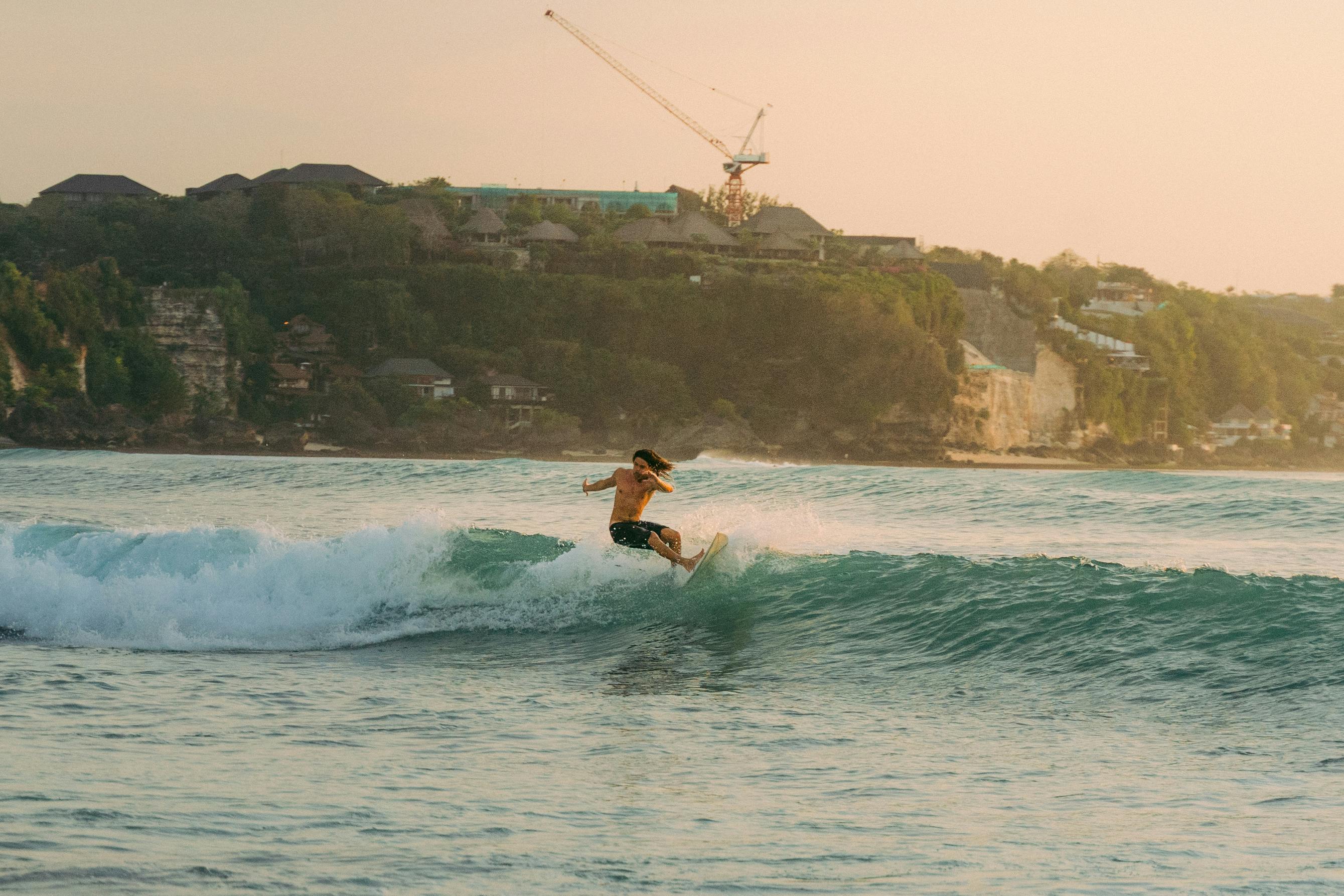
Surfing and beach time peak from May through September. The west coast (Uluwatu, Padang Padang, Canggu, Bingin) gets steady offshore winds and powerful swells from June to August — world-class conditions for experienced surfers. The east coast (Sanur, Nusa Dua, Keramas) is calmer year-round and works better for beginners and families.
- Best for surf (advanced): June–August on the west coast
- Best for surf (beginner): April–May or September–October on the east coast
- Best for swimming/calm beaches: May–September on the Bukit (Padang Padang, Pandawa, Nusa Dua)
- Worst for beach: January–February (rough seas, plastic accumulation)
Diving and snorkelling — when visibility actually peaks
Diving conditions in Bali are at their best from late August through November. Sea visibility regularly hits 25–30 metres, currents are predictable, and the famous mola mola (sunbathing oceanic sunfish) appear off Nusa Penida between July and October. November is widely cited by dive operators as the single best month — clear water, fewer divers, and pleasant temperatures.
- Peak diving and mola mola sightings: August–October
- Best overall visibility: September–November
- Avoid: December–March (poor visibility, occasional plankton blooms)
Hiking and volcanoes
Sunrise treks up Mount Batur and Mount Agung only make sense in the dry season. From May through September, the chance of cloud cover at the summit drops below 30%, and trails are firm. From November through March, both volcanoes are routinely closed, and even when open, the sunrise is often invisible behind cloud. If volcano hikes matter to your trip, anchor your dates between June and September.
Rice terraces and waterfalls
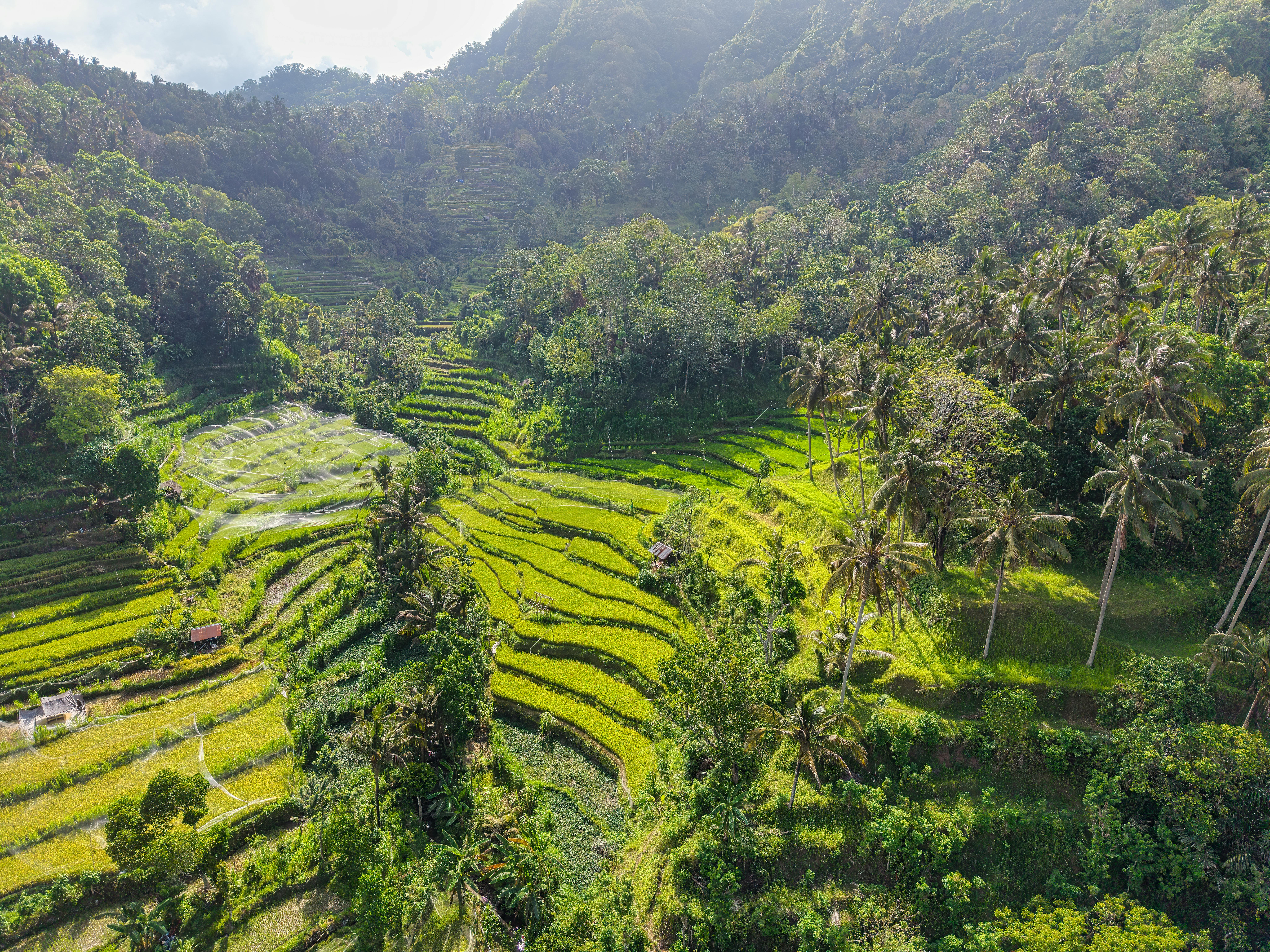
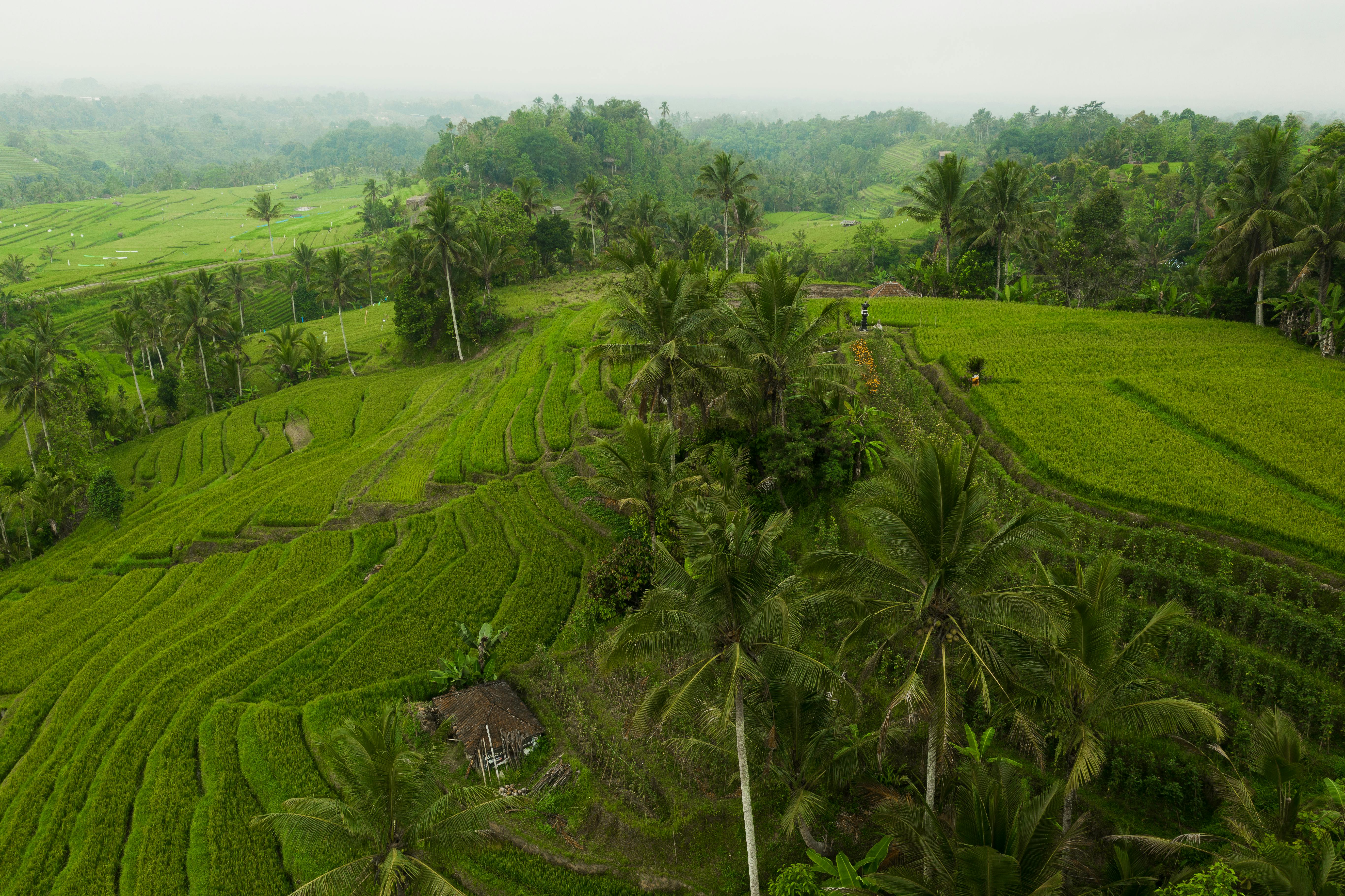
The Tegalalang Rice Terrace looks dramatically different across the year. Late January through April produces the most vivid green, when the paddies are flooded and reflective. June through August they turn golden as harvest approaches. Waterfalls are at their most dramatic from December through April — heavier flow, but slipperier paths.
- Lush green paddies: February–April
- Golden harvest paddies: July–August
- Powerful waterfalls: December–April
- Easier waterfall access (drier paths): May–October
Best Quality Experiences for Bali



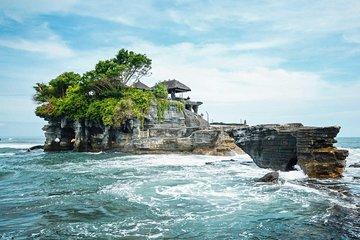

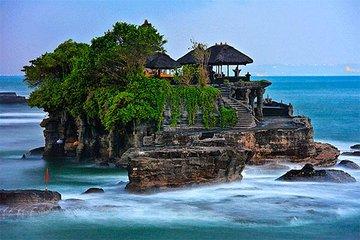
View more Experiences

Bali Month by Month — July to December 2026
The second half of 2026 covers Bali's busiest weeks, its quietest dive season, and the festival-rich shoulder months. If you have flexibility, this is where you'll find some of the smartest weeks on the calendar.
July — peak crowds, peak weather
July marks the start of high season. Temperatures sit between 26°C and 30°C, humidity is low, and rain is rare. Australian, European, and Indonesian school holidays all overlap, sending hotel occupancy past 90% in Seminyak, Canggu, and the Bukit. Restaurants need reservations, and traffic between Canggu and Seminyak slows to a crawl after 5pm.
- Bali Kite Festival: July (exact dates TBC) — giant traditional kites at Padang Galak and Sanur
- Bali Jani Festival: July 11–25 — contemporary art and theatre in Denpasar
- Mid-range hotel rates: $150–$300/night; luxury villas often double their May rate
- Book accommodation at least three months ahead
August — driest month, busiest beaches
August is the driest month of the year — under 20mm of rain on average and consistent breezes that keep the air comfortable. Uluwatu Temple and the southern beach clubs run at full capacity. If you want the postcard version of Bali, August delivers it. If you want quiet, this is the worst month to choose.
- Ubud Village Jazz Festival: August 7–8, 2026 (ARMA Museum)
- Maybank Bali Marathon: August 24, 2026 — runners take over Gianyar
- Hotel rates peak; some luxury properties enforce minimum-stay rules
- Best base for fewer crowds in August: Sidemen Valley, north coast (Lovina), or eastern Amed
September — the second sweet-spot month
September is, for many seasoned travellers, the best time to visit Bali. The crowds of August thin out almost overnight as international school terms restart. Weather stays dry and sunny. Sea visibility is at its annual peak, making this the strongest month for diving around Nusa Penida day trips and the Gilis. Hotel rates ease back to the $90–$190 mid-range band.
- Bali International Airshow: September 24–27 (Ngurah Rai)
- Mola mola sightings still possible off Nusa Penida
- Light winds — better for beach lounging than August
- Best month for combining beach time, diving, and inland exploration
October — shoulder month, cultural heavyweight
October is a transition month. The first half is reliably dry; the second half can bring early showers. Crowds are light, and prices stay shoulder-season. Cultural travellers should anchor here — Ubud Writers and Readers Festival (October 21–25, 2026) draws major literary figures and runs across multiple venues.
- Saraswati Day: October 31 (second cycle) — temple offerings everywhere
- Diving still excellent; mola mola season tapering
- Hotel rates: $90–$170 mid-range
- Smart pick if you want the dry season vibe without the dry season prices
November — green season returns gently
November sees the return of the rains, but they arrive softly. Mornings stay bright. Afternoon downpours last 30–90 minutes. The island feels distinctly quieter, and the rice terraces start their second flush of green. Hotel rates fall to early-year lows: $70–$160 for mid-range four-star properties.
- Diwali (Deepavali): November 7, 2026 — observed at Hindu temples
- Sea visibility starts to drop after mid-month
- Surf flattens on the west coast; east coast still works
- Best for: travellers who want value, lush scenery, and minimal crowds
December — wet season plus the NYE spike
December is split in two. The first three weeks are wet but quiet, with rates similar to November. From around December 22 through January 3, however, prices spike sharply — luxury villas can charge two to three times their November rate, and minimum-stay rules of five to seven nights apply. If you're not specifically chasing a Christmas/NYE escape, skip the last fortnight.
- Christmas Day: December 25, 2026 (Friday)
- Hotel rates: $80–$160 (early Dec) / $250–$600+ (Dec 22–Jan 3)
- Rainfall: 250–300mm; expect daily afternoon storms
- Best base for NYE: Seminyak, Canggu (most beach club fireworks)
Best Time to Visit Bali by Traveller Type
The "best" month is rarely the same for two travellers. Here's how the calendar maps onto different priorities — useful if you're choosing between two windows.
Couples and honeymooners
Best months: late April through early June, and September. Weather is dry but the island isn't yet at full volume. Sunset spots like Tanah Lot and Uluwatu are still uncrowded, and luxury villas in Ubud and the Bukit run shoulder-season rates. Avoid July–August (too busy for intimate dinners) and December 22–January 3 (price spike).
Families with kids
Best months: late June through August, aligning with European and Australian school holidays. Yes, it's peak season — but the dry weather, calm east-coast beaches, and family-friendly resorts in Nusa Dua justify the cost for most parents. April and the first half of October work well too if your school calendar allows it.
Solo travellers and wellness seekers
Best months: February, March (post-Nyepi), and November. These are quiet, affordable, and well-suited to long stays in Ubud. Yoga studios and retreats run smaller classes, and you'll often get last-minute booking flexibility on villas and ashram stays.
Surfers and divers
Best months: June through September for west-coast surfing; September through November for diving. There's some overlap — if you do both, target September. Expect competitive line-ups at Uluwatu and Padang Padang during peak dry season; for quieter waves, head to Medewi (west) or the lesser-known east-coast breaks at Keramas.
Budget travellers
Best months: late January through early March, and November. Hotels run 40–60% below July rates, restaurants offer low-season menus, and you'll have temples, beaches, and rice terraces largely to yourself. The trade-off is short, predictable afternoon rain.
If you have flexibility — here's how to pick
- Want guaranteed weather and don't mind crowds: July–August
- Want the best balance of weather, value, and quiet: May, June (excluding Galungan week if you want quiet), or September
- Want the lowest prices and don't mind rain: February or November
- Want a unique cultural experience: March (Nyepi week) or June (Galungan)
- Want to dive: September–November
- Want to surf big west-coast swells: June–August
Practical Planning — Costs, Crowds, and the Tourist Levy
Once you've narrowed your dates, three logistical inputs shape the rest of your planning: hotel pricing, flight costs, and the mandatory Bali Tourist Levy. None of these are optional, and getting them right saves you both money and time.
Hotel pricing by season
Mid-range four-star hotels in Seminyak, Canggu, or Ubud run roughly:
- Wet season (Jan–Feb): $60–$130/night
- Shoulder (Mar, Apr, Sep, Oct, Nov): $80–$190/night
- Peak (Jun, Jul, Aug, Dec 22–Jan 3): $130–$320/night
Luxury villas and resorts (Four Seasons, Bulgari, COMO Shambhala, Mandapa) run $500–$2,500/night and follow similar seasonal patterns, with the largest spreads between February and August. Hostels and guesthouses sit at $15–$45/night and barely move across the year.
Flight cost patterns
Flights to Denpasar (DPS) follow the same seasonal logic as accommodation, but with sharper spikes around school holidays. February and November consistently produce the lowest international airfares from Australia, India, the UK, and Singapore. December 18–28 and June 25–July 5 produce the highest. Mid-week departures (Tuesday/Wednesday) are typically 15–25% cheaper than weekends, regardless of month.
The IDR 150,000 Tourist Levy and entry rules
Every international visitor must pay a one-time Bali Tourist Levy of IDR 150,000 (approximately USD 10) on arrival, regardless of when you visit or how long you stay. The fee is separate from your visa.
- Pay online via the official Love Bali portal at lovebali.baliprov.go.id before you fly — save the QR code to your phone
- Alternatively, pay at BRI Bank counters in the arrivals hall at Ngurah Rai International Airport
- Applies to all foreign visitors including children
- Per entry — if you leave Indonesia and return, you pay again
- Indonesian e-VOA (visa) is a separate IDR 500,000 (~USD 35) fee, valid 30 days and extendable once
Also note the Indonesia Electronic Customs Declaration: complete it online within 48 hours of arrival and keep the QR code accessible. The U.S. Department of State's Indonesia travel page is a useful reference for current entry requirements.
Booking lead times by season
How far ahead you should book depends on when you're going. The wider your window, the more flexibility you have on price.
- Peak (Jun–Aug, Dec 22–Jan 3): book hotels and key activities 3–6 months ahead
- Sweet-spot months (May, Sep): 6–10 weeks ahead is usually fine
- Wet season (Jan–Feb, Nov): 3–4 weeks ahead works for most properties
- Galungan week (Jun 17 in 2026): 4+ months for villas in Ubud and Sanur
For activities and tours, booking ahead matters most for popular dates and limited-capacity experiences — Nyepi resort packages, Galungan ceremonies, sunrise volcano treks, and private boat charters. The top experiences in Bali on Travjoy are reviewed and approved by local experts, which spares you the trade-off of choosing between unverified listings or skipping the booking altogether and risking a sold-out arrival.
Plan Your 2026 Bali Trip with Confidence
The best time to visit Bali in 2026 depends almost entirely on what you're prioritising. May, June (outside Galungan week), and September deliver the strongest weather-and-value balance. July and August give you the most reliable dry-season weather but at peak prices. February and November are the cheapest, with predictable afternoon showers as the only real cost. March 19 and the days around it sit in their own category — Nyepi is either the centrepiece of your trip or a date to plan around.
Once you've picked your window, the rest is logistics: pay the Tourist Levy online before you fly, book any festival-week or volcano-trek dates well ahead, and check whether your microclimate (Bukit, Ubud, north coast) suits the activities you've planned. Start planning your Bali trip on Travjoy and choose from local-expert-approved hotels, tours, and experiences mapped to your dates.
Best Quality Experiences for Bali







View more Experiences
Plan Your Visit (FAQ's)
.svg&w=1920&q=75)



POWERED BY REAL EXPERTS
Aura Salsa Dila
Local Expert -

Planning Your Bali trip? TravJoy Recommends the Best for You


