


Balinese Art: From Woodcarving to Batik — A Visual Guide
12 min read
Raj Varma
Author
Travel & Tourism Expert Ex-Thomas Cook, Kuoni, Times of India & Travel Triangle.
SHARE BLOG
TABLE OF CONTENTS
- Key Takeaways
- A Brief History of Balinese Art — From Temple Decoration to Global Recognition
- The Five Painting Schools of Bali — How to Tell Them Apart
- The Ubud Museums Worth Your Time
Key Takeaways
- Balinese art runs across five recognised painting schools — Kamasan, Ubud, Batuan, Pengosekan, and Young Artist — plus the later Keliki Miniature style, each with a distinct visual signature you can learn to spot.
- Four villages around Ubud specialise in three-dimensional crafts: Mas (woodcarving), Celuk (silver and goldsmithing), Batuan (painting), and Batubulan (stone carving).
- The 1930s Pita Maha movement, led by Walter Spies and Rudolf Bonnet, shifted Balinese painting from temple commission to standalone artwork — the change you still see in galleries today.
- Batik workshops in Ubud and Tohpati typically run IDR 300,000–500,000 (~USD 18.50–31) for a half-day, including all materials and a finished piece to take home.
- The most authentic pieces sit outside the main tourist markets — head to the source villages where you can see the work being made.
Balinese art is the visual and decorative tradition of the island of Bali — painting, woodcarving, stone carving, silver and goldsmithing, batik, weaving, and mask-making — rooted in Hindu cosmology and organised around village specialisations that still function today. Each craft village around Ubud has held its specialism in Balinese art for generations, which makes a trip to Bali rare among modern destinations: the work isn't framed in a museum, it's being made on the porch of the house next door.
You can see it on any morning drive south from Ubud. In Mas village, the steady tap of chisels comes from open-front workshops where carvers are finishing teak Garuda statues. Fifteen minutes further on in Celuk, silversmiths hammer filigree rings to order. A few kilometres east in Batuan, painters are filling canvas with the dense, dark, supernatural scenes the village is known for. None of it is performance. The carver in Mas is as likely to be finishing a temple component for a village ceremony as a piece for a Sydney collector.
This guide walks through Balinese art end-to-end — the history that shaped it, the five painting schools and how to tell them apart, the four craft villages and what each makes, batik and the textile traditions including the rare double-ikat of Tenganan, the Ubud museums worth your time, and a practical section on telling authentic work from mass-produced souvenirs. Prices are in IDR and USD throughout, and the experiences here have been picked by Travjoy's local experts to point you at the workshops and villages that are still doing the work properly.

A Brief History of Balinese Art — From Temple Decoration to Global Recognition
Balinese art evolved from religious commission to standalone artwork over roughly five centuries, with the decisive turn coming in the 1930s. Before then, painters and carvers worked almost exclusively for temples, palaces, and life-cycle ceremonies. After the 1930s — and especially after the Second World War — Balinese artists began producing work for its own sake, signed by name, sold to collectors, and shown in galleries from Ubud to New York.
The Classical Era — Kamasan-Style Painting from Klungkung
From the 16th to the early 20th century, the village of Kamasan in Klungkung regency on Bali's east coast was the centre of classical Balinese art and painting. The style is unmistakable: flat figures arranged in panels like a comic strip, narrative scenes drawn from the Ramayana and Mahabharata, and a restricted earth-tone palette dominated by light brown (made from limestone, locally called batu gamping), ochre, and lampblack.
Kamasan paintings weren't framed wall pieces. They were ceiling cloths (langse) for palace pavilions, hanging banners for temple festivals, and astrological charts used by priests. You can still see them in situ at the Kerta Gosa pavilion in Klungkung, the old royal hall of justice, where the ceiling panels depict the punishments of hell in serial detail.
The Pita Maha Movement of the 1930s — Spies, Bonnet, and Modernisation
The 1930s were the inflection point for Balinese art. German painter Walter Spies settled in Ubud in 1927, and Dutch artist Rudolf Bonnet arrived in 1929. Working with the Ubud royal family — particularly Cokorda Gede Agung Sukawati — they founded Pita Maha in 1936, an artists' association whose stated mission was to preserve quality while opening Balinese painting to new techniques and subjects.
What changed: artists started using perspective, modelling light and shadow on human figures, painting on paper and canvas instead of cloth, and signing their work. Subject matter shifted from religious narration to daily life — rice harvests, market scenes, dances, courtyards. The group held exhibitions across Indonesia and abroad, which created the first international collector market for Balinese art.
Pita Maha ran until 1942, when the Japanese occupation interrupted it. Spies died in 1942 in a Japanese bombing of a prisoner-transport ship. Bonnet was interned in Sulawesi, returned to Bali in the 1950s, and helped found Museum Puri Lukisan in Ubud in 1956 — the first museum dedicated to modern Balinese art.
Post-War Evolution — Arie Smit and the Young Artist School
The next major movement in Balinese art came from another Dutch artist, Arie Smit, who arrived in Bali after the war and settled in Penestanan village, just west of Ubud. In the 1960s, Smit started teaching local children — most with no formal art training — and the result was the Young Artist style: naive, flat compositions in surprising colours (red seas, blue skin, yellow skies), with rural village life as the subject. The style is still produced in Penestanan today and is one of the easiest to recognise on a gallery wall.
The 1970s brought two more developments. The Pengosekan Community of Artists, founded in 1970 by Dewa Nyoman Batuan and others, established a new school focused on flora and fauna — birds, trees, butterflies — in bright, modern colour palettes. And in Keliki village, north of Ubud, farmer-painter I Ketut Sana began producing tiny, hyper-detailed paintings on small cards, founding what's now known as the Keliki Miniature school.
The Five Painting Schools of Bali — How to Tell Them Apart
The shortest visual identification for the major schools of Balinese art: Kamasan is flat and brown, Ubud uses open space and emphasises human figures, Batuan is dense and dark, Pengosekan paints birds and trees in bright colour, Young Artist flips realistic colours into something dreamlike, and Keliki Miniatures fit in your palm. Once you've seen one good example of each you can pick them out across any gallery in Ubud.
Kamasan Style — Wayang Narratives in Earth Tones
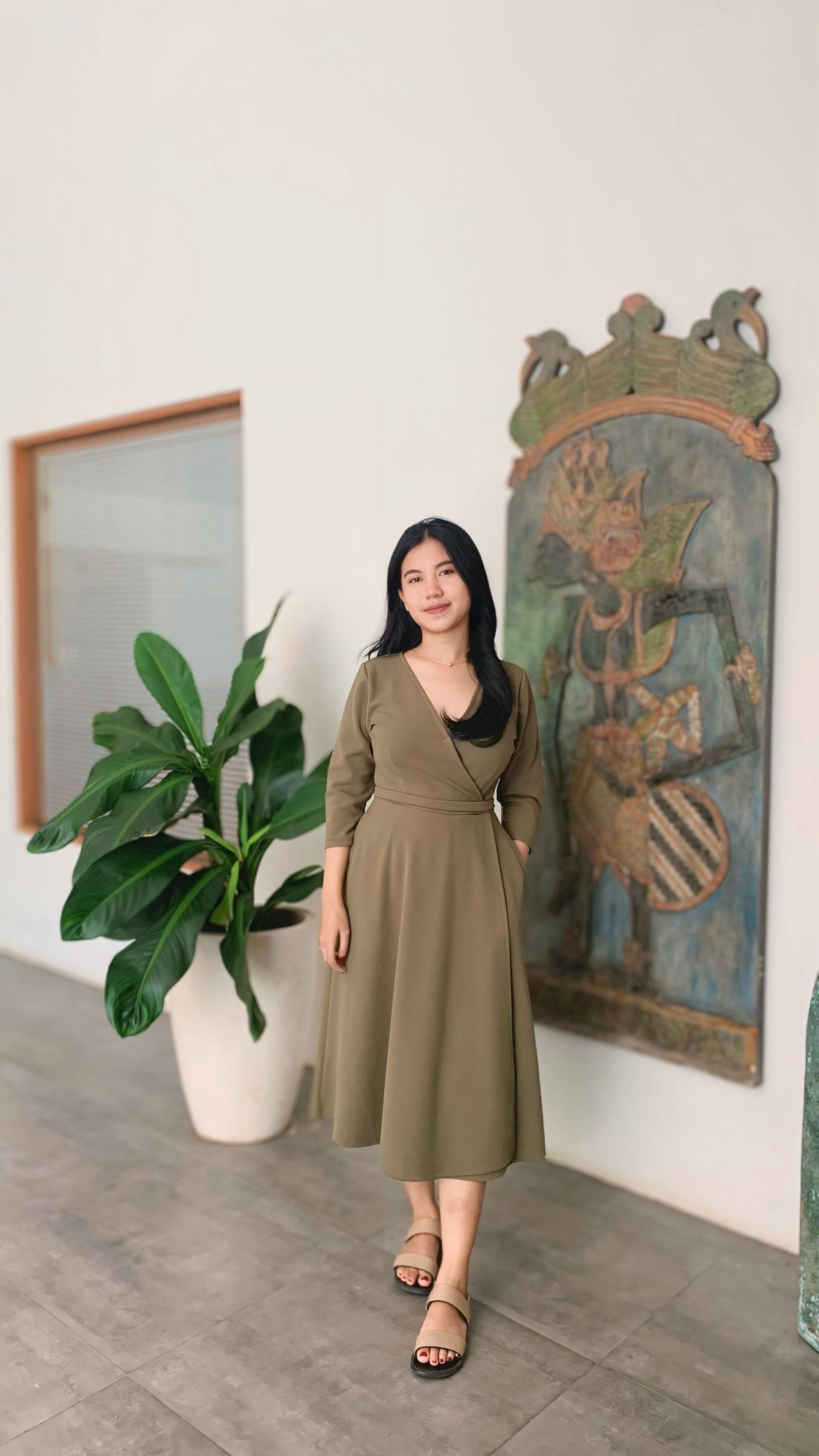
Kamasan paintings look like the puppet shadow figures (wayang kulit) they're related to: figures in profile, stylised faces, layered compositions divided into panels by stylised foliage and clouds. This earliest school of Balinese art uses a deliberately restricted colour palette — light brown, dark brown, red ochre, black, white, and occasionally gold leaf. The subjects are almost always epic narratives from the Hindu canon. If you want to see classical Kamasan work, the Nyoman Gunarsa Museum in Klungkung holds the largest collection, and the original Kerta Gosa ceiling is open to visitors for around IDR 50,000 (~USD 3) entry.
Ubud Style — Open Compositions and Human Figures
Ubud-style paintings emerged directly from Pita Maha and are the canonical face of modern Balinese art for most visitors. Compared to Kamasan, they use more open space, foreground human figures, and apply Western perspective and light modelling. Subjects are everyday life: women carrying offerings, men working in rice fields, temple ceremonies, dance performances. The colour palette is fuller than Kamasan but still grounded — earth greens, browns, ochres, and small accents of red and gold. The major artist names to recognise: Anak Agung Gede Sobrat, Ida Bagus Made Poleng, and I Gusti Nyoman Lempad (whose line drawings are studied in their own right).
Batuan Style — Dense, Dark, Every Centimetre Filled
Batuan-style paintings are the easiest to identify because every square centimetre is filled. They're worked in tight ink line on a paper or canvas base, then washed with restrained colour over the top — the overall effect is dark and dense. Subjects often pull from village ceremonies, supernatural narratives, and crowd scenes. The newer Batuan "crowded miniature" style takes the density further, packing dozens of figures into a single small canvas. If you want to see Batuan work in volume, Pura Puseh Batuan in the village itself has examples, and ARMA in Ubud holds a strong permanent collection.
Pengosekan Style — Birds, Trees, and Tropical Foliage
Pengosekan paintings are the easiest to live with. Bright but not garish, realistic but not photographic, the subjects are almost always nature — herons in a pond, frangipani flowers, butterflies on a banana leaf. The style took off internationally in the 1970s and 1980s; you'll see it reproduced on hotel walls across Asia. The original village, Pengosekan, sits a kilometre south of central Ubud and still has working galleries on the main road. Smaller original pieces start around IDR 800,000 (~USD 50); larger studio works can run into the millions.
Young Artist Style — Naive, Colour-Flipped, Childlike
If you see a painting where the sea is red, the people are blue, and the sky is yellow, you're looking at Young Artist work from Penestanan. The style emerged in the 1960s under Arie Smit's mentorship and remains in production. Subjects are pastoral village scenes painted with a deliberately flattened, two-dimensional approach. The pieces are easy to spot but also easy to fake — machine-printed reproductions circulate widely. Buy direct from a Penestanan gallery if you want certainty.
Keliki Miniature — Hyper-Detailed and Postcard-Sized
Keliki Miniature paintings range from 5 x 7 cm to roughly 25 x 38 cm and are usually executed in ink with watercolour or acrylic wash. The detail is what you remember: a 10 x 15 cm canvas can contain a fully populated Ramayana scene with thirty named figures, each painted with a single-hair brush. Keliki village sits 15 minutes north of central Ubud and several studios — including Five Art Studio — run workshops where you can attempt the technique yourself for around IDR 450,000 (~USD 28).
The Ubud Museums Worth Your Time
Three museums in and around Ubud cover the full arc of Balinese art and painting from classical to contemporary, and a fourth specialises in masks and puppets. Pick by interest and time available: Puri Lukisan for the original collection, Neka for chronological depth, ARMA for a quieter setting with performance, and Setia Darma for craft specifically.
Museum Puri Lukisan — The Original
Museum Puri Lukisan opened in 1956 and is the oldest museum of modern Balinese art on the island. It sits in central Ubud, a five-minute walk from the Ubud Art Market. The collection covers Pita Maha-era painting, classical Kamasan work, and a strong holding of woodcarving and stone sculpture. The grounds — water gardens, lotus ponds, traditional pavilions — are part of the visit.
- Address: Jalan Raya Ubud, central Ubud
- Hours: 9am–6pm daily
- Entry: IDR 95,000 (~USD 6) adults; children under 15 free
- Time needed: 1.5–2 hours
Neka Art Museum — Chronological Depth
Neka Art Museum, founded in 1982 by art dealer and collector Suteja Neka, traces the development of Balinese art and painting from temple-art origins through the Pita Maha modernisation and into contemporary work. It also houses a strong collection of paintings by foreign artists who worked in Bali — Spies, Bonnet, Smit, Antonio Blanco, Han Snel, Donald Friend — alongside Indonesian masters. The museum sits about 1.5 km north-west of central Ubud.
- Address: Jalan Raya Sanggingan, Ubud
- Hours: 9am–5pm daily
- Entry: IDR 100,000 (~USD 6.20) adults; children under 12 free
- Time needed: 2–3 hours
ARMA (Agung Rai Museum of Art) — A Working Cultural Centre
ARMA opened in 1996 and is set on more than three hectares in Pengosekan, southern Ubud. Beyond the painting collection — which includes major Pengosekan, Batuan, and Ubud-style work that anchors the contemporary canon of Balinese art — ARMA runs scheduled performances of Legong, Barong, and Kecak dance on its grounds. If you want to combine visual art with performance in one visit, this is the strongest choice. Pre-booking a Legong Dance Show separately gives you a second performance option on a different evening.
- Address: Jalan Raya Pengosekan, Ubud
- Hours: 9am–6pm daily
- Entry: IDR 100,000 (~USD 6.20); performances ticketed separately
- Time needed: 2 hours for the museum, plus performance time
Setia Darma — Masks and Puppets
Rumah Topeng dan Wayang Setia Darma (the House of Masks and Puppets) sits in Mas village. The collection holds over 1,300 masks and 5,700 puppets from across Indonesia and Asia, displayed in restored traditional pavilions. This is where to come if you're more interested in the carving tradition than painting, or if you want context for the masks used in Barong and Topeng performances.
- Address: Jalan Tegal Bingin, Mas village
- Hours: 8am–4pm daily
- Entry: By donation (typical IDR 50,000 / ~USD 3)
- Time needed: 1–1.5 hours
Which Museum Should You Pick?
- First-time visitor on a half-day: Museum Puri Lukisan — central, walkable from Ubud, the canonical introduction.
- Returning visitor or art-focused trip: Neka Art Museum — the depth and chronology are unmatched.
- Want art plus performance: ARMA — combine the museum with a scheduled Legong or Barong show.
- More interested in carving than painting: Setia Darma in Mas — and combine it with a craft-village drive south of Ubud.
- Have a full day: Do Puri Lukisan in the morning and Neka in the afternoon; they're 20 minutes apart by car.








The Four Craft Villages — Where Bali's Three-Dimensional Art Is Made
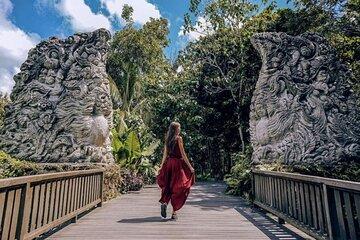
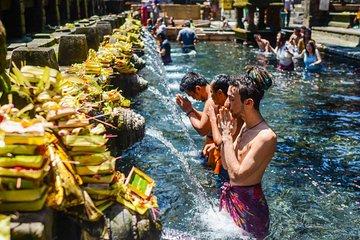
Four villages south of Ubud hold the three-dimensional specialisations of Balinese art and craft, and they sit close enough to do as a single day's drive: Mas for woodcarving, Celuk for silver and gold, Batuan for painting, and Batubulan for stone. The road south from Ubud passes through them in roughly that order, and most have working studios you can walk into without an appointment. A half-day driver-led loop is the easiest way to cover all four, and a Sukawati Art Market stop is a natural finish.
Mas — Woodcarving
Mas village, 10 minutes south of central Ubud, has produced Bali's master woodcarvers for centuries and remains the centre of three-dimensional Balinese art. The 1930s Pita Maha movement reached Mas through Bonnet and Spies, who pushed the carvers toward new subjects and freer interpretation; pre-1930s work was almost entirely temple sculpture and ceremonial pieces. The names that emerged — Ida Bagus Nyana, his son Ida Bagus Tilem, and the Tilem family workshops that still operate today — set the standard for what Mas carving means.
The wood is what determines the piece. Most carvers work in teak (jati) for durability, hibiscus (waru) for medium pieces, jackfruit (nangka) for traditional masks, ebony for premium work, and crocodile wood (belalu) for export-grade sculpture. The best pieces are carved from a single block — no glued joints, no inserts — and a master carver may spend three to six months on a single major sculpture.
- Small carvings (10–20 cm): IDR 500,000–1,500,000 (~USD 32–95) for studio work
- Medium pieces (30–60 cm): IDR 2,000,000–8,000,000 (~USD 125–500)
- Major works: IDR 15,000,000 (~USD 950) and up
- Carving workshops: half-day from IDR 350,000–500,000 (~USD 22–31)
Celuk — Silver and Goldsmithing
Celuk sits 15 minutes south of Mas and has been Bali's silver and gold village since at least the 1930s, when the metalsmithing tradition formalised alongside the broader modernisation of Balinese art. The specialism is filigree — fine twisted wirework formed into rings, earrings, pendants, and ceremonial objects. The craft is still hand-done; most workshops have apprentices hammering at small benches in open-front spaces along Jalan Raya Celuk, and you can watch a piece being made before you buy it.
What to look for: sterling silver work should carry a 925 stamp, and the joint quality on filigree pieces is the test — clean, near-invisible solders in good work, visible blobs in cheaper imports. Custom pieces can be made in a day or two from your own sketch, which is one of the better travel-souvenir scenarios on the island.
- Filigree rings: from IDR 200,000–600,000 (~USD 13–38)
- Earrings: IDR 350,000–1,200,000 (~USD 22–75)
- Statement pendants: IDR 800,000–3,000,000 (~USD 50–190)
- Custom work: typically 24–48 hours turnaround; pricing depends on weight
Batubulan — Stone Carving
Batubulan, 20 minutes south of Ubud, is the stone-carving village and the most architectural of the four craft centres of Balinese art. Most pieces are worked in paras, a soft volcanic tuff stone quarried locally that hardens after carving and weathers to a deep grey-green. The traditional pieces are temple components: dwarapala (guardian figures flanking gateways), candi bentar (split-gate temple entrances), and small shrine sculptures. Larger studios export work internationally and will ship overseas; expect three to six months for major commissions plus shipping time.
Batubulan also has a daily Barong dance performance at 9.30am on the main road, which most southern day-trip itineraries use as their first stop. Stone-carving studios sit immediately around the performance ground and along Jalan Raya Batubulan.
Tampaksiring — Bone and Horn Carving
Often missed in roundups of Balinese art and craft, Tampaksiring — north-east of Ubud near Tirta Empul Temple — is Bali's specialist village for bone and horn carving. Workshops produce decorative panels, small figures, and ceremonial pieces from buffalo bone and horn. The craft is older than the village's other claim to fame (the spring temple) and worth a stop if you're already heading north for Tirta Empul or Mount Batur.
Balinese Textiles — Batik, Endek, Songket, and the Sacred Geringsing
Textile work is a major branch of Balinese art and runs across four distinct cloth types, each made differently and used differently in Balinese life. Batik is the wax-resist dyed cloth most travellers know; endek is the everyday handwoven ikat; songket is the gold-and-silver-threaded ceremonial cloth; and geringsing is the rare double-ikat woven only in one village. All four are still being produced, and three of the four are accessible to visitors through workshops or studio visits.
Bali Batik vs Javanese Batik — What's Actually Different
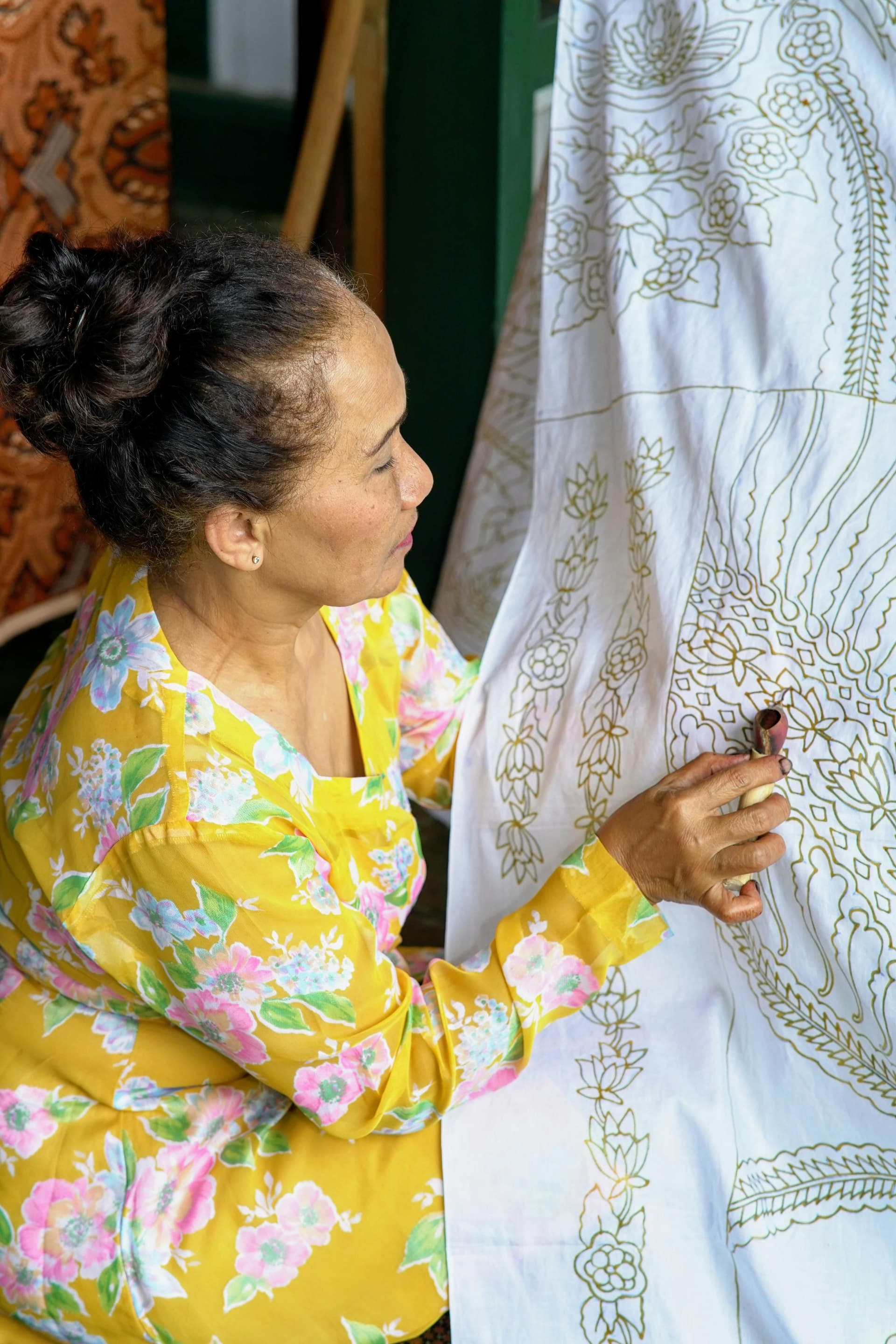
Indonesian batik was inscribed on UNESCO's list of Intangible Cultural Heritage of Humanity in 2009, and the technique is shared across Java and Bali — but the Balinese art form has its own character. Javanese batik tends toward formal repeating geometric patterns in a restrained palette (indigo, brown, cream); Balinese batik leans into mythological motifs (Garuda, Barong, demons), brighter colours, and more freehand composition. Bali also produces a faster "batik painting" variant where the cloth functions as a wall artwork rather than a garment.
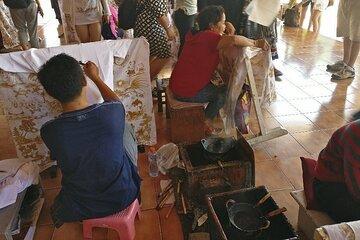
You can take a half-day workshop in Ubud or in nearby Keliki or Tohpati villages. The format is consistent: sketch your design, apply hot wax with a canting tool, dip in dye baths, remove wax, take the finished piece home.
- Widya Batik Studio, Ubud: from IDR 400,000 (~USD 25) per person
- Five Art Studio, Keliki: IDR 450,000 (~USD 28) per person, includes lunch
- WS Art Studio (3-hour class): from IDR 500,000 (~USD 31)
- Duration: 2.5–4 hours depending on design complexity
- Skill level: all classes are beginner-friendly; no prior art experience needed
Endek — The Everyday Handwoven Ikat
Endek is the everyday ikat of Balinese art: a handwoven cloth where the warp threads are tied and dyed before weaving, producing the slightly blurred-edge patterns characteristic of ikat. Since 2021, the Bali provincial government has required civil servants and schoolchildren to wear endek on certain days of the week, which has revived production. Sidemen village in east Bali is the main weaving centre; you can visit working looms there and buy direct from the makers for a fraction of what you'd pay in a Seminyak boutique.
Songket — Gold-and-Silver-Thread Ceremonial Cloth
Songket is the formal-wear cloth: a heavy handwoven silk or cotton ground with supplementary weft threads of gold or silver introducing the pattern. It's worn at weddings, tooth-filing ceremonies, and major temple festivals. The motifs are dense — wayang figures, butterflies, flowers — and a single full sarong-and-shoulder-cloth set takes a skilled weaver weeks. Real songket runs from IDR 2,000,000 to over IDR 20,000,000 (~USD 125–1,250+); machine-printed imitations look similar at first glance but feel different and won't carry the slight weight that real metal thread gives.


Geringsing — The Double-Ikat of Tenganan
Geringsing is the rarest textile in Balinese art and one of only three double-ikat traditions left in the world (alongside Japan's Oshima Tsumugi and India's Patola of Patan). Within the wider field of Balinese art, no other cloth is woven in the same way. It's woven exclusively in Tenganan Pegringsingan, a Bali Aga (pre-Hindu indigenous) village in east Bali, about 90 minutes from Ubud. Both the warp and weft threads are individually tied and dyed before weaving, which means the pattern has to align in both directions on the loom — a process that takes between two and five years per cloth.
The cloth is sacred. It's worn at Bali Aga life-cycle ceremonies, used as ritual protection, and believed to ward off illness — the name geringsing derives from gering (illness) and sing (no). Authentic geringsing pieces start around IDR 5,000,000 (~USD 315) for small cloths and run well into the millions for full ceremonial cloths. The village is open to visitors for a small donation; the loom houses are toward the back of the compound.
How to Tell Authentic Balinese Art from Mass-Produced Souvenirs
The fastest way to avoid a fake piece of Balinese art is to buy at the village where the work is made — but if you're shopping in Ubud, Sukawati, or anywhere else, a few quick checks will separate real handwork from imports and machine production. The signs differ by craft, but they're not subtle once you know what you're looking for.
Woodcarving
- Single block vs glued: Run your hand around the piece. Visible seams, especially at necks and limbs, indicate glued joints — fine for decoration, but not the workshop standard.
- Chisel marks: Look at the back and underside. Real hand-carving shows fine, irregular chisel facets. Resin casts and machine-finished pieces are uniformly smooth or have repeating tool patterns.
- Wood weight: Pick the piece up. A teak piece feels dense and cool; cheaper softwoods (often jackfruit-stained-as-teak) feel light. Resin pieces sound hollow when tapped.
- Detail in tight spaces: Faces, fingers, and folds of cloth show the carver's skill. Mass production rounds these off; master work keeps them crisp.
Painting
- Back of the canvas: A real painting has pigment bleed through to the back. Machine reproductions look uniformly smooth on the reverse.
- Brushstroke variation: Hold the painting at a low angle to a light source. Real brushwork shows raised paint texture; printed reproductions are flat.
- Signature placement: Bali painters sign on the front, often with a village or studio name. A signature that looks identical across multiple "different" paintings is a print run.
- Pricing red flag: A 30 x 40 cm "original" Pengosekan painting for IDR 200,000 (~USD 13) is not original. Real small originals start around IDR 800,000–1,500,000.
Silver
- 925 stamp: Real sterling silver carries a 925 hallmark. Pieces without the stamp may be silver-plated brass.
- Weight: Sterling silver has a noticeable heft. Plated pieces feel light.
- Filigree joints: Look closely at where the wirework meets. Clean, almost invisible solders mean good Celuk work; visible blobs of solder suggest production-line imports.
- Tarnish test: Real silver tarnishes slowly over months. If a "silver" piece is bright yellow underneath after light use, it's plated.
Batik
- Wax cracking on the back: Real batik shows fine cracking patterns on the reverse where the wax has resisted dye unevenly. Machine-printed "batik" has a uniform back with no wax pattern.
- Dye depth: Run your fingers along the fold of the cloth. Real batik dyes penetrate fully; printed fabric is darker on one side than the other.
- Pattern continuity: On a real handworked batik, no two figures or motifs are identical. Machine print repeats are exact copies.
- Smell: Real batik that's recently been finished carries a faint wax smell. Printed cotton smells like fabric dye.
Where to Buy Without Doubt
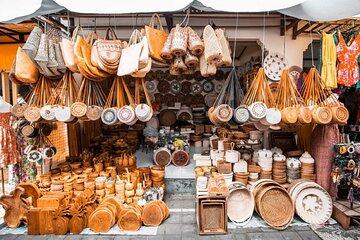
The cleanest scenario is village direct: workshops in Mas, Celuk, Batuan, Batubulan, and Tenganan all sell work made on site, often by the person you're talking to. For convenience under one roof, the Ubud Art Market and the wholesale Sukawati Art Market both have a mix of authentic handwork and imports; ask where the piece was made, and look for the chisel-mark and wax-back tests above. Bargaining is expected at both markets — start at around 40 percent of the opening price and settle in the middle. Travjoy's selection of Balinese art villages and workshops has been picked by local experts so you can spend less time vetting studios and more time choosing pieces, but the in-person tests above are still the surest filter.
Plan Your Balinese Art Trip
Balinese art rewards the traveller who pairs museums with village visits. A two-day plan works well: one day in Ubud for Museum Puri Lukisan, Neka Art Museum, and the Ubud Art Market; a second day driving the southern craft villages — Mas, Celuk, Batuan, Batubulan — finishing at Sukawati Art Market or a batik workshop in Tohpati. If you want the rare textile end of the spectrum, add a day for Tenganan in the east and the Sidemen weaving studios.
The shortest summary of Balinese arts and crafts: the painting schools tell you the styles, the craft villages tell you where the three-dimensional work is made, and the museums give you the context to connect them. Once you've seen one good piece of each, the rest of the island opens up. Start planning your art-focused trip to Bali on Travjoy, or browse the top picks for Bali to pair art days with the rest of the island.



.svg&w=1920&q=75)