



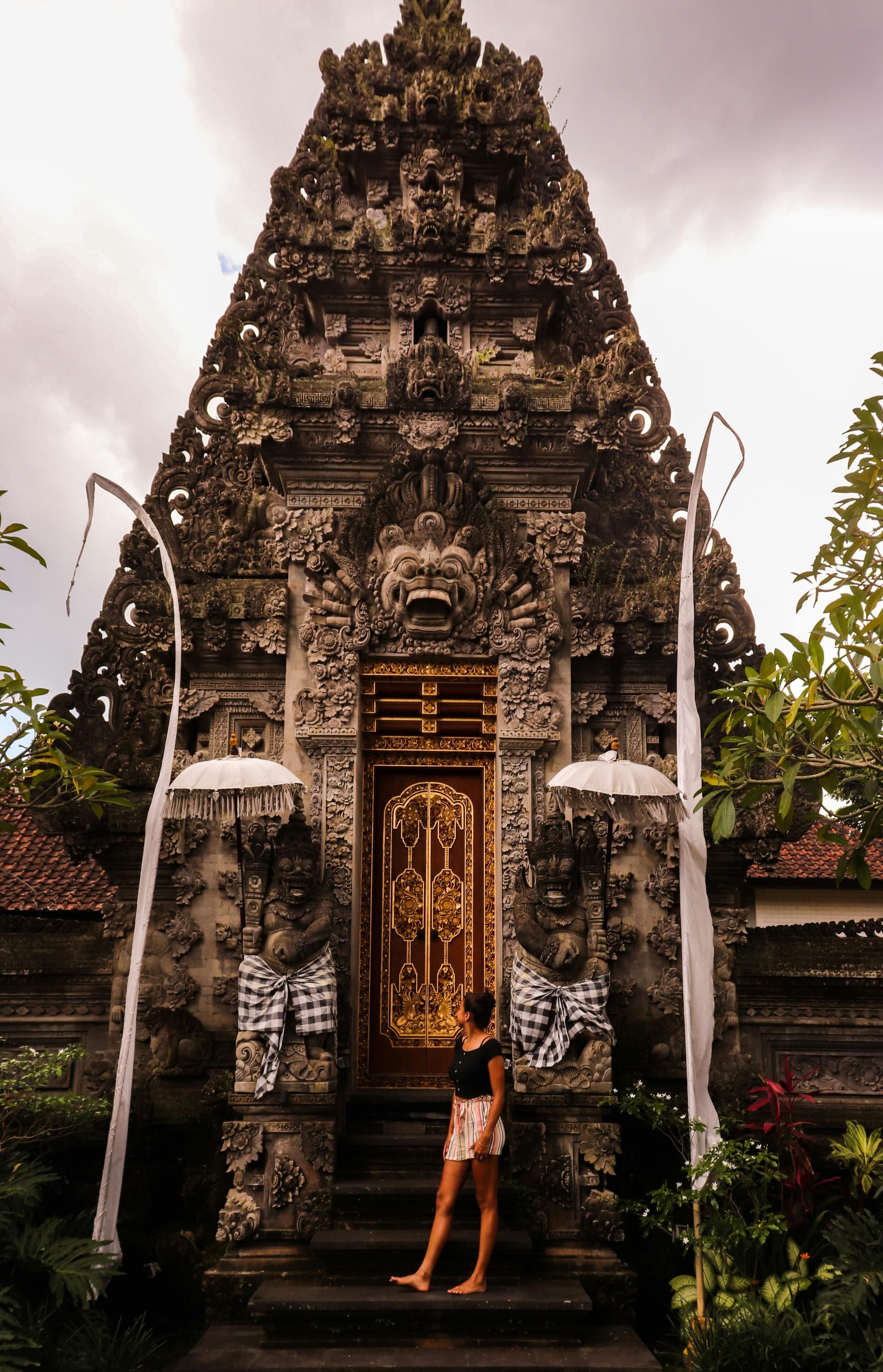
Bali Off the Tourist Trail: 12 Places Locals Actually Visit
7 min read

Raj Varma
Author
Travel & Tourism Expert Ex-Thomas Cook, Kuoni, Times of India & Travel Triangle.
SHARE BLOG
TABLE OF CONTENTS
Key Takeaways
- The quietest corners of Bali sit two hours or more from the south coast, on roads bus tours don't take: Sidemen, Munduk, Amed, Pemuteran, and southwest Nusa Penida.
- Most of these spots charge IDR 10,000–90,000 (USD 0.70–6) entry; a private driver runs IDR 700,000–900,000 (USD 45–60) per day and is the most practical way to reach the East and North.
- The dry season — May to October — gives safer mountain roads, fuller waterfalls (except August), and the calmest seas around Menjangan and Nusa Penida.
- Skip Tegalalang, Wanagiri swings, and Kelingking viewpoint after 9am — the lesser-known alternatives below are quieter and often free or under USD 3.
- Booking guided experiences for Menjangan diving, the Goa Rang Reng canyon walk, and West Bali National Park treks through a vetted platform avoids the wide quality gap between freelance operators.
Bali receives more than six million visitors a year, but most of them cycle through the same dozen attractions in the south and around Ubud. The result: half the island sees almost no tourist traffic. This guide walks through 12 places in Bali off the tourist trail — village valleys, twin waterfalls, royal water palaces, canyon walks, and a coral reef restoration project — that locals visit, ranked by region with 2026 entry fees, drive times, and the cleanest way to reach each.
The pattern across all 12: anywhere that requires a deliberate detour from the Canggu–Ubud–Uluwatu loop. Driving an hour past Ubud, climbing into the Munduk hills, or taking the rough road on Nusa Penida's southwest coast does the filtering work — fewer scooters, fewer photographers, more of the Bali that existed before Instagram.
Two upfront notes. First, "lesser-known" in 2026 means anywhere not yet hit by the social-media cycle — a moving target, and a few places on this list (Tibumana, Tirta Gangga) are quieter than Tegalalang but no longer empty. Second, almost every spot below needs either a private driver or a confident scooter rider. Grab and Gojek often refuse fares outside the south.
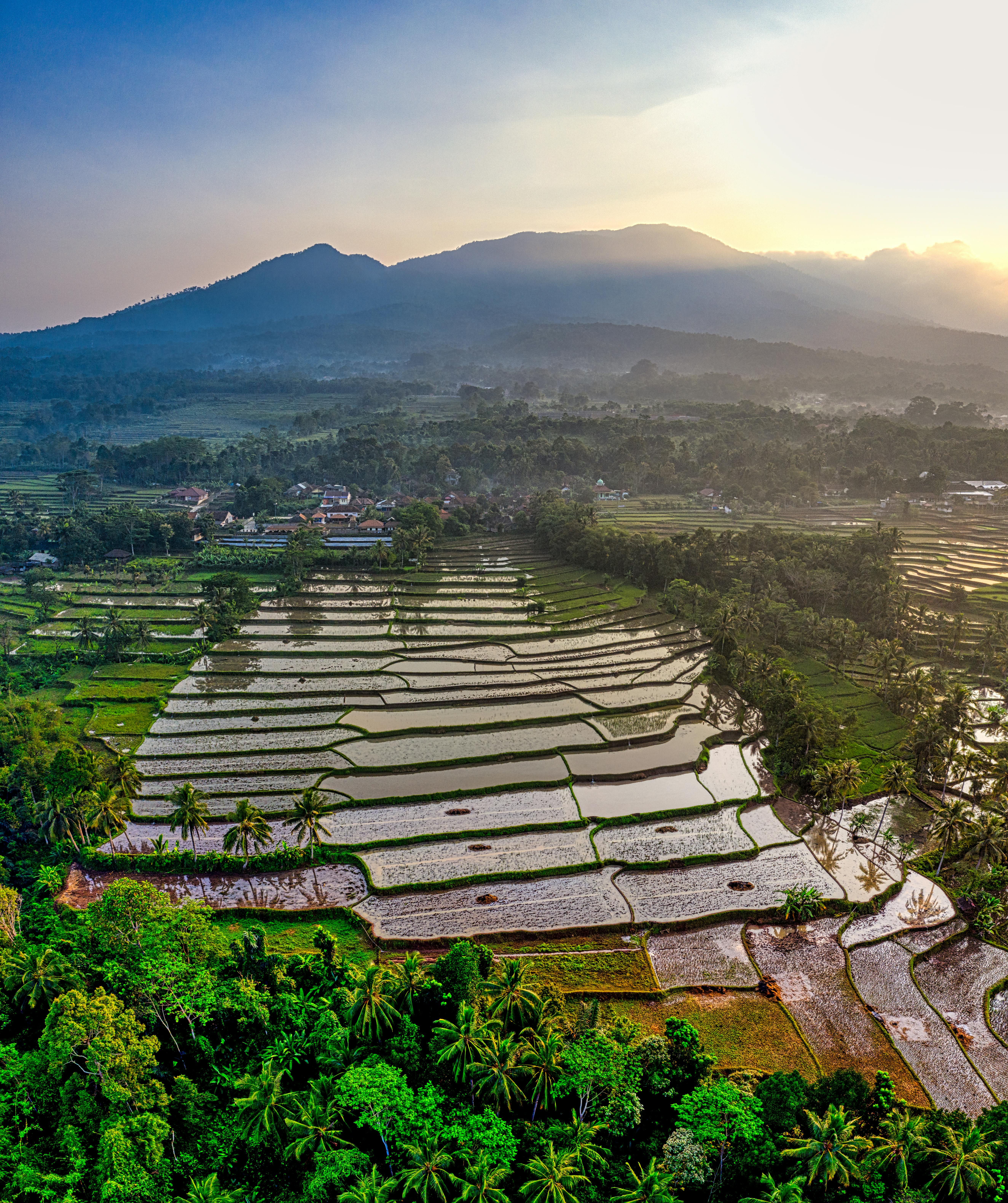
North Bali: The Munduk Highlands
Munduk sits at 1,200 metres above sea level in the mountains north of Lake Buyan — a 2.5-hour drive from Canggu, longer if you stop on the way. The temperature drops 5–8°C from the south, clove and coffee plantations replace palm trees, and most guesthouses face a forested valley. The region delivers two of Bali's most rewarding waterfall walks with a fraction of Tegenungan's foot traffic.
1. Munduk Village and the Melanting Waterfall Trek
Munduk village itself is the draw before any waterfall. Most accommodation is in family-run guesthouses charging IDR 400,000–1,500,000 (USD 25–95) per night, with breakfast on a veranda overlooking the valley. From the village, a 3–4 hour waterfall loop walks down through clove plantations to Melanting Waterfall, then on to Labuhan Kebo and a smaller unnamed third fall before climbing back. A local guide costs IDR 150,000–250,000 (USD 10–16) and is worth taking because the unmarked paths through plantation land confuse most maps.
- Munduk Waterfall entry: IDR 20,000 (USD 1.30)
- Guide for the full waterfall loop: IDR 150,000–250,000 (USD 10–16)
- Drive time from Ubud: 2 hours; from Canggu, 2.5 hours
- Best time of day: 7–10am before clouds roll in over the highlands
2. Banyumala Twin Waterfall
Banyumala sits 12.5 kilometres from Munduk and gets a fraction of the visitors of nearby Sekumpul Waterfall — partly because the descent is steep, and partly because the road is rough during the wet season. The reward at the bottom is two parallel cascades dropping 30 metres into a clear pool you can swim in. The walk down takes 15 minutes; the climb back takes longer.
- Entry fee: IDR 50,000 (USD 3.30)
- Hours: 8am–6pm daily
- Trail: 500 metres of paved path to the ticket booth, then a 15-minute descent on stairs and dirt path
- Skip in November–February: the unsealed road becomes muddy and the cliffs above the falls are prone to small rockfalls
East Bali: Mount Agung Country
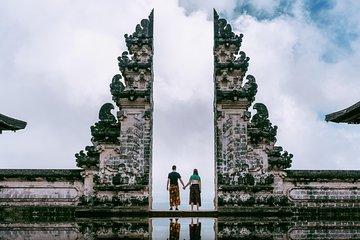
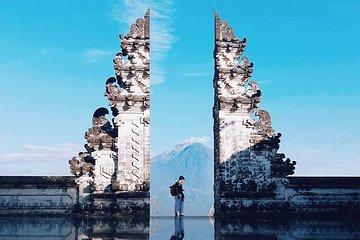
East Bali is the quietest mainland region and the one that most rewards a multi-day stay. Sidemen, Amed, and the Karangasem coast sit 90 minutes to two hours from Ubud and four corners away from the Seminyak energy. Mount Agung dominates the skyline from almost every viewpoint, rice paddies cover the slopes, and three royal water palaces — Tirta Gangga and Taman Ujung — break up any temple fatigue. Closer to Amed, the cliff-top Lempuyang Temple (Gate of Heaven) sits at the eastern edge of the region.
3. Sidemen Valley
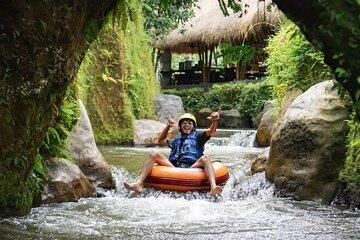
Sidemen (pronounced see-da-men) is what Ubud was 25 years ago: terraced rice paddies, family-run warungs, no nightlife, and Mount Agung visible from most accommodation. There is no entry fee — the whole valley is residential and agricultural — and exploration is via scooter or on foot. Most visitors spend two or three nights, walking the rice paddy paths in the morning, rafting the Telaga Waja river in the afternoon, and watching sunset from a guesthouse veranda. The Telaga Waja is steeper than the Ayung river out of Ubud and carries longer Class III–IV rapids.
- Sidemen entry: free (residential village)
- Telaga Waja river rafting: IDR 600,000–900,000 (USD 40–60) per person, 2–3 hours on water
- Bukit Cinta viewpoint: 30-minute scooter ride from Sidemen, free entry, best at sunrise for Mount Agung
- Drive time from Ubud: 90 minutes; from Sanur, 75 minutes
4. Amed and the USAT Liberty Shipwreck
Amed runs along Bali's far-east coast — a thin strip of black-sand fishing villages where the snorkelling starts ten metres from shore. The headline site is the USAT Liberty, a US Army transport torpedoed in 1942 and now resting in 6–30 metres of water at Tulamben, 30 minutes north of Amed proper. It is one of the rare wrecks in Asia accessible from the beach: walk in with fins on, swim 25 metres, and the bow is below you. Snorkellers see most of the upper structure; divers explore the whole hull.
- USAT Liberty snorkel: IDR 50,000 (USD 3) gear rental from the beach
- Two-tank dive with operator: IDR 800,000–1,200,000 (USD 50–75) including equipment
- Lahangan Sweet treehouse viewpoint (between Sidemen and Amed): IDR 20,000 (USD 1.30)
- Drive time from Sidemen: 90 minutes; from Ubud, 2.5 hours
5. Tirta Gangga Water Palace
Tirta Gangga is the late Karangasem king's water garden, finished in 1948 and built around natural springs. Stepping stones cross the main koi pond toward a central fountain — the photo most visitors come for. Entry fees climbed in 2025 and arrive earlier than tour buses (before 9am) to actually walk the stones without queueing. The site is small enough to cover in 45 minutes, which makes it an easy add-on to a Sidemen or Amed day.
- Entry fee: IDR 90,000 (USD 6) — verified for early 2026
- Swimming in the lower pools: additional IDR 10,000 (USD 0.70)
- Hours: 8am–5pm daily
- Best time: arrive at opening to beat the 9:30am tour bus wave
6. Taman Ujung Water Palace
Taman Ujung is the older of the two royal water palaces — built in 1909 by the same Karangasem king, with a Dutch architect and a Chinese architect collaborating on the design. The result is larger and emptier than Tirta Gangga: three pools connected by stone bridges, with views to the sea and Mount Agung. Most travellers visit either Tirta Gangga or Taman Ujung; locals know to do both in one half-day because they sit 30 minutes apart.
Pairing East Bali in one day
- Morning: Tirta Gangga at 8am, then Taman Ujung by 10am — beats both bus crowds
- Midday: Lunch in Amed, then USAT Liberty snorkel at Tulamben
- Late afternoon: Lahangan Sweet viewpoint for sunset over Mount Agung
- Total drive: 4–5 hours with stops, easiest with a private driver









Beyond Tegalalang: Quieter Spots Around Ubud
Within an hour of Ubud sit four places that absorb almost no tour bus traffic. They are alternatives to the well-photographed sites — Tegalalang, Tegenungan, Monkey Forest — that now require pre-9am visits to enjoy. Each of the four below stays under the radar because reaching them requires turning off the main tourist arteries — the same pattern that holds across every spot on this Bali off the tourist trail list.
7. Tibumana Waterfall
Tibumana is 45 minutes northeast of Ubud and one of the few central Bali waterfalls where you can still arrive at 10am and find space. The single 20-metre cascade drops into a wide pool you can swim in — the water comes out clear in the dry season and slightly silted in the wet. A 600-metre paved path from the car park leads down through a small ravine, crossing a stream twice before reaching the falls. Combine it with the lesser-known Taman Sari Waterfall ten minutes away.
- Entry fee: IDR 25,000 (USD 1.65) per person; locker rental IDR 5,000 (USD 0.35)
- Hours: 7am–6pm daily
- Drive time from Ubud: 45 minutes; from Canggu, 90 minutes
- Bring cash: no card payments at the entrance and no ATM nearby
8. Penglipuran Village
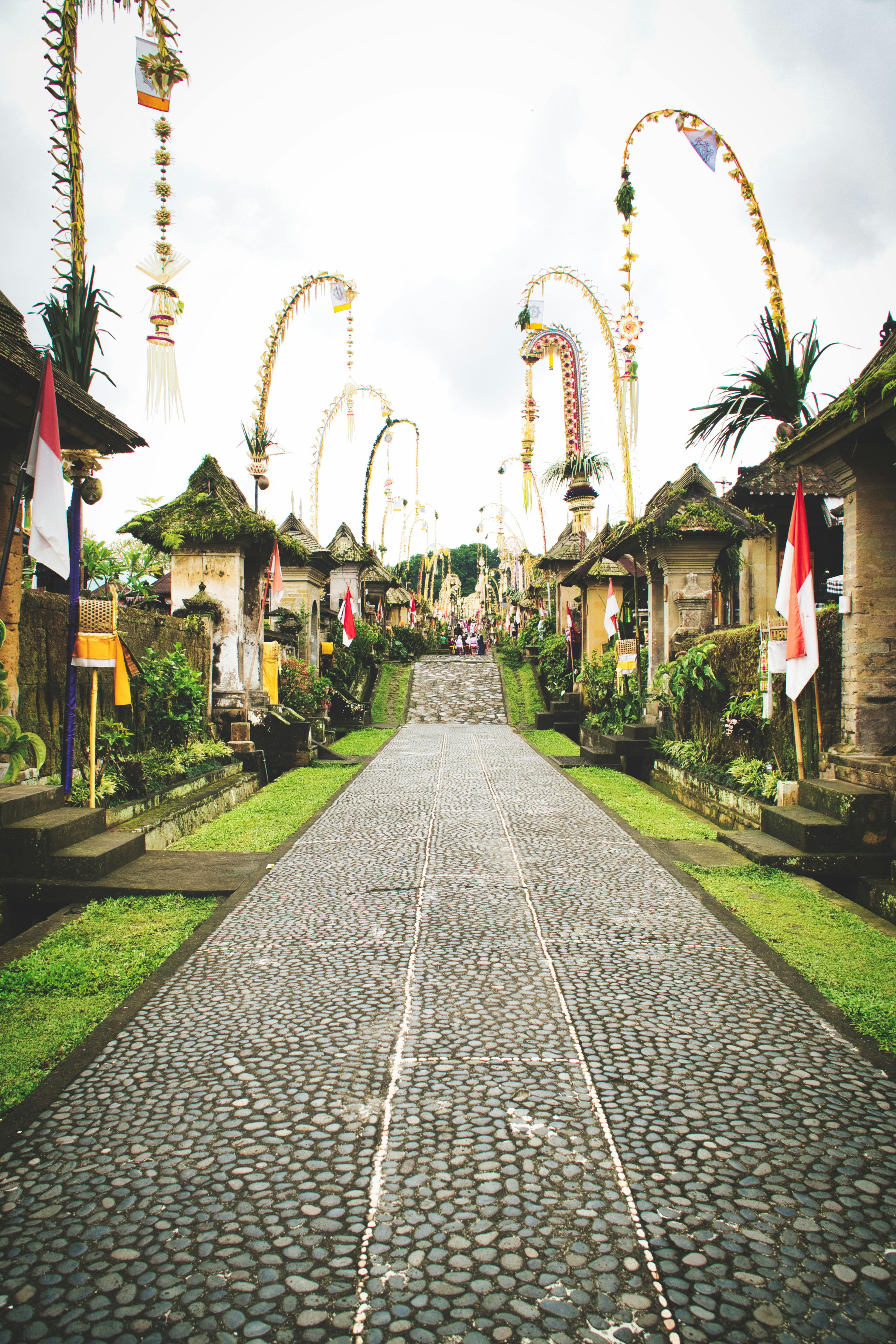
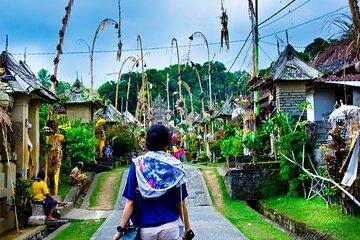
Penglipuran is a traditional Balinese village in Bangli regency, 90 minutes from Ubud, where 75 family compounds line a stone-paved central path. The houses behind their traditional angkul-angkul gates are still lived in, and the village still operates under the old awig-awig customary law. Behind the village sits a 45-hectare bamboo forest. Travel & Leisure has repeatedly named Penglipuran one of the cleanest villages in the world; the local banjar enforces a strict no-motorised-vehicles rule along the main path.
- Entry fee: IDR 50,000 (USD 3.30) per adult, IDR 30,000 (USD 2) per child
- Hours: 8am–6pm daily
- Drive time from Ubud: 90 minutes via Bangli; from Sanur, 2 hours
- Pair with: Mount Batur viewpoint at Kintamani, 30 minutes north
Read more about Penglipuran's traditional architecture and customary law before going — the visit makes more sense once you understand the tri mandala spatial layout that organises every compound.
9. Goa Rang Reng Canyon Walk
Goa Rang Reng is a small canyon east of Ubud where the local banjar caps daily entries at roughly 25 people and refuses online bookings. You arrive at the village entrance, sign up at the desk, and wait for your turn — the system is the village's way of keeping the canyon walk pristine. A local guide leads you through narrow stone passages, past a small waterfall, and into a chamber where light filters down through the canyon opening at midday. The walk takes 60–90 minutes.
- Entry plus guide: IDR 100,000–150,000 (USD 7–10) per person; book at the entrance, not online
- Hours: 8am–4pm; arrive before 11am to avoid being turned away when the cap fills
- Drive time from Ubud: 40 minutes east via Bakbakan
- Wear shoes that can get wet: short sections require wading
10. The Sweet Orange Walk in Ubud
The Sweet Orange Walk — locally called Subak Juwuk Manis — is a rice-paddy circuit that starts five minutes from central Ubud and almost no one walks. The path runs through 4 kilometres of active terraces, past the small Subak Juwuk Manis warung, and loops back through Penestanan village. The whole thing takes 90 minutes at a slow pace and costs nothing. It is the easiest way to see working rice paddies without the Tegalalang queues.
- Entry: free (active farmland, please stay on path edges)
- Start point: the small wooden sign on Jalan Subak Sok Wayah, behind Cafe Pomegranate
- Best time: 6:30–9am for cool temperatures and active farmers
- Pair with: breakfast at Sari Organik or Pomegranate at the end of the loop

West Bali: Menjangan Island and Pemuteran Reef
West Bali sees fewer visitors than any other region of the island. Pemuteran is a four-and-a-half hour drive from Denpasar, the village stretches along a single coastal road, and there is almost no nightlife. What it has is the best snorkelling and diving on the island, a coral reef restoration project running for more than two decades, and access to Bali's only national park.
11. Menjangan Island and West Bali National Park
Menjangan is a small uninhabited island in the Bali Sea, 30 minutes by boat from the Labuhan Lalang harbour near Pemuteran. The island sits inside West Bali National Park, and access requires a park permit and a licensed guide. The reward is dive visibility that often exceeds 30 metres, a sloping reef wall starting at 5 metres, and the chance to see Bali Starlings — the island's only endemic bird species, brought back from six wild individuals in 2001 through a captive breeding programme.
- Park permit: IDR 200,000 weekday / IDR 300,000 weekend (USD 13–20) per person, cash only
- Boat charter from Labuhan Lalang: IDR 400,000–700,000 (USD 25–45) split between up to 5 people
- Guided snorkel or dive package from Pemuteran operators: IDR 1,200,000–2,000,000 (USD 75–130) including permit, boat, gear, and guide
- Best months: April–November, with September–November the calmest seas and best visibility
Pemuteran village itself sits 15 minutes east of the harbour. Stay there for one or two nights to dive Menjangan with two morning trips and snorkel the in-bay Biorock coral restoration project in the afternoon — one of the largest electric-mineral-accretion reef projects in the world, with the artificial reef structures visible just 50 metres from shore.
Nusa Penida's Quieter Corner: Tembeling Natural Pool
12. Tembeling Beach and Forest
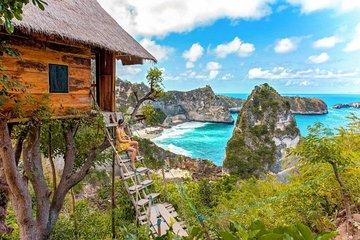
Most visitors to Nusa Penida do the standard west-coast circuit — Kelingking, Broken Beach, Angel's Billabong — and miss Tembeling on the same coast. Tembeling sits at the bottom of a steep ravine on the southwest side of the island. From the upper car park, you either walk 30 minutes down a rocky trail, take a motorbike taxi for IDR 20,000 (USD 1.30), or drive your scooter down if you are confident on rough roads. At the bottom: two freshwater springs feed a natural pool, a small forest opens out to a black-sand beach, and a sea cave faces directly into the cliffs.
- Entry fee: IDR 10,000 (USD 0.70) — sometimes collected, sometimes a voluntary donation
- Motorbike taxi from the upper car park: IDR 20,000 (USD 1.30) each way
- Walk down: 30 minutes one way; the climb back takes longer
- Drive time from Nusa Penida's main harbour: 1 hour, with the last few kilometres on rough road
Combine Tembeling with the quieter east-coast spots — Atuh Beach, Diamond Beach descent, the treehouse viewpoint at Rumah Pohon — in a full day. For a planning baseline, the top 20 things to do in Bali list includes the Nusa Penida island highlights, and the lesser-known Tembeling fits naturally as an add-on for a second day on the island.
How to Reach These Places: Practical Logistics
The single biggest barrier to visiting most spots above is transport. Grab and Gojek drivers refuse fares outside the south-coast triangle, public buses don't run on the rural routes, and self-driving requires both an International Driving Permit with a motorbike endorsement and comfort with Balinese road conventions. Three practical options work for most travellers.
Hire a Private Driver for the Day
This is the cleanest option for East Bali, Munduk, and Penglipuran. A driver in a 6-seater car costs IDR 700,000–900,000 (USD 45–60) for a 10-hour day including fuel — pricier in peak season, cheaper if booked direct rather than via a hotel concierge. Brief the driver the night before so the route is set, and pay in cash at the end of the day. Drivers expect to wait at each stop, not join you inside.
Rent a Scooter
Useful for Sidemen, Amed, and exploration around Munduk once you are based there. A scooter rental costs IDR 70,000–100,000 (USD 4.50–6.50) per day, with discounts for week-long rentals. The legal requirement is an International Driving Permit endorsed for motorbikes — a car-only IDP is not enough, and the Bali traffic police now check at random stops along the main routes. Helmets are compulsory.
Book a Guided Experience for the Specialised Sites
Menjangan diving, the Goa Rang Reng canyon walk, the Munduk waterfall trek, and the West Bali National Park jungle hike all benefit from a guide whose quality varies sharply between operators. Travjoy's Bali experiences are vetted and approved by local experts, which removes the freelance lottery — a useful filter for activities where guide skill noticeably affects how much you see.
Quick reference: how to skip the crowds
- Arrive at any waterfall, water palace, or rice walk before 9am — most tour buses leave the south at 9 and reach central Bali by 10:30
- Avoid weekends at Tirta Gangga, Banyumala, and Tibumana when domestic tourism doubles the foot traffic
- Visit during shoulder season (May–early June, late September–October) for fewer foreign visitors and full waterfalls
- Stay overnight in Sidemen, Munduk, or Pemuteran rather than day-tripping — most coach tours leave by 4pm and these places empty out
Planning Your Quieter Bali Trip
Three calls shape any off the tourist trail Bali itinerary: which region matches your pace, when to go, and how much you delegate to a driver versus a scooter. East Bali fits a slow honeymoon or culture-led trip. Munduk and West Bali reward active travellers willing to drive. Tembeling and the Sweet Orange Walk slot easily into any itinerary already going through Nusa Penida or Ubud.
The simplest week-long structure: two nights in Sidemen for East Bali, two nights in Munduk for the waterfalls, and three nights split between Ubud (for Tibumana, Penglipuran, and the Sweet Orange Walk) and Pemuteran (for Menjangan). Start planning your quieter Bali trip on Travjoy's Bali destination page — the experiences listed there are vetted by local experts, which takes the guesswork out of picking the right operator for guide-dependent activities like Menjangan diving and the Munduk waterfall trek.







.svg&w=1920&q=75)