


Bali Jungle Swing: Is It Worth It? An Honest 2026 Review
11 min read
Raj Varma
Author
Travel & Tourism Expert Ex-Thomas Cook, Kuoni, Times of India & Travel Triangle.
SHARE BLOG
TABLE OF CONTENTS
Key Takeaways
- The Bali jungle swing is worth it if you want a signature Ubud photo with a mild adrenaline hit — but it is a photo product first, a thrill ride second. Roughly 15 minutes of swing time across a 90-minute visit.
- Expect IDR 150,000 to IDR 500,000 (USD 9 to USD 31) per person at the major regulated operators. The "free shuttle from Ubud" pitch usually comes with a higher per-swing rate on arrival.
- Stick to operators with full body harness, weight checks, and a posted age limit. Lap-strap-only roadside setups are where the rare incidents have happened.
- Couples should book Real Bali Swing or d'Alas; families with kids 7 to 12 do well at Alas Harum; pure thrill-seekers should skip the swing for the Alas Harum bungee or the 130-metre XPark cliff jump on Nusa Penida.
- Arrive 8:00 to 9:00 AM in the dry season (April to October) for soft light and small queues. By 11:00 AM the tour buses arrive and waits at the most photogenic swings can hit 45 minutes.
A Bali jungle swing visit in 2026 costs between IDR 150,000 and IDR 500,000 per person (USD 9 to USD 31) and runs about 90 minutes from arrival to departure, with roughly 15 minutes of actual swing time at the major harness-equipped venues around Ubud. The experience is worth booking for first-time visitors after a strong photo and a manageable thrill, and best skipped by adrenaline-only travellers — who are better served by the Alas Harum bungee or the XPark cliff bungee on Nusa Penida.
The Bali jungle swing started as one swing rope tied between two palm trees outside Ubud in 2017. By 2018 it had broken Instagram. By 2026 it is an industry — at least 12 commercial operators within a 30-minute drive of central Ubud, dress rental businesses on every approach road, and a price spread that runs from IDR 50,000 at a roadside platform to IDR 498,000 for the headline extreme swing at Alas Harum. The marketing has not slowed down; the honest review has.
This post does the review. You will get an operator-by-operator price table for 2026, the safety differences that actually matter (regulated venues versus roadside swings, harness type, posted weight limits), a verdict on whether the Bali jungle swing is worth it for your specific traveller type, and the practical logistics — what to wear, when to arrive, what to skip on the upsell sheet. Travjoy's options are pre-vetted by local experts on these exact criteria, so the operators we point to have passed the safety filter before they reach the page.
What Is the Bali Jungle Swing? (And What You Are Actually Paying For)
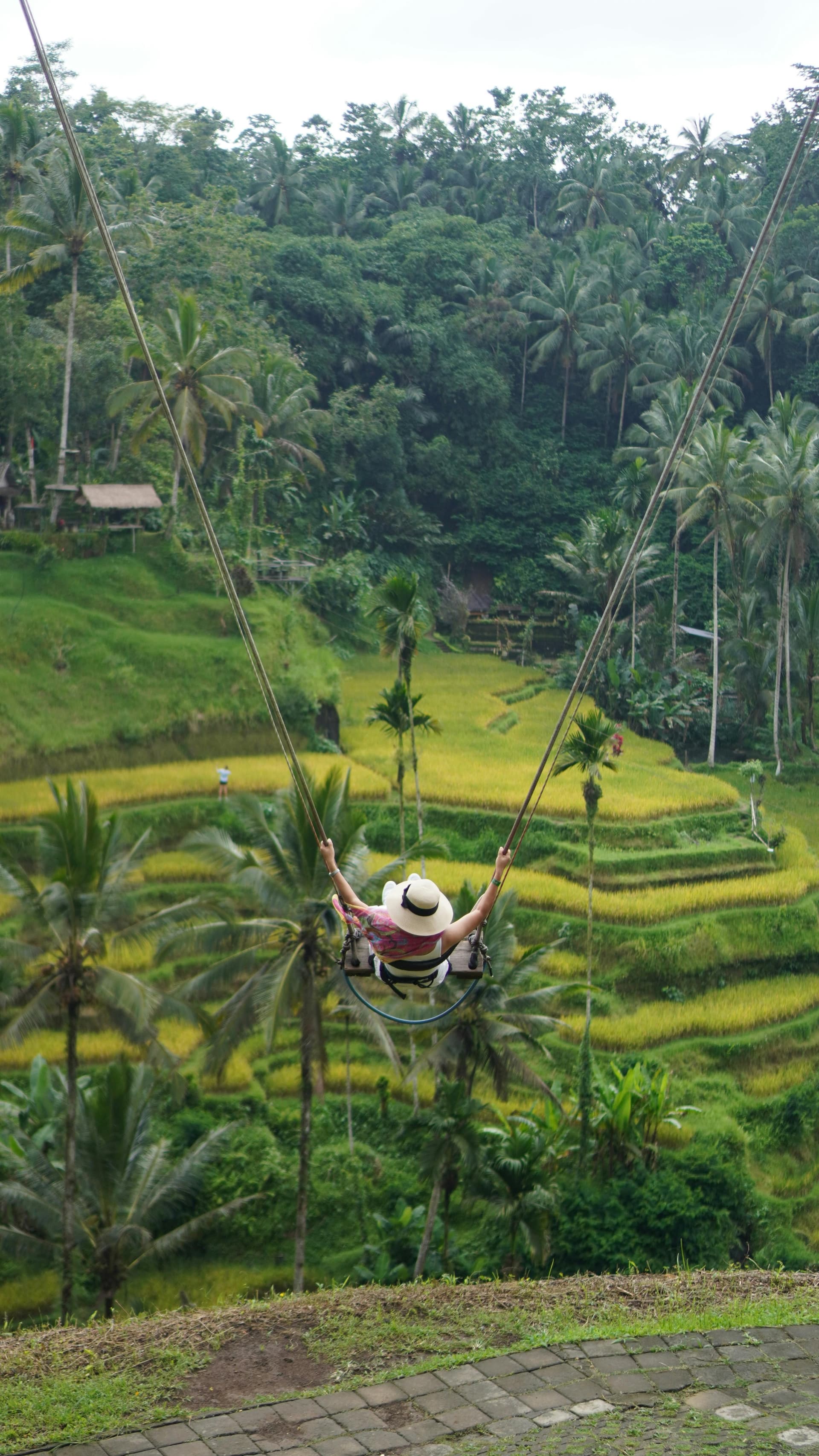
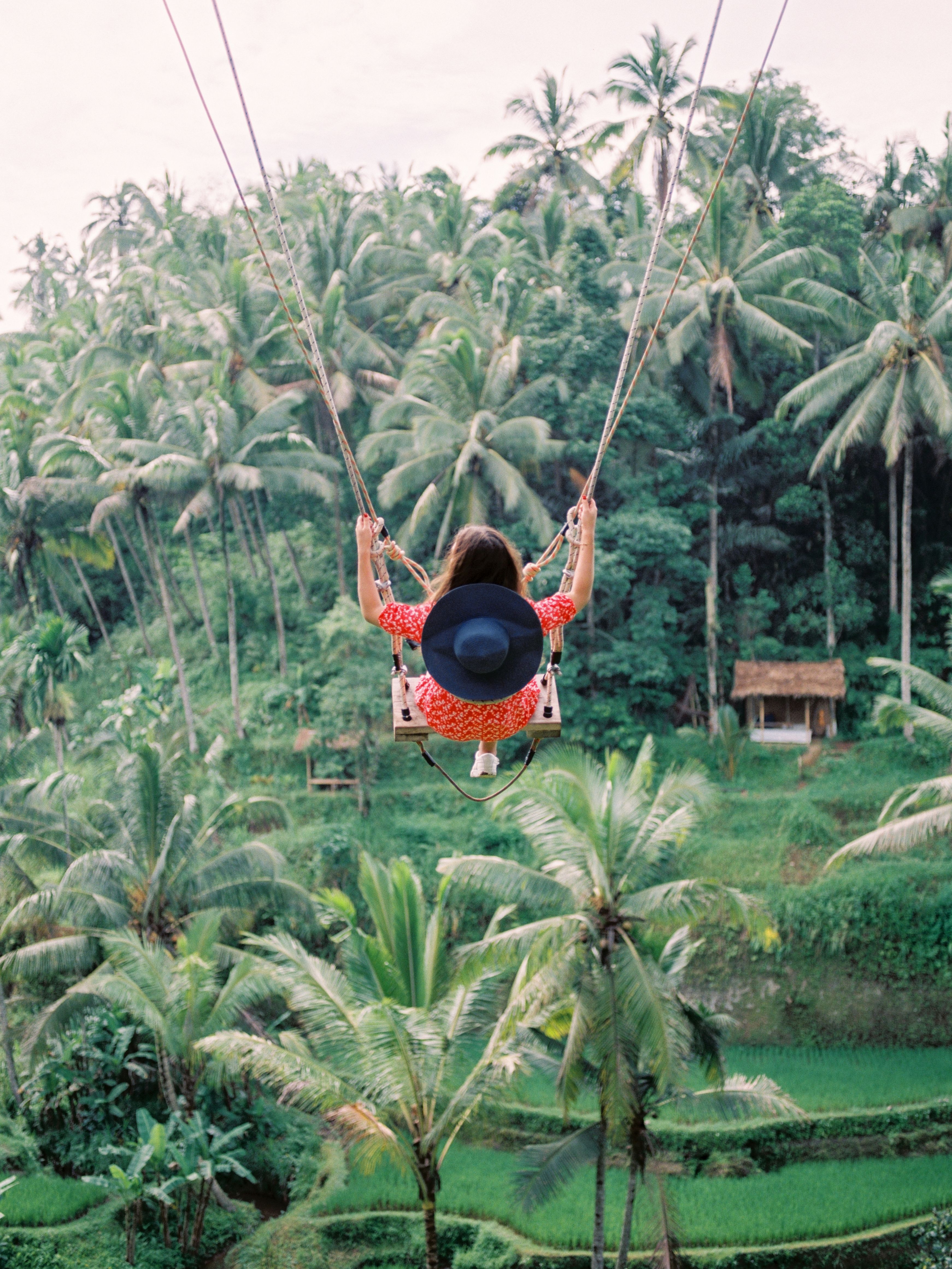
A Bali jungle swing is a large rope swing built on engineered steel or palm-tree frames, set up over a steep valley, rice terrace, or river gorge in the highlands around Ubud. Riders wear a full body harness, are pushed off a launch platform, and swing in a long arc over the drop. The point is not the swing itself — it is the photo of the swing, taken from a tripod position the operator has fixed for the exact moment of peak arc.
That distinction matters because it changes what you should expect from the visit and where the money goes.
How a Tourism Craze Became an Industry
The original Bali Swing opened in 2017 in Bongkasa Pertiwi village, about 20 minutes north of central Ubud. Within twelve months Instagram travel accounts had pushed it to global recognition, and within two years a dozen copycat operators had built variations across the Ubud and Tegallalang regions. By 2026 the cluster has stabilised into roughly five major players (Real Bali Swing, Bali Swing Pioneer, Alas Harum, Aloha Ubud Swing, Zen Hideaway) and a long tail of smaller and roadside operations.
What sets the Bali version apart from a backyard rope swing is the engineering. Major operators have multiple swings at staggered heights — typically 10, 15, 25, 50, and up to 78 metres — built on permanent steel frames over actual gorges. The photo backdrop is real. The drop is real. The harness is the part that makes the swing a tourist product instead of a stunt.
What a Typical Visit Actually Looks Like
A standard mid-tier package (IDR 250,000 to 350,000) buys you:
- Entrance to the swing park grounds — usually a 1 to 2 hectare site with a viewing platform, café, and bird's-nest photo props
- One or two swing rides at fixed heights — often 10 m and 15 m. Each ride is roughly 15 to 20 push-cycles, totalling 60 to 90 seconds in the air
- A staff photographer for the swing photos. Digital files are sometimes included, sometimes a separate IDR 50,000 to 150,000 add-on
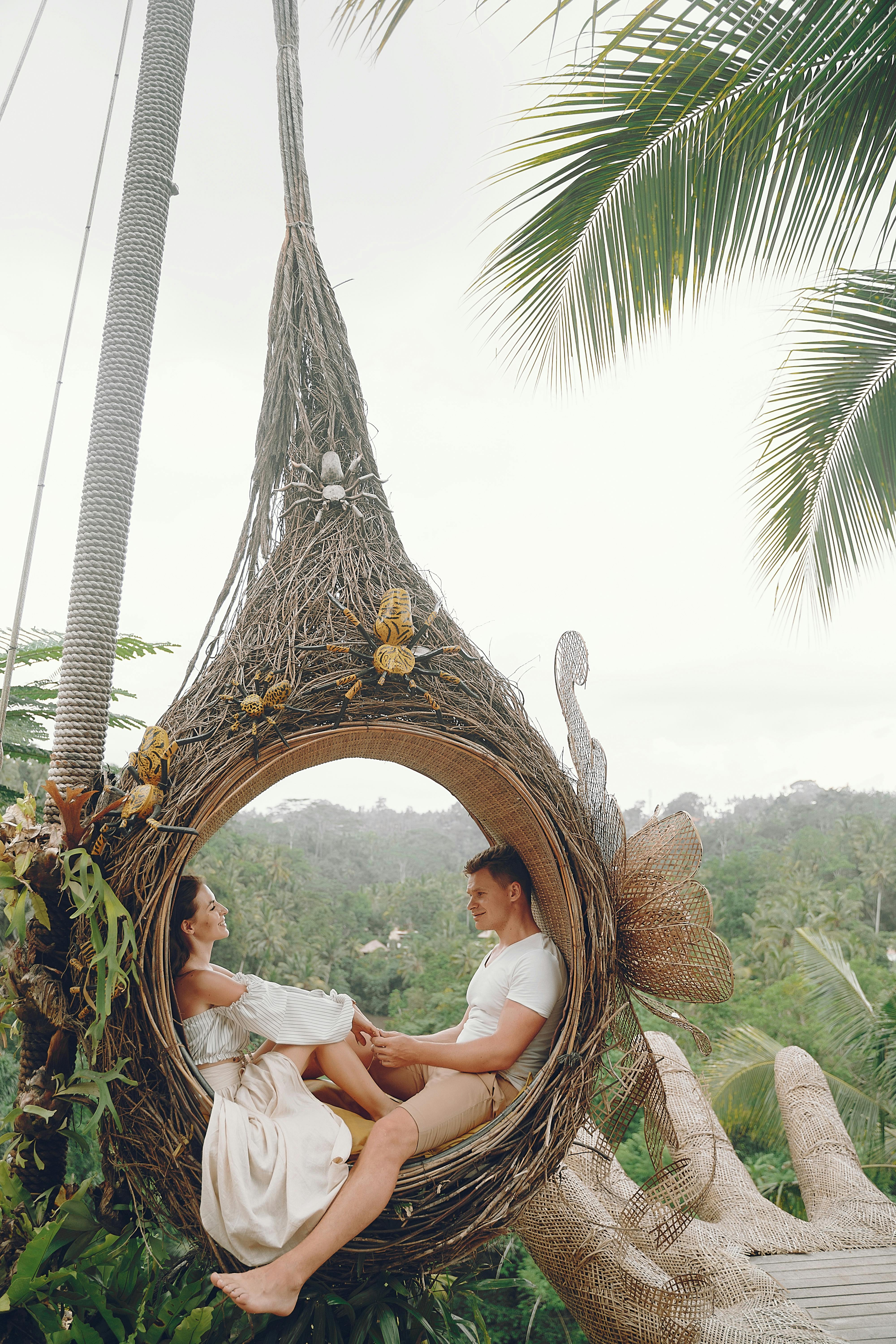
- Time on the bird's-nest props (giant woven nests, heart frames, glass bridges) — typically 20 to 30 minutes of self-directed photo time
- Use of basic dress rental or your own clothing. Premium dress rental runs IDR 50,000 to 100,000
The maths is honest: across a 90-minute visit, the actual swing time totals 3 to 5 minutes. The remaining 85 minutes is photo logistics, harness changes, queueing, and food.
Why This Is Not a Thrill Ride
The Bali jungle swing photographs as adrenaline. It performs as something gentler. The arc is long but the speed is moderate, the harness is over-engineered, and the launch is staffed by people whose job is to keep your face camera-ready. Most riders describe the feeling as "nervous excitement" rather than "adrenaline rush" — closer to a fairground rope swing than a bungee jump. For honest comparison: an 80-metre swing produces less raw drop sensation than a 35-metre bungee at Alas Harum, and a fraction of the 130-metre XPark cliff jump on Nusa Penida.
If you want the photo, the swing delivers. If you want the heart-in-throat moment, the swing under-delivers, and you should plan one of the upgrades covered in Block 2.
Is the Bali Jungle Swing Worth It in 2026?
Yes for most first-time Bali visitors. No for repeat visitors, hard-core adrenaline travellers, and anyone who gets motion-sick easily. The honest verdict in a single line: the Bali jungle swing is worth the money if the photo is the goal and the IDR 250,000 to 350,000 mid-tier package is your budget.
When It Is Worth Booking
- First-time Bali visitors — the swing photo is one of the three or four most recognisable images of Bali, alongside Uluwatu sunset and Tegallalang rice terraces. Skipping it is a fair choice; missing it then regretting it is the worse outcome
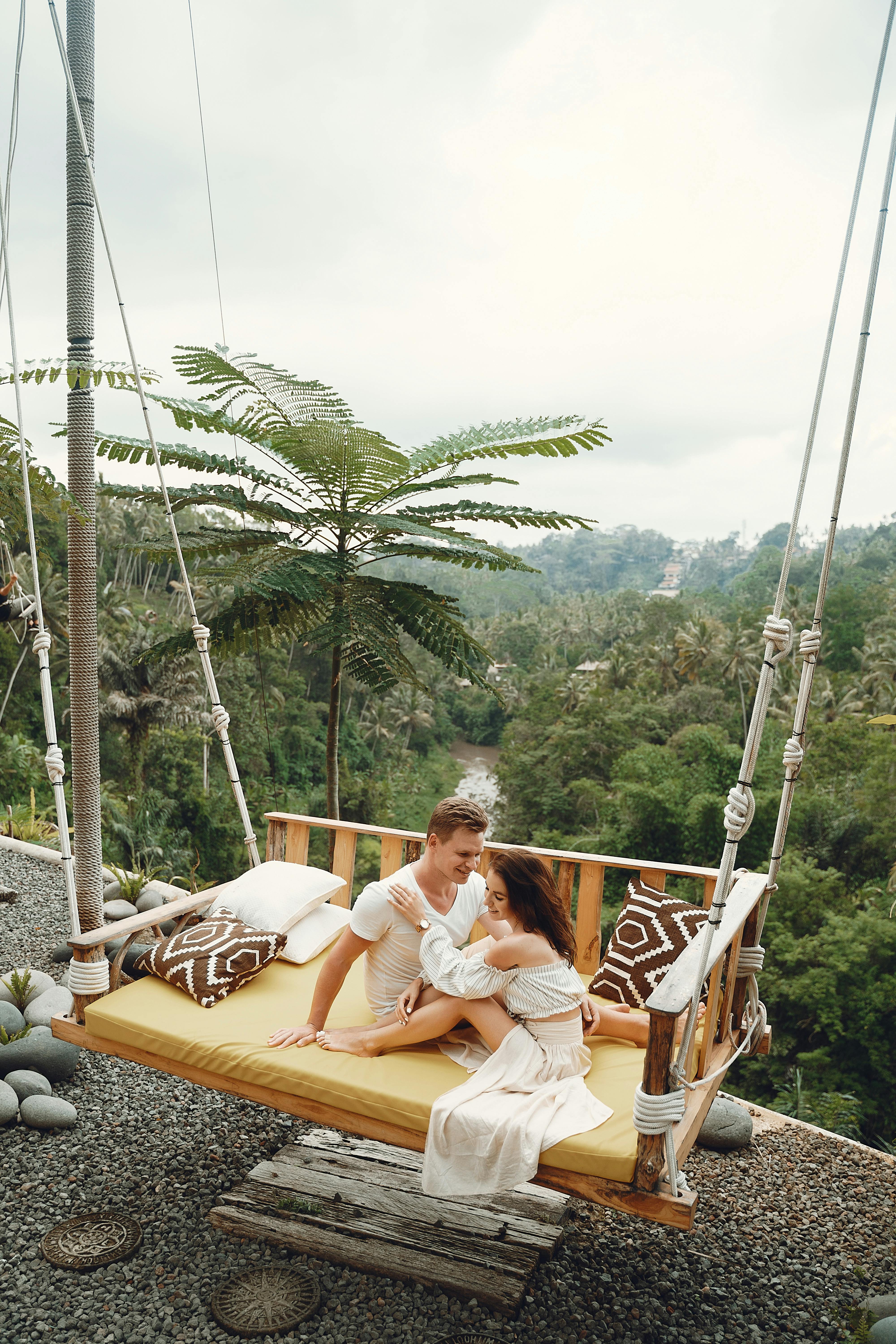
- Couples on a 4 to 7 day trip — the tandem swings (Real Bali Swing, d'Alas, Alas Harum couple's swing) produce strong shared photos, and the dress rental option pays off for portraits
- Families with kids aged 7 to 12 — Alas Harum has multiple swing heights, a zipline, and a small entry tier (IDR 70,000) that lets the under-confident skip the bigger drops without paying for them
- Solo travellers with a photographer eye — Aloha Ubud Swing and Zen Hideaway have lower crowds and softer settings, and the operator photographers at the smaller venues tend to take more time
When to Skip
- Adrenaline-only travellers — the swing is not an adrenaline product. Spend the budget on the Alas Harum bungee (IDR 350,000 to 500,000) or the XPark Nusa Penida 130 m cliff bungee (IDR 1.5 to 3.1 million) instead
- Repeat Bali visitors who have done it before — the variants are not different enough between operators to justify a second ride
- Travellers with motion sickness, severe vertigo, recent spinal or heart issues, or in pregnancy — every regulated operator explicitly excludes these conditions
- Anyone over the posted weight limit — most major swings cap at 100 to 150 kg single and 200 kg tandem. Operators do enforce
If you fall into the "skip" category, the broader inland Ubud loop still delivers — see Travjoy's Bali top 20 picks for stronger alternatives than the swing for your trip.
The Major Bali Jungle Swing Operators Compared (2026 Prices)
Five operators carry the volume. The price spread inside this group is wider than most listicles suggest — IDR 135,000 at Aloha for a basic swing versus IDR 498,000 at Alas Harum for the Super Extreme — and the differences are not always about the swing itself. Location, crowd density, and the upsell pressure on arrival matter as much as the equipment.
| Operator | Location | Swing heights | Price (IDR / USD) | Weight limit | Best for |
|---|---|---|---|---|---|
| Real Bali Swing | Bongkasa Pertiwi (20 min from Ubud) | 10–78 m, 12 single + 3 tandem | IDR 350K–500K / USD 22–31 | 150 kg single, 200 kg tandem | Couples, mainstream photo trip |
| Alas Harum Bali | Tegallalang (20 min north of Ubud) | Up to 25 m extreme, multiple tiers | IDR 70K entry + 263K–498K per swing / USD 4 + 16–31 | 90 kg flying fox single, 100 kg tandem | Families, multi-activity day |
| Bali Swing Pioneer | Bongkasa (next to Real Bali Swing) | 10–80 m, 10+ photo spots | IDR 300K–450K / USD 19–28 | 130 kg single | Photo-heavy itinerary |
| Aloha Ubud Swing | Tegallalang (5 km from Ubud centre) | 10–60 m, 5 swings | IDR 135K–174K / USD 8–11 | 100 kg single | Solo, photographers, budget |
| Zen Hideaway / d'Alas | North of Ubud, smaller venues | 10–15 m, single swing focus | IDR 150K / USD 9 | 120 kg single | Quiet visit, dress photoshoot |
| Wanagiri Hidden Hills | North Bali (Buyan Lake area) | Variable, mostly platforms not swings | IDR 50K–100K per platform / USD 3–6 | Inconsistent, often unposted | Day-trippers in north Bali |
Prices are baseline 2026 walk-up rates and exclude transport, dress rental, premium photo packages, and the Indonesian 17.25% tax-and-service surcharge that Alas Harum and Real Bali Swing apply on top of the listed price. Cross-check the operator's official site the week of your visit — these venues raise prices in dry-season peak windows (July–August, December–January) by 10 to 20 percent.
Real Bali Swing — The Original, and Still the Headline
The Bongkasa Pertiwi venue is the original 2017 site. Twelve single swings spanning 10 to 78 metres, three tandem swings for couples, six bird's nests, a heart-rock platform, and a 78-metre headline swing that runs over the Ayung River gorge. Open 08:00 to 17:00 daily, lunch buffet included in the standard package, free shuttle from Ubud listed on the site. Reviews on TripAdvisor across the past 18 months stay above 4.5, with the most common positive comment being staff attentiveness and the most common negative comment being the queue at the headline swing past 11:00 AM.
Alas Harum Bali — The Theme-Park Version
Set in Tegallalang next to the rice terraces, Alas Harum runs the swing as part of a wider park — coffee plantation tour (included free at the gate), Sky Bike (cycling on a wire over the rice fields), Flying Fox zipline, and the Super Extreme Swing at 25 metres. The Cretya Ubud day club next door is a separate entry. The model is "buy the gate ticket, then pay per ride", which gives more flexibility than a single all-in package but pushes the total cost up sharply if you want to do everything. Strong choice for families because you can let one parent skip the extreme swing and use the entry ticket for the rice terraces and bird's nests instead.
Insider reality check — the "free Ubud shuttle" pitch. Most of the major operators advertise a free hotel shuttle from central Ubud. The shuttle is real. What is also real: the on-arrival package the staff present is almost never the IDR 350K rate you saw online. Standard playbook is to walk arrivals straight to the IDR 450K to 500K "all-swings" upgrade and only offer the basic IDR 250K option when asked. Decide your budget before you get into the shuttle, and either pre-book online at the rate you want or ask for the basic ticket at the desk before the upsell starts.








Is the Bali Jungle Swing Safe? The Regulated vs. Roadside Divide
Yes at the regulated operators, with the standard caveats. No at the roadside swings without harnesses, which is where the rare incidents have happened. The Bali jungle swing safety question is essentially binary in 2026, and the line between the two categories is easy to see if you know what to look for.
What "Regulated" Actually Means at a Major Operator
At Real Bali Swing, Alas Harum, Bali Swing Pioneer, and Aloha Ubud, the safety setup includes:
- Full body harness with chest and leg straps, not just a lap belt
- Two independent anchor points — primary harness clip and a backup safety line
- A weight check at the gate before harness fitting
- A safety briefing covering how to grip, where to look, what to do if you panic mid-arc
- A trained launcher who controls the push force, the release angle, and the brake
- Liability insurance carried by the operator (which is why every venue requires you to sign a waiver)
None of this is unusual — these are baseline standards for any adventure tourism operator, and Bali's swing industry has tightened them since the early viral years. The major operators are inspected, post their safety equipment lists publicly, and have established WhatsApp customer-service lines for pre-arrival questions.
The Warning Signs of a Roadside Setup
Bali has no national-level safety regulator for adventure swings the way Australia or New Zealand do. That puts the responsibility on you. Walk away from any swing that shows any of these signs:
- Lap strap or seatbelt only — no chest harness
- One anchor point on the rope — no visible backup line
- No posted weight limit — and no scale or check at the gate
- No safety briefing — just pay and sit
- The launcher is a passing villager, not a trained staff member in uniform
- No waiver or insurance paperwork — a regulated venue will always make you sign
The Wanagiri Hidden Hills cluster in North Bali is a frequent example of mixed-quality operators sitting next to each other on the same stretch of road. Some platforms are well-engineered; others are bamboo-and-rope setups that exist because the regulatory floor is the ground. The IDR 50,000 to 100,000 price is a clue — it pays for a platform, not a safety system.
Weight, Age, and Health Limits Across the Major Operators
- Minimum age — 5 years (Real Bali Swing), 7 years (Alas Harum extreme swings, Aloha)
- Minimum weight — 35 kg at most venues for the bigger swings; lighter children use the shorter platforms
- Maximum weight — 100 to 150 kg single rider, 200 kg tandem
- Health exclusions — pregnant women, recent spinal or back surgery, severe vertigo, uncontrolled cardiovascular conditions, recent ear surgery
- Footwear — closed grip shoes required at most venues; flip-flops are usually refused at the platform
Check your travel insurance before you go. Many standard policies exclude "adventure activities" or have a height threshold — anything above 30 metres can trigger an exclusion clause. A few minutes with your policy document beats a hospital bill in Denpasar.
Insider reality check — the rare fatalities have not been the riders. Across the major operators' decade of operation, the only fatality on record at a Bali swing site involved a parent who stepped forward off the platform to push a child's swing and fell, not a harnessed rider. The takeaway: respect the launch zone barrier, stay behind the line, and let the staff do the pushing. If your operator does not have a clear barrier line at the launch, that is a second-tier signal worth heeding.
Which Bali Jungle Swing Should You Choose? (By Traveller Type)
Choose Real Bali Swing or d'Alas if you are a couple. Choose Alas Harum if you have kids aged 7 to 12. Choose Aloha Ubud Swing if you are solo and care about photos. Choose Alas Harum bungee or XPark Nusa Penida if you are after raw adrenaline. Choose Zen Hideaway or Wanagiri Hidden Hills if you are on a tight budget. Below is the longer version of each call.
Best for Couples — Real Bali Swing or d'Alas
Real Bali Swing has the largest tandem swing inventory and the best couple-friendly background — palm canopy, Ayung River gorge, multiple bird's nests built for two. The tandem swing at d'Alas is smaller, quieter, and works better for portrait-style photos with the infinity pool and rice paddies as the second-shot backdrop. Both rent flowy dresses on site (IDR 50,000 to 100,000) and have dedicated couple photographers. Budget: IDR 350,000 to 500,000 per person at Real Bali Swing; IDR 150,000 plus IDR 50,000 dress at d'Alas.
Best for Families with Kids 7 to 12 — Alas Harum
Alas Harum is the only major venue where the entry ticket alone (IDR 70,000) gives you a complete park experience without committing to any swing. Kids who panic at the platform can pivot to the rice terrace walking loops, the bird's nests, the dancing bridge, and the coffee plantation, while the older kids do the 15-metre swing. Adventure-confident 10-to-12 year olds can do the 25-metre Super Extreme Swing under the 35 kg minimum. Layer in lunch at the Cretya Ubud day club next door for a full half-day with kids.
Best for Solo Travellers and Photographers — Aloha Ubud Swing
Aloha is the lowest-commercial-pressure venue of the major operators, with five swings spanning 10 to 60 metres, smaller crowds, and staff photographers who take more time per visitor because the throughput is lower. Closer to central Ubud than Real Bali Swing, which means the morning light arrives sooner and the dry-season tour buses arrive later. Price (IDR 135,000 to 174,000) is roughly a third of Real Bali Swing for a comparable swing height, and the trade-off is mainly that the photo set-ups are less elaborate.
Best for Pure Adrenaline — Alas Harum Bungee or XPark Nusa Penida
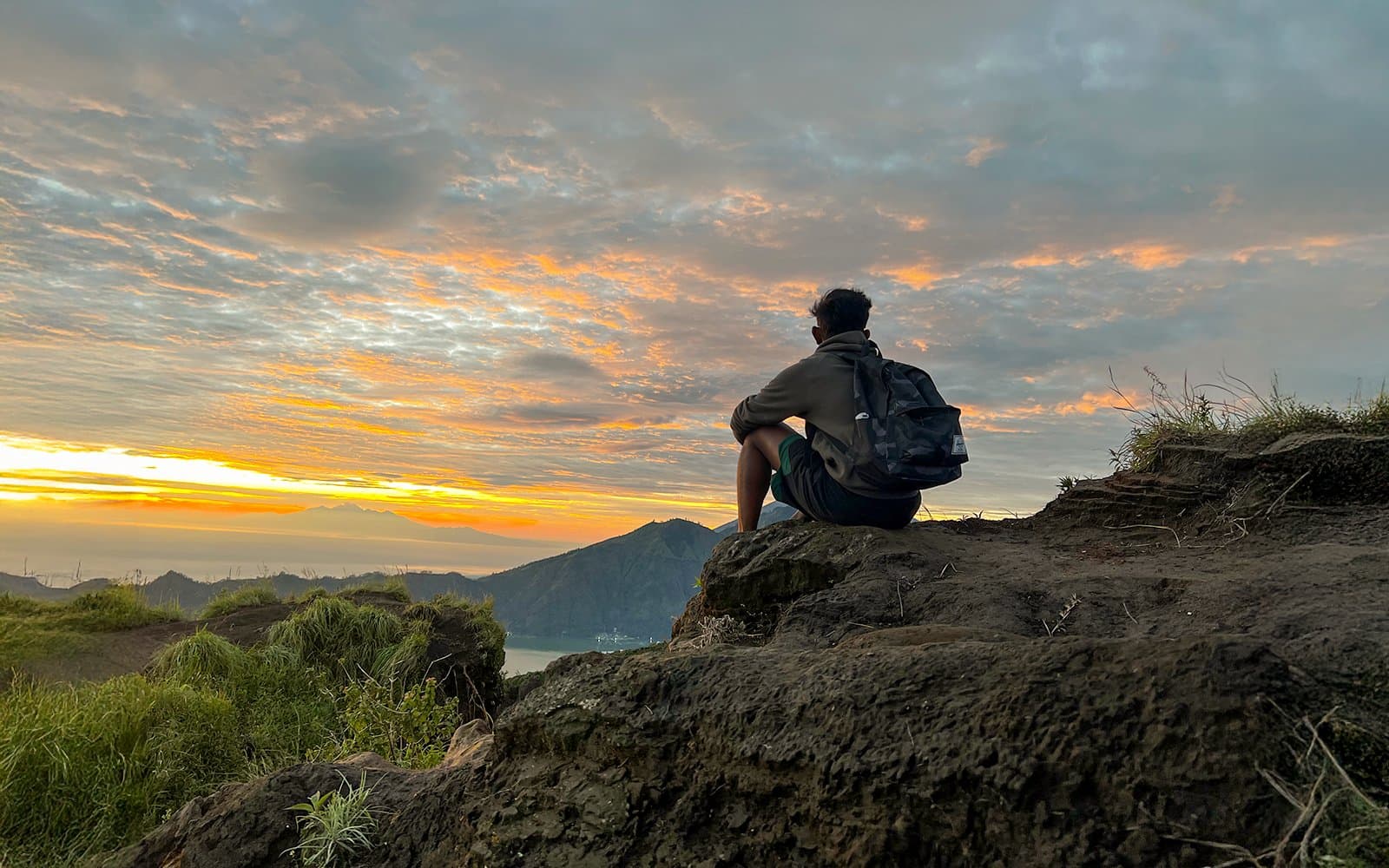
If the swing arc is not enough, the bungee jump at Alas Harum (IDR 350,000 to 500,000, 35 m drop) is the next step up — a vertical free fall with safety gear and a briefing, in the same park as the swings so you can do both in one visit. The bigger step is XPark on Nusa Penida, which holds the record for Southeast Asia's highest bungee at 130 metres over a cliff edge with the open ocean beneath. XPark costs IDR 1.5 to 3.1 million depending on package and add-ons, and requires a 30 to 45-minute fast boat from Sanur. For a full ocean adventure day, layer in a Bali-side Mount Batur sunrise trek the day before the bungee.
Best for Budget Travellers — Zen Hideaway or Wanagiri Hidden Hills
Zen Hideaway is the cleanest budget option at IDR 150,000 — a small operator with proper harnesses and a quieter setting. Wanagiri Hidden Hills in North Bali is the cheapest at IDR 50,000 to 100,000 per platform, but quality varies operator to operator on the same road. Use Wanagiri only if you are already passing through (it pairs well with a Munduk or Buyan Lake day) and only at platforms with visible harness setups.
How to Book, What to Wear, and What to Skip
Pre-book online for the headline operators (Real Bali Swing, Alas Harum, Bali Swing Pioneer) — it locks in the lower-tier price before the on-arrival upsell starts. Walk-in works fine at the smaller venues (Aloha, Zen, d'Alas) where the upsell pressure is lower. The differential between pre-booked and on-arrival rates is usually 15 to 25 percent.
What to Wear
- Flowy dress in a bright solid colour — red, yellow, white, deep blue all photograph well against the jungle green. Avoid busy patterns; the swing motion will blur them
- Closed-toe grip shoes for the platform and walking sections, then change at the swing if you want barefoot photos
- No loose jewellery, scarves, or hats — anything that can fly off will, and most operators ask you to remove them at the harness check
- A swimsuit underneath if you are doing Alas Harum (the Cretya pool is next door) or a Zen Hideaway combo (some packages include the infinity pool)
- Sunscreen — the sun on the open platform is stronger than under the jungle canopy at the photo nests
Dress rental on site runs IDR 50,000 to 100,000 and is worth it if you are travelling carry-on only. The dresses are mostly long, brightly coloured, and pre-photographed at the swing — so the staff photographers know exactly which angle works for each style.
What to Bring
- Your own camera or phone — operator photographers vary in quality, and digital files are often a paid add-on (IDR 50,000 to 150,000)
- Water — most venues have cafés but mark up prices 2 to 3x
- A small towel — the harness can be sweaty in the dry-season midday heat
- A change of clothes if you are renting a dress
- Cash in IDR — most operators take card for the entry ticket but not always for the add-ons
What to Skip on the Upsell
- Luwak coffee tasting — flagged in 2026 TripAdvisor reviews at Alas Harum and several other venues for animal welfare concerns (caged civets, not free-ranging). The plantation walk is fine; the caged-civet tasting is not
- Drone photography add-ons at most venues — Bali has restrictive drone rules and most operators do not have permits
- Premium photo packages above IDR 250,000 — the extra files rarely justify the cost; ask to see sample edits before paying
- Combo "swing + 5 attractions" full-day tour bookings made on arrival — the rate is usually 30 to 40 percent above what the same operator charges online for the same combo
The Morning Rule
Arrive between 8:00 and 9:00 AM. Light is soft, the jungle background reads green rather than washed out, the queues are short, and the operator photographers are not yet rushing through visitors. From 10:00 AM onwards the day tours and packaged tour buses arrive, and queues at the headline swings (the 78 m at Real Bali, the 25 m Super Extreme at Alas Harum) can hit 45 minutes. The late-afternoon golden hour from 4:30 to 5:30 PM is the second-best window, with the trade-off that some operators close their headline swings at 5:00 PM.
Combining the Bali Jungle Swing With the Rest of Your Day
Most travellers underestimate how short the swing visit actually is. A full operator visit takes 90 minutes; the drive from central Ubud is 20 to 30 minutes. That leaves four to six daylight hours to fill, and three sensible combinations stand out.
Half-Day Ubud Cultural Combo
Swing in the morning (8:00 to 10:00 AM), Tegalalang Rice Terrace walk and lunch (10:30 AM to 1:00 PM, in the dry season when the paddies are flooded and reflective), Monkey Forest Sanctuary in central Ubud in the afternoon (2:00 to 4:00 PM, IDR 100K to 120K). Most travellers can do this without a driver if they pre-book a one-way ride between sites.
Full-Day Adventure Stack
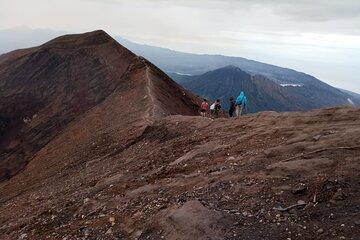
Mount Batur sunrise trek (2:00 AM pickup, summit by 5:30 AM, back to Ubud by 10:00 AM), swing visit at 11:00 AM, Sekumpul Waterfall in the afternoon for the multi-strand cascade and a 1-hour trek down to the basin. This is a 14-hour day and works only if you are well-rested; the Batur descent is harder than the climb, and the legs will not thank you at Sekumpul.
Adrenaline Day
Ayung River white-water rafting (8:00 AM to 12:30 PM, IDR 350K to 500K, Class 2–3 rapids past the Real Bali Swing site itself, so you literally see the swing from below the gorge), lunch, swing in the afternoon, then a sunset cocktail at one of the Tegallalang ridge cafés. Most operators sell rafting-plus-swing as a single combo for IDR 700K to 1.2 million; book direct online for the lower end of that range.
For longer Bali itineraries, the inland-versus-coast split matters more than the swing question — see Travjoy's Mount Agung overnight trek coverage for the harder adventure end of the inland day, and the Bali top 20 picks for the rest of the must-do list.
The Honest Take on the Bali Jungle Swing
The Bali jungle swing earns its place on a first-time Bali itinerary if you frame it correctly: a 90-minute photo product with a gentle thrill on top, at IDR 250,000 to 350,000 for the mid-tier package at a regulated operator. It does not earn its place if you book the IDR 500,000 all-swings upgrade on arrival and expect a bungee-grade adrenaline rush — that is the path to the disappointed TripAdvisor review.
The three rules that protect the experience: pick a harness-equipped regulated operator (the major five), pre-book online to lock in the base price, and arrive before 9:00 AM. Get those right and the swing photo is one of the strongest images you will bring home from Bali. Get them wrong and you are paying premium money for a queue. Start planning your Bali jungle swing day and the rest of your trip on Travjoy's Bali page.




.svg&w=1920&q=75)