



Bali Itinerary for First-Timers: What to See, Eat & Explore
7 min read

Sandeepa K
Author
Long-term traveller and AI Expert.
SHARE BLOG
TABLE OF CONTENTS
Key Takeaways
- 7 days is the sweet spot — enough for two bases plus a Nusa Penida day trip.
- Stay in two areas, never one — Ubud for culture, Uluwatu or Canggu for the coast.
- Visit April–September; January and February bring heavy rain and ferry cancellations.
- Skip Kuta and Nusa Dua on a first trip — both feel disconnected from the Bali you came to see.
- Hire a private driver for cross-island days; scooters work only for short hops within one neighbourhood.
A Bali itinerary for first-timers works best across 7 days — three nights in Ubud for culture and rice fields, three nights in Uluwatu or Canggu for beaches and surf, and one full day on Nusa Penida. Visit between April and September for dry weather, hire a private driver for cross-island travel, and budget around USD 80–150 per day for a comfortable mid-range trip.
You've narrowed your trip down to Bali. Now the planning fog hits: every blog wants you in a different town, every YouTuber loved a different beach club, and the island looks deceptively small on the map. It isn't. Driving from Ubud to Uluwatu can take three hours in afternoon traffic, and a poorly planned day can mean two of those hours sitting still on the bypass.
This guide is built around the three decisions that actually matter: how many days you need, where to base yourself, and which sights are worth the pre-dawn alarm. It's a 7-day plan with notes on flexing it shorter or longer, and it deliberately skips the photo-op stops most travel blogs pad their itineraries with.
The recommendations below come from Travjoy's curation team — local experts who've done the legwork of vetting what's actually worth your time on a first visit, so you're not building your trip from a stranger's Instagram feed.

How many days do you actually need in Bali?
The honest answer is seven days for a first-time Bali itinerary. Five works if you'll skip Nusa Penida; ten gives you room for East Bali or the Gili Islands. Less than five and you'll spend more time in transit than seeing the island.
Here's how the math actually plays out — these numbers assume you're moving between bases with a private driver, which we'll cover later.
- 5 days: Ubud (2 nights) + South Bali (2 nights). One full day for sights in each area. Skip the day trip to Nusa Penida — it eats a 5am-to-7pm day and leaves you nothing in reserve.
- 7 days (recommended): Ubud (3 nights) + South Bali (3 nights), with one full day on Nusa Penida from the southern base. Allows for proper cultural depth, a beach rest day, and the iconic island viewpoints.
- 10 days: Add Sidemen Valley or East Bali for two slower nights, or use the extra time for a Mount Batur sunrise hike and a wellness day. This is where a first trip stops feeling rushed.
- 14 days+: Add the Gili Islands for snorkelling and slow living, or commit to a full round of North Bali (Lovina, Munduk).
Why not fewer than five days?
Bali's main areas are surprisingly far apart. The drive from Ubud to Uluwatu is officially 60 km but routinely takes 2.5 to 3 hours. Lose half a day to that drive and your "5-day Bali itinerary" becomes a 4-day blur.
Why not more than ten?
Bali is a destination of stays, not stops. Once you've covered the south, Ubud, and one offshore day, additional days are best spent slowing down rather than chasing more icons. Two weeks works only if you genuinely want to add a different region — the Gilis or North Bali — rather than cram more day trips into the south.
When to visit Bali
Visit between April and September. Dry season runs April through October, with May to August the peak. Wet season (November to March) means heavy afternoon storms, rough ferry crossings to Nusa Penida, and occasional flight delays.
The monthly breakdown:
- April, May: Shoulder. Low crowds, mostly dry. The best value-to-weather ratio.
- June, July, August: Peak. Australian and European summer holidays. Hotels run 30–50% above shoulder prices, and Tegalalang gets crowded by 8am.
- September, October: Shoulder again. Occasional showers, prices easing, fewer crowds.
- November, December: Wet season begins. Heavy late-afternoon rain, but mornings often clear. December holidays still bring crowds.
- January, February: Wettest months. Ferry cancellations to Nusa Penida are common. Avoid for a first trip.
- March: Tail of wet season, improving steadily.
One date to plan around: Nyepi
Nyepi is the Balinese Day of Silence, falling in March or April depending on the lunar calendar. For 24 hours the entire island shuts down — Ngurah Rai International Airport closes, no transport runs, and locals stay indoors. If you arrive on Nyepi you'll be confined to your hotel. The day before (Pengrupukan) features parades of giant ogoh-ogoh effigies and is one of the year's most memorable cultural experiences if you plan around it. Check the date for your travel year before booking flights.
For weather and safety advisories, double-check the US State Department's Indonesia travel page before booking — Indonesia is geologically active, and Mount Agung occasionally disrupts flights.
Where to base yourself
Stay in two areas, not one. The biggest first-time mistake is booking seven nights in Seminyak and trying to day-trip to Ubud — you'll spend half your trip in a car. Pick one inland base and one coastal base, and shift mid-trip.
Ubud — culture, jungle, slower pace
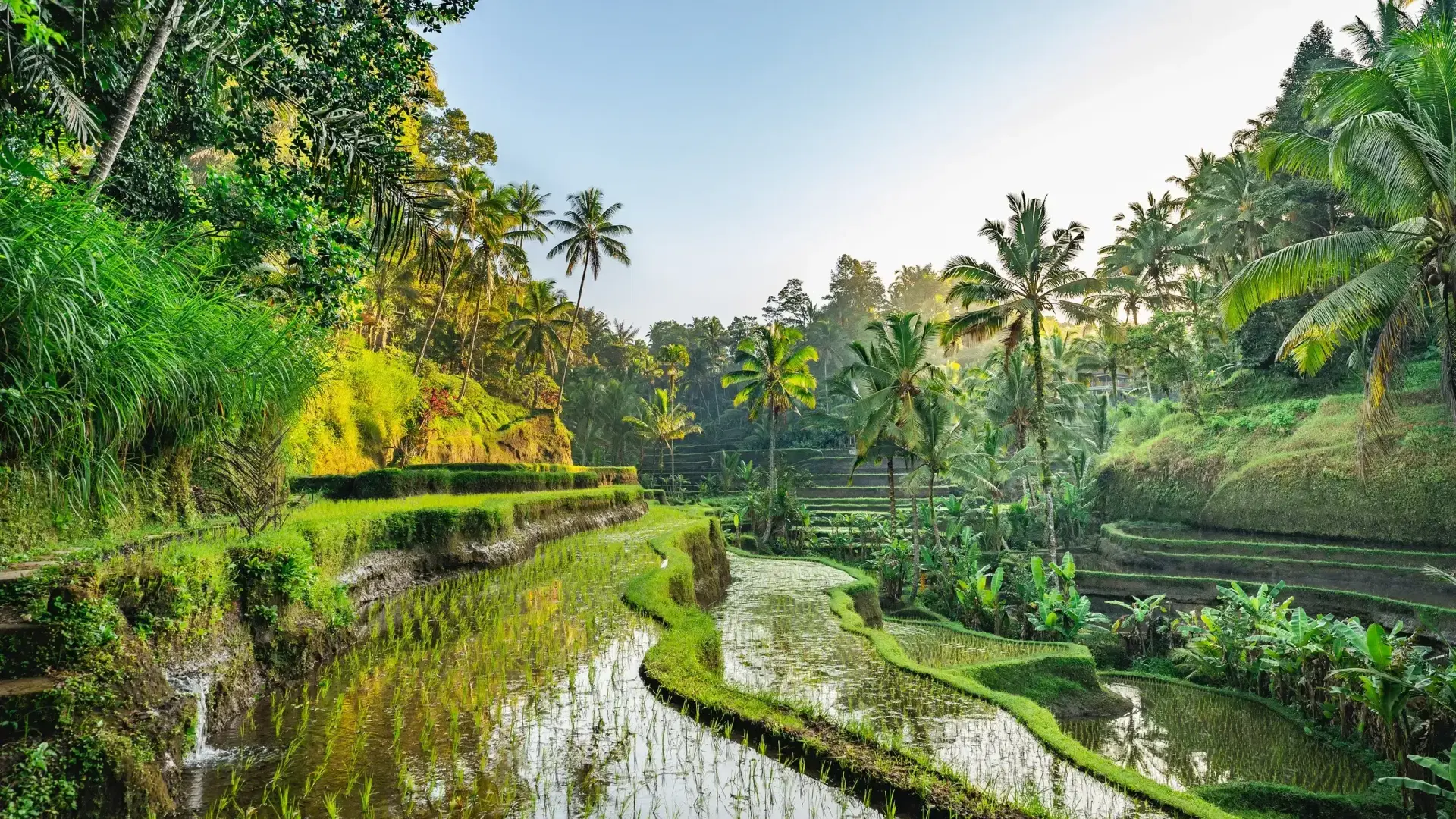
Ubud is Bali's cultural and spiritual hub. Rice terraces, temples, art markets, yoga retreats, and a slower pace that helps you decompress after a long flight. The town centre is touristy and traffic-heavy by midday, so look for accommodation a 5–10 minute drive out — Penestanan, Pengosekan, and Sayan are good neighbourhoods. Three nights here gives you time for a proper rice terrace morning, a temple day, a cooking class, and at least one massage. The surrounding rice fields earned UNESCO recognition in 2012 for the Subak system, the traditional Balinese irrigation philosophy.
Choosing your second base — Uluwatu vs Canggu vs Seminyak
- Uluwatu: Cliff-top setting, world-class surf breaks, the most dramatic sunsets on the island. Quieter than Canggu, more upscale. Drive to airport: 25 minutes. Best for: views, surf, calmer evenings.
- Canggu: The trendy, cafe-heavy expat hub. Excellent food, surf-able beaches, busy nightlife. Traffic is hectic and getting worse. Drive to airport: 40–60 minutes depending on time of day. Best for: solo travellers, food lovers, anyone in their 20s and 30s.
- Seminyak: The middle ground — established beach clubs, decent shopping, more polish than Canggu, more nightlife than Uluwatu. Beaches are average. Drive to airport: 30 minutes.
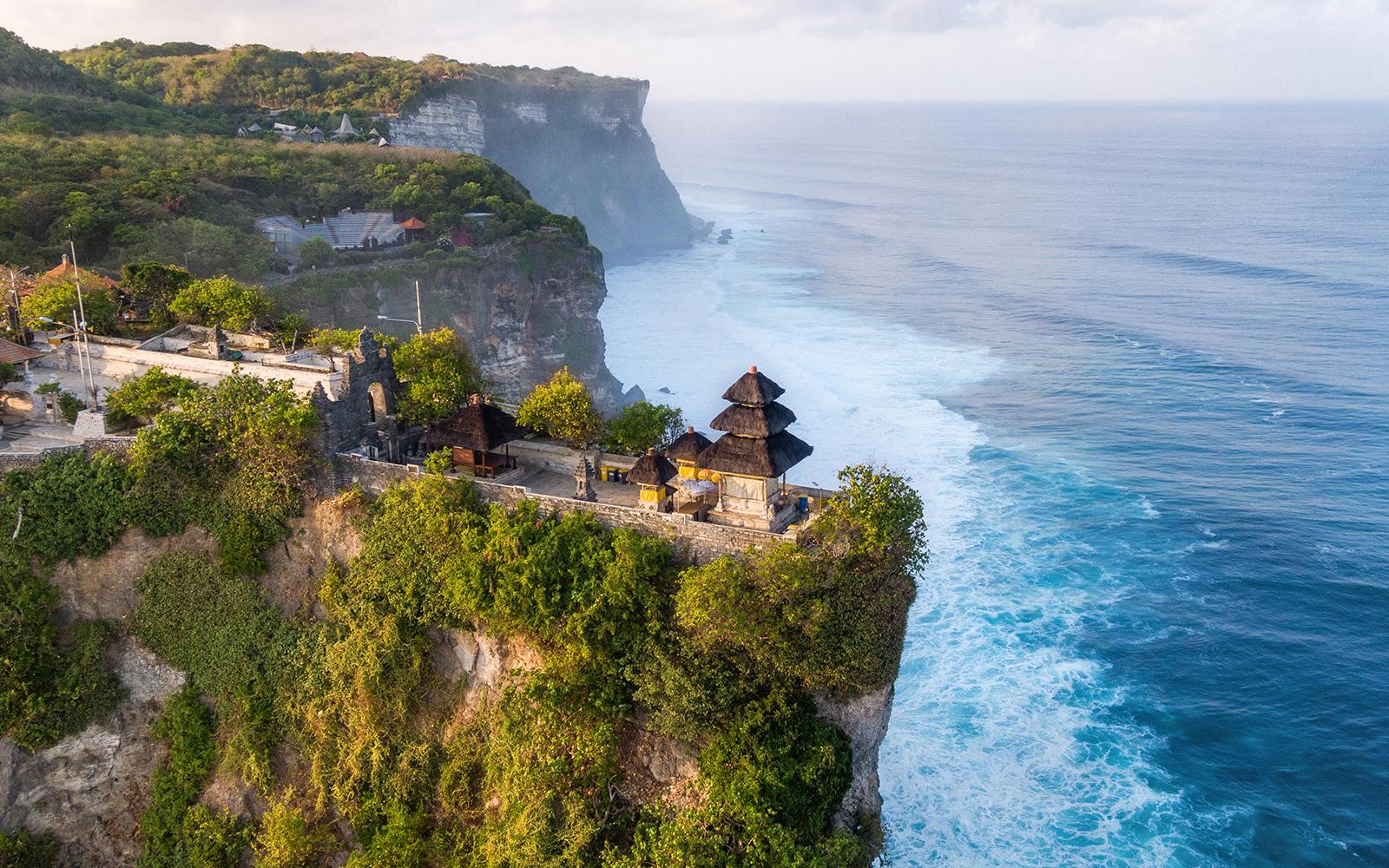
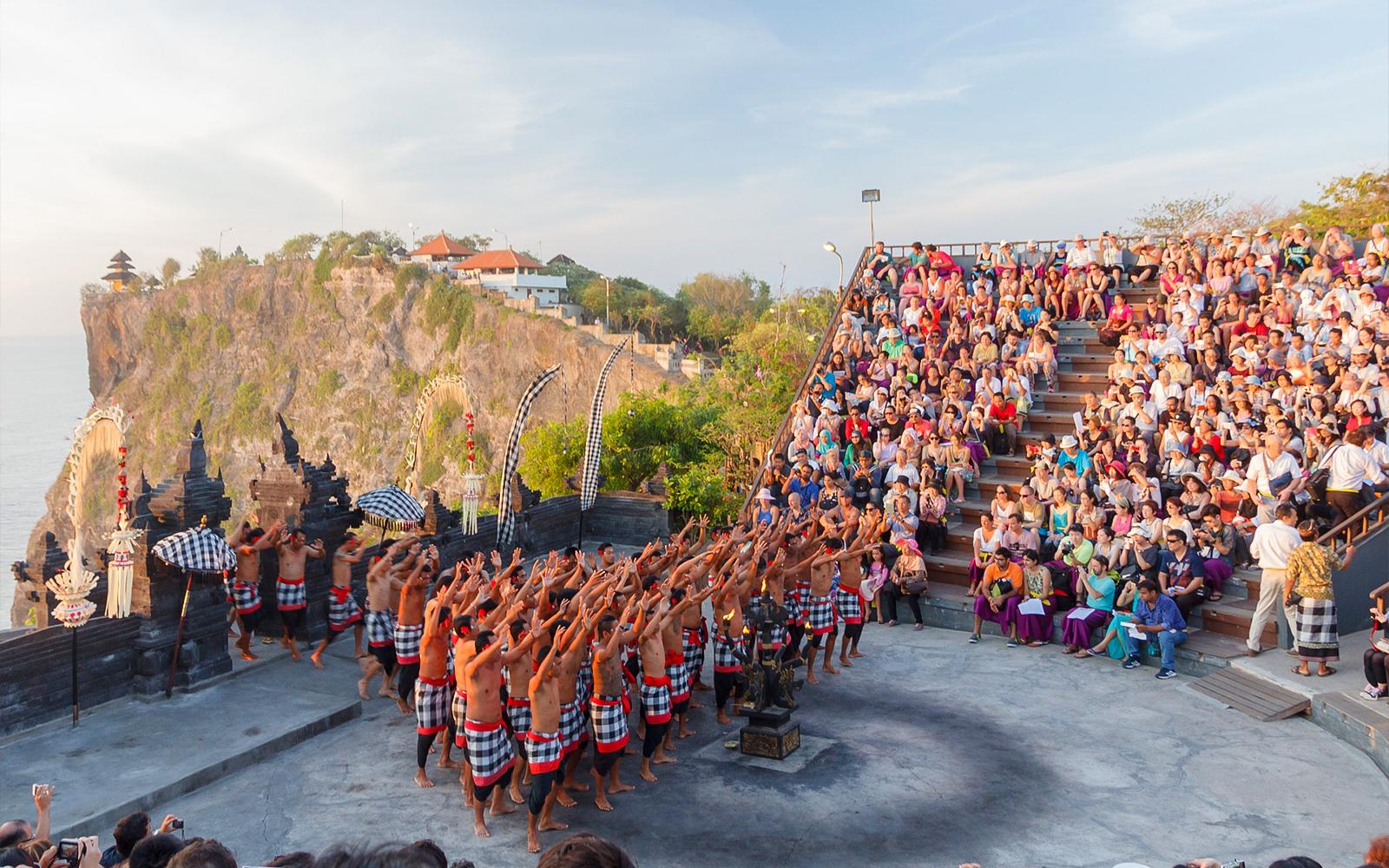
For a first trip, Uluwatu narrowly wins on payoff per day. The cliff scenery and Kecak fire dance at sunset feel uniquely Balinese in a way the other two bases don't quite match.
Where NOT to stay on a first trip
- Kuta: Once the backpacker heart, now mostly tired and overcrowded. Beaches are average, traffic is among the worst on the island.
- Nusa Dua: A walled resort enclave. Comfortable but feels disconnected from Bali — you could be in Phuket or Cancún.
- North Bali (Lovina, Singaraja): Beautiful but adds 3+ hours of driving. Save for a return trip.





Your day-by-day 7-day Bali itinerary
This is a flexible 7-day plan built around the structure above — three nights in Ubud, three nights in Uluwatu, one Nusa Penida day. Adjust the order based on flight times.
Days 1–3 in Ubud
Day 1 — Arrival. Most flights from Europe and Australia land in the late evening. Pre-arrange a transfer (about IDR 350,000–500,000 from the airport to Ubud). Eat near your hotel and sleep.
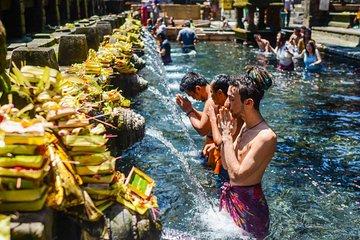
Day 2 — Rice terraces and temples. Leave by 7am to beat the crowds at the Tegalalang Rice Terrace — by 9am tour buses arrive. Continue to Tirta Empul (a sacred Hindu water temple, sarong required, takes 60–90 minutes). Lunch back in Ubud, afternoon for the Ubud Art Market or a traditional Balinese massage. Evening: a Legong dance show at Ubud Palace if scheduled.
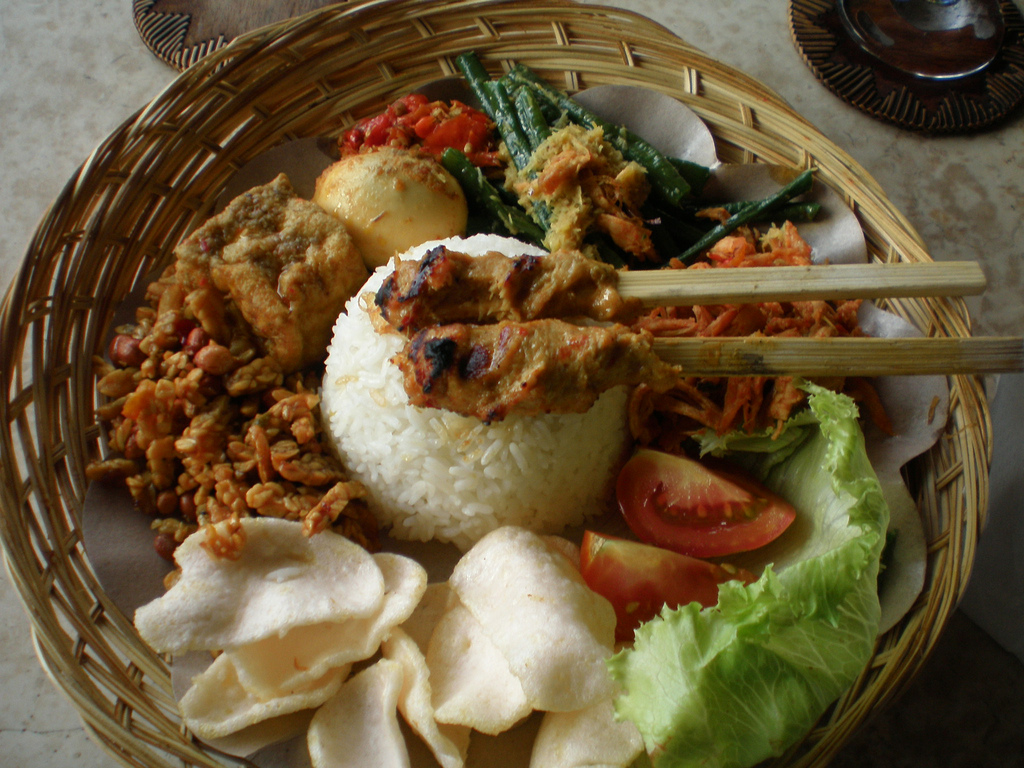
Day 3 — Monkey Forest and a cooking class. Spend the morning at the Monkey Forest Sanctuary (entry around IDR 80,000) — secure your sunglasses, snacks, and anything shiny. The afternoon cooking class (around USD 35–50) is one of the few "tourist activities" first-timers consistently call a highlight; you'll learn what's in nasi campur and walk away able to recreate three or four dishes. Evening: dinner at a riverside warung.
Days 4–5 in Uluwatu / South Bali
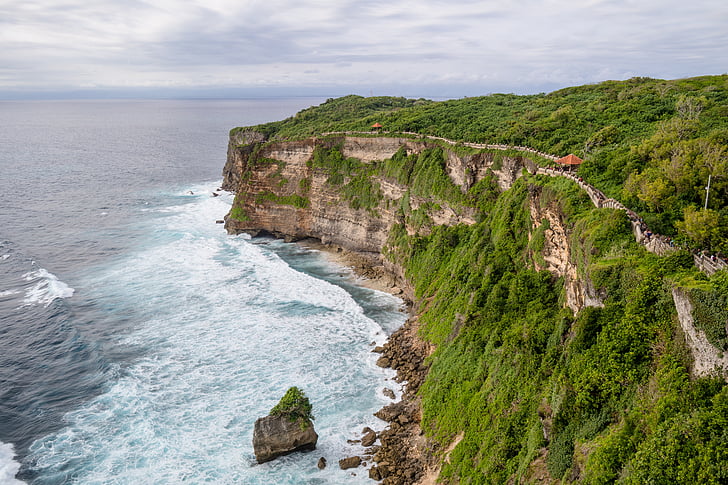
Day 4 — Transfer day with stops. Leave Ubud by 9am. Two natural stops on the route south: a quick coffee plantation visit if you want to try luwak coffee, then lunch at Jimbaran Bay (grilled seafood, beachfront). Check into Uluwatu by mid-afternoon, beach time at Padang Padang or Bingin, and end at Uluwatu Temple for the 6pm Kecak fire dance — buy tickets at least 30 minutes early to get good seats.
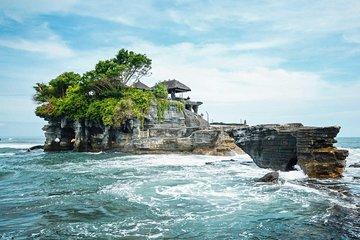
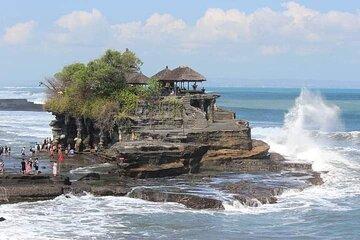
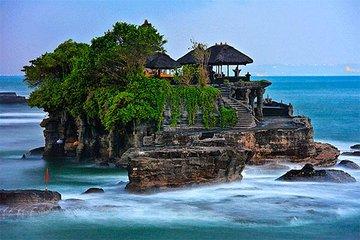
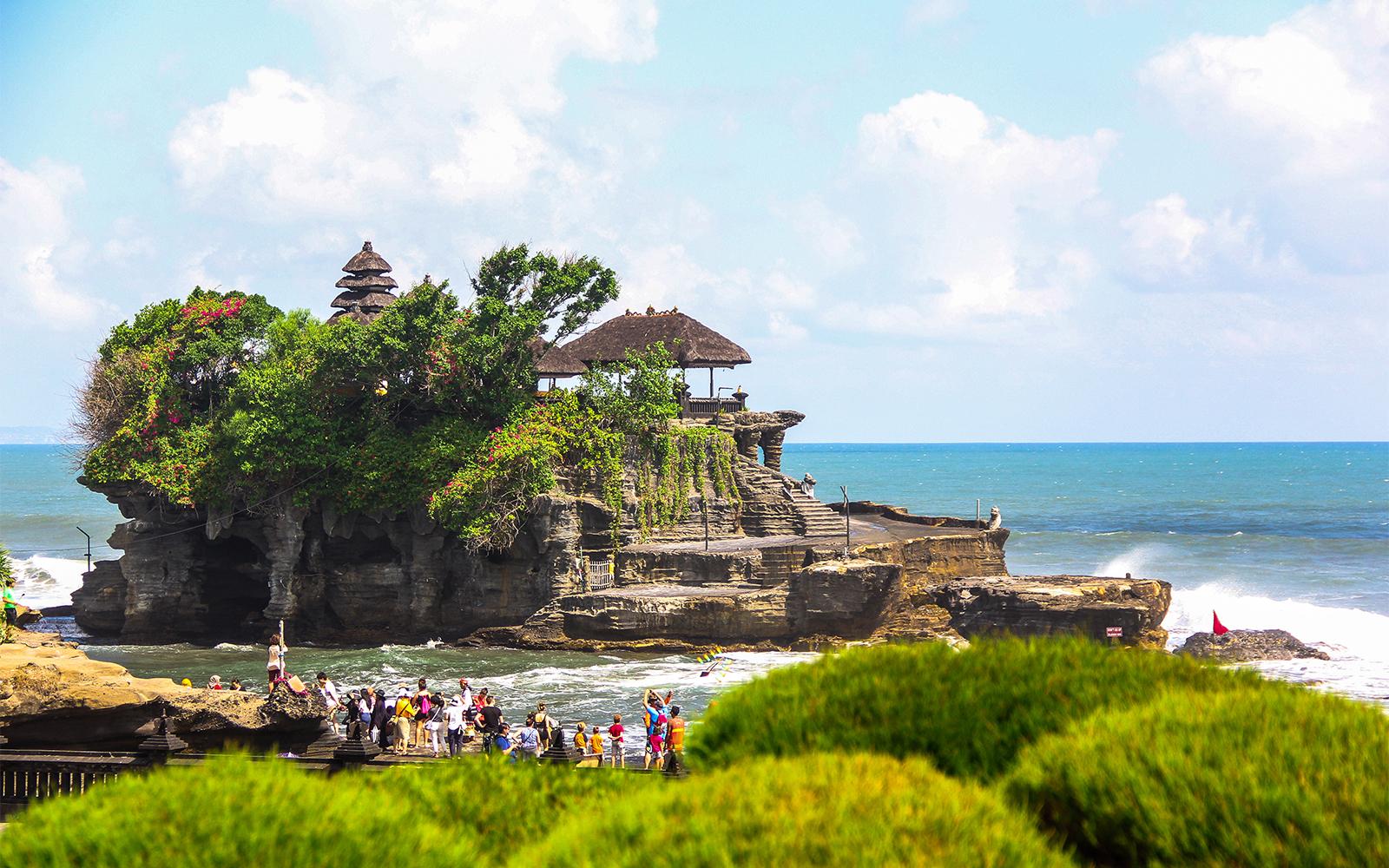
Day 5 — Beaches and the most photographed temple. Slow morning, brunch at one of the cliff-top cafes. Afternoon at Pandawa Beach or Suluban. Drive to Tanah Lot Temple for sunset — about 90 minutes north of Uluwatu. The drive is a chunk of your day, but the offshore temple silhouette against the setting sun is the single most iconic Bali image, and worth seeing in person.
Day 6 — Nusa Penida day trip
The hardest day, and the most rewarding. Pre-book a guided tour the night before (around IDR 700,000–1,200,000 per person including ferry, driver, and guide). Pickup is 6am, fast boat from Sanur leaves around 8am, and you have roughly six to seven hours on the island.
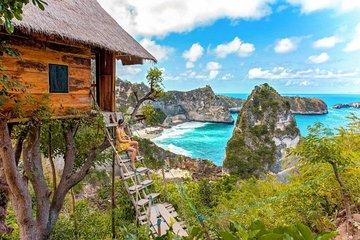
The west circuit covers Nusa Penida's famous viewpoints — Kelingking Beach (the T-Rex cliff), Angel's Billabong, and Broken Beach. The east circuit covers Diamond Beach and Atuh — quieter but a longer drive. Roads are rough, so a guided car-based tour beats renting a scooter. Back to Sanur on the late-afternoon ferry, brief recovery in your hotel, simple dinner. You'll be tired.
Day 7 — Wind-down and departure
Spa, late breakfast, last walk through Seminyak's boutique stores, or a relaxed beach club afternoon at Sundays Beach Club or Karma Kandara. Plan for at least 90 minutes to get to the airport in afternoon traffic, more if you're flying at peak hours.
What to eat — Bali food experiences first-timers shouldn't miss
Balinese food is bolder than the Indonesian dishes most travellers know. Expect coconut, lemongrass, kaffir lime, palm sugar, and chillies layered into nearly every plate. Order beyond the resort menu.
The dishes worth ordering
- Babi guling: Roasted suckling pig with crackling skin, served with rice and spiced vegetables. The classic spot is Ibu Oka in Ubud.
- Nasi campur: A small mound of rice surrounded by 5–8 small portions — sate, vegetables, sambal, peanuts, an egg. The default Bali lunch.
- Lawar: A traditional vegetable salad with grated coconut, sometimes including pork. Strong, herbal, often spicy.
- Sate lilit: Minced fish or chicken sate wrapped around lemongrass skewers and grilled. Distinctly Balinese — mainland Indonesia uses straight skewers.
- Bebek betutu: Slow-roasted duck stuffed with spices, traditionally cooked underground. Order in advance — it takes 4–6 hours to prepare.
Where to eat them — warung vs restaurant
A warung is a small family-run eatery, often open-fronted, with handwritten menus. They're the best value and the most authentic experience: a full meal of nasi campur, satay skewers, and a fresh juice runs IDR 40,000–80,000 (USD 3–5). Restaurants in tourist areas charge 3–5 times that for similar food, often watered down for foreign palates.
A first-timer fear: warungs look basic. The food is safe — busy local warungs serve hundreds of meals daily, with high turnover and fresh ingredients. Look for places where you see Balinese families eating, especially at lunch.
Cooking class — worth it for a first-timer
A half-day Bali cooking class (USD 35–50) is one of the highest-return activities a first-time visitor can book. You'll visit a local market, learn the spice paste (basa gede) that underpins most Balinese dishes, and cook 3–5 dishes to eat for lunch. It also teaches you what to order back home and elevates the rest of your trip's meals.
Practical tips for first-timers
Visa and entry
Most nationalities (97 countries) need an e-Visa on Arrival (eVOA). Apply online at the official Indonesian e-Visa portal 3–14 days before arrival. The fee is IDR 500,000 (about USD 35), valid for 30 days, extendable once for another 30. Carry a printed copy as backup.
You'll also need to pay the Bali Tourism Levy (IDR 150,000, about USD 10) via the Love Bali portal before arrival, and complete the All Indonesia Arrival Card up to three days before landing. None of these are optional, and immigration officers do check.
Getting around — driver vs scooter
A private driver is the right choice for first-timers on a 7-day trip. Expect to pay IDR 700,000–900,000 (USD 45–60) per day for an English-speaking driver with a clean car — they handle parking, navigation, traffic, and local price negotiation. For longer transfers (Ubud to Uluwatu, for instance), agree the price up front.
Scooters are cheap (IDR 70,000–100,000 per day) and let you skip traffic, but accidents are extremely common, and Bali's hospitals see scooter injuries daily. If you've never ridden one before, your first trip to Bali isn't the place to learn. Save scooter rental for short hops within Canggu or Ubud town centre, ideally with experience from elsewhere.
Money and connectivity
- Cash is still essential for warungs, temples, parking, and small purchases. Use ATMs at major banks (BNI, BCA, Mandiri). Avoid ATMs on quiet streets and always cover the keypad.
- Cards are accepted at hotels, beach clubs, and mid-to-upscale restaurants — but not everywhere.
- eSIM: Buy before you fly (Holafly, Airalo) or pick up a Telkomsel SIM at the airport. 4G coverage is strong in tourist areas and weaker in the highlands.
Cultural etiquette at temples
- A sarong is mandatory at all temples — most provide one at the entry, free or for a small donation.
- Cover shoulders. Knees should be covered if seated cross-legged for a ceremony.
- Don't step on offerings (the small palm-leaf baskets with flowers and rice on the ground). Walk around them.
- Photography is fine in courtyards, generally not allowed inside inner sanctums.
First-timer red flags
- Anyone offering a "private tour" at the airport for USD 200+ — book in advance, never on arrival.
- Money changers offering rates 20% above the going rate. They short the count. Use ATMs or established exchanges (Central Kuta, BMC).
- "Free" Kintamani transport to a coffee plantation. The pressure-sell at the end is brutal.
- Massage offers on Kuta beach. The price always goes up midway.
Pulling the Bali itinerary together
A first-time Bali itinerary done well is built on subtraction, not addition. Seven days, two bases, one offshore island, and the discipline to ignore the dozens of secondary stops competing for your attention. You'll see Ubud's rice terraces in early light. You'll watch the Kecak dance against an Uluwatu sunset. You'll spend one long, sun-baked day on Nusa Penida and earn the photographs you came for.
What you'll skip is also part of the plan: Kuta, Nusa Dua, the third coffee plantation, the fourth waterfall. Skipping these gives the rest of the trip room to breathe.
Plan the next steps with vetted experiences and curated itineraries on Travjoy's Bali destination page — local-expert-approved recommendations across every section above.













.svg&w=1920&q=75)