



Bali Food Tours: Is a Guided Street Food Tour Worth It?
7 min read

Raj Varma
Author
Travel & Tourism Expert Ex-Thomas Cook, Kuoni, Times of India & Travel Triangle.
SHARE BLOG
TABLE OF CONTENTS
Key Takeaways
- A guided street food tour in Bali runs roughly IDR 300,000–950,000 (USD 18–60) per person for 3–4 hours and 10–11 tastings, with shared tours at the low end and private tours at the high end.
- Tours are worth it for first-timers, nervous eaters, and anyone short on time; confident independent travellers on longer trips can replicate most of it for IDR 10,000–50,000 a dish.
- A good guide handles vendor vetting, ordering, and dietary needs, which lowers the practical risk of Bali belly and removes the guesswork from a market you can't read.
- Tour styles range from shared evening walks to private tastings, Ubud night-market loops, and food-plus-cooking-class combos, each suiting a different traveller.
A guided Bali food tour costs about IDR 300,000–950,000 (USD 18–60) per person and lasts 3–4 hours, covering 10–11 tastings of dishes like babi guling, sate lilit, and nasi campur across markets and warungs you'd struggle to find alone. It's worth booking if you're a first-timer, an anxious eater, or tight on time, because the guide does the vendor-vetting, ordering, and dietary translation for you. Independent travellers comfortable pointing at a bubbling pot and staying a week or more can cover the same ground cheaply on their own.
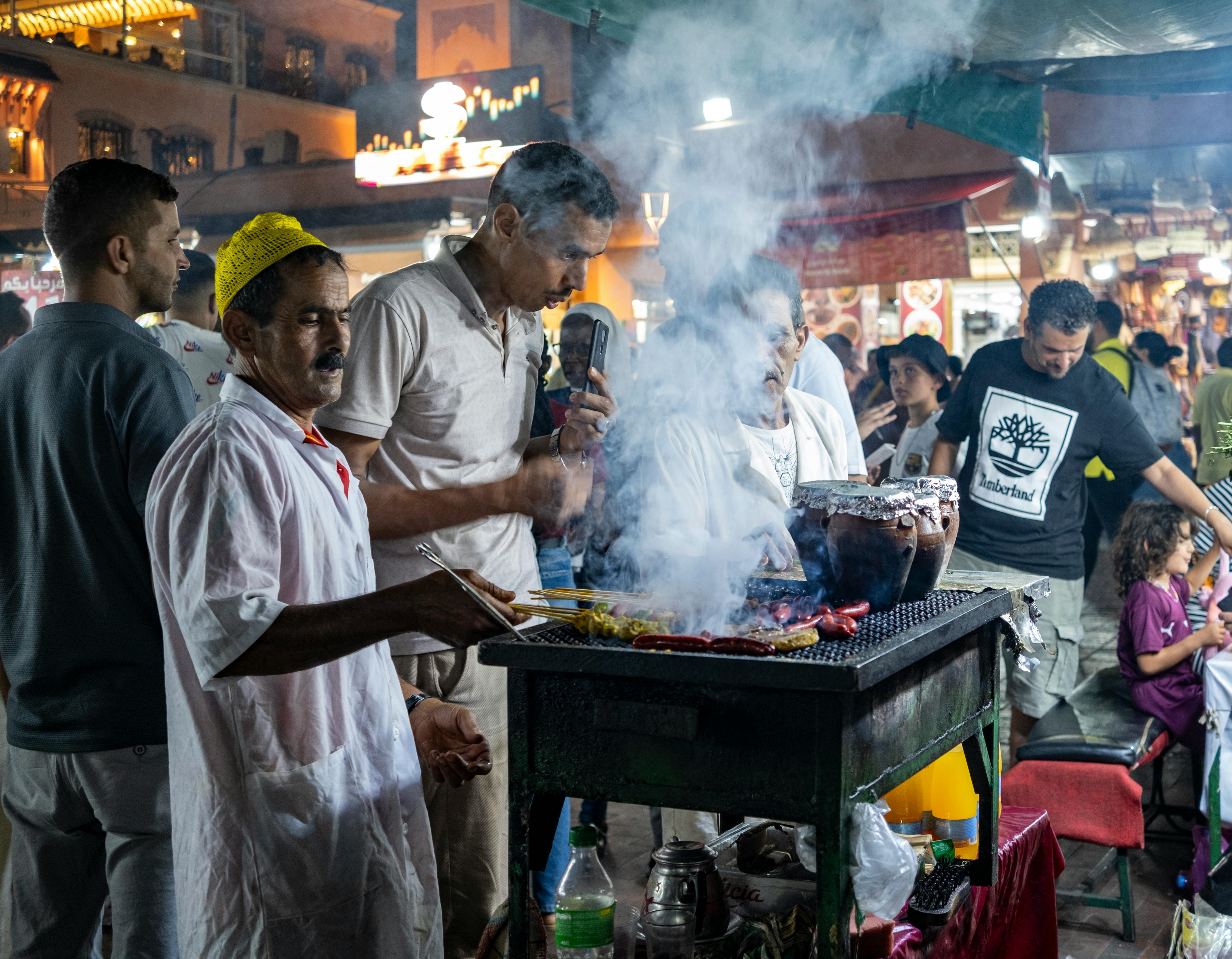
You land in Bali hungry, the night market is three streets of grilled smoke and unlabelled pots, and every blog you've read has warned you about Bali belly. So you hesitate, then eat dinner at the café next to your villa for the third night running. That standoff is exactly what a food tour is built to solve.
This guide answers the real question behind the search: is a guided street food tour worth the money, or can you do it yourself? You'll get honest pricing in rupiah and dollars, a breakdown of the tour types on offer, what actually lands on your plate, how the safety math works, and a clear recommendation for your travel style. Bali food tours aren't for everyone, and this post is just as much about when to skip one.
Is a Bali food tour worth it?
For most first-time visitors, yes. A guided tour is worth it when the value you get from a local's knowledge, vendor access, and dietary handling outweighs the premium over eating solo, and for nervous or time-pressed travellers it clearly does. For seasoned independent eaters on a long stay, the maths tips the other way.
The premium is real but modest in absolute terms. A shared tour adds maybe USD 15–40 over a self-guided night of street eating, and in return a guide steers you to busy, high-turnover stalls, orders in Bahasa Indonesia, explains what each dish is, and flags anything that won't suit your diet. On a market floor you can't read, that's the difference between five confident bites and one cautious one.
Worth it if
- You're a first-timer who doesn't know babi guling from bakso and wants a guided introduction before exploring on your own.
- You're nervous about Bali belly and want someone to vet the vendors for hygiene and turnover.
- You have dietary needs (vegetarian, halal, allergies) and want a guide to handle the translation and substitutions.
- You're short on time and want maximum coverage of local dishes in a single evening.
- You enjoy the cultural context, such as why babi guling is normally a ceremony dish, not just the food.
Not ideal if
- You're a confident independent traveller who's happy to point, pay, and eat wherever the locals queue.
- You're staying two weeks or more and have time to find your own warungs at your own pace.
- You're on a strict budget and would rather eat ten street meals than do one tour.
- You dislike fixed schedules or eating in a group of strangers.
The quick gut-check
- Book a tour if it's your first few days and you want a confident, low-risk introduction to local food.
- Skip it if you've eaten street food across Southeast Asia and just want to wander.
- Do both if you can: tour early in the trip to learn the dishes, then explore solo using what you learned.
What you actually eat and where tours go
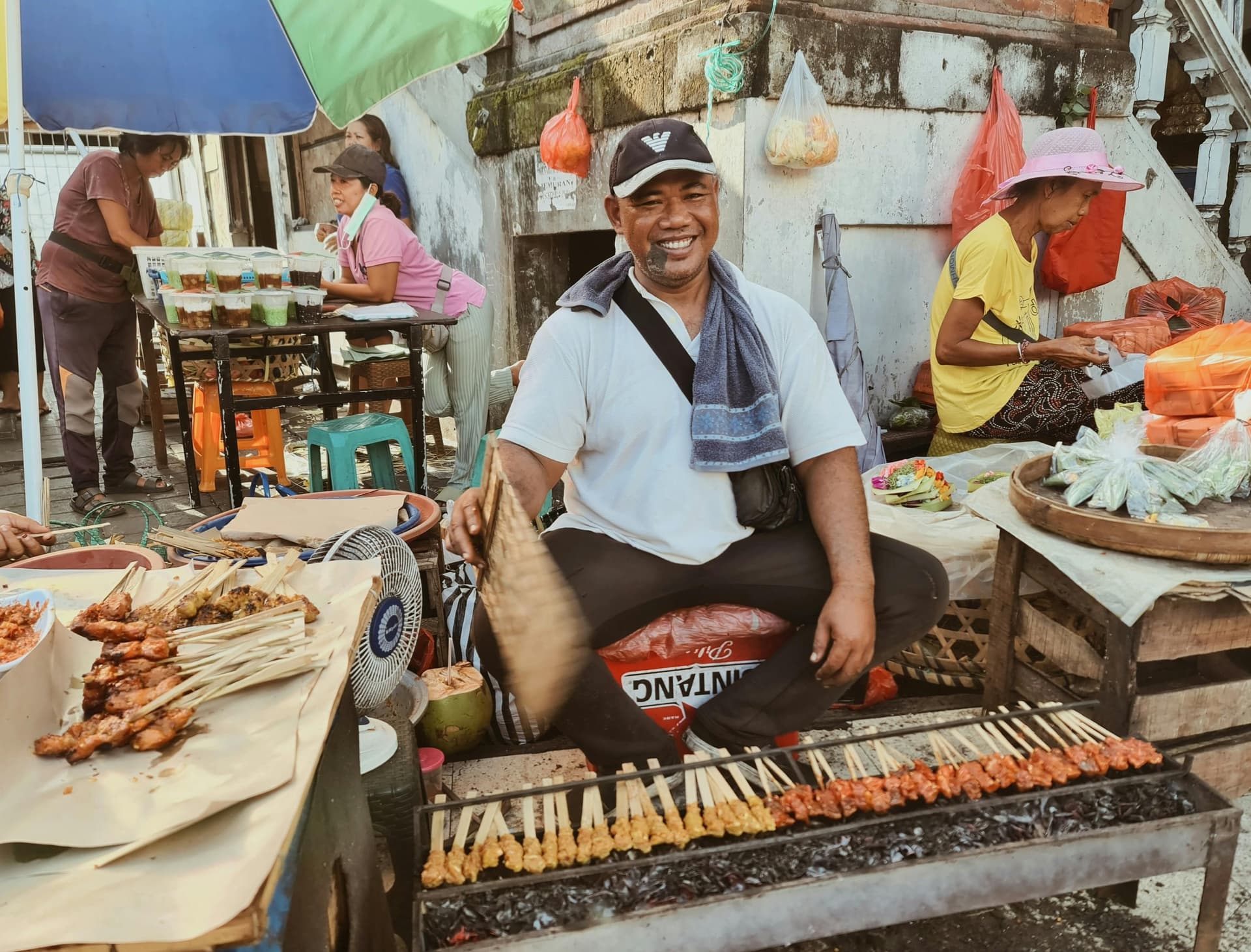
A typical Bali street food tour covers 10–11 tastings of savoury dishes, snacks, and drinks, moving between a produce market, a few warungs, and a night market. The food is the local everyday menu, not a tourist tasting set, and most tours can tailor the line-up to dietary needs if you ask when booking.
Tours cluster around Denpasar (the capital, where Badung Market anchors most routes) and Ubud (for night-market loops like Gianyar). Expect a lot of walking between stops and portions generous enough that most guides tell you, sensibly, to come hungry and skip lunch.
The dishes you'll likely try
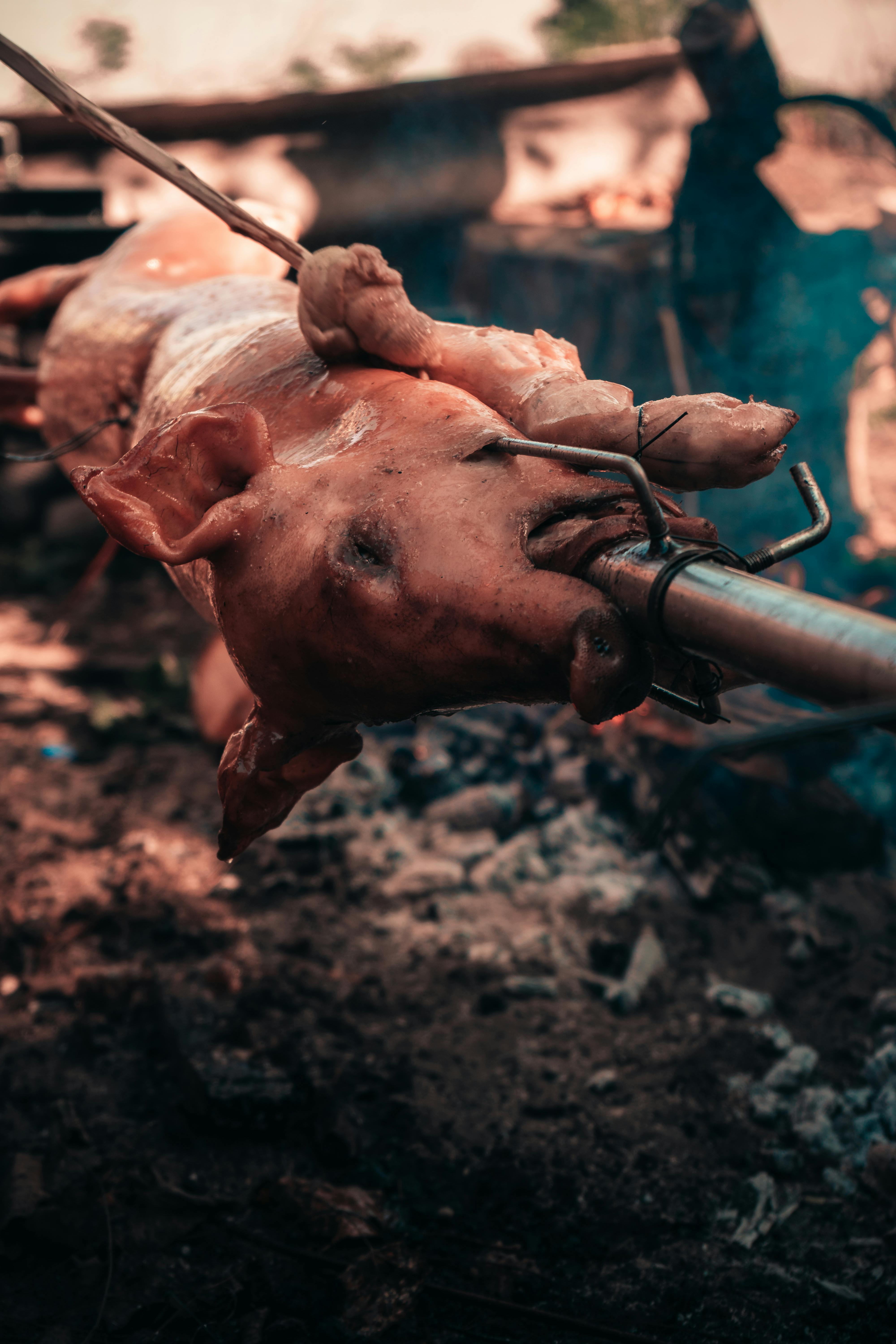
- Babi guling — Balinese spit-roast suckling pig, traditionally a ceremony dish, with crisp skin and spiced meat.
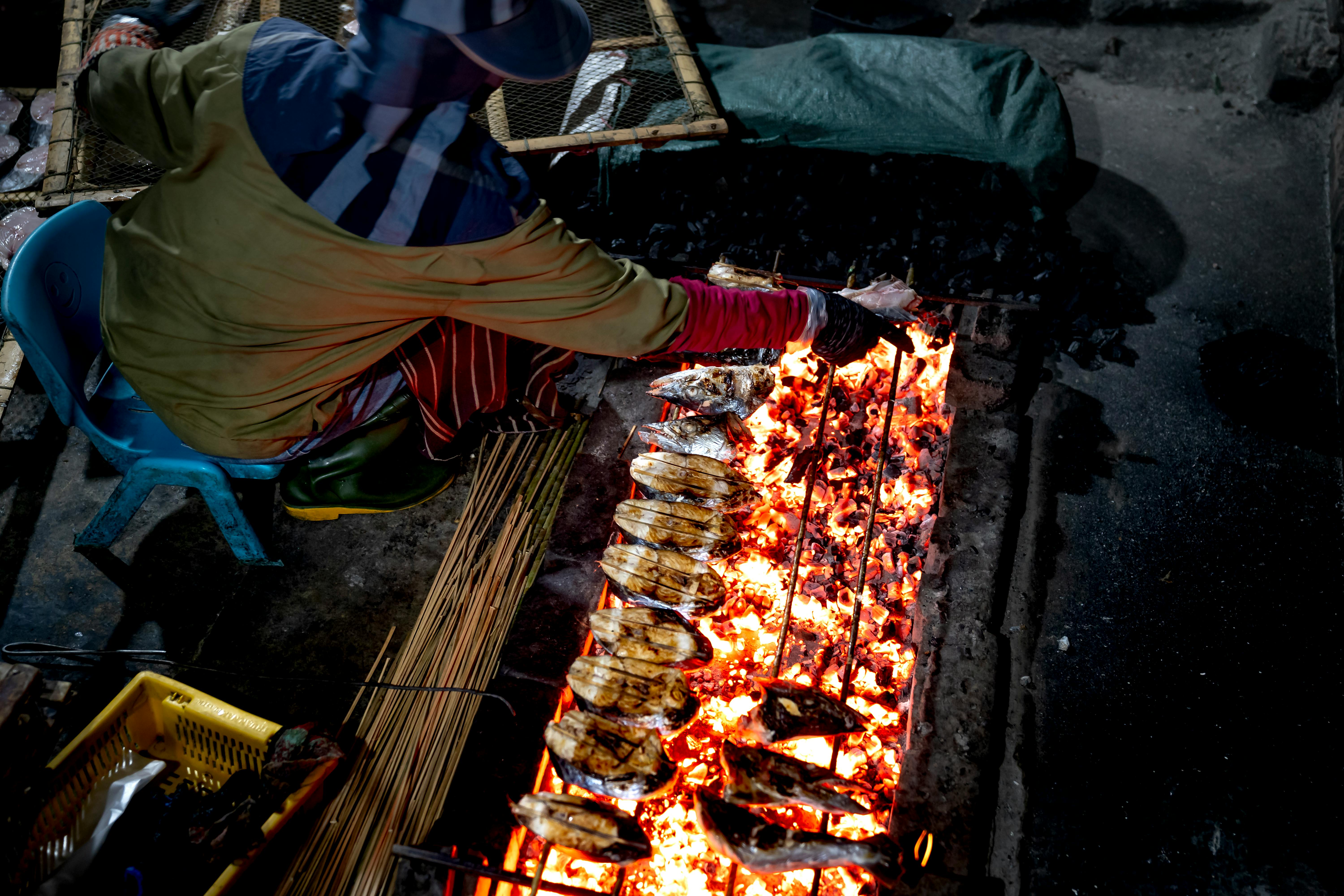
- Sate lilit — minced, spiced satay pressed onto lemongrass or bamboo and grilled over coconut husk.
- Nasi campur — a "mixed rice" plate of small portions, the best single window into local home cooking.
- Bakso — Indonesian meatball soup, a comfort-food staple sold from carts everywhere.
- Jaje Bali — colourful traditional snacks and sweets, often coconut- and palm-sugar-based.
- Fresh juices and tropical fruit — dragon fruit, snake fruit, and seasonal produce you may not recognise.
Where the tours take you
- Badung Market, Denpasar — Bali's largest produce market and the start of most Denpasar tours.
- Gianyar Night Market — a busy, local-leaning night market near Ubud known for babi guling and satay.
- Sindhu Night Market, Sanur — a smaller, low-stress market that's a gentle first taste of the scene.
- Ubud warungs and food streets — family-run eateries away from the café strip.
If a particular evening market appeals, you can read more about the island's night-market scene and where each one sits on our Bali destination page before you decide which tour route fits your base.
Types of Bali food tours compared
There are five main formats, and the right one depends on group size, budget, and whether you want food alone or food plus an activity. Shared evening tours are the cheapest and most social; private walking tours cost more but flex around your pace and diet; combos add a cooking class or scooter ride.
The table below compares the common formats on duration, group size, and 2026 price ranges so you can match a tour to your travel style at a glance.
| Tour type | Duration | Group size | Price (per person) | Best for |
|---|---|---|---|---|
| Shared evening street food tour | 3–4 hrs | Up to 8–12 | IDR 300,000–500,000 (USD 18–32) | Budget travellers, solo, social eaters |
| Private walking food tour | 3 hrs | Your party only | IDR 800,000–950,000 (USD 50–60) | Couples, families, dietary needs |
| Ubud night-market tour | 2.5–3 hrs | Small group or private | IDR 350,000–600,000 (USD 22–38) | Ubud-based travellers, first-timers |
| Food tour + cooking class combo | 5–7 hrs | Small group | IDR 600,000–1,100,000 (USD 38–70) | Hands-on foodies, half-day fillers |
| Scooter / SUV food tour | 4–5 hrs | Private | IDR 700,000–1,000,000 (USD 44–63) | Wider routes, air-con comfort |
Prices are indicative 2026 ranges and vary by operator, season, and inclusions. If you'd rather build food into a half day with a skill to take home, a Balinese cooking class pairs naturally with the combo format. Every food experience listed on Travjoy is researched and checked by local experts before it goes up, so you're choosing from vetted options rather than guessing from a search page.















How much does a Bali food tour cost?
A Bali food tour costs IDR 300,000–950,000 (USD 18–60) per person, with shared group tours at the bottom of the range and private tours at the top. The price almost always includes all tastings and drinks plus the guide, but transport to the meeting point and tips are usually extra.
Here's how the numbers break down so you can judge the value against eating on your own.
What a tour typically costs in 2026
- Shared group tour: from IDR 300,000 (USD 18), up to IDR 500,000 (USD 32) for premium small-group versions.
- Private walking tour: around IDR 800,000–950,000 (USD 50–60) per person, often with a two-person minimum.
- Combo with cooking class: IDR 600,000–1,100,000 (USD 38–70), reflecting the longer half-day format.
- Usually included: all food tastings, local drinks, the guide, and sometimes hotel pickup within the tour's home area.
- Usually extra: tips for the guide, transport if your hotel sits outside the pickup zone, and alcohol.
What the same evening costs solo
- Street dishes: IDR 10,000–50,000 (USD 0.65–3.20) each at a night market.
- A full night of grazing: roughly IDR 80,000–150,000 (USD 5–10) if you eat five or six dishes.
- Transport: a Grab or Gojek ride between districts runs IDR 20,000–350,000 (USD 1.50–23) depending on distance.
So a shared tour costs around three to five times a self-guided night, and a private tour roughly six to ten times. You're paying for knowledge, access, and zero guesswork rather than for the food itself. Whether that's worth it comes down to confidence and time, which is what the next section sorts out. Cash is essential either way, as most stalls and many smaller operators don't take cards.
Which food tour should you choose?
Match the tour to who you're travelling with and what you want out of the evening. First-timers and the budget-conscious do well on shared tours; couples and families get more from private ones; foodies should add a cooking class. Use the if/then guide below.
Pick by traveller type
- If you're a first-timer: take a shared evening tour or an Ubud night-market tour early in your trip, then explore solo with what you learned.
- If you're a couple: a private walking tour is worth the premium for the flexible pace and the chance to linger at stalls you like.
- If you're travelling as a family: book private so the guide can pace the walking around children and tailor tastings to fussier eaters.
- If you're a solo traveller: a shared tour is the better value and a natural way to eat with company rather than alone.
- If you're a serious foodie: the food-tour-plus-cooking-class combo gives you both the eating and the recipes to take home.
- If you're on a tight budget: skip the tour, eat the night markets directly, and put the saving toward more meals.
Wherever you're based shapes the choice too. Travellers staying in Seminyak or Canggu will find most street food tours run out of Denpasar or Ubud, so factor a 30–60 minute transfer into the evening. For a broader sense of what's worth your time across the island, our top picks for Bali set the food tours in context alongside the headline sights.
Are Bali street food tours safe?
Yes, a guided street food tour is one of the lower-risk ways to eat street food in Bali, because the guide steers you to busy, high-turnover stalls and away from the things that actually cause trouble. The risk isn't street food itself; it's tap water, ice, and food that's been sitting out, and a good guide knows which is which.
Bali belly is travellers' diarrhoea, usually a reaction to unfamiliar bacteria rather than a single dangerous dish. The standard advice is to eat food cooked fresh and hot in front of you, choose stalls with long local queues, skip raw salads and unpeeled fruit washed in tap water, and avoid ice unless you know it's from filtered water. A tour does most of this filtering for you.
Insider reality checks
- Come hungry. Tastings on a 10–11 stop tour add up to a full dinner and then some; eating lunch beforehand is a common regret.
- Bring small cash. Night-market stalls are cash-only and rarely have change for large notes, so keep a stack of IDR 10,000–20,000 notes.
- Flag diets at booking, not on the night. Vegetarian and halal options exist, but the guide needs notice to route around pork-heavy stops like babi guling.
- Ask about pickup distance. "Free pickup" often means within Ubud or Denpasar only; staying in Uluwatu or Canggu can add a transfer cost.
- Order drinks "tanpa es" if unsure. That's "without ice" — a simple hedge at smaller stalls where you can't confirm the ice is filtered.
None of this means avoiding street food. It means eating it the way locals and good guides do. If you do book through a vetted platform, the operator-level checks add another layer on top of your own common sense.
Plan your Bali food trip
A guided street food tour earns its price for first-timers, nervous eaters, and anyone short on time, turning an intimidating night market into a confident, well-fed evening. If you're a seasoned independent traveller on a longer stay, you can cover the same dishes yourself for a fraction of the cost once you know what to order. The smartest move is often to do both: tour early, then explore on what you learned.
Whichever way you lean, the dishes are the same, the markets are the same, and the only real question is how much guidance you want for your first bites. Start planning your Bali food adventure on Travjoy's Bali page, where every food tour and cooking class is researched and approved by local experts before it reaches you.







.svg&w=1920&q=75)