



Bali Food Guide: 20 Must-Try Dishes and Where to Find Them
8 min read

Pratima Alvares
Author
Leisure Travel Expert Ex- SOTC & Cox & Kings
SHARE BLOG
TABLE OF CONTENTS
Key Takeaways
- 20 dishes across savoury icons, everyday staples, coastal specialties, sambals, and sweets
- Most warung meals cost IDR 25,000–80,000 (USD 1.50–5); Jimbaran seafood runs IDR 150,000–400,000 per kilo of mixed catch
- Ubud is Bali's food capital — Seminyak, Sanur, Jimbaran, and Denpasar each have a distinct scene worth a separate evening
- Practical food-safety, vegetarian, and ordering phrases in the final section
This Bali food guide covers 20 dishes worth your appetite, starting with babi guling, bebek betutu, sate lilit, and nasi campur — the four most identifiably Balinese plates. Most warung meals cost IDR 25,000–80,000 (USD 1.50–5), and Ubud, Seminyak, Sanur, Jimbaran, and Denpasar each offer a distinct food scene worth a separate evening.
By 9am the smell of clove smoke and turmeric drifts out of a warung in Gianyar — the morning's babi guling is on the rotisserie, the cook is hand-pounding sambal matah, and the first plates will land in another half-hour. This is the rhythm of Balinese cooking, and it sits a long way from the avocado bowls of Canggu.
Bali's food is distinct from generic Indonesian cuisine. The island's Hindu majority means pork sits openly on most menus (rare elsewhere in Indonesia), while the ceremonial spice paste known as basa gede — a mix of turmeric, candlenut, lemongrass, galangal, garlic, shrimp paste, and chillies — gives Balinese dishes their signature warmth. Fresh aromatics dominate the kitchen, and every village has its own small variation on the classics.
This Bali food guide runs through 20 dishes you should put on your eating list, organised by category and pinned to specific neighbourhoods and warungs. You'll find prices in IDR and USD (current to 2026), a region-by-region eating map, and a final section on Bali belly, vegetarian navigation, and how to order without surprises.
How Bali's food scene is laid out
Bali's eating happens in three layers, and learning to spot them saves you money and tells you what to expect on the plate. The most useful starting point is understanding what a warung is and how it differs from a tourist-leaning café.
A warung is a small, family-run eatery — sometimes a shopfront, sometimes a corrugated tin counter with three plastic stools. The food is honest and the prices are local. A modern café or restaurant in Seminyak or Canggu costs three to five times more for similar food. Night markets sit between the two: cheap, fast, social, and best after dark.
Typical per-person prices in 2026:
- Warung meal: IDR 25,000–80,000 (USD 1.50–5)
- Mid-tier restaurant: IDR 100,000–250,000 (USD 6–16)
- Beach club or fine dining: IDR 400,000–1,200,000+ (USD 25–75+)
- Night-market street snack: IDR 5,000–25,000 (USD 0.30–1.50)
Where to eat what, in one line each:
- Ubud — traditional ceremonial dishes, the best babi guling, organic-leaning cafés
- Seminyak & Canggu — modern Indonesian, brunch culture, beach-club dining
- Sanur — old-school warungs, dawn markets, quiet seafront cafés
- Jimbaran — beachfront seafood grills at sunset
- Denpasar — the locals' city; Pasar Badung morning market and Pasar Kreneng for night eats
You can explore Bali's local foods through Travjoy's selections, all approved by local food experts so you skip the trial-and-error step.
A 60-second food-language primer
- Nasi = rice; Mie = noodle; Goreng = fried
- Sate = grilled skewer; Bakar = grilled; Bakso = meatball
- Bebek = duck; Ayam = chicken; Babi = pork; Ikan = fish; Sayur = vegetable
- Sambal = chilli paste, served on the side of almost everything
Bali's icons — 5 dishes you cannot miss
This is the heart of any Bali food guide: five dishes locals consider essential, all of them rooted in Balinese (rather than pan-Indonesian) cooking traditions. If you eat nothing else, eat these.
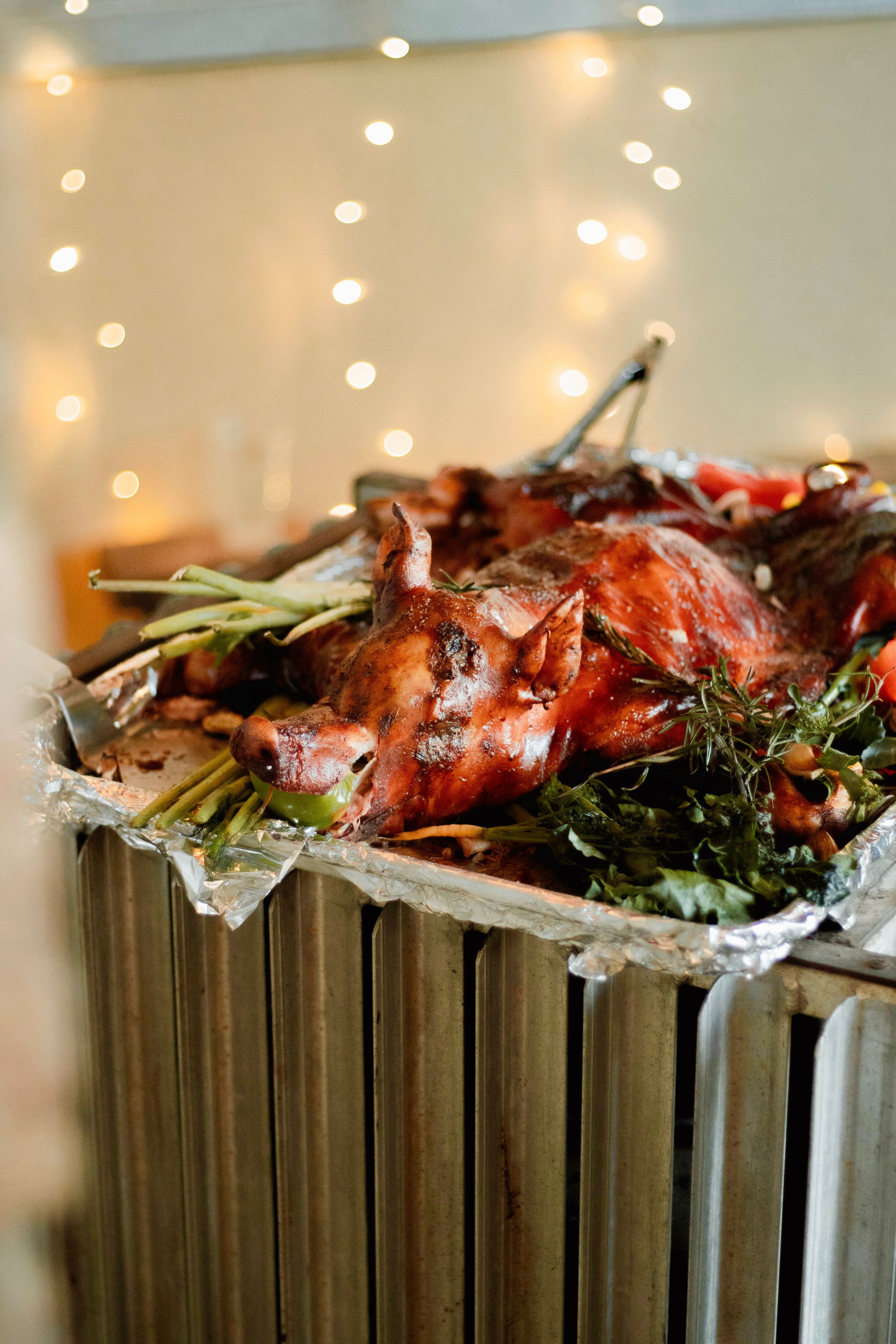
1. Babi Guling — spit-roasted suckling pig
The dish Anthony Bourdain put on the international map. The pig is stuffed with basa gede paste, then spit-roasted over coconut husk for hours until the skin shatters and the meat soaks up the spice. A standard plate arrives with rice, pork sate, lawar, sambal matah, and a shard of crackling.
- Where: Warung Babi Guling Ibu Oka (Ubud), Babi Guling Pak Malen (Seminyak), Warung Babi Guling Gung Cung (Ubud)
- Price: IDR 50,000–85,000 (USD 3–5)
- Best for: First-time visitors, meat eaters, anyone after the single most Balinese dish on the island
2. Bebek Betutu — slow-cooked spiced duck
A whole duck rubbed in spice paste, wrapped in betel and banana leaves, and slow-cooked for 6–12 hours. The meat falls apart; the spice gets deep into every fibre. Traditionally a ceremonial dish, today you can usually find a half-portion on the menu without a day's notice.
- Where: Bebek Tepi Sawah (Ubud), Bebek Bengil (Ubud)
- Price: IDR 110,000–180,000 (USD 7–11) per portion
- Best for: A sit-down dinner; travellers who want to taste ceremonial Balinese cooking
3. Ayam Betutu — chicken version of the same idea
Same technique as bebek betutu, but with chicken. Faster to prepare, a touch lighter on the wallet, and easier to find on standard menus. The spice paste profile is identical, so you still get the unmistakable Balinese warmth without committing to a whole duck.
- Where: Warung Ayam Betutu Men Tempeh (Gilimanuk; branches in Denpasar)
- Price: IDR 65,000–120,000 (USD 4–8)
- Best for: Spice lovers; families splitting plates
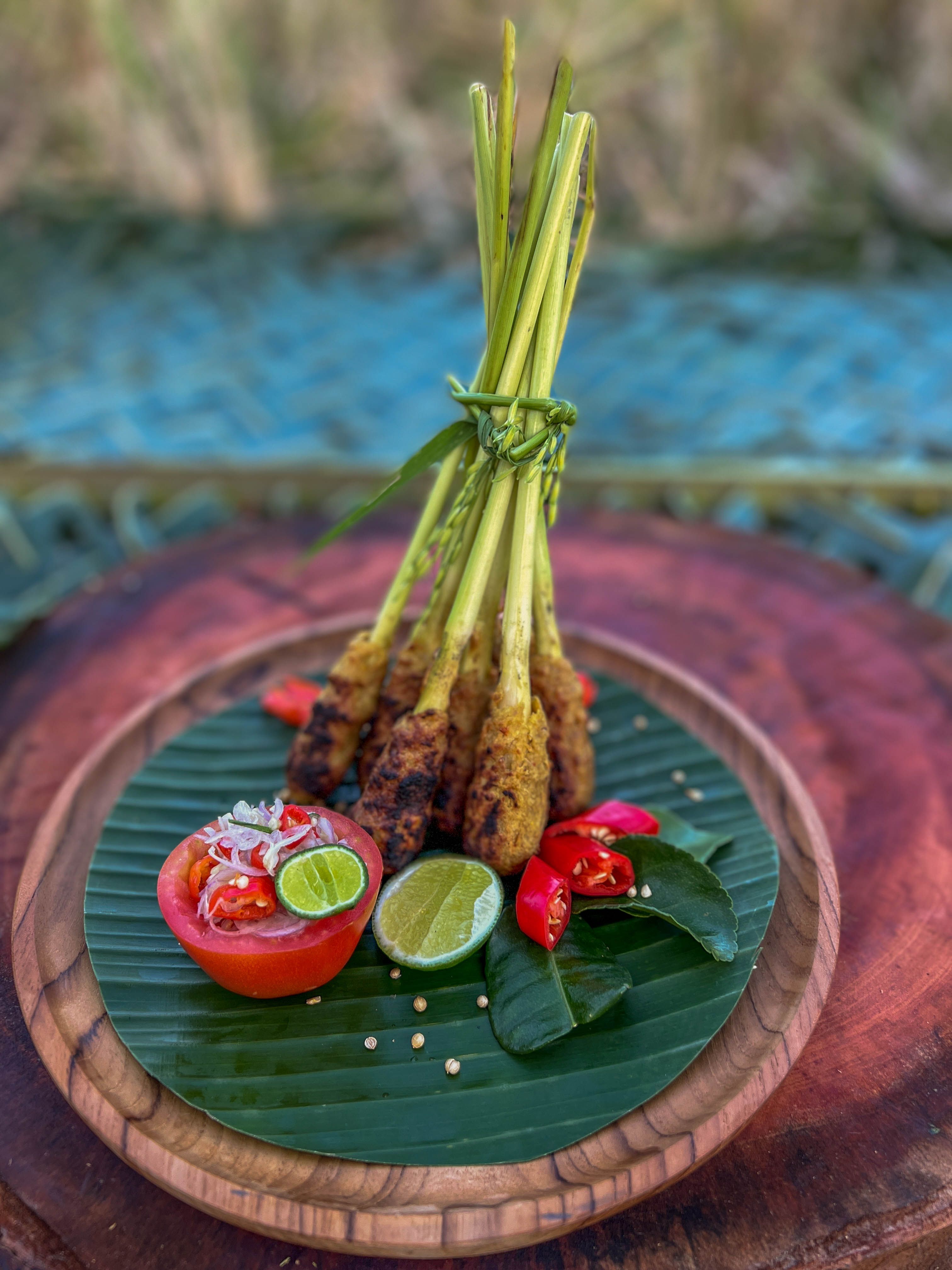
4. Sate Lilit — minced satay on lemongrass
The most distinctly Balinese satay you'll eat. Minced fish, chicken, or pork is mixed with grated coconut, lime leaf, and the same spice paste, then wrapped around a flattened lemongrass stalk and grilled over coconut-husk coals. The lemongrass perfumes the meat from the inside as it cooks.
- Where: Most Balinese restaurants; Jimbaran's seafood grills do excellent fish versions
- Price: IDR 30,000–70,000 (USD 2–4) for 5–8 skewers
- Best for: A starter or shared plate; seafood fans
5. Nasi Campur Bali — the everything plate
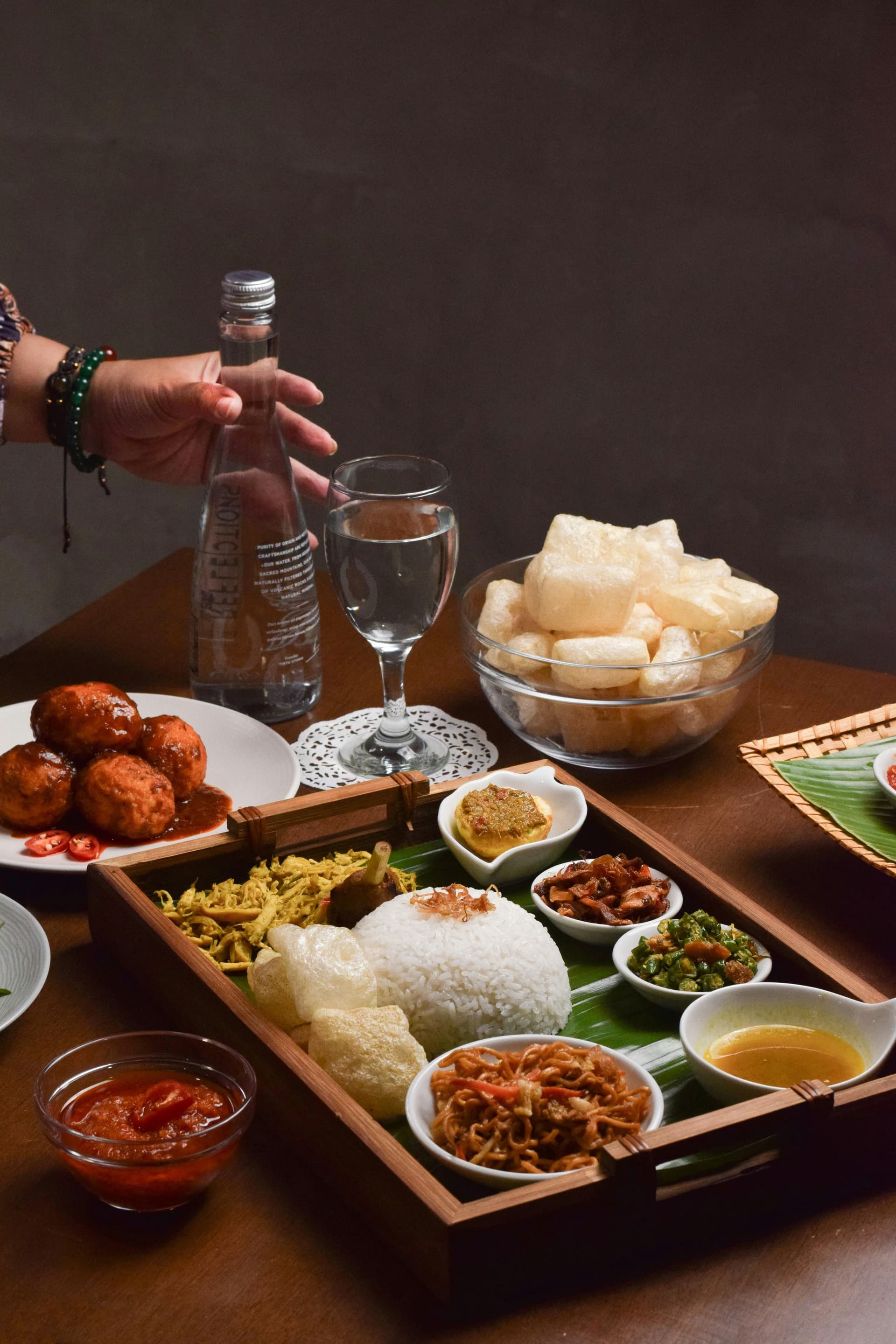
Campur means "mixed". You get a mound of rice surrounded by small portions of half a dozen sides: sate lilit, lawar, fried tempeh, sambal, urap (steamed vegetables with coconut), and often a piece of fried chicken or pork. It's the single best way to taste several Balinese dishes in one sitting.
- Where: Warung Nasi Bali Men Weti (Sanur), Nasi Ayam Kedewatan Ibu Mangku (Ubud), Warung Wardani (Denpasar)
- Price: IDR 35,000–65,000 (USD 2–4)
- Best for: First lunch on the island; picky eaters who want options on one plate
Everyday staples you'll order again and again
These five aren't uniquely Balinese — they're pan-Indonesian — but you'll see them on every menu, and a good food guide has to cover them because they're often the safest, cheapest, and most reliable order at the end of a long day.
6. Nasi Goreng — Indonesian fried rice
Day-old rice stir-fried with garlic, chilli, sweet soy (kecap manis), and whatever protein the kitchen has on hand. Topped with a fried egg and a few prawn crackers. A late-night staple that ranges from a roadside cart to a hotel buffet without ever quite losing its identity.
- Where: Everywhere; try Warung Nikmat (Kuta) for the local benchmark
- Price: IDR 25,000–80,000 (USD 1.50–5)
- Best for: A reliable first or last meal; kids; anyone who wants a no-surprises plate
7. Mie Goreng — fried noodles
Same flavour profile as nasi goreng, but with wheat noodles. Usually served with shredded chicken or prawn, vegetables, and a fried egg. Noodles vary in thickness — Hokkien-style thick at some warungs, thin egg noodles at others.
- Where: Hawker stalls at any night market; sit-down at almost any Bali warung
- Price: IDR 25,000–70,000 (USD 1.50–4.50)
- Best for: Quick lunch; comfort food after a long beach day
8. Gado-Gado — vegetable salad with peanut sauce
Steamed vegetables (cabbage, beansprouts, beans, spinach), boiled egg, tofu, tempeh, and rice cake (lontong) under a peanut sauce made with palm sugar and chilli. Filling, vegetarian-friendly, and one of the most travel-safe orders on any menu.
- Where: Sari Organik (Ubud), Warung Pulau Kelapa (Ubud), most cafés in Canggu
- Price: IDR 40,000–80,000 (USD 2.50–5)
- Best for: Vegetarians; lighter lunch; hot afternoons
9. Soto Ayam — turmeric chicken soup
A clear yellow broth with shredded chicken, glass noodles, hard-boiled egg, fried shallots, and a squeeze of lime. The turmeric gives it the colour and a subtle bitterness; sambal and kecap manis sit on the table for you to adjust.
- Where: Soto Ayam Pak Min (Denpasar); most warungs do a workable version
- Price: IDR 30,000–55,000 (USD 2–3.50)
- Best for: Travellers feeling under the weather; an easy breakfast or supper
10. Bakso — meatball noodle soup
Bouncy beef meatballs in a clear broth with noodles, tofu, and fried wontons. Bakso vendors push wheeled carts down residential streets and tap a small wooden block to announce arrival. The roving-cart version is part of the experience.
- Where: Bakso Solo Samrat (Denpasar), Bakso IGA Canggu — pick a busy cart rather than a quiet one
- Price: IDR 25,000–50,000 (USD 1.50–3)
- Best for: Late-night cravings; comfort food








Coastal catches and regional specialties
These five dishes lean on Bali's coastline and on regional traditions you won't see pulled out of every warung. They round out a food list that goes beyond the obvious icons.
11. Ikan Bakar — charcoal-grilled fish (Jimbaran)
Whole fish rubbed in spice paste, wrapped in banana leaf, and grilled over coconut-husk coals. In Jimbaran, seafront warungs line the sand and serve catches by the kilo — snapper, barramundi, prawns, squid, lobster — at sunset, with your feet in the sand.
- Where: Jimbaran Bay (Café Menega, Lia Café, Roman Café cluster) — about 30 minutes from Kuta
- Price: IDR 150,000–400,000 (USD 9–25) per kilo of mixed seafood
- Best for: Sunset dinners; couples; a celebratory meal
- Tip: Walk past the first few cafés before picking one — the sand layout means later cafés often have better tables
12. Pepes Ikan — banana-leaf steamed fish
Fish (usually mackerel or red snapper) coated in spice paste, wrapped in banana leaf, and either steamed or grilled. The leaf chars at the edges and infuses the fish; the spice paste hits a softer, more aromatic note than the charred ikan bakar.
- Where: Most Balinese warungs offer it as a daily special
- Price: IDR 55,000–110,000 (USD 3.50–7)
- Best for: Spice-tolerant eaters who prefer steamed to grilled
13. Lawar — minced meat and coconut
A ceremonial Balinese dish: finely chopped meat or jackfruit, grated coconut, kaffir lime, and the full basa gede paste. The traditional version (lawar merah) uses fresh pig's blood; the everyday version (lawar putih) skips it. Almost always a side rather than a main, served alongside babi guling or nasi campur.
- Where: Any warung that serves babi guling will have lawar
- Price: Usually included with a nasi campur plate
- Best for: Adventurous eaters; ask for lawar putih if you'd rather skip the blood version
14. Bebek Goreng — crispy fried duck
Duck marinated overnight, then deep-fried in a single thick batter until shatteringly crisp. Served with white rice, sambal matah, plecing kangkung (water spinach in chilli paste), and a small bowl of broth. The fat renders out properly, so it's less greasy than it sounds.
- Where: Bebek Bengil (the "Dirty Duck" in Ubud), Bebek Tepi Sawah, Warung Eropa (Kuta)
- Price: IDR 95,000–175,000 (USD 6–11)
- Best for: First proper dinner in Ubud; anyone who normally avoids duck
15. Nasi Jinggo — banana-leaf rice parcels
Tiny banana-leaf-wrapped portions of rice, shredded chicken, tempeh, fried noodles, and sambal. Originally a late-night working-person's meal, jinggo costs almost nothing and is sold from carts and warungs late into the evening. You can read more about Bali's street food scene for similar cheap-and-quick options.
- Where: Warung Jinggo at Pasar Kreneng (Denpasar); late-night vendors in Sanur and Denpasar
- Price: IDR 5,000–10,000 (USD 0.30–0.65) per parcel — most people eat 2–3
- Best for: Late-night street snack; budget travellers
Sambals, snacks and sweets
The sambal-and-sweet half of Balinese cooking gets the least attention in most food write-ups, which is exactly why it deserves a place in this Bali food guide. These five round out the picture and are the easiest to combine into an afternoon snack run.
16. Sambal Matah — raw chilli and lemongrass relish
Bali's signature sambal. Uncooked: finely sliced red chilli, shallot, lemongrass, kaffir lime leaf, garlic, and a touch of shrimp paste, dressed with lime juice and warm coconut oil. Bright, sharp, fresh — a different animal from the cooked sambals you'll meet elsewhere in Indonesia. It transforms ikan bakar, sate lilit, and plain rice.
- Where: Served as a side at nearly every Balinese restaurant
- Price: Free or IDR 5,000–10,000 (USD 0.30–0.65) for a side bowl
- Best for: Adding to grilled fish, fried chicken, anything that needs a lift
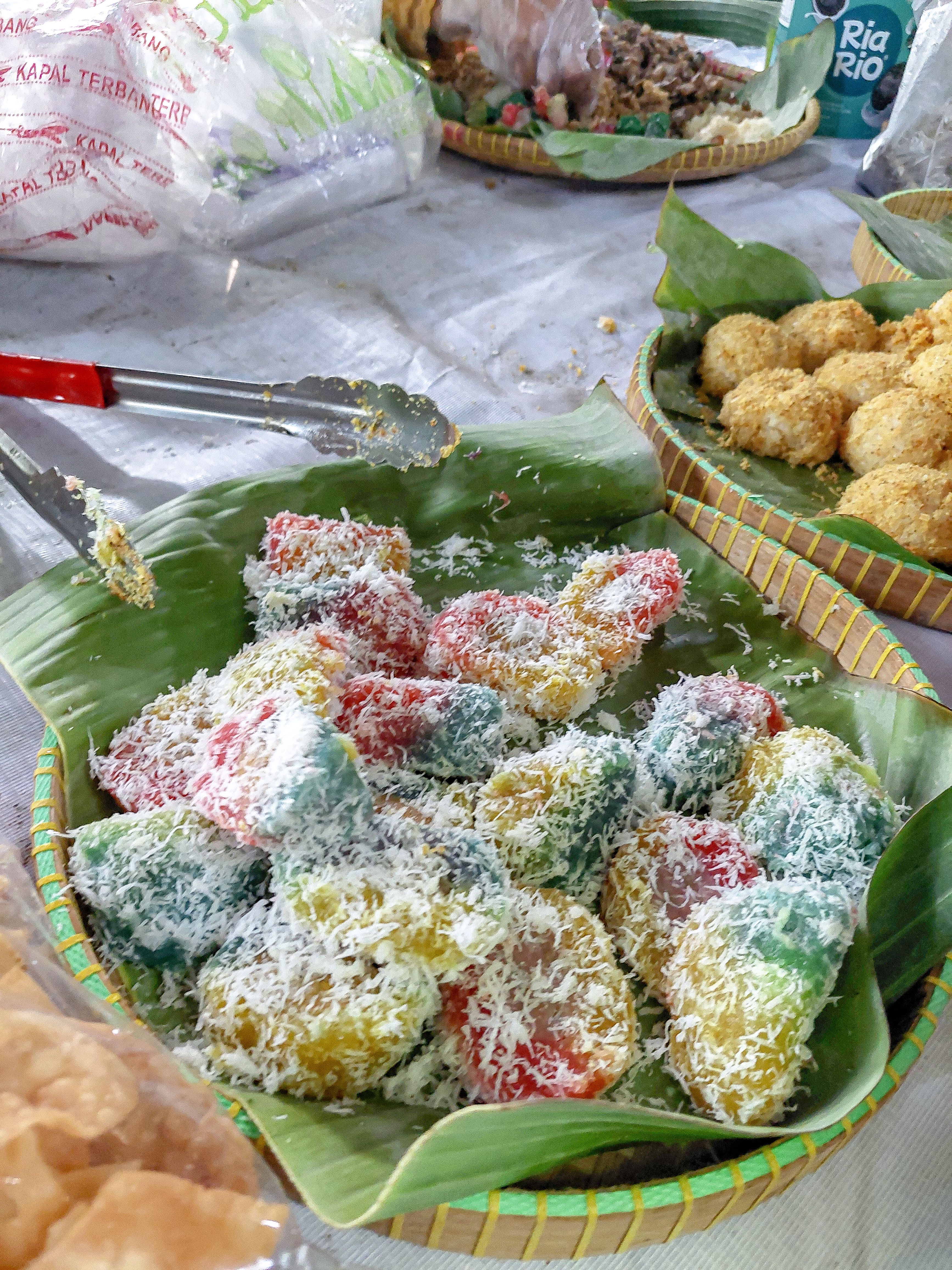
17. Klepon — palm-sugar-filled rice balls
Pandan-green glutinous rice balls filled with liquid palm sugar and rolled in fresh grated coconut. Pop one in whole — the sugar bursts when you bite. A ceremonial sweet, but you'll find klepon everywhere from market stalls to upscale cafés.
- Where: Pasar Badung (Denpasar) early morning, Sindhu Market (Sanur), most Ubud cafés
- Price: IDR 5,000–15,000 (USD 0.30–1) per piece
- Best for: Afternoon snack with a Balinese coffee
18. Dadar Gulung — pandan crêpe with coconut
A thin, vivid-green pandan-flavoured pancake wrapped around a filling of grated coconut cooked in palm sugar. The pandan smells faintly floral; the filling is sticky-sweet without being cloying. Easy to find and easy to like.
- Where: Pasar Kumbasari (Denpasar), Sindhu Market, This Is Bali (Ubud) for a refined version
- Price: IDR 5,000–20,000 (USD 0.30–1.25) per piece
- Best for: Anyone who finds Western desserts too rich
19. Laklak — clay-pot rice pancakes
Tiny rice-flour pancakes cooked in small clay moulds over a wood fire. The clay gives them a slight toasty edge; they're served with palm sugar syrup and grated coconut. Best eaten warm, straight off the griddle, in the morning at a market.
- Where: Pasar Badung 6–9am, Pasar Kreneng (Denpasar), the back of Ubud Market early
- Price: IDR 5,000–15,000 (USD 0.30–1) for 4–5 pieces
- Best for: A second breakfast; anyone who prefers simple to ornate
20. Bubur Injin — black rice pudding
Black glutinous rice cooked slowly with palm sugar and pandan, served warm with coconut cream on top. Earthy, nutty, lighter than it looks. Sometimes served as breakfast, sometimes as dessert.
- Where: Sari Organik (Ubud), Café Lotus (Ubud), most healthy cafés in Canggu
- Price: IDR 30,000–55,000 (USD 2–3.50)
- Best for: Breakfast; vegans; anyone curious about rice as a dessert
Where to eat in Bali, and what to know before you go
A Bali food guide is only useful if it tells you where to actually go. Bali's eating regions have distinct personalities, and a thoughtful trip plans different meals in different areas rather than eating everything in one neighbourhood.
Quick reference: best region for each meal style
- Traditional warung lunch → Ubud or Denpasar
- Seafood dinner on the sand → Jimbaran
- Modern Indonesian and brunch → Seminyak or Canggu
- Morning market sweets → Sanur (Sindhu) or Denpasar (Badung)
- Late-night street eats → Gianyar Night Market or Pasar Kreneng
Ubud — traditional and ceremonial
Ubud is Bali's culinary anchor. Warung Ibu Oka (babi guling), Bebek Bengil (crispy duck), Warung Nasi Ayam Kedewatan Ibu Mangku (nasi campur), and Locavore (modern Balinese tasting menu) are all within a 15-minute drive of each other. Ubud kitchens lean hard on local farms, so the vegetables and rice are noticeably fresher. A Balinese cooking class here usually starts at a morning market — worth doing on your first full day so the rest of the trip's menus start making sense.
Seminyak and Canggu — modern Indonesian and brunch
Beach-club brunch, smoothie bowls, and elevated Indonesian classics. Mejekawi at Ku De Ta and Kaum Bali at Potato Head Beach Club do refined modern Balinese; Babi Guling Pak Malen on Sunset Road serves a classic version for under USD 5. Canggu leans plant-based; Seminyak leans cocktail-driven. Plan one beach-club lunch and one warung dinner here rather than two of either.
Sanur, Denpasar, and Jimbaran
The locals' belt and the sunset belt. Sanur is quieter and less tourist-saturated — Warung Nasi Bali Men Weti (the original), Warung Mak Beng (fish soup and fried fish, three items only on the menu), and Sindhu Market for morning klepon and laklak. Denpasar's Pasar Badung (Bali's largest market, open 24 hours) and the Gianyar Night Market 30 minutes north are the two pins to drop for night street food. Jimbaran is the sunset seafood spot — a row of beachfront warungs grill the day's catch on the sand.
Before you go — Bali belly, spice, vegetarian, etiquette
Four practical notes that save first-time visitors a lot of guesswork.
Avoiding Bali belly:
- Drink bottled or filtered water only; check the seal
- Skip ice unless you're at a restaurant that visibly makes its own (most tourist-facing places do)
- Eat at warungs with high local turnover — busy carts mean fresh stock
- Be more cautious with raw vegetable garnishes than with cooked food
- Pack rehydration salts in your luggage rather than buying them in a panic
Eating vegetarian or vegan: Bali is one of the easier Southeast Asian destinations for plant-based eating. Useful phrases:
- Saya vegetarian — I'm vegetarian
- Tanpa daging — without meat
- Tanpa telur — without egg
- Tanpa susu — without dairy
Gado-gado, urap, sayur lodeh (vegetable curry), tahu-tempeh, and bubur injin are reliably vegan. Canggu and Ubud have dense vegan café clusters (Sari Organik, Alchemy, Plant Cartel, Peloton Supershop).
Spice tolerance and ordering: Balinese food is spicier than most Indonesian cooking by default, but sambal is usually served on the side so you control the heat.
- Tidak pedas — not spicy
- Sedikit pedas — a little spicy
- Pedas biasa — normal spice
- Pedas sekali — very spicy
Cash, tipping, and etiquette: Smaller warungs and markets are cash-only; ATMs are easy to find. A 10% tip is standard at sit-down restaurants if a service charge isn't already included (check the bill). Eating with your right hand is fine and traditional; the left hand is considered impolite for handling food.
Plan your Bali food trip
A great Bali food guide isn't a checklist — it's a map of moments. Plan one ceremonial dish (babi guling, bebek betutu, or sate lilit) for a proper sit-down meal, one beach-grill dinner in Jimbaran, two warung lunches across Ubud or Sanur, and a morning market run for klepon and laklak. Eat slowly, ask the cook what they're proudest of, and don't try to hit all 20 dishes in a week — three or four really memorable meals beat twenty rushed ones.
Travjoy's Bali restaurants, food tours, and cooking-class options are vetted by local experts so you can spend your time eating rather than second-guessing the choice. Start planning your Bali trip with the destinations and experiences worth your time.






.svg&w=1920&q=75)