



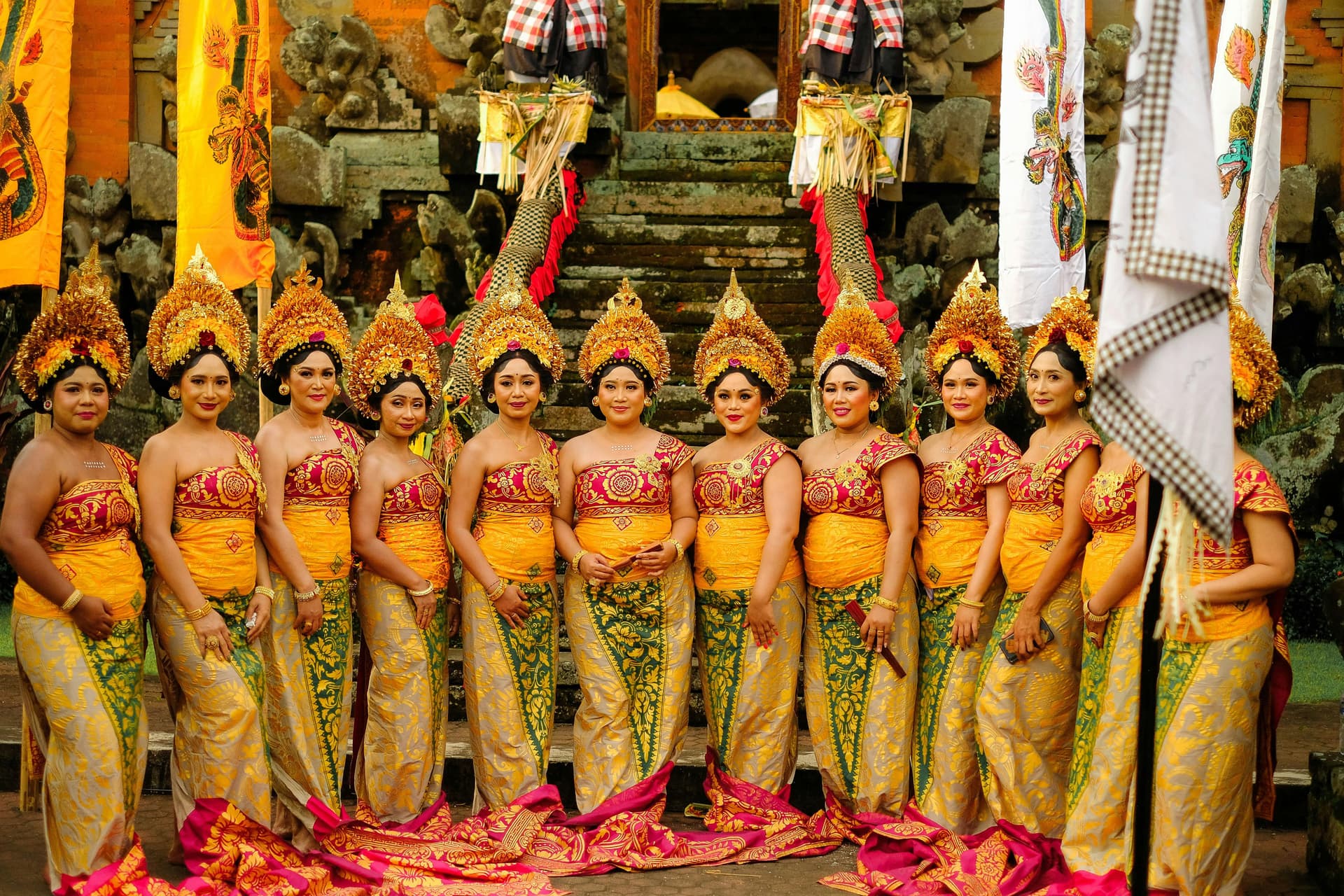
Bali Festivals: A Complete Calendar of Events and Ceremonies
11 min read
Raj Varma
Author
Travel & Tourism Expert Ex-Thomas Cook, Kuoni, Times of India & Travel Triangle.
SHARE BLOG
TABLE OF CONTENTS
Key Takeaways
- Bali festivals run on two parallel calendars — the lunar Saka and the 210-day Pawukon — so most dates shift every year.
- Nyepi falls on 19 March 2026 and shuts the entire island for 24 hours, including the airport and all roads.
- Galungan (17 June 2026) and Kuningan (27 June 2026) are the year's biggest religious festivals, with penjor poles lining every village street.
- The Bali Arts Festival runs 13 June to 11 July 2026 in Denpasar — month-long, free, and the largest secular cultural event on the calendar.
- Beyond the headliners, dozens of Tumpek days, temple odalan anniversaries, and village festivals fill the year — many of them more rewarding than the big-name events.
Bali festivals fall into two streams: religious ceremonies tied to the 210-day Pawukon and lunar Saka calendars (Nyepi, Galungan, Kuningan, the Tumpek series, Saraswati, Pagerwesi), and secular cultural events on fixed dates (Bali Arts Festival, Ubud Food Festival, BaliSpirit Festival, Ubud Writers and Readers Festival). The three biggest Bali festivals in 2026 are Nyepi on 19 March, Galungan on 17 June, and the Bali Arts Festival from 13 June to 11 July.
One morning in March, Bali's airport falls silent. No flights take off, no cars move, no lights come on after dark. For 24 hours, an island of more than four million people observes Nyepi — and that is just one entry on a calendar that runs hundreds deep.
Bali is one of the few places where the festival calendar is the calendar. Religious life sits on top of, and overlaps with, the secular event circuit year-round. A traveller arriving in June might find themselves driving past streets canopied in bamboo poles for Galungan one week, then watching a Legong dance at the Bali Arts Festival the next.
This guide walks through every major Bali festival worth planning around in 2026, when each falls, where to see it, and what to expect as a visitor. Confirmed dates are listed for the religious holidays; for the cultural events, official festival announcements are noted.
How Bali's festival calendars actually work
Bali festivals follow two calendars, and understanding the difference is the single most useful piece of knowledge for planning a trip around them. Most travellers assume festival dates work like Christmas — same date every year — and then get confused when Galungan falls in February one year and August the next.
The Saka calendar — lunar, used for Nyepi
Saka is the lunar calendar inherited from India, with 12 months tied to moon cycles. It governs a small number of festivals, the biggest being Nyepi — the Balinese New Year, which marks the first day of the Saka year. In 2026, Saka year 1948 begins, and Nyepi falls on Thursday 19 March.
Because the Saka year is shorter than the Gregorian solar year, Nyepi creeps forward or back by a few weeks each year, but it always lands in March or early April.
The Pawukon calendar — 210-day cycle
Pawukon is the indigenous Balinese calendar, and it runs a 210-day cycle made up of 30 seven-day weeks. Almost every major Balinese ceremony — Galungan, Kuningan, Saraswati, Pagerwesi, the Tumpek series, and the anniversary of every temple on the island — follows this cycle.
This is why dates shift each year and, more confusingly, why some festivals happen twice in one Gregorian year and once in the next. In 2026, Saraswati and Pagerwesi both fall twice (April and October/November); Galungan and Kuningan fall only once, in June.
Why 2026 has only one Galungan
The mechanics are simple once seen on paper: Galungan in 2026 lands on 17 June. Add 210 days and the next cycle would begin around 13 January 2027 — outside the 2026 calendar year. So while many years have two Galungan-Kuningan cycles, 2026 has just the one, which makes the mid-June window unusually concentrated for cultural travellers.
Key religious dates in 2026 — quick reference
- 15 March 2026: Melasti purification ceremonies on beaches
- 18 March 2026: Tawur Kesanga and Ogoh-Ogoh parades (the night before Nyepi)
- 19 March 2026: Nyepi — Saka New Year, Day of Silence
- 20 March 2026: Ngembak Geni (and Omed-Omedan in Sesetan, Denpasar)
- 4 April 2026: Saraswati Day (first of two in 2026)
- 8 April 2026: Pagerwesi (first of two)
- 15–19 April 2026: BaliSpirit Festival, Ubud
- 29–31 May 2026: Ubud Food Festival
- 13 June – 11 July 2026: Bali Arts Festival (Pesta Kesenian Bali), Denpasar
- 17 June 2026: Galungan
- 27 June 2026: Kuningan
- 7–8 August 2026: Ubud Village Jazz Festival
- 21–25 October 2026: Ubud Writers and Readers Festival
- 31 October 2026: Saraswati Day (second cycle)
- 4 November 2026: Pagerwesi (second cycle)
Major religious festivals in 2026
These are the biggest Bali festivals on the religious calendar, the ones that will visibly affect what you see on the streets, what is open or closed, and whether you can move around the island.
Nyepi — the Day of Silence (19 March 2026)
Nyepi is the most striking observance on the Balinese calendar and the most disruptive to any traveller in town. For 24 hours, from 6am on 19 March to 6am on 20 March 2026, the entire island shuts down. No flights land or depart at Ngurah Rai Airport. Roads are closed to all vehicles except emergency services. Lights are kept off after sunset. Even WiFi signal is suppressed in some areas. The day is reserved for fasting, silence, and self-reflection.
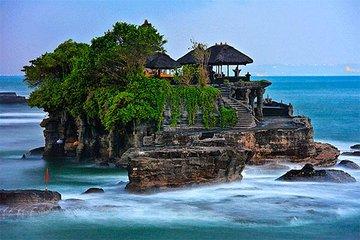
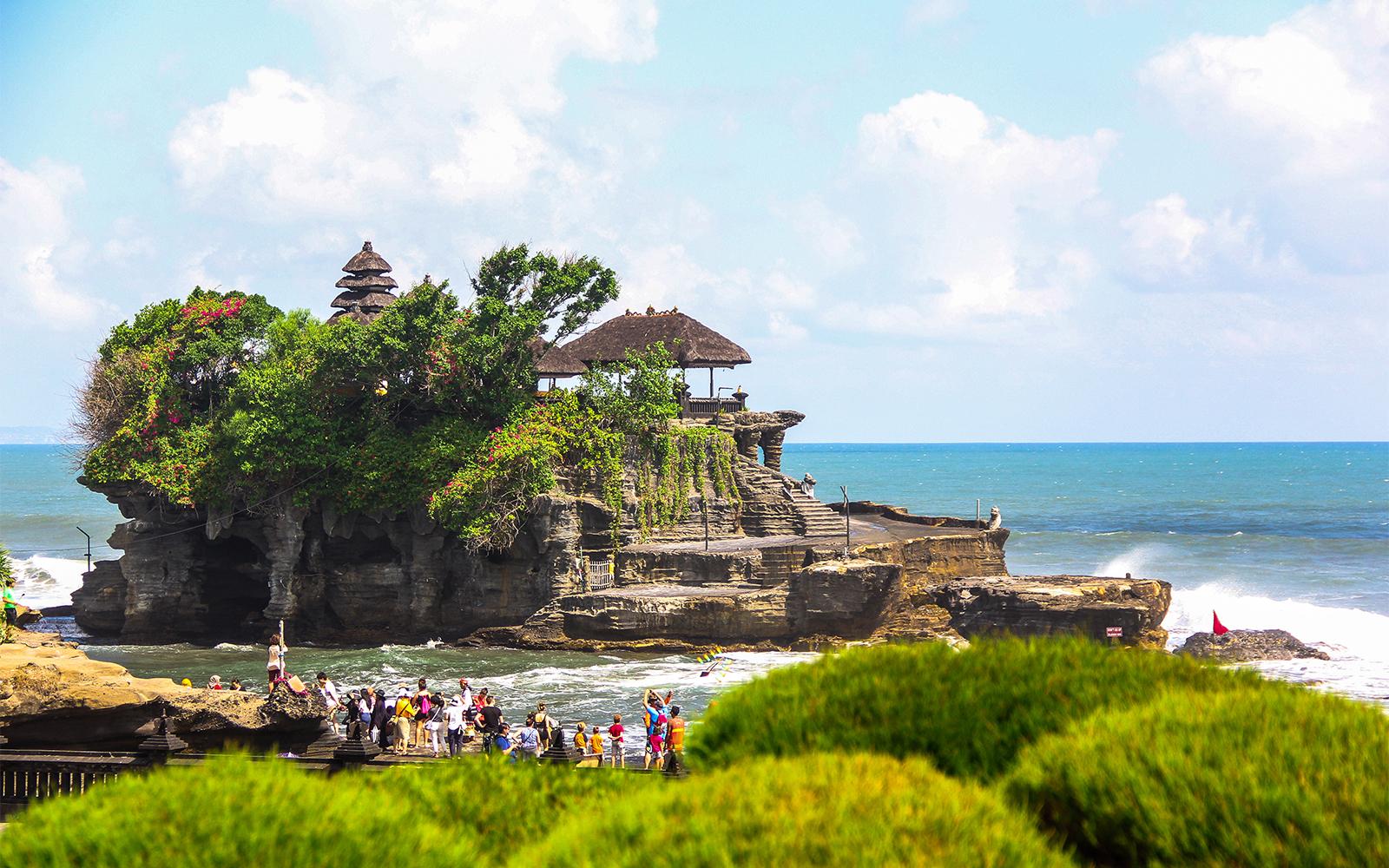
The buildup is anything but silent. Three days before Nyepi, on 15 March, Balinese Hindus carry sacred temple effigies to the sea or nearest water source for the Melasti purification ceremony — a striking procession of white-robed worshippers, gamelan players, and parasol-bearers winding from temple to beach. Tanah Lot Temple and the coastal stretches near Sanur are among the most photographed Melasti sites.
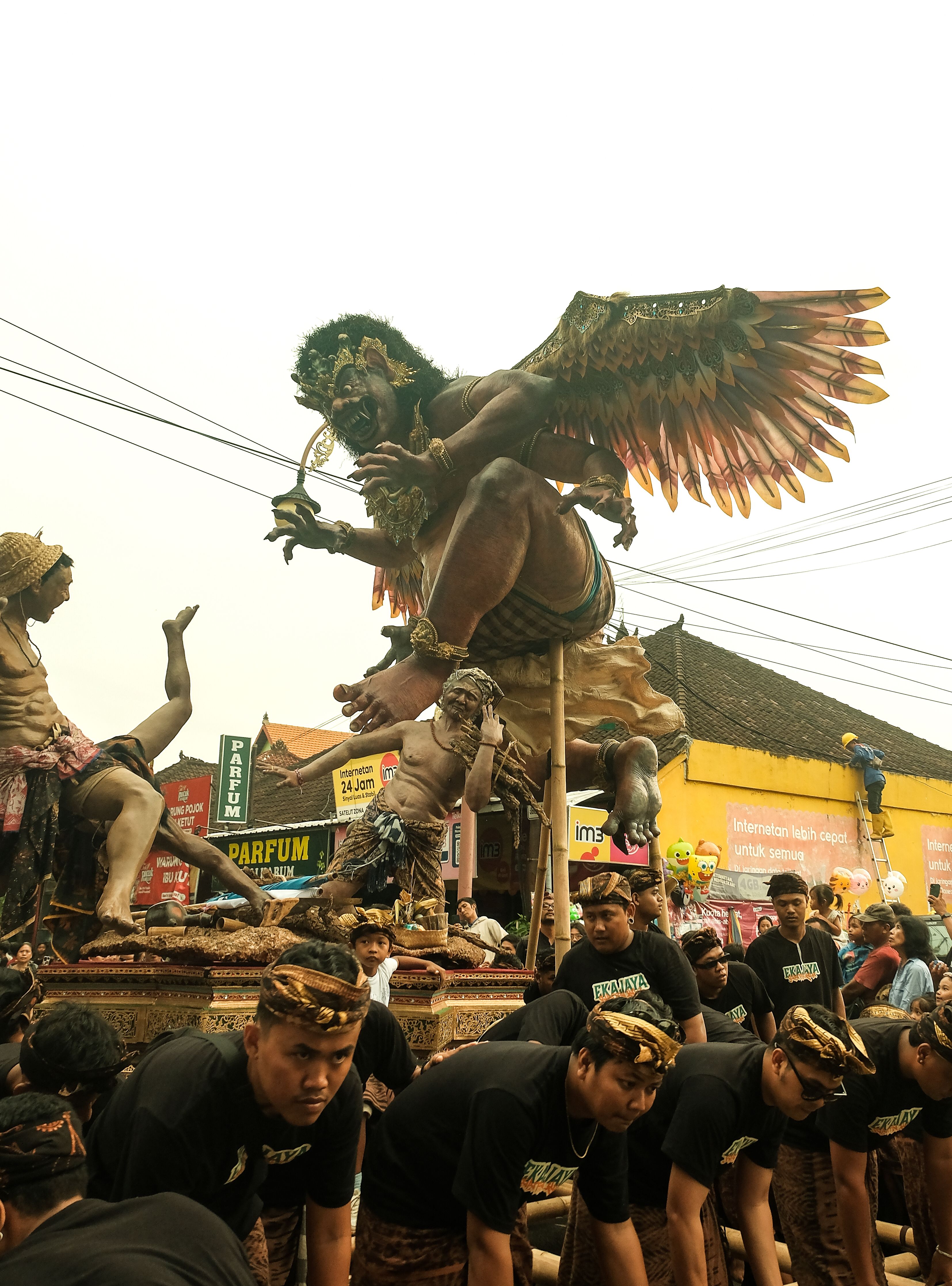
On the evening of 18 March, each village parades its ogoh-ogoh — towering papier-mâché demons built over the previous month — through the streets. The statues are meant to absorb negative spirits, then are burned or symbolically destroyed by night's end. Denpasar's Kesanga Fest is the largest gathering point.
The day after Nyepi, 20 March, is Ngembak Geni — a return to social life. In the Sesetan suburb of Denpasar, the Banjar Kaja community holds Omed-Omedan, the so-called kissing ritual, where young unmarried members of the community embrace under sprays of water in a centuries-old village tradition.
Galungan and Kuningan (17 and 27 June 2026)
Galungan marks the victory of dharma (good) over adharma (evil) and the period when ancestral spirits descend to visit family homes. It is celebrated every 210 days, and in 2026 falls on Wednesday 17 June. Kuningan, exactly 10 days later on Saturday 27 June, closes the period as the spirits return to the heavens.
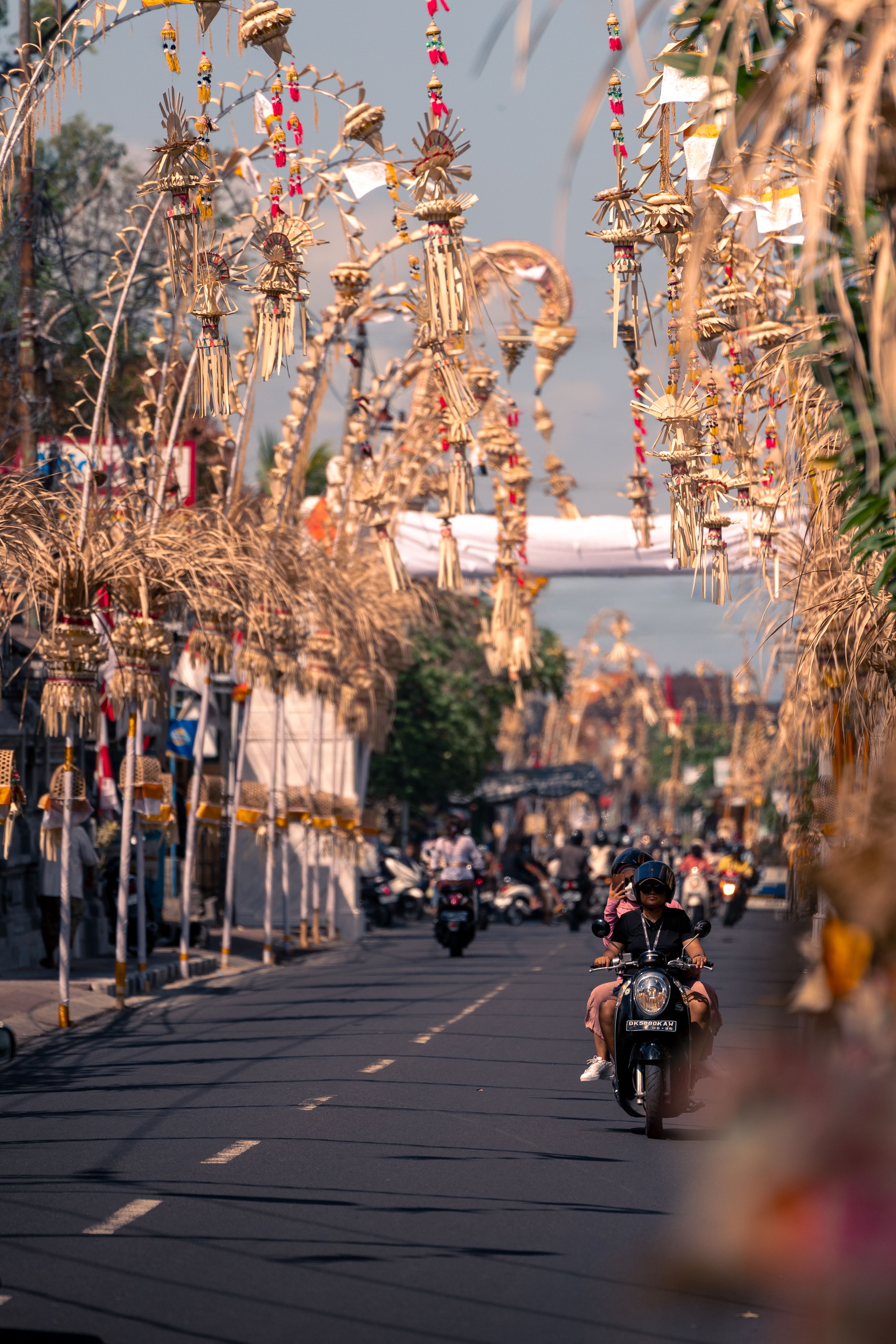
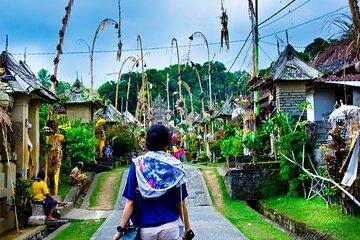
The week leading up to Galungan is when Bali looks most photogenic. Every household installs a penjor — a tall, decorated bamboo pole with cascading palm-leaf decorations — outside the front gate. Village streets arch over with hundreds of these poles, creating a tunnel of woven offerings. The build-up sequence runs:
- 14 June: Penyekeban — fruit ripening day, preparing offerings
- 15 June: Penyajaan Galungan — preparing rice cakes
- 16 June: Penampahan Galungan — pig slaughtering, final preparation, penjor installation
- 17 June: Galungan — the main holiday, family temple visits
- 18 June: Manis Galungan — visiting relatives, day off
- 27 June: Kuningan — yellow rice offerings, spirits depart
Visitors during this window will find every temple in full ceremony, many businesses closed on Galungan and Kuningan themselves, and roads quieter than usual as Balinese families travel home to their ancestral villages.
Saraswati Day (4 April and 31 October 2026)
Saraswati honours the Hindu goddess of knowledge, learning, and the arts. Schools, libraries, and homes bless books, instruments, and computers with offerings of flowers and incense. Out of respect, many Balinese avoid reading or writing for parts of the day. There is no major public spectacle, but visiting an Ubud temple or school on a Saraswati morning shows the ceremony at its most domestic and authentic.
Pagerwesi (8 April and 4 November 2026)
Pagerwesi means "iron fence" — a day for spiritual fortification, four days after Saraswati. The idea is that newly received knowledge needs protection. Ceremonies take place in family compounds and temples; visitors will see family altars stacked with offerings but little disruption to daily life.
The Tumpek series — six Saturdays of nature blessing
The Tumpek days are arguably the most distinctive feature of the Balinese calendar — six separate Saturdays in each 210-day cycle, each dedicated to a different element of the natural and crafted world. They are less famous than Galungan but offer a more intimate look at Balinese spirituality.
- Tumpek Landep — blessing of metal objects, traditionally weapons (the keris) but now extended to cars, motorbikes, and laptops. Look for vehicles draped in palm-leaf decorations on this day.
- Tumpek Uduh (or Pengatag) — blessing of plants, trees, and crops. Farmers tap fruit trees with a small bamboo stick and offer prayers for productive harvests.
- Tumpek Kandang — blessing of domestic animals. Cows, pigs, dogs, and chickens are decorated with rice paste and offered small portions of food.
- Tumpek Krulut — dedicated to love, music, and harmony; gamelan instruments are blessed.
- Tumpek Wayang — blessing of shadow puppets and the performing arts.
- Tumpek Kuningan — falls on Kuningan day itself, blessing of gold and yellow offerings.
For 2026, the dates fall in mid-March (Tumpek Landep), late May (Tumpek Uduh), early September (Tumpek Kandang), and across the calendar at 35-day intervals. Local odalan listings or your hotel concierge can pin the exact dates for the week of your trip.
Temple anniversaries (odalan) and life-cycle ceremonies
Every Balinese temple — and there are more than 20,000 across the island — celebrates its founding anniversary every 210 days. These odalan ceremonies are the steady undercurrent of religious life on the island, far more numerous than the headline holidays, and often more visually rewarding for visitors who happen to be in the right village on the right day.
How odalan work
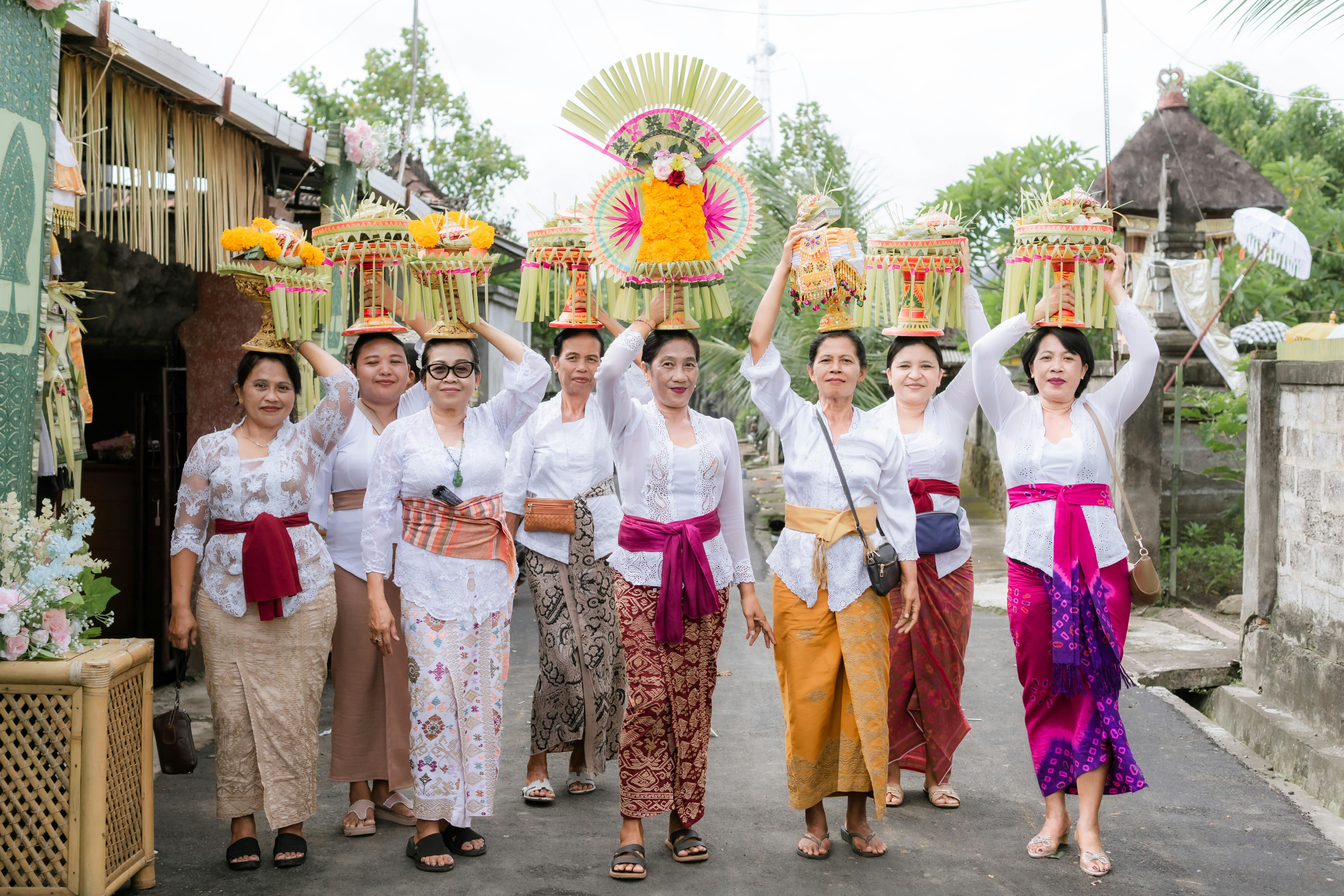
An odalan typically runs for three days. The temple is decorated with woven palm-leaf decorations called lamak, and offerings are stacked metres high on the central altars. Worshippers arrive in ceremonial dress — white or coloured sarongs, lace kebaya for women, headcloth (udeng) for men — to pray, share food, and witness performances of sacred dance like Rejang or Sanghyang.
Famous temple odalan worth witnessing
The largest temple anniversaries tend to attract regional crowds and provide easier access for visitors:
- Besakih, the Mother Temple — multiple major ceremonies tied to the lunar calendar, including the annual Bhatara Turun Kabeh ceremony around the tenth full moon, when all gods are believed to descend simultaneously. Visit Besakih Temple on a ceremony day and the entire complex transforms.
- Tanah Lot — odalan falls every 210 days on Buda Cemeng Langkir, with a procession from the temple base to the sea cliffs.
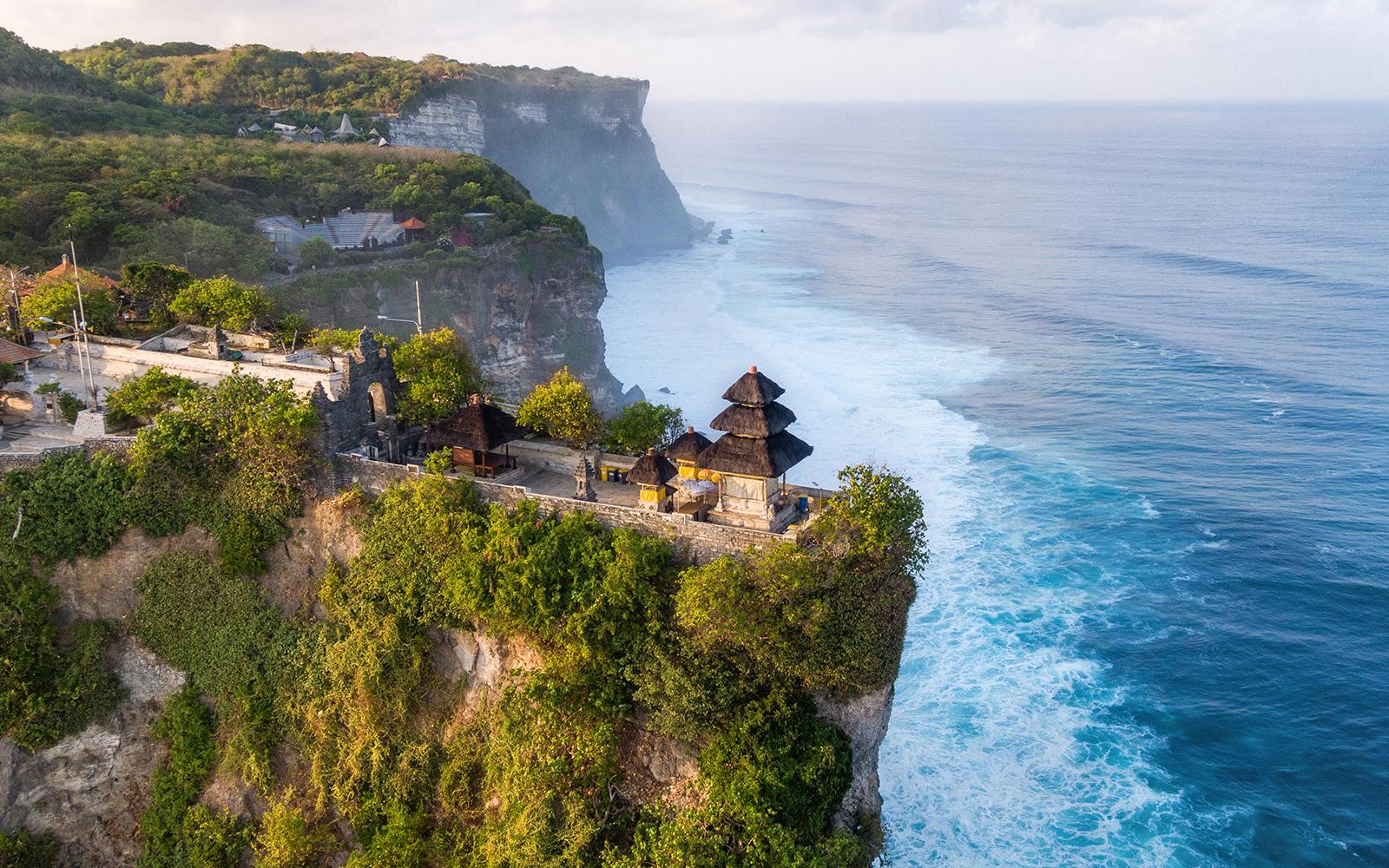
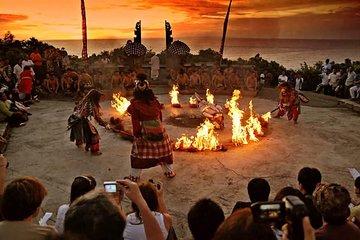
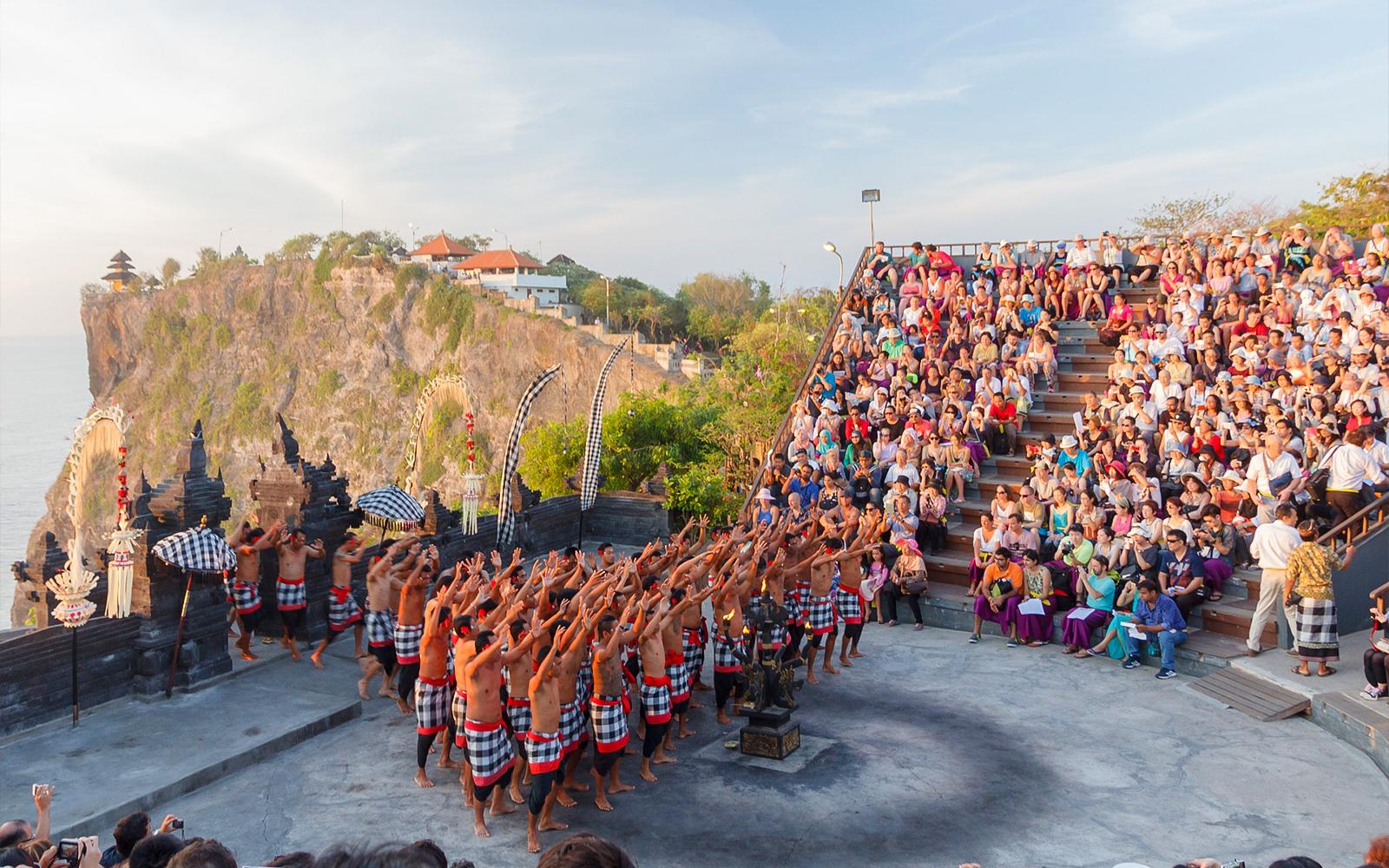
- Uluwatu — Uluwatu Temple holds its anniversary every 210 days, with daily Kecak fire-dance performances at sunset that intensify around odalan windows.
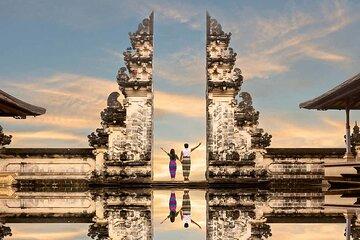
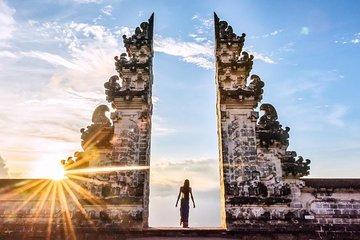
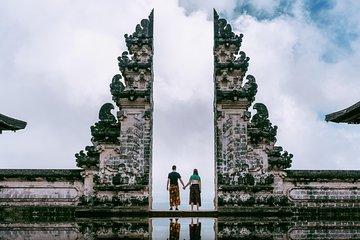
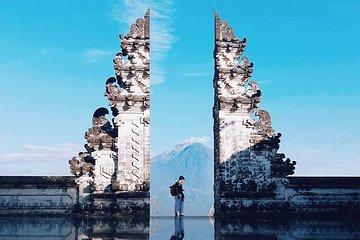
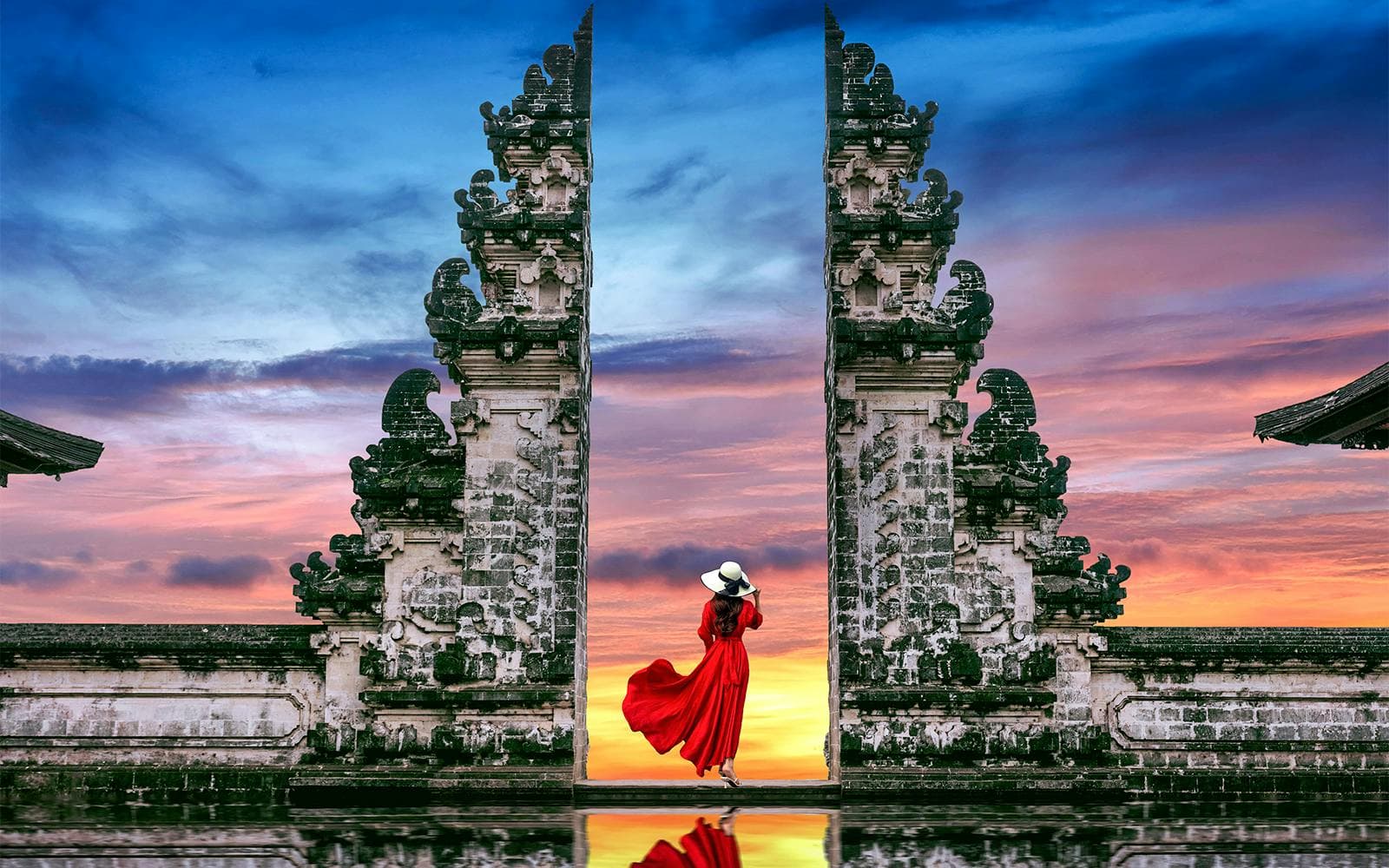
- Pura Penataran Agung Lempuyang — Gate of Heaven odalan brings hours-long queues, but the energy is unlike any other day.
Life-cycle ceremonies you may stumble upon
Beyond the calendar-based festivals, Balinese life runs on a continuous loop of personal rituals. You may witness any of these in passing on a Bali trip:
- Otonan — the 210-day birthday ceremony every Balinese receives, marking each Pawukon cycle of their life.
- Metatah — the coming-of-age tooth-filing ceremony, where the six upper front teeth are symbolically filed to remove the six negative human traits (lust, greed, anger, intoxication, indecisiveness, jealousy).
- Ngaben — the cremation ceremony, often delayed for months or years to coincide with auspicious dates and to share costs across families. Large royal ngaben in Ubud and Klungkung draw thousands of spectators and feature ornate cremation towers (bade) carried by dozens of men.
Visitors are generally welcome to observe ceremonies from a respectful distance, provided they wear a sarong and sash, do not stand higher than the priest, and never use flash photography during prayer moments.





Bali's biggest cultural and arts festivals in 2026
Beyond the religious calendar, Bali hosts a packed circuit of secular cultural festivals — most of them concentrated between April and October, when the dry season makes outdoor venues practical. The Bali Tourism Office has confirmed 56 official events on its 2026 calendar, including 40 cultural festivals across the nine regencies.
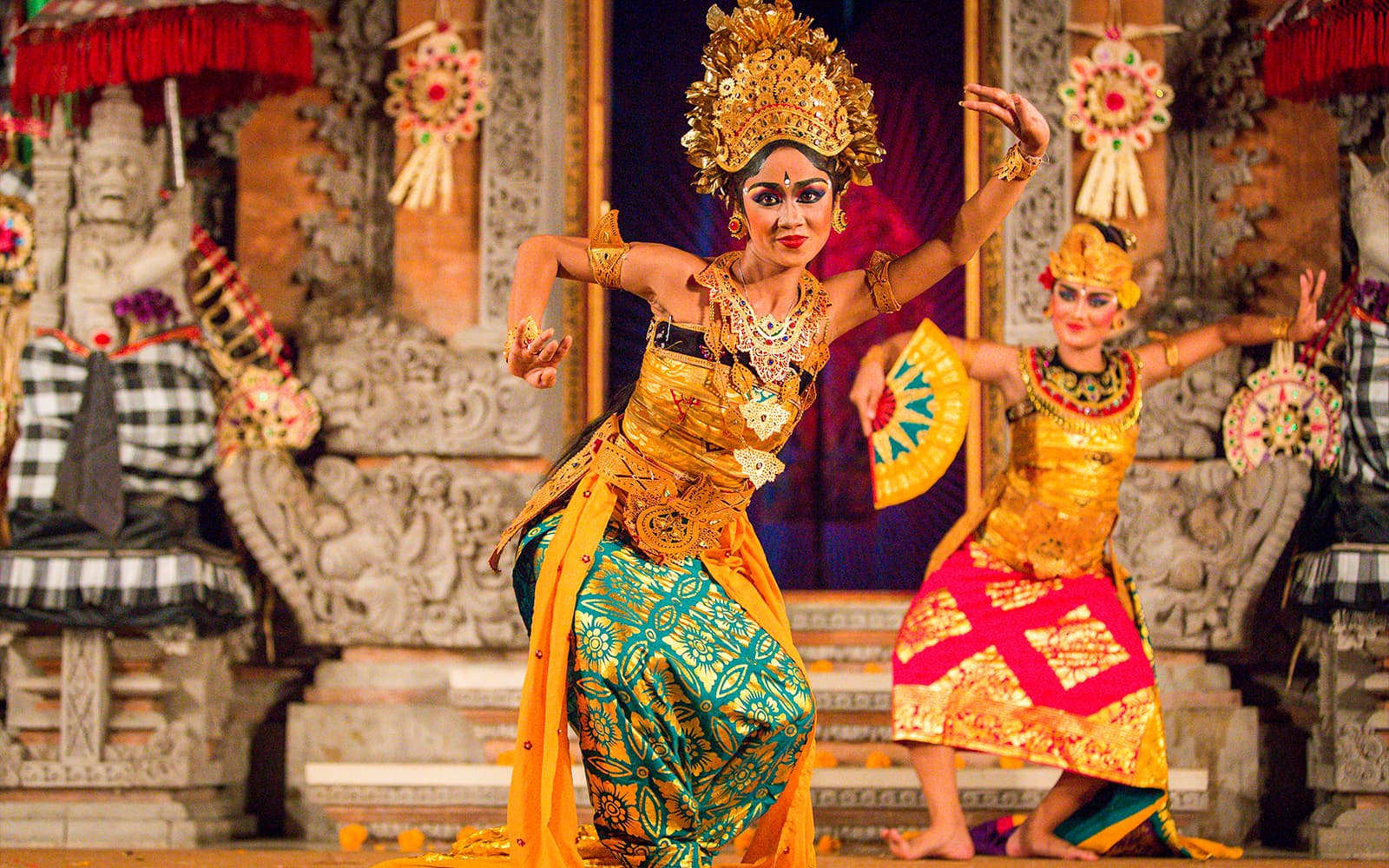
Bali Arts Festival / Pesta Kesenian Bali (13 June – 11 July 2026)
The Bali Arts Festival is the single largest cultural showcase on the calendar — a month of daily performances, exhibitions, and craft markets centred at the Werdhi Budaya Art Centre in Panjer, Denpasar. The 2026 edition runs from 13 June to 11 July, opening with a parade of dancers, musicians, and craftspeople from all nine Balinese regencies.
Entry to the festival is free, which makes it one of the best-value cultural experiences on the island. Daily programming includes:
- Sacred dance performances — Legong, Topeng, Baris, Rejang, and Kecak from troupes across Bali
- Gamelan competitions between regency orchestras
- Wayang shadow puppet performances
- Traditional craft exhibitions — Ubud painting, Mas woodcarving, Celuk silverwork, Batubulan stone carving
- Food and culinary showcases tied to regional specialities
Performances run from morning to late evening, with the largest gala shows on opening night and the closing weekend. Programmes are released on official festival channels week-by-week — checking the schedule before your visit lets you target specific dance forms or regency showcases. A Legong Dance Show attended during festival weeks will be backed by some of the island's most senior performers.
Ubud Food Festival (29–31 May 2026)
The Ubud Food Festival is Bali's leading culinary event, held over three days at Taman Kuliner in Ubud. Across cooking demonstrations, panel discussions, and street-food stalls, it draws together Indonesian chefs from across the archipelago — Padang, Manado, Makassar, Yogyakarta — alongside the local Balinese tradition.
The festival has a strong focus on heritage cuisine and small producers, so it tends to attract food-curious travellers rather than the party crowd. Tickets are required for the main programme; some satellite events around Ubud are open to the public.
BaliSpirit Festival (15–19 April 2026)
Now in its 17th edition, BaliSpirit Festival is the island's flagship wellness gathering, held at The Yoga Barn and Puri Padi Hotel in Ubud. The five-day programme covers yoga, dance, music, breathwork, and ecstatic dance, with two free community days at the start (15–16 April) and ticketed days running 17–19 April.
Night concerts feature international and Indonesian musicians. The festival is intentionally non-corporate in feel and attracts a regular crowd of yoga teachers and long-term Ubud residents — useful if you want to plug into the wider wellness community for the rest of your trip.
Ubud Writers and Readers Festival (21–25 October 2026)
The Ubud Writers and Readers Festival is regarded as Southeast Asia's leading literary event. The 2026 edition runs from 21 to 25 October, themed Samarasā: Awareness, Empathy, Action. Founded in 2004 by Janet DeNeefe in the aftermath of the 2002 Bali bombings, the festival brings together more than 200 international and Indonesian authors for panel discussions, in-conversation sessions, workshops, and book launches.
The main venue is Taman Baca on Jalan Raya Sanggingan. Multi-day passes are released in stages from early in the year, with discounted early-bird rates. Beyond the literary programme, the festival includes long-table dinners, film screenings, and music nights.
Ubud Village Jazz Festival (7–8 August 2026)
A more intimate gathering than its name suggests, the Ubud Village Jazz Festival brings together Indonesian and international jazz musicians across two evenings in early August. The atmosphere is closer to a serious music weekend than a party — a refined, cultural crowd, with sets running into the night across open-air stages around Ubud.
Village, beach and quirky local festivals worth seeking out
The headline cultural events get most of the press, but the village festivals and unusual local rituals often reward travellers more — they are less crowded, more rooted in local life, and feature traditions that exist nowhere else on Earth.
Bali Kite Festival (July–August)
Bali's kite-flying tradition is centuries old and tied to agricultural prayer — kites are believed to carry messages to the rice-paddy gods asking for good harvests. The competitive Bali Kite Festival is usually held during the strong dry-season winds of July and August at Padang Galak, a stretch of open coast just north of Sanur. Giant traditional kites — Bebean (fish-shaped), Janggan (long-tailed bird), and Pecukan (leaf-shaped) — can stretch four metres across and require teams of 20 to launch.
Sanur Village Festival (typically August)
The Sanur Village Festival has been running for more than 20 years and turns the beach stretch from Mertasari to Maisonette into a five-day celebration of food, music, watersports, and crafts. Dates rotate but typically fall in late August. The opening parade along Jalan Danau Tamblingan is the easiest entry point.
Penglipuran Village Festival (July)
Held in the protected heritage village of Penglipuran Village in Bangli, this festival opens with residents carrying gebogan — towering pyramids of fruit and offerings — through the village's central lane. Cultural performances, local food, and craft demonstrations fill out the multi-day programme, with the village's traditional architecture as backdrop.
Pemuteran Bay Festival and Ulun Danu Beratan Festival
Pemuteran Bay Festival in November celebrates the marine conservation work around Pemuteran's Biorock reef restoration project, with beach activities, eco workshops, and traditional dance. The Ulun Danu Beratan Festival in Bedugul, on the same month, centres on the iconic lakeside temple and features a procession across the water.
Mekepung buffalo races (Jembrana, July to November)
In West Bali's Jembrana regency, the traditional Mekepung buffalo races run from late June through November, with pairs of water buffalo pulling decorated wooden chariots at high speed through dry paddy fields. The races have rotated between villages for over a century and are easily the most thrilling spectator sport in Bali.
Mekotek at Munggu
Every Kuningan day in Munggu village (Mengwi, Badung), young men gather hundreds of three-metre wooden poles and clash them together in a ritual believed to ward off evil spirits — the Mekotek tradition is over 300 years old and unique to this single village. Visitors are welcome to watch from the edges; the central scrum is for villagers only.
Nusa Penida Festival (5–7 October 2026)
Held on the island just off Bali's southeast coast, the Nusa Penida Festival features the Rejang Renteng — a mass dance performed by hundreds of village women on Ped Beach. The festival blends Penida's marine tourism with its religious traditions and offers a chance to see the smaller island at its most celebratory.
Planning your trip around Bali festivals — practical visitor guidance
Knowing the dates is only half the work. The other half is understanding how each festival reshapes the daily logistics of a trip — what closes, what gets booked out, what you can and cannot do on the day.
When to come (and when to skip)
Two windows are festival-dense for travellers who want to plan around them:
- Mid-March — Nyepi and the surrounding Melasti and Ogoh-Ogoh days. A polarising window: extraordinary cultural value, but the silence day itself is a hard stop on movement.
- Mid-June to mid-July — Galungan, Kuningan, and the Bali Arts Festival overlap into a single five-week stretch of dense religious and secular programming. This is the strongest culture window of the year.
October adds the Ubud Writers and Readers Festival for literary travellers, and April offers BaliSpirit for the yoga and wellness set. The quieter months (February, September, November) are good for travellers who want to dodge crowds but still encounter ceremonies — there will always be an odalan happening somewhere.
Surviving Nyepi as a visitor
If your trip dates touch 19 March 2026, plan around these realities:
- Ngurah Rai Airport closes for 24 hours from 6am on 19 March to 6am on 20 March. No arrivals, no departures, no transits.
- All roads are closed to private vehicles. Only ambulances and emergency services operate. Hotel shuttles do not run.
- Hotel rules vary — most properties require guests to stay on-site for the full 24 hours. Lights inside rooms must be dimmed after dark and curtains closed; outdoor lighting is switched off.
- Food — hotels and villas serve buffets or in-room dining. Restaurants outside resort grounds are closed. Stock up on snacks the day before.
- Pecalang (traditional village security) patrol streets and will turn back anyone walking outside.
For families with young children, Nyepi can be a genuine challenge — no TV, no pool noise, no excursions. Larger resorts in Nusa Dua and Uluwatu generally cope better than small homestays in Ubud. For travellers who lean into the silence, it is one of the most memorable nights of a Bali trip: zero light pollution, total stillness, and a sky filled with stars.
Galungan and Kuningan logistics
Galungan and Kuningan are less disruptive than Nyepi but still affect daily plans:
- Many shops, salons, and small businesses close on Galungan and Kuningan themselves
- Roads quieten as families travel to their ancestral villages — driving is easier, not harder
- Temples are at peak ceremonial activity, with restricted access during prayers
- Penjor poles line every village road from around 15 June, making this the most photogenic week of the year
- Drivers and guides are harder to book on the main days — secure transport in advance
Temple dress code and behaviour during ceremonies
Whether you are attending a major festival or stumbling on a village odalan, the same rules apply:
- Sarong and sash are mandatory at every temple, men and women — most temples loan or rent them at the entrance for IDR 10,000–30,000 (~USD 0.65–1.90)
- Cover shoulders and knees — no tank tops, no short shorts
- Do not stand higher than the priest or temple altars — sit or kneel during prayer moments
- No flash photography during active prayer or sacred dance performances
- Move clockwise through temple courtyards
- Menstruating women are traditionally asked not to enter inner temple courtyards — this is the local custom, not enforced at the gate but worth respecting
- Never step over an offering on the ground (canang sari) — walk around them
Where to see ceremonies authentically
Not every odalan is open to visitors, and turning up uninvited at a sacred family ceremony is poor practice. The safest path is to ask a local guide or your hotel concierge which temples have public-facing ceremonies during your dates. Travjoy's Bali tour and ceremony options are reviewed and approved by local experts, so the experiences listed are ones where visitor access is expected and respectful participation is welcomed — useful if you want to see a real ceremony rather than a staged one. For broader trip ideas built around the festival calendar, browse the top 20 picks for Bali.
Planning a festival-aligned Bali trip
Three things to remember when timing a trip around Bali festivals worth planning around: dates shift, two big windows matter most, and the small village events often reward more than the headline ones. The Pawukon and Saka calendars mean any festival list more than a year old is unreliable — always cross-check confirmed 2026 dates before booking. March (Nyepi) and mid-June through mid-July (Galungan, Kuningan, and the Bali Arts Festival) are the densest cultural windows; everything else is icing.
And the rewards of timing your visit well are real — an Ogoh-Ogoh parade, a penjor-lined village lane, a Tumpek ceremony in a quiet temple courtyard is a different Bali from the beach-club one. Start planning your trip with Travjoy's curated Bali experiences — every option is approved by local experts, so you can book with confidence and focus on the festivals rather than the logistics.



.svg&w=1920&q=75)