



Penglipuran Village: Bali's Most Authentic Traditional Village
9 min read

Raj Varma
Author
Travel & Tourism Expert Ex-Thomas Cook, Kuoni, Times of India & Travel Triangle.
SHARE BLOG
TABLE OF CONTENTS
- Key Takeaways
- What Penglipuran Village Actually Is
- The Layout — Tri Hita Karana in Stone
- Awig-Awig — The Customary Rules That Keep Penglipuran Penglipuran
Key Takeaways
- Penglipuran Village is a living Bali Aga village in Bangli, ~45 minutes from Ubud, recognised in October 2023 as one of the UNWTO Best Tourism Villages.
- The 2026 entrance fee is IDR 50,000 (about USD 3.20) for international adults and IDR 30,000 (about USD 1.90) for international children — cash or QRIS only, no cards.
- Open daily 8:00 AM – 5:00 PM (counter closes 6:30 PM), closed on Nyepi. Plan 1.5 to 3 hours to walk the main street, the bamboo forest, and the temple.
- Easiest paired with Tirta Empul, Tegalalang, or a Mount Batur sunrise trek for a full East Bali day. Homestays are available but basic.
Penglipuran Village is a traditional Bali Aga village in Bangli Regency, around 45 minutes north of Ubud, known for its single stone-paved main street, identical arched gates, and a 45-hectare protected bamboo forest. International adults pay IDR 50,000 to enter in 2026, the village is open daily 8:00 AM – 5:00 PM, and most travellers spend 1.5 to 3 hours here.
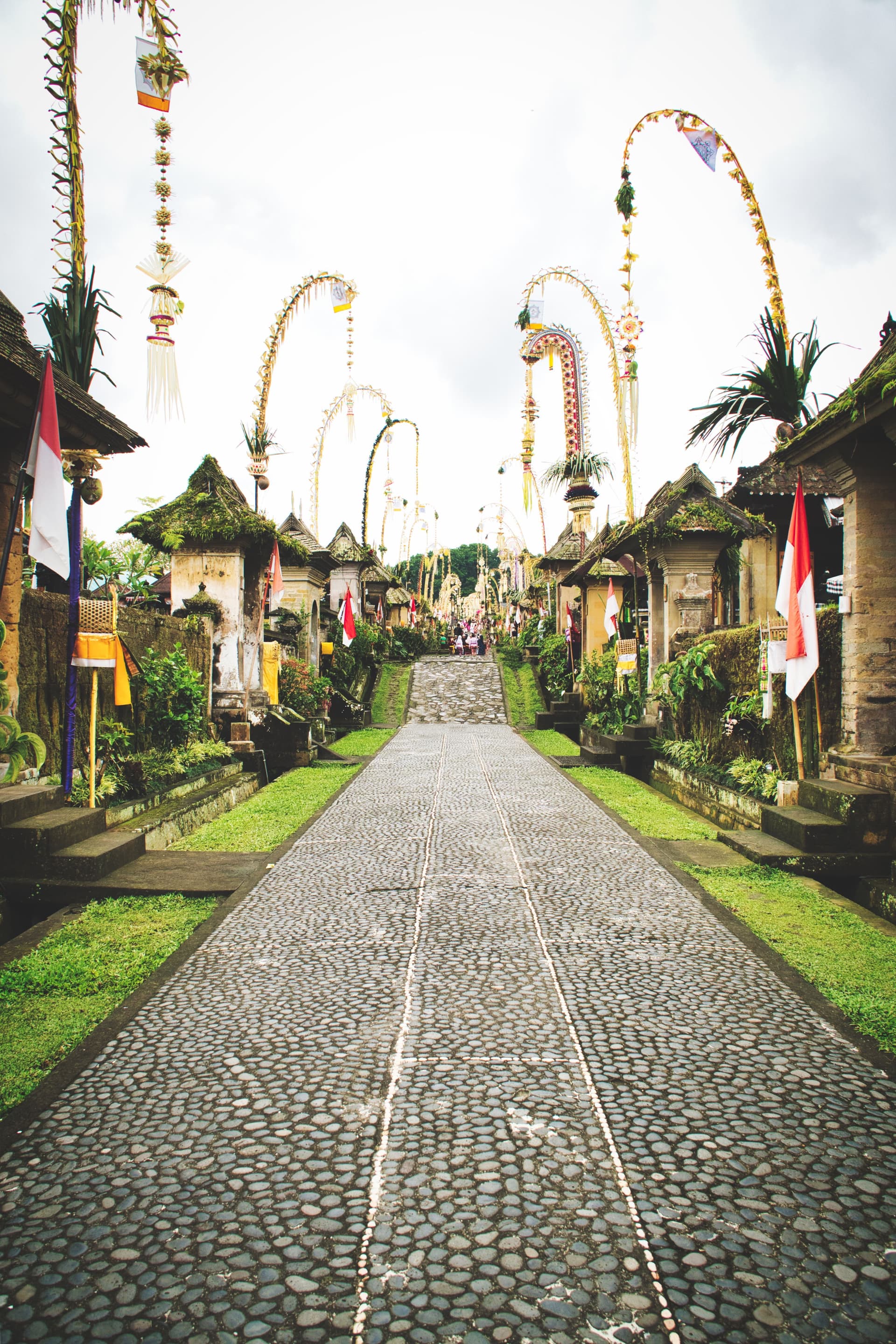
You leave the chaos of the Ubud road, climb for forty-five minutes through bamboo and rice fields, and step through an archway into a single stone street that goes silent the moment you cross it. No scooters. No taxis. Just identical gates, swept courtyards, and a temple at the high end of the slope.
This is Penglipuran Village in Bangli — a working Balinese community of around 76 family compounds that has held its layout, rules, and ceremonies for centuries. The United Nations World Tourism Organization called it one of the best tourism villages on earth in 2023. Most visitors call it the cleanest village in Bali.
This guide covers what Penglipuran actually is, why the layout looks the way it does, the customary law that holds it together, and how to visit without treating a real community like a film set. You'll get 2026 entrance fees in IDR and USD, opening hours, drive times from every major Bali base, and a realistic plan for combining it with Mount Batur, Tirta Empul, or Tegalalang.
What Penglipuran Village Actually Is
Penglipuran is a living Bali Aga village in Bangli Regency, not a heritage exhibit. Around 76 families still live, farm, marry, and cremate their dead here, all under customary law that predates Indonesian independence by centuries. Tourism is managed directly by the village council, not by an outside operator, and the entrance fee funds village maintenance.
A living village, not a museum
The thing that surprises most first-time visitors is how ordinary the village feels once you're inside it. Children walk to school. Grandmothers sweep their courtyards. Someone is always carrying offerings to the temple. Many compounds run a small shop or warung from the front room, and a few rent out a spare room as a homestay, but the families are not performing for tourists. They're living.
You can walk into any compound through the open gate, accept a glass of water, and ask about the bamboo roof. The villagers are used to visitors and most will show you around. It's also worth knowing when to step back — if a ceremony is underway, give the family space.
Bali Aga heritage — the original Balinese
The Bali Aga (sometimes Bali Mula, meaning "original Balinese") are the descendants of the island's pre-Majapahit population. They keep older customs that most of Bali set aside after the 14th-century Majapahit influence — different temple architecture, different marriage rules, different funerary practices. Tenganan in Karangasem is the other famous Bali Aga village; Penglipuran is the easier one to visit and the more accessible introduction to that older Bali.
The village's founders came from Bayung Gede in Kintamani, resettled here by the King of Bangli centuries ago to be closer to the royal court. The name "Penglipuran" comes from pengeling pura — "a place to remember the ancestors."
UNWTO Best Tourism Village 2023 and the awards before it
In October 2023, the United Nations World Tourism Organization named Penglipuran one of 54 Best Tourism Villages worldwide, chosen from 260 candidates across more than 60 countries. The award was presented in Samarkand and recognises community-led tourism that preserves culture and the environment.
It wasn't the first. Penglipuran won a Kalpataru environmental award from the Indonesian government in 1995 for protecting its bamboo forest, was ranked the third cleanest village in the world by Boombastic magazine in 2016, and has picked up ASEAN sustainable tourism honours along the way. The recognition matters because it's earned, not bought.
Penglipuran Village at a glance
- Location: Bangli Regency, central-east Bali, around 45 minutes from Ubud and 1.5 hours from Seminyak
- Elevation: ~700 metres — noticeably cooler than the coast, often 18–24°C
- Size: ~112 hectares total, including a 45-hectare protected bamboo forest
- Population: ~76 family compounds, all following customary law
- Recognition: UNWTO Best Tourism Village 2023, Kalpataru 1995, ISTA 2017
The Layout — Tri Hita Karana in Stone
Penglipuran's layout is the Balinese Hindu philosophy of Tri Hita Karana — harmony with God, people, and nature — built into the ground. The village runs north to south along a single sloping stone street, divided into three zones based on elevation and spiritual purity. Walk from the top of the slope to the bottom and you walk the entire cosmology.
Parahyangan — the sacred zone
At the highest point of the village, closest to Mount Batur, sits Pura Penataran, the main village temple. This is the parahyangan zone — the realm of the gods. Everything in the village physically slopes away from it. Ceremonies happen here on the Balinese calendar, and the temple's inner sanctum is closed to non-Hindus, but you can stand at the gate and look in.
Pawongan — the human zone (the main street)
The middle of the village is the pawongan zone — the realm of people. This is where you'll spend most of your time. The single main street runs straight down the centre, lined on both sides by 76 nearly identical family compounds. Each compound has an arched bamboo-roofed gate (angkul-angkul), a small front garden, and an inner courtyard with a family shrine in the auspicious north-east corner.
Palemahan — the outer zone (the bamboo forest)
The lowest part of the village, and the area surrounding it, is the palemahan zone — the realm of nature. This is where the cemetery sits, where the farmland runs out toward the river, and where the famous 45-hectare bamboo forest grows. The bamboo isn't decorative — it's the village's water-catchment area, building material, ceremonial supply (the curved penjor poles you see at Galungan), and the reason the highland temperature stays cool.
Why every house looks the same (and why that's the point)
The matching gates aren't a tourism gimmick. Customary law requires every compound to share the same dimensions, materials, and orientation — the gate width, the height of the wall, the bamboo-shingle roof, the carved limestone trim. The architectural rule is a social one: no compound stands above another, no family advertises wealth on the street.
Personal expression happens inside the courtyard, where compounds vary in detail and decoration. From the road, the village reads as a single coherent design, which is what visitors photograph and what UNESCO-style assessors point to as a model of community design.
Awig-Awig — The Customary Rules That Keep Penglipuran Penglipuran
Penglipuran runs on awig-awig, a body of customary law unique to the village that governs daily life alongside Indonesian national law. The rules are unwritten in some cases, written and posted in others, and breaking them carries social consequences that matter more than fines. This is the part most blog posts skip, and it's the part that explains why the village still works.
No polygamy — and what happens to villagers who break the rule
Penglipuran is one of the very few villages in Bali that explicitly forbids polygamy. Indonesian and broader Hindu Balinese law permits it under certain circumstances, but Penglipuran's awig-awig doesn't. A villager who takes a second wife is required to move out of the main village and into a designated area called karang memadu — literally "the polygamy compound" — separated from the rest of the community. Villagers will point it out if you ask. The space exists, but no one currently lives there. The deterrent works.
Environmental rules and the 45-hectare bamboo forest
The bamboo forest is protected by awig-awig as strictly as any temple. Felling a tree without village permission carries a fine and a ceremonial obligation. Replanting is scheduled. Fourteen bamboo species grow in the forest, including two endemic Bali types — jajang taluh and jajang aya. The 1995 Kalpataru award was given for exactly this kind of conservation, decades before "sustainable tourism" became a marketing phrase.
Daily cleaning, ceremonies, and shared maintenance
Every villager contributes to keeping the main street swept and the public areas in good repair. Big ceremonies — Galungan, Kuningan, temple anniversaries — are organised by the banjar (village council), with every household participating. There's no street cleaning service. The village is clean because the villagers clean it.
Visible awig-awig rules you'll notice as a visitor:
- No motor vehicles in the village interior — bikes and scooters park outside
- No smoking on the main street
- Modest dress expected, especially near the temple
- Photographs of ceremonies should be requested, not assumed
- The temple's inner sanctum is closed to non-Hindus
- Re-entry on a single-use ticket is for parking access only
None of this is enforced with security guards. It's enforced by community, which is the real character of Penglipuran Village and the reason the place still feels different from anywhere else in Bali.










What to Do at Penglipuran Village
You're here for cultural depth, not a thrill ride. The main things to do at Penglipuran Village are walking the village street, exploring the bamboo forest, accepting invitations into family compounds, and — if you arrange ahead — joining a craft or cooking workshop. Plan 1.5 to 3 hours; longer if you do a workshop or stay overnight.
Walk the main street and accept invitations into homes
Start from the bottom of the slope and walk up. The street is car-free, gently inclining, and around 500 metres long. Each gate looks the same from the outside, but the courtyards behind them vary. Several families will wave you in and show you the family shrine, the traditional kitchen with its wood-fire hearth, and the woven bamboo roof structure. Some sell small bamboo crafts at the front; almost none will pressure you.
It's polite to greet with "Om Swastiastu" if you've learned the phrase, to remove your shoes before entering inner rooms, and to put a small note (IDR 10,000 – 20,000) in the donation box if you've been shown around for more than a few minutes.
Explore the 45-hectare bamboo forest
The bamboo forest sits behind the village on the lower slopes. The trail is mostly flat, well-marked at the entry, and free to enter once you have a village ticket. You'll see 14 bamboo species including two found only in Bali. Allow 30–60 minutes. The light is best mid-morning when it filters through the canopy, and the path is cooler than the village itself.
The forest can feel quiet to the point of empty — that's the point — but a few reviewers mention loose dogs further in, so wear closed shoes and turn back at the marked path rather than pushing off-trail. There's a small open-air spot called Bamboo Café just past the forest entry that serves local food and drinks.
Workshops, craft demos, and traditional dress rental
For groups of around 20 or more booked ahead, the village runs hands-on workshops:
- Bamboo weaving — making baskets and keben boxes
- Canang sari — folding the small daily Balinese offerings
- Gebogan — building the ceremonial fruit towers carried to temple
- Penjor making — the curved bamboo poles used at Galungan
- Balinese cooking — basic warung dishes, sometimes including babi guling demos
Solo or small-group travellers can usually join smaller demonstrations on the day. Traditional Balinese dress is also available to rent from villagers — expect IDR 75,000 – 150,000 for a sarong, sash, and headcloth set if you want to take photos in the proper outfit.
Eat at warungs and Bamboo Café
A handful of family compounds run informal warungs serving rice plates, soto, and traditional Balinese desserts like klepon. Expect IDR 25,000 – 60,000 per dish. Bamboo Café is the largest sit-down option and serves Indonesian staples plus coffee. Bring cash; not every warung accepts QRIS.
How to Visit — Fees, Timing, and Getting There in 2026
The 2026 entrance fee for Penglipuran Village is IDR 50,000 for international adults and IDR 30,000 for international children. The village is open daily 8:00 AM – 5:00 PM (counter closes around 6:30 PM). Payment is cash or QRIS only — no cards. There is no online booking; everything happens at the gate.
2026 entrance fees
Prices are payable in IDR at the counter on arrival. Foreign currency is not accepted. Bring small notes.
- International adult: IDR 50,000 (approximately USD 3.20)
- International child (~5–14): IDR 30,000 (approximately USD 1.90)
- Indonesian adult (with KTP): IDR 25,000 (approximately USD 1.60)
- Indonesian child: IDR 15,000 (approximately USD 0.95)
- Group discount: 10% off for groups of 10+, at counter staff discretion
- Parking: Pay separately at the parking area before the gate (IDR 5,000 – 10,000 for cars)
The ticket gives you full access to the public village areas and the bamboo forest. There are no compulsory add-ons inside. Workshops, dress rental, and homestays are paid directly to the host family.
Opening hours and best time of day
- Daily: 8:00 AM – 5:00 PM (counter closes ~6:30 PM)
- Closed: Nyepi (Balinese New Year — 19 March 2026)
- Best window for fewer crowds: 8:00–10:00 AM, weekdays
- Busiest: Weekend afternoons and Indonesian school holidays
- Best light for photos: Early morning side-light along the main street
The village empties out after 4:00 PM as day trippers head back to Ubud. If you've stayed for the late afternoon, that's when villagers come home from the fields and gather in front of their houses — the most natural time to see daily life.
How long to spend
Most travellers spend 1.5 to 3 hours here. That's enough to walk the main street twice, take a slow look inside a few compounds, do the bamboo forest, see the temple gate, and eat lunch. Add another hour for a workshop, another two hours if you want to do the forest properly with photography, and a full overnight if you've booked a homestay.
The "you can see it in 15 minutes" line you'll read on some blogs is misleading — yes, you can walk the street that fast, but you'll miss everything that makes the place interesting.
Getting there from anywhere in Bali
Penglipuran has no train, no public bus that's useful for tourists, and no ride-hailing presence inside the village. You'll need a private driver, a rental car, or a scooter.
| From | Distance | Drive Time | Typical Driver Cost (IDR / USD) |
|---|---|---|---|
| Ubud | ~20 km | ~45 minutes | IDR 400,000 – 600,000 (USD 25 – 38) for a half-day |
| Seminyak / Canggu | ~60 km | ~1.5 – 2 hours | IDR 700,000 – 900,000 (USD 45 – 58) for a full day |
| Sanur | ~50 km | ~1.5 hours | IDR 650,000 – 850,000 (USD 42 – 55) for a full day |
| Denpasar / Airport | ~45 km | ~1.5 hours | IDR 600,000 – 800,000 (USD 39 – 52) for a full day |
| Nusa Dua | ~65 km | ~2 hours | IDR 750,000 – 950,000 (USD 48 – 61) for a full day |
A private driver is the practical choice for most travellers — they wait at Penglipuran, then drive you on to the next stop. Scooters work from Ubud only and only if you're a confident rider; the road from south Bali is too long for a half-day round trip on two wheels.
Dress code and what to bring
- Modest dress (shoulders and knees covered); a sarong is not required outside the temple inner sanctum
- Closed walking shoes — the stone street is uneven and the bamboo forest path is dirt
- A light layer or shawl — at 700m, the morning can feel 18–20°C even in dry season
- Small IDR notes for offerings, snacks, and rentals
- Sunscreen and water
- A reusable bag to take any rubbish out with you — the village has no public bins
Combining Penglipuran with Other East Bali Highlights
Penglipuran on its own doesn't fill a full day. The smart move is to pair it with one or two nearby sights — the village sits in the same central-east corridor as Mount Batur, Tirta Empul, and Tegalalang. Most experienced drivers will suggest the same routes the locals do, and Travjoy's top picks for Bali include all of them.
With Mount Batur and Kintamani (full day, ~10 hours)
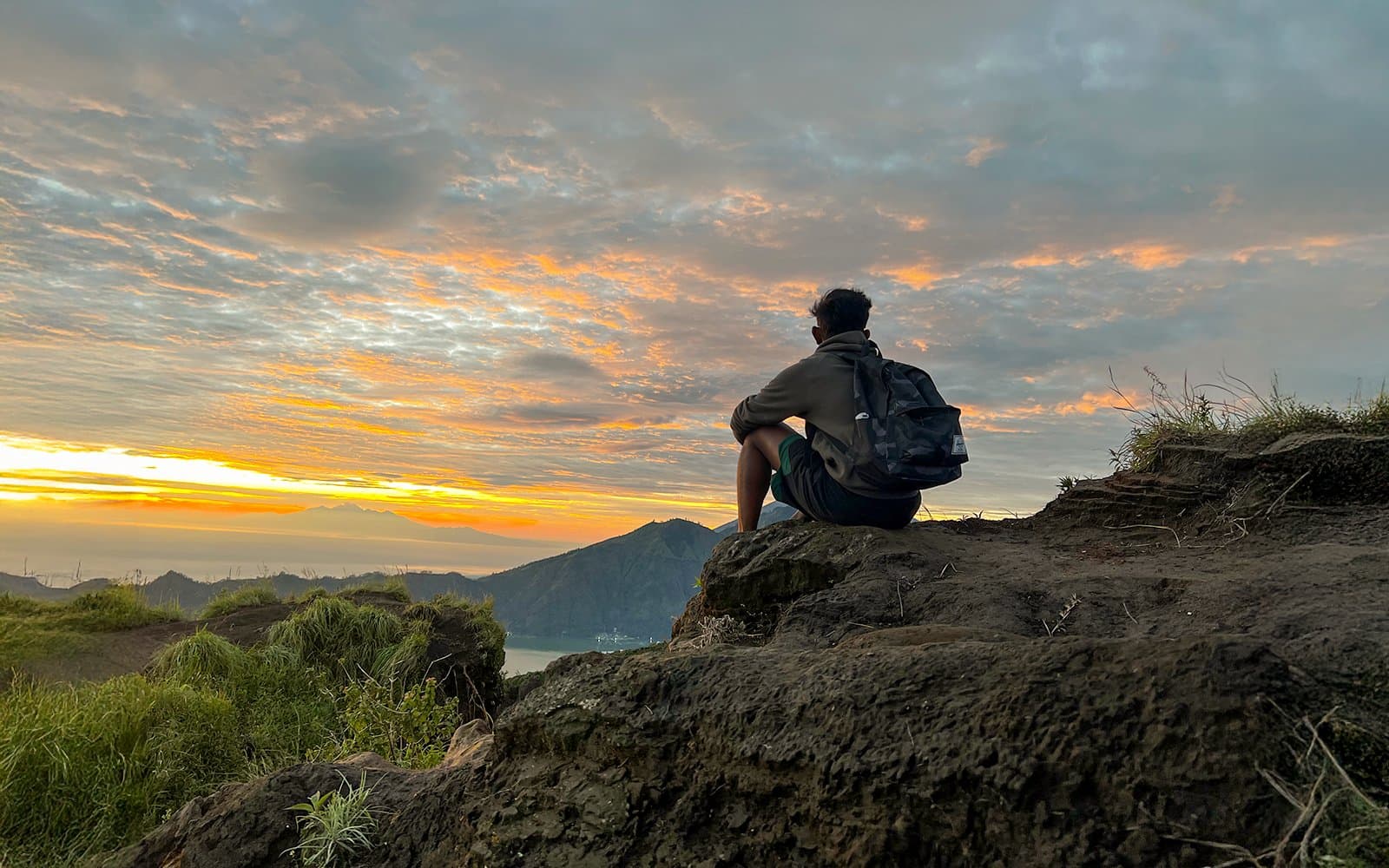
The classic combination if you have the stamina for an early start. Begin the Mount Batur sunrise trek at 2:00 AM, summit by 5:30 AM, descend by 9:00 AM, eat breakfast in Kintamani with the caldera view, then drop south to Penglipuran for an 11:00 AM arrival. You'll be in the village before the day-trip crowds. Back in Ubud by 3:00 PM, ready to collapse.
With Tegalalang Rice Terrace and Tirta Empul (cultural day, ~8 hours)
The cultural-day pairing if you don't want to start at 2:00 AM. Leave Ubud at 8:00 AM, do the Tegalalang Rice Terrace walk before the heat builds, drive 45 minutes to Penglipuran for late morning, eat lunch at a village warung, then continue to Tirta Empul Temple for the purification ritual in the late afternoon. This is the route most cultural tours follow, and it works.
With Tibumana Waterfall (half-day cultural + nature)
For a gentler half-day, pair Penglipuran with Tibumana Waterfall, which sits roughly between Penglipuran and Ubud. The waterfall has a short trail, a swimming pool, and a IDR 20,000 entry fee. Combined, you can do Penglipuran in the morning, Tibumana in the early afternoon, and be back in Ubud by 4:00 PM.
Sample full-day plan from Ubud
- 8:00 AM — Depart Ubud with a private driver
- 8:45 AM — Walk the Tegalalang Rice Terrace before the crowds
- 10:30 AM — Arrive at Penglipuran Village; walk the main street and a few compounds
- 12:00 PM — Lunch at a Penglipuran warung or Bamboo Café
- 1:00 PM — Bamboo forest walk
- 2:30 PM — Drive to Tirta Empul Temple; purification ritual and temple walk
- 4:30 PM — Return to Ubud
Staying Overnight — Penglipuran Homestays
Yes, you can stay overnight at Penglipuran Village. A few family compounds rent a spare room to visitors, with breakfast and sometimes dinner included. Expect basic — clean, traditional, but without air-conditioning in most, and shared bathrooms in some. It suits travellers who want cultural immersion and don't mind simple comforts.
What a Penglipuran homestay actually looks like
You're sleeping in a real family compound, not a guesthouse next door. The room is usually a separate building inside the courtyard, with a bed, a fan, a desk, and a simple bathroom. Breakfast is eaten with the family or in the front pavilion — often nasi goreng or banana pancakes with strong Balinese coffee. Some hosts offer a Balinese cooking demo or take you to the morning ceremony if there's one happening.
Pricing varies but typically runs IDR 250,000 – 500,000 per room per night (USD 16 – 32), payable in cash to the host. Bookings are arranged through the village website or directly with a host — the major OTAs don't generally list these rooms, which is part of why the stays support the community directly.
Who should stay overnight, and who should skip it
Stay overnight if you:
- Want to see village life after the day-trippers leave
- Are comfortable with basic facilities and shared bathrooms
- Have time for a slow, unstructured night without nightlife
- Want a meaningful cultural experience rather than a luxury one
Skip the homestay if you:
- Need air-conditioning or a pool
- Are travelling on a tight Bali itinerary where one night here costs you a beach day
- Want any kind of evening entertainment
- Are bringing very young children who need predictable amenities
Is Penglipuran Village Worth Visiting?
Yes, if you want cultural depth and you're already exploring central or east Bali. Penglipuran rewards travellers who slow down and pay attention. Skip it if you're chasing beach clubs, surf, or pure photo-stop content — there's no infinity pool, no swing, and no Insta-set here, which is precisely the appeal for those it suits.
Best for:
- Culture-curious travellers — Penglipuran is the easiest, clearest introduction to Bali Aga heritage and Tri Hita Karana you'll find on the island
- Families with older children — younger kids may find it slow, but children 8+ usually engage with the bamboo forest and the workshops
- Photographers — the symmetry of the main street is hard to beat in early-morning light
- Slow travellers and second-time Bali visitors — if you've done the beach circuit and want the other Bali, this is the one
- Anyone visiting Tirta Empul, Tegalalang, or Mount Batur — Penglipuran is on the way and adds depth to all three
Skip if:
- You're staying only in south Bali and don't have a full day for the drive
- You want big landscapes or adventure — this is a quiet village, not a viewpoint
- You're uncomfortable with the idea of walking through people's neighbourhoods as a visitor
The Travjoy team curates Bali experiences with the same logic — pairing cultural sites like Penglipuran with the nature and food that surround them — so you get a real sense of the island, not a Pinterest version of it.
Conclusion
Penglipuran Village rewards visitors who treat it as what it is — a living community with centuries of practice in keeping things in balance, not a backdrop for a content shoot. Walk the main street slowly, accept a few invitations into family compounds, walk the bamboo forest, and pair it with Tirta Empul or Mount Batur for a full day that shows you the Bali most travellers miss.
Two takeaways: the entrance fee (IDR 50,000 for international adults in 2026) supports the community that runs the village directly, and the smart visit is a half to full day that combines Penglipuran with one or two nearby East Bali sights. Start planning your Bali trip on Travjoy, where the cultural sites and the experiences around them are already pulled together for you.




.svg&w=1920&q=75)