



Greenwich Park, London: A Complete Guide for Discerning Travellers — Views, Deer, Gardens and the Meridian
7 min read
Key Highlights
- Greenwich Park is London's oldest enclosed Royal Park — 183 acres on two levels, at the heart of the Maritime Greenwich World Heritage Site.
- The view from the General Wolfe statue, over the Queen's House to Canary Wharf and the City, is free and among the finest in London.
- Eight fallow deer returned to the Wilderness enclosure in spring 2025, after the £12m Greenwich Park Revealed restoration.
- The Prime Meridian runs straight through the park — you can stand on 0° longitude at the Royal Observatory on the hill.
- Formal gardens, 400-year-old trees, cafés, a boating lake and a children's playground all sit inside the gates.
Greenwich Park is London's oldest enclosed Royal Park, a 183-acre green space in south-east London that rises from the River Thames to the hilltop Royal Observatory. Entry to the park is free, it opens daily at 6am and closes at dusk, and its highlights run from the panoramic view at the General Wolfe statue to a herd of fallow deer, formal gardens and the Prime Meridian line. Most visitors spend a half-day here; pairing the park with the Observatory or the maritime museums fills a full day.
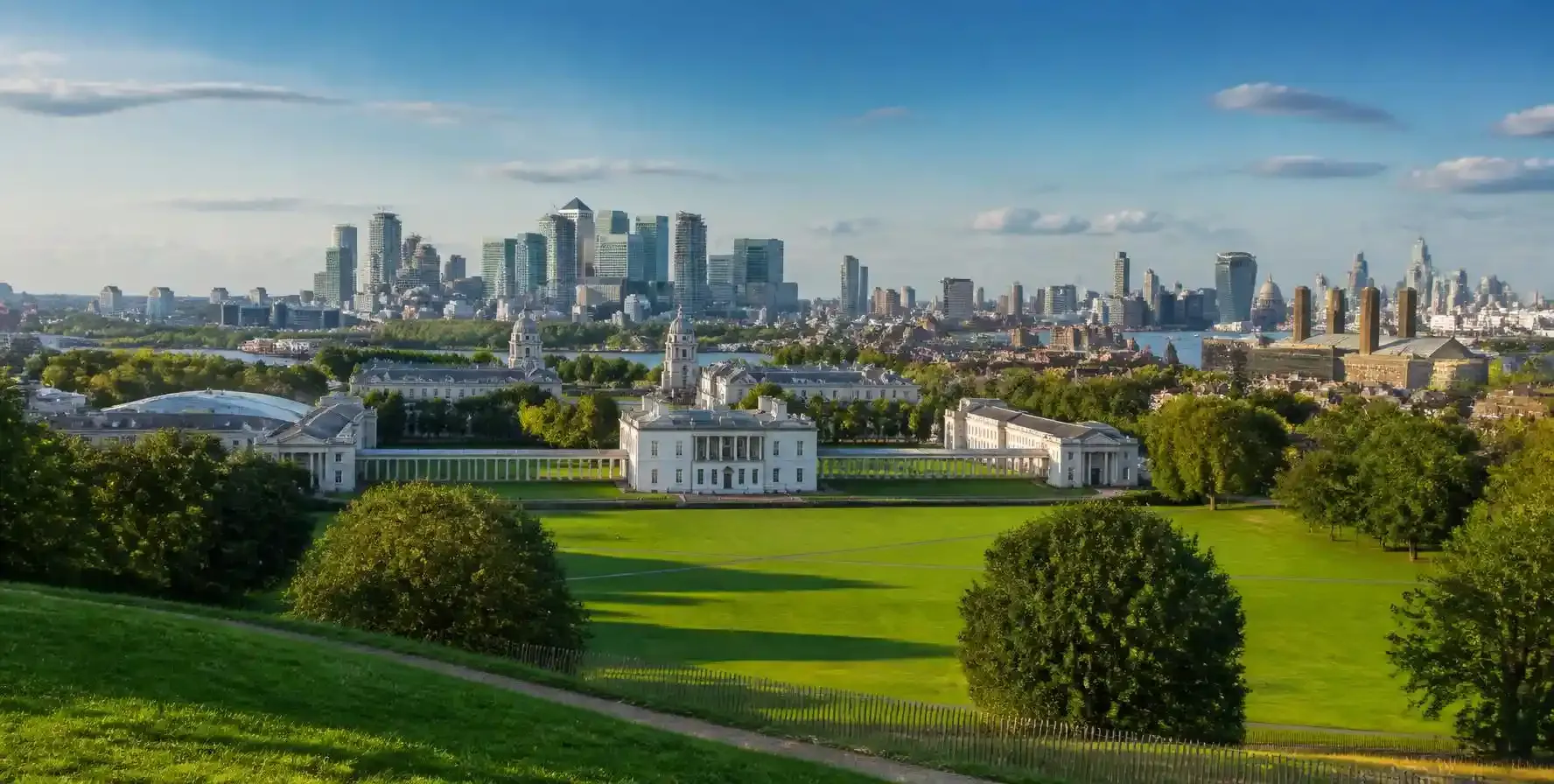
Most people meet Greenwich Park the same way: they step off the train or the river boat, walk in through the north gates, and see the ground rise ahead of them to a white observatory on the crest of a hill. The climb is short, and the payoff at the top is the reason to come — one of the great London views, laid out along a dead-straight line from the Queen's House below you to the towers of Canary Wharf across the river.
This is a park that rewards a proper visit rather than a quick stop. It is the oldest of London's Royal Parks, a Grade I-listed 17th-century landscape, and a green space with deer, ancient trees, a working observatory and formal gardens all inside its walls. This guide covers the view, the wildlife, the gardens, the Observatory and the Prime Meridian, and how to plan your time — whether you have a spare morning or a whole day in Greenwich.
Why Greenwich Park is worth building a half-day around
Greenwich Park is the oldest of London's eight Royal Parks and the first to be enclosed, walled off in 1433. It covers 183 acres (74 hectares) on two distinct levels: a lower lawn beside the river and museums, and an upper plateau that runs south towards Blackheath. The Royal Observatory sits on the hill between the two, which is why almost every visit becomes a walk uphill and a view.
What sets it apart from a museum stop is that the park itself is the attraction. It anchors the Maritime Greenwich UNESCO World Heritage Site, and its layout — a formal Baroque design once attributed to André Le Nôtre, the landscape architect behind Versailles — still shapes how you move through it. The straight avenues, the grass terraces below the Observatory and the sightline to the Queen's House were all built to be read from the top of the hill.
There is real history underfoot, too. Henry VIII was born in the palace beside the river and hunted deer here; James I enclosed the park with a two-mile brick wall that still marks its boundary; and the park holds Roman and Anglo-Saxon remains, including Saxon burial mounds excavated during recent works. A visit to Greenwich Park is as much a walk through five centuries of royal London as it is a green break from the city.
- Size: 183 acres (74 hectares), on two levels — river-level lawn and hilltop plateau.
- Status: London's oldest enclosed Royal Park (enclosed 1433); Grade I-listed landscape; part of the Maritime Greenwich World Heritage Site.
- Entry: free, year-round.
- Time to allow: a half-day for the park and the view; a full day if you add the Observatory and the museums.
The view from Observatory Hill
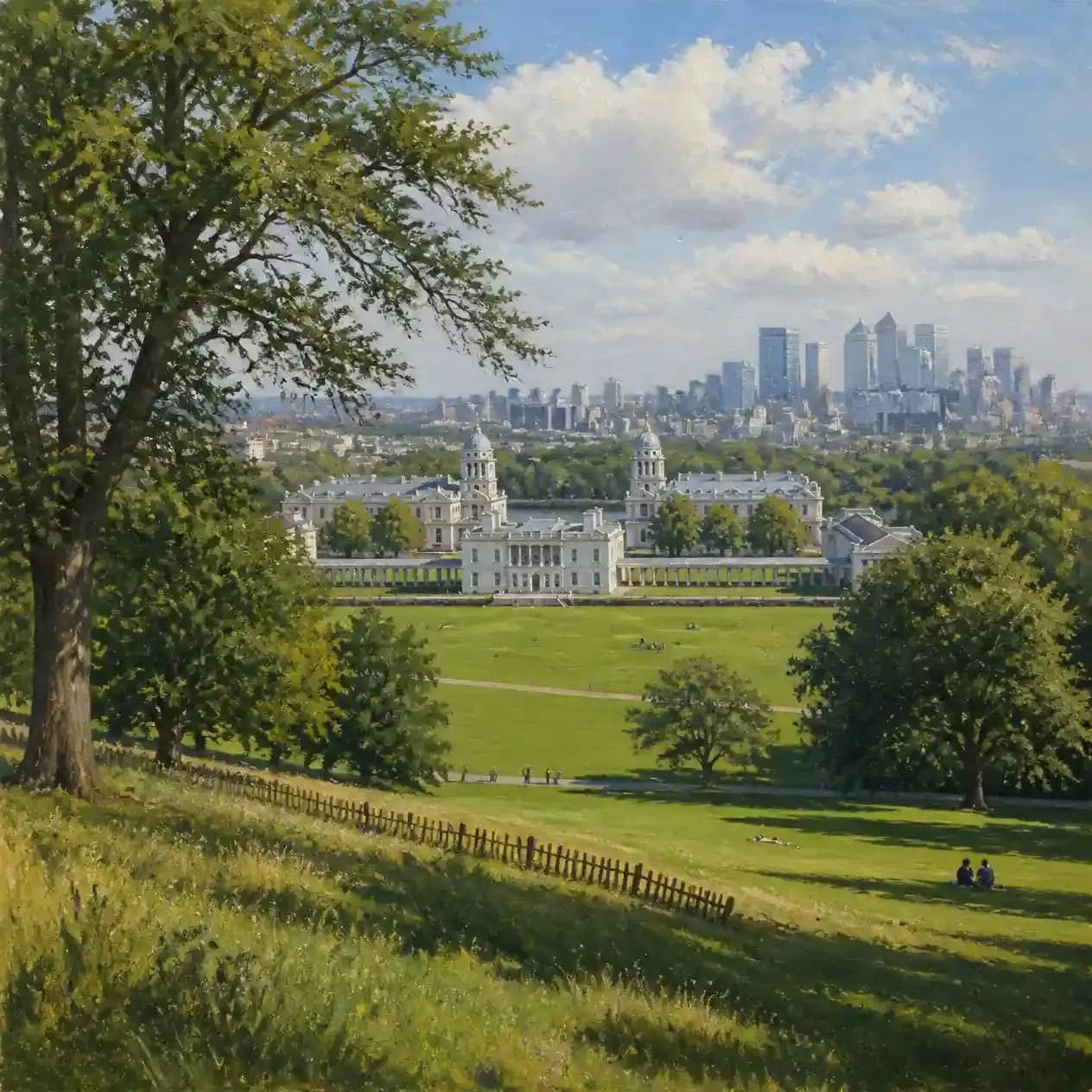
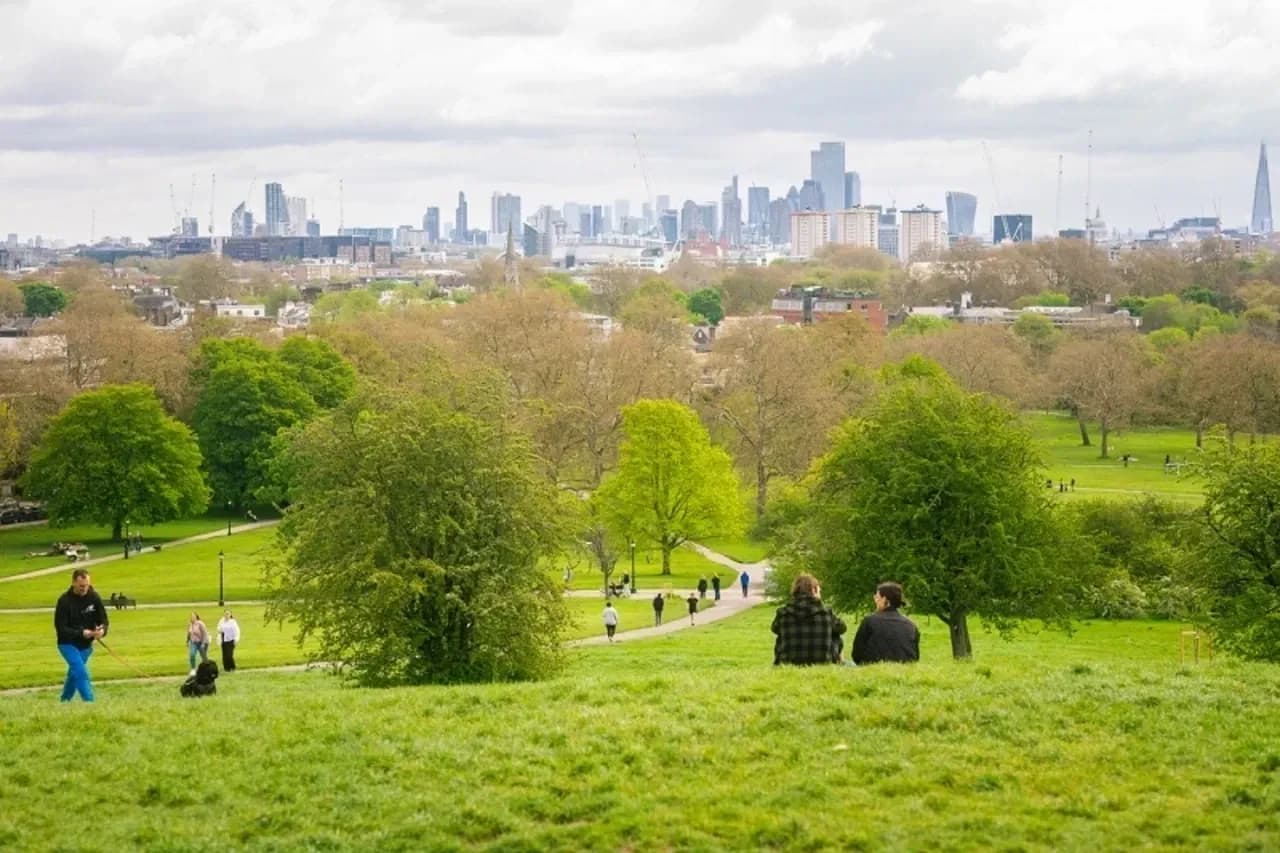
The best view in Greenwich Park is from the terrace beside the General Wolfe statue, at the top of the hill by the Royal Observatory. From here the park drops away in front of you along a straight axis: the Queen's House and the twin domes of the Old Royal Naval College below, the River Thames beyond, and the towers of Canary Wharf, the City, St Paul's and the O2 filling the skyline. It is free, it is open whenever the park is, and it is the one thing everyone remembers.
The viewpoint was reworked as part of the recent restoration. The Greenwich Park Revealed project, a £12 million programme completed in 2025, rebuilt the "Grand Ascent" — a set of giant grass steps first laid out in the 1660s that had slumped and eroded under the weight of five million annual visitors. There is now a wider viewing platform around the Wolfe statue and a glass balustrade along the crest. Access onto the restored grass steps themselves is managed while the turf establishes, so treat them as part of the view rather than a place to sit for now.
What you can see from the top
- The Queen's House and the Old Royal Naval College directly below, framed on the central axis.
- Canary Wharf and the Isle of Dogs across the river.
- The City of London and St Paul's Cathedral to the north-west.
- The O2 arena to the north.
- Best light is early morning or late afternoon; midday sun sits behind the towers and flattens the skyline.
The deer, the gardens and the ancient trees
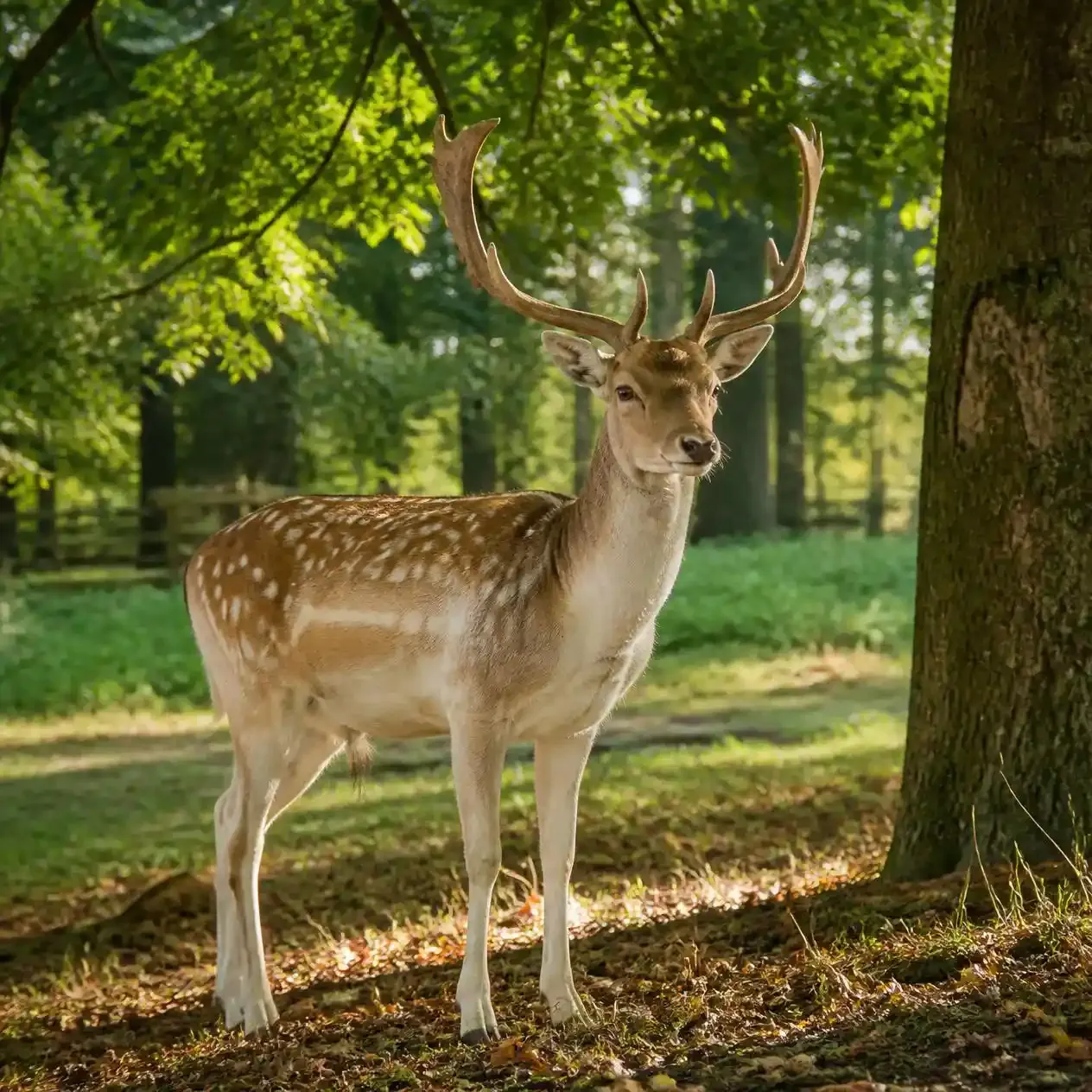
Greenwich Park is the oldest deer park in London, and after a four-year gap the deer are back. A new herd of eight fallow deer was reintroduced to the Wilderness enclosure in spring 2025, once the paddock had been enlarged and replanted during the restoration. The original herd had been moved to Richmond Park in 2021 to keep them undisturbed by the building works, and has stayed there; the animals you see now are a new group still settling in, so they can be shy and are not always in view. The Wilderness is a fenced enclosure in the south-east of the park, not a free-roaming range — you watch the deer from the railings rather than among them.
The gardens are the other reason to linger. The Flower Garden, first planted in the 1890s around a lake, is the park's quiet centre and a natural picnic spot; the Rose Garden behind the Ranger's House is at its best from May to July; and the Herb Garden is laid out around a central fountain. Nearby, the Queen's Orchard grows heritage varieties of fruit, and the park's herbaceous border — running about 200 metres — is the longest flower border in London.
Then there are the trees. Greenwich Park holds more than 3,000 of them, including 400-year-old sweet chestnuts with gnarled, hollowing trunks and the remains of Queen Elizabeth's Oak, a hollow tree that legend links to Elizabeth I. Much of the southern grassland is acid grassland, one of Britain's rarer habitats, which is why the park is a Site of Metropolitan Importance for Nature Conservation. A slow loop through the gardens and the old trees is the part of a Greenwich Park visit most day-trippers miss.
- The Wilderness: fenced deer enclosure, south-east corner; eight fallow deer (viewing from the railings; dogs not permitted here).
- Flower Garden: lake, formal Edwardian planting, picnic-friendly.
- Rose Garden: behind the Ranger's House; best May–July.
- Queen's Orchard & Herb Garden: heritage fruit trees and a fountain garden near the Greenwich town gate.
- Ancient trees: 3,000+ across the park, including 400-year-old sweet chestnuts and Queen Elizabeth's Oak.



The Royal Observatory and the Prime Meridian
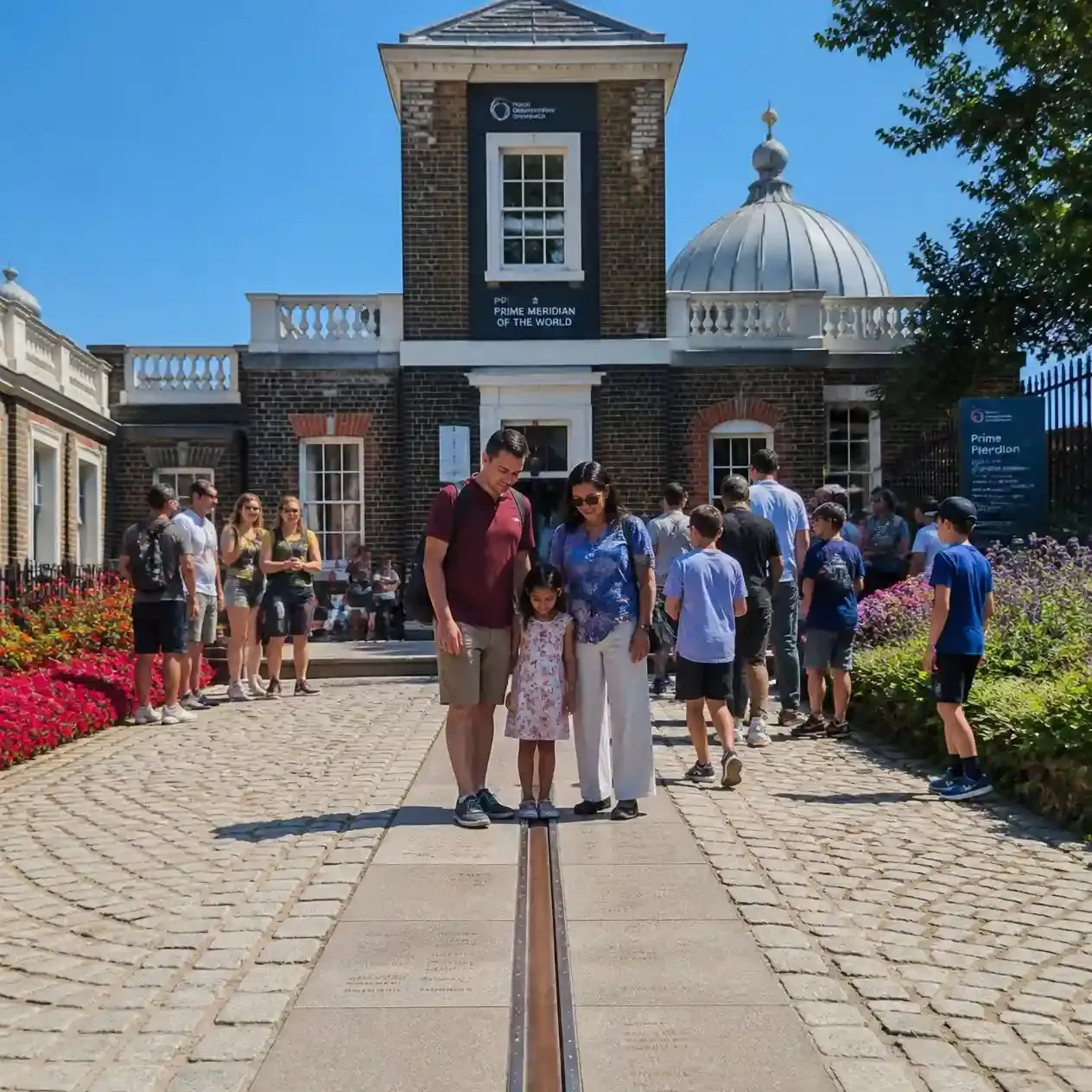
The Royal Observatory sits at the highest point of Greenwich Park, and it is where the park's history and the view come together. Founded by Charles II in 1675 on the advice of Christopher Wren, it is the home of Greenwich Mean Time and the Prime Meridian — 0° longitude, the line from which the world sets its clocks and measures east and west. Standing with one foot in each hemisphere on the Meridian line in the courtyard is the reason most people buy a ticket.
Inside, Flamsteed House holds the Octagon Room designed by Wren, the galleries tell the story of John Harrison's marine chronometers and the race to solve longitude, and the Great Equatorial Telescope is the largest of its kind in the UK. The site also runs a planetarium with regular shows. It is ticketed, and sits within the free park, so you can enjoy the hill and the view without going in — though the Meridian courtyard and the astronomy galleries are the part worth paying for.
One detail rewards a second visit: the Meridian does not stop at the Observatory wall. It runs north–south straight through the park, and is marked for free on a path just north of the Observatory and on wall plaques in Chesterfield Walk to the south and Park Vista to the north. If you would rather not queue, you can still cross the line of world longitude in the open park.
- Royal Observatory (adult): around £24 / $32 standard; a summer-sale price of £18 / $24 runs until 2 September 2026 — check current rates before booking.
- Royal Museums Greenwich Day Pass (Observatory + Cutty Sark): around £38 / $51 adult, £19 child.
- Under 4s: free. Book online in advance to guarantee entry.
- Free alternative: the Meridian line is also marked on park paths outside the ticketed courtyard.
What else sits in and beside the park
Greenwich Park is unusual among Royal Parks in having world-class museums inside and beside its gates, most of them free. At the foot of the hill, the National Maritime Museum is the largest maritime museum in the world, with 14 galleries and free entry — the strongest single stop for families and history readers. Beside it, the Queen's House is a 1616 royal villa by Inigo Jones, also free, known for its spiral Tulip Stairs and its art collection.
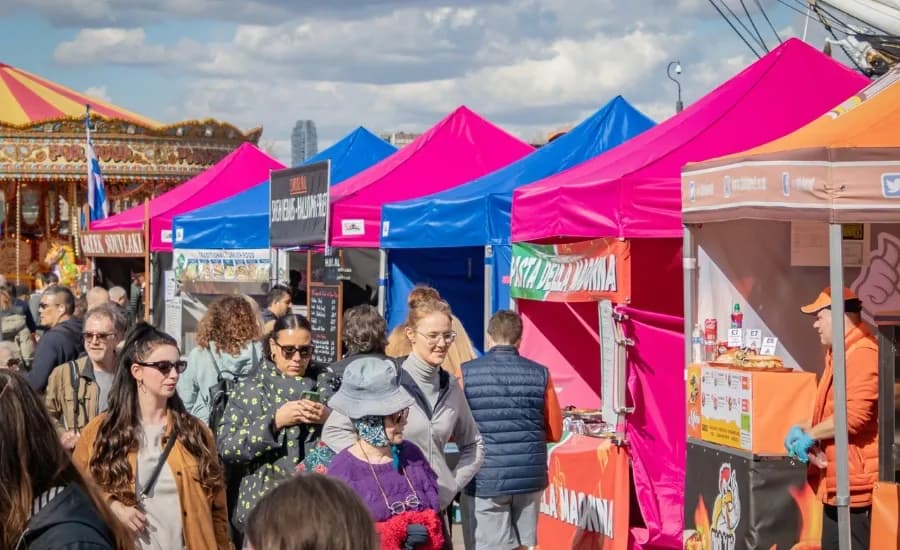
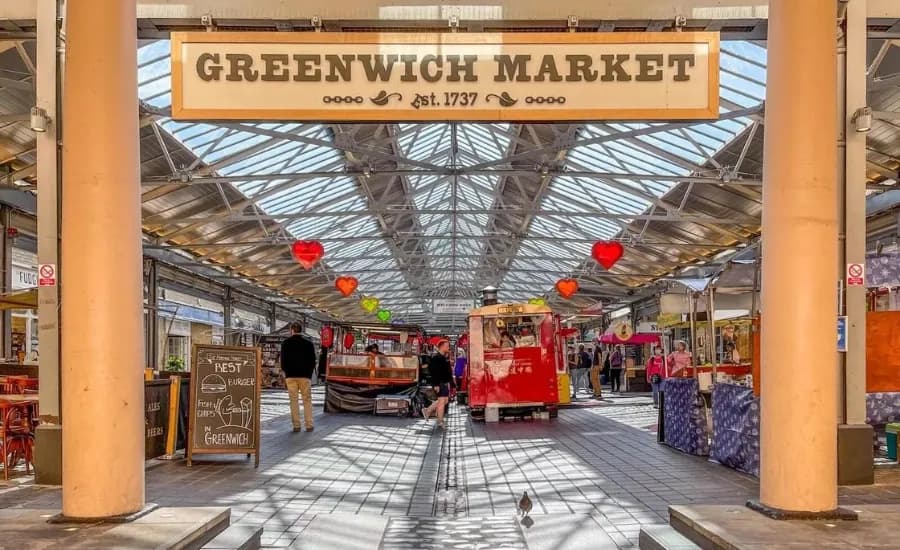
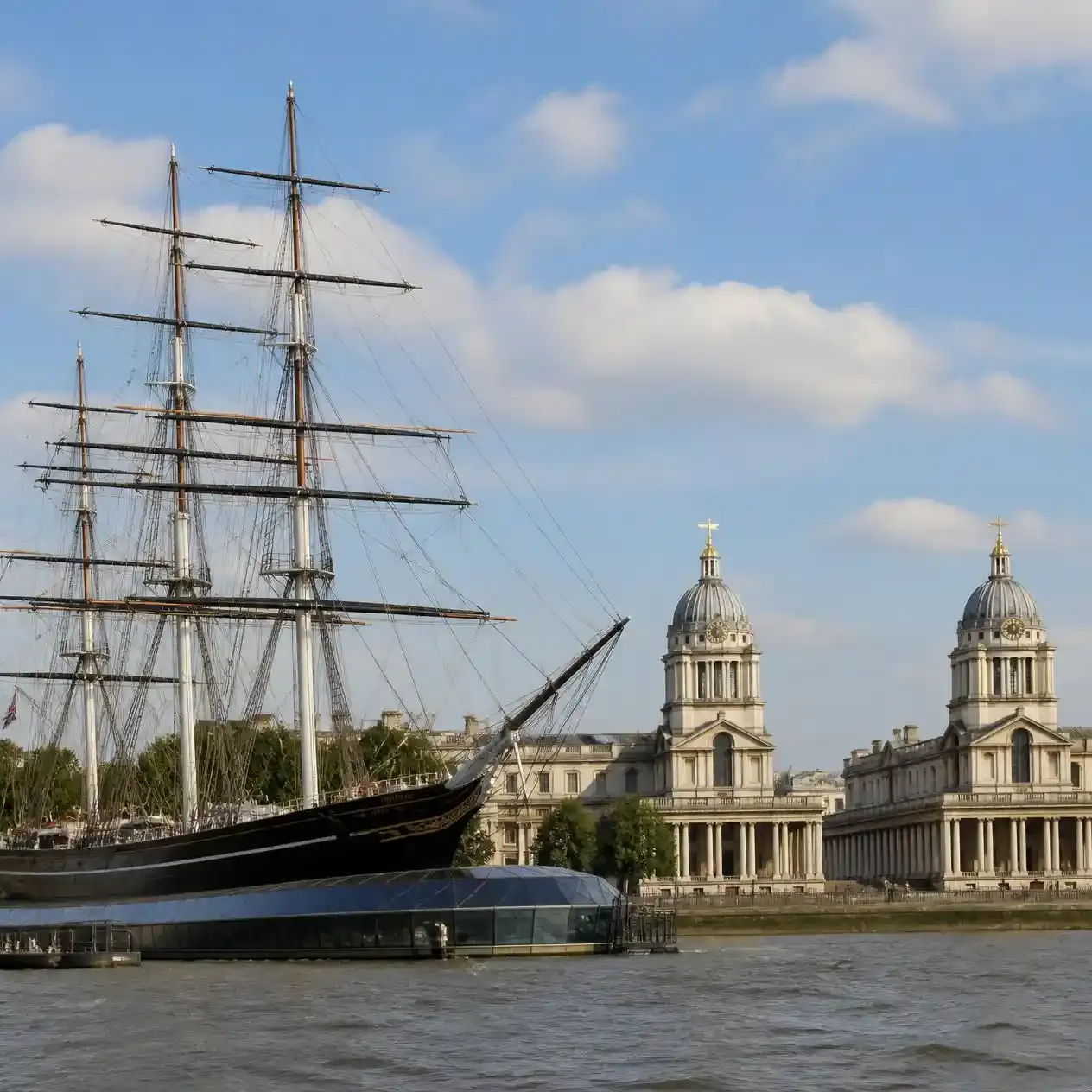
By the north gate, at the river's edge, the Cutty Sark — the last surviving tea clipper — is dry-docked and raised so you can walk beneath the copper hull. For lunch, Greenwich Market is a few minutes from the north gate: a covered Georgian market of food stalls, makers and antiques, busiest and best at weekends. The options we list across Greenwich are researched and approved by local experts, so you can book the paid sights with confidence rather than working out on the day which are worth it.
Back inside the park, there is plenty that costs nothing. The lower level near Maze Hill has a large children's playground and a boating lake; the upper level has a bandstand, a cricket pitch and tennis courts; and the Ranger's House in the south-west corner holds the Wernher art collection. For food, the Pavilion Café sits near the Observatory, and the Ignatius Sancho Café — opened in 2024 near the Vanbrugh Gate on the east side and named for the writer, composer and abolitionist who lived in Greenwich — is the newest addition from the restoration.
- National Maritime Museum — free; the world's largest maritime museum, 14 galleries.
- Queen's House — free; 1616 royal villa with the Tulip Stairs and a fine-art collection.
- Cutty Sark — ticketed, around £22 / $30 adult (£18 / $24 on the summer offer); the last surviving tea clipper.
- Greenwich Market — free to browse; food, crafts and antiques, best at weekends.
- Ranger's House — the Wernher art collection, south-west corner.
Planning your visit to Greenwich Park
Greenwich Park is open every day, with pedestrian gates opening at 6am year-round and closing at dusk — that means roughly 6pm in midwinter and as late as 9:30pm in June and July, so check the day's closing time before an evening visit. The park is free, so the only tickets you need are for the Observatory or the Cutty Sark if you choose to go in. Vehicle gates open later, at 7am.
Getting there is easiest by rail or river. Maze Hill station sits right against the north-east corner by the playground; Greenwich station is a 5–10 minute walk; and the DLR stops at both Greenwich and Cutty Sark. For the best arrival, take an Uber Boat (Thames Clipper) down the river to Greenwich Pier — the approach past Canary Wharf is part of the day. There is no Underground station within easy reach, so use the mainline and DLR services rather than looking for a tube.
Greenwich Park at a glance
- Opening hours: pedestrian gates 6am–dusk daily (≈6pm winter to ≈9:30pm midsummer).
- Entry: free; Observatory and Cutty Sark ticketed.
- Getting there: Maze Hill or Greenwich rail; Cutty Sark / Greenwich DLR; Uber Boat to Greenwich Pier.
- Parking: pay-and-display along the Blackheath roads; National Maritime Museum car park about £3 / $4 an hour, £15 / $20 a day.
- Accessibility: tarmac paths with some slopes; a free mobility buggy service and Changing Places facilities were added in the restoration.
- Dogs: welcome in most areas, but not in the Flower and Rose Gardens, the Wilderness deer enclosure or the Observatory garden.
For the route, do the hill first. Walk up to the Observatory and the Wolfe statue while you are fresh and the morning light is good, then come down through the gardens, the deer enclosure and the ancient trees, and finish at the museums or Greenwich Market at the bottom. If you have only a couple of hours, the hill, the view and the Flower Garden are the core. If you have a full day, add the National Maritime Museum and the Observatory, and browse more of Greenwich's best experiences across the area. Greenwich Park also makes a strong pair with the central Royal Parks on a longer trip — it is a very different mood from Hyde Park or St James's Park, wilder and higher, with the view they cannot match.
Plan your day in Greenwich
Greenwich Park gives you three things few London parks manage at once: the finest free view in the east of the city, a genuine slice of royal and maritime history, and the calm of gardens, old trees and returning deer. Climb the hill first for the view, take your time coming down through the gardens, and decide on the day whether to add the Observatory, the Cutty Sark or the maritime museums at the bottom. It works as a half-day on its own and a full day with the sights. When you are ready to build the rest of your trip around it, start planning your visit to Greenwich Park and the wider city on Travjoy's London page.



.svg&w=1920&q=75)