



Best Shopping Experiences in London: What, Where and Why — A Complete Guide
8 min read
Key Highlights
- London's shopping divides into clear experience types: grand department stores, flagship high-street and luxury streets, covered Regency arcades, and weekend markets.
- Harrods and Selfridges put the widest range of luxury labels under one roof; Bond Street and Mayfair hold the designer and jewellery flagships.
- Oxford and Regent Street are the high-street heavyweights; head east or to Notting Hill for vintage, antiques and independent design.
- Selfridges, John Lewis and Harvey Nichols offer complimentary personal shopping you can book in advance.
- Large stores can trade only six hours on a Sunday, and the airport VAT refund for overseas visitors ended in 2021.
The best shopping experiences in London fall into four broad types: the grand department stores and food halls of Knightsbridge and the West End, the flagship-lined streets around Oxford Circus and Mayfair, the covered arcades near Piccadilly, and the weekend markets of Notting Hill and the East End. Choose the department stores and Bond Street for luxury labels under one roof, Oxford and Regent Street for high-street flagships, and Portobello or Brick Lane for vintage and one-off finds. Note that large stores can open for only six hours on a Sunday, and the airport tax refund for visitors is no longer available.
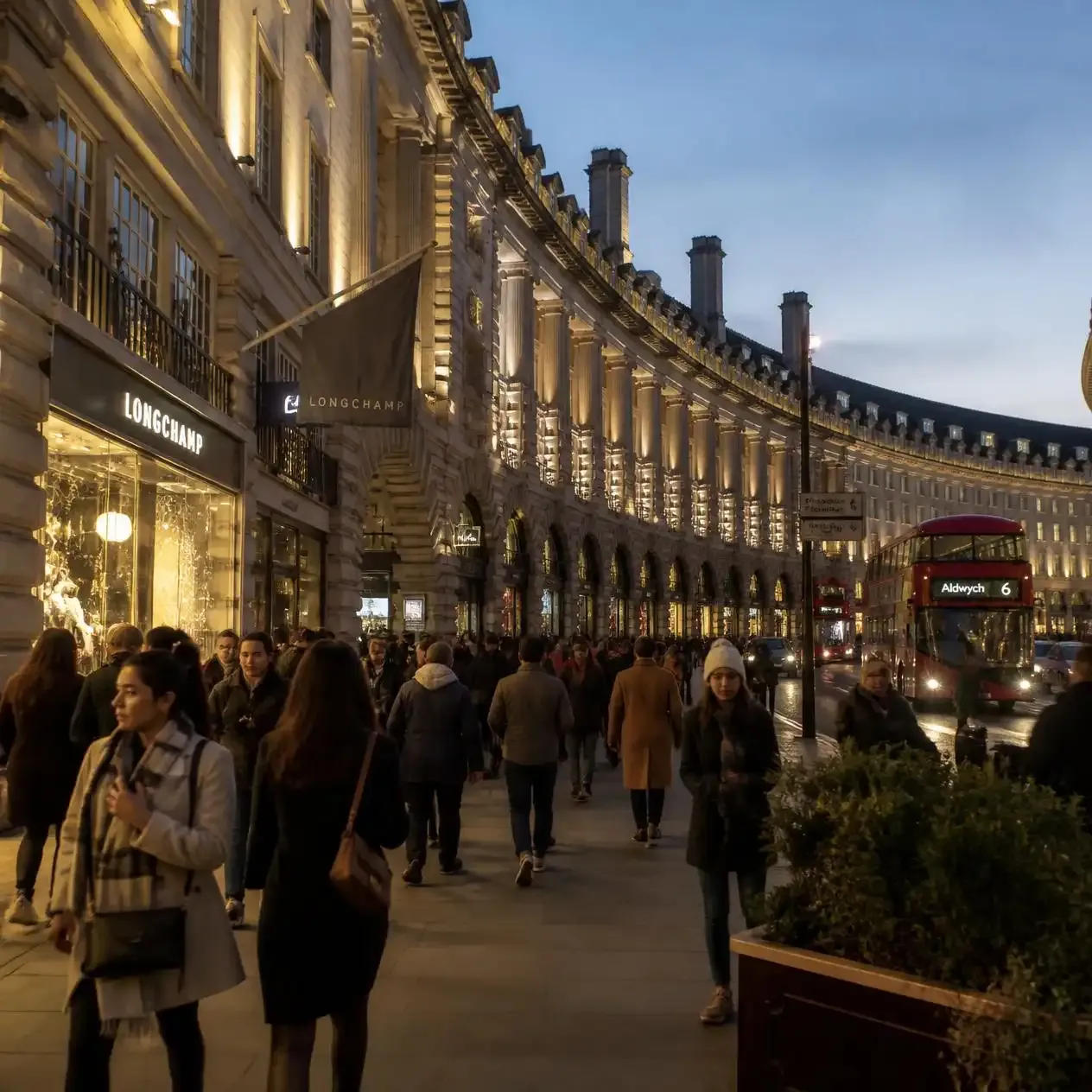
London does not have one shopping district. It has a dozen, and each runs on its own logic. Knightsbridge is for the grand department stores; Mayfair for designer houses and jewellers; Oxford Street for the big high-street names in a single walk; Notting Hill and the East End for markets where the pleasure is in the hunt rather than the label.
Knowing which is which is the difference between a rewarding afternoon and an exhausting one. This guide sorts the best shopping experiences in London by type rather than by postcode, so you can match the day to what you actually want to buy — a made-to-measure suit, a designer investment piece, a rainy-day browse under glass, or a Saturday spent turning over vintage.
You will find where each experience sits, what it is best for, and the practical detail that decides how the day goes: opening hours, the sales calendar, and how to get purchases home without paying twice. The experiences on Travjoy's London shopping pages are researched and approved by local experts, so you can browse by area and interest with some confidence about what is worth your time.
How to Choose Your London Shopping Experience
The best shopping experiences in London start with what you want to buy, and the right area follows. If you want luxury labels under one roof, head for the department stores or Bond Street. If you want the big high-street names in one walk, Oxford and Regent Street deliver them. If you want character and one-off finds, the markets are where to spend a morning. The table below maps the main experience types to what each does best.
| Experience type | What you'll find | Best for | Where |
|---|---|---|---|
| Grand department stores | Luxury fashion, beauty and food halls under one roof | One-stop browsing, gifts, afternoon tea | Knightsbridge, Oxford Street, Piccadilly |
| Flagship high-street streets | Global high-street and mid-market brands | Big-name browsing, covering a lot in one walk | Oxford Street, Regent Street |
| Luxury streets and Mayfair | Designer houses, fine jewellery and watches | Investment pieces and marquee labels | Bond Street, Mount Street, Mayfair |
| Covered arcades and bespoke | Cashmere, fine jewellery, leather, made-to-measure | Heritage craft, tailoring, considered gifts | Burlington Arcade, Savile Row, Jermyn Street |
| Weekend markets | Vintage, antiques and independent design | One-off finds, character, a slow browse | Portobello, Camden, Spitalfields, Brick Lane |
| Neighbourhood boutiques | Independent fashion, homeware and design | Quiet browsing away from the crowds | Marylebone, Chelsea, Coal Drops Yard |
A useful rule: the marquee experiences sit close enough together to combine. Knightsbridge, Mayfair and the West End form one broad luxury district you can cover on foot, while the markets each make a half-day of their own. If you have a single afternoon, pick one type; if you have a full day, pair a department-store morning with an arcade or a market in the afternoon.
The Grand Department Stores and Food Halls
London's department stores are destinations in themselves, and they carry the widest range of luxury and beauty under one roof. Harrods and Harvey Nichols anchor Knightsbridge; Selfridges, Liberty, Fortnum & Mason and John Lewis draw shoppers across the West End. If you have one afternoon and want to see a lot without walking far, this is the format to choose — and several stores are worth visiting for the buildings alone.
Knightsbridge: Harrods and Harvey Nichols
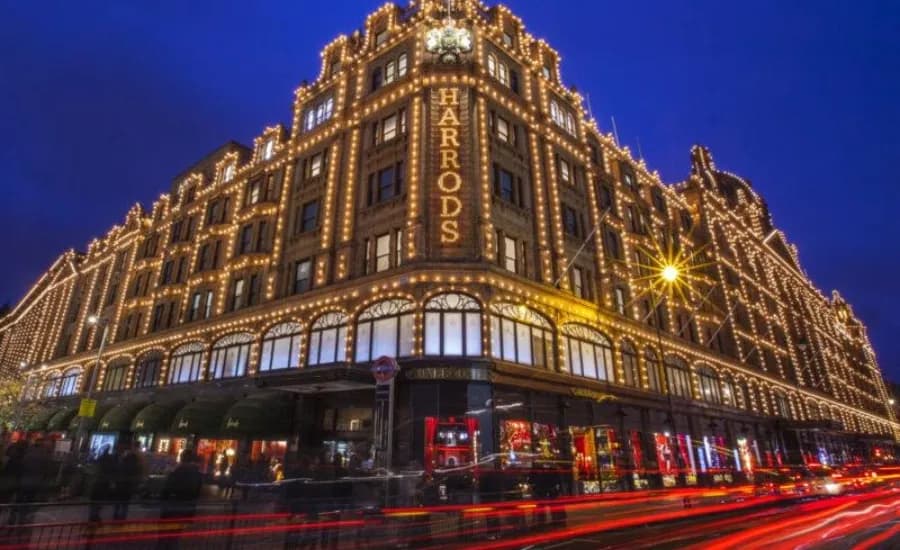
Harrods spans a five-acre site in Knightsbridge, with fashion, jewellery, a landmark set of food halls and a scale that no other London store matches. Harvey Nichols, a short walk away, is the more fashion-led of the pair, strong on contemporary designer floors and beauty. Together they make Knightsbridge the natural first stop for a store-focused day, and the Natural History Museum sits ten minutes away if you want to break up the shopping.

The West End Stores: Selfridges, Liberty, Fortnum & Mason
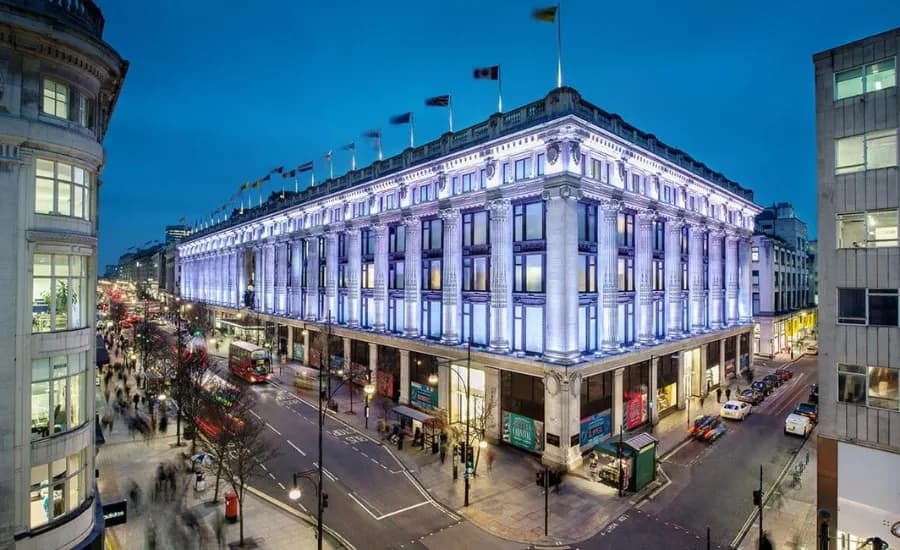
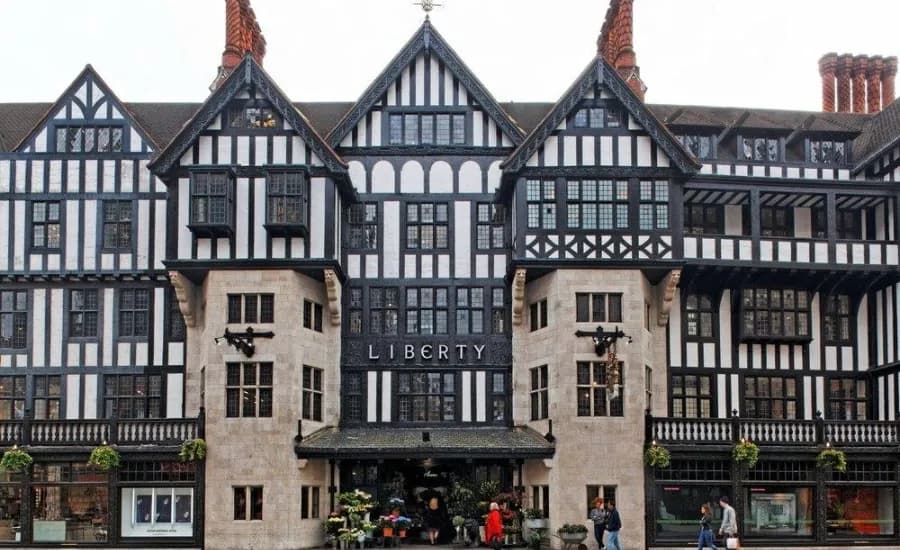
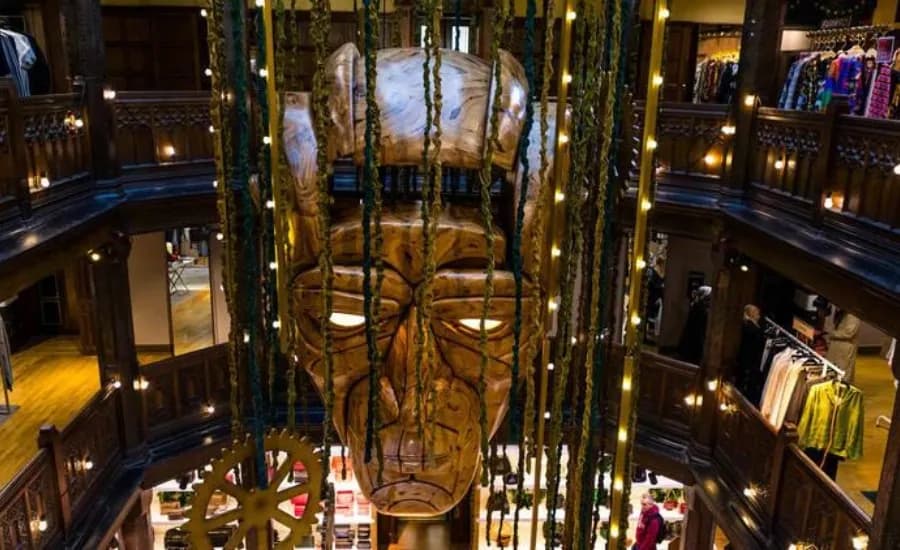
Across the West End, four stores each offer something distinct. Selfridges on Oxford Street has the strongest designer and beauty halls in the city and an accessories floor worth an hour on its own. Liberty, behind its Tudor-revival front near Carnaby Street, is the place for fabrics, homeware and emerging menswear. Fortnum & Mason on Piccadilly is the heritage grocer, known for tea, hampers and one of London's best-known afternoon teas, so you can pair a browse with a sitting. John Lewis is the reliable mid-market anchor for homeware and electronics. For the full run of the city's luxury department stores, these are the names to start with.
Free Personal Shopping — the Elevated Visit
The stores' best-kept practical secret is that personal shopping is often complimentary. Selfridges, John Lewis and Harvey Nichols all run free personal-shopping services you can book in advance, where a stylist pulls pieces before you arrive and gives you a private room to try them. Harrods offers a personal-shopping service too, though its top tier is access-gated. If you are short on time or shopping for a specific occasion, booking a session ahead turns a crowded store into a calm, focused hour — the elevated version of the same visit.
The West End Flagship Streets
For big-name browsing in a single walk, the West End streets are unmatched, each with a clear character. Oxford Street is the high-street heavyweight, Regent Street the more upmarket curve, and Bond Street the address for luxury houses and jewellers. Knowing which street does what saves you doubling back across the busiest shopping quarter in the country.
Oxford Street: Is It Worth It?
Oxford Street is worth one focused visit for its flagship high-street and department stores, but it is also the most crowded shopping street in London. More than 300 shops run from Marble Arch to Tottenham Court Road, from global flagships to high-street favourites, with Selfridges and John Lewis as the anchors. The practical approach is to start at one end and work along, and to go on a weekday morning rather than a weekend. If the crowds wear thin, Regent Street nearby is easier to walk and St Christopher's Place, a lane off the north side, offers a calmer run of boutiques.
Regent Street, Bond Street and Mayfair
Regent Street curves between Oxford Circus and Piccadilly under landmark Edwardian facades, holding flagship stores such as Liberty, Hamleys and a run of mid-to-premium brands in a more elegant setting than Oxford Street. Bond Street, a few minutes west, is London's premier luxury address — Chanel, Louis Vuitton, Cartier and Hermès within a few strides of each other, with the surrounding Mayfair streets like Mount Street adding more designer and jewellery houses. This is the quarter for investment pieces and marquee labels rather than a broad haul.
Carnaby, Jermyn Street and King's Road
Three more streets round out the West End experience. Carnaby, behind Regent Street, leans towards streetwear, independent labels and a livelier Soho-edge crowd. Jermyn Street in St James's is the traditional home of shirtmakers, shoemakers and grooming houses — the address for classic menswear. King's Road in Chelsea mixes designer boutiques with a relaxed, residential pace, and pairs well with the galleries and cafés of the surrounding neighbourhood.


London's Covered Arcades and Heritage Shopping
For a different kind of shopping experience — quieter, older and under glass — London's covered arcades are the answer, and they are among the most overlooked stops in the city. These Regency and Victorian passages hold jewellers, cashmere houses, leather goods and grooming shops, and they make an ideal rainy-day browse near the luxury quarter. Alongside them sits the tailoring district, where London's made-to-measure trade has no real equal.
The Covered Arcades
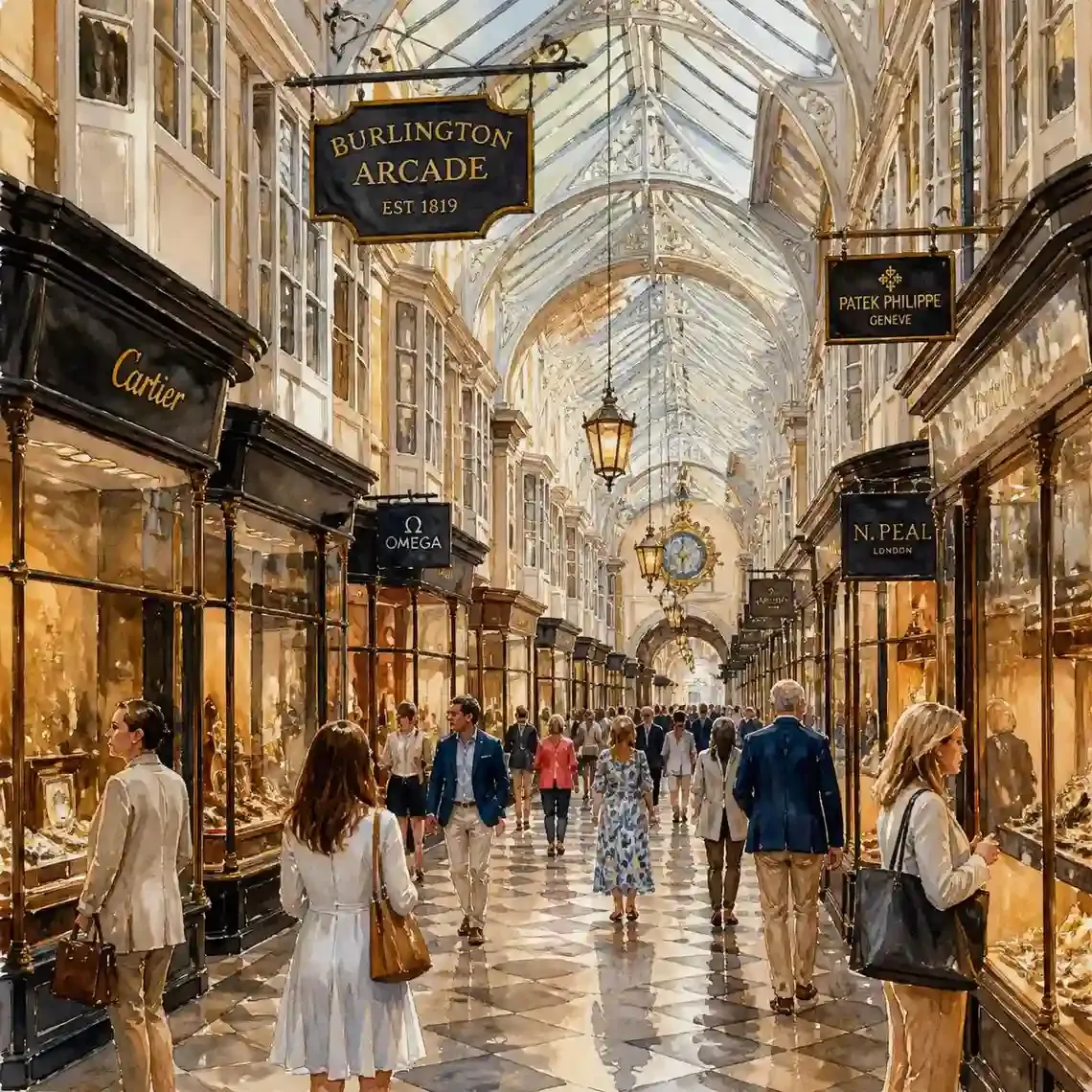
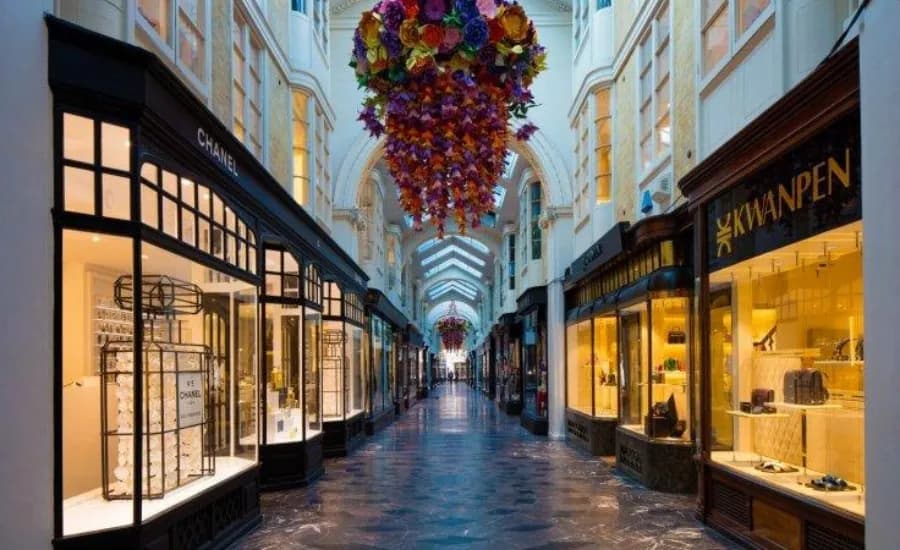
Burlington Arcade off Piccadilly is the grandest and oldest of them, a covered Regency passage of jewellers, cashmere and leather that has traded since 1819, complete with its own top-hatted beadles. Nearby, Piccadilly Arcade and the Royal Arcade add more of the same in miniature. In the City, the Royal Exchange behind Bank holds luxury boutiques under a colonnaded courtyard, while Leadenhall Market — a Victorian covered market with painted ironwork — mixes independent traders with bars and cafés. Each is small enough to see in half an hour and rewarding on a wet afternoon.
Savile Row and Bespoke Tailoring
For made-to-measure, Savile Row in Mayfair is the home of bespoke suiting, where a first fitting begins a process measured in weeks rather than an afternoon. The surrounding streets hold shirtmakers, shoemakers and the covered Burlington Arcade, so the whole bespoke quarter sits within a few blocks. Even if you are not commissioning a suit, the window displays and the sense of trade are part of the experience. If tailoring is the reason for your visit, book the first appointment ahead — the houses work by consultation, not walk-in.
Marylebone and Chelsea Boutiques
Away from the flagship streets, two neighbourhoods reward a slower browse. Marylebone High Street has a village feel, lined with independent boutiques, a strong bookshop and refined homeware and beauty. Chelsea, around King's Road and the streets off it, mixes designer boutiques with galleries and a residential calm. Both are where to go when you want quality and quiet rather than the crowds of the West End — the neighbourhood-boutique version of a London shopping day.
The Markets: Vintage, Antiques and One-Off Finds
For character and one-off finds, the markets are among the best shopping experiences in London — and the pleasure is in the hunt as much as the purchase. Portobello is the classic for antiques and vintage, the East End markets are strong for independent designers and secondhand fashion, and Camden leans towards alternative style and crafts. Most run best on specific days, so timing matters more here than anywhere else.
Portobello Road: Antiques and Vintage
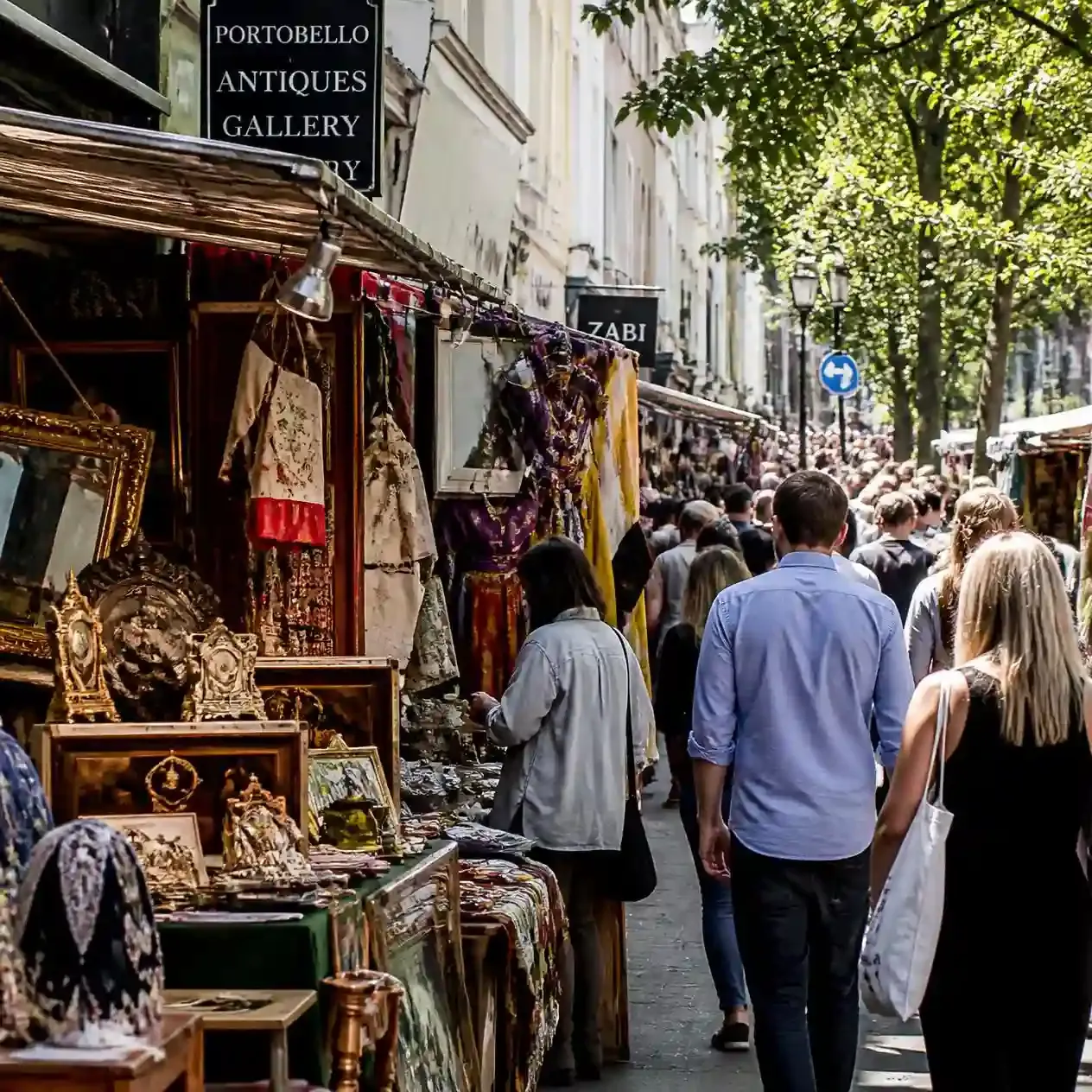
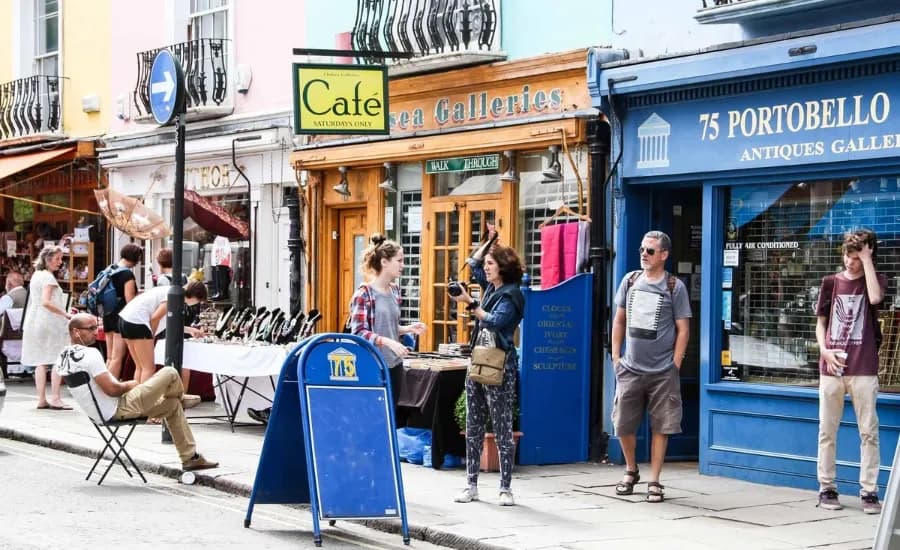
Portobello Road Market in Notting Hill is the classic choice for antiques, running for over a mile with vintage fashion vendors, jewellery makers and designer resale shops alongside the bric-a-brac stalls. It is busiest — and best — on Saturdays, when the full antiques market runs. Go in the morning for the best pick before the stalls are turned over, and allow time to explore the boutiques on Westbourne Grove nearby.
Camden and the East End Markets
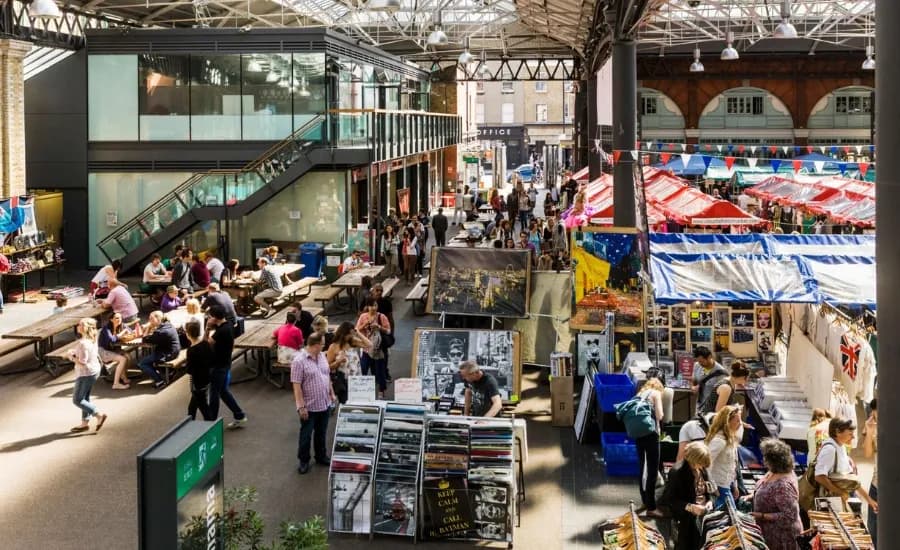
Camden Market leans towards alternative fashion, music and crafts, spread across several halls by the canal, and is worth a visit for the atmosphere even if you do not buy. In the East End, Old Spitalfields Market is strong for independent designers and one-off pieces under its Victorian roof, while nearby Brick Lane is the top address for vintage fashion, with Beyond Retro, Rokit and Atika all within reach. For the full run of the city's markets and flea markets, these are the ones to build a morning around.
- Portobello Road — antiques and vintage; Saturdays for the full market, mornings for the best pick
- Old Spitalfields — independent designers; Thursdays (antiques) and weekends are strongest
- Brick Lane — vintage fashion and secondhand; Sunday is the main day
- Camden Market — alternative fashion and crafts; open daily, busiest at weekends
Coal Drops Yard and the Bookshops
For a more designed, contemporary experience, Coal Drops Yard in King's Cross reworks a set of Victorian coal warehouses into a run of independent and design-led shops, quieter than the West End and strong on homeware and menswear. And for a shopping experience that is entirely London's own, the city's independent bookshops — from Daunt Books in Marylebone to the narrow-boat Word on the Water at King's Cross — are worth seeking out for the browse as much as the buy.
Practical Planning: Hours, Sales and Getting Purchases Home
A good shopping day in London comes down to three practical decisions: when you go, when the sales fall, and how you get purchases home. Sunday hours are shorter than most visitors expect, the sales calendar concentrates around two windows, and the tax position for overseas shoppers changed in 2021. Getting these right is what separates a smooth day from a frustrating one.
Opening and Sunday Hours
Most shops open Monday to Saturday from around 10am to 8pm, with Oxford Street stores often running to 9pm. The detail that catches visitors out is Sunday: under UK trading law, large stores (over 280 square metres) can open for only six hours, usually noon to 6pm. Markets keep their own days — Portobello peaks on Saturday, Brick Lane on Sunday — so check the day before you plan a visit around one.
The London Sales Calendar
- Boxing Day (26 December) and the following weeks — the biggest winter clearance, with the deepest reductions
- Late June to July — the main summer sales across department stores and high-street brands
- Mid-season sales appear around spring and autumn, though stock is thinner
- The first days of a sale have the best choice; the final days have the deepest cuts but the thinnest stock
VAT, Tax and Getting Purchases Home
The single biggest change for overseas shoppers is that the airport VAT refund scheme for visitors ended in January 2021, so you can no longer reclaim VAT on purchases you carry home in your luggage. The one tax-free route that remains is to have a store ship your purchase directly to an address outside the UK, which removes VAT at the point of sale — worth asking about for larger buys. For everything you are carrying yourself, budget for the price on the label.
Practical notes worth knowing
- Plastic and paper bags are chargeable at most stores; a reusable bag saves the small fee and the queue
- Card and mobile payment are accepted almost everywhere; markets increasingly take cards, though a little cash still helps at smaller stalls
- The luxury quarter — Knightsbridge, Mayfair and the West End — is walkable end to end, so plan the day on foot rather than by Tube
Figures such as sale dates and the tax-free position can move, so confirm the current detail with the store before a trip built around it.
Planning Your London Shopping Trip
The best shopping experiences in London reward one simple habit: lead with what you want to buy. Choose the department stores or Bond Street for luxury under one roof, Oxford and Regent Street for high-street flagships in one walk, the covered arcades and Savile Row for heritage craft, and the markets for vintage and one-off finds. Pair a store morning with an arcade or a market in the afternoon, plan around the six-hour Sunday cap, and remember that the airport VAT refund is gone.
The shopping experiences on Travjoy are researched and approved by local experts, so you can browse by area and interest and plan a route that fits your trip. Start planning your shopping days in London on Travjoy's London page.

.svg&w=1920&q=75)