


London: Liberty London
Operating Hours:Monday - Saturday: 10:00 - 20:00. Sunday: 11:30 - 18:00
The Vibe:Mock-Tudor heritage shopping with iconic florals.
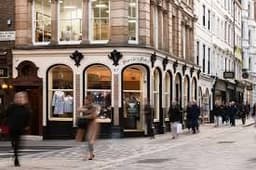
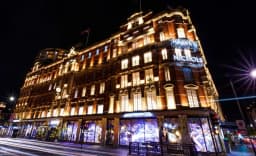
Liberty opened on Regent Street in 1875 as a trader in fabrics and decorative arts from Asia. Its current mock-Tudor building — built in 1924 from the timbers of two Royal Navy ships — houses six floors of fashion, beauty, fabric, and homeware around a central atrium.
Dark oak panelling warms the atrium; natural light falls through stained glass above. The famous floral fabric department hums with customers leafing through ream after ream; fragrance drifts from the beauty hall on the ground floor.
- • Founded 1875 by Arthur Liberty as an Oriental emporium
- • Iconic mock-Tudor building opened in 1924, Grade II* listed
- • Famous Liberty print fabrics used by designers including Yves Saint Laurent and Manolo Blahnik
- • Built from timbers of HMS Impregnable and HMS Hindustan
Persona Fit
- 👨👩👧 Families: Haberdashery floor charms crafty older kids
- 💕 Couples: Atrium and fabric department have a magical quality
- 👵 Seniors: Full lift access; compact compared to mega-department stores
- 📸 Photographers: Atrium stained glass and mock-Tudor detailing
Highlights
- Liberty Fabric Department — third floor, legendary cotton and silk prints
- Central atrium — dramatic four-storey stairwell under stained glass
- Beauty Hall — ground floor with niche and heritage perfume brands
- Christmas Shop — year-round festive department, legendary decorations
- Carnaby Street side — hidden shopping lane behind Liberty
- Haberdashery — ribbons, buttons, thread — classic craft supplies — Hidden Gem

Sarah Riches
Our London Local Expert
Table of Contents
Things To Do Nearby
Carnaby Street — 1960s shopping district, immediately behind
Regent Street — major shopping thoroughfare, connected to Liberty's main entrance
Oxford Street — 10 minutes north for broader shopping
Soho — bars and restaurants, five minutes east
Carnaby Street — 1960s shopping district, immediately behind
Regent Street — major shopping thoroughfare, connected to Liberty's main entrance
Oxford Street — 10 minutes north for broader shopping
Soho — bars and restaurants, five minutes east
TJ's Guide - Liberty London
Know Before You Go
Insider Tips
Best Time: Weekday mornings for quiet browsing; Sundays for families
Hack: Liberty's Christmas department opens in late September — earliest in Britain
Hidden Gem: The hidden original staircase in the atrium — ask about occasional tours
Custom Liberty print cut fabric by the metre for sewing enthusiasts
Annual summer and winter sales are the best time for designer bargains
Best Time: Weekday mornings for quiet browsing; Sundays for families
Hack: Liberty's Christmas department opens in late September — earliest in Britain
Hidden Gem: The hidden original staircase in the atrium — ask about occasional tours
Custom Liberty print cut fabric by the metre for sewing enthusiasts
Annual summer and winter sales are the best time for designer bargains
Know Your Facts
- Closest Tube: Oxford Circus (Central, Bakerloo, Victoria), five-minute walk
- Main entrance: Regent Street (side entrance on Great Marlborough Street)
- Bus: 3, 6, 13, 15, 139 along Regent Street
- First-time tip: Liberty's main entrance is on Regent Street but feels hidden — the Great Marlborough Street entrance is more dramatic
Once You Reach
Internal Navigation
Six floors: Ground (beauty), First (women's fashion), Second (menswear), Third (fabrics, haberdashery, Café Liberty), Fourth (children's, homeware), Fifth (furniture)
Central atrium with staircase and lifts
Venue map: Free at main entrance; app available
Accessibility: Lifts to all floors; step-free throughout
Efficient route: Beauty Hall on entry, Fabric Department third floor (star attraction), Café Liberty nearby
Food & Coffee Shops
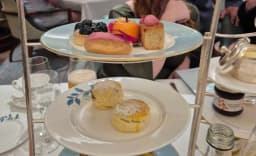
Café Liberty (third floor): Tea and cakes within the store
Arabica London (Great Marlborough Street): Middle Eastern brunch two minutes away
Polpo (Soho): Venetian small plates, five minutes east
Café Liberty (third floor): Tea and cakes within the store
Arabica London (Great Marlborough Street): Middle Eastern brunch two minutes away
Polpo (Soho): Venetian small plates, five minutes east
Photography Tips
Photography welcomed throughout public spaces
Atrium from the fourth floor looking up is the iconic composition
Stained glass above benefits from side-lit afternoon shots
Exterior mock-Tudor façade works best in overcast light
Photography welcomed throughout public spaces
Atrium from the fourth floor looking up is the iconic composition
Stained glass above benefits from side-lit afternoon shots
Exterior mock-Tudor façade works best in overcast light
Explore Deeper
Arthur Liberty founded the store in 1875 as 'East India House', selling silks, carpets and exotic imports. He pioneered the Arts and Crafts and Art Nouveau movements in Britain, commissioning designs from Morris, Mackintosh and Godwin. The current building opened in 1924 — conceived as a piece of British heritage fantasy rather than a modern retail space.
The mock-Tudor building was constructed from the timbers of two Royal Navy ships — HMS Impregnable (1860) and HMS Hindustan (1841) — bought specifically for the project
Liberty was central to Victorian fascination with Japan and the Far East; William Morris designed for the store, and Liberty prints directly influenced Paris's Art Nouveau movement
The central atrium was designed by Edwin Lutyens as a living-room scale retail space — a stark contrast to the cathedral-scale atriums at Harrods and Selfridges
Liberty prints became a signature in the 1960s when designers including Yves Saint Laurent used them; the fabric department remains the store's most famous department
The mock-Tudor building was constructed from the timbers of two Royal Navy ships — HMS Impregnable (1860) and HMS Hindustan (1841) — bought specifically for the project
Liberty was central to Victorian fascination with Japan and the Far East; William Morris designed for the store, and Liberty prints directly influenced Paris's Art Nouveau movement
The central atrium was designed by Edwin Lutyens as a living-room scale retail space — a stark contrast to the cathedral-scale atriums at Harrods and Selfridges
Liberty prints became a signature in the 1960s when designers including Yves Saint Laurent used them; the fabric department remains the store's most famous department
Did You Know?
Ship timbers — HMS Impregnable contributed the most timber, still visible in the building's structure
Royal Warrant — Liberty holds Royal Warrants as suppliers to the Royal Family
Art Nouveau — In Italy, Art Nouveau is still called 'Stile Liberty' after the London store
Christmas traditions — Liberty's Christmas Shop runs year-round as one of Britain's earliest festive retail departments