


London: Portobello Road Market
Yes
Operating Hours:Monday - Wednesday: 09:00 - 18:00 (limited stalls). Thursday: 09:00 - 13:00 (half-day). Friday: 09:00 - 19:00 (full market). Saturday: 09:00 - 19:00 (biggest market day). Sunday: Closed
The Vibe:Notting Hill's kaleidoscopic mile of antiques and colour.
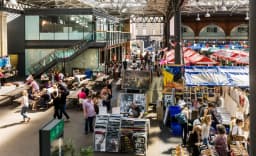
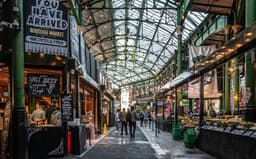
The world's most famous antiques market stretches a mile along Portobello Road in Notting Hill, spilling into Golborne Road at its north end. Saturdays are the main event — 1,000 stalls of antiques, vintage fashion, street food and fresh produce — though the pastel-coloured houses shine year-round.
Pastel houses line the street; silver dealers call bargains; frying paella scents mix with vinyl crackling from record stalls. The crowd thickens at the antiques end near Chepstow Villas; food tightens around Westway flyover.
- • The world's largest and most famous antiques market, running since the 1860s
- • Featured in the 1999 film Notting Hill starring Hugh Grant and Julia Roberts
- • Over 1,000 stalls on peak Saturdays; attracts international dealers and buyers
- • The colourful Notting Hill terraces along the route are among London's most photographed
Fit For
- 👨👩👧 Families: Vintage toys, record stalls and street food engage all ages
- 💕 Couples: Saturday morning market then brunch at Farm Girl or Granger & Co
- 👵 Seniors: Busy but flat; avoid peak 11
- 📸 Photographers: Pastel houses and market colour — London's most photographed street
Highlights
- Antiques section — south end between Chepstow Villas and Elgin Crescent (Saturdays)
- Vintage clothing — mid-section around Westbourne Park Road
- Food market — Acklam Village and Golborne Road at the north end
- Notting Hill coloured houses — pastel terraces throughout the route
- Alice's Antiques — iconic shopfront featured in Notting Hill the film
- Golborne Road — Moroccan and Portuguese community shops — Hidden Gem
London Local Expert

Sarah Riches
Table of Contents
Things To Do Nearby
Notting Hill Carnival route — August bank holiday weekend celebration
Holland Park — leafy park with Kyoto Garden, 15 minutes south
Design Museum — contemporary design exhibitions, 20 minutes south
Kensington Palace — royal residence, 15 minutes south via Kensington Gardens
Notting Hill Carnival route — August bank holiday weekend celebration
Holland Park — leafy park with Kyoto Garden, 15 minutes south
Design Museum — contemporary design exhibitions, 20 minutes south
Kensington Palace — royal residence, 15 minutes south via Kensington Gardens
TJ's Guide - Portobello Road Market
Know Before You Go
Insider Tips
Best Time: Early Saturday (before 10:00) for serious antiques hunters; late morning for atmosphere
Hack: Walk north to south starting at Ladbroke Grove — fresh produce first, antiques last
Hidden Gem: Lisboa Patisserie on Golborne Road for the best Portuguese pastéis de nata in London
Bring cash — many vintage stalls don't take cards
Carnival weekend (late August) transforms the area into Europe's biggest street festival
Best Time: Early Saturday (before 10:00) for serious antiques hunters; late morning for atmosphere
Hack: Walk north to south starting at Ladbroke Grove — fresh produce first, antiques last
Hidden Gem: Lisboa Patisserie on Golborne Road for the best Portuguese pastéis de nata in London
Bring cash — many vintage stalls don't take cards
Carnival weekend (late August) transforms the area into Europe's biggest street festival
Know Your Facts
- South end: Notting Hill Gate Tube (Central, Circle, District)
- North end: Ladbroke Grove Tube (Hammersmith & City, Circle)
- Middle access: Westbourne Park (Hammersmith & City) or Royal Oak
- First-time tip: Walk the full mile — each section has distinct character
Once You Reach
Internal Navigation
Five sections: Antiques (south), Fashion (centre-south), Fresh food (centre), Street food (north), Golborne Road (far north)
Main axis: One mile, roughly 30 minutes' walk end-to-end
Signage: None needed — follow the crowd
Accessibility: Flat paved road throughout; crowds can be challenging
Efficient route: Start south at Notting Hill Gate, browse antiques, walk north for food, exit via Ladbroke Grove
Food & Coffee Shops
Lisboa Patisserie (Golborne Road): Legendary Portuguese custard tarts
Farm Girl (Portobello Road): Instagram-ready healthy brunch
Granger & Co (Notting Hill): Australian-influenced brunch staple
Lisboa Patisserie (Golborne Road): Legendary Portuguese custard tarts
Farm Girl (Portobello Road): Instagram-ready healthy brunch
Granger & Co (Notting Hill): Australian-influenced brunch staple
Photography Tips
Pastel-coloured houses photograph best in morning light (east-facing side)
Antiques stallholders often welcome photos if you ask politely
The Westway flyover section works for gritty urban compositions
Tripods not practical in crowd — handheld only
Pastel-coloured houses photograph best in morning light (east-facing side)
Antiques stallholders often welcome photos if you ask politely
The Westway flyover section works for gritty urban compositions
Tripods not practical in crowd — handheld only
Explore Deeper
Portobello Road was a country lane until the 1860s, when Victorian terraces filled the area. A local produce market developed; antiques began arriving in the 1940s when silver dealers moved from Caledonian Market to Portobello. The 1999 film Notting Hill cemented the market's global fame.
The antiques specialisation began in the 1940s when traders from the closed Caledonian Market moved here; Portobello quickly became Britain's most important weekly antiques fair
The area's 'Notting Hill' identity is relatively recent — it was called Kensal New Town until the 1960s, when the Notting Hill Carnival and property gentrification changed the neighbourhood's character
The Notting Hill Carnival (late August bank holiday) began in 1966 as a Caribbean-community celebration; it now attracts over 2 million people over two days
The Electric Cinema on Portobello Road, opened in 1911, is one of Britain's oldest working cinemas — largely preserved in its original Edwardian interior
The antiques specialisation began in the 1940s when traders from the closed Caledonian Market moved here; Portobello quickly became Britain's most important weekly antiques fair
The area's 'Notting Hill' identity is relatively recent — it was called Kensal New Town until the 1960s, when the Notting Hill Carnival and property gentrification changed the neighbourhood's character
The Notting Hill Carnival (late August bank holiday) began in 1966 as a Caribbean-community celebration; it now attracts over 2 million people over two days
The Electric Cinema on Portobello Road, opened in 1911, is one of Britain's oldest working cinemas — largely preserved in its original Edwardian interior
Did You Know?
Stall count — Saturday peaks at around 1,000 stalls; weekdays drop to 200-300
Film impact — The 1999 Notting Hill film increased tourism by 300% the following year
Carnival origins — Notting Hill Carnival began in 1966, inspired by Trinidad's carnival
Antiques value — Over 1,000 professional antiques dealers trade at Portobello weekly