


Bali Souvenirs: The 15 Best Gifts to Bring Home (and 5 to Avoid)
7 min read

Raj Varma
Author
Travel & Tourism Expert Ex-Thomas Cook, Kuoni, Times of India & Travel Triangle.
SHARE BLOG
TABLE OF CONTENTS
Key Takeaways
- The strongest Bali souvenirs are made-in-Bali crafts: Celuk silver, hand-stamped batik, Mas wood carvings, and Tenganan ata-grass bags.
- For people who don't want clutter, edible and scented gifts travel best — single-origin coffee, bean-to-bar chocolate, aromatherapy oils, and spices.
- Match the gift to the person: jewellery for one, a rattan bag for another, coffee and chocolate for the foodie back home.
- Five things to skip outright: turtle shell or coral, caged kopi luwak, counterfeit branded goods, untreated raw wood, and anything sold as "antique" at a market.
- Bargain at markets, check for the 925 stamp on silver, and keep receipts — customs at home may ask.
The best Bali souvenirs to bring home are handmade Balinese crafts and small-batch edibles: silver jewellery from Celuk village, hand-stamped batik textiles, wood carvings from Mas, ata-grass bags from Tenganan, plus single-origin coffee, bean-to-bar chocolate, and aromatherapy oils. Skip anything made from turtle shell, coral, or other protected wildlife, plus caged kopi luwak and counterfeit goods — these are seized at customs or unethical to buy in the first place.
Most visitors come home with the wrong thing. A driver stops at a roadside shop, you buy a fridge magnet and a fake watch, and three months later it's in a drawer. The gifts people actually keep are different: a hammered silver ring, a length of hand-stamped batik, a jar of coffee from a plantation you can name.
Bali's craft villages each specialise — silver in one, wood in another, weaving in a third — and the markets resell from all of them. Knowing what's worth buying, who each gift suits, and roughly what it should cost is the difference between souvenirs and clutter.
This guide covers 15 Bali souvenirs worth buying, matched to the person you're shopping for, with fair price ranges in rupiah and US dollars. Then it covers the 5 to avoid — not because they're tacky, but because some are illegal to export, get seized at customs, or fund practices you wouldn't want to support.
What makes a Bali souvenir worth buying
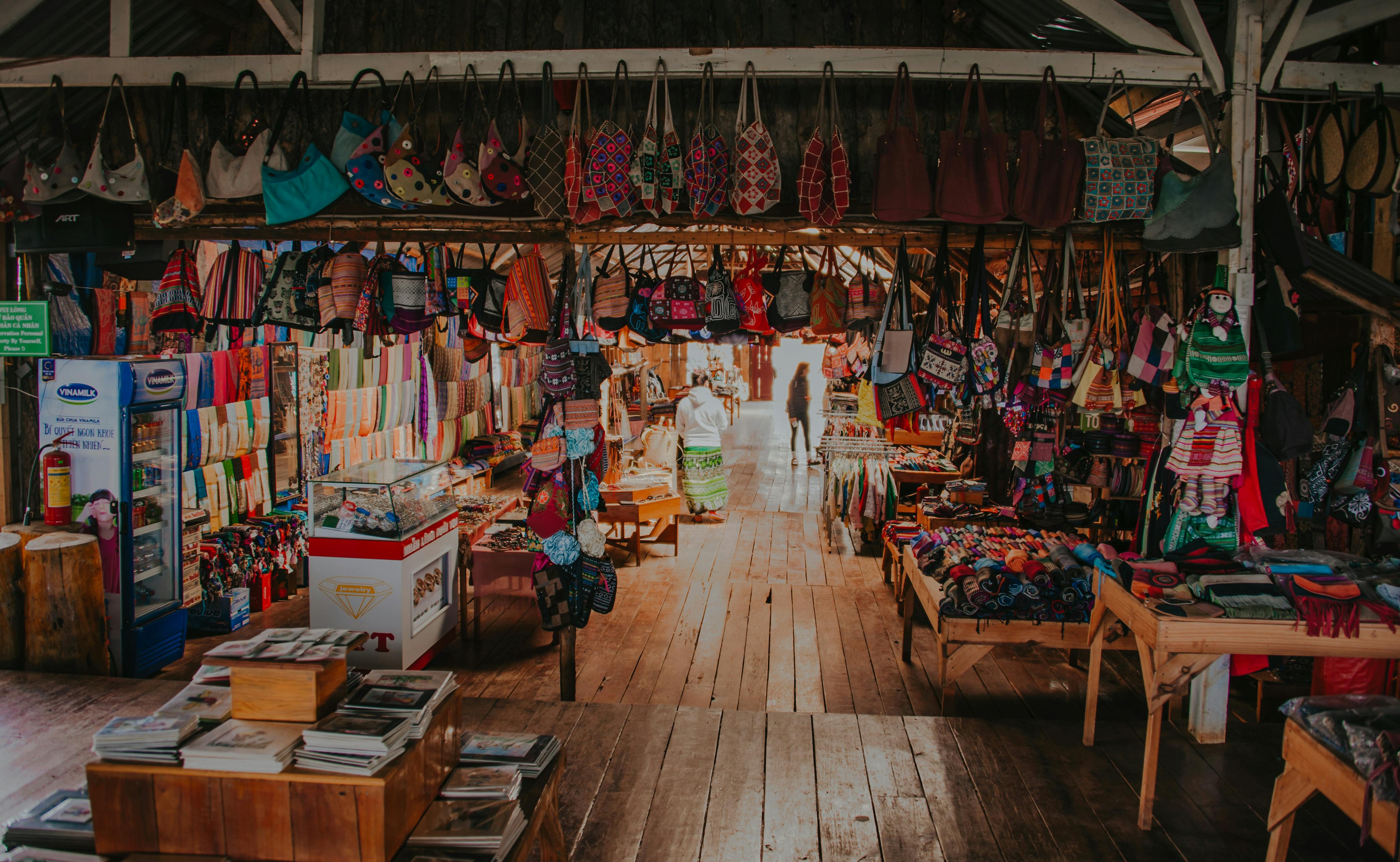
A souvenir is worth buying when it's actually made in Bali, packs without breaking, and suits the person you're giving it to. That rules out most airport trinkets and the mass-produced items shipped in from elsewhere and sold across every tourist strip. It rules in the island's real crafts — silver, textiles, wood, woven grass — and its small-batch food and skincare.
Before the item-by-item list, here's a reference table. Use it to match a gift to a recipient and to sense-check the price before you start bargaining. Prices are 2026 ranges in Indonesian rupiah (IDR) with approximate US dollar equivalents at around IDR 17,800 to USD 1; market quotes start higher, so these reflect fair prices after a friendly negotiation.
| Souvenir | Fair price (IDR) | Approx. USD | Best gift for | Where to buy |
|---|---|---|---|---|
| Silver jewellery | 300,000–2,500,000 | $17–$140 | A partner, a sibling | Celuk village |
| Hand-stamped batik sarong | 150,000–600,000 | $8–$34 | Almost anyone | Sukawati, Tohpati |
| Wood carving / puzzle box | 100,000–1,500,000 | $6–$84 | A home decorator, kids | Mas village |
| Ata-grass / rattan bag | 200,000–900,000 | $11–$51 | A friend with style | Tenganan, Seminyak |
| Single-origin coffee | 80,000–250,000 | $4–$14 | The foodie | Plantations, supermarkets |
| Bean-to-bar chocolate | 60,000–150,000 | $3–$8 | The foodie, colleagues | Pod, Krakakoa stockists |
| Aromatherapy oils / skincare | 50,000–300,000 | $3–$17 | A parent, a self-care friend | Ubud, Seminyak shops |
Travjoy's Bali shopping options are checked after research and approved by local experts, so when you book a guide to take you between Celuk, Mas, and the markets, you're not gambling on which workshops actually do honest work.
Craft and keepsake gifts
These are the best souvenirs from Bali for people who'll display or wear what you bring them. Each comes from a specific craft village, which is why buying close to the source — or from a market that resells from it — gets you better quality than a generic tourist-strip shop. Here are the first six.
1. Balinese silver jewellery (Celuk village)
Celuk village, about 30 minutes south of Ubud, is Bali's silversmithing centre, and a hand-shaped silver piece is one of the most giftable things on the island. Look for the 925 hallmark stamped on the underside — that confirms sterling silver rather than plated metal. A simple ring or pair of earrings makes a personal gift; a statement cuff costs more but reads as one-of-a-kind.
- Earrings or a simple ring: IDR 300,000–700,000 (USD $17–$39)
- Pendant or bracelet: IDR 700,000–1,500,000 (USD $39–$84)
- Statement cuff or detailed piece: IDR 1,500,000–2,500,000+ (USD $84–$140+)
Buy at a Celuk workshop where you can watch the work, or browse a market stall — but check the stamp before you pay. A shopping tour with a local guide who isn't on commission is the cleanest way to reach Celuk without being steered to a markup showroom.
2. Hand-stamped batik textiles and sarongs
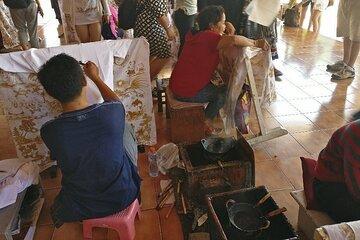
A length of real batik is the gift that suits almost anyone — wearable as a sarong, usable as a throw or wall hanging. The thing to know is the difference between the three grades. Hand-drawn batik tulis is the finest and priciest; hand-stamped batik cap is the practical sweet spot; machine-printed fabric is cheapest and not technically batik at all.
- Tell them apart: on real batik, the pattern shows on both sides because the wax penetrates the cloth. On printed fabric, the back is faded.
- Hand-stamped sarong: IDR 150,000–400,000 (USD $8–$22)
- Hand-drawn or fine piece: IDR 400,000–600,000+ (USD $22–$34+)
Tohpati village near Denpasar is a batik production centre; for buying, Sukawati Art Market sells the same goods that resell at a markup in more central markets.
3. Wood carvings and puzzle boxes (Mas village)
Mas village, between Ubud and Celuk, is Bali's woodcarving capital, and its carvers produce everything from temple-style figures to clever puzzle boxes with hidden compartments. The puzzle boxes make excellent gifts for kids and curious adults; a carved panel or figure suits someone furnishing a home. Buy treated, finished wood rather than raw — it matters for customs, covered in the avoid section below.
- Small carving or puzzle box: IDR 100,000–400,000 (USD $6–$22)
- Mid-size figure or panel: IDR 400,000–1,500,000 (USD $22–$84)
4. Ata-grass and rattan bags (Tenganan)
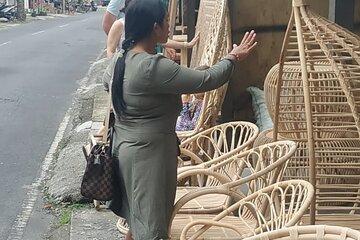
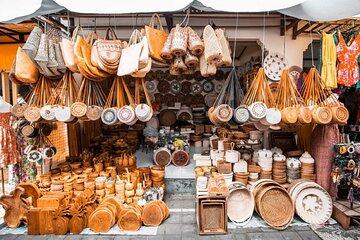
The woven rattan bag became a Bali signature for good reason — it's handmade, durable, and reads as effortlessly stylish. The finest are ata-grass bags from Tenganan, the Bali Aga village in the east, where weavers smoke the grass over coconut husks to harden it. A well-made ata bag lasts decades.
- Small rattan bag or clutch: IDR 200,000–450,000 (USD $11–$25)
- Larger or fine ata-grass bag: IDR 450,000–900,000+ (USD $25–$51+)
5. Balinese masks
Carved masks are a piece of Bali's ceremonial art rather than just décor — the Barong, Rangda, and topeng masks each carry a story from dance-drama traditions. A hand-carved mask makes a striking gift for someone who likes a conversation piece on the wall. Look for hand-carving and traditional motifs rather than the spray-painted versions on roadside racks.
- Decorative mask: IDR 250,000–700,000 (USD $14–$39)
- Detailed, performance-grade carving: IDR 1,000,000–3,500,000+ (USD $56–$197+)
6. Handmade ceramics
Bali's pottery studios — many around Ubud and the Pejaten area — turn out plates, cups, vases, and decorative pieces in glazes you won't find at home. Ceramics are heavier and need careful packing, but a small set of cups or a single statement bowl survives the journey wrapped in clothes. Best for someone who hosts or cooks.
- Single cup or small dish: IDR 50,000–150,000 (USD $3–$8)
- Set or larger decorative piece: IDR 300,000–1,000,000 (USD $17–$56)





Edible, scented and small-space gifts
If you're shopping for people who don't want another object on a shelf, these are the Bali souvenirs to bring home. They're light, they pack flat, and most cost a fraction of the craft gifts above. Here are the next nine, leading with the two that travel best of all.

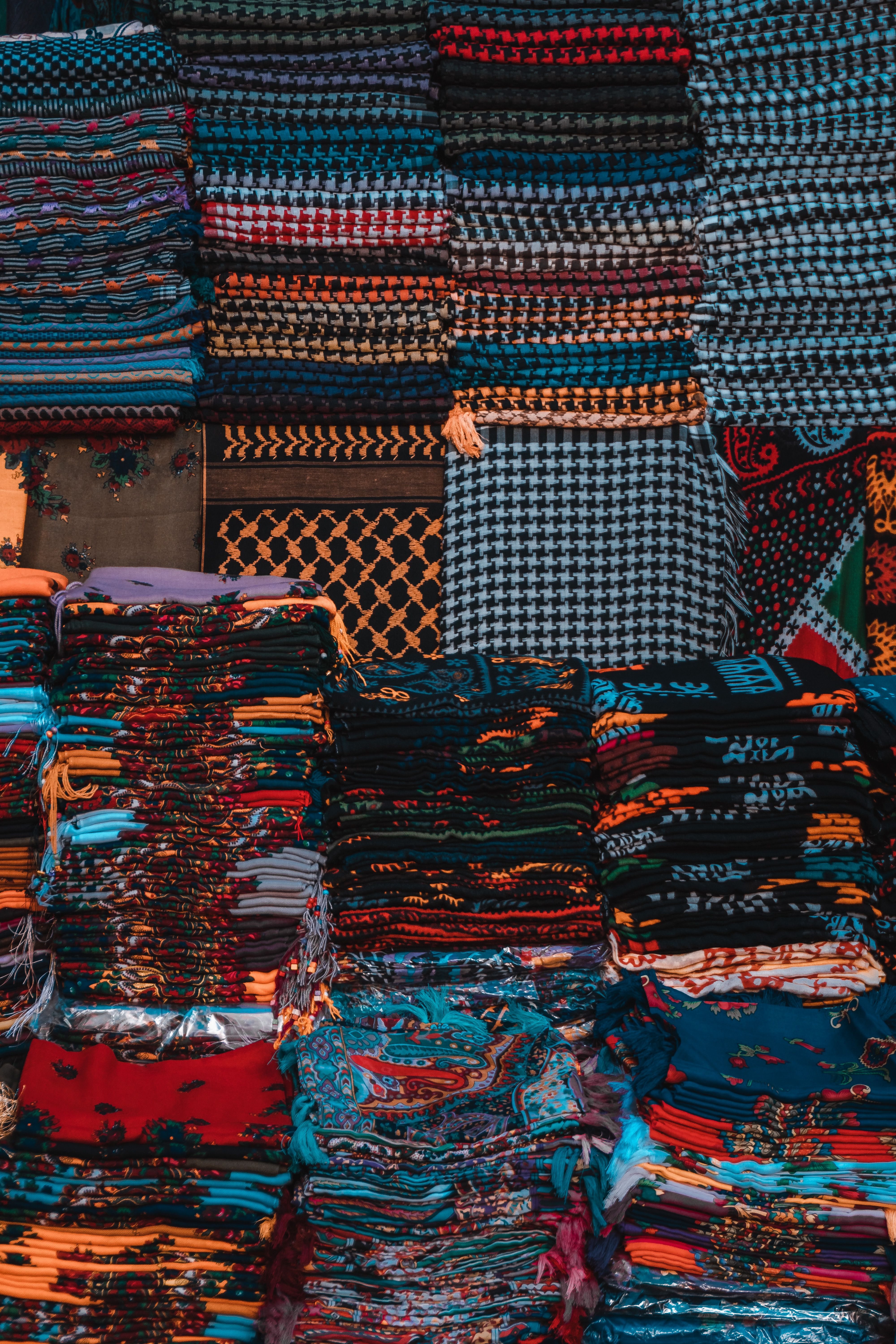
7. Bali single-origin coffee
Bali grows excellent arabica in the Kintamani highlands, and a bag of single-origin beans is the easiest gift for any coffee drinker back home. Buy whole beans from a named plantation or a specialty roaster rather than generic "Bali coffee" in tourist packaging. One word of caution: kopi luwak, the famous civet coffee, is covered in the avoid section — buy regular single-origin instead unless you can verify it's wild-sourced.
- 200g single-origin arabica: IDR 80,000–150,000 (USD $4–$8)
- Specialty roaster or gift pack: IDR 150,000–250,000 (USD $8–$14)
8. Bean-to-bar Bali chocolate
Bali has a genuine craft chocolate scene, and a few bars are one of the best-value gifts on the island. Pod Chocolate and Krakakoa both make bean-to-bar chocolate from Indonesian cacao, often with local flavours like sea salt, ginger, or coffee. Bars are flat, cheap, and easy to hand out to colleagues or friends.
- Single craft bar: IDR 60,000–90,000 (USD $3–$5)
- Gift box or multipack: IDR 100,000–150,000 (USD $6–$8)
9. Aromatherapy oils and natural skincare
Bali's wellness culture has produced a wave of small-batch skincare brands using coconut oil, lemongrass, frangipani, and ginger. Utama Spice, Sensatia Botanicals, and Blue Stone Botanicals are reliable, well-packaged, and made for travel. Essential oils, balms, and soaps make a calming gift for a parent or a self-care-minded friend, and they pack small.
- Soap or balm: IDR 50,000–100,000 (USD $3–$6)
- Essential oil or skincare set: IDR 150,000–300,000 (USD $8–$17)
10. Incense and offering kits (dupa)
Incense — dupa — burns in every Balinese temple and home, and a bundle is one of the cheapest, most evocative things to carry home. Frangipani and sandalwood are the classic scents. Some shops sell pre-made canang sari offering sets so the recipient can recreate the ritual, though check your home country's rules on dried plant matter before buying these.
- Incense bundle: IDR 20,000–60,000 (USD $1–$3)
- Incense with holder or offering set: IDR 80,000–200,000 (USD $4–$11)
11. Spices and Balinese vanilla
Local markets sell vanilla, cinnamon, cloves, nutmeg, and cardamom at a fraction of home prices, and Balinese vanilla pods are particularly good. Buy clearly labelled, dried, sealed packets and declare them if your home country asks — most allow commercially packaged dried spices. Best for anyone who cooks.
- Vanilla pods (small pack): IDR 50,000–150,000 (USD $3–$8)
- Mixed spice selection: IDR 80,000–200,000 (USD $4–$11)
12. Arak and brem (local spirits)
Arak is Bali's distilled palm or rice spirit; brem is a sweeter rice wine. A bottle makes a distinctive gift for someone who collects unusual spirits — buy a sealed, labelled, commercially produced bottle rather than home-distilled arak, which can be unsafe. Mind your duty-free allowance: most countries permit one litre of spirits per adult.
- Bottle of branded arak or brem: IDR 80,000–250,000 (USD $4–$14)
13. Local snacks (kacang disco, pia)
For cheap, crowd-pleasing gifts, Bali's packaged snacks deliver. Kacang disco are spiced, dough-coated peanuts; pia are flaky filled pastries. They're inexpensive, easy to share around an office, and sold in every supermarket. Best for colleagues or as filler gifts.
- Pack of kacang disco or pia: IDR 15,000–50,000 (USD $1–$3)
14. Gamelan chime balls
Miniature metal chime balls echo the sound of Bali's gamelan orchestras and make a small, unusual gift. They produce a soft resonant tone — listen before you buy, since the sound quality varies. Good for someone who likes music or meditation objects.
- Single chime ball: IDR 75,000–200,000 (USD $4–$11)
15. Macramé and small homeware
Woven macramé wall hangings, small lampshades, and decorative homeware fill Bali's craft markets and design shops, especially around Canggu and Ubud. They pack flat, weigh little, and suit a friend who's decorating. Buy from a design boutique for one-off quality or a market for budget pieces.
- Small macramé piece: IDR 100,000–300,000 (USD $6–$17)
- Larger hanging or homeware set: IDR 300,000–800,000 (USD $17–$45)
5 souvenirs to avoid buying in Bali
These five are not on the list because they're tacky — they're here because some are illegal to export, get seized at customs, or fund practices worth avoiding. Knowing them protects your trip's end as much as your conscience: a confiscation at the airport, or worse, is a poor way to finish a holiday.
1. Sea turtle shell, coral, and wildlife products
Avoid anything made from sea turtle shell (sold as "tortoiseshell"), coral, ivory, or other protected species. The international trade in all sea turtle species has been banned for decades under CITES, the global wildlife-trade convention, and items like these are among the most commonly confiscated by customs worldwide. Beyond the legal risk, buying them drives the destruction of endangered animals. The same goes for shells and coral picked up or bought on the beach — leave them where they are.
2. Caged kopi luwak
Kopi luwak — coffee made from beans eaten and passed by civets — is marketed as a luxury, but most sold to tourists comes from civets kept in cages in poor conditions. If you want the experience, buy only certified wild-sourced kopi luwak from a producer that can prove it, and treat any cheap, mass-marketed version as a welfare red flag. For most gift-givers, a bag of regular Kintamani single-origin is the better, kinder choice.
3. Counterfeit branded goods
The fake watches, sunglasses, handbags, and "branded" clothing pushed on tourist strips and beaches are counterfeit, and customs officers at home routinely intercept them. Some countries fine travellers or confiscate the goods on arrival. They also fall apart quickly. Spend the same money on something real and made in Bali instead.
4. Untreated raw wood and anything with soil or plant matter
Carvings are fine when they're finished and treated, but untreated raw-wood items, anything with bark, seeds, or soil, and live plant material face strict biosecurity rules — especially for travellers heading to Australia and New Zealand, where undeclared organic material draws heavy fines. Buy sealed, finished wood, declare any plant-based items, and skip the raw stuff.
Before you pack — a 30-second customs check
- Nothing from turtle shell, coral, ivory, or protected wildlife — illegal under CITES and seized.
- No counterfeit branded goods — intercepted at many borders.
- Wood carvings: only treated and finished, never raw or with bark.
- Food, spices, and plant matter: commercially sealed, labelled, and declared on arrival.
- Spirits: stay within your one-litre duty-free allowance.
- Keep receipts — your home customs may ask for proof of value.
5. "Antique" claims and last-minute airport buys
Treat any market stall selling "100-year-old antiques" with suspicion — chemicals make new wood look aged, and genuine antiques face their own export restrictions. And airport shops charge a steep premium for the same items you'll find for half the price in Sukawati or a craft village. Do your real shopping during the trip, not in the departure lounge.
Pulling it together
The best Bali souvenirs to bring home aren't the ones thrust at you on the beach — they're the silver from Celuk, the batik from a market that resells village work, the coffee and chocolate made from Indonesian beans, and the oils that smell like the island. Match the gift to the person, check the 925 stamp and the batik's reverse side, and pay a fair price after a friendly bargain.
Just as importantly, skip the five that cause trouble: wildlife products, caged kopi luwak, counterfeits, raw wood, and dubious "antiques." Get those calls right and every gift you carry home is one someone keeps. Start planning your Bali shopping — and the rest of your trip — on Travjoy's Bali page, where every experience is researched and approved by local experts, or browse the top 20 things to do in Bali to build the days around it.








.svg&w=1920&q=75)