


Bali Shopping Guide: Where to Buy What (Without Getting Ripped Off)
8 min read
Raj Varma
Author
Travel & Tourism Expert Ex-Thomas Cook, Kuoni, Times of India & Travel Triangle.
SHARE BLOG
TABLE OF CONTENTS
Key Takeaways
- The first price quoted to a tourist in Bali markets is usually 2–3 times the fair price — bargaining down to roughly a third of the opening number is normal, not rude.
- Bargain at markets, street stalls, and craft villages; do not haggle at price-tagged boutiques, malls, or anything in Seminyak Village — those are fixed.
- Budget around IDR 1,500,000–4,000,000 (USD 95–250) per person for a week of souvenir shopping, more if you want real silver or a serious painting.
- Two rip-offs cost the most: cage-farmed coffee sold as wild kopi luwak, and plated metal sold as 925 silver — both are easy to catch once you know the test.
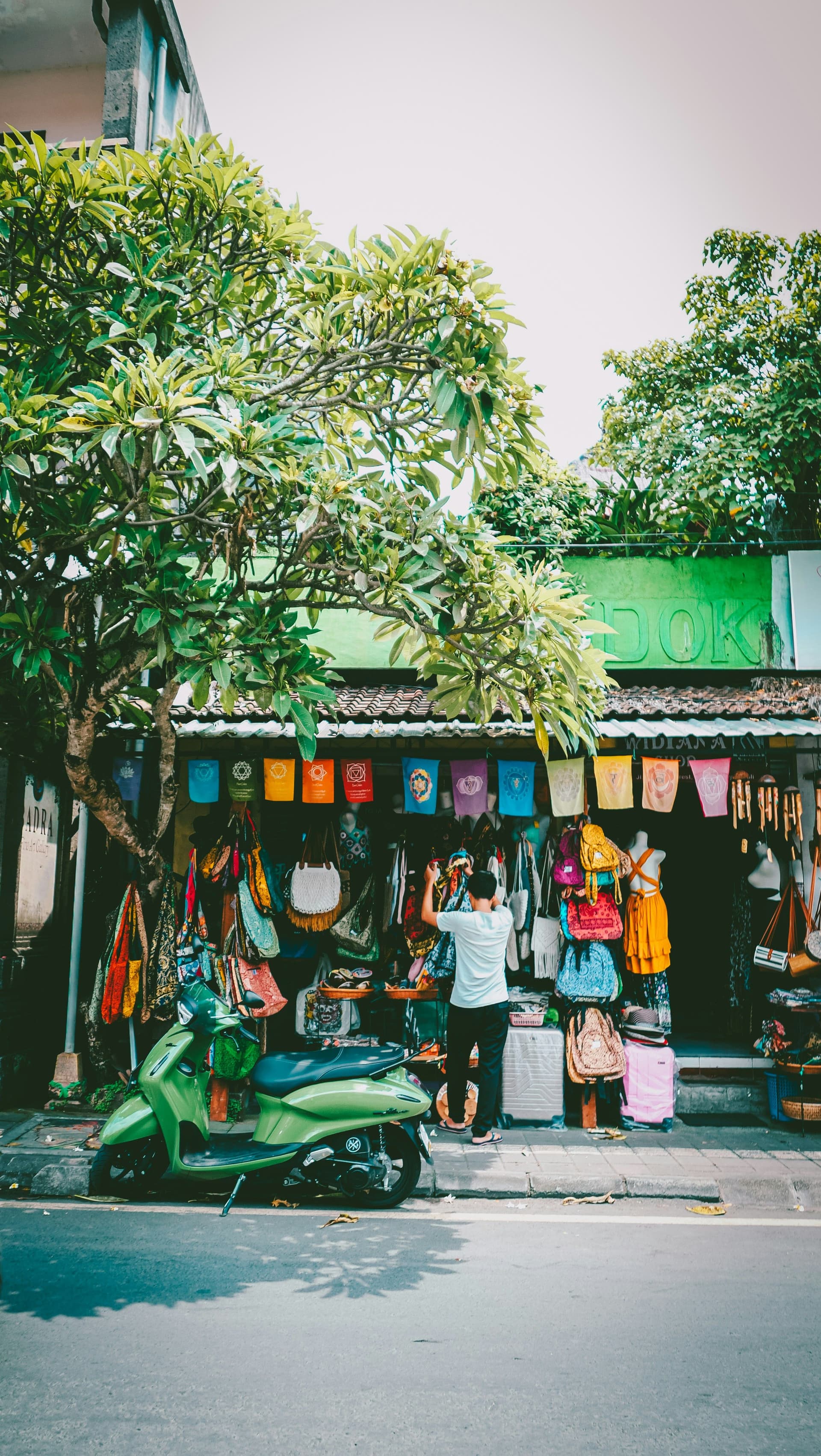
In Bali, the first quoted price is almost always the tourist price — typically two to three times what the item actually sells for. The fix in this Bali shopping guide is simple: bargain hard at markets, stalls, and craft villages (aim for about a third of the opening offer, then meet in the middle), pay the marked price without haggling at boutiques and malls, and verify quality before you hand over cash — check silver for a 925 stamp and never buy kopi luwak that costs under USD 20 per 100 grams.
Here is the scene that explains the whole island. The same hand-carved wooden mask costs IDR 100,000 (USD 6) at a workshop in Mas, IDR 250,000 (USD 16) at Sukawati Art Market, IDR 600,000 (USD 37) at the more central Ubud Art Market, and IDR 1,200,000 (USD 75) in a Seminyak boutique. None of those prices is a scam on its own — they reflect different rent, location, and service. The mistake is paying the IDR 1,200,000 number while thinking you got the IDR 250,000 deal.
Most shopping advice for Bali stops at "bargaining is expected." This Bali shopping guide goes further: it gives you the number to aim for on each item, tells you exactly where bargaining works and where it backfires, and shows you how to spot the handful of tricks that turn a fun afternoon into an expensive one. Prices are current for 2026 and listed in both rupiah and US dollars.
Where bargaining works — and where it backfires
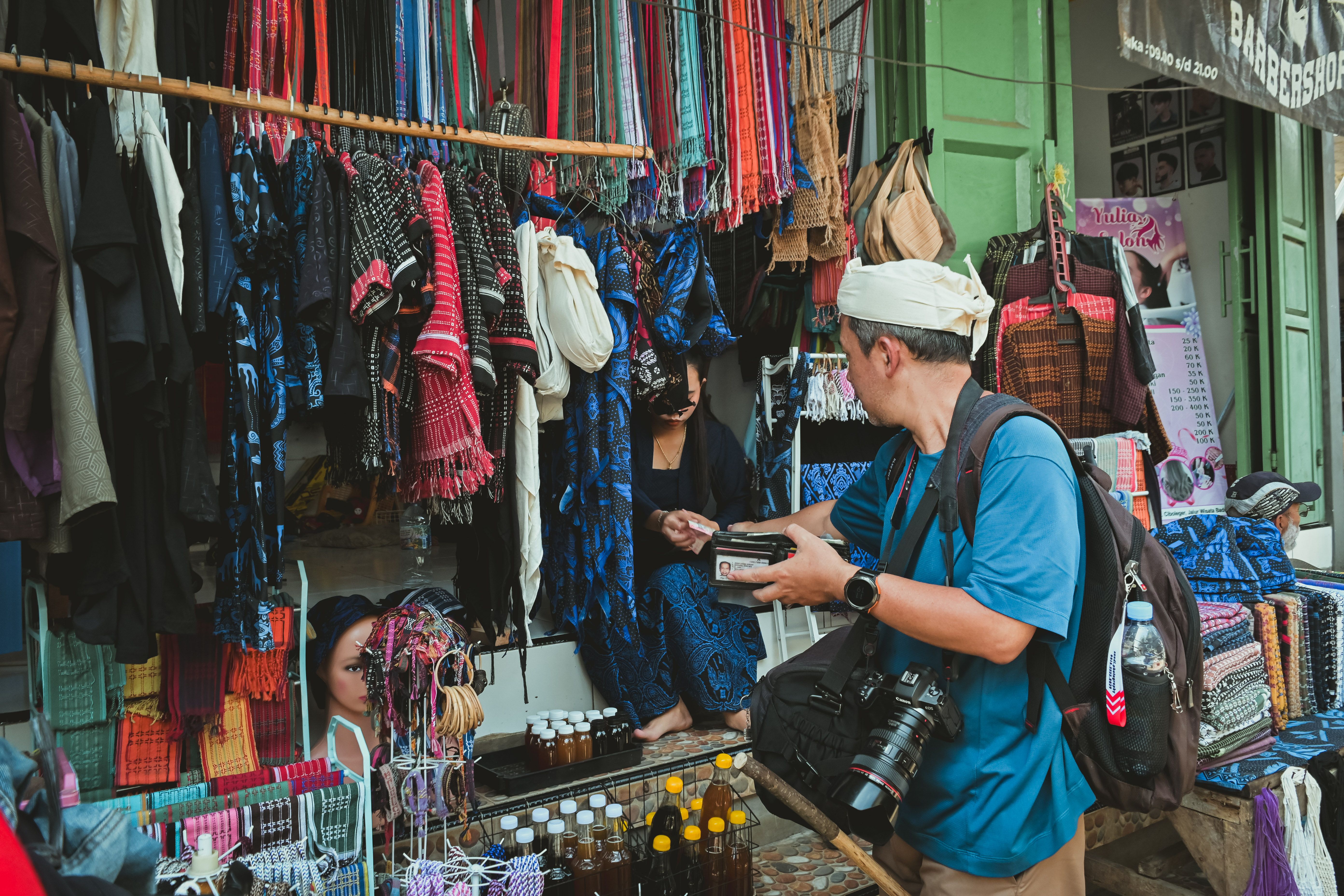
Before you negotiate a single rupiah, learn the one rule that prevents most overpaying: in Bali, bargaining is expected at markets, street stalls, and artisan villages, and it is not welcome at price-tagged shops, boutiques, and malls. Haggling where prices are fixed marks you as someone who does not know the rules; paying the sticker price where bargaining is expected means you overpaid by 50% or more. Get the venue type right first, then act accordingly.
This is the core decision in any Bali shopping guide, so here is the map in one table.
| Where you're shopping | Bargain? | Opening move | Payment |
|---|---|---|---|
| Art markets (Sukawati, Ubud) | Yes, hard | Counter at ~30% of quote | Cash only |
| Beach and street stalls (Kuta, Legian) | Yes, hard | Counter at ~30% of quote | Cash only |
| Craft villages (Celuk, Mas, Tenganan) | Lightly | Ask the workshop price, trim 10–20% | Cash; some take cards |
| Night markets (Sindhu, food and goods) | A little, on goods | Food is fixed; goods, trim 20–30% | Cash; QRIS spreading |
| Boutiques and concept stores (Seminyak, Canggu) | No | Pay the marked price | Cards widely accepted |
| Malls (Seminyak Village, Beachwalk) | No | Pay the marked price | Cards; 3% foreign surcharge common |
The method that actually moves the price
Bargaining in Bali runs on friendliness, not pressure. Open with a smile and a greeting, then counter the first quote at roughly a third of what was said. The vendor will protest; you hold near your number and let them come down. Most deals settle somewhere between your opening counter and their quote — usually 40–60% below the first price at a busy market.
- Buy in bulk. Three sarongs from one stall will always beat the per-item price of one. Bundle, then negotiate the total.
- Use the walk-away. Thank them, give your last price, and step away. Where stalls sell identical goods, you will usually be called back. If you are not, the next stall has the same item.
- Know the local number first. Price the same item at two or three stalls before committing. Once you have seen it three times, you know the floor.
- Stop pushing once you agree. Squeezing for an extra IDR 10,000 after a fair handshake sours the exchange and is not the point.
One quiet markup catches a lot of visitors: shops that pay drivers and guides a commission, sometimes 30–50%, to bring tourists in. That commission is baked into your price. If a driver insists on a particular "cousin's" gallery or coffee plantation, you are likely paying for the introduction. Choosing your own stops — or booking a shopping tour led by a vetted local guide rather than a commission-driven one — keeps that markup out of your bill. The experiences on Travjoy are selected after research and approved by Bali-based experts, so the guide is working for you, not the shop.
What you'll be quoted vs. what to pay
Here is the part most guides skip: the actual numbers. The table below shows the typical opening quote to a tourist versus a fair settled price for common Bali buys, in 2026 rupiah and US dollars. Treat the fair column as your target at a market — at a fixed-price boutique you will pay the higher end and that is normal.
| Item | Typical tourist quote | Fair market price | USD (fair) |
|---|---|---|---|
| Cotton sarong | IDR 150,000–250,000 | IDR 50,000–80,000 | USD 3–5 |
| Beachwear dress | IDR 350,000–500,000 | IDR 80,000–150,000 | USD 5–9 |
| Small wood carving | IDR 300,000–600,000 | IDR 100,000–200,000 | USD 6–12 |
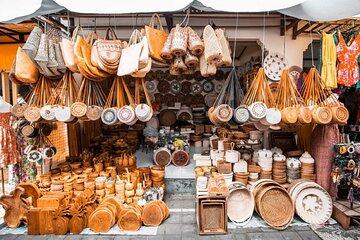
| Ata-grass woven bag | IDR 350,000–500,000 | IDR 150,000–300,000 | USD 9–19 |
| 925 silver ring | IDR 350,000+ | IDR 150,000–400,000 | USD 9–25 |
| Small canvas painting | IDR 600,000+ | IDR 200,000–400,000 | USD 12–25 |
| Aromatherapy oil set | IDR 150,000–250,000 | IDR 50,000–150,000 | USD 3–9 |
| Kintamani arabica (200g) | IDR 120,000–180,000 | IDR 60,000–120,000 | USD 4–7 |
Two notes on this table. First, a serious painting by a named artist, or heavy sterling silver by weight, will sit well above these ranges and is often close to fixed — those are not the items you grind on. Second, "fair" assumes you bargained; if you accept the first number at a market, expect to pay the left-hand column.
Set a sensible total budget
- Light souvenir run: IDR 1,500,000–2,500,000 (USD 95–155) per person across a week — sarongs, oils, snacks, a couple of small gifts.
- Mid-range with a keepsake: IDR 2,500,000–4,000,000 (USD 155–250) — add a silver piece, an ata bag, a small painting.
- Statement buyer: Set the above aside and budget separately for one signature item — a large carving, fine silver, or gallery art can each run IDR 2,000,000+ (USD 125+) on its own.
Where to buy what — matched to the item, not the vibe
Buy at the source, then bargain
The single biggest saving in any Bali shopping guide comes from buying each item where it is made or wholesaled, rather than wherever you happen to be standing. Match the item to the source and you skip a layer of markup before you even start bargaining.
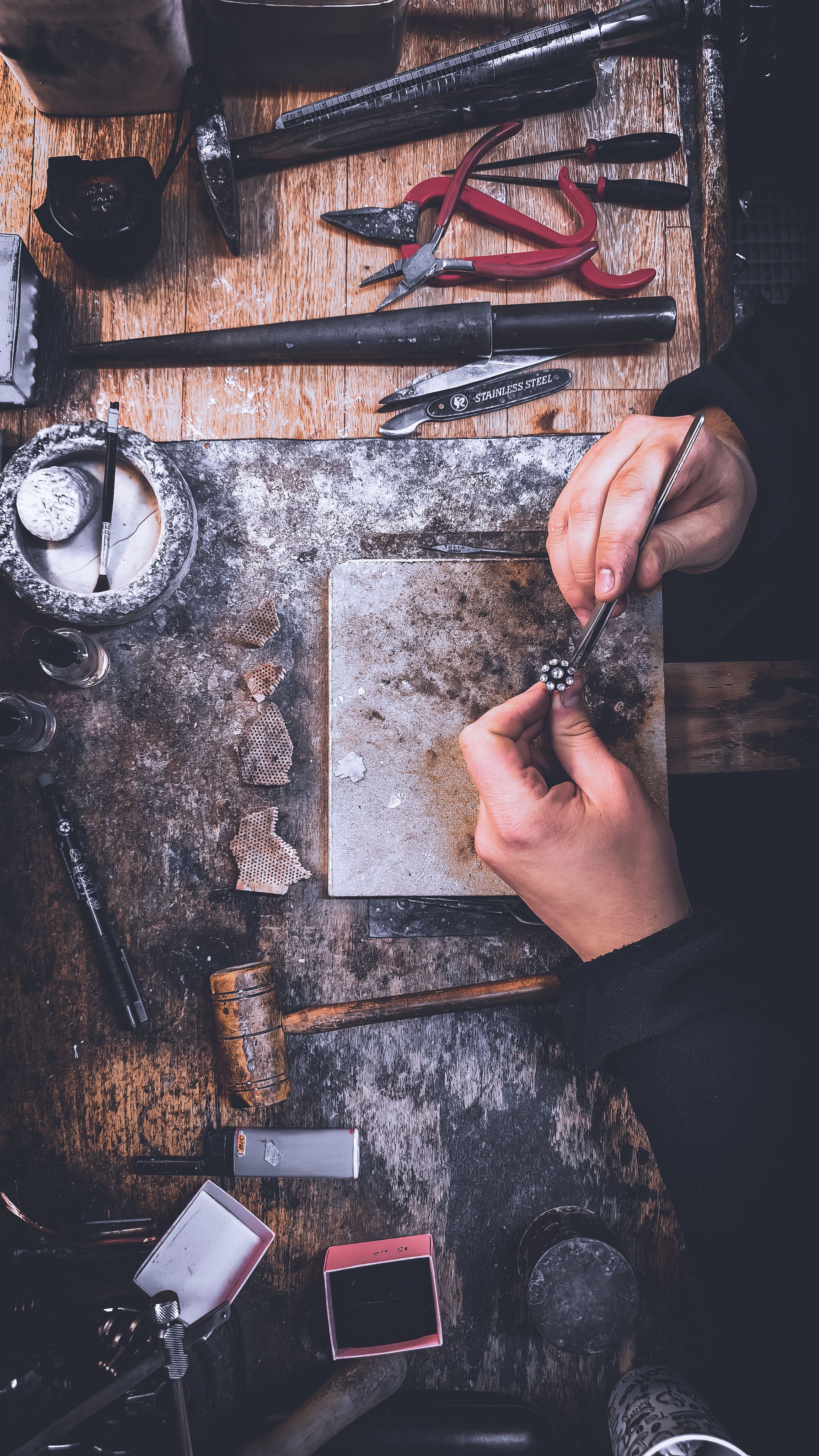
- Silver jewellery → Celuk Village. The silversmithing centre in Gianyar regency. Buying at the source means workshop pricing and a far better chance the piece is real 925 sterling, not plated.
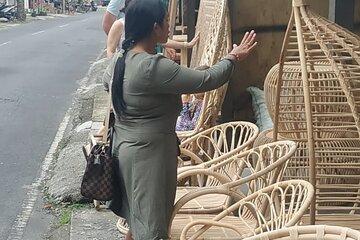
- Wood carving → Mas Village. The carving village between Ubud and Sukawati. Workshop prices are a fraction of what the same piece fetches in a central market.
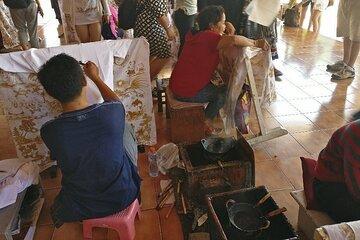
- Textiles and ata bags → Tenganan and Tohpati-supplied stalls. Tenganan is the double-ikat weaving village; Tohpati is the batik hub. Buy woven goods where they are made for honest pricing and real handwork.
- Everyday souvenirs → Sukawati over Ubud Art Market. Many Ubud vendors restock at Sukawati and resell at a markup. Drive the extra 20 minutes south for the lower base price and bargain from there.
- Fixed-price one-offs → Seminyak boutiques. Independent fashion and homeware along Jalan Kayu Aya and Jalan Petitenget, or inside Seminyak Village. No haggling, but the quality and design are a step up.
If you would rather not drive between villages yourself, a guided shopping route can string Celuk, Mas, and a market together in a day without the commission detours — the Bali options on Travjoy are checked by local experts, so each stop earns its place.












The five rip-offs that cost the most
Most overpaying in Bali is just the tourist markup, and bargaining handles that. A smaller set of tricks costs real money because they sell you something other than what you think you are buying. These five account for the bulk of expensive regrets, and each has a quick tell.
The five to watch — and how to spot them
- Caged coffee as wild kopi luwak. Authentic wild-civet kopi luwak costs at least USD 100 per 100 grams. If a plantation sells it for USD 15–25, the civets are caged or the beans are not civet-sourced at all. Ask directly whether the animals roam free — a vague answer means caged. If welfare matters to you, buy single-origin Kintamani arabica from the same farms instead.
- Plated metal as 925 silver. Real sterling, especially from Celuk, carries a "925" stamp on the underside or clasp. No stamp means plated. A magnet is a quick backup — silver is not magnetic.
- Fake antiques. New wood is chemically aged to look a century old, then priced like a real antique. If an "old" carving is expensive in a tourist market, treat it as new and walk.
- The money-changer short-count. Some street changers offering a rate slightly above everyone else palm or re-swap notes mid-count. Use authorised changers inside a shopfront, count your own rupiah, and do not hand the cash back once counted.
- The "shipping included" upsell. On a large carving or furniture, shipping is rarely included even when implied. Confirm the total before paying and get a tracking number in writing.
None of these requires expertise to dodge — just the habit of checking before you pay rather than after. The stamp, the magnet, the direct question about the civets: ten seconds each, and they protect the only purchases in Bali big enough to hurt.

Paying safely — cash, QRIS, cards, and change tricks
Match your payment to the venue
Payment method follows venue type, and getting it wrong costs you in surcharges or leaves you stuck at a cash-only stall. The short version: carry small rupiah notes for markets, save cards for boutiques and malls, and treat QRIS as a bonus rather than a guarantee.
- Markets, stalls, craft villages: cash, almost always. Bring small notes — IDR 20,000, 50,000, and 100,000. Vendors who "have no change" for a large note sometimes round up; small notes remove the excuse.
- Boutiques and malls: cards are widely accepted, but foreign cards often carry a 3% surcharge. Ask before tapping if you are price-sensitive.
- QRIS digital payment: Indonesia's unified QR system is spreading to larger stalls and cafés, and foreign-issued QR via some apps now works at many merchants. Useful, but cash is still the safe default at any traditional market.
- ATMs: withdraw inside bank branches or malls rather than free-standing street machines, and cover the keypad. Skimming is the one card risk worth taking seriously.
The single most common cash trick is the short-count at small money changers, covered above — the defence is the same wherever you pay: count what lands in your hand, slowly, before it goes in your pocket. For night-market food, prices are effectively fixed and cheap, so save your negotiating energy and just enjoy a IDR 25,000–50,000 (USD 1.50–3) plate at Gianyar Night Market or Sindhu Night Market.
Is Bali shopping worth it? Buy or skip, by traveller type
Whether Bali shopping is "worth it" depends entirely on what you came for. The island rewards specific buys and punishes impulse splurges on items that are cheaper or better elsewhere. Here is the honest breakdown.
It's worth it if you want handmade craft with a real source — Celuk silver, Mas carving, hand-stamped batik, ata-grass weaving. These are made in Bali, priced fairly at the source, and hard to find at the same quality and price at home. It's not ideal if you are chasing branded fashion or electronics (often counterfeit or no cheaper), or buying "kopi luwak" as a novelty (usually unethical and overpriced).
- Souvenir hunters: stick to Sukawati and a Seminyak market for volume — sarongs, bags, oils, snacks. Bargain hard, buy in bundles, keep each item under IDR 100,000 (USD 6).
- Serious craft buyers: go to the source villages, pay closer to the asking price for genuine handwork, and verify materials (the 925 stamp, the weave density). This is where spending more is justified.
- Families: markets are fun but crowded and cash-only; build in an air-conditioned mall stop like Seminyak Village for a fixed-price reset and a cold drink.
- Design-led shoppers: skip the markets entirely and spend your time in Seminyak and Canggu concept stores, where the pieces are one-off, fairly priced, and card-friendly.
If you would rather have the route planned and the honest stops pre-vetted, browse Travjoy's top picks for Bali — the experiences are researched and approved by local experts, so a shopping day comes without the commission traps or guesswork.
Shop Bali with confidence
The whole of this Bali shopping guide comes down to three habits: get the venue type right so you bargain only where you should, know the fair number before you start so the tourist quote has no power over you, and check quality before you pay so the big purchases are real. Do those three things and the markup that catches most visitors simply stops applying to you.
Buy your silver in Celuk, your wood in Mas, your textiles where they are woven, and your everyday souvenirs at Sukawati rather than the more central markets. Save cards for boutiques and malls, carry small notes everywhere else, and treat any coffee branded kopi luwak with suspicion. To map a shopping day against the rest of your trip, start planning your Bali trip on Travjoy, where every experience is checked by local experts so you can shop, eat, and explore without second-guessing each stop.





.svg&w=1920&q=75)