



Bali National Park (West Bali): An Underrated Wildlife Adventure
7 min read

Raj Varma
Author
Travel & Tourism Expert Ex-Thomas Cook, Kuoni, Times of India & Travel Triangle.
SHARE BLOG
TABLE OF CONTENTS
Key Takeaways
- West Bali National Park (Taman Nasional Bali Barat) is the island's only national park, covering roughly 190 km² of dry forest, savanna, mangrove, and coral reef in Bali's remote northwest.
- It is the last refuge of the critically endangered Bali starling — fewer than 50 fly wild — and home to over 160 bird species, Javan rusa deer, and shy ebony leaf monkeys.
- Menjangan Island, reached by boat from Labuhan Lalang, offers the best snorkelling and wall-diving on Bali, with calm, clear water and coral walls dropping to 50 metres.
- The park sits 4–4.5 hours from south Bali, so it works best as an overnight from Pemuteran rather than a rushed day trip; a permit and a licensed ranger guide are mandatory.
West Bali National Park is Bali's only national park, protecting around 190 km² of forest, savanna, mangrove, and reef on the island's northwest tip. A standard 2026 visit costs IDR 200,000 (about USD 12) on weekdays for entry, plus a mandatory ranger guide from around IDR 350,000, and most travellers come for one of three things: snorkelling Menjangan Island, spotting the rare Bali starling, or trekking the forest trails.
When most people picture Bali, they see rice terraces, clifftop temples, and beach clubs in the south. Almost no one pictures mangrove channels, savanna grazed by wild deer, and a reef so clear it reads like an aquarium. That second Bali exists, but it sits four hours up the coast from Seminyak, which is exactly why so few visitors reach it.
The reward for the drive is the quietest, wildest corner of the island. This guide covers what lives in the park, why Menjangan snorkelling earns its reputation, what every fee and permit actually costs in 2026, and how to plan the journey so the logistics don't eat your day. By the end you'll know whether to go for an afternoon, a full day, or an overnight.
What is West Bali National Park?
West Bali National Park, known locally as Taman Nasional Bali Barat, is the only national park on the island and covers roughly 190 km² — about 5% of Bali's total land area — across the Jembrana and Buleleng regencies. Around 80% of it is land; the rest reaches into the Bali Sea to protect the waters and reefs around Menjangan Island.
The park packs four distinct ecosystems into a compact area. You move from seasonal dry forest and open savanna into dense mangrove and out onto coral reef, often within the same day. This range is why the park supports such varied wildlife despite its size.
Core zone vs. visitor zone
Not all of the park is open to you, and that is by design. A large core zone is reserved for conservation and scientific research and stays off-limits to keep breeding habitats undisturbed. The sections open to visitors offer snorkelling, diving, trekking, birdwatching, and mangrove tours, with the rest acting as a protected buffer.
The park is run from two ranger stations: the main headquarters at Cekik, near Gilimanuk, and a second at Labuhan Lalang on the north-coast road, where the Menjangan boats leave. You buy permits and arrange guides at these offices — there is no online gate, and you cannot enter the forest zones without a licensed ranger.
At a glance
- Local name: Taman Nasional Bali Barat
- Size: ~190 km² (around 5% of Bali), land and marine zones
- Ecosystems: dry forest, savanna, mangrove, coral reef
- Ranger stations: Cekik (headquarters) and Labuhan Lalang (Menjangan boats)
- Flagship species: Bali starling, Javan rusa deer, ebony leaf monkey
The wildlife you'll actually see
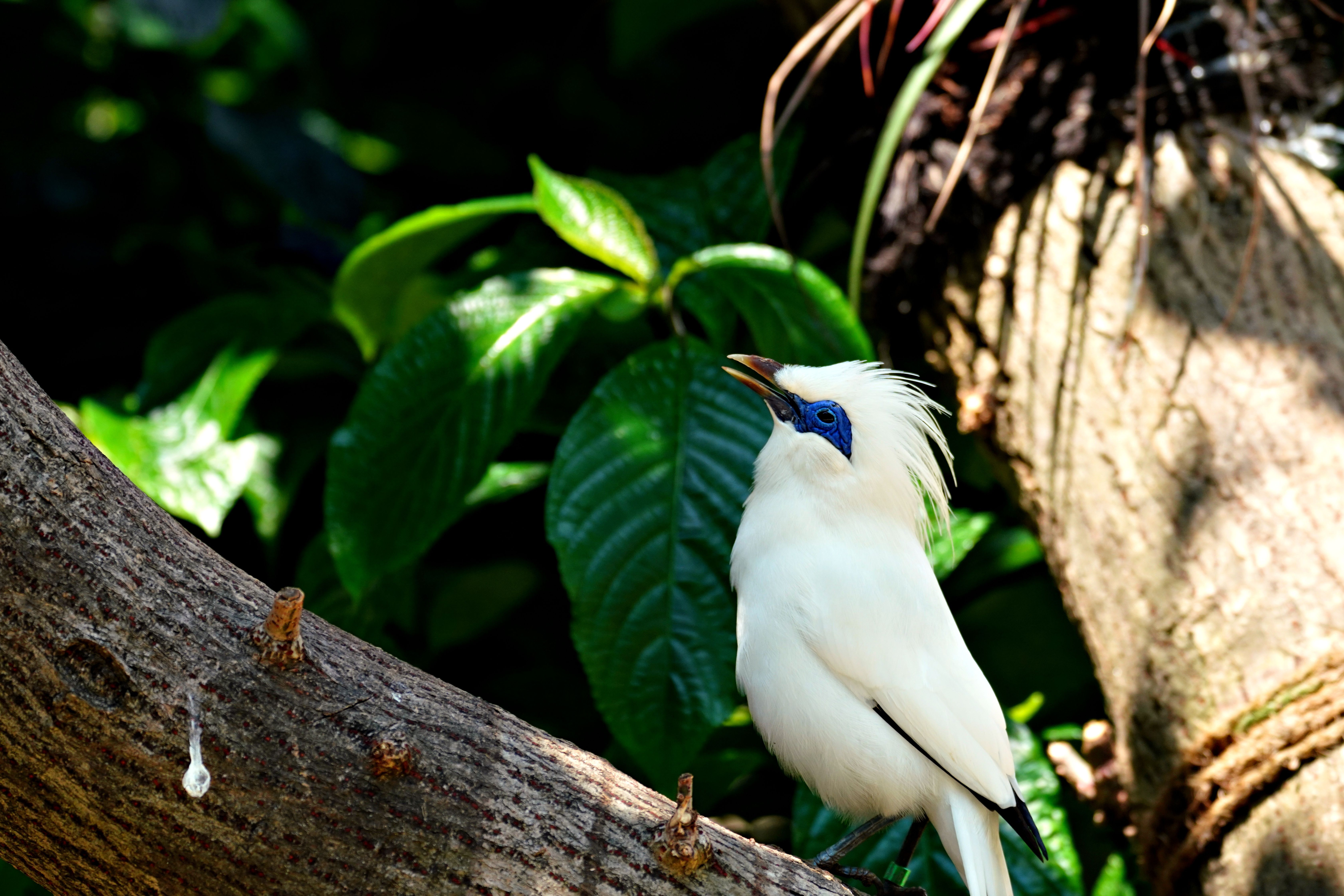
The headline animal is the Bali starling, and the park is the only place on earth where it still lives in the wild. Fewer than 50 birds fly free, which makes a sighting rare rather than guaranteed — set your expectations accordingly. The park as a whole shelters more than 160 bird species, so birdwatchers rarely leave empty-handed even without the starling.
The Bali starling and where to find it
The snow-white Bali starling, with its blue eye mask, was named in 1911 and nearly vanished to poaching and habitat loss. A captive-breeding programme at Sumber Klampok village, near the Gilimanuk entrance, has slowly rebuilt the population, and it is the only breeding centre inside the park boundaries.
- Breeding centre: Sumber Klampok, roughly 200 metres from the western entrance point near Gilimanuk
- Wild flock: Teluk Brumbun, reachable by boat from Labuhan Lalang — the spot where starlings have always flown wild
- Best chance: early morning or late afternoon, when the birds are most active
- Reality check: wild sightings are never promised; the breeding centre is the reliable place to see the bird up close
Deer, monkeys, and the mangrove crowd
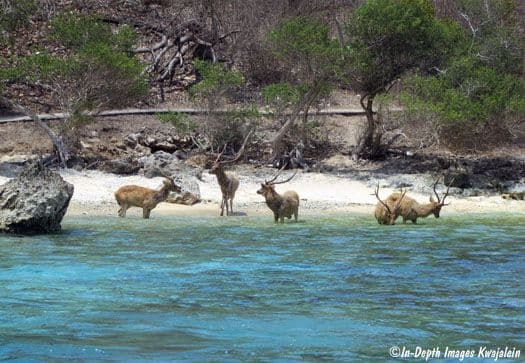
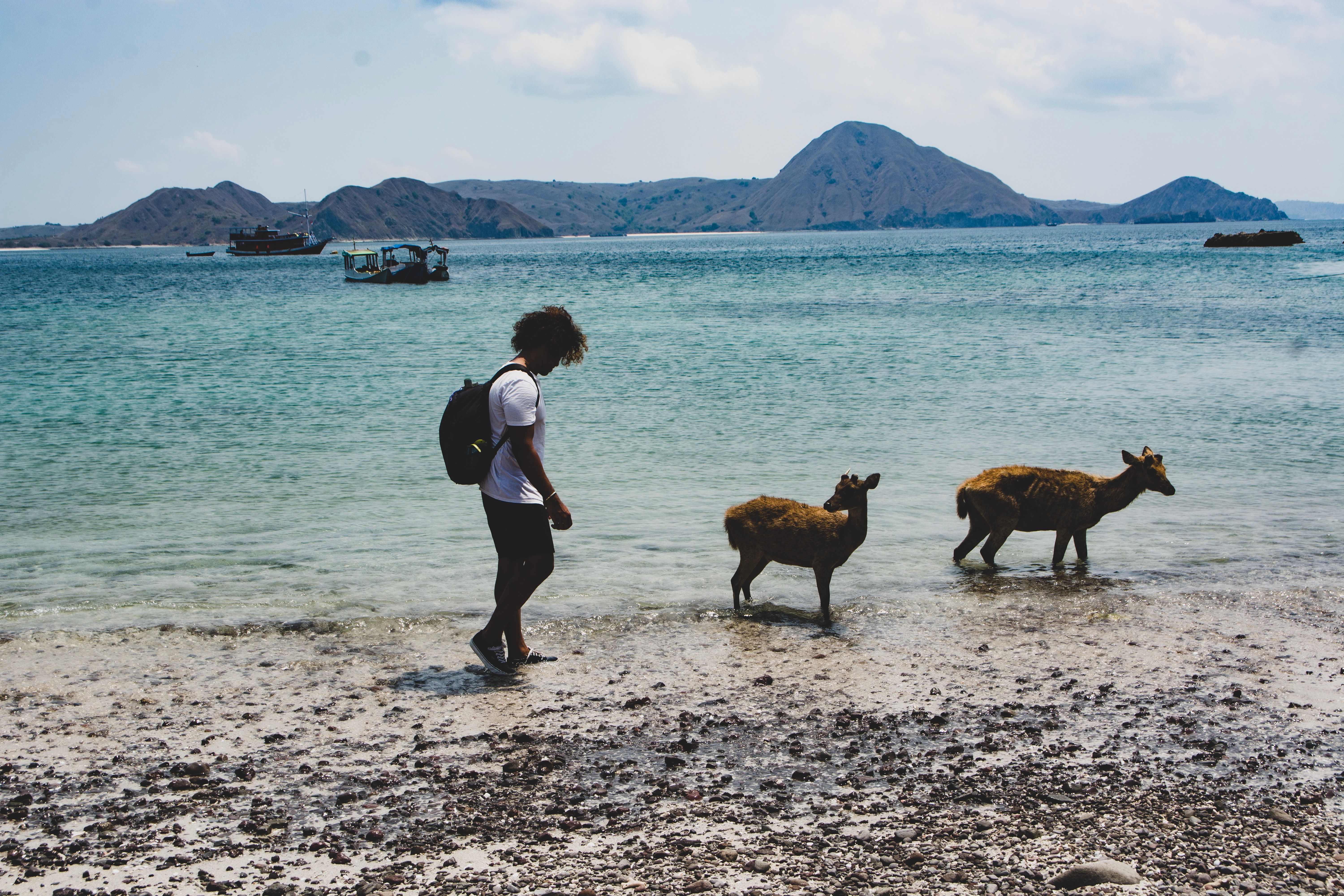
Beyond the birds, the park's mammals are easier to find. Javan rusa deer — the menjangan that gives the island its name — graze the savanna and wander onto Menjangan's white-sand beaches, often unbothered by snorkellers. In the forest canopy you may spot the ebony leaf monkey, a glossy-black primate that, unlike the bag-snatching macaques near Uluwatu Temple in the south, stays shy and undisturbed.
The mangroves around Gilimanuk Bay add another layer: mudskippers, crabs, and wading birds in the channels by day, and at Pulau Kalong (Bat Island), thousands of flying foxes lifting off the mangroves at dusk. Wild boar and civets round out the cast for anyone who lingers into the evening.
Menjangan Island: Bali's best snorkelling and diving
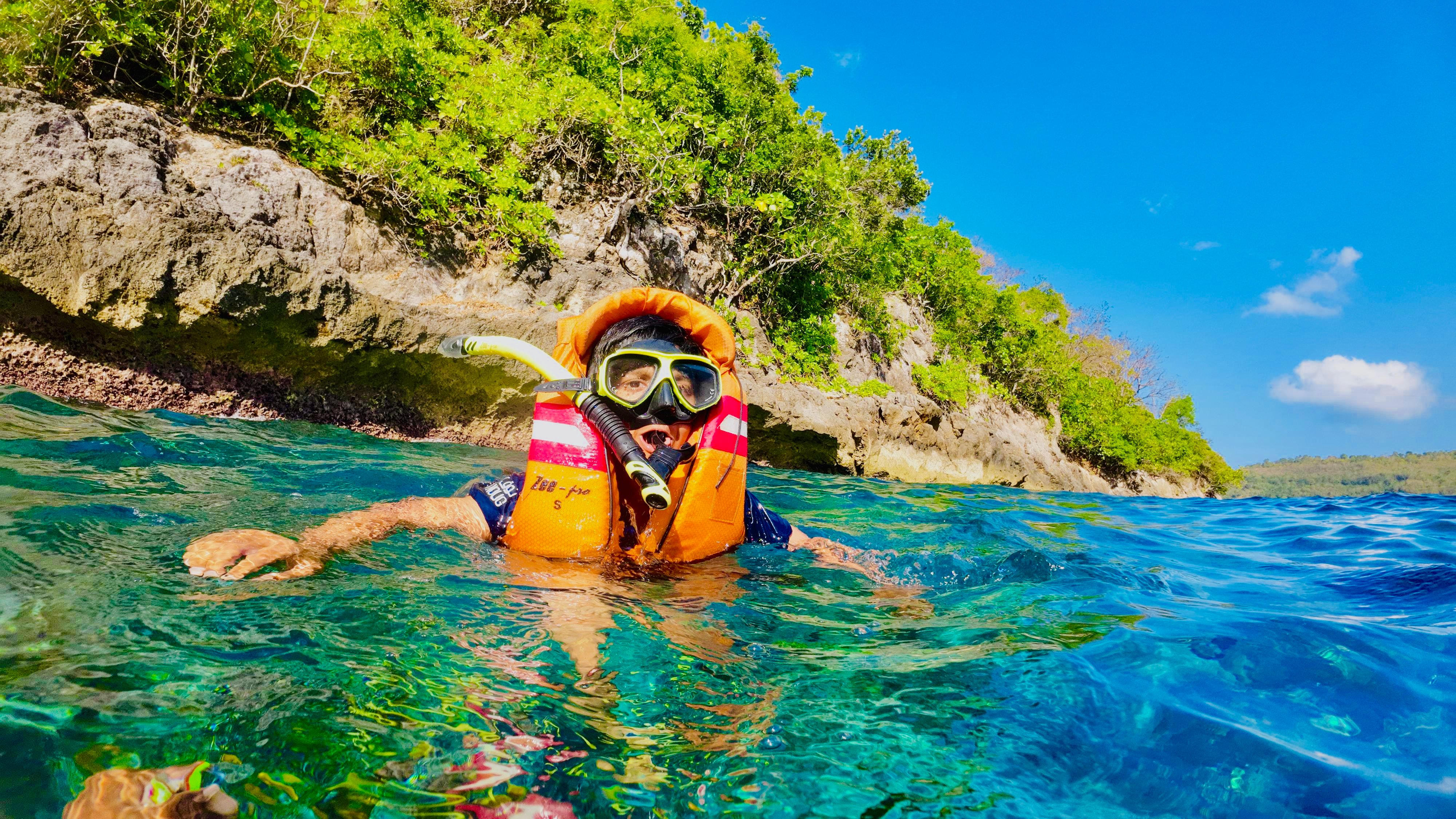
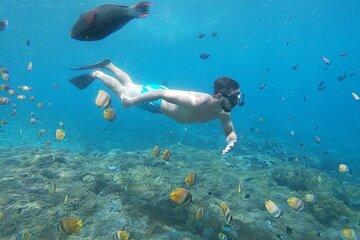
Menjangan Island is the reason most travellers make the trip, and it earns the reputation. The water is calm and clear, the coral walls drop steeply from about 10 metres to 50 metres, and because the island is uninhabited the reef stays in far better shape than the busier sites in the south. Snorkelling in West Bali National Park is consistently rated the best on the island.
What you'll see underwater
The signature feature is wall-diving: vertical coral cliffs covered in hard and soft coral, with overhangs and swim-throughs. Beginners can stay shallow along the coastal shelf and still see plenty, while certified divers drop the wall.
- Marine life: green sea turtles, reef sharks, pygmy seahorses, and dense schools of tropical fish
- Dive sites: Coral Garden, The Wall, and Pos II are the established favourites
- Landmarks: the famous Anchor Wreck and a small Ganesha statue submerged near the reef
- Visibility: among the clearest in Bali, regularly 15–30 metres in dry season
How the boats work
Boats leave from Labuhan Lalang harbour, on the northern edge of Teluk Terima bay, and the crossing takes around 30 minutes. You don't need to book days ahead — groups often club together at the jetty in the morning to share a boat — but every charter must carry a licensed guide, and you buy the park permit at the office in the car park before you go. If you prefer certainty, a snorkelling day trip booked in advance removes the haggling and the wait.
For travellers basing in the south, Menjangan is a long way to come for one reef, so it pairs well with a night in Pemuteran. If you only have the islands in mind and want something closer to the south, the snorkelling around Nusa Penida Island is the obvious alternative, though it trades Menjangan's calm clarity for stronger currents and bigger crowds. The experiences listed on Travjoy are reviewed by local experts, so you can match the right snorkelling trip to your level without second-guessing the operator.











Things to do beyond the reef
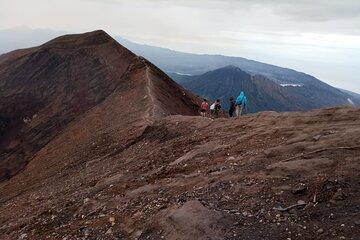
Menjangan gets the headlines, but the park rewards anyone who stays on land too. The two main dry-land activities are ranger-led treks and birdwatching, with mangrove kayaking as a quieter third option. You cannot trek alone — a licensed ranger is required on every forest route, both for your safety and to protect the habitat.
Trekking the forest trails
Trails range from gentle strolls to half-day climbs. The easy Tegal Blunder loop suits most visitors and takes around two hours through forest where the birdwatching is strongest. The challenging Gunung Klatakan route runs closer to five hours and is for fit walkers who want a workout and deeper forest. Book the day before if you want an early start, since the rangers organise from 8am.
Birdwatching and mangroves
Birdwatching tours run best in the early morning or late afternoon, and Teluk Brumbun is the favoured spot for native species including the Bali starling, deer, and wild boar. Mangrove tours and kayak rentals let you paddle the channels of Gilimanuk Bay, where mudskippers, crabs, and wading birds thrive — a calm, low-effort way to see a side of the park most snorkellers skip.
| Activity | Duration | Difficulty | Best for |
|---|---|---|---|
| Menjangan snorkelling | Half to full day | Easy | First-timers, families, swimmers |
| Menjangan wall-diving | Full day (2 dives) | Moderate | Certified divers |
| Tegal Blunder trek | ~2 hours | Easy | Birdwatchers, casual walkers |
| Gunung Klatakan trek | ~5 hours | Challenging | Fit, experienced hikers |
| Mangrove kayak / tour | 1–2 hours | Easy | Families, slow travellers |
Fees, permits and how the system works in 2026
Fees in West Bali National Park are a stack of small charges rather than one ticket, and you settle them in cash at the ranger station — Cekik or Labuhan Lalang — before you start. The headline cost is the park entrance fee; the rest depends on what you actually do. All figures below are 2026 rates and can shift, so carry extra cash.
- Park entrance: IDR 200,000 (~USD 12) on weekdays, IDR 300,000 (~USD 18) on weekends and public holidays
- Ranger / licensed guide: from around IDR 350,000 (~USD 21) for a private session — mandatory for treks
- Boat charter to Menjangan: from around IDR 400,000 (~USD 24), often shared between a group
- Full-day snorkel package: roughly IDR 650,000–950,000 (~USD 40–58) per person with gear and lunch
- Snorkel / dive permit: a small per-person fee, around IDR 15,000–25,000
- Trekking permit: a few thousand rupiah on top of the guide fee
Combining activities usually works out cheaper per item than booking them piecemeal, and sharing a boat charter brings the Menjangan cost down sharply. Bring your passport or a copy — it's checked for the marine permit at Labuhan Lalang.
Hours and closures
- Ranger stations: open roughly 8am–3pm; arrange treks the day before for a dawn start
- Best time to visit: dry season, April to November, for clearest water and the most active wildlife
- Closed: the park and all transport shut for 24 hours during Nyepi, on 19 March 2026
How to get there and how long to stay
The single biggest planning factor is distance: West Bali National Park sits in the far northwest, around 4 to 4.5 hours by car from Denpasar and the southern resort strip. From the north coast it is much closer — roughly 1.5 to 2 hours from Lovina or Singaraja — which changes the whole shape of the trip.
Day trip or overnight?
How you reach the park should decide how long you give it:
- If you're based in the south (Seminyak, Canggu, Ubud): a same-day return is punishing — 8–9 hours of driving for a few hours in the park. Treat it as an overnight instead and sleep in Pemuteran.
- If you're already on the north coast (Lovina) or doing a round-island loop: a day visit is realistic and well worth slotting in.
- If wildlife is the whole point: stay two nights — one for Menjangan, one for a dawn bird walk and the breeding centre.
Pemuteran is the practical base: a low-key coastal village strung along a single road, with dive shops, a long-running coral-restoration project offshore, and accommodation from simple guesthouses to eco-resorts inside the park. It is calm, dark at night, and built for early starts rather than late ones. To see how the park fits a wider trip, browse our top 20 things to do in Bali and build the northwest into a loop rather than a detour.
Plan your wild side of Bali
West Bali National Park is the antidote to the crowded south — a remote stretch of forest, savanna, mangrove, and reef where the wildlife still sets the pace. Come for Menjangan's coral walls, stay for the chance to see a Bali starling fly free, and give the park enough time that the long drive feels earned rather than rushed. Sort the logistics first: base in Pemuteran, build in an overnight, and arrive with cash and your passport.
For more on this part of Bali, including official park information, the Indonesian tourism board keeps a useful overview. When you're ready to map it all out, start planning your wildlife escape in Bali on Travjoy, where the experiences are reviewed by local experts so you can book the right snorkelling trip, trek, or bird walk with confidence.




.svg&w=1920&q=75)