



Bali Culture: Religion, Customs and Traditions Every Visitor Should Know
9 min read

Raj Varma
Author
Travel & Tourism Expert Ex-Thomas Cook, Kuoni, Times of India & Travel Triangle.
SHARE BLOG
TABLE OF CONTENTS
Key Takeaways
- Bali culture is rooted in Agama Hindu Dharma — Balinese Hinduism — practised by around 87% of the island and shaped by Hindu, Buddhist and indigenous animist traditions.
- Tri Hita Karana — harmony between people, the divine, and nature — is the philosophy behind everything from rice irrigation to family compound layouts.
- Nyepi (Day of Silence) falls on 19 March 2026; Galungan on 17 June 2026; Kuningan on 27 June 2026. The airport closes for Nyepi.
- For temples: cover shoulders and knees, wear a sarong and sash, never sit higher than the priest, and walk around offerings, not on them.
- The head is sacred and the left hand is impolite for giving or receiving — both customs are easy to get wrong without a heads-up.
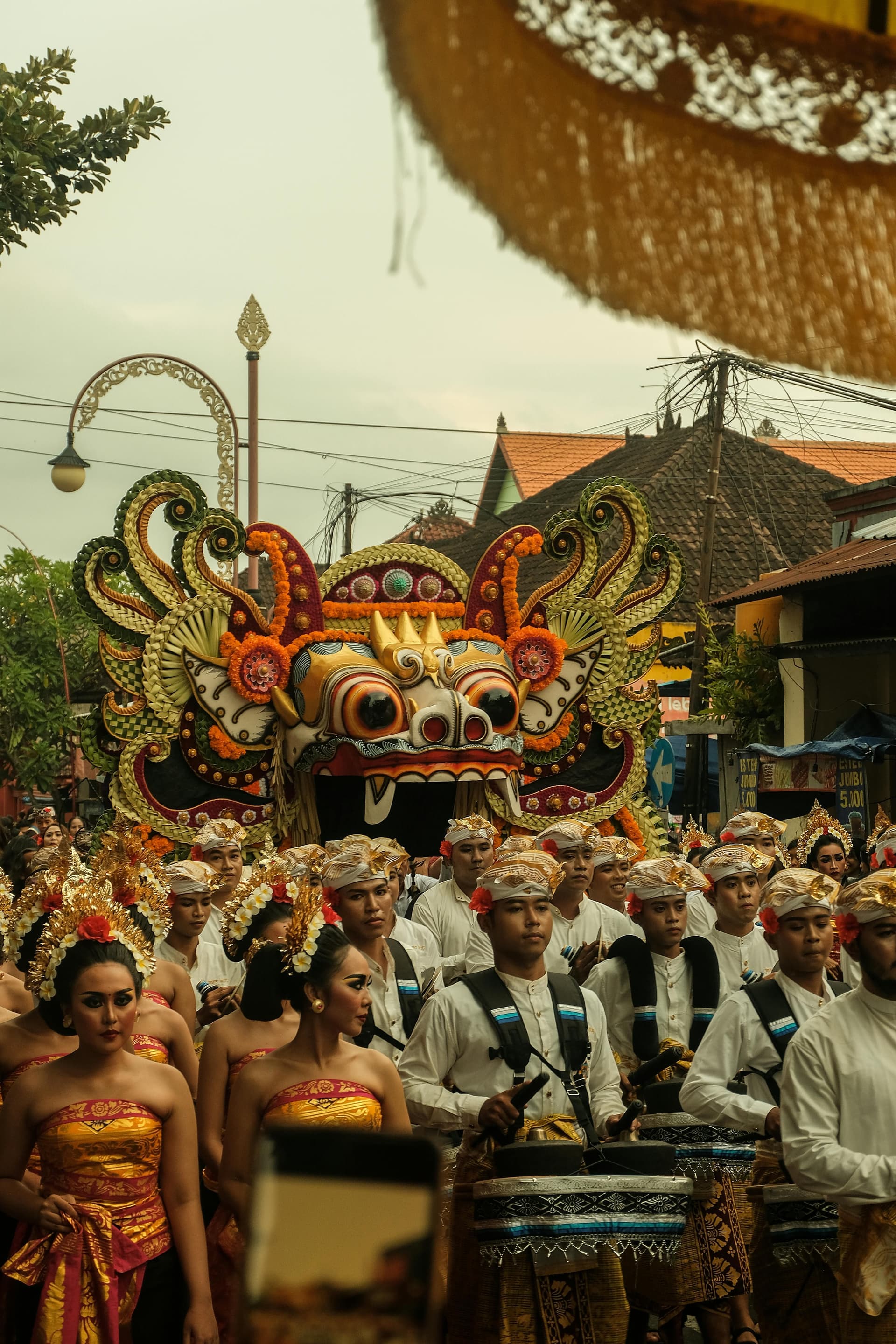
Bali culture is built on Agama Hindu Dharma — the local form of Hinduism — and the philosophy of Tri Hita Karana, which keeps people, nature and the divine in balance. You'll see this in daily palm-leaf offerings, the 210-day Pawukon ritual calendar, festival days like Nyepi and Galungan, and the temple customs around dress, behaviour and respect for sacred space.
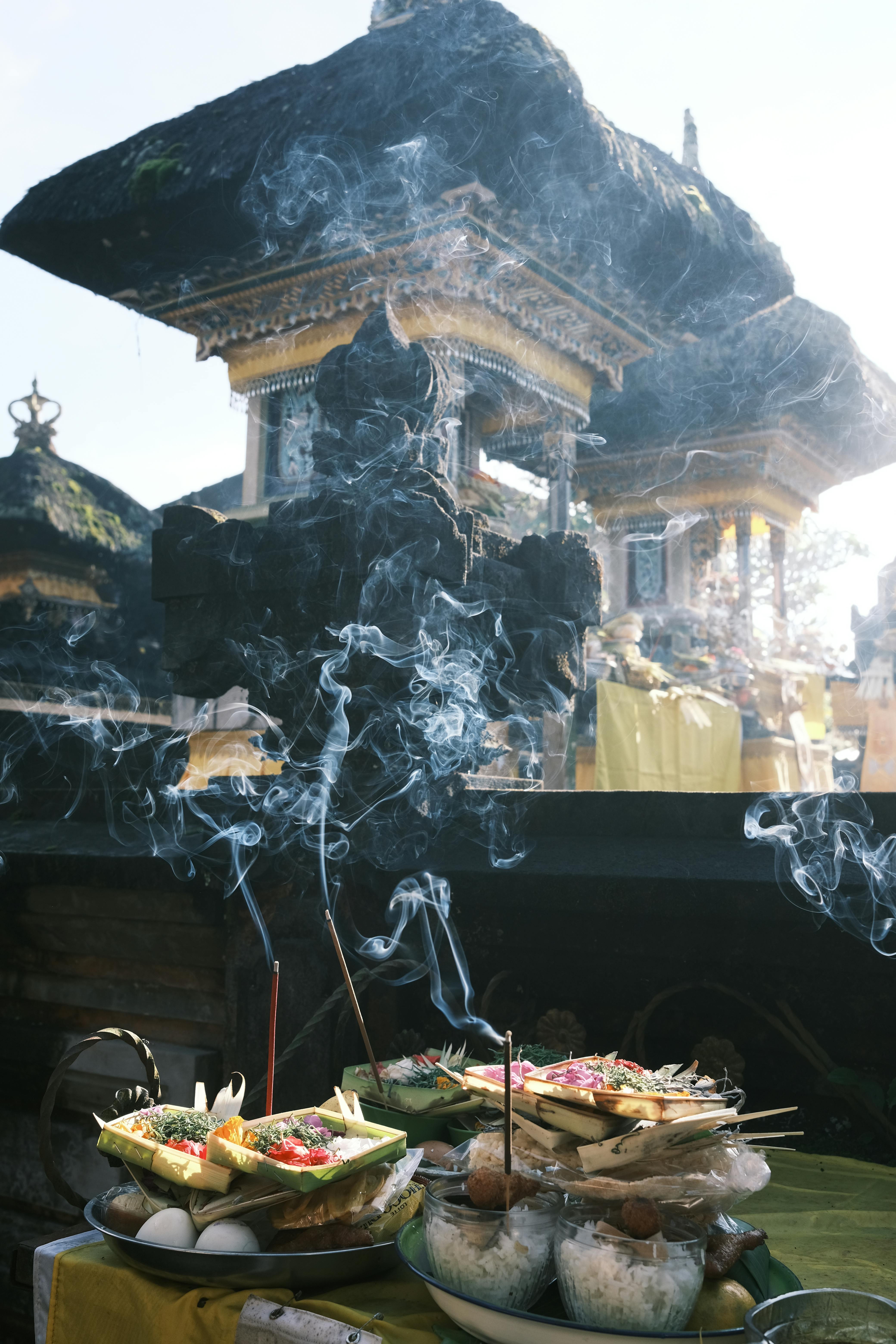
Step out of your villa in Ubud at six in the morning and you'll already see them: small palm-leaf trays of rice, frangipani and incense, placed on doorsteps, walls and scooter dashboards. These canang sari offerings are the most visible thread of Bali culture, and they appear before most visitors are awake.
Bali isn't a Hindu island that performs ceremonies for tour buses. It's a Hindu island where ceremonies are the operating system. Around 87% of the four-million-strong population practises a form of Hinduism shaped by Buddhism, Javanese influence and older animist beliefs, and the philosophy behind it touches everything from how rice is irrigated to how a village resolves a dispute.
This guide covers what every visitor should know before arriving — the religion at the heart of the island, the calendar of festivals with 2026 dates, the temple rules that catch people off-guard at the gate, and the everyday behaviours that earn respect. Travjoy's Bali experiences are vetted by local guides, so the temples, villages and shows we feature line up with these customs.
The religion at the heart of Bali culture
The religion practised by most Balinese is called Agama Hindu Dharma — a form of Hinduism that absorbed Buddhism and pre-Hindu animist beliefs over a thousand years. It's the only majority-Hindu region in Muslim-majority Indonesia, and it gives Bali its temples, festivals and daily rituals. Understanding the basics changes how you read everything you see in Bali culture.
What Balinese Hindus actually believe
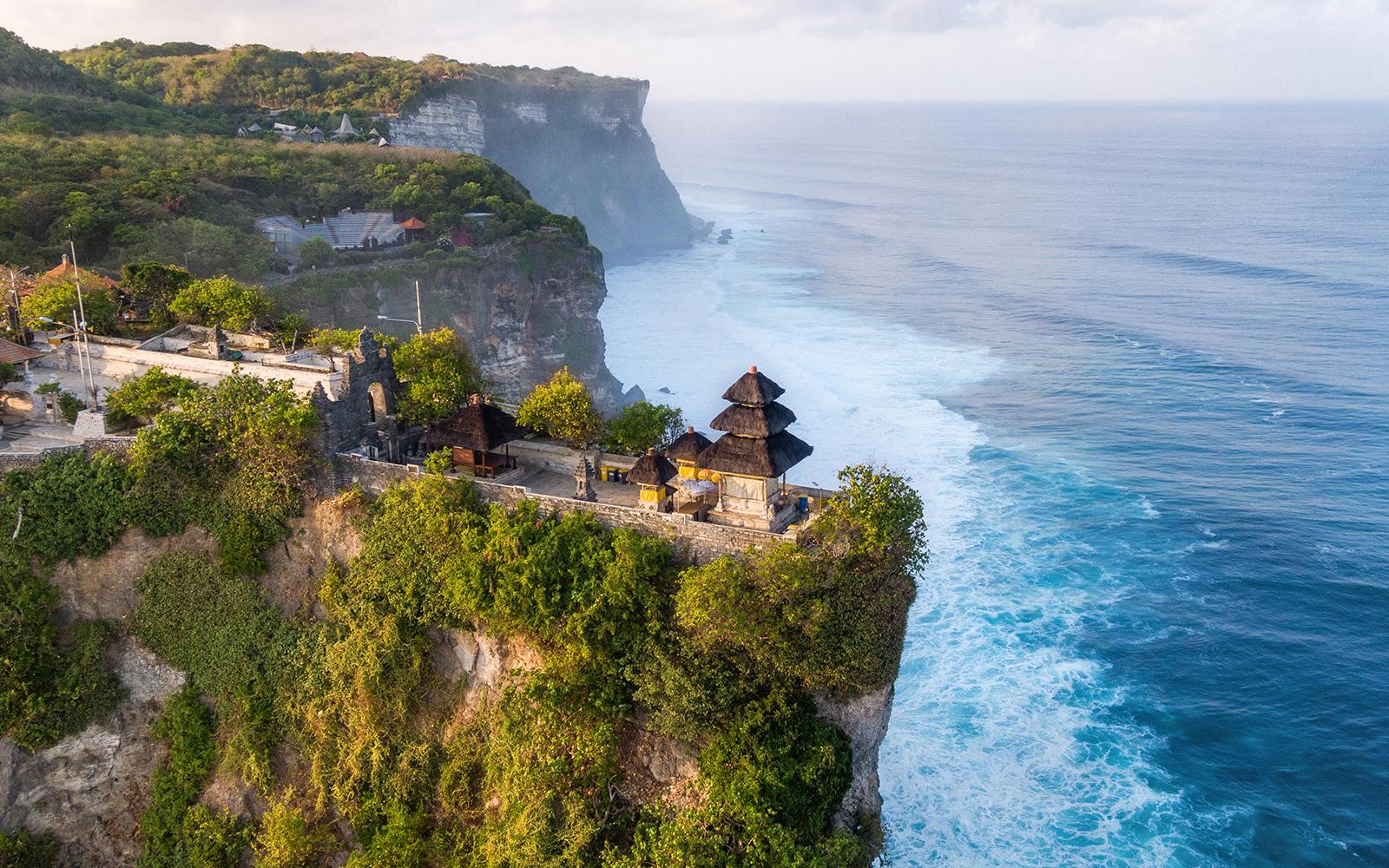
At its core, Agama Hindu Dharma recognises one supreme divine, Ida Sang Hyang Widhi Wasa, expressed through many gods, ancestors and local spirits. Mountains are associated with the divine and the sea with powerful, purifying energies — which is why temples are placed on mountain ridges, cliff tops and shorelines. The island's spatial logic follows this same axis: kaja (toward the mountain, sacred) and kelod (toward the sea).
The Balinese also speak of two parallel worlds — Sekala, the seen, and Niskala, the unseen. Daily life keeps both in balance through ritual. That's why offerings appear on dashboards, why a new building gets a blessing before it opens, and why a village priest may set the date for a wedding using calendars most outsiders never see.
Tri Hita Karana: the philosophy behind everything
If there's one phrase that opens the rest of Bali culture, it's Tri Hita Karana — Sanskrit for "the three causes of well-being". The principle states that prosperity and harmony rest on three relationships:
- Parahyangan — harmony between people and the divine, expressed through rituals, temples and offerings
- Pawongan — harmony between people, expressed through family, banjar and community ties
- Palemahan — harmony between people and nature, expressed through farming, water sharing and respect for the land
You can see it in the layout of a family compound (a temple at the most sacred corner, living quarters in the middle, kitchen toward the back), in the way villages organise mutual aid, and in the Subak rice-irrigation system that UNESCO recognised as a cultural landscape in 2012. You can read the principle on the Wikipedia entry on Tri Hita Karana, but you'll see it more clearly in any rice terrace at sunrise.
Other religions on the island
Bali isn't only Hindu. Around 10–13% of the population follows Islam, with smaller Christian, Buddhist and Confucian communities, especially in coastal towns and Denpasar. Indonesia recognises six official religions, and you'll see this reflected in mosques, churches and Chinese temples sitting alongside Hindu pura. The dominant culture you encounter, though, is Hindu — that's the one shaping everyday rituals.
Daily rituals and offerings you'll see everywhere
Daily offerings are how the abstract philosophy of Tri Hita Karana shows up in real life. Walk anywhere in Bali at any time of day and you'll see them: small woven baskets, a few flower petals, a stick of incense, sometimes a sweet or a coin. The Balinese place them several times a day to keep peace between the seen and unseen worlds — and visitors who don't know what they are tend to step on them without realising.
Canang sari: the offering you'll see most
The most common offering is the canang sari, a small palm-leaf tray with flowers laid out by colour and direction. Each colour represents a god — white for Iswara (east), red for Brahma (south), yellow for Mahadeva (west), and blue or green for Vishnu (north). Families make or buy hundreds a week. After the offering is "given" to the gods through prayer and incense, the physical leaf is left in place; what matters spiritually has already been received.
- Where you'll see them: doorsteps, shop entrances, household shrines, scooter dashboards, taxi rear-view mirrors, the bow of a fishing boat
- When: typically morning and again in the afternoon
- Cost to a Balinese household: a meaningful slice of monthly income — much of it spent on flowers and incense
The big rule: don't step on offerings
The single most common mistake visitors make is stepping on a canang sari left on the pavement. Once the offering is placed, the spiritual act is complete — but the physical tray still represents the act, and stepping on it reads as careless at best, disrespectful at worst. Walk around them. If you accidentally step on one, no one will scold you, but a quiet apology and a respectful detour next time goes a long way.
Household shrines and family compounds
Most Balinese live in family compounds — walled clusters of pavilions arranged around a courtyard, with a family temple in the most sacred corner (toward the mountain). You'll see this layout everywhere outside the resort strips of Seminyak and Canggu. Ceremonies often happen at home rather than at a public temple, which is why even quiet residential streets sometimes echo with gamelan music in the early evening.
The festivals that shape the Balinese year
Bali runs on two calendars. The Pawukon calendar is a 210-day cycle inherited from Java; the Saka calendar is a 354-day lunar one shared with Indian Hinduism. Major festival dates rotate against the Gregorian calendar each year, which is why your travel timing matters — and why "when is Galungan?" needs the year added before it can be answered.
Nyepi — Bali's Day of Silence
Nyepi marks the Saka new year and is the most visible religious day of the year for visitors. In 2026, it falls on Thursday, 19 March. For 24 hours, from 6 am to 6 am the next morning, the entire island shuts down: no flights in or out of Ngurah Rai airport, no traffic on the streets, no lights at night, no work, no entertainment. Even tourists are expected to stay inside their hotels or villas.
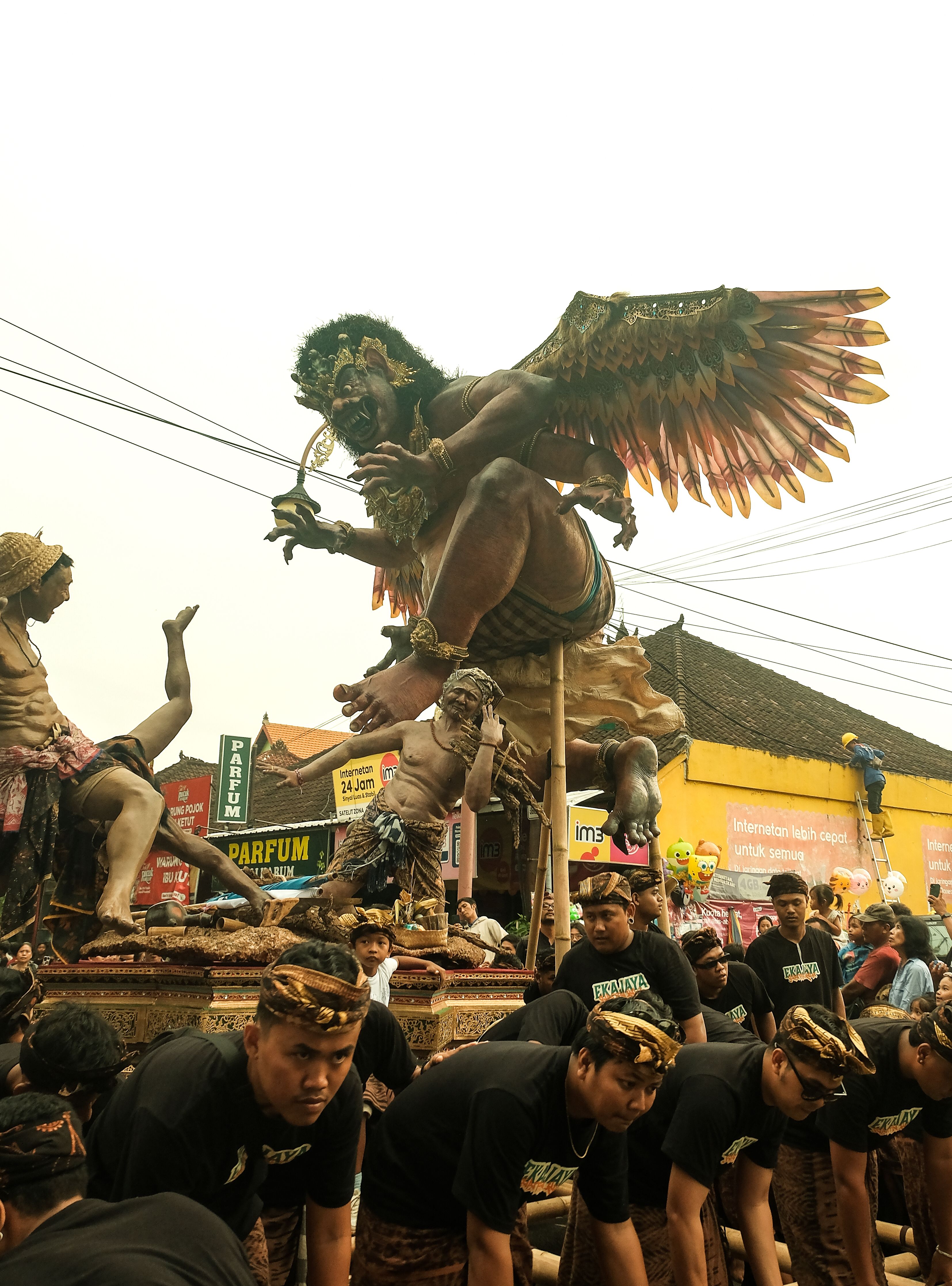
- Date in 2026: 19 March (with the wild Ogoh-Ogoh parades on the evening of 18 March)
- What's allowed: staying within your accommodation, dim lights, quiet conversation, hotel pools, room service
- What's not: leaving the property, visible lights from outside, swimming visible to the street, drone flights, loud music
- Date in 2027: 9 March
Most travellers find Nyepi unforgettable rather than restrictive. Hotels offer special menus, yoga sessions and meditation classes, and the night sky over Bali — with all light pollution gone — is one of the few you'll ever see this clearly.
Galungan and Kuningan
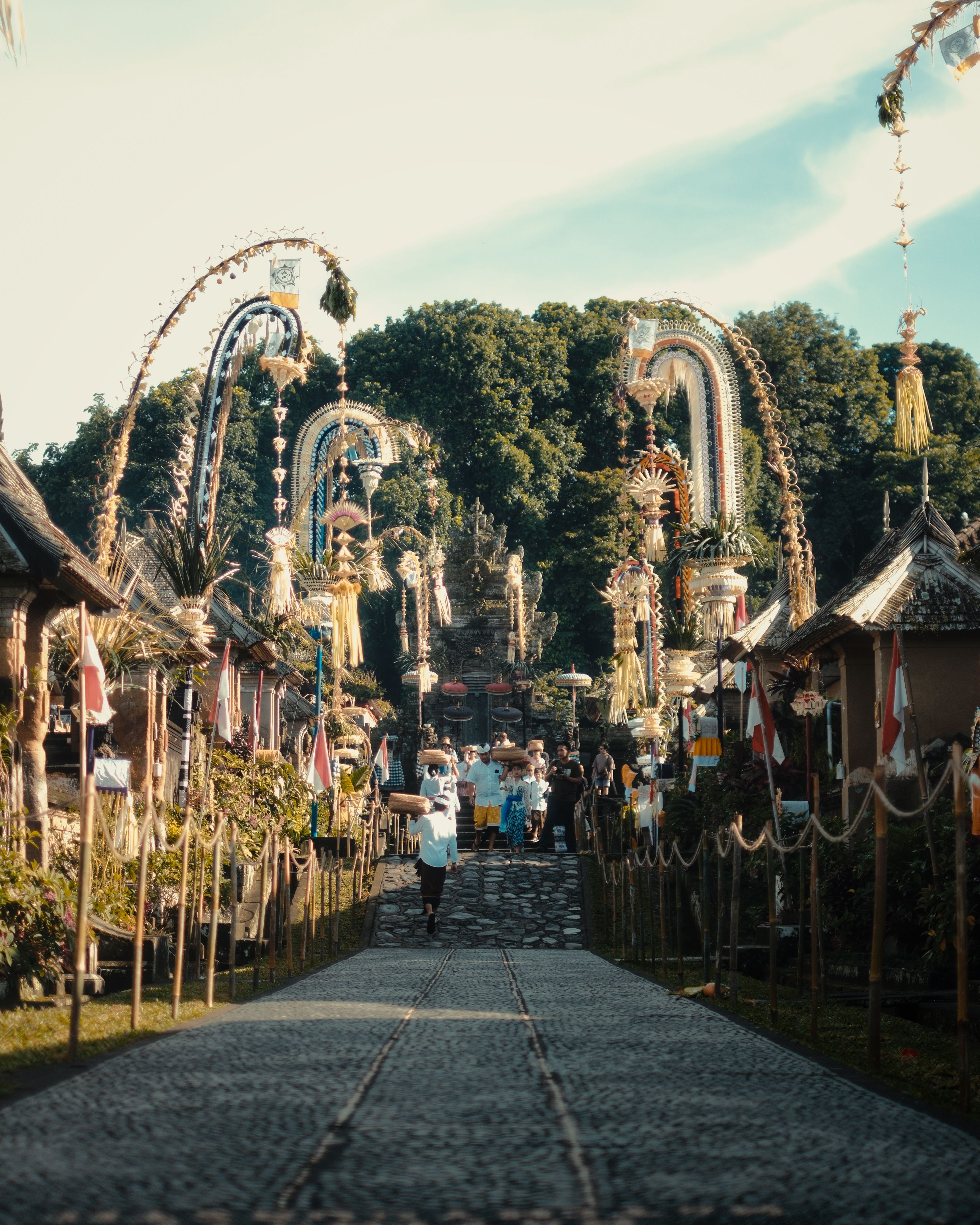
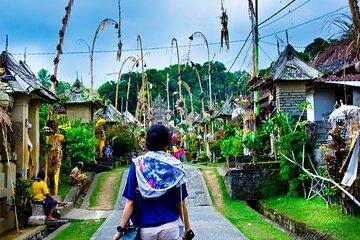
Galungan celebrates the victory of dharma (good) over adharma (evil) and the return of ancestral spirits to family homes. Streets are lined with penjor — tall, gracefully arched bamboo poles decorated with palm leaves, fruits and rice — for ten days. Families dress in traditional attire and visit temples with elaborate offerings. Kuningan, ten days later, marks the spirits' return to the heavens with offerings of yellow rice.
- Galungan 2026: 17 June
- Kuningan 2026: 27 June
- What you'll see: penjor poles on every village road, families in white kebaya and udeng, processions to the village temple
- Travel impact: minimal disruption, but accommodation in rural areas can fill up
Other days worth knowing
- Saraswati Day (4 April 2026): honouring the goddess of knowledge; books and learning tools are blessed at home and at school
- Pagerwesi (8 April 2026): "iron fence" — a day of spiritual protection and self-fortification
- Tumpek Landep (18 April 2026): blessings for metal objects and vehicles — you may see your hire-scooter blessed
- Tumpek Uduh (23 May 2026): honouring plants and trees
- Odalan: each temple's anniversary, celebrated every 210 days — at any time of year, somewhere on the island, an odalan is happening
If your trip lines up with one of these, ask your hotel or local guide whether you can observe respectfully. Most ceremonies welcome polite onlookers in the outer courtyards. The Travjoy team can match your visit to a nearby village temple for the day.





Temple etiquette: dress, behaviour and the rules that surprise visitors
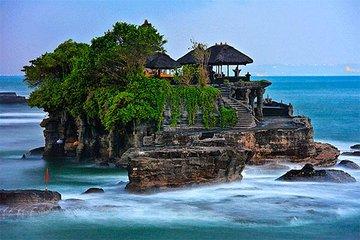
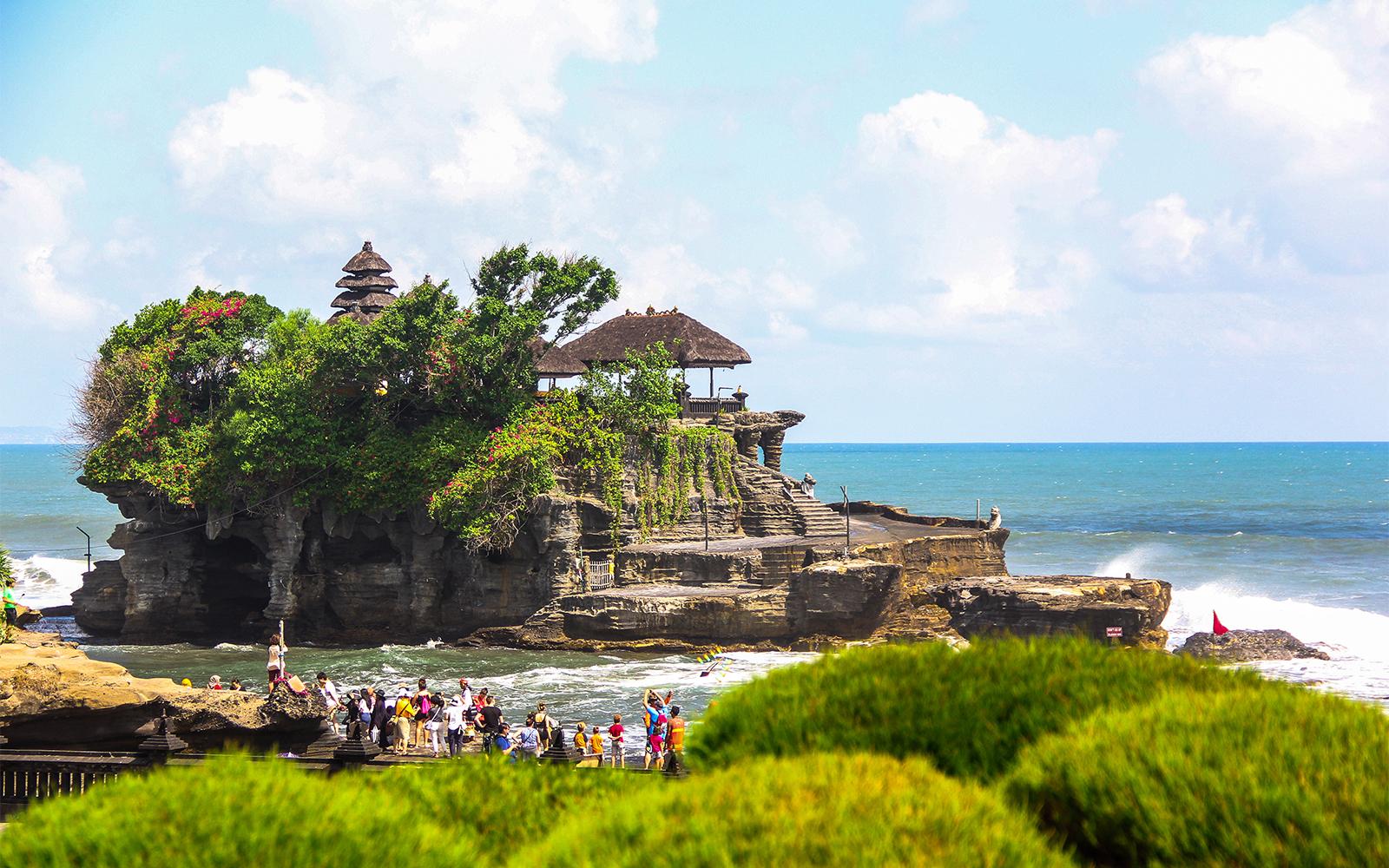
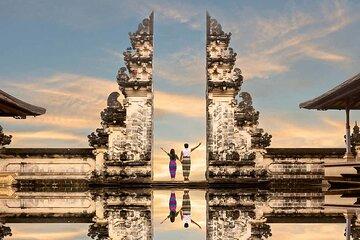
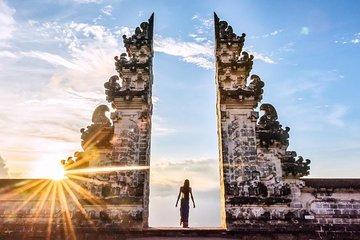
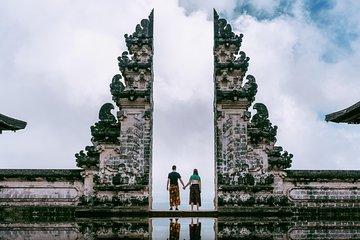
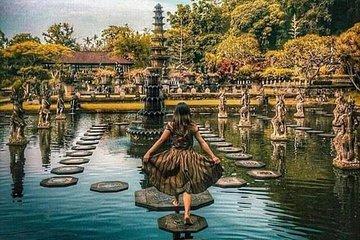
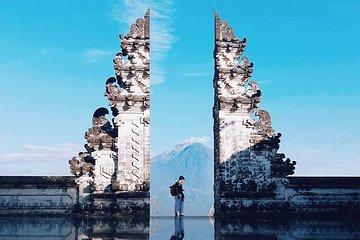
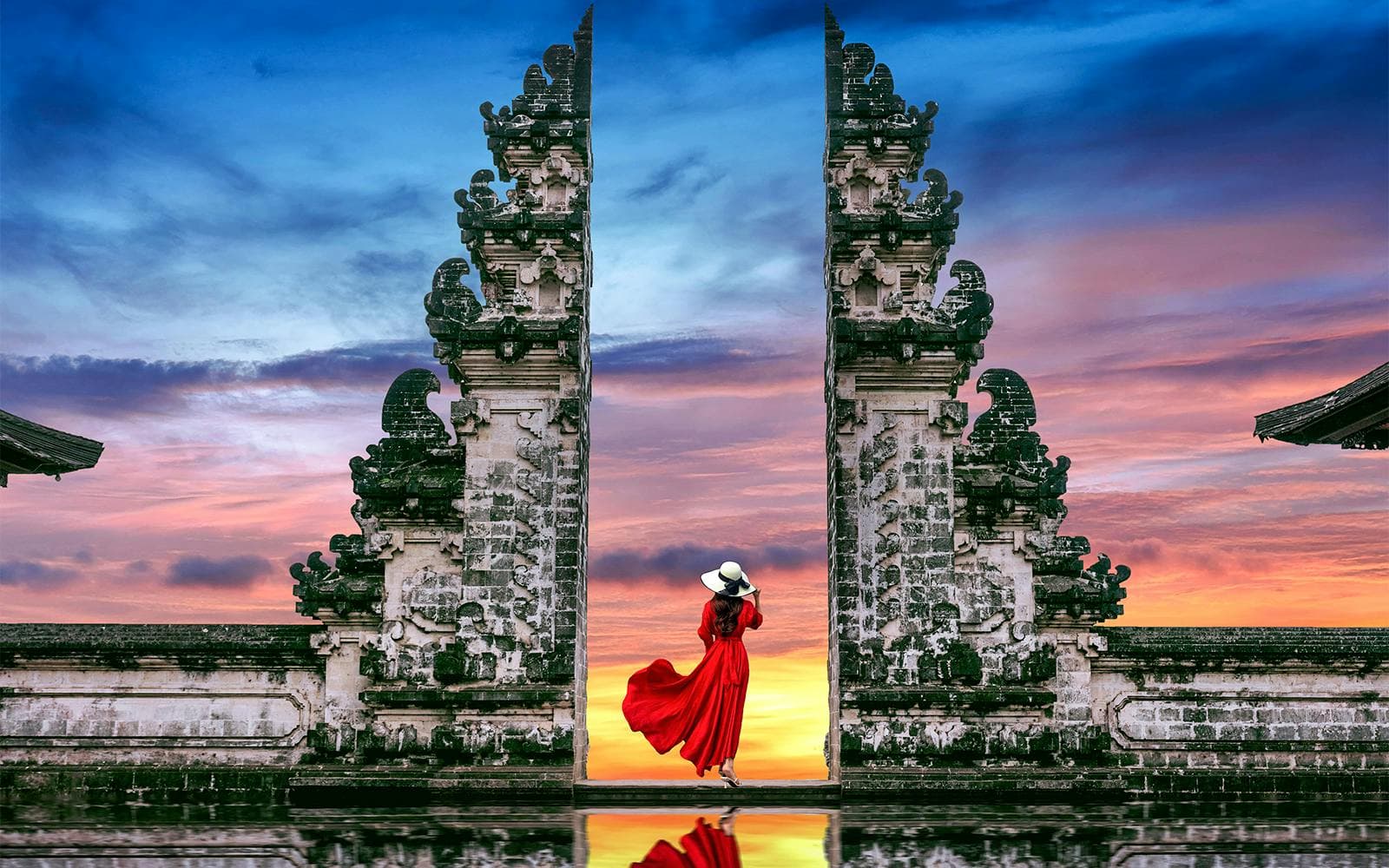
To enter a Balinese temple, both men and women must wear a sarong over the legs and a sash tied at the waist. Shoulders should be covered. Most major temples — including Tanah Lot, Besakih and Tirta Empul — rent or include a sarong with the entry fee. Beyond clothing, several rules surprise first-time visitors and are worth knowing before you arrive at the gate.
What to wear
- Sarong (kain kamben): wraps the lower body, covers below the knees
- Sash (selendang): tied at the waist over the sarong
- Top: covered shoulders — t-shirt, blouse or kebaya; no tank tops, no swimwear
- Footwear: usually fine; remove shoes if signage indicates, especially in inner sanctums
- Hire cost at temple gates: typically IDR 10,000–20,000 (around USD 0.65–1.30) per sarong
Carrying your own sarong is the easiest fix. You can buy one from any market for IDR 50,000–100,000 (USD 3–6) and use it as a beach wrap and picnic cloth too.
The menstruation rule (and why it exists)
Balinese custom asks women who are menstruating, more than seven months pregnant, or within six weeks of giving birth not to enter inner temple courtyards. The belief is rooted in the concept of cuntaka — a state of ritual impurity tied to bodily fluids and major life transitions, not a moral judgement. It's not always policed at the gate, but signs at the entrance often state it plainly. Some temple staff will ask directly. The respectful response is honest acknowledgement; you can usually still enjoy outer courtyards, gardens and architecture without entering the inner sanctum.
Behaviour inside the temple
- Don't sit higher than the priest, the offerings, or anyone praying. Find a low step or kneel.
- Never point your feet at the altar. Sit cross-legged or kneel; raised feet are seen as disrespectful.
- The head is sacred — don't pat children on the head, even affectionately.
- No drone flights over temples; this is now signposted at most major sites.
- Photography is fine in outer courtyards, but never use flash during ceremonies, never stand in front of someone praying, and ask before close-ups of priests or worshippers.
- Donations are not always required, but appreciated. IDR 10,000–50,000 (USD 0.65–3.20) is typical at smaller temples.
The three courtyards
A typical Balinese temple has three nested zones: the nista mandala (outer courtyard, open to all), the madya mandala (middle, used for preparations), and the utama mandala (innermost and most sacred, usually reserved for active worshippers). As a visitor, you're welcome in the first two, and often the third when no ceremony is in progress — follow signage and your guide's lead.
Life-cycle ceremonies and community customs
Balinese life is shaped by a sequence of ceremonies — known collectively as Manusa Yadnya — that mark every major transition from birth to death. Most visitors won't attend these, but you'll see traces everywhere: the tiered offering platforms outside a home, the rumble of gamelan from a side street, the quiet white-clad procession to the sea before a cremation.
The arc of a Balinese life
- Birth and the 105-day ceremony (Nyabutan): a child's feet first touch the ground at 105 days, marking the start of life as a social being
- Otonan: a "birthday" celebrated every 210 days according to the Pawukon calendar — most Balinese have many otonans before their first Western birthday
- Mepandes (tooth filing): a coming-of-age rite where the canine and front teeth are symbolically smoothed to dampen the six negative emotions — anger, lust, greed, jealousy, intoxication and confusion
- Pawiwahan (marriage): a multi-day ceremony binding a couple before gods, ancestors and the community
- Ngaben (cremation): the most public ceremony, often involving towering bamboo bull effigies, processions to the cremation ground and the release of the soul through fire — communities sometimes wait years to consolidate cremations into one large ceremony
Cremation processions are openly held and often pass through residential streets. If you encounter one, stand back, lower your voice, never block the path, and ask before taking photographs. The mood is rarely sombre — Balinese cremation is treated as a release rather than a loss.
Banjar: the village within the village
The smallest unit of Balinese community life is the banjar, a neighbourhood association that organises ceremonies, security, marriages and cremations. Every Balinese is born into one. If you see a group of men gathered in a roofed pavilion (the bale banjar) on weekday evenings, that's a banjar meeting — a working democracy quietly underwriting island-wide harmony. The principle of gotong royong (mutual aid) keeps it running: when one family has a wedding or cremation, the whole banjar shows up.
Subak: the rice fields as ritual
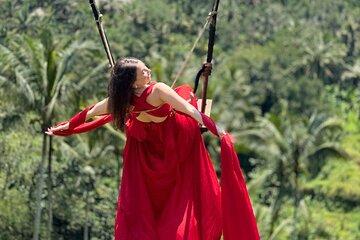
The terraced rice paddies you see at Tegalalang and Jatiluwih aren't only beautiful — they're the surface of a thousand-year-old water-sharing system called Subak. Each Subak is a democratic association of farmers, with its own water temples and priests, distributing irrigation by ritual schedule. UNESCO inscribed the Subak landscape on its list of cultural heritage sites in 2012, recognising it as a working application of Tri Hita Karana — harmony between people, nature and the divine, made of rice. You can read more on the UNESCO listing for the cultural landscape of Bali Province.
Art, dance and music as living devotion
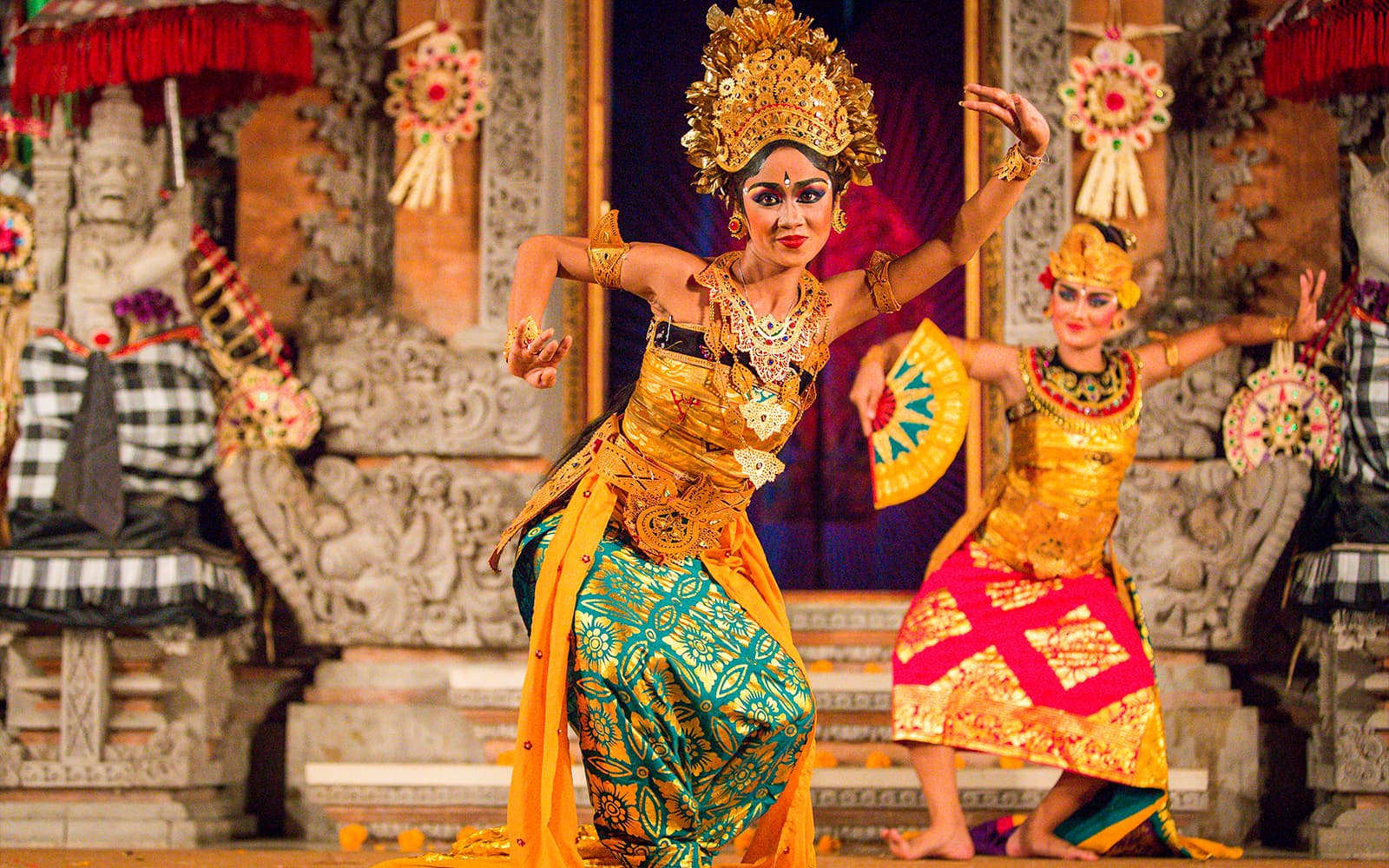
Most Balinese art exists for ritual rather than decoration. Dance retells Hindu epics, gamelan music opens temple ceremonies, masks carry sacred power, and stone carving turns temple walls into illustrated theology. Travjoy's Bali experiences route visitors to performances that the local community itself recognises as authentic — including those run inside temple complexes, not only those staged for tourism.
The dances you're most likely to see
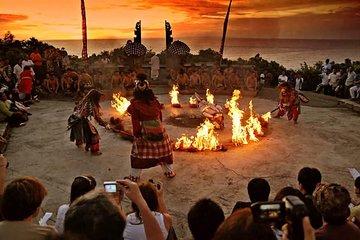
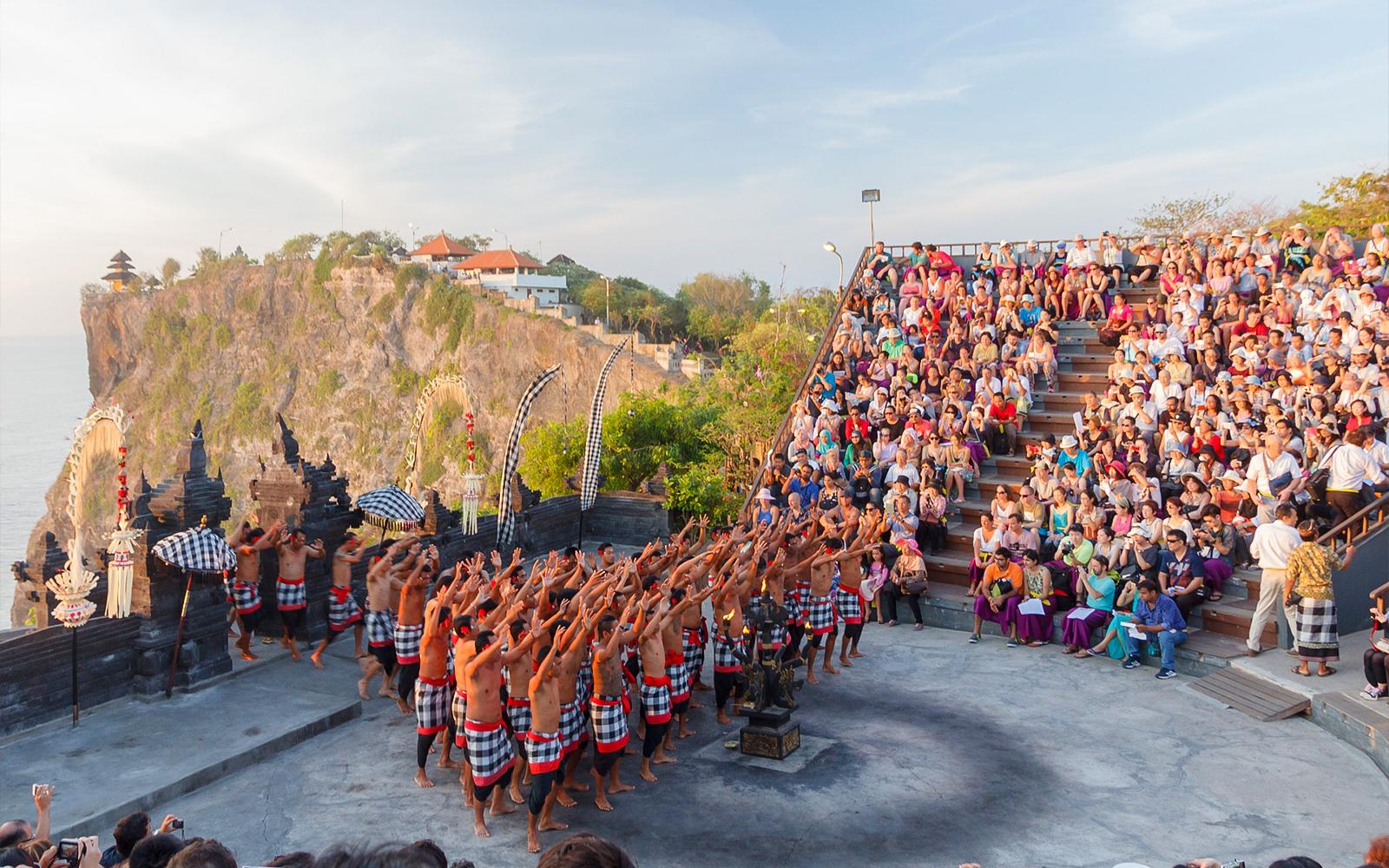
- Kecak — a circle of 70 or more men chanting "cak-cak-cak" rhythmically while dancers retell parts of the Ramayana. The most famous Kecak performance is at Uluwatu Temple at sunset, with the Indian Ocean as the backdrop. Tickets typically run IDR 150,000 (around USD 9.70).
- Legong — a refined court dance traditionally performed by young girls, with intricate finger and eye movements. Often staged in Ubud's palace courtyards.
- Barong — a masked dance dramatising the eternal balance between Barong (a benevolent lion-like spirit) and Rangda (a fearsome witch). The masks are treated as sacred and are blessed regularly.
Gamelan and the sound of Bali
The metallic, layered music you hear at temples and dance shows is gamelan — an ensemble of bronze metallophones, drums, gongs and bamboo flutes. Each village banjar typically has its own gamelan set, treated as community property with spiritual weight. If you visit a temple during ceremony, the gamelan you hear isn't a performance — it's the soundtrack to live worship.
Carving, weaving and the village artisans
Mas is famous for wood carving, Celuk for silverwork, Batuan for painting, and Tenganan for the rare double-ikat geringsing textile, woven only in this one village. Many of these crafts are taught informally inside the family compound — children pick them up the way other children pick up languages. See Travjoy's top-20 picks for Bali for villages and workshops where you can watch (and try) these crafts in person.
Bali culture do's and don'ts for respectful visitors
Most missteps in Bali culture aren't religious — they're behavioural. Knowing a handful of small customs around the head, the left hand, public dress and bartering will make every interaction smoother, and most Balinese will appreciate the effort visibly.
Greetings
- "Om Swastiastu" — the traditional Balinese Hindu greeting, said with palms together at chest height (the sembah). Used among Balinese, especially when entering a home.
- "Selamat pagi / siang / sore / malam" — Indonesian for good morning, midday, afternoon, evening. Useful with anyone.
- A smile — easily the most effective opener. The Balinese connect through smiling more than handshakes.
Hands, feet and pointing
- Use your right hand for giving and receiving — money, food, gifts. The left hand is reserved for personal hygiene and avoided in social exchange.
- Don't point with your index finger. Use your right thumb with fingers folded, or gesture with an open palm.
- Don't touch anyone's head, including children. The head is the most sacred part of the body.
- Avoid showing the soles of your feet when seated near someone or in a temple.
Dress, photography and small social cues
- Bali is more conservative than the resort strips suggest. Cover up between Kuta and your hotel — walking shirtless or in a bikini through a residential village reads as careless.
- Ask before photographing a person, a ceremony or inside a home compound.
- Bartering is expected at markets and roadside stalls, never in supermarkets, restaurants or fixed-price stores. Open at around half the asking price and settle around 60–70%.
- Tipping isn't expected but is appreciated. Many restaurants add a 10–15% service charge — that's usually enough.
- Public displays of affection, anger and loud arguments are all frowned on. The cultural ideal is composure — losing your temper is described as "losing face".
If you encounter a procession
- Stop or pull over — never drive through the line.
- Stand back, lower your voice, remove your hat or cap.
- Don't take close-up photos without asking.
- If invited to walk along the edge, accept quietly and follow the lead of locals around you.
Plan a Bali trip that reads the island clearly
Bali culture rewards visitors who arrive informed. Knowing the religion, the calendar, the temple rules and the everyday customs turns a stay from poolside into something closer to participation — and it changes how locals respond to you in markets, at temple gates and in passing on a quiet village road. The island is generous to respectful guests.
Travel timing matters too. Arrive on Nyepi and you'll spend a day in your villa; arrive during Galungan and you'll see Bali at its most decorated and most communal. Both can be memorable, for opposite reasons. Bali culture doesn't pause for tourism — it moves to its own calendar — and matching your trip to it is the difference between watching from outside and stepping in.
Start planning your Bali trip on Travjoy's Bali destination page. The temples, villages, dance shows and cultural experiences featured there have been checked by local guides, so you can choose with confidence and skip the noise.


.svg&w=1920&q=75)