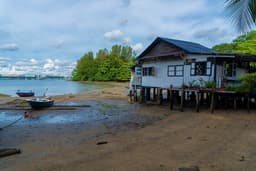



Singapore: Sungei Buloh Wetland Reserve
Operating Hours:Monday – Sunday: 07:00 - 19:00
The Vibe:Wild mangroves, birdsong, and a world apart 🐦
Singapore’s first wetland reserve, this quiet mangrove sanctuary draws migratory birds from thousands of miles away. Far from the city’s bustle, it's a living tapestry of mudflats, mangroves, and marshes.
The air hums with cicadas and bird calls as you tiptoe along wooden boardwalks. Mudskippers splash in the shallows, mangrove leaves rustle, and distant herons break the silence.
- Recognized as Singapore’s first ASEAN Heritage Park.
- Designated a wetland of international importance (Ramsar site).
- Visitors praise its biodiversity and peaceful trails, calling it a hidden wild gem in the city.
Persona Fit
- Families: Flat trails and fun wildlife sightings keep kids engaged.
- Couples: Quiet, scenic walk for nature-loving pairs away from crowds.
- Seniors: Gentle walking routes with plenty of benches and shelters to rest.
- Photographers: Rich birdlife and macro subjects – a telephoto lens paradise.
Highlights
- Mangrove Boardwalks — elevated paths through dense mangrove forests alive with crabs and mudskippers.
- Bird Observation Hides — camouflaged shelters to quietly watch herons, egrets, and migratory shorebirds up close.
- Coastal Trail to Eagle Point — scenic path to a lookout over the water, where you might spot crocodiles or otters.
- Junior Wetland & Pods — family-friendly trail with viewing pods like the Kingfisher Pod for unobstructed nature views.
- Migratory Bird Season (Sep–Mar) — witness flocks of visiting shorebirds stopping over on their global journey — Hidden Gem

Adeline Ee
Our Singapore Local Expert
Table of Contents
Things To Do Nearby
Kranji Marshes — another nature spot nearby known for freshwater marsh birds, great for birdwatching.
Bollywood Veggies — an organic farm and bistro a short drive away, perfect for a rustic meal after your hike.
Kranji Marshes — another nature spot nearby known for freshwater marsh birds, great for birdwatching.
Bollywood Veggies — an organic farm and bistro a short drive away, perfect for a rustic meal after your hike.
TJ's Guide - Sungei Buloh Wetland Reserve
Know Before You Go
Insider Tips
• Best time: Early morning (around 7–8am) is coolest and when wildlife is most active. Late afternoon (4–6pm) is also pleasant, but note the reserve closes at 7pm.
• Bring insect repellent and water. The trails go through mangroves (mosquitoes) and there are no shops inside.
• Check tidal times if you’re keen on shorebirds – low tide exposes mudflats where birds feed in large numbers.
• Weekdays are generally quieter than weekends, offering a more serene experience on the trails.
• Best time: Early morning (around 7–8am) is coolest and when wildlife is most active. Late afternoon (4–6pm) is also pleasant, but note the reserve closes at 7pm.
• Bring insect repellent and water. The trails go through mangroves (mosquitoes) and there are no shops inside.
• Check tidal times if you’re keen on shorebirds – low tide exposes mudflats where birds feed in large numbers.
• Weekdays are generally quieter than weekends, offering a more serene experience on the trails.
Know Your Facts
- • Public transport: From Kranji MRT (North-South Line), take Bus 925 on weekdays (925M on Sundays/public holidays) to the reserve. Note: Bus service is limited, especially on Sundays.
- • Driving: There are free car parks at both the Visitor Centre (Kranji Way entrance) and Wetland Centre (Neo Tiew Crescent entrance). Both have ample parking and bike racks.
- • Entrances: First-timers should start at the Visitor Centre entrance (60 Kranji Way) – it has maps, toilets, and the main trails. Another entrance at Neo Tiew has additional trails and hides.
- • Navigation: Grab a free map at the Visitor Centre. Trail signposts and maps are posted throughout the reserve to guide you.
Once You Reach
Internal Navigation
• Trails: The reserve has multiple clearly marked trails – Coastal Trail, Forest Trail, Migratory Bird Trail – each with signboards and distance markers.
• Map: A large map board at the Visitor Centre outlines all routes. The trails form loops that bring you back to the start; follow the arrows and stick to boardwalks to avoid muddy areas.
• Hides & Towers: Look out for signposts to hides (numbered e.g. Hide 1A, 1B) and the Aerie Tower. These side paths are worth the detour for wildlife viewing.
• Safety: Some boardwalk sections may be slippery when wet – walk carefully and hold the railings. During thunderstorms, seek shelter (there are basic shelters along trails).
• Accessibility: The main Mangrove Boardwalk near the Visitor Centre is wheelchair- and stroller-friendly. Other trails are packed earth and may be uneven, but many are accessible with some assistance.
Food & Coffee Shops
• No eateries inside the reserve – bring your own snacks. Picnic tables are near the Visitor Centre where you can rest and snack before/after your walk.
• For a meal or coffee after visiting, head to nearby Kranji Countryside farms: Bollywood Veggies bistro offers farm-to-table meals, or try a refreshing coconut at a farm cafe.
• No eateries inside the reserve – bring your own snacks. Picnic tables are near the Visitor Centre where you can rest and snack before/after your walk.
• For a meal or coffee after visiting, head to nearby Kranji Countryside farms: Bollywood Veggies bistro offers farm-to-table meals, or try a refreshing coconut at a farm cafe.
Photography Tips
• Use a zoom/telephoto lens (300mm or more) for bird and wildlife shots from the hides or boardwalks.
• Early morning light or golden hour provides the best lighting and more animal activity for photos.
• Be patient and quiet in hides; set up your camera and wait – sudden movements or noise can scare off wildlife.
• Carry a plastic bag or rain cover for your gear in case of sudden rain (common in the tropics).
• Use a zoom/telephoto lens (300mm or more) for bird and wildlife shots from the hides or boardwalks.
• Early morning light or golden hour provides the best lighting and more animal activity for photos.
• Be patient and quiet in hides; set up your camera and wait – sudden movements or noise can scare off wildlife.
• Carry a plastic bag or rain cover for your gear in case of sudden rain (common in the tropics).
Explore Deeper
Sungei Buloh offers a rare glimpse of Singapore’s wild side. Its mangroves and mudflats are not just scenic—they support a delicate ecosystem and global migratory bird routes, making it a living outdoor laboratory.
• Opened in 1993 and gazetted as a Nature Reserve in 2002, it was Singapore’s first protected wetland area.
• Spanning 202 hectares, it encompasses mangroves, ponds, and mudflats
about 280 football fields of vital habitat.
• It lies on the East Asian–Australasian Flyway, a major migration corridor. Birds from as far as Siberia and Alaska stop here en route to Australia and New Zealand.
• The mangrove forests act as nurseries for fish and crabs and help protect the coastline by absorbing wave energy.
• The reserve is home to uncommon creatures like the smooth-coated otter and the prehistoric-looking horseshoe crab, highlighting the surprising biodiversity in urban Singapore.
• Opened in 1993 and gazetted as a Nature Reserve in 2002, it was Singapore’s first protected wetland area.
• Spanning 202 hectares, it encompasses mangroves, ponds, and mudflats
about 280 football fields of vital habitat.
• It lies on the East Asian–Australasian Flyway, a major migration corridor. Birds from as far as Siberia and Alaska stop here en route to Australia and New Zealand.
• The mangrove forests act as nurseries for fish and crabs and help protect the coastline by absorbing wave energy.
• The reserve is home to uncommon creatures like the smooth-coated otter and the prehistoric-looking horseshoe crab, highlighting the surprising biodiversity in urban Singapore.
Did You Know?
• Crocodile Comeback - Estuarine crocodiles, once thought absent in Singapore, naturally returned to Sungei Buloh in the 1980s and have since thrived as apex predators here.
• Migratory Marathon - Some bird species that visit (like the Arctic tern) migrate over 20,000 km each year, using wetlands like this as rest stops.
• Name Origin - “Sungei Buloh” means “Bamboo River” in Malay, named after the bamboo groves that once grew along its riverbanks.
• Sister Wetlands - Sungei Buloh is 'twinned' with Hong Kong’s Mai Po Reserve in a partnership to share conservation knowledge between two important Asian wetlands.