

Singapore: Kampong Buangkok
Operating Hours:Daily: Open 24 hours
The Vibe:A living time capsule of old Singapore.
In bustling Singapore, a tiny village holds on to a simpler past. This last surviving kampong stands quietly amid modern high-rises, preserving a way of life nearly lost.
Breeze rustles through coconut palms and zinc roofs, chickens cluck freely, and neighbors chat leisurely across open doorways. The city’s hum fades, replaced by a calm, bygone rhythm.
- Only surviving kampong (village) on mainland Singapore
- Featured by BBC & local media for its nostalgic charm
- Visitors praise its 'time capsule' atmosphere 🕰️
Fit For
- 👨👩👧 Families: Educational peek into old Singapore; kids can try traditional games in the open.
- 💕 Couples: Quiet strolls together through a simpler world, away from city bustle.
- 👵 Seniors: Nostalgic atmosphere reminiscent of their youth; flat paths for an easy walk.
- 📸 Photographers: Rustic wooden huts against modern flats make striking contrast shots.
Highlights
- Wooden zinc-roof houses — glimpse how Singaporeans lived in the 1950s
- Kampong spirit lifestyle — open doors, friendly chats, and a close-knit community
- Old-school details — overhead power lines and vintage street signs frozen in time
- Free-roaming chickens and lush gardens — Hidden Gem
1 Booking Option
Curated by AI, handpicked by local expert
Starts From
(Per Person)
Singapore Local Expert

Adeline Ee
Table of Contents
Things To Do Nearby
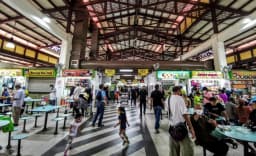
Kovan Market & Food Centre – authentic hawker eats at a lively neighborhood market, just a short ride away
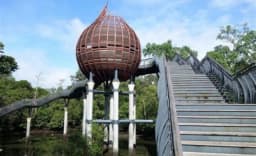
Sengkang Riverside Park – green parkland and a wetland boardwalk for a relaxing nature stroll nearby
Kovan Market & Food Centre – authentic hawker eats at a lively neighborhood market, just a short ride away
Sengkang Riverside Park – green parkland and a wetland boardwalk for a relaxing nature stroll nearby
TJ's Guide - Kampong Buangkok
Know Before You Go
Insider Tips
• Best Time: Visit in the morning or late afternoon for cooler weather. Avoid nighttime visits (the kampong is very dark after sundown).
• Respect: This is a living village. Keep noise down, don’t litter, and always ask for permission before photographing people or homes.
• Guided Tours: Going with a guide is recommended – you’ll hear stories and may be welcomed into a home (solo visitors should remain outside houses).
• Comfort: Wear covered shoes for uneven paths (which can get muddy). Bring insect repellent and water, as there are no facilities on-site.
• Best Time: Visit in the morning or late afternoon for cooler weather. Avoid nighttime visits (the kampong is very dark after sundown).
• Respect: This is a living village. Keep noise down, don’t litter, and always ask for permission before photographing people or homes.
• Guided Tours: Going with a guide is recommended – you’ll hear stories and may be welcomed into a home (solo visitors should remain outside houses).
• Comfort: Wear covered shoes for uneven paths (which can get muddy). Bring insect repellent and water, as there are no facilities on-site.
Know Your Facts
- • Public Transport: From Serangoon MRT, take Bus 70 or 103 and alight at ‘Opp St. Vincent de Paul Church’ on Yio Chu Kang Rd. Walk 3 minutes to the kampong entrance.
- • Taxi/Rideshare: Set your destination to 7 Lorong Buangkok. There’s no marked gate – just a small lane off the main road leading into the village.
- • No Ticketing: There is no admission booth or formal entry. You simply walk in quietly as you would into any neighborhood.
- • Driving: No public parking on-site. If driving, park along the main road (legally) and walk in.
Once You Reach
Internal Navigation
• Layout: A single narrow lane (Lorong Buangkok) runs through the village, with simple houses on both sides.
• Signage: There are no signs or maps here. Wander freely, but stick to common paths and avoid entering yards without an invitation.
• Mobility: Paths are unpaved and uneven (muddy after rain). Wheelchair access is very difficult. Strollers can pass slowly, but expect bumps.
• Scale: The kampong is very small – only a few minutes’ walk end-to-end. You can easily see everything by strolling the main lane.
• Boundaries: No fences, but treat each house’s immediate area as private. The main lane and open areas are fine to explore.
Food & Coffee Shops
• On-site: There are no food or drink vendors in Kampong Buangkok. Carry a water bottle to stay hydrated.
• Nearby: For refreshments after your visit, head to nearby Hougang or Serangoon areas – for example, Kovan Hawker Centre offers great local food a short drive away.
• On-site: There are no food or drink vendors in Kampong Buangkok. Carry a water bottle to stay hydrated.
• Nearby: For refreshments after your visit, head to nearby Hougang or Serangoon areas – for example, Kovan Hawker Centre offers great local food a short drive away.
Photography Tips
• Always ask residents before photographing them or their homes – respect comes first.
• Signature shot: Frame the colorful wooden huts against the background of surrounding high-rise flats for a powerful old-meets-new contrast.
• Lighting: Late afternoon sun casts a warm glow on the village. After dark, there’s virtually no lighting – not ideal for photos.
• Always ask residents before photographing them or their homes – respect comes first.
• Signature shot: Frame the colorful wooden huts against the background of surrounding high-rise flats for a powerful old-meets-new contrast.
• Lighting: Late afternoon sun casts a warm glow on the village. After dark, there’s virtually no lighting – not ideal for photos.
Explore Deeper
Kampong Buangkok is more than just an old village; its story offers a glimpse into Singapore’s rapid urban transformation. Here are a few deeper insights into how it endures and what it represents:
• Heritage: Founded in 1956 by a Chinese medicine seller, it once housed around 40 families across a six–football-field area.
• Community: Roughly 30 Malay and Chinese families still live here, exemplifying the old “kampong spirit” of trust and neighborliness.
• Change: Past floods led to a canal being built next door. Much of the land was sold over time, and the village is now half its original size.
• Future: Plans to replace the kampong with new roads and housing were paused amid calls for conservation. Its fate remains undecided.
• Heritage: Founded in 1956 by a Chinese medicine seller, it once housed around 40 families across a six–football-field area.
• Community: Roughly 30 Malay and Chinese families still live here, exemplifying the old “kampong spirit” of trust and neighborliness.
• Change: Past floods led to a canal being built next door. Much of the land was sold over time, and the village is now half its original size.
• Future: Plans to replace the kampong with new roads and housing were paused amid calls for conservation. Its fate remains undecided.
Did You Know?
• Nickname – The kampong’s old nickname is “Kampong Selak Kain,” meaning “hitch up your skirt,” a nod to how often it used to flood.
• Rent – Some residents still pay as little as S$10 a month in rent, unchanged for decades.
• Postal Quirk – The village uses a 4-digit postal code system that Singapore phased out in the 1970s.
• Land Value – Despite its humble look, the land is estimated to be worth around S$70 million, but the owner refuses to sell.