



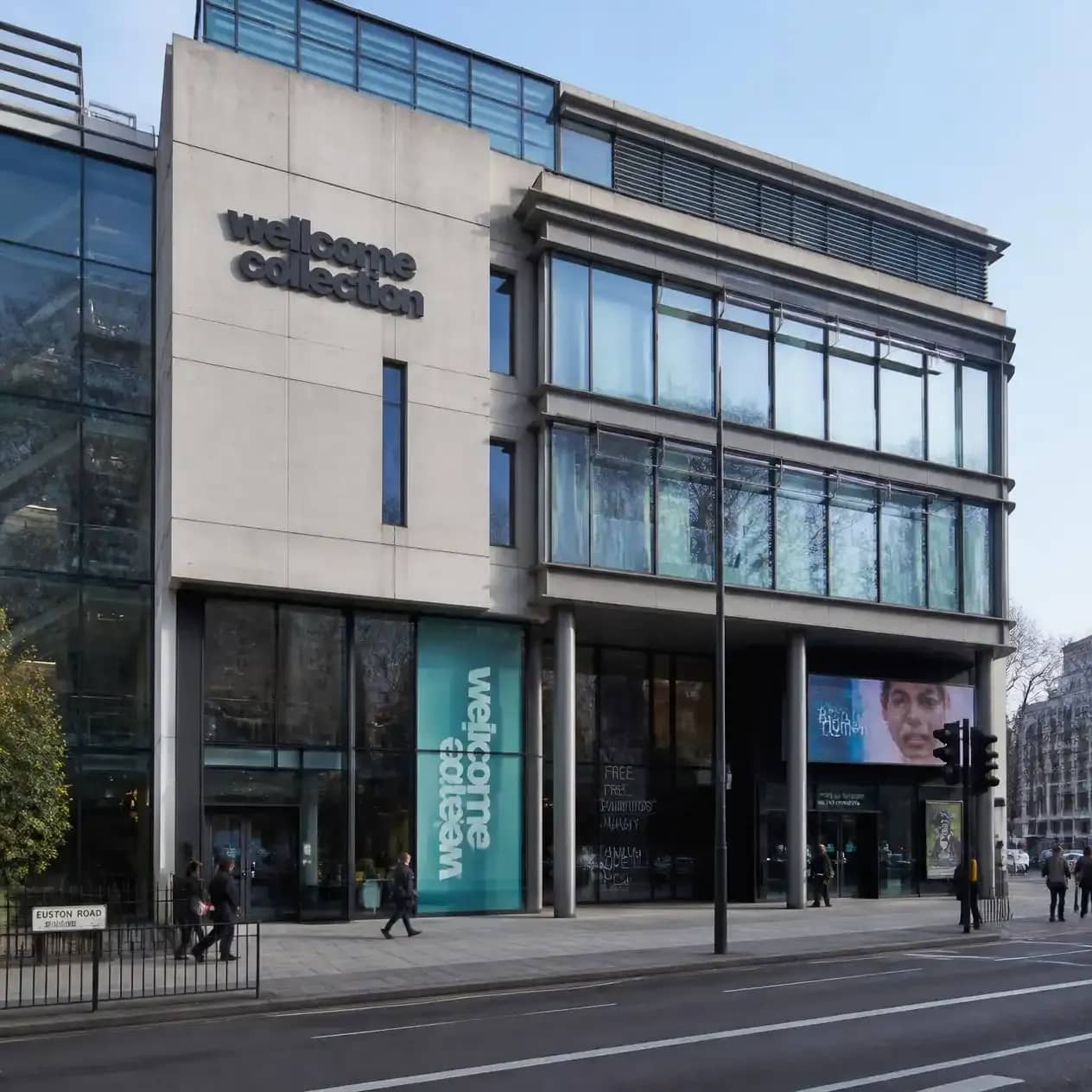
The Wellcome Collection, London: A Complete Guide to Henry Wellcome and the Museum for the Incurably Curious
6 min read
Key Highlights
- Free to enter, including all exhibitions — a museum on Euston Road that treats medicine, art and what it means to be human as a single subject.
- Built on the collection of Sir Henry Wellcome, the pharmaceutical magnate behind "Tabloid" medicines and the medical charity that still carries his name.
- Being Human is the current permanent gallery; the Medicine Man gallery that told Wellcome's own story closed permanently in November 2022.
- Two minutes' walk from Euston station, with a strong changing exhibition programme, a Reading Room, research library, bookshop and café.
- Best given a slow couple of hours rather than a rushed loop, and easy to combine with the other museums clustered around Bloomsbury.
The Wellcome Collection London is a free museum on Euston Road that explores the connections between medicine, life and art. Built around the vast collection of the pharmaceutical entrepreneur Sir Henry Wellcome, it pairs a permanent gallery, Being Human, with a rotating programme of exhibitions on health and the human condition. The galleries open Tuesday to Sunday, close on Mondays, and stay open late on Thursdays.
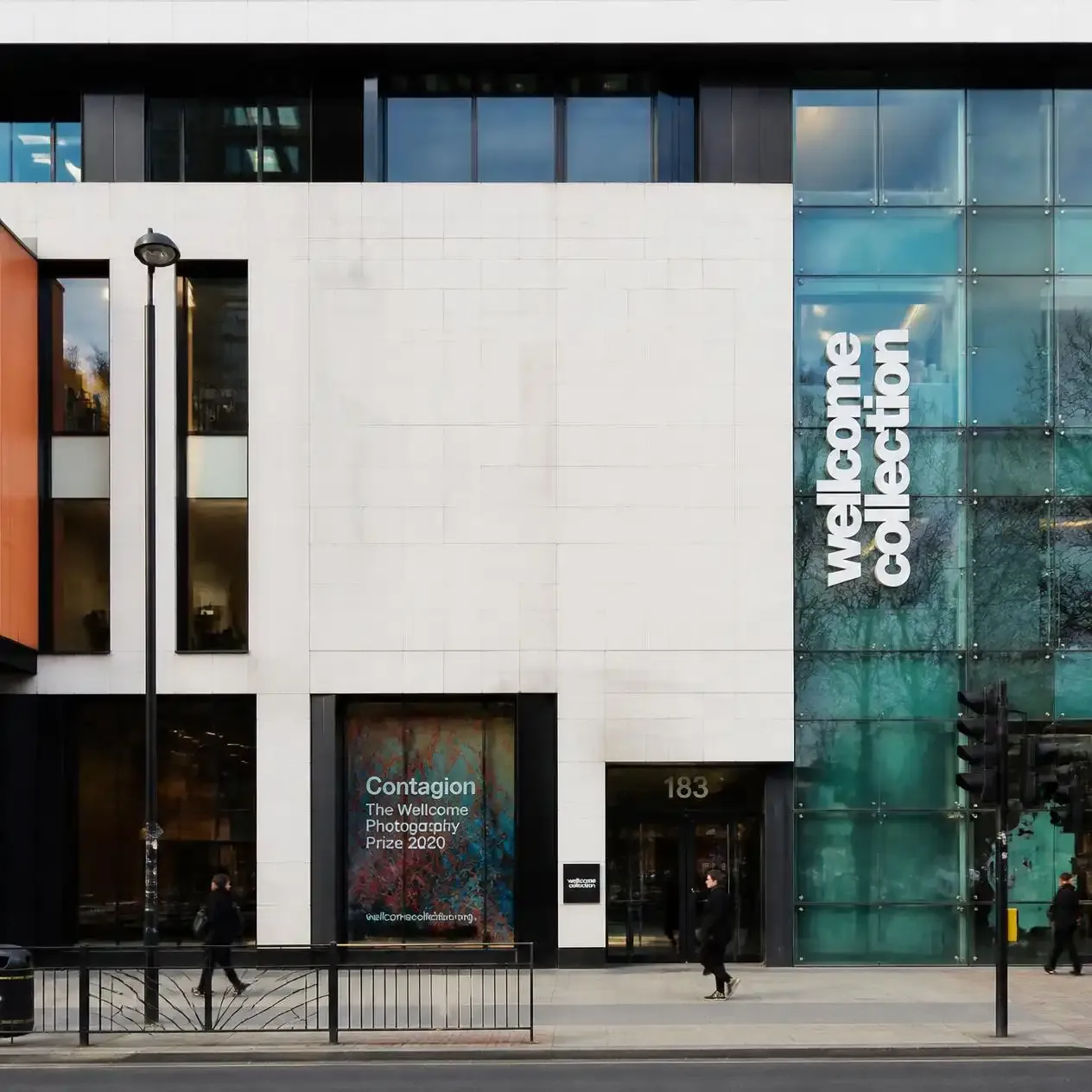
Most visitors to London aim for South Kensington or the British Museum and never think to cross the road at Euston. That is a small mistake. Directly opposite the station sits the Wellcome Collection London, a free museum that treats medicine, art and the human body as one continuous story — and does it with more imagination than almost anywhere else in the city.
It exists because of one man's obsession. Sir Henry Wellcome, the American-born pharmaceutical magnate who made his fortune selling compressed "Tabloid" medicines, spent decades amassing more than a million objects related to health and healing — a hoard later reckoned at roughly five times the size of the Louvre.
This guide covers what the museum is today, who Henry Wellcome was and why his collection matters, what actually remains on display after a significant change in 2022, and how to plan an unhurried visit. Whether this is a first stop or a return to a corner of London you skipped last time, there is more here than a quick loop suggests.
What Is the Wellcome Collection?
The Wellcome Collection is a free museum and library on Euston Road that explores the links between medicine, life and art. It opened in 2007, is run by the Wellcome Trust — the medical research charity founded on Henry Wellcome's estate — and calls itself a destination for the incurably curious. Where most museums keep science and art in separate rooms, this one deliberately blurs the line between them.
A free museum on Euston Road
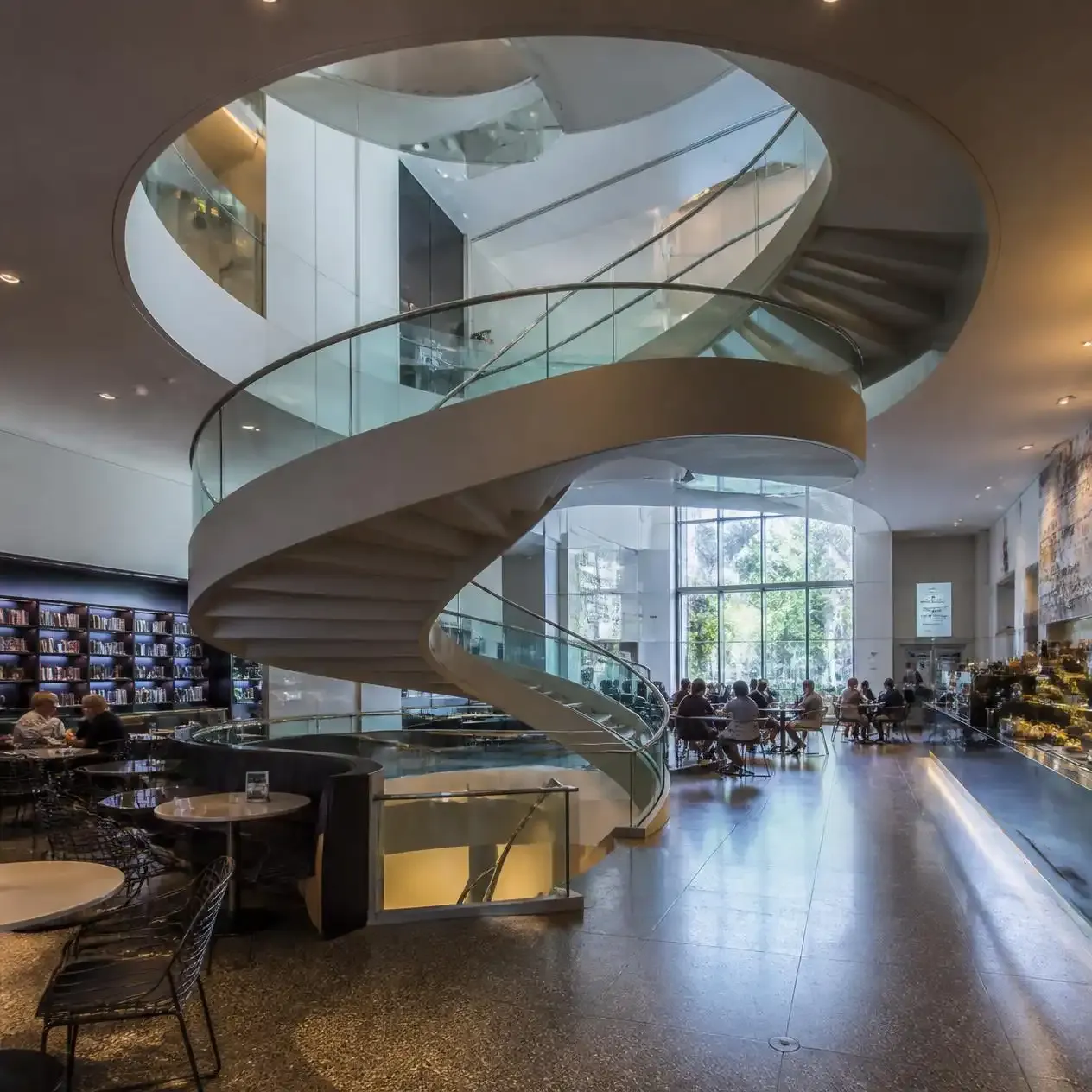
The building sits at 183 Euston Road, a two-minute walk from Euston station. Inside, the Wellcome Collection gathers a permanent gallery, a changing exhibition programme, a Reading Room, a research library, a bookshop and a ground-floor café under one roof. Admission is free, exhibitions included, and you can walk in without a ticket.
Because the museum is run by a research charity rather than the state, it has an unusually free hand with its subject matter. Shows here have taken on themes as varied as milk, the cult of beauty, sleep, mental health and genetics — always through a mix of objects, contemporary art and personal stories rather than dry display cases.
How it differs from London's big museums
This is not an encyclopaedic collection you tackle by floor plan. The Wellcome Collection is idea-led and comparatively small, which is precisely its appeal — you can absorb it in a single unhurried visit rather than triaging galleries against the clock.
If the British Museum and the other major London museums are about breadth, the Wellcome is about a single, human question asked from many angles: what does it mean to have a body, to fall ill, to be cared for, to be mortal? That focus is what brings people back for the next exhibition rather than the same permanent halls.
Who Was Henry Wellcome?
Sir Henry Wellcome (1853–1936) was an American-born British pharmaceutical entrepreneur whose company helped invent the modern medicine tablet and whose fortune created one of the world's largest medical charities. He was also one of history's most voracious collectors, and the museum's name and existence both trace directly back to him.
From a Wisconsin log cabin to a pharmaceutical empire
Wellcome was born in 1853 in a log cabin in Almond, Wisconsin. The commercial instinct showed early: at sixteen he advertised his own "invisible ink" — lemon juice — in the local paper. In 1880 he moved to London and co-founded Burroughs Wellcome & Co. with his fellow American Silas Burroughs.
The company changed how medicine was sold. Under the 1884 trademark "Tabloid", it popularised compressed tablets at a time when most remedies came as powders and liquids, and it pioneered marketing straight to doctors through free samples. After Burroughs died in 1895, Wellcome took sole control and built the firm into an international business, becoming a naturalised British subject in 1910.
The obsessive collector
As the money grew, so did Wellcome's collecting. His stated ambition was to trace the story of the human body — in sickness and in health — across the whole sweep of history, and he pursued it on an industrial scale.
- By his death he had amassed more than a million objects, a collection later estimated at around five times the size of the Louvre.
- The range was extraordinary and often unsettling: surgical instruments and amputation saws, anatomical models in wax and ivory, votive offerings, masks, and curiosities such as Napoleon's toothbrush and Charles Darwin's walking stick.
- He also funded major archaeological excavations and was an early backer of aerial photography, buying and gathering far faster than any single museum could ever display.
The collection was so large that it is now dispersed across roughly a hundred institutions worldwide, from the Science Museum to the British Museum — a scale that tells you as much about Wellcome's wealth and reach as about the history of medicine itself.
The Wellcome Trust and his legacy
Wellcome was knighted by King George V in 1932 and died in London in 1936, just before his eighty-third birthday. His will directed that the shares in his company be vested in a new charitable body, the Wellcome Trust, with its income devoted to medical research.
That decision is the reason the museum exists today. The business he built eventually became part of what is now GlaxoSmithKline, while the Wellcome Collection in London and its parent Trust grew into a major independent funder of biomedical science. Understanding this backstory changes how the galleries read: you are looking at the public face of a fortune, a research charity and a lifelong obsession, all at once.


What to See at the Wellcome Collection Today
Today the museum's permanent gallery is Being Human, supported by a rotating programme of temporary exhibitions and the Reading Room. All of it is free, and none of it requires a ticket booked in advance. The character of a visit changes with whatever show is on, which is part of why the Wellcome Collection London rewards more than one trip.
Being Human
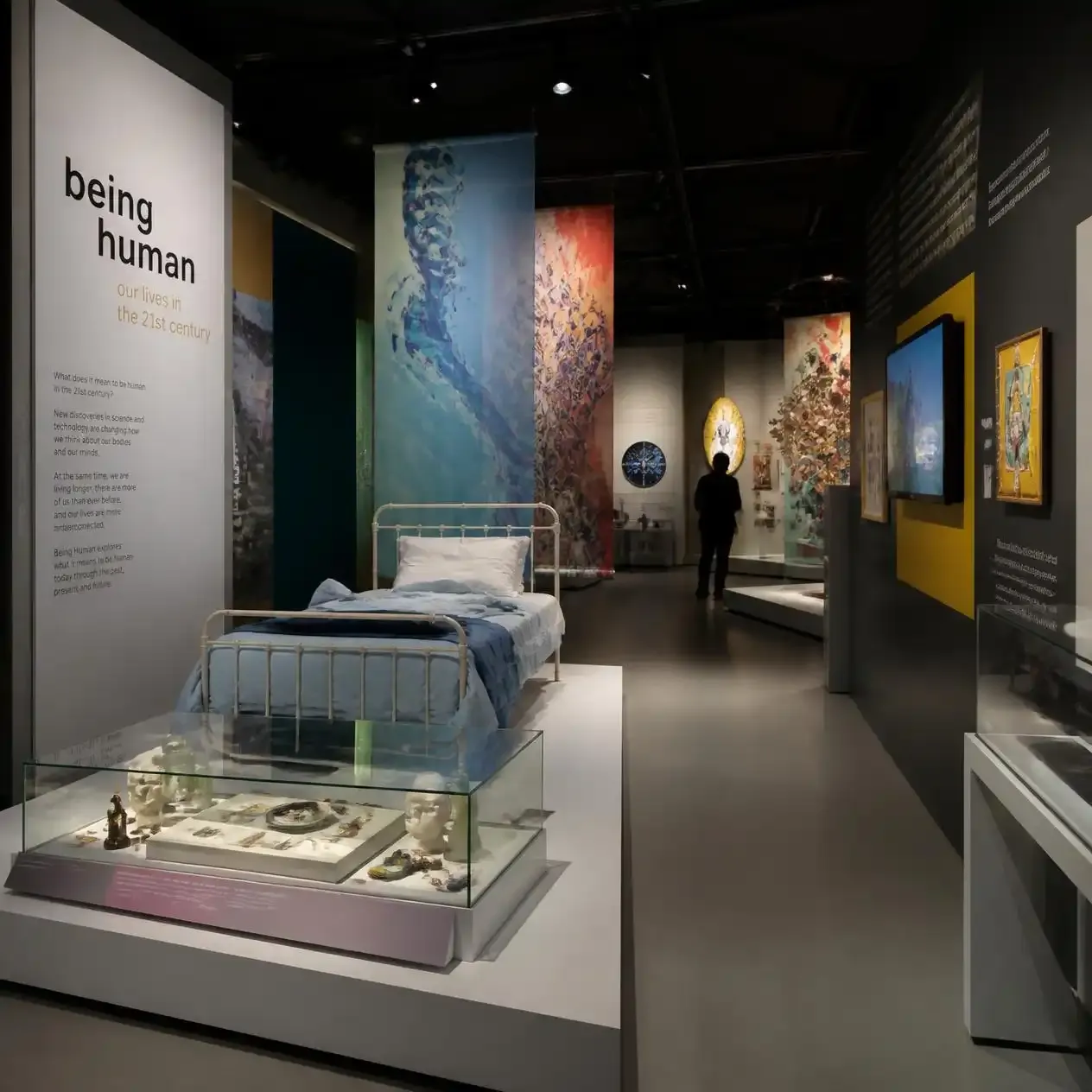
Being Human opened in 2019, replacing the earlier Medicine Now display, and is the museum's flagship permanent gallery. It asks what it means to be human in the twenty-first century, through around 50 artworks and objects rather than rows of specimens.
The gallery is divided into four themes — Genetics, Minds & Bodies, Infection, and Environmental Breakdown — and leans on contemporary art and lived experience to explore trust, identity and health. It is the best single place to understand what the museum is trying to do: use objects and art together to make you think differently about your own body.
The changing exhibition programme
The temporary exhibitions are where the museum reinvents itself. Two or three times a year, the ground-floor gallery is given over to a new subject drawn from health, medicine and the human condition, and these shows are the main reason regular visitors keep returning.
Past exhibitions have tackled subjects as different as milk, the cult of beauty, sleep, infertility and the science of the mind — each blending historical objects, new commissions and personal testimony. Because the line-up rotates, it is worth checking what is on before you go; you can find the current programme and any events on the museum's own listings.
The Reading Room, library and bookshop
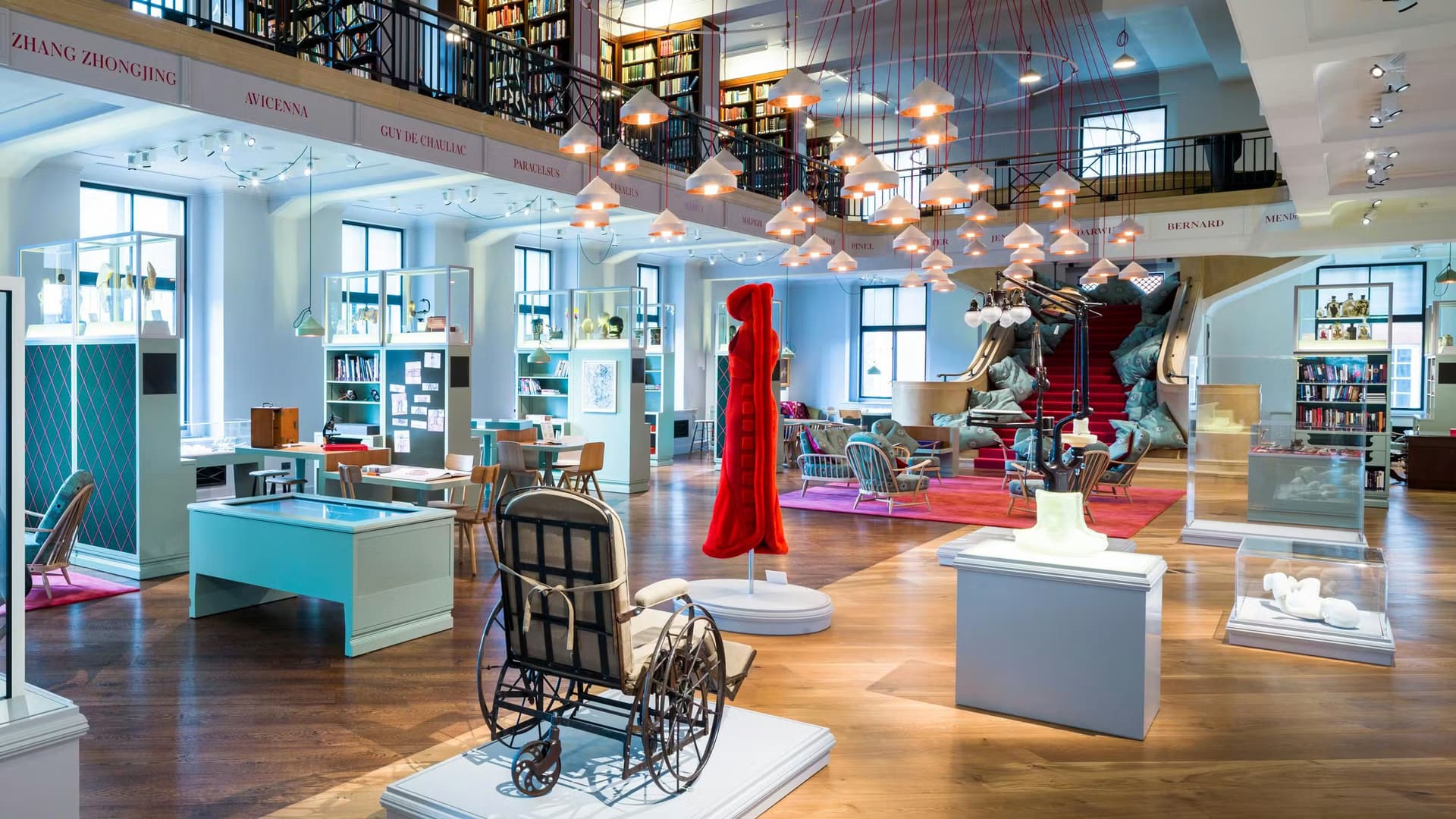
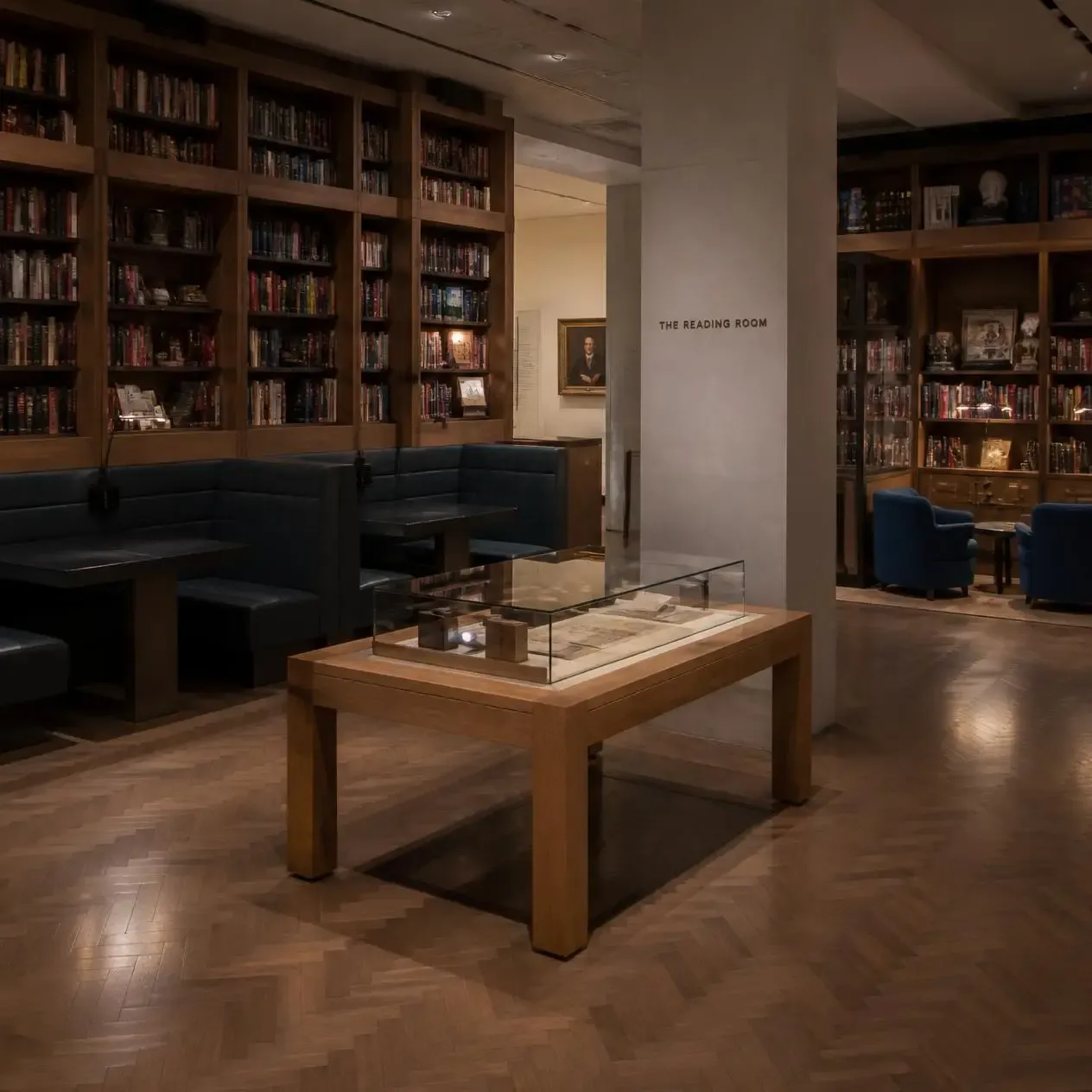
The Reading Room is a hybrid of gallery, library and lounge — a space where objects sit alongside books you are free to pick up, with sofas and steps to settle into. It was reworked in 2015 and makes a calm counterpoint to the exhibitions downstairs.
- The research library holds more than 250,000 items, from paintings, prints and photographs to television programmes and public-health films, and is open to anyone who registers.
- The ground-floor bookshop is one of the better museum shops in the city for titles on science, medicine and the body.
- The café and shop keep slightly longer hours than the galleries, which is useful if you arrive on a Monday when the exhibitions are closed.
What Happened to the Medicine Man Gallery?
The Medicine Man gallery, which displayed Henry Wellcome's own collection and told his story, closed permanently on 27 November 2022. If you have read an older guide that lists Napoleon's toothbrush or rows of amputation saws among the highlights, that information is out of date — those objects are no longer on show here.
Why it closed
Medicine Man had been part of the museum since it opened in 2007. In closing it, the museum said the display "perpetuates a version of medical history that is based on racist, sexist and ableist theories and language", and that telling a global story of health through the lens of a single wealthy man no longer sat well with how it wants to present the past.
The decision drew both support and criticism, and it prompted a wider debate about how museums should handle collections built during the imperial era. Whatever your own view, it is a live example of a museum publicly rethinking its founder's legacy — which, given the subject of this guide, is worth understanding rather than glossing over.
Where to see Henry Wellcome's collection now
The collection has not disappeared; it has been dispersed and recontextualised. The bulk of Wellcome's medical artefacts are cared for by the Science Museum, where the permanent Medicine: The Wellcome Galleries display around 3,000 objects — including the world's first MRI scanner and Alexander Fleming's penicillin mould — across more than five centuries of medical history.
- Science Museum, South Kensington — the largest public display of Wellcome's medical collection.
- The Wellcome Collection's own library and online catalogue — many items can be viewed by request or browsed digitally.
- Other institutions, including the British Museum, hold parts of the wider collection.
Planning Your Visit to the Wellcome Collection
Plan on a Tuesday-to-Sunday visit of around 90 minutes to two hours, and treat Monday as a café-and-shop-only day when the galleries are closed. Everything below is the practical detail for a smooth trip to the Wellcome Collection in London.
Opening hours and admission
- Galleries and Reading Room: Tuesday to Sunday, 10:00–18:00; closed Mondays.
- Late opening on Thursday evenings (typically until 21:00 — confirm the current closing time before an evening visit).
- Library: Monday to Friday, 10:00–18:00, and Saturday, 10:00–16:00.
- Café, shop and cloakroom keep slightly longer hours and open on Mondays.
- Admission is free, including all exhibitions. Walk-ins are welcome; some talks and events need booking ahead.
Getting there
- Address: 183 Euston Road, London NW1 2BE.
- Tube: Euston (about 2 minutes' walk), Euston Square (3 minutes), Warren Street, and King's Cross St Pancras (around 10 minutes).
- Bus: routes 18, 30, 73, 205 and 390 all stop close by.
- Cycle stands sit near the main entrance, and there is a free cloakroom for coats and bags.
How long to spend, and the café
Give the museum an hour and a half to two hours: enough for the current exhibition, Being Human and a pause in the Reading Room, with more time if you plan to use the library. The ground-floor café is a comfortable place to slow down between galleries, and there are family activities during school holidays if you are visiting with children.
Wellcome Collection at a glance
- Cost: Free, all exhibitions included
- Time needed: 1.5–2 hours
- Closed: Mondays (galleries); café and shop stay open
- Nearest station: Euston (2 minutes)
- Good to pair with: The British Library, Bloomsbury's Museum Mile, or another free museum across the city
What's nearby
The Wellcome sits at the top of Bloomsbury's "Museum Mile", so it slots easily into a wider day. The British Library is a few minutes east towards King's Cross and St Pancras, and the smaller university collections — the Grant Museum of Zoology and the Petrie Museum of Egyptian Archaeology — are a short walk south.
If you want to build a day around free, idea-led museums, it pairs naturally with the Horniman Museum and Gardens further south, or with the wider art and heritage experiences across London. Each of the options Travjoy lists has been researched and approved by local experts, so you can group a day of galleries without second-guessing what is worth your time.
Plan your London museum days
The Wellcome Collection is the rare free museum that asks a single human question and answers it from every direction — through Henry Wellcome's restless collecting, a permanent gallery on what it means to be human, and a programme of shows that keeps changing. Read it with the founder's story and the 2022 closure of Medicine Man in mind, and it becomes far more than an hour to fill near Euston.
Come with a slow couple of hours, check what exhibition is on before you set out, and treat it as one stop in a wider Bloomsbury day. To build the rest of that itinerary — museums, galleries and everything around them — start planning your trip on Travjoy's London hub.



.svg&w=1920&q=75)