



Thames River Sightseeing: A Complete Guide to London's Landmarks From the Water
7 min read
Key Highlights
- The classic Thames river sightseeing route runs west to east — Westminster to Tower to Greenwich — and takes in most of London's signature landmarks in a single line on the water.
- The south bank gives you the postcard north-bank views (Parliament, St Paul's); the north bank looks back across to the South Bank, the Globe and the Shard.
- Four central piers — Westminster, London Eye, Tower and Greenwich — are the natural hop-off points for the sights clustered around each.
- The river keeps going past Greenwich to the Thames Barrier, and upstream to Kew, Richmond and Hampton Court — the quieter stretches second-time visitors gravitate to.
- The hour before sunset is the best light for photographs from the water in any season; the open upper deck is the place to take them.
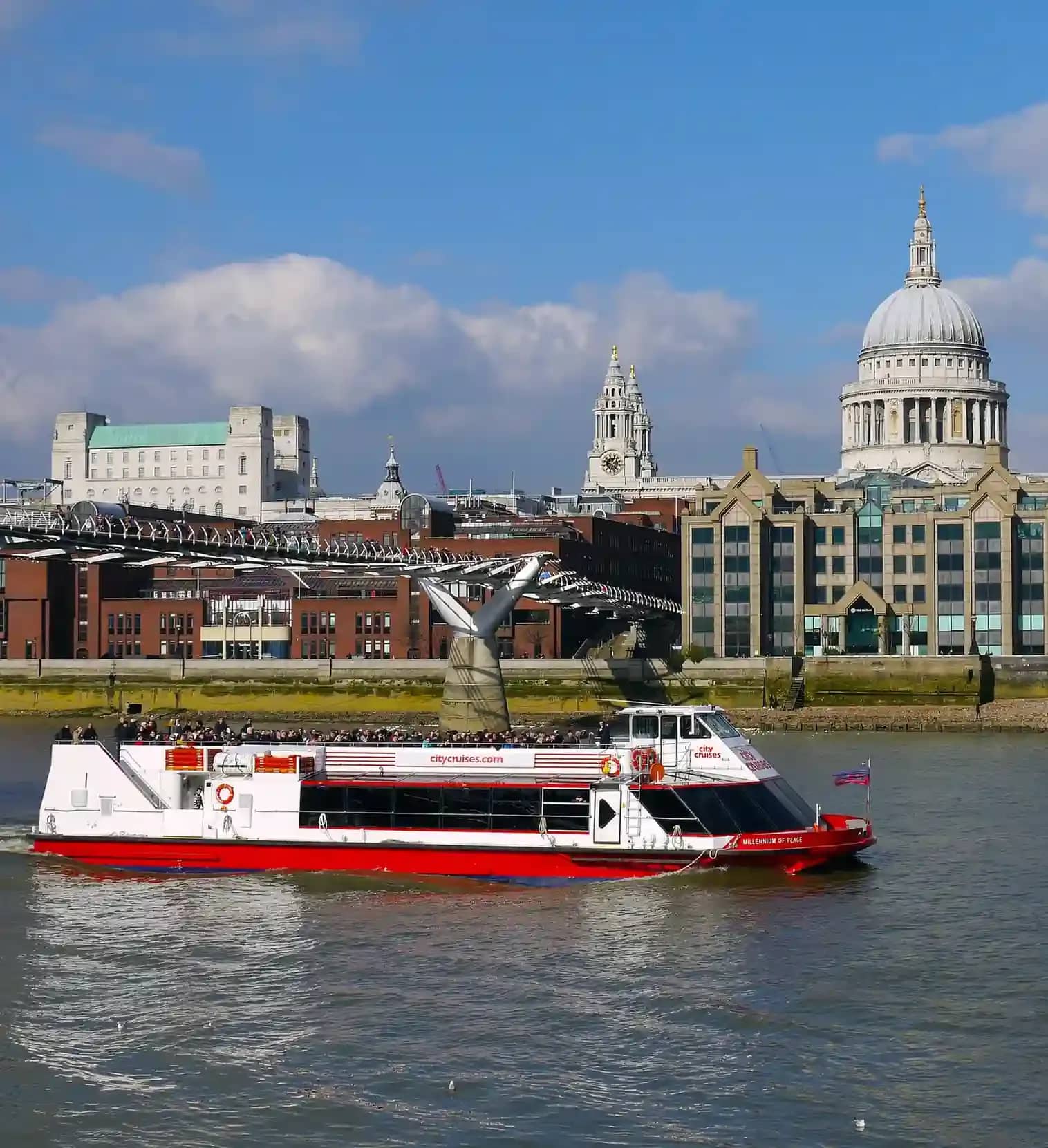
Thames river sightseeing means seeing London's landmarks from the water along the central stretch between Westminster and Greenwich — the London Eye, Big Ben and the Houses of Parliament, the South Bank, St Paul's, Tate Modern, the Shard, Tower Bridge and the Tower of London, finishing at maritime Greenwich. The river runs roughly west to east through the centre, so almost all sightseeing follows that line. The western Thames towards Kew, Richmond and Hampton Court, and the eastern reach past Greenwich to the Thames Barrier, are the parts to save for a return trip.

You can walk London for years and still not have seen it from the one angle that pulls the whole city into order. At street level the centre is a maze of districts that do not obviously connect. From the river, they line up: Parliament, the Eye, St Paul's, the Globe, the Shard, the Tower, each arriving in sequence as the boat moves downstream.
That is the real case for Thames river sightseeing — not that it is faster than walking, though it is, but that it is the only vantage from which London's landmarks read as a single composition. The river has been the city's main road for two thousand years, and the buildings still face it.
This guide works through that composition the way the water does, west to east, then turns to the stretches beyond the postcard. For each landmark you will get what it is, which bank it sits on, which pier puts you closest, and what to actually look for as you pass. The aim is that you arrive at the river already knowing what you are seeing — and leave knowing which stretch to come back for.
How to read the river: the Thames sightseeing route at a glance
Most Thames river sightseeing happens on the central stretch between Westminster Pier and Greenwich Pier, a run of about 70 minutes one way that passes the great majority of London's riverside landmarks. The river flows west to east here, so a downstream trip starts at Parliament and ends in maritime Greenwich, picking up the Eye, the South Bank, St Paul's, the Tower and Tower Bridge along the way.
North bank or south bank
Which side of the river a landmark sits on decides where you see it best, and it is the single most useful thing to know before you set off. As a rule, the headline north-bank sights are best photographed from the south, and vice versa.
- North bank: the Houses of Parliament, Big Ben, the Tower of London, St Paul's Cathedral and the City skyline. Best seen looking across from the South Bank or from the open water.
- South bank: the London Eye, the Southbank Centre, Tate Modern, Shakespeare's Globe and the Shard. Best framed from the north bank or mid-river.
On a boat this resolves itself — you pass between the two and get both. On foot, it tells you which side to walk for the view you want.
The piers that matter
Four piers carry almost all central sightseeing traffic, and each one drops you beside a distinct cluster of sights. Knowing them turns a river trip into a flexible day rather than a fixed loop.
- Westminster Pier — beside Big Ben and opposite the Eye; the historic, governmental core.
- London Eye Pier — on the South Bank, steps from the Eye and the SEA LIFE aquarium.
- Tower Pier — at Tower Bridge and the Tower of London; the medieval and the Victorian side by side.
- Greenwich Pier — for the Cutty Sark, the Maritime Museum and the Royal Observatory.
If you would rather have the route, commentary and pier logistics handled for you, the options on Travjoy's London sightseeing tours page are researched and approved by local experts, so you can pick a format and step aboard rather than work out timetables.
The central stretch: Westminster to Bankside
The Westminster-to-Bankside stretch is the densest concentration of landmarks on the whole river, and the part every first trip should cover. In about fifteen minutes on the water you pass the Eye, Parliament, the South Bank's arts cluster, the Globe, Tate Modern and the dome of St Paul's. This is the heart of any Thames river sightseeing trip.
The London Eye and the South Bank
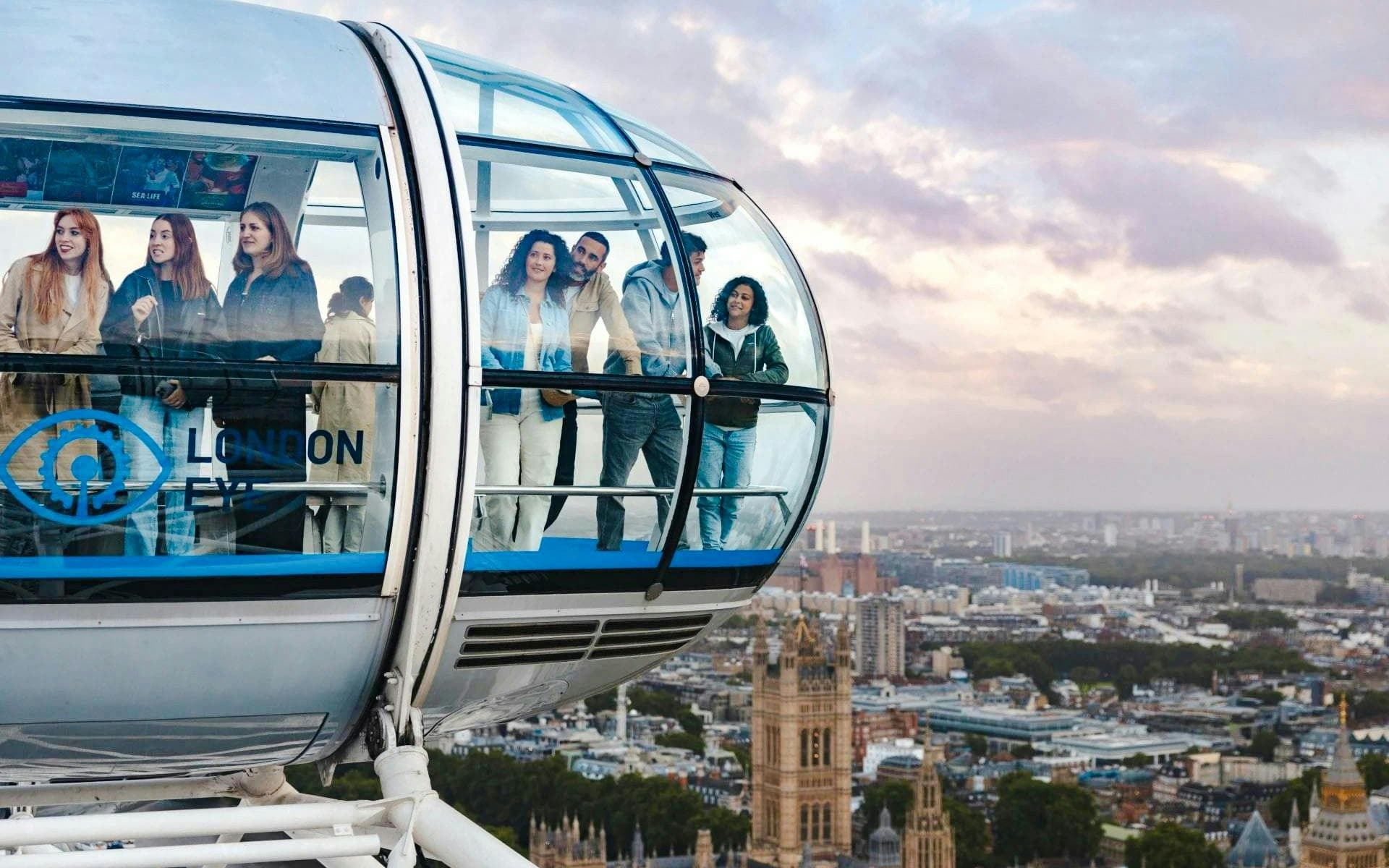
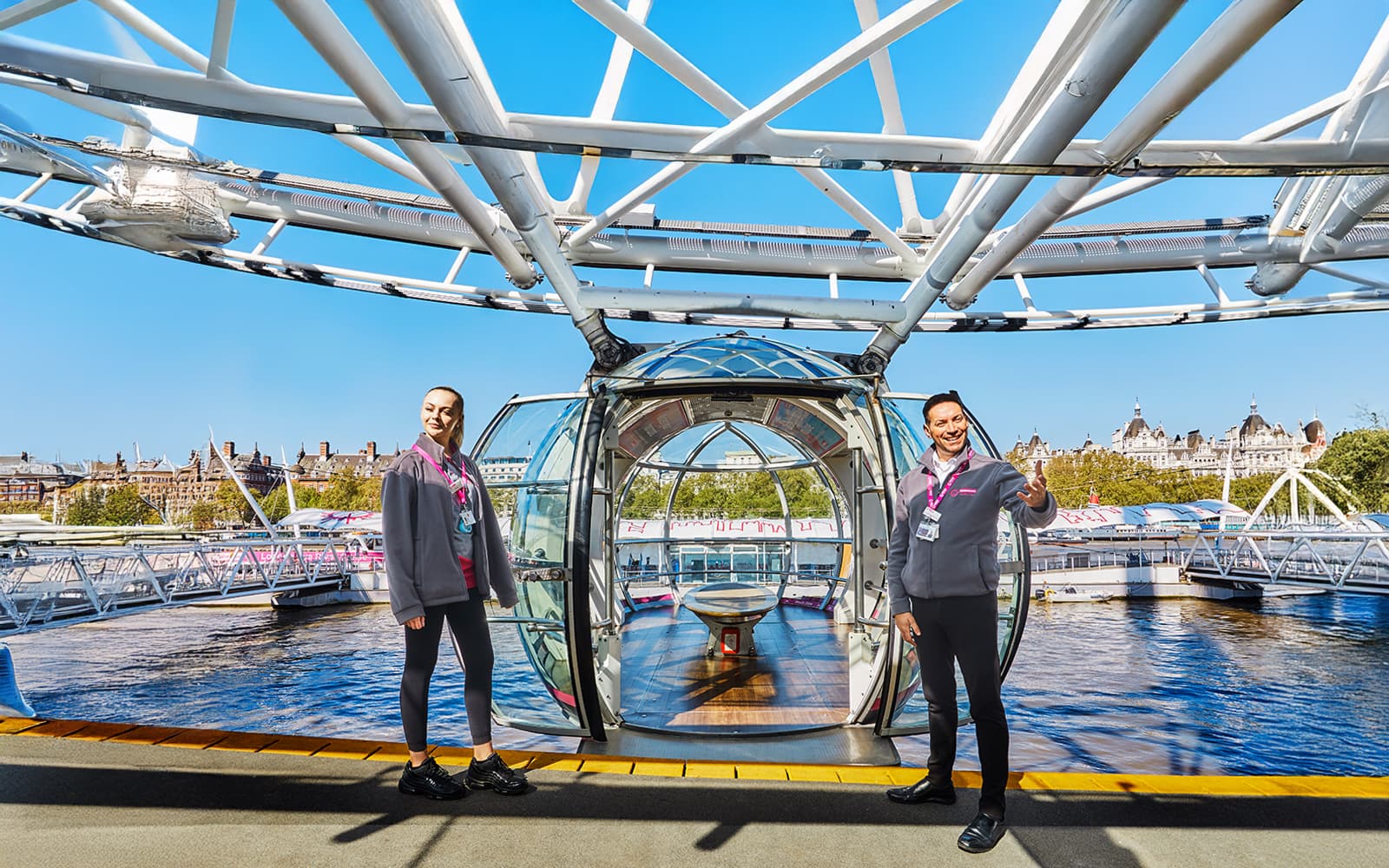
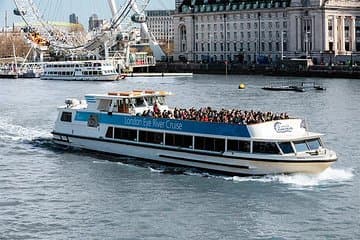
The London Eye is the modern landmark the central river is built around, and from the water you see why its 135-metre wheel was sited here — it looks straight down the axis to Parliament. Each of its 32 capsules takes about half an hour to complete a rotation, and the view from the top reaches the City and beyond on a clear day.
Behind it runs the South Bank: the Southbank Centre, the National Theatre and the BFI, a walkable run of arts venues, street performers and food stalls. You can read more about each landmark on the London Eye page before you decide whether to ride or simply admire it from below.
Parliament, Big Ben and Westminster Abbey
The Palace of Westminster is the sight that anchors the western end of the central stretch, its Victorian Gothic frontage running the length of the north bank. The Elizabeth Tower at the northern end houses Big Ben — strictly the name of the bell, not the clock — whose chimes carry across the water on the quarter-hour.
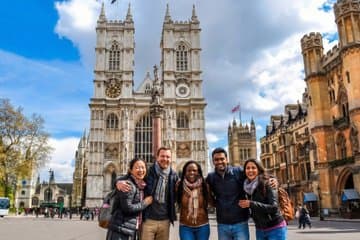
A short walk back from the river sits Westminster Abbey, the coronation church of English and British monarchs for nearly a thousand years. From Westminster Pier you are a few minutes from all three.
Bankside: Tate Modern, the Globe and St Paul's
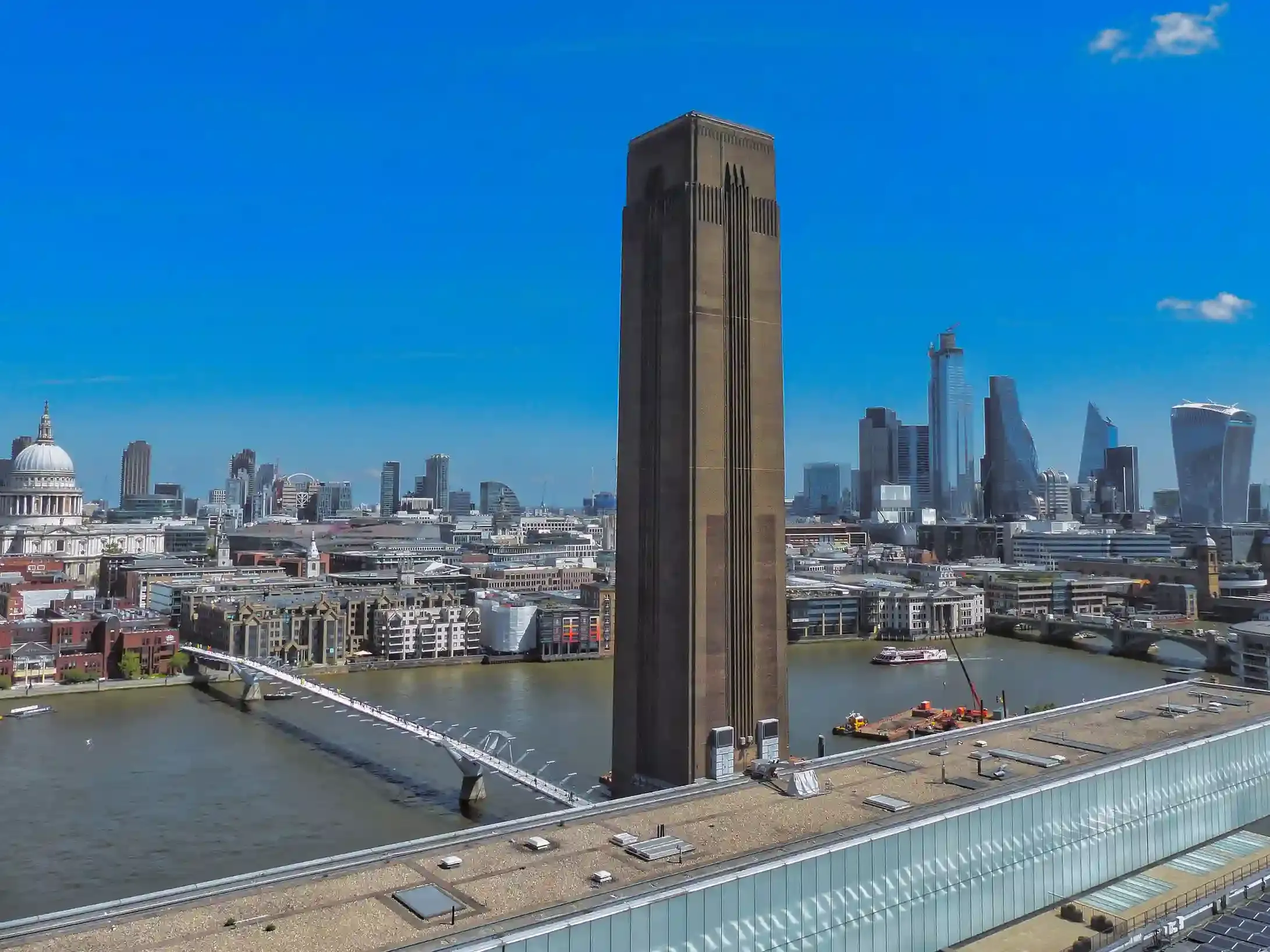
The Bankside stretch is where the river's cultural weight concentrates, all of it within a few hundred metres on the south bank. Tate Modern occupies the old Bankside Power Station, its turbine hall now one of the largest gallery spaces in the world; the Tate Modern collection of international modern art is free to enter.
Next door stands the reconstructed Shakespeare's Globe, a faithful timber-and-thatch playhouse on the site where his plays were first staged. Look across the river from here and the Millennium Bridge frames the dome of St Paul's Cathedral on the north bank — a sightline the bridge's designers built in deliberately.



The City to the Tower: skyline to fortress
East of Bankside the river opens onto the contrast that defines modern London — the glass towers of the City on the north bank giving way to the medieval stone of the Tower of London. This stretch, running down to Tower Bridge, is the most photographed on the river and the dramatic centre of any Thames river sightseeing trip.
The Shard, the City skyline and HMS Belfast
The Shard is the tallest building in the United Kingdom at 310 metres, and from the water its glass spire dominates the south-bank skyline near London Bridge. Opposite, the City of London's cluster — the Walkie-Talkie, the Cheesegrater, the Gherkin — marks the financial district on the north bank.
Moored between them sits HMS Belfast, a Second World War light cruiser now preserved as a floating museum. It is hard to miss: a grey warship anchored mid-river against a backdrop of glass.
Tower Bridge and the Tower of London
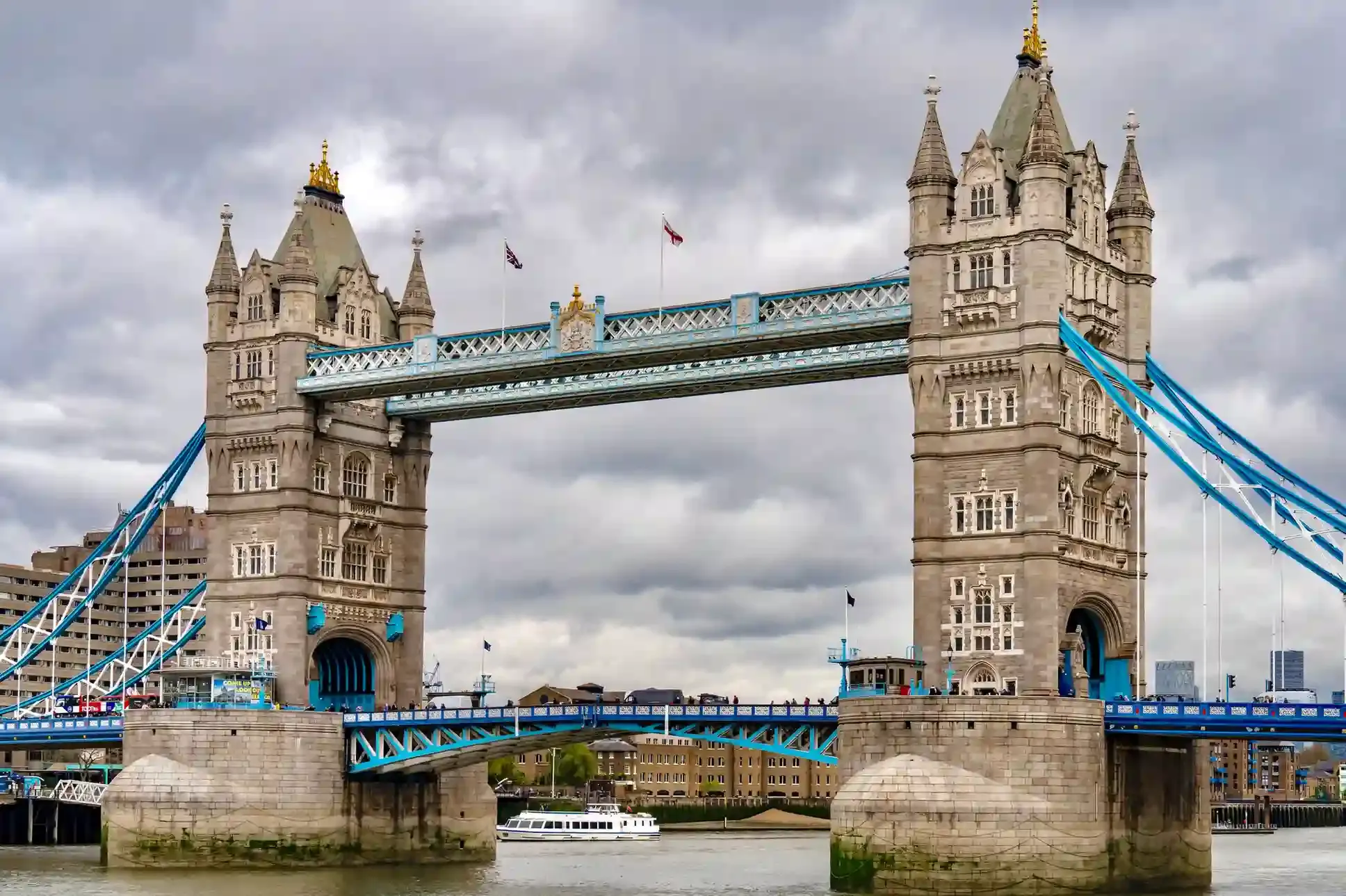
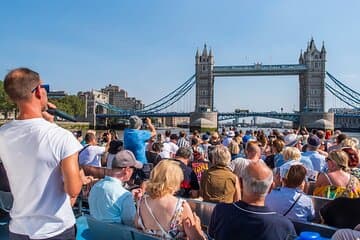
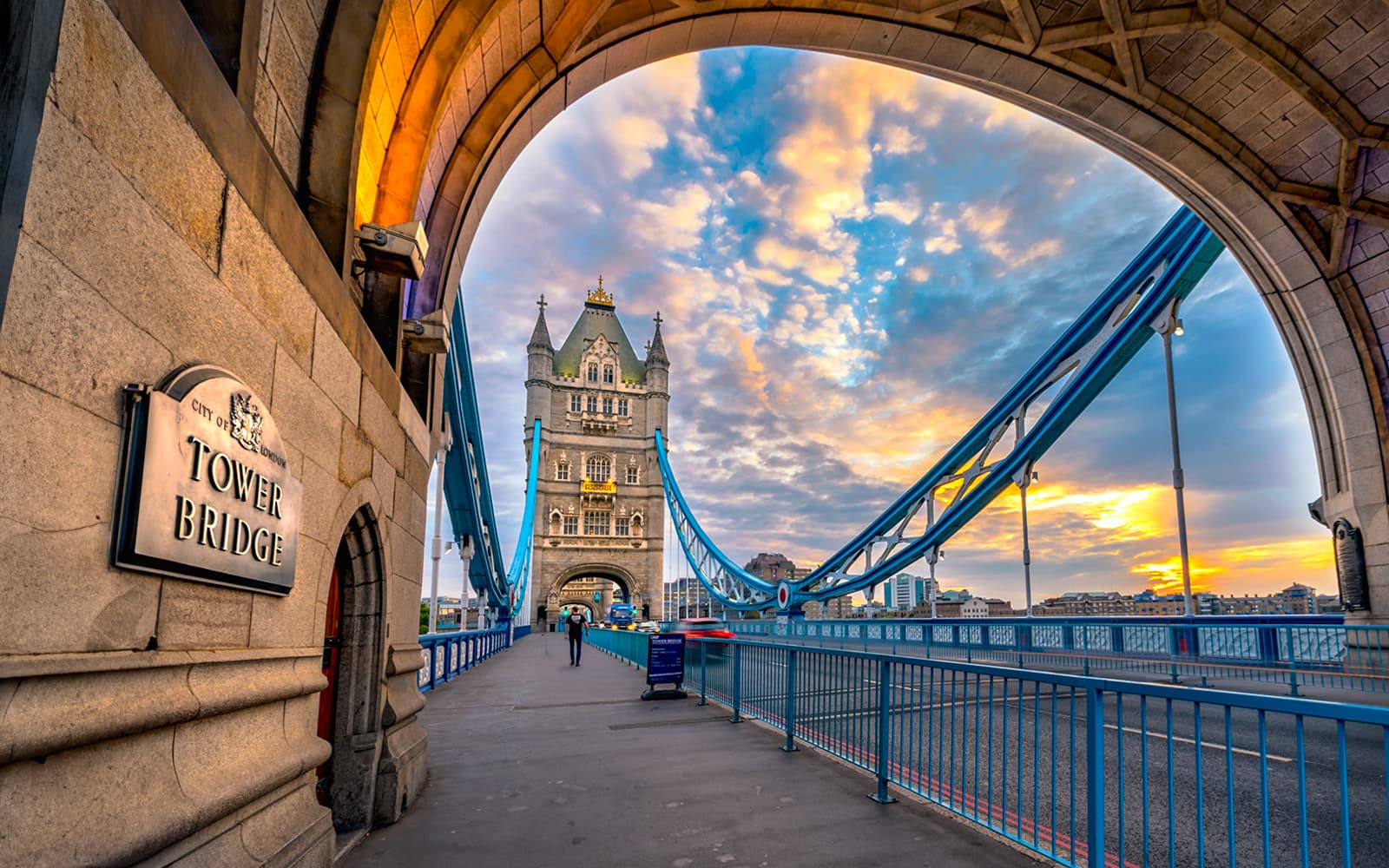
Tower Bridge is the landmark most people picture when they think of the Thames, and seeing it from the water — sailing beneath the walkway slung between its two Gothic towers — is the single best vantage there is. Built between 1886 and 1894, it still raises its bascules for tall vessels, and the high-level walkways now carry a glass floor you can look straight down through.
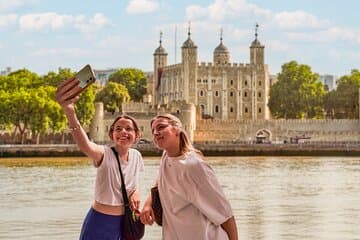
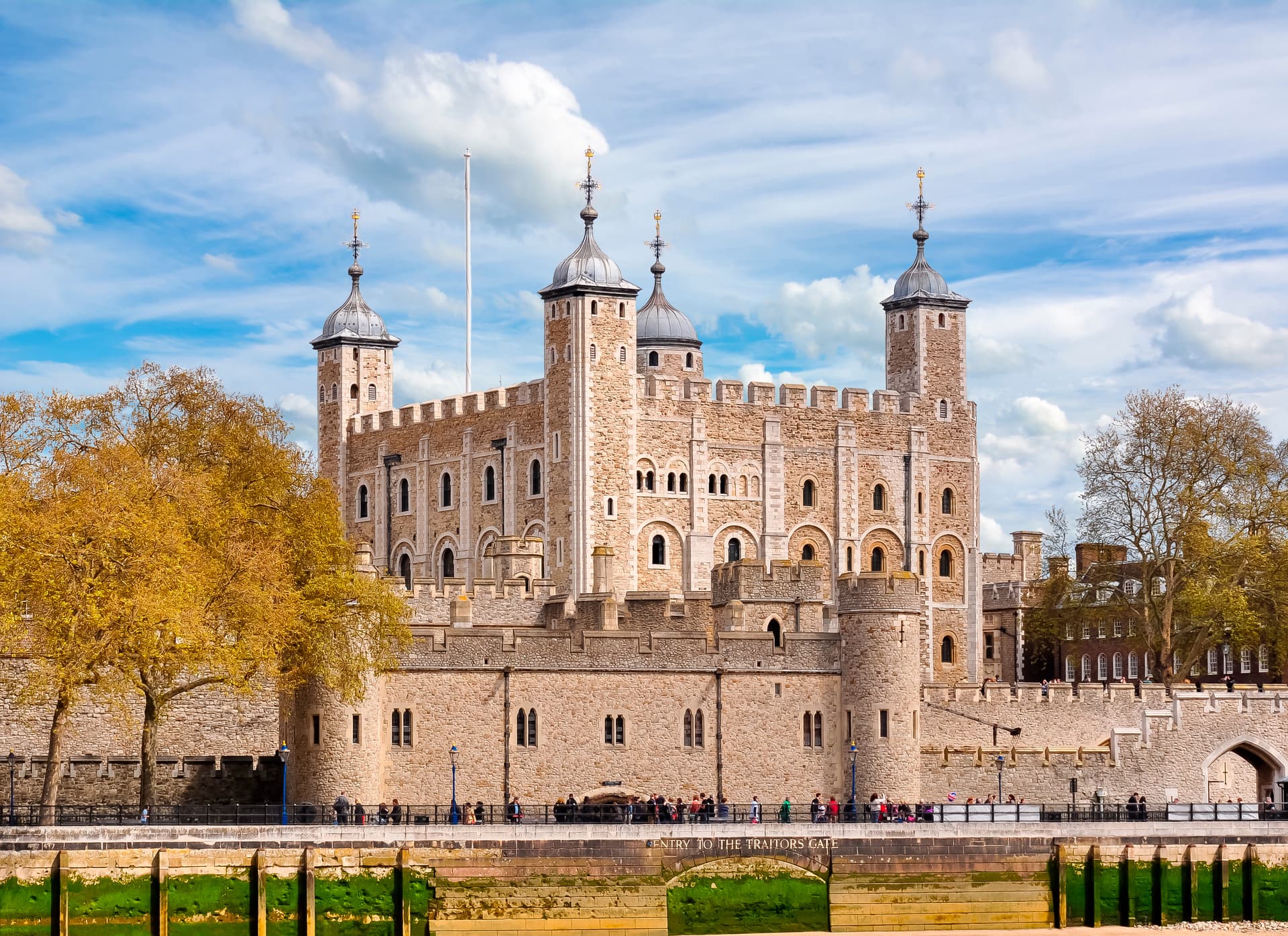
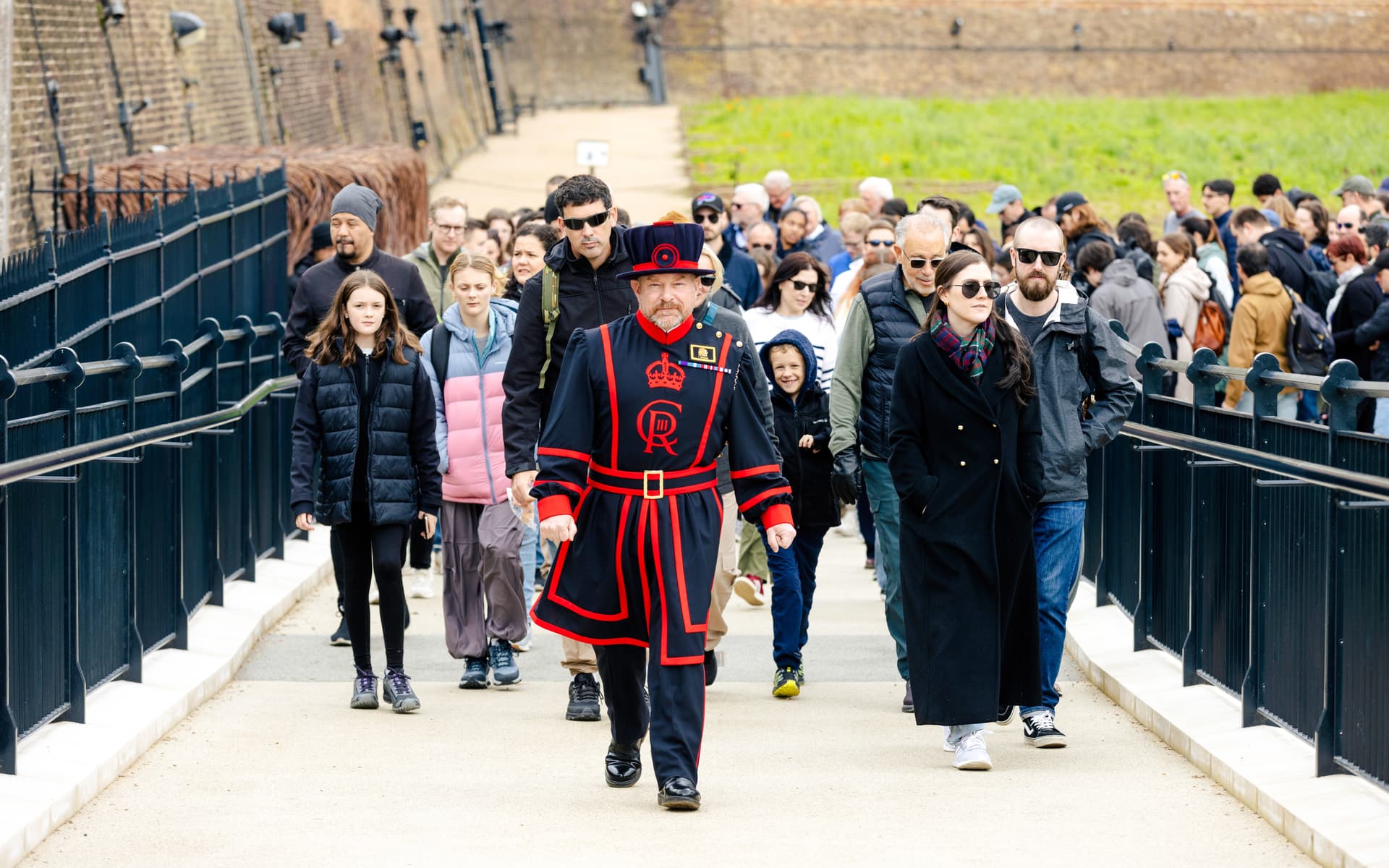
Just upstream on the north bank stands the Tower of London, the Norman fortress begun by William the Conqueror in the 1070s. From the river you pass Traitors' Gate, the water entrance through which prisoners were once brought in by boat. The Tower Bridge page is the place to start if you want to walk the glass walkway rather than just sail under it.
St Katharine Docks
Immediately east of the Tower, St Katharine Docks is the quiet reward of this stretch, a former cargo dock turned marina that most sightseeing boats pass without stopping. Yachts sit where trading ships once unloaded, ringed by restaurants and a flower-covered pub. It is a five-minute walk from Tower Pier and a calm counterpoint to the crowds around the bridge.
Downriver to Greenwich: maritime London
Past the Tower the river widens and the trip changes character, trading landmarks for open water on the way to Greenwich — the historic home of British seafaring and the natural eastern end of a sightseeing run. The journey from central London takes you past the towers of Canary Wharf before delivering you to the green slopes of Greenwich Park.
Canary Wharf and the Isle of Dogs
Canary Wharf is the skyline moment of the eastern river, a dense cluster of towers rising from what were once the West India Docks. As the boat rounds the Isle of Dogs, the financial district appears all at once — old warehouse walls at water level, glass towers above them, the two centuries between them compressed into a single view.
Greenwich: the Cutty Sark, the Naval College and the Observatory
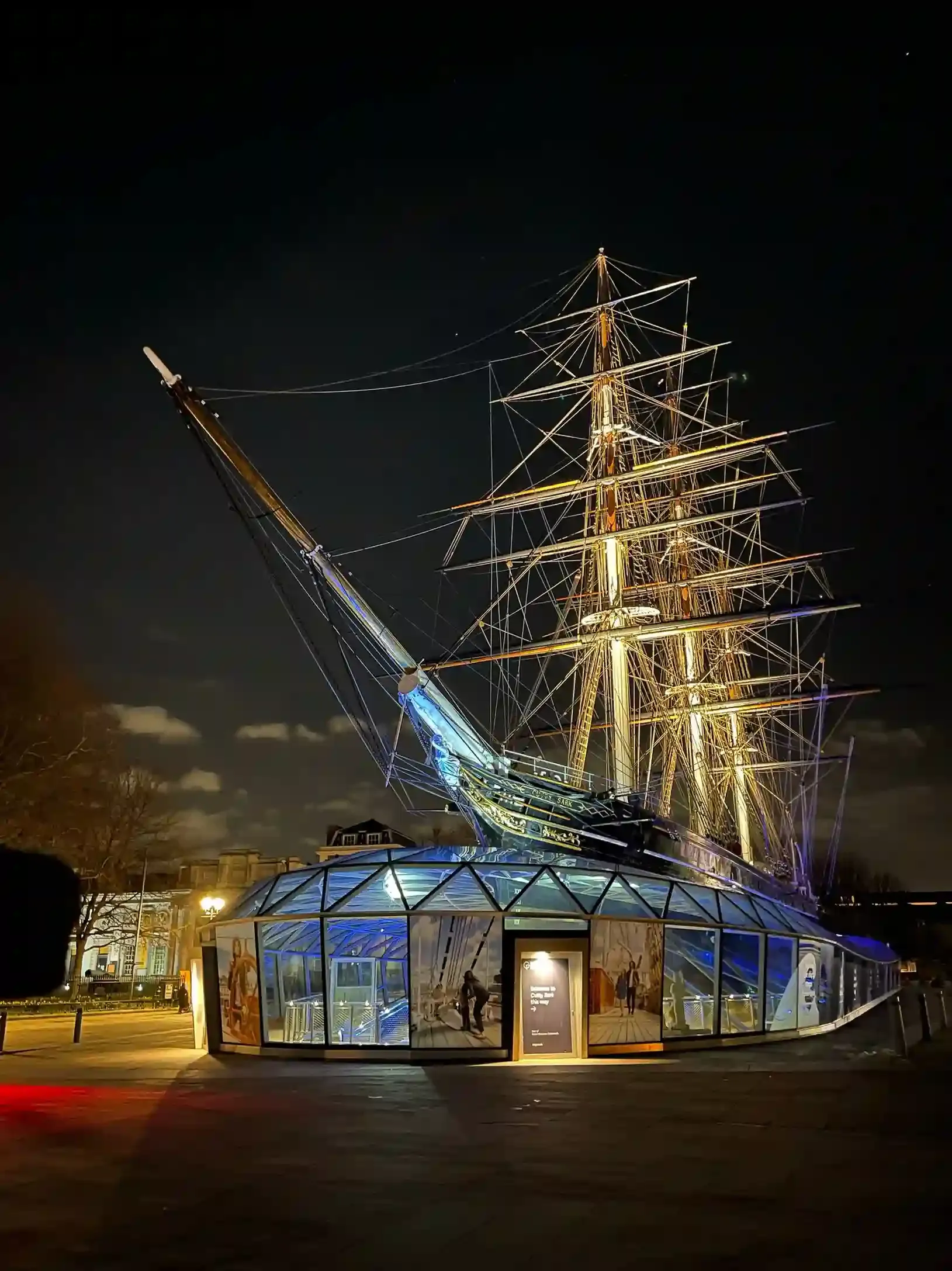
Greenwich is the most complete riverside destination on the Thames, and the one stretch where stepping off the boat is the whole point. Beside the pier sits the Cutty Sark, the last surviving tea clipper, dry-docked and raised so you can walk beneath her hull.
Behind it stretches the Old Royal Naval College, Christopher Wren's twin-domed baroque masterpiece, framed so that the Queen's House is visible on the axis between its two halves. Up the hill in Greenwich Park, the Royal Observatory marks the Prime Meridian — line zero of world longitude — and gives the finest panorama back over the river to the City.
- National Maritime Museum — the largest maritime museum in the world; free entry.
- Royal Observatory — stand astride the Prime Meridian, one foot in each hemisphere.
- Greenwich Market — covered market for food and crafts, a short walk from the pier.
Beyond Greenwich: the Thames Barrier
For those who want the river's full eastern reach, the Thames Barrier lies a few miles past Greenwich, and it is a genuine engineering landmark rather than a postcard one. Its ten steel gates — each as tall as a five-storey building when raised — protect central London from tidal surges, and have closed more than two hundred times since 1982. Note that only longer river-bus services running to Woolwich pass it; most standard sightseeing cruises turn at Greenwich.
Beyond the postcard: the western Thames for a second visit
The river most visitors never see runs the other way — upstream from Westminster into a greener, residential Thames of palaces, parks and riverside villages. If you already know the central landmarks, this is where a second trip pays off, and it is a different kind of Thames river sightseeing altogether: slower, leafier, and almost crowd-free.
Battersea, Chelsea and the western reaches
Heading west, the first marker is Battersea Power Station, the four-chimnied Art Deco icon now reopened as shops, restaurants and homes. Beyond it the river passes Chelsea and Putney, the embankment trading commerce for handsome residential frontages and the boathouses that launch the annual Boat Race crews.
Kew, Richmond and Hampton Court
Further upstream the Thames turns properly rural, and the landmarks become royal and botanical rather than civic. Kew Gardens runs down to the water; Richmond offers the river's prettiest town reach; and at the far end sits Hampton Court Palace, Henry VIII's Tudor residence with its maze and riverside gardens. You can reach Hampton Court from Westminster by boat in around three hours, or far faster by train — see the Hampton Court Palace page for the detail. For a quicker, higher-energy take on the central river instead, the Thames speedboat tours cover the headline sights at pace.
Getting the most from the view
- Time it for the light: board about an hour before sunset for golden-hour colour on the buildings, in any season.
- Sit up top: the open upper deck has the clear sightlines for photographs — bring a layer, as the wind on the water runs cooler than the streets.
- Pick your bank: for the Parliament and St Paul's postcards, you want the south side; for the Eye, Globe and Shard, the north.
- Mind the season: April to September brings the fullest schedules and longest daylight; winter sailings are quieter, with festive evening lights.
Plan your Thames trip
Done well, Thames river sightseeing turns London's scattered landmarks into a single, legible line — Parliament and the Eye at the centre, the Tower and Tower Bridge as the dramatic turn, Greenwich as the maritime finish, and the green western reaches waiting for a return. Decide which stretch matches your trip, pick the bank that frames the views you came for, and time it for the hour before sunset.
When you are ready to put the day together, start planning your London trip on Travjoy, where the river tours and riverside experiences are researched and approved by local experts so you can book once and get it right.



.svg&w=1920&q=75)