



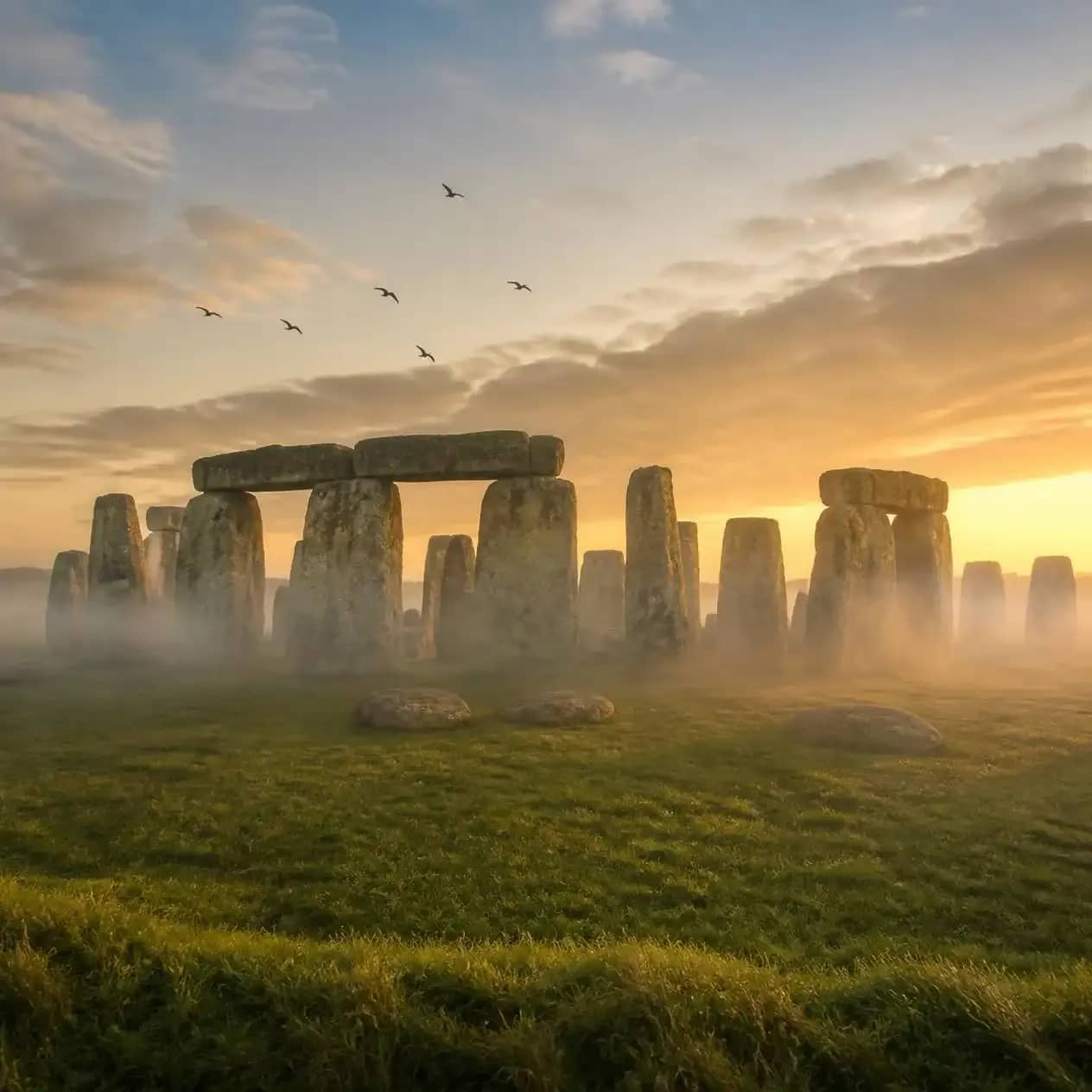
Stonehenge: History, Location, Meaning & Facts — A Complete Guide for Discerning Travellers
9 min read
Key Highlights
- Stonehenge was built in stages over roughly 1,500 years, beginning around 3000 BC — the stone circle itself predates the completion of the Great Pyramid of Giza.
- Its smaller bluestones were brought from the Preseli Hills in Wales, over 150 miles away — a feat still not fully explained.
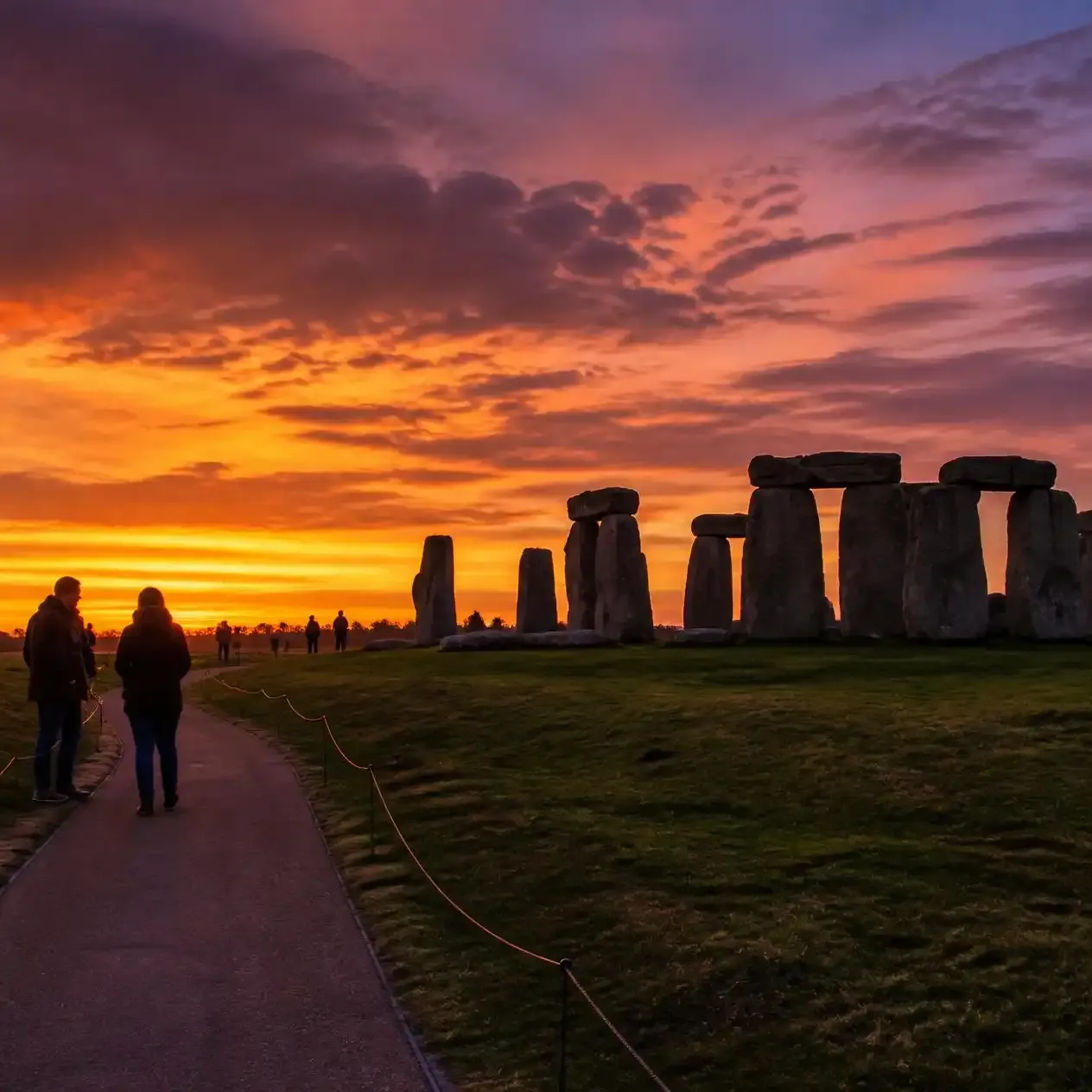
- The entire monument is aligned on the solstice axis: midsummer sunrise over the Heel Stone, midwinter sunset through the tallest trilithon.
- A UNESCO World Heritage Site since 1986, it sits within a landscape of more than 350 prehistoric monuments and draws close to a million visitors a year.
- Timed-entry tickets for 2026 start around £25 ($34) for adults, with the hour-long Stone Circle Experience — inside the stones themselves — from about £70 ($95).
Stonehenge is a Neolithic stone circle on Salisbury Plain in Wiltshire, England, about 90 miles west of London, built in stages from around 3000 BC. Its purpose is still debated — a solar temple, a burial ground, a place of healing, or all three — and no written record survives from its builders. The site is open year-round on timed-entry tickets, with adult admission from roughly £25 ($34) in 2026 and limited-access visits inside the circle available at dawn and dusk.
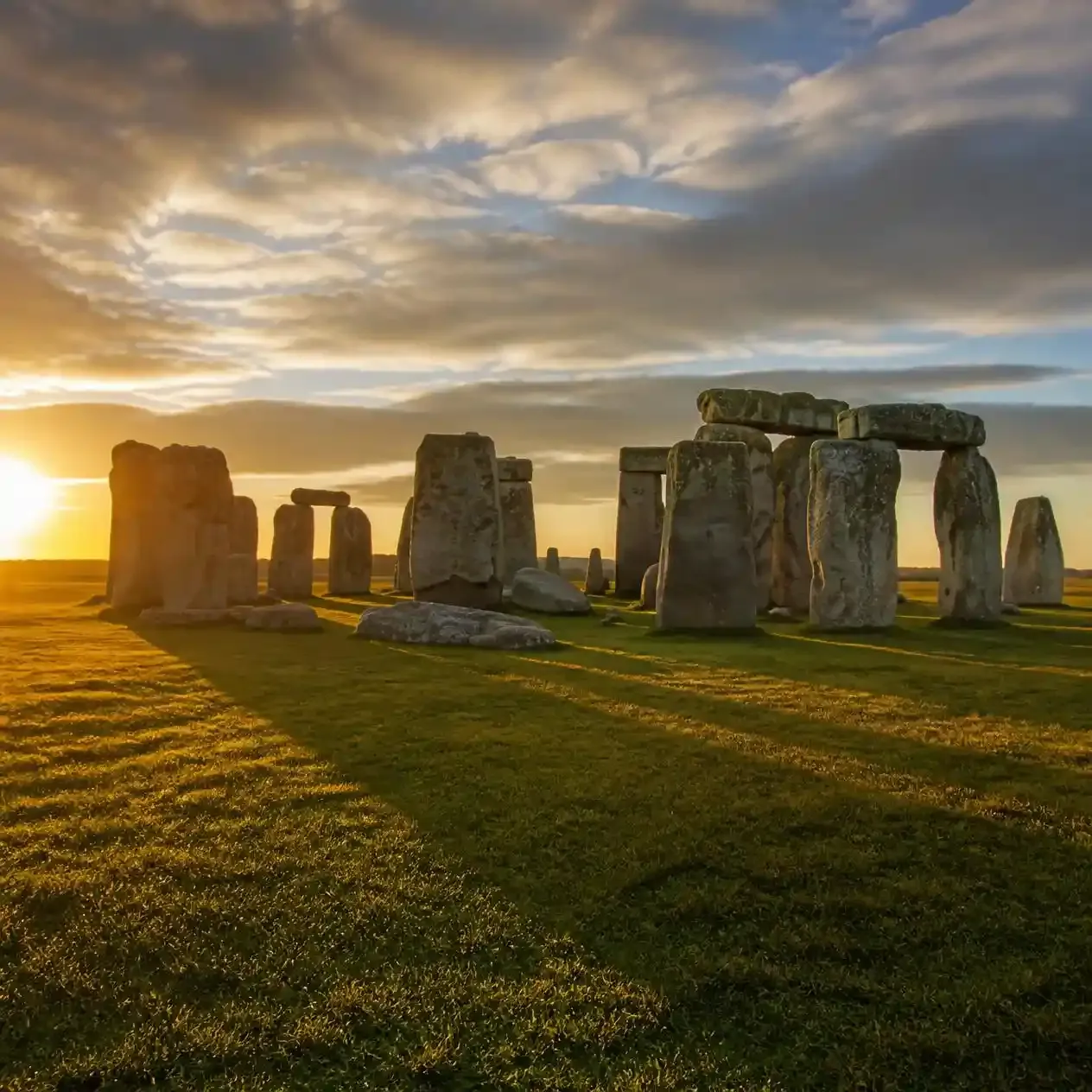
Stand on the path that rings the stones and the first thing that registers is the silence of the thing. The sarsens are nine metres of shaped rock raised by people who had no metal tools, no wheel, and no writing — and who somehow moved five-tonne bluestones across 150 miles of prehistoric Britain to get them here. Four and a half thousand years later, nobody can say with certainty why.
That gap between what we can see and what we can prove is exactly what makes Stonehenge more rewarding than a photo stop. This guide covers the full story: how the monument was built and rebuilt across 1,500 years, precisely where it sits and what surrounds it, the leading theories on its meaning, the facts that separate evidence from legend, and how to plan a 2026 visit that goes deeper than the standard loop of the path — including the one ticket that puts you inside the circle itself.
The history of Stonehenge — 1,500 years in the making
Stonehenge was not built once; it was built, rearranged, and rebuilt across roughly 1,500 years, from about 3000 BC to 1500 BC. What stands today is the final arrangement — and an incomplete one, since many stones were broken up and carried off in the Roman and medieval centuries.
The first monument: a circle of earth and the dead
Around 3000 BC, late Neolithic communities dug a circular ditch and bank — a henge — on a stretch of Salisbury Plain that had already held meaning for generations. Just inside the bank they cut 56 pits, now called the Aubrey Holes, and placed cremated human remains in and around them. Burials continued here for at least 500 years, which makes the first Stonehenge one of Britain's largest known Neolithic cemeteries long before the great stones arrived.
The bluestones arrive from Wales
Around 2600 BC, some 80 bluestones — dolerite, rhyolite, and tuff weighing two to five tonnes each — were raised at the site. Their source is the remarkable part: the Preseli Hills of south-west Wales, more than 150 miles away. Whether they came by raft, sledge, and sheer collective will, or were partly carried by glaciers in a much earlier age, remains argued over, though most archaeologists favour human transport. The bluestones were rearranged at least three times as the monument evolved.
The sarsen circle and the trilithons
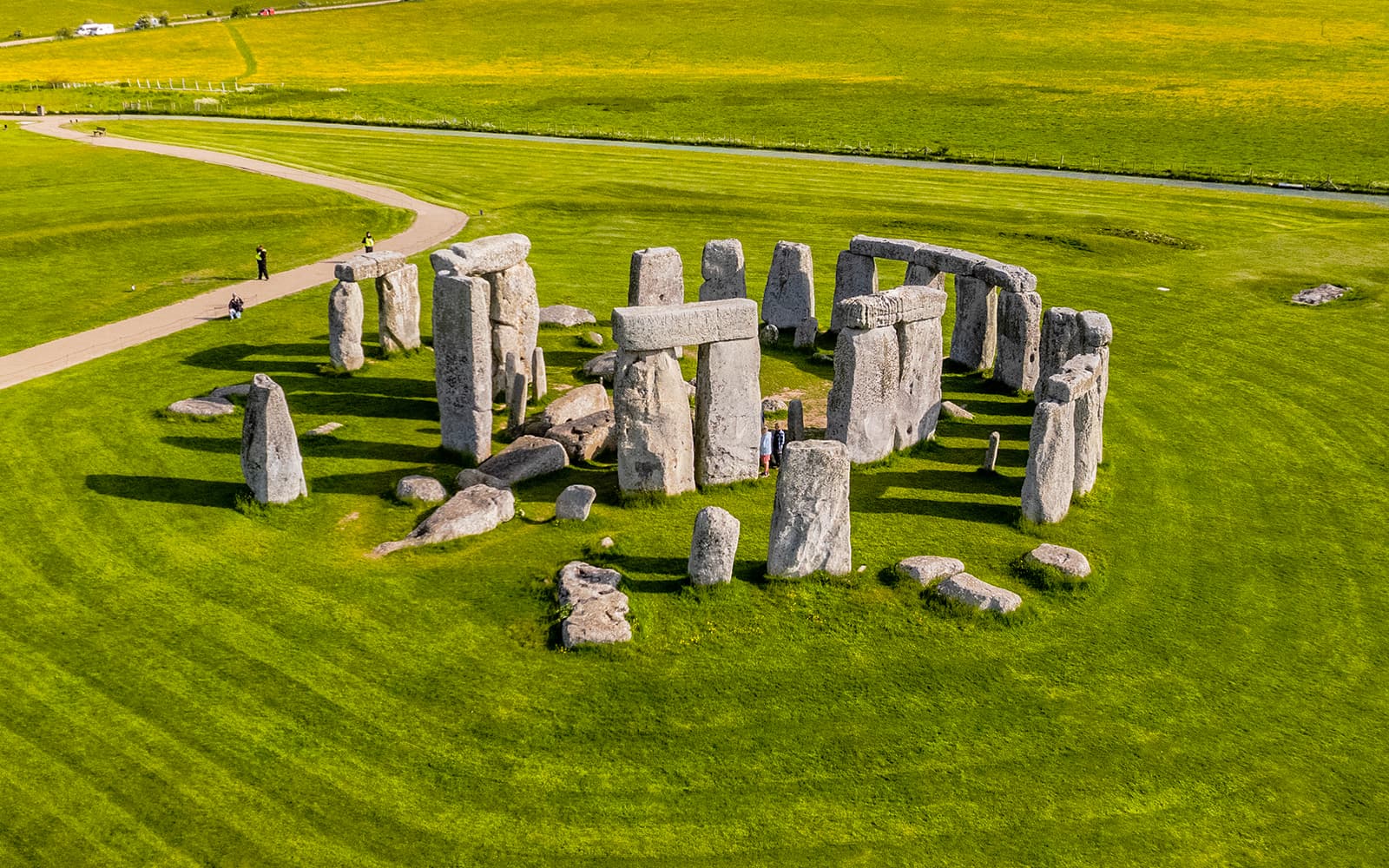
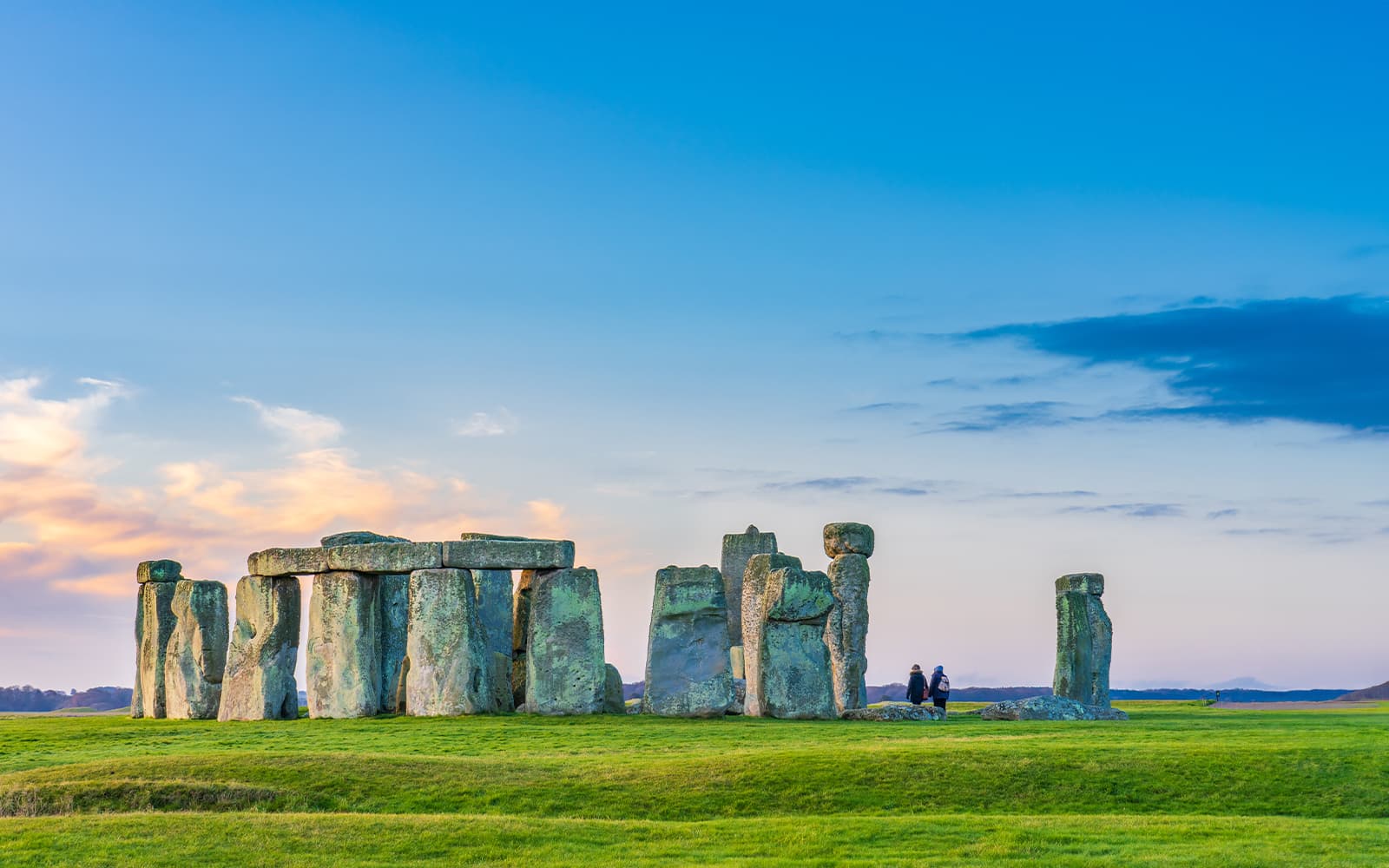
The Stonehenge of the postcards took shape around 2500 BC, when around 30 sarsen stones — silicified sandstone traced in 2020 to West Woods, about 16 miles north — were shaped, raised, and capped with lintels. The builders locked the lintels in place with mortise-and-tenon and tongue-and-groove joints, techniques borrowed from woodworking and found at no other prehistoric stone monument anywhere. Inside the circle stood five towering trilithons in a horseshoe, framing the axis of the sun.
Later centuries: treasure hunters, an auction, and a gift
The monument's afterlife is a story in itself. Historian John Aubrey surveyed the site in the 1660s and wrongly credited it to the Druids — an idea that stuck for centuries despite the Druids arriving some two millennia after the stones went up. The Duke of Buckingham dug a large hole in the circle hunting treasure in 1620; Charles Darwin dug two far smaller ones in 1877, studying earthworms. After a sarsen and its lintel fell in 1900, the leaning tallest trilithon was re-erected in 1901, beginning a century of careful conservation. Then, in 1915, Stonehenge itself went to auction as Lot 15. A local barrister, Cecil Chubb, bought it on a whim for £6,600 and gave it to the nation three years later — which is how the most famous prehistoric monument in the world came to be held in trust for everyone.
Where is Stonehenge? Location and the wider landscape
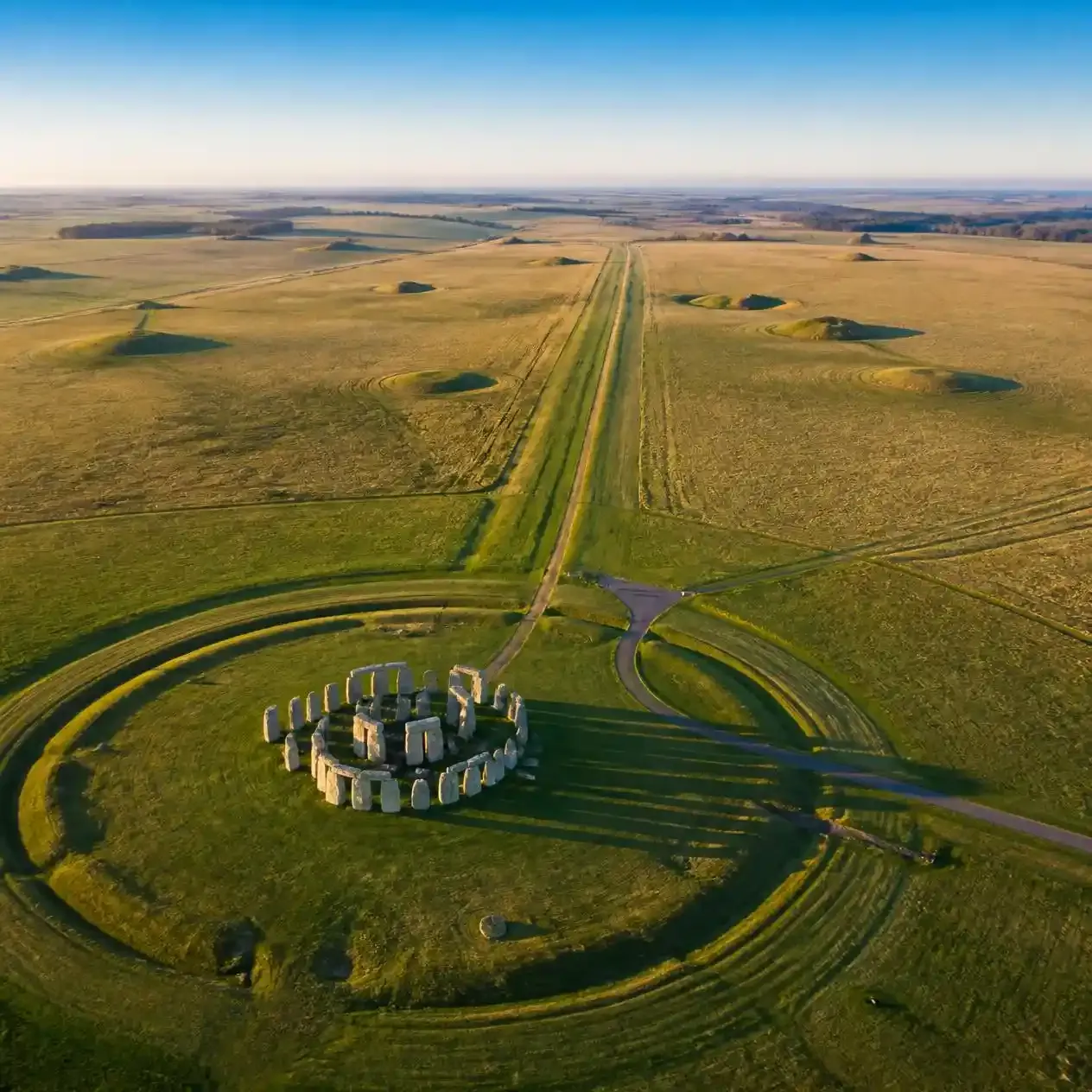
Stonehenge stands on Salisbury Plain in Wiltshire, in the south-west of England, roughly 90 miles (145 km) west of London. It is rural, exposed chalk downland — which is why the stones read so dramatically against the horizon.
Orientation and distances
- From London: about 90 miles (145 km) west — around 2 hours by road
- From Salisbury: 12 miles (19 km) north — the nearest railway station and cathedral city
- From Bath: about 40 miles (64 km) south-east — the classic same-day pairing
- Nearest town: Amesbury, roughly 2 miles east of the stones
A monument at the centre of a prehistoric landscape
The circle is only the centrepiece. The UNESCO World Heritage Site, inscribed in 1986, takes in more than 350 monuments and henges across the surrounding downland, including the vast kindred stone circle at Avebury to the north. From the stones, the Avenue — a pair of parallel banks and ditches — runs north-east towards the River Avon, its final straight aligned on the solstice axis. Two miles away sit Durrington Walls, one of Britain's largest henges and likely the builders' settlement, and Woodhenge, a timber monument raised on the same solar alignment. Burial mounds stud the skyline in every direction. Walk any of it and the circle stops feeling like an isolated relic and starts reading as the heart of a designed sacred landscape.
Getting there from London
The quickest independent route is the train from London Waterloo to Salisbury — about 90 minutes — with the Stonehenge Tour Bus or a taxi covering the last 12 miles. A guided coach or private car removes the connections entirely and usually pairs the stones with Bath or Windsor; the full range of day excursions from London and guided tours from London covers both formats. If Stonehenge is one stop in a wider day out of the capital, a guided option makes the timings work; if the stones and their landscape are the whole point, going independently buys you the freedom to linger.
What does Stonehenge mean? Theories and evidence
The honest answer is that nobody knows what Stonehenge was for — its builders left no written record. But the evidence points firmly in certain directions, and the leading theories are not mutually exclusive.
A temple aligned with the sun
The strongest evidence is the architecture itself. Stand at the centre on midsummer's morning and the sun rises beside the Heel Stone, the outlying sarsen to the north-east; on midwinter's day it originally set between the uprights of the tallest trilithon, dropping over the Altar Stone laid across the axis. Laser surveys show the stones framing this solstice line were the most carefully shaped of all. The Station Stones mark the same axis at the corners of a rectangle, and the Avenue's final approach follows it too — possibly because natural periglacial ridges in the chalk happened to line up with the solstice, and the builders read that as a sign this ground was chosen. One thing the builders almost certainly did not mark: the equinoxes. Today's spring and autumn gatherings are a modern tradition, not a prehistoric one.
A burial ground, a place of healing, a monument of unity
The cremated remains in the Aubrey Holes show Stonehenge served as a burial ground from its very beginning, for perhaps 500 years or more. A separate theory casts it as a prehistoric place of healing — a kind of ancient Lourdes — with the Welsh bluestones credited with restorative powers, which would explain the extraordinary effort of hauling them 150 miles. And researchers led by Mike Parker Pearson have argued the great sarsen phase was a monument of peace and unity, raised at a moment when Neolithic Britain's cultures were drawing together. Temple, cemetery, hospital, statement of unity: the stones may have been all of these across fifteen centuries.
The myths: Merlin, giants and Druids
The legends deserve their place in the story. Geoffrey of Monmouth wrote in the 12th century that Merlin spirited the stones from Ireland, where giants had raised them; other tales credited invading Danes or a ruined Roman temple. The most durable myth — that Druids built it — began with John Aubrey in the 1660s and lives on in the white-robed ceremonies still held at the solstices, even though the historical Druids postdate the stones by roughly 2,000 years. The monument has been collecting meanings for as long as people have looked at it, and that, in its way, is part of what Stonehenge means now.




Facts about Stonehenge worth knowing
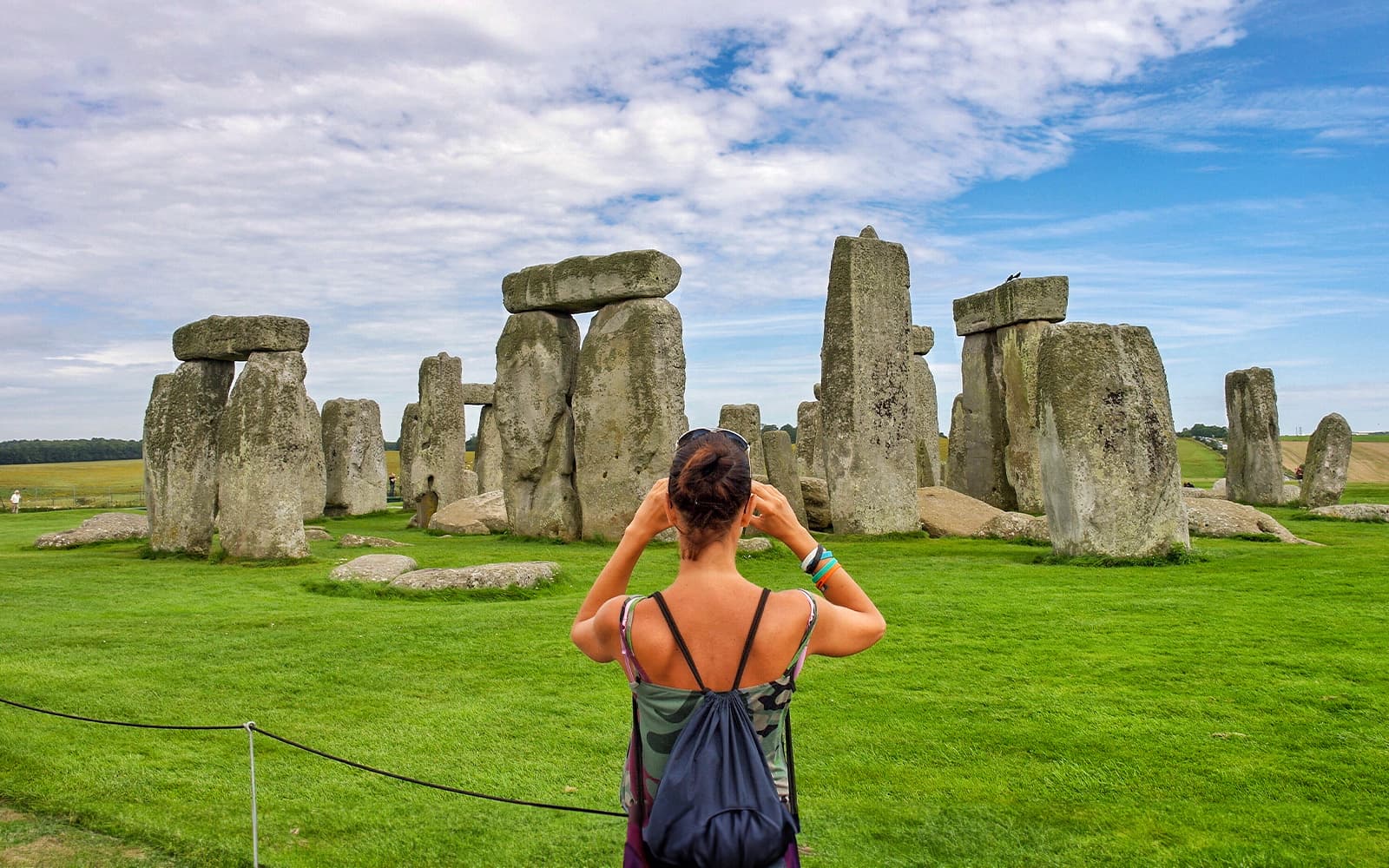
The essential Stonehenge facts come down to scale, distance, and engineering no one has fully explained. Around 100 massive stones once stood here; the largest sarsens weigh over 25 tonnes and stand up to nine metres tall, and every lintel was locked to its uprights with joints otherwise known only from carpentry.
The engineering puzzle
No one knows exactly how the stones travelled. The sarsens likely came the 16 miles from West Woods on sledges over timber rails, hauled by teams of hundreds. The bluestones' 150-mile journey from the Preseli Hills is harder to account for — overland haul, river raft, and coastal routes have all been modelled, and each demands a level of organisation that rewrites assumptions about Neolithic society. The 2024 analysis of the six-tonne Altar Stone pushed the puzzle further still, tracing its sandstone to north-east Scotland, roughly 450 miles away. Whatever the method, the message is the same: this was a society capable of coordinating labour, logistics, and intent across enormous distances.
The numbers at a glance
Stonehenge in figures
- Construction span: c. 3000–1500 BC, in at least three major phases
- Largest sarsens: up to 9 metres tall, over 25 tonnes
- Bluestone journey: 150+ miles from the Preseli Hills, Wales
- Altar Stone origin: north-east Scotland, c. 450 miles away (2024 analysis)
- Aubrey Holes: 56 pits holding some of Britain's earliest cremation burials
- UNESCO World Heritage Site: inscribed 1986, alongside Avebury
- Annual visitors: close to 1 million
Stranger footnotes
The name itself is Saxon — stan-hengen, "hanging stones", with an uncomfortable echo of the gallows. Flinders Petrie made the first accurate plan of the stones in the 1870s, around the same time Darwin was conducting his earthworm experiments in the turf. Half the site was excavated in the 20th century, but the chronology was only settled in 1995, when radiocarbon dating rewrote the sequence — a reminder that Stonehenge is still an active research site, not a closed case. Acoustic modelling has even shown the completed circle would have held and amplified sound within the stones, turning the interior into something like a room.
Visiting Stonehenge in 2026 — tickets, timings and access
Visiting Stonehenge in 2026 works on timed-entry tickets booked in advance, with adult admission from about £25 ($34) and a visit taking around two hours. Entry is managed in 30-minute arrival windows; once inside, you can stay as long as you like within opening hours.
Tickets and what the spend buys
- Adult: from about £25–30 ($34–41) booked ahead; on-the-day prices run higher, so the advance ticket is the one to have
- Child (5–17): about £15–18 ($20–24); under-5s enter at no charge
- Family tickets: from about £44 ($59)
- English Heritage and National Trust members: no charge, though a timed slot is still required
- Parking: £3, separate from admission
- Prices are 2026 rates and vary by date tier — peak summer dates cost more than winter weekdays
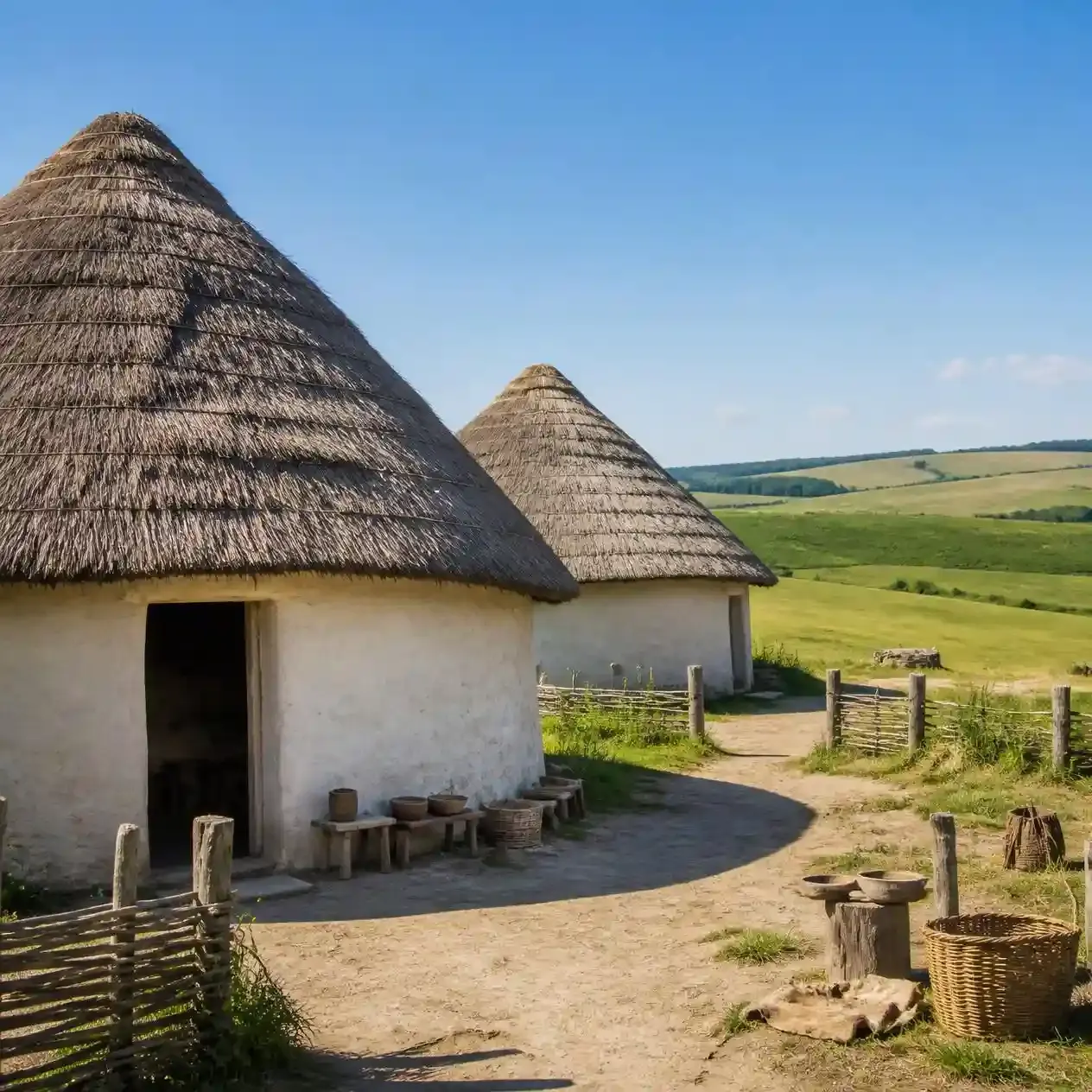
Admission includes more than the stones: the visitor centre exhibition holds over 250 archaeological finds with a 360-degree projection that stands you virtually inside the circle, and the reconstructed Neolithic houses outside show how the builders actually lived. A shuttle covers the mile and a half from the visitor centre to the circle, with an audio guide available in 11 languages — though walking at least one direction across the open plain is the better arrival. The general route is the perimeter path around the stones; entering the circle itself is reserved for the access visits below. Every Stonehenge experience listed on Travjoy's Stonehenge page has been researched and approved by local experts, so the format you book — entry ticket, guided day out, or access visit — is a choice between good options rather than a gamble.
The elevated option: inside the stones
The Stone Circle Experience is the ticket that changes the visit. For about an hour at dawn or dusk, outside public opening, a maximum of 52 people — split into two groups of 26 — walk inside the circle itself, close enough to read the tool marks on the sarsens and pick out the Slaughter Stone and Heel Stone in the low light. It runs from roughly £70 ($95) per adult and £40 ($54) per child, sells out months ahead, and is currently booking well into 2027. Touching the stones is not permitted, but tripods are — and the photographs are the ones nobody on the daytime path can take. If Stonehenge matters to your trip, this is where to spend.
When to go
- Opening hours (28 Mar–6 Sep 2026): 9.30am–6pm, last entry 4pm
- Opening hours (7 Sep 2026–16 Mar 2027): 9.30am–5pm, last entry 3pm
- Quietest: the first morning slots on weekdays; busiest window is 11am–2.30pm, especially weekends and school holidays
- Light: early morning and late afternoon give the stones their depth — midday flattens them
- Closed 25 December; solstice dates run altered arrangements around the open-access gatherings
Beyond the stones — pairing Stonehenge with Salisbury and Bath
Stonehenge takes about two hours; the day around it is where the itinerary decisions sit. Three pairings work, each with a different centre of gravity.
Salisbury: the quiet, closer companion
Nine miles south, Salisbury holds Britain's tallest cathedral spire, the world's oldest working mechanical clock, and one of the four surviving original copies of Magna Carta — a genuine 13th-century document a short drive from a 4,500-year-old monument. Most coach itineraries skip it, which is precisely its appeal for a second visit: cathedral close, riverside pubs, and none of the crowd choreography.
Bath and Windsor: the classic combinations
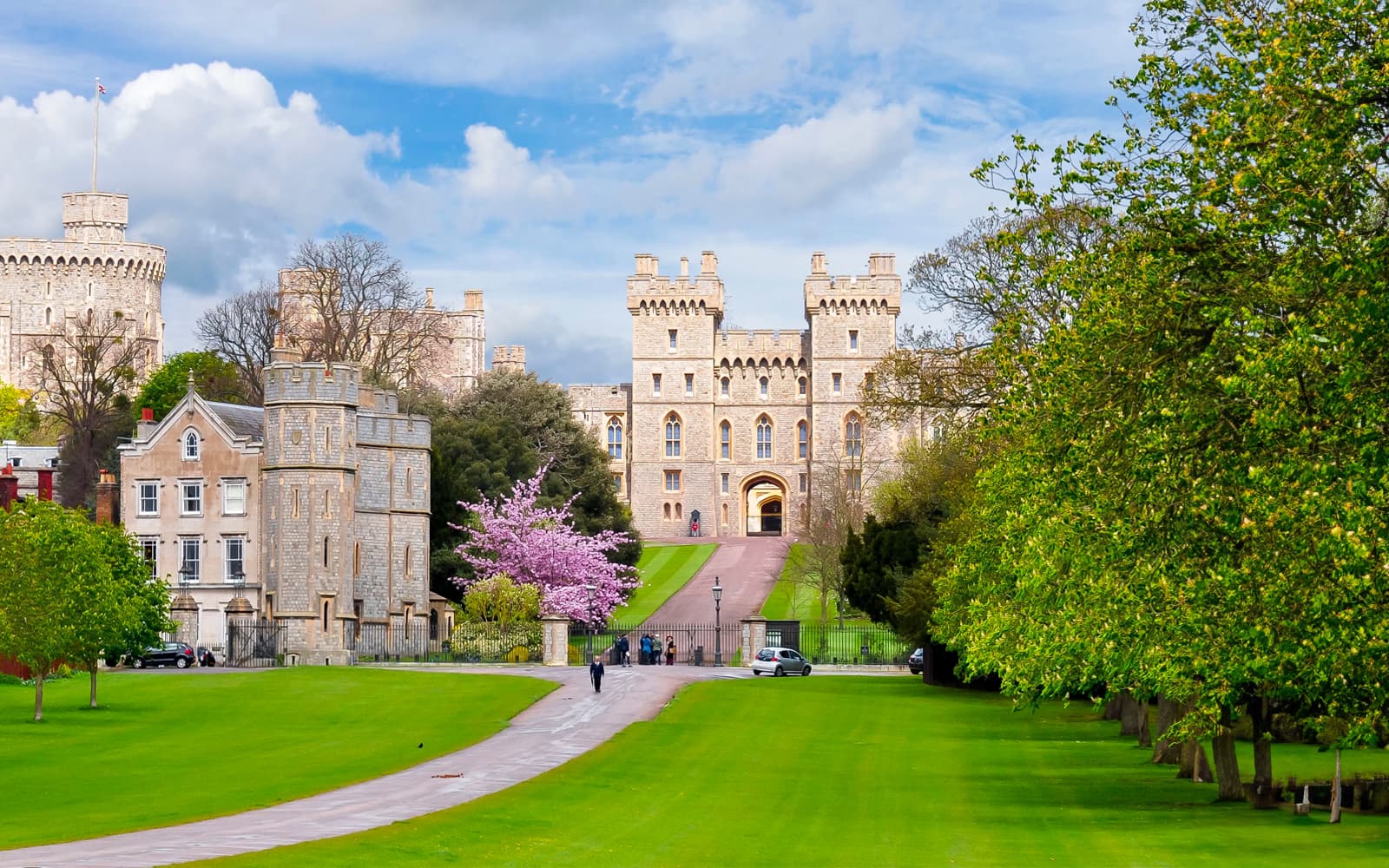
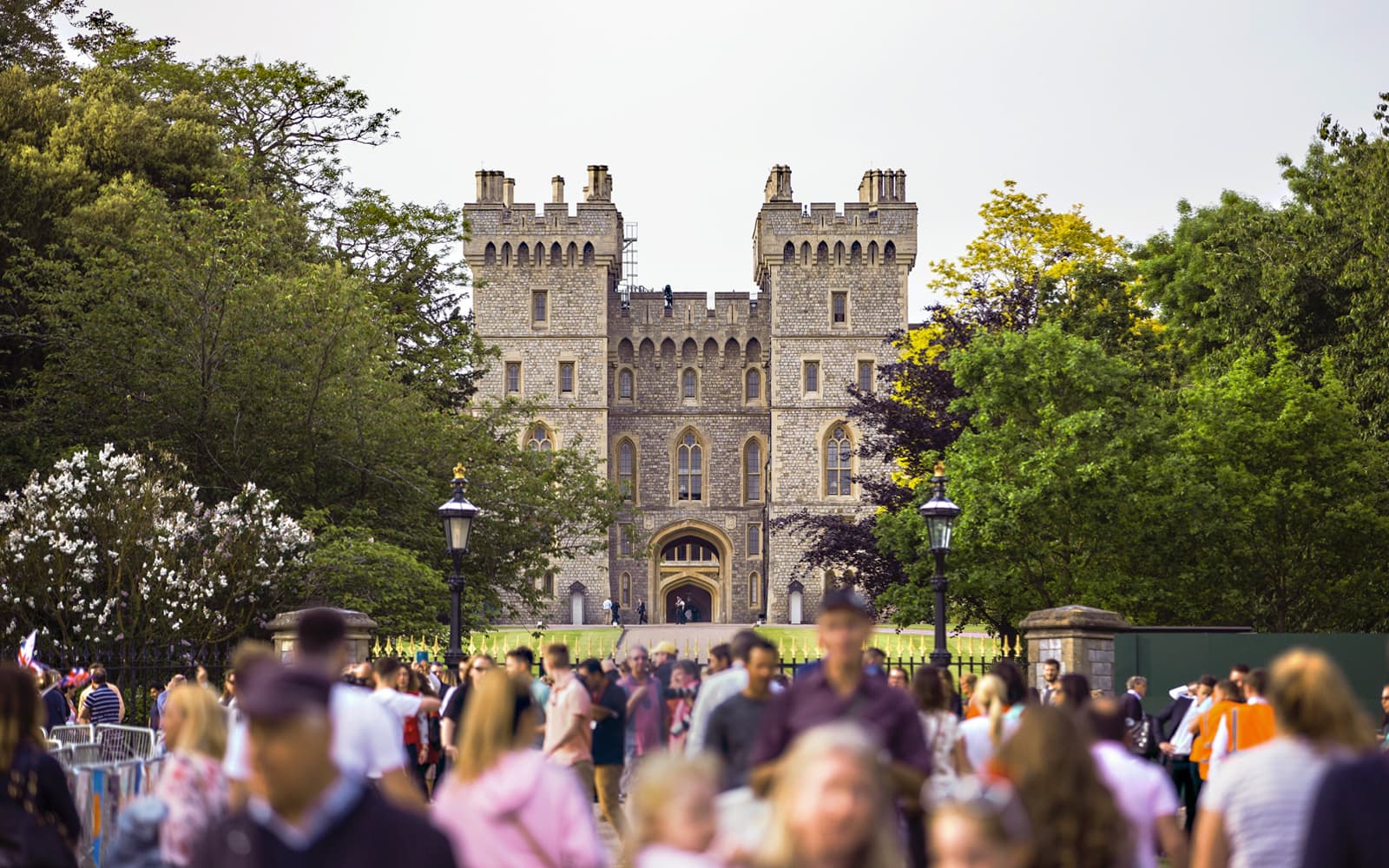
The most common full-day pairing runs Stonehenge with Bath — the Roman baths and Georgian crescents make a rich counterweight to the prehistoric plain, at the cost of a longer day on the road. The alternative pairs the stones with Windsor Castle on the return towards London. If this is your first run at the stones, the Bath combination gives the fuller day; if you have seen Bath before, Windsor keeps the driving shorter and the afternoon royal.
The second-visit angle: walk the landscape
Returning visitors should skip the shuttle entirely and walk — from the visitor centre across the plain, or the longer route in from Durrington Walls past Woodhenge and down the line of the Avenue, arriving at the circle the way its builders did. The barrows, earthworks, and sightlines that make sense of the monument are invisible from the car park and largely empty of people. It is the least-taken option at one of the most-visited sites in Britain.
Plan your visit
Stonehenge rewards a planned visit: the history runs deeper than the skyline silhouette, the meaning is a live archaeological question rather than a settled fact, and the difference between a rushed photo stop and a proper encounter comes down to three choices — the advance timed ticket, the early or late slot for the light, and, if the stones are the point of your trip, the Stone Circle Experience booked months ahead. Pair it with Salisbury, Bath or Windsor and the day earns its place in any England itinerary. Start planning your Stonehenge day out and the rest of your trip on Travjoy's London page.



.svg&w=1920&q=75)