


London: Bath
Operating Hours:Roman Baths: Daily 09:30 - 18:00 (summer extended to 21:00). Most other central sights: Daily 10:00 - 17:00
The Vibe:Georgian elegance above Roman waters.
Set in a Somerset valley 115 miles west of London, Britain's only UNESCO-listed city is built on natural hot springs the Romans first tapped 2,000 years ago. Its honey-coloured Georgian architecture made it the 18th-century spa capital of Europe.
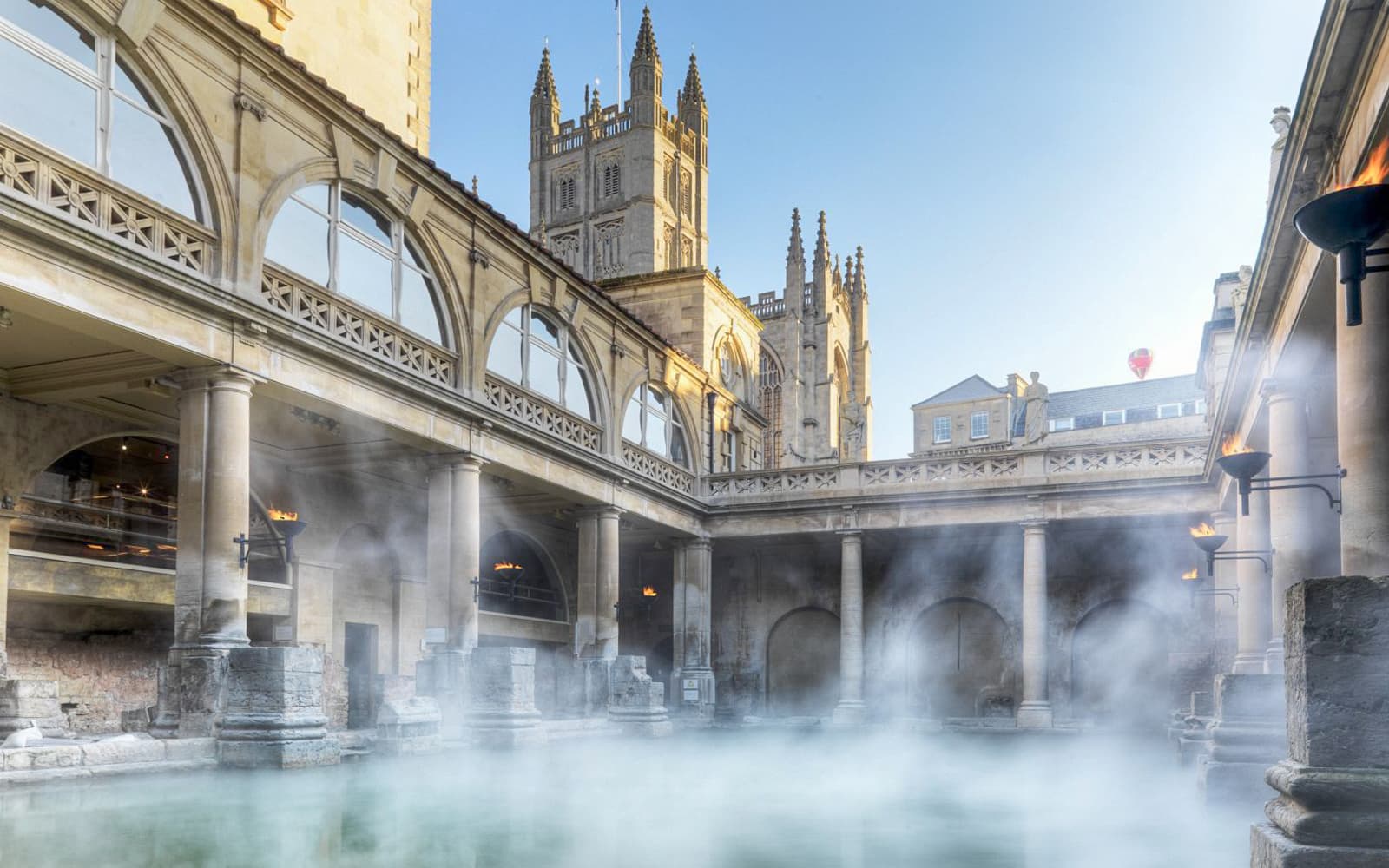
Steam rises from the ancient baths in cool weather; Bath stone glows gold in evening light. Cobbled streets curve past the Royal Crescent; buskers with violins play outside the Abbey Churchyard.
- • UNESCO World Heritage Site since 1987 — the only entire city in the UK so listed
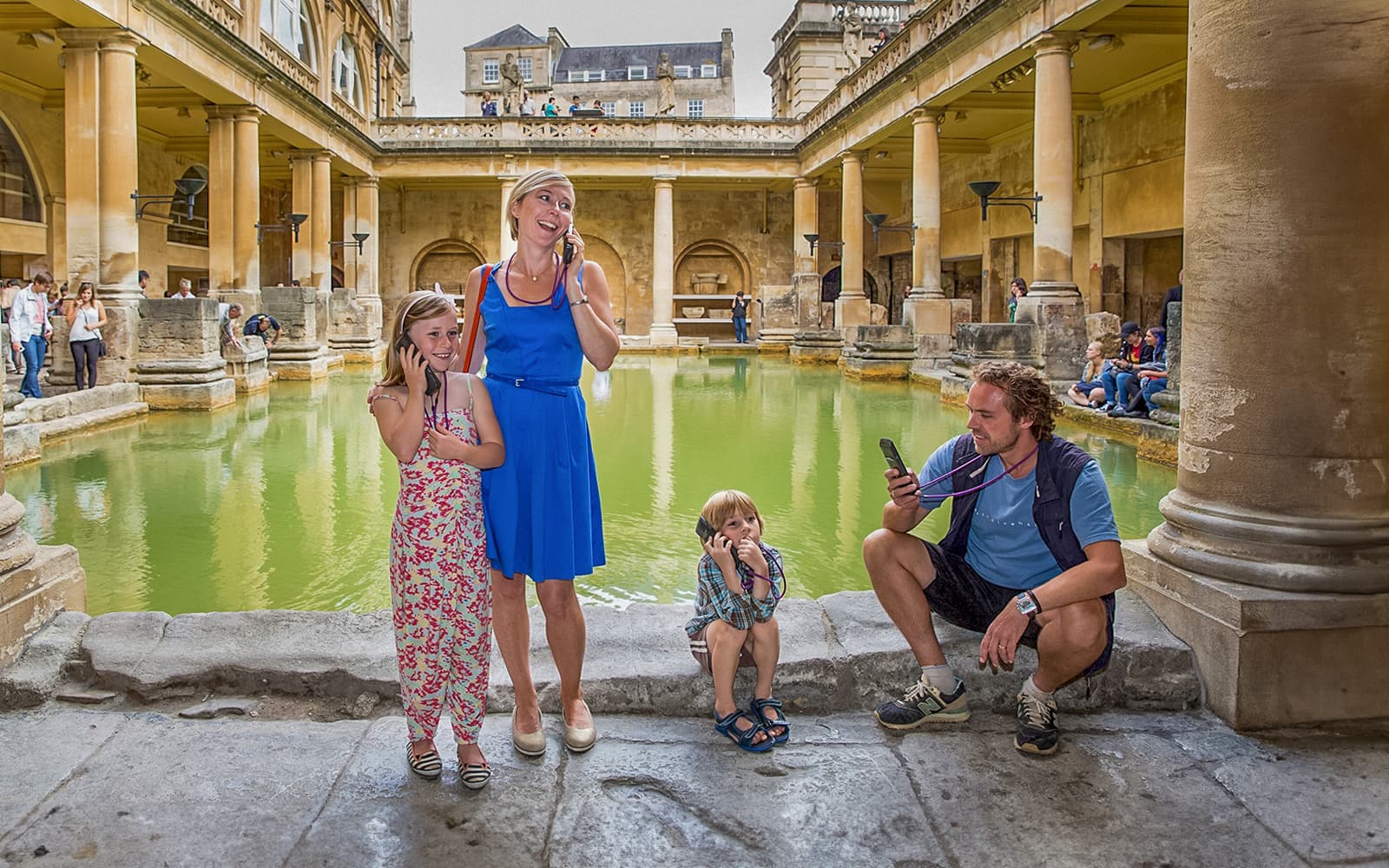
- • Home to Britain's best-preserved Roman bath complex
- • Setting for two of Jane Austen's novels: Northanger Abbey and Persuasion
- • Europe's only natural thermal springs in a city centre, flowing at 46°C
Persona Fit
- 👨👩👧 Families: Roman Baths audio guide is designed for children; street performers in the Abbey Churchyard
- 💕 Couples: Thermae Bath Spa rooftop pool at dusk
- 👵 Seniors: Compact walkable centre; plenty of rest benches
- 📸 Photographers: Royal Crescent from the sloping lawn below gives classic compositions
Highlights
- Roman Baths — the preserved ancient complex with the original Sacred Spring
- Bath Abbey — last great medieval cathedral built in England (completed 1499)
- Royal Crescent — Georgian terrace of 30 houses in a curving sweep
- Thermae Bath Spa — modern spa fed by the same natural thermal waters
- Jane Austen Centre — immersive museum of the author's Bath years
- Pulteney Bridge — one of only four bridges in the world lined with shops — Hidden Gem
3 Curated Booking Options
Starts From
(Per Person)

Sarah Riches
Our London Local Expert
Table of Contents
Things To Do Nearby
Prior Park Landscape Garden — 18th-century Palladian garden with Palladian bridge, one mile south
The Cotswolds — AONB countryside begins 20 miles north
Castle Combe — picture-book stone village, 12 miles north
Lacock Village — Harry Potter filming location, 15 miles east
Prior Park Landscape Garden — 18th-century Palladian garden with Palladian bridge, one mile south
The Cotswolds — AONB countryside begins 20 miles north
Castle Combe — picture-book stone village, 12 miles north
Lacock Village — Harry Potter filming location, 15 miles east
TJ's Guide - Bath
Know Before You Go
Insider Tips
Best Time: Evening for torchlit Roman Baths or the Royal Crescent in gold light
Hack: Pre-book the Roman Baths online to save 10% and skip on-the-day queues
Hidden Gem: No. 1 Royal Crescent is fully restored and gives the indoor Georgian experience
Thermae Bath Spa requires advance booking — especially for the rooftop pool at sunset
Sally Lunn's historic bun shop traces to 1680 — the oldest eating house in Bath
Best Time: Evening for torchlit Roman Baths or the Royal Crescent in gold light
Hack: Pre-book the Roman Baths online to save 10% and skip on-the-day queues
Hidden Gem: No. 1 Royal Crescent is fully restored and gives the indoor Georgian experience
Thermae Bath Spa requires advance booking — especially for the rooftop pool at sunset
Sally Lunn's historic bun shop traces to 1680 — the oldest eating house in Bath
Know Your Facts
- From London: Direct train from Paddington (90 minutes)
- By car: 2.5 hours from London via M4 and A46
- Bath's historic centre is largely pedestrian; park at Lansdown or Odd Down Park & Ride
- First-time tip: Trains arrive at Bath Spa — a five-minute walk from the Roman Baths
Once You Reach
Internal Navigation
Compact grid: Most major sights within 15 minutes on foot
Roman Baths and Abbey sit in the same central square
Royal Crescent and Circus: 10-minute walk uphill from the centre
Accessibility: Step-free across main sights; some Georgian interiors have stairs
Efficient route: Baths first, then Abbey, lunch in Abbey Churchyard, then Royal Crescent
Food & Coffee Shops
Sally Lunn's: Historic bun shop dating to 1680, famous for the Sally Lunn bun
The Pump Room: Grand Georgian restaurant above the Roman Baths
Boston Tea Party (Kingsmead Square): Casual brunch and coffee popular with locals
Sally Lunn's: Historic bun shop dating to 1680, famous for the Sally Lunn bun
The Pump Room: Grand Georgian restaurant above the Roman Baths
Boston Tea Party (Kingsmead Square): Casual brunch and coffee popular with locals
Photography Tips
Roman Baths interior allows photography; no tripods
Royal Crescent photographs best from the sloping lawn below, with a wide-angle lens
Pulteney Bridge works in morning light; Parade Gardens gives the classic view of the weir
Evening light on Bath stone is the city's signature — shoot after 17:00
Roman Baths interior allows photography; no tripods
Royal Crescent photographs best from the sloping lawn below, with a wide-angle lens
Pulteney Bridge works in morning light; Parade Gardens gives the classic view of the weir
Evening light on Bath stone is the city's signature — shoot after 17:00
Explore Deeper
The Romans built the bath complex around 60 CE, calling the settlement Aquae Sulis after a Celtic water goddess. The baths fell into ruin after the Roman withdrawal and were rediscovered in the 18th century, just as Beau Nash was transforming Bath into England's most fashionable spa town.
The Sacred Spring produces 1.17 million litres of 46°C water daily — unchanged since Roman times
The Great Bath sits on its original Roman foundations; only the upper levels and statuary are Victorian additions
John Wood the Elder designed the Circus and (posthumously) the Royal Crescent as parts of a grand Palladian plan for the city
Jane Austen lived in Bath from 1801 to 1806 and set two novels — Northanger Abbey and Persuasion — in the city
The Sacred Spring produces 1.17 million litres of 46°C water daily — unchanged since Roman times
The Great Bath sits on its original Roman foundations; only the upper levels and statuary are Victorian additions
John Wood the Elder designed the Circus and (posthumously) the Royal Crescent as parts of a grand Palladian plan for the city
Jane Austen lived in Bath from 1801 to 1806 and set two novels — Northanger Abbey and Persuasion — in the city
Did You Know?
Only natural hot springs — Bath is the only city in the UK with natural thermal waters in its centre
UNESCO uniqueness — Bath is one of only two entire cities in Europe designated UNESCO World Heritage (Venice is the other)
Bath stone — The honey-coloured oolitic limestone used throughout came from nearby Combe Down quarries
Austen's view — Jane Austen disliked Bath; her letters describe the city as 'vapour, shadow, smoke and confusion'