


Snorkelling in Bali: Best Spots, Costs, and What to Expect
11 min read

Raj Varma
Author
Travel & Tourism Expert Ex-Thomas Cook, Kuoni, Times of India & Travel Triangle.
SHARE BLOG
TABLE OF CONTENTS
- Key Takeaways
- Is snorkelling in Bali actually worth it?
- The best snorkelling spots in Bali, ranked by what they deliver
- What to expect on a Bali snorkelling tour
Key Takeaways
- Bali's three real snorkelling zones are Nusa Penida (manta rays), the east coast (Amed, Tulamben, Padang Bai), and the north coast (Menjangan Island) — the famous south-coast beaches like Kuta and Seminyak have almost no coral and are poor bases for a snorkel trip.
- Group day-tour prices in 2026 run IDR 350,000–800,000 (~USD 22–50) per person; private charters from IDR 1.2–1.8 million (~USD 75–115); DIY shore snorkel with rented gear is under IDR 80,000 (~USD 5).
- Manta rays are sighted year-round at Manta Point but most reliably from May to October; underwater visibility collapses from 25 m to 5–10 m during the wet season (December to February).
- Beginners and families should start at Blue Lagoon (Padang Bai) or Jemeluk Bay (Amed) — calm, shallow, easy shore entry, and far less boat-jumping than the Penida tours.
The best snorkelling in Bali sits well away from the busy south-coast beaches. Plan around three zones — Nusa Penida for manta rays, Amed and Tulamben on the east coast for shore reefs and the USS Liberty wreck, and Menjangan Island in the north for the clearest water on the island. Group tours cost IDR 350,000–800,000 (USD 22–50) and run April to October with the best visibility.
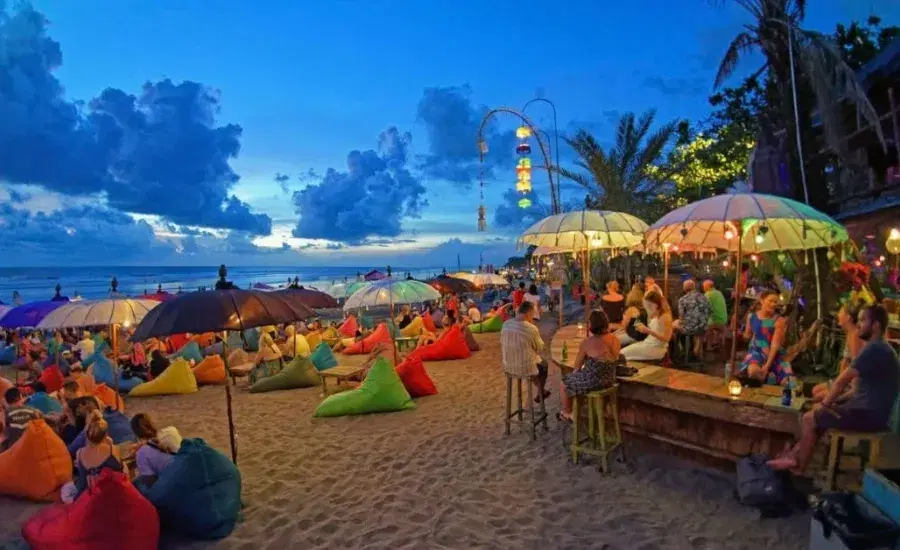
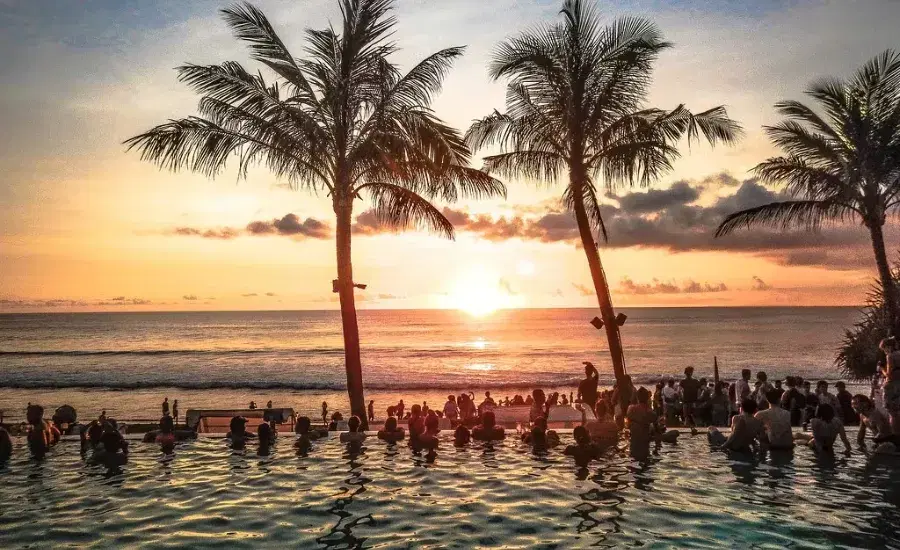
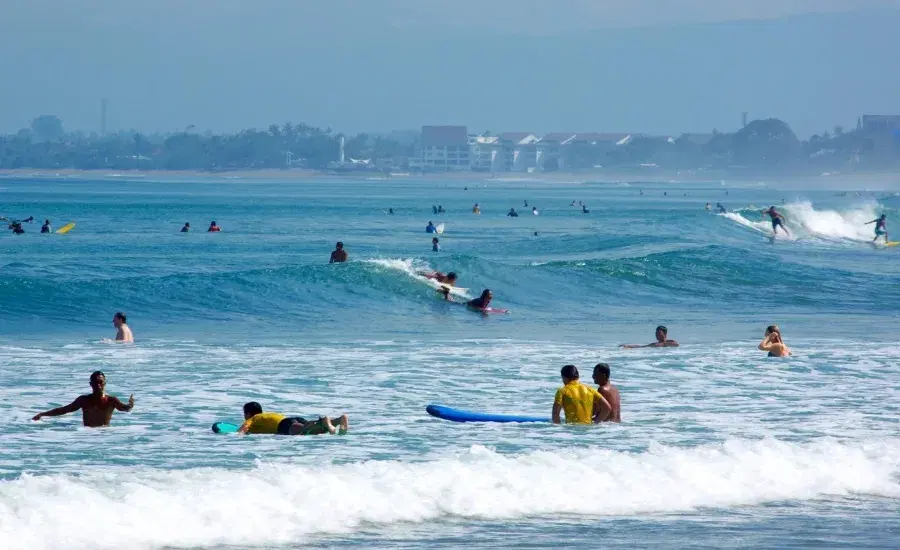
Most travellers book a hotel in Kuta or Seminyak and assume the snorkelling will follow. It doesn't. The south coast is built for surf, sunsets and beach clubs — the water is grey, the coral is gone, and the closest decent reef is a 90-minute drive away. The mistake costs people a full day of their trip when they figure it out on arrival.
Bali's real snorkelling is on the opposite side of the island, plus the islands off the southeast coast. This guide walks through the best spots, what a typical day on the water actually looks like, and what you'll pay in 2026 — split by group tours, private charters and DIY shore snorkelling. There's a comparison table for the seven spots that matter, a "which should you choose" breakdown by traveller type, and the insider details (cold water at Manta Point, leaking rental masks, August queues) that most listicles skip.
By the end you'll know whether snorkelling deserves a day of your itinerary, which spot fits your travel style, and what to book before you arrive.
Is snorkelling in Bali actually worth it?
Snorkelling in Bali is worth a dedicated day for most travellers, especially first-timers to Southeast Asia — manta-ray sightings at Nusa Penida are reliable from April to October, shore snorkelling at Amed gets you to coral within a 30-second swim, and a full group tour costs less than a single beach-club dinner in Seminyak. It's not worth it if your trip falls in the deep wet season or if you've already snorkelled top-tier sites elsewhere.
Worth it if…
- You're visiting between April and October when visibility holds at 20–30 metres
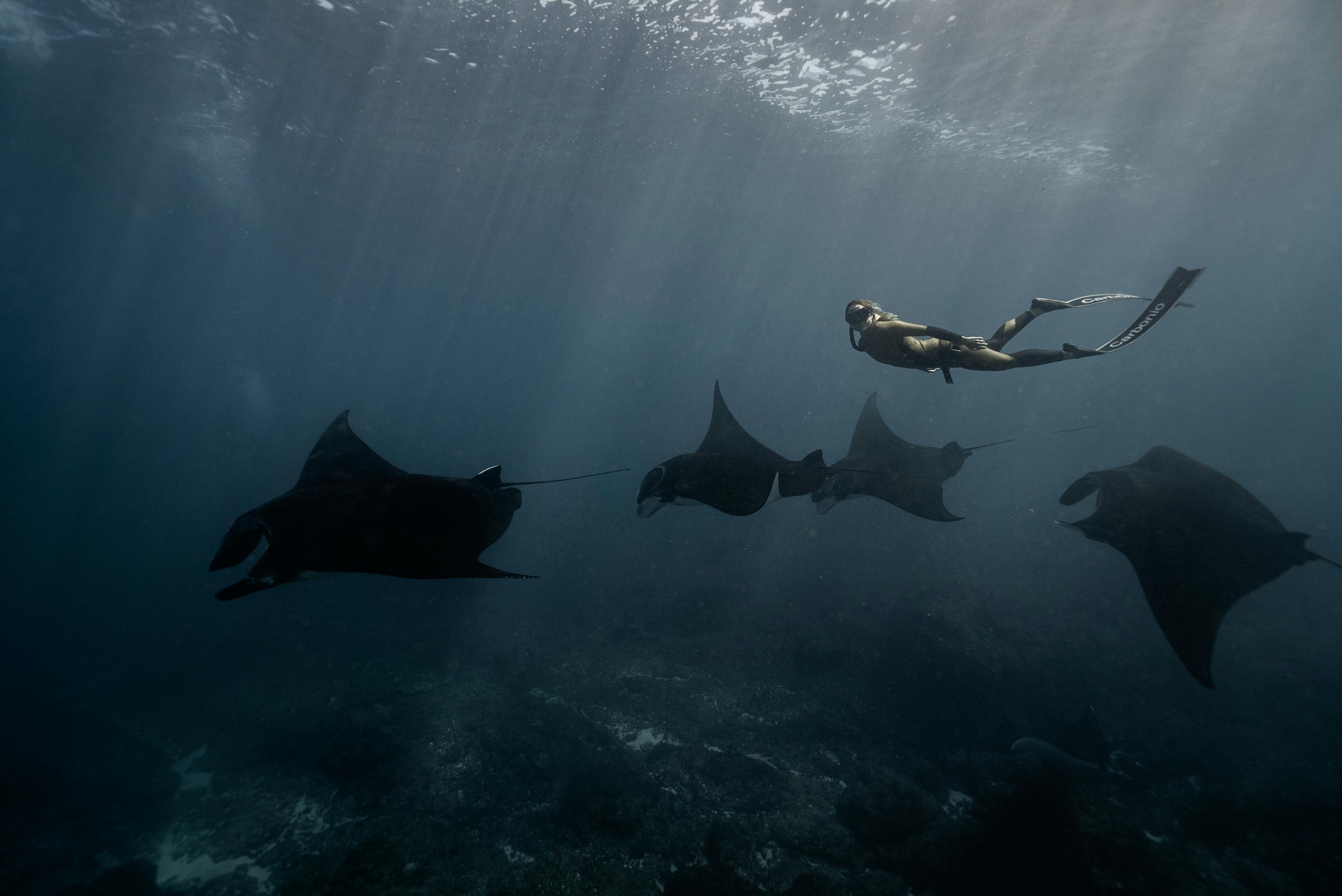
- Manta rays are on your bucket list — Nusa Penida is one of the few places in the world where snorkellers (not just divers) reliably swim with them
- You're travelling with kids — Blue Lagoon and Jemeluk Bay are calm, shallow and shore-accessible
- You've never tried snorkelling before — Bali's combination of warm water, beginner sites and English-speaking guides is among the easiest entry points anywhere
- You're staying long enough to make the drive to Amed, Pemuteran, or do a Penida day trip from Sanur
Not ideal if…
- Your trip falls between December and February — runoff cuts visibility to 5–15 metres and some operators pause
- You're spending all your nights in Kuta, Seminyak or Canggu and don't have a full day to spare on a Nusa Penida round-trip
- You've snorkelled the Maldives, Raja Ampat, the Great Barrier Reef or the Philippines — Bali's coral is good, not world-class, and the comparison may underwhelm
- You can't swim confidently and aren't comfortable jumping off a boat — most Penida tours skip jetties and board from the deck
The best snorkelling spots in Bali, ranked by what they deliver
Bali's snorkelling clusters into seven spots worth considering. Each delivers something different — pick by what you most want to see, not by which is nearest your hotel. The order below runs roughly from highest-impact to most niche.
Nusa Penida — Manta Bay, Crystal Bay, Gamat Bay
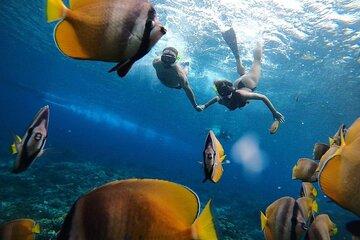
The flagship. Nusa Penida sits a 30-minute fast-boat ride east of Sanur, and the standard snorkelling tour visits three to four spots in a single day. Manta Bay (also called Manta Point) is the headline — manta rays glide through the shallows and snorkellers float above them. Crystal Bay has the brightest coral and the best visibility on a calm day. Gamat Bay is the quieter, fish-heavy stop most operators add as the third site.
Standard day-tour ticket includes a hotel pickup in south Bali, the fast boat, gear, lunch and a guide. Total time door-to-door is roughly 11 hours.
Amed — Jemeluk Bay and the Japanese Patrol Boat wreck
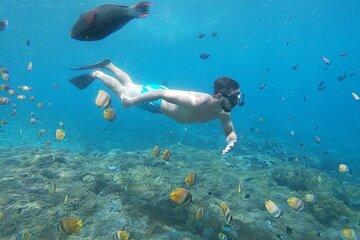
Amed is the east-coast snorkelling town. Black-sand beaches, glass-flat water, and coral close to shore — you can rent a mask at a warung for IDR 50,000 and be on the reef in 30 seconds. Jemeluk Bay is the most photographed stretch; the Japanese Patrol Boat wreck sits in 6–12 metres of water just off the beach at Amed Bay, fully visible to snorkellers from the surface.
Best base for travellers who want quiet, hate big boats, and can swim a confident 100 metres unassisted. The drive from south Bali takes 2.5–3 hours.
Tulamben — USS Liberty wreck
Tulamben is technically a dive site — the USS Liberty is a 120-metre WWII cargo ship resting in 5–30 metres of water just 30 metres off a black-pebble beach. The shallowest sections of the wreck (around the bow) are within reach of snorkellers on a calm day. Coral has colonised the entire hull, and the resident fish life is dense. Most snorkellers tag Tulamben onto an Amed base — it's a 20-minute drive between them.
Menjangan Island — West Bali National Park
Menjangan is the clearest water in Bali. The island sits off the northwest coast inside West Bali National Park, reached by a 30-minute boat ride from Pemuteran. Visibility regularly hits 30 metres, sometimes 50. The drop-off walls are coated in gorgonian fans, sponges and pelagic fish. Locals call it the "Maldives of Bali" — it earns the comparison.
The catch: the drive from south Bali takes 4–5 hours. Realistically you stay one or two nights in Pemuteran rather than day-tripping.
Blue Lagoon — Padang Bai
The beginner option. A small protected cove 90 minutes from south Bali, with shallow entry from the beach, calm conditions, and friendly reef fish in 1–4 metres of water. Mask-and-fin hire runs IDR 50,000–80,000 from the beach shacks. Half-day group tours that combine Blue Lagoon with nearby Tanjung Jepun cost IDR 350,000–500,000 (USD 22–32) and include a guide who'll spot turtles, reef sharks and squid.
Lovina — north coast sunrise snorkel
Lovina is best known for its dawn dolphin-spotting boats, and most operators bolt a snorkel stop onto the trip. The coral is modest by Menjangan or Penida standards, but the dolphin-plus-snorkel combo is unique in Bali. Plan to stay one night in Lovina — the 2.5-hour drive from south Bali rules out a same-day return.
Nusa Lembongan — Mangrove Point
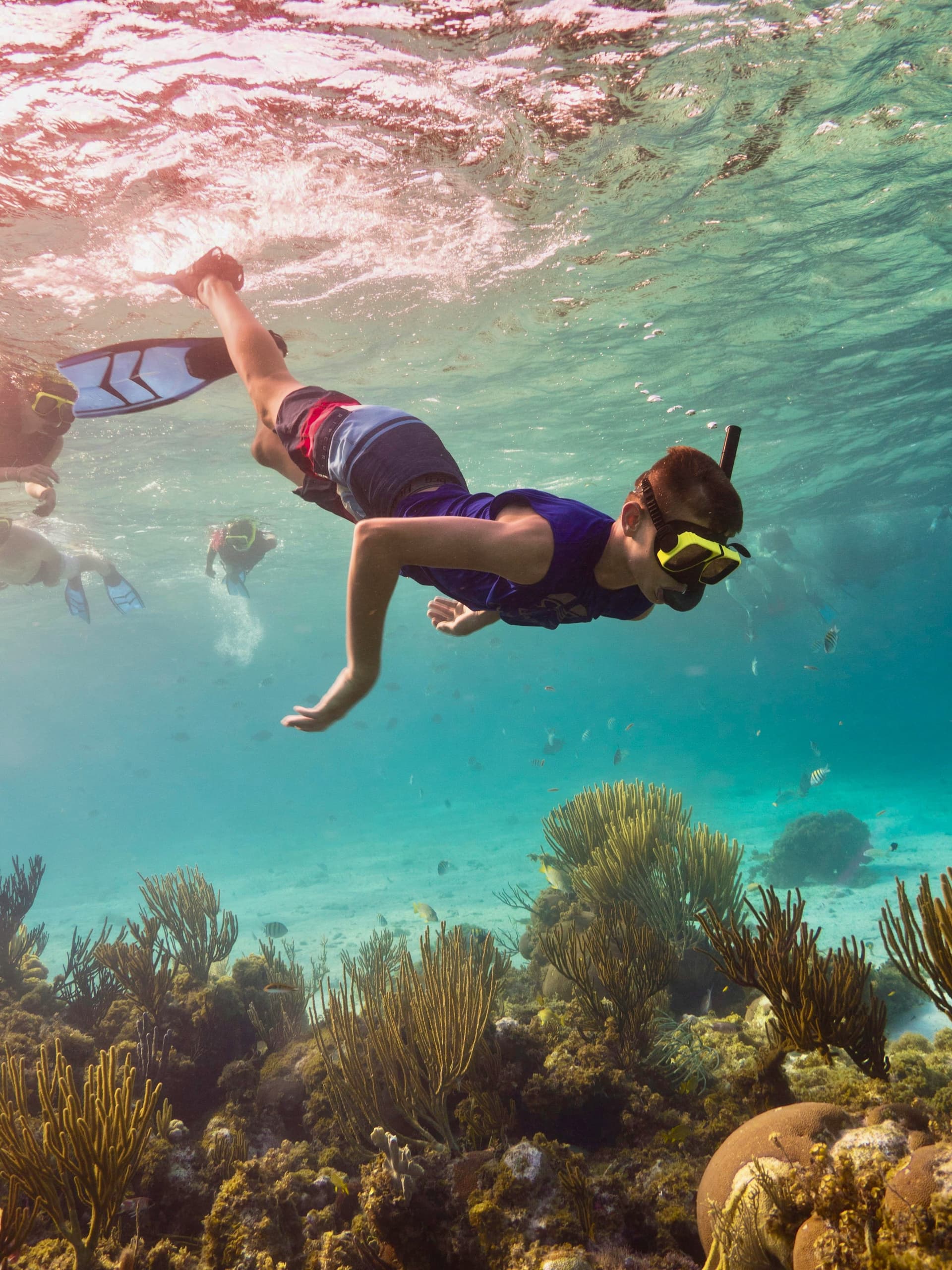
If Nusa Penida feels intimidating — the boat jumping, the cold water, the queues — Nusa Lembongan is the easier sister island. Mangrove Point is a calm, shallow reef on the north coast suited to beginners and families. The fast boat from Sanur takes 30 minutes, and many operators run combined Lembongan-Penida packages so you get the calm reef and the manta-ray spot in one day.
Comparison table — Bali's seven snorkel spots
The table below maps each spot against the variables that actually matter: visibility, marine life, difficulty, and what you'll pay for a typical visit. Use it to shortlist before you read into the specifics.
| Spot | Region | Visibility (dry season) | Marine life highlight | Difficulty | Typical cost (2026) | Best for |
|---|---|---|---|---|---|---|
| Nusa Penida | SE islands | 15–25 m | Manta rays | Moderate (boat jumps) | IDR 450K–800K (~USD 28–50) | First-timers chasing mantas |
| Amed (Jemeluk Bay) | East coast | 15–20 m | Coral gardens, wreck | Easy (shore entry) | IDR 50K–80K DIY (~USD 3–5) | Independent snorkellers |
| Tulamben (USS Liberty) | East coast | 15–25 m | WWII shipwreck, dense fish | Easy-moderate | IDR 100K–200K (~USD 6–13) | Wreck enthusiasts |
| Menjangan Island | North coast | 25–50 m | Wall coral, pelagic fish | Easy (boat-supported) | USD 50–80 | Repeat visitors, photographers |
| Blue Lagoon (Padang Bai) | East coast | 10–15 m | Turtles, reef sharks | Easy (shore entry) | IDR 350K–500K (~USD 22–32) | Beginners and families |
| Lovina | North coast | 10–15 m | Dolphins, moderate reef | Easy | IDR 200K–400K (~USD 13–25) | Dolphin-snorkel combo |
| Nusa Lembongan | SE islands | 10–20 m | Mangroves, reef fish | Easy | IDR 400K–700K (~USD 25–45) | Penida-anxious travellers |
Browse Travjoy's top 20 Bali experiences if you want to see how snorkelling slots into a broader itinerary.
What to expect on a Bali snorkelling tour
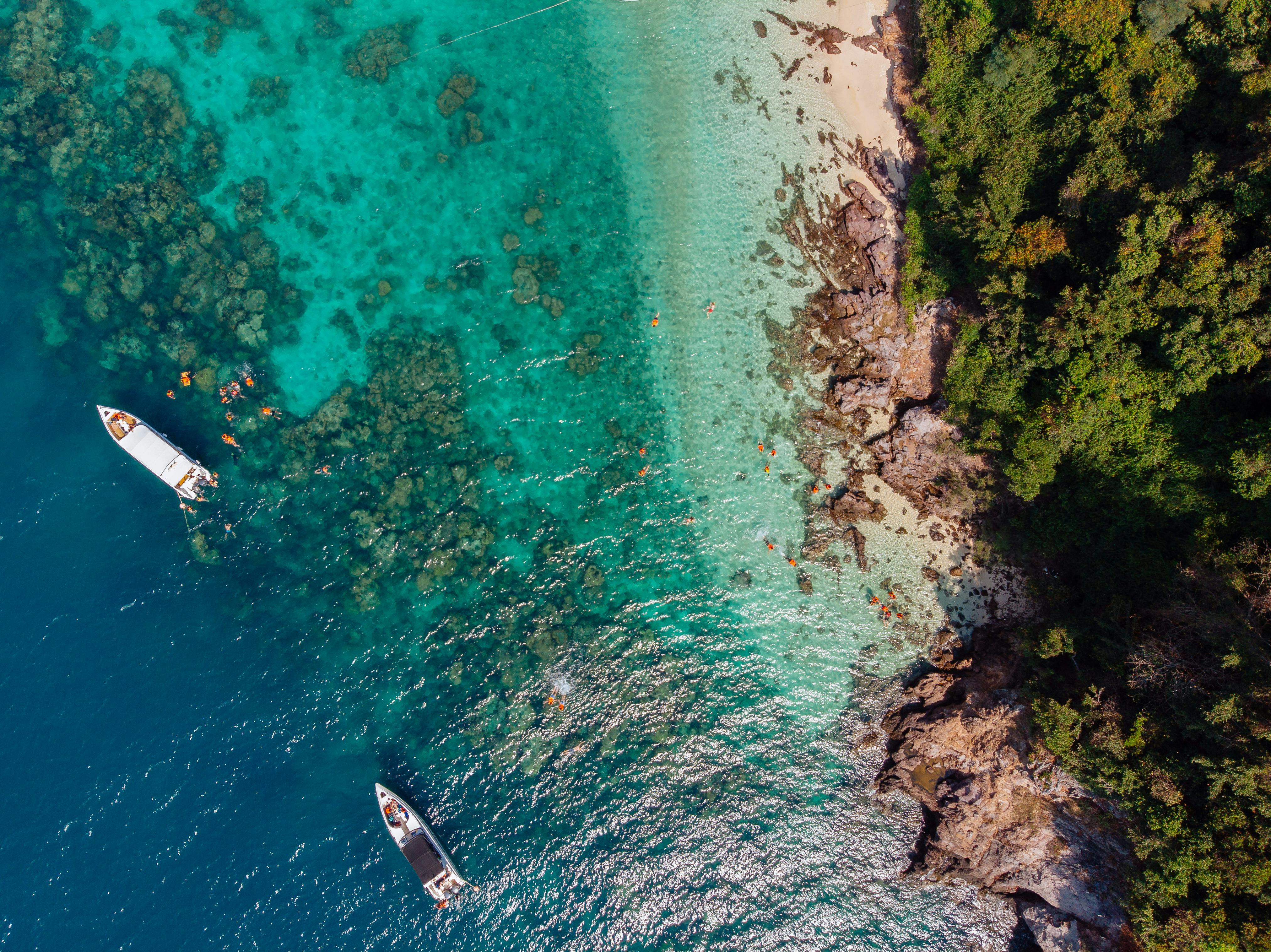
A typical Bali snorkelling day runs 10–12 hours door to door, includes hotel pickup, fast-boat transfer, three to four snorkel sites with gear and guide, and a lunch stop. Manta sightings are likely but not guaranteed — they depend on currents and the day, not the tour brand. Expect to board boats by jumping in from the deck rather than walking off a jetty.
The day-trip rhythm
A standard Nusa Penida snorkel tour from south Bali looks like this:
- 6:00–6:30 AM: Hotel pickup in Kuta, Seminyak, Sanur or Ubud
- 7:30 AM: Check-in at Sanur Harbour
- 8:30 AM: Fast boat to Nusa Penida (30 minutes)
- 9:30 AM–1:00 PM: Three snorkel stops (typically Manta Bay, Crystal Bay, Gamat Bay or Wall Point)
- 1:30 PM: Lunch at a local restaurant
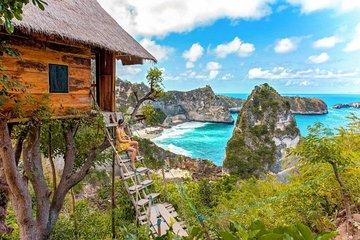
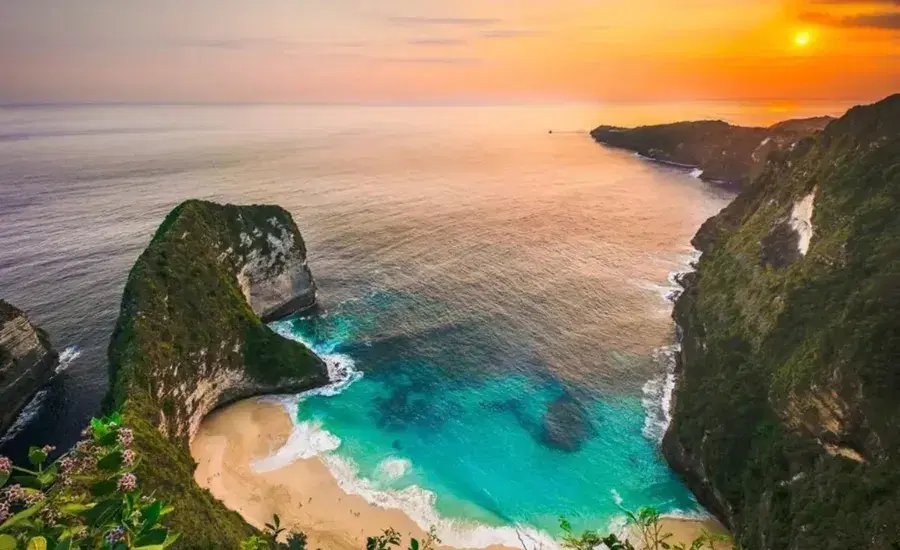
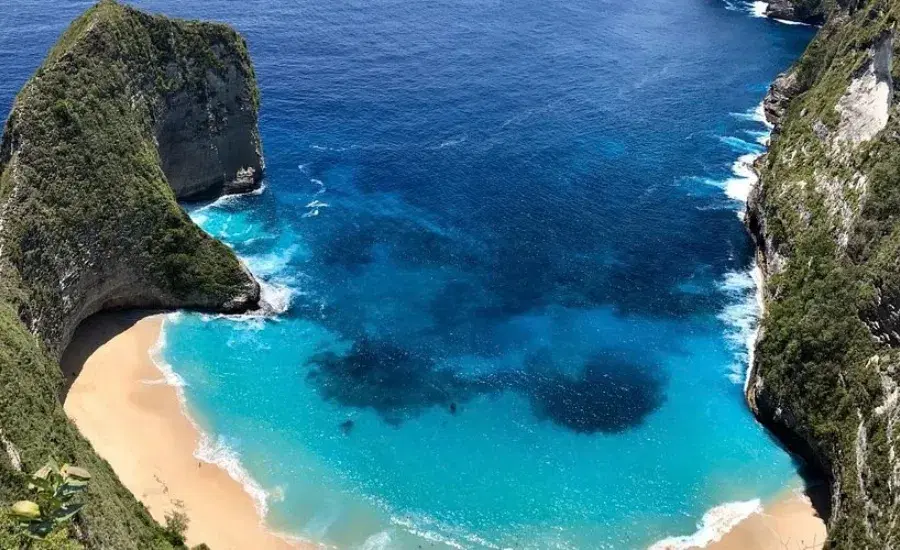
- 3:00 PM: Optional land tour to Kelingking and Broken Beach (premium packages)
- 4:30 PM: Fast boat back to Sanur
- 5:30–6:00 PM: Hotel drop-off
What's included, what isn't
- Included as standard: Hotel transfer (south Bali only), fast boat, snorkel mask, fins, life jacket, guide, lunch
- Usually extra: GoPro rental (~IDR 100,000–150,000 / USD 6–10), wetsuit hire (~IDR 100,000), pickup from Ubud/Uluwatu/Canggu (IDR 150,000–400,000 group surcharge)
- Bring your own: Hat, sunglasses, reef-safe sunscreen, motion-sickness tablets, dry bag, swimwear and towel, change of clothes for the boat back
Boarding the boat — the reality nobody mentions
Most Bali snorkel boats don't dock at jetties. You board from a small platform or wade out from the beach, climb a metal ladder onto the deck, and jump back in via the deck when you reach the snorkel spot. There's no graceful walk-down — you sit on the side, the crew yells "manta!", and you slide into the water. The exit is via a ladder. None of this is dangerous, but it's worth knowing if you're nervous around boats or travelling with someone who is.
Reality check — manta sightings depend on the day, not the operator
- Every Penida snorkel boat visits the same two or three bays — Manta Bay and Manta Point cycle depending on swell direction. The "best" operator and the "cheapest" operator are looking at the same water.
- Sightings depend on currents flushing plankton through the bays. Some days you see eight mantas, some days zero. Cloudy mornings are often better than sunny ones because the rays sit higher in the water column.
- If mantas are essential, book a two-day trip with an overnight on Nusa Penida — the second morning is your insurance against a blank first day.
Reality check — Manta Point can be cold and choppy
- Water at Manta Point sits between 22°C and 24°C even in dry season, which feels cold after Bali's 28°C beach water. Wear a rash vest or rent a wetsuit shorty.
- The bay is open to ocean swell. Even on a calm day, surface chop makes it harder to track mantas. Take motion-sickness tablets one hour before boarding, not after — by the time you feel queasy, they won't work.
- Strong swimmers are fine without a life jacket; weaker swimmers should keep theirs on. The current can push you 50 metres in five minutes.


How much does snorkelling in Bali cost?
Snorkelling in Bali in 2026 costs between IDR 50,000 (USD 3) for DIY shore-rented gear and IDR 1.8 million (USD 115) for a private Nusa Penida charter. Group day tours sit in the middle at IDR 450,000–800,000 (USD 28–50) per person. The spread is wide because the price hides large differences in boat quality, group size, included spots and pickup zone — read the inclusions, not the headline number.
Full cost breakdown by tour type
- DIY shore snorkel (Amed, Blue Lagoon): Mask, fin and snorkel hire from beach warungs runs IDR 50,000–80,000 (USD 3–5) for the day. Add transport and lunch and a full day costs under USD 30.
- Half-day group tour (Blue Lagoon and Tanjung Jepun, with guide): IDR 350,000–500,000 (USD 22–32) — includes pickup from south Bali, gear, guide and lunch.
- Full-day Nusa Penida group snorkel tour: IDR 450,000–800,000 (USD 28–50) per person. Three snorkel stops, hotel transfer, fast boat, lunch and guide all included. Larger groups (10+ people) push the price toward the lower end.
- Premium Nusa Penida tour with land sightseeing: IDR 850,000–1,200,000 (USD 55–75) — adds Kelingking, Broken Beach and Angel's Billabong photo stops to the snorkel itinerary.
- Private Nusa Penida charter: IDR 1,200,000–1,800,000 (USD 75–115) per person for groups of 2–4. Faster pace, no waiting for other passengers, choose your own snorkel rotation.
- Menjangan Island boat trip from Pemuteran: USD 50–80 per person inclusive of boat, gear, park entry fee and lunch. Most operators run two dives or three snorkel stops in a half-day.
- Two-tank certified dive (for context): USD 70–120 — useful comparison if you're deciding between snorkelling and a discover-scuba session.
What drives the price gap
Two snorkel tours at the same site can charge wildly different rates. The variables that move the price:
- Group size on the boat — 25-person boats are cheaper per head than 8-person small-group boats
- Pickup zone — Sanur, Kuta, Seminyak and Nusa Dua are usually free; Ubud, Canggu and Uluwatu add IDR 100,000–400,000 per car
- Number of snorkel stops — three stops is standard; some budget tours run only two
- Land-tour add-on — Kelingking, Broken Beach and Diamond Beach extensions add 30–50% to the price
- GoPro and underwater photos — some operators include free underwater photos, others charge IDR 100,000–200,000 separately
Booking online a week ahead is usually 20–30% cheaper than walk-in rates on the day, and you secure a seat in peak season when boats sell out by 5 PM the day before.

Best time to snorkel in Bali
The best time for snorkelling in Bali is the dry season, April to October, when visibility holds at 20–30 metres and seas stay calm enough for the fast boats to run reliably. Wet season (November to March) cuts visibility to 5–15 metres because river runoff carries silt into the bays. May, June and September are the sweet-spot months — dry-season conditions without the August crowd surge.
Month-by-month snapshot
- April–June: Best conditions overall. Dry, calm seas, 25–30 m visibility, manta sightings building, crowds still manageable.
- July–August: Peak season. Visibility excellent but Sanur Harbour and Crystal Bay get crowded; boats queue, parking lots fill, prices spike 15–25%. Mola mola (giant sunfish) season for divers — snorkellers won't see them since they sit at 25–40 metre depth.
- September–October: Returns to the April–June sweet spot. Smaller crowds, dry conditions hold, mantas still active.
- November: Shoulder month. Some calm days, some rain days. Operators run most days but conditions are unpredictable.
- December–February: Wet season peak. Heavy rain, choppy seas, visibility 5–15 m. Many operators reduce schedules or cancel boats outright. Plan land-based activities instead.
- March: Recovery month. Conditions start improving from mid-March; visibility builds back toward 20 m by month-end.
For wider seasonal context across the whole trip, check the best time to visit Bali month-by-month guide.
Manta seasonality
Manta rays are sighted at Manta Point year-round, but reliability shifts. The May-to-October window delivers the most consistent sightings — currents flush plankton through the bays daily and rays cluster to feed. November to April still produces sightings, but you're rolling the dice. Booking a two-day overnight Penida trip raises your odds significantly: the second morning is your insurance.
Which Bali snorkelling tour should you choose?
The right snorkelling option depends on what you most want to see, who's travelling, and how confident a swimmer you are. The recommendations below segment by traveller type — match your group to the closest profile and book accordingly.
Choose a Nusa Penida group tour if…
You're a first-time visitor to Bali, manta rays are on your bucket list, and you want the headline experience without the planning headache. The standard IDR 450K–800K (USD 28–50) group tour from Sanur covers everything in one day. Confident swimmers and reasonable comfort with boats are required.
Choose Amed shore snorkelling if…
You want quiet, hate big tour groups, and can swim a confident 100 metres. Stay two nights in Amed, rent gear from a beach warung for IDR 50,000, and snorkel directly from Jemeluk Bay each morning before the wind picks up. You'll spend less than IDR 200,000 across two days of snorkelling.
Choose Menjangan Island if…
You've already done Nusa Penida on a previous trip, you want the clearest water in Bali, or zero crowds matter more than convenience. The drive from south Bali is long enough that you commit to two nights in Pemuteran — most travellers who make the effort think it's the best snorkelling on the island.
Choose Blue Lagoon (Padang Bai) if…
You're travelling with children under 10, anyone in the group is a first-time snorkeller, or you don't want the boat-jumping and cold-water reality of Penida. Half-day group tours from Sanur or Candidasa run IDR 350K–500K (USD 22–32) and finish by lunch.
Choose Lovina sunrise snorkel if…
The dolphin-spotting boat trip is a separate goal and you want to layer snorkelling onto it. The coral isn't as good as Menjangan or Penida, but the dawn-departure dolphin combo is unique to Lovina. Stay one night to avoid the pre-dawn drive from south Bali.
Choose a private Nusa Penida charter if…
You're a family or group of four-plus, peak-season crowding bothers you, or you want to set your own snorkel rotation rather than queue with 60 other boats at Crystal Bay. The IDR 1.2–1.8M (USD 75–115) premium gets you a smaller boat, faster pace, and time to wait out a current change at Manta Point.
Reality check — skip snorkelling entirely in December and January
- If your trip falls in the wet-season peak, redirect your snorkelling budget. Heavy rain, river runoff and storm chop turn the water cloudy and the boats cancellation-prone.
- Better calls for those weeks: temple tours, Ubud day trips, cooking classes, spa days. Save the snorkelling budget for a return visit, or build a side trip to the Gili Islands or Komodo where the wet-season impact is less severe.
- If you absolutely must snorkel in December–January, the most protected option is Menjangan — the West Bali National Park bay is sheltered from southwesterly weather and visibility holds up better than Penida.
Practical logistics — what to bring, where to base yourself, safety
Where you sleep matters more than which tour you book. The south-coast hotel zones are designed for surf, sunsets and nightlife, not for snorkel access. Picking the right base saves three to four hours of driving on snorkel days and unlocks early-morning conditions when visibility is best.
Where to base yourself by snorkel priority
- Sanur — Best base for Nusa Penida day trips. Fast-boat harbour is in town, pickups happen at 6:30 AM not 5:30 AM, and the calm-water beach is good for a relaxed end-of-day dip.
- Amed — Best base for shore snorkelling and a Tulamben day trip. Sleepy, fishing-village atmosphere, dive shops on every corner, family-run warungs along the beach.
- Pemuteran — Best base for Menjangan Island. Quiet north-coast village, dive resorts geared to early boat departures, almost no other tourist traffic.
- Candidasa or Padang Bai — Best for a Blue Lagoon-focused trip, with the option to add a fast-boat to the Gili Islands.
- Lovina — Best for the dolphin-and-snorkel combo. One or two nights is enough.
South-coast areas — Seminyak, Canggu, Kuta, Uluwatu — are bad snorkel bases. The driving distance to every decent reef is 2–3 hours each way. Use these areas as your nightlife or surf base, then move to Sanur or Amed for the snorkelling leg. The full Bali beaches guide covers the coast-by-coast trade-offs.
What to bring
- Your own mask if you have one — rented masks frequently leak. The annoyance compounds across a six-hour boat day.
- Reef-safe sunscreen — Indonesia is tightening reef protection rules and oxybenzone-based creams are increasingly restricted at protected sites like Menjangan.
- Motion-sickness tablets — take one hour before boarding the fast boat. Penida and Lembongan crossings can be rough.
- Rash vest or thin wetsuit shorty — Manta Point water sits at 22–24°C. Most operators rent wetsuits for IDR 100K but supply is patchy in peak season.
- Dry bag — phones, wallets and camera bodies live in here while you snorkel. Most boats have lockers but they're not always secure.
- Cash for tips and beach warungs — IDR 50,000–100,000 per guide is a normal tip on a private tour.
Safety
- Wear the life jacket if you're not a confident swimmer. The boat crews check, but check yourself before you jump in.
- Don't drink alcohol before boats. Operators won't always refuse you, but the combination of fast-boat motion, sun and water is unforgiving.
- Stay close to the boat. Currents at Manta Point and Gamat Bay can push you 50 metres in a few minutes.
- Don't touch coral or chase fish. Brittle reef snaps under fins; rays and turtles spook quickly.
- Check flag warnings at beach-snorkel sites. Red flag means stay out of the water, full stop.
Reality check — rented masks leak more often than they don't
- Beach-rental masks have a hard life — sand, sunscreen, salt and repeated tightening warp the silicone seal. Most leak slightly; some leak badly.
- If you're snorkelling more than once on the trip, a cheap mask from any sporting goods store at home pays back on day two. A reasonable budget mask costs USD 20–30 and fits in carry-on.
- If you're stuck with a rental, ask for two or three and test the seal on dry land — press the mask to your face without the strap, breathe in, and if it stays sealed for five seconds you're good. If it falls off, swap it.
Operators on Travjoy's Bali beaches and watersports experiences list have been researched and approved by local experts for safety records, boat quality and guide standards — useful if you'd rather pre-book a vetted shortlist than compare tour agents on the ground.
Final word — plan the zone, then the spot
The mistake most travellers make with snorkelling in Bali is treating it as an activity that fits any base. It doesn't. Pick the zone first — Nusa Penida for the manta-ray bucket-list day, Amed and Tulamben for shore reefs and the Liberty wreck, Menjangan for the clearest water on the island, Blue Lagoon for beginners and kids. Then book the room, the boat and the gear around that zone.
Hit the dry season if you can, pad an extra day on either side of the snorkel day to allow for rain reschedules, and don't expect Maldives-grade clarity — expect warm water, easy logistics and a fair chance of swimming alongside a manta ray for the cost of dinner. Start planning your Bali snorkelling trip on Travjoy's Bali destination page.


.svg&w=1920&q=75)